Bioethical Issues in Genomics
and Electronic Health Records
Wylie Burke MD PhD
Department of Bioethics and Humanities
University of Washington
2013-14 Presidential Chair
University of California San Francisco
The challenge…ethically and
scientifically
“…big data becomes transformative when
disparate datasets can be linked at the
individual person level… [BUT]
big biomedical data are scattered
across institutions and intentionally
isolated to protect patient privacy.”
Weber et al JAMA 2014
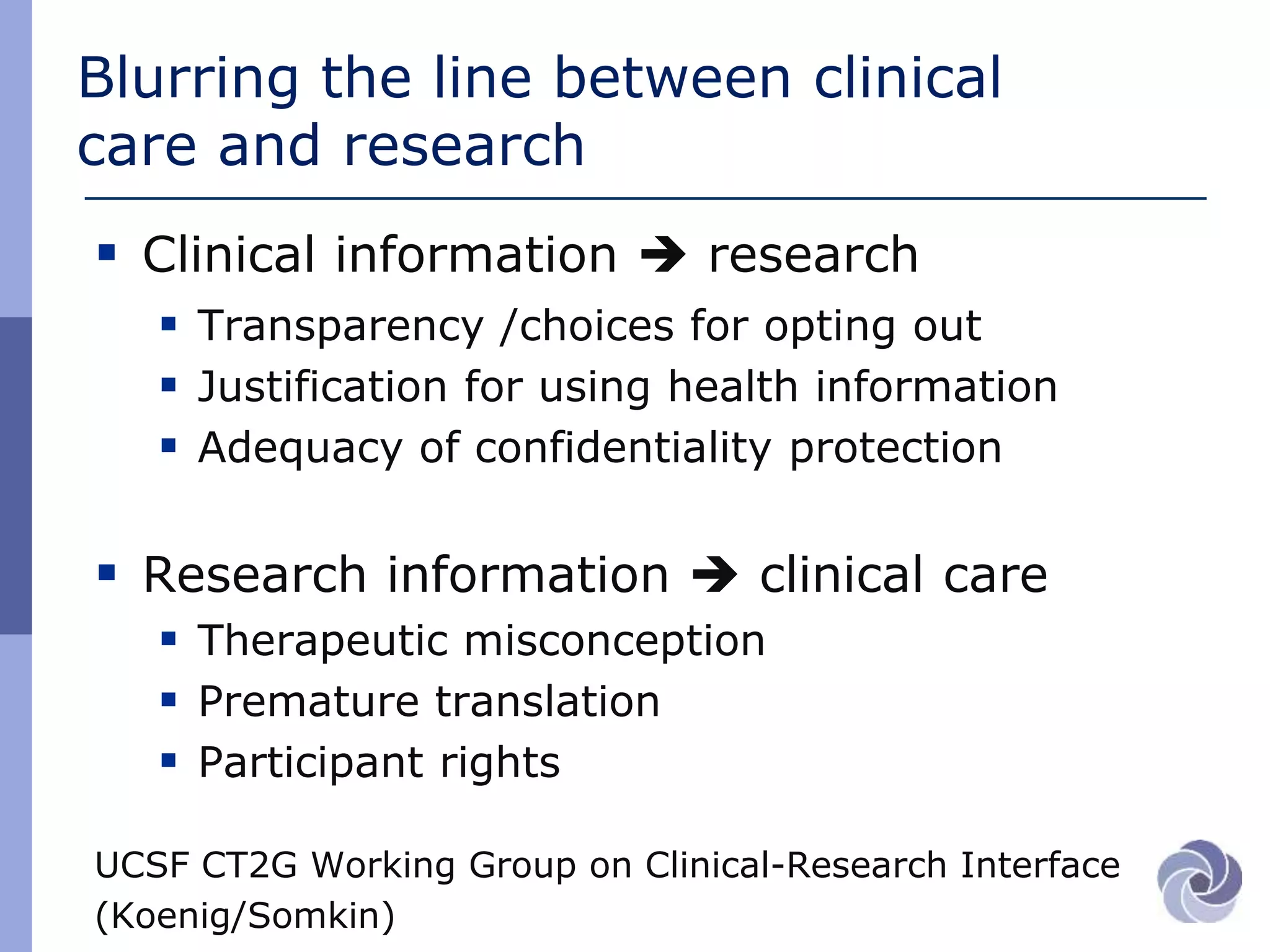
Blurring the line between clinical
care and research
 Clinical information  research
 Transparency /choices for opting out
 Justification for using health information
 Adequacy of confidentiality protection
 Research information  clinical care
 Therapeutic misconception
 Premature translation
 Participant rights
UCSF CT2G Working Group on Clinical-Research Interface
(Koenig/Somkin)
Trust
Context specific…
 Whom do you trust to do what?
 Who would you trust to handle your
money?
 Take care of your child?
 Use your personal health information?
Kohn M. Trust Oxforf Univ Press
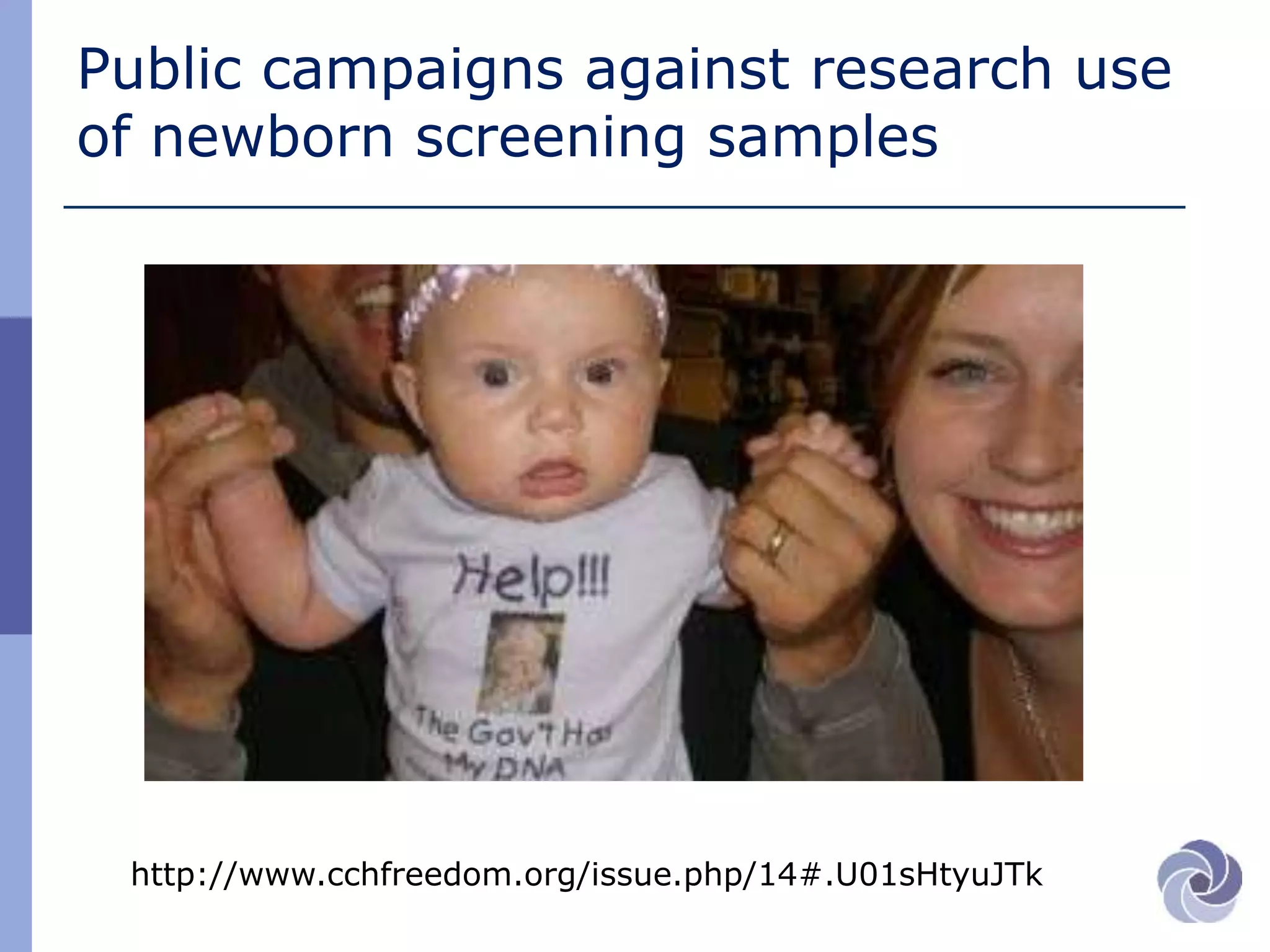
Public campaigns against research use
of newborn screening samples
http://www.cchfreedom.org/issue.php/14#.U01sHtyuJTk
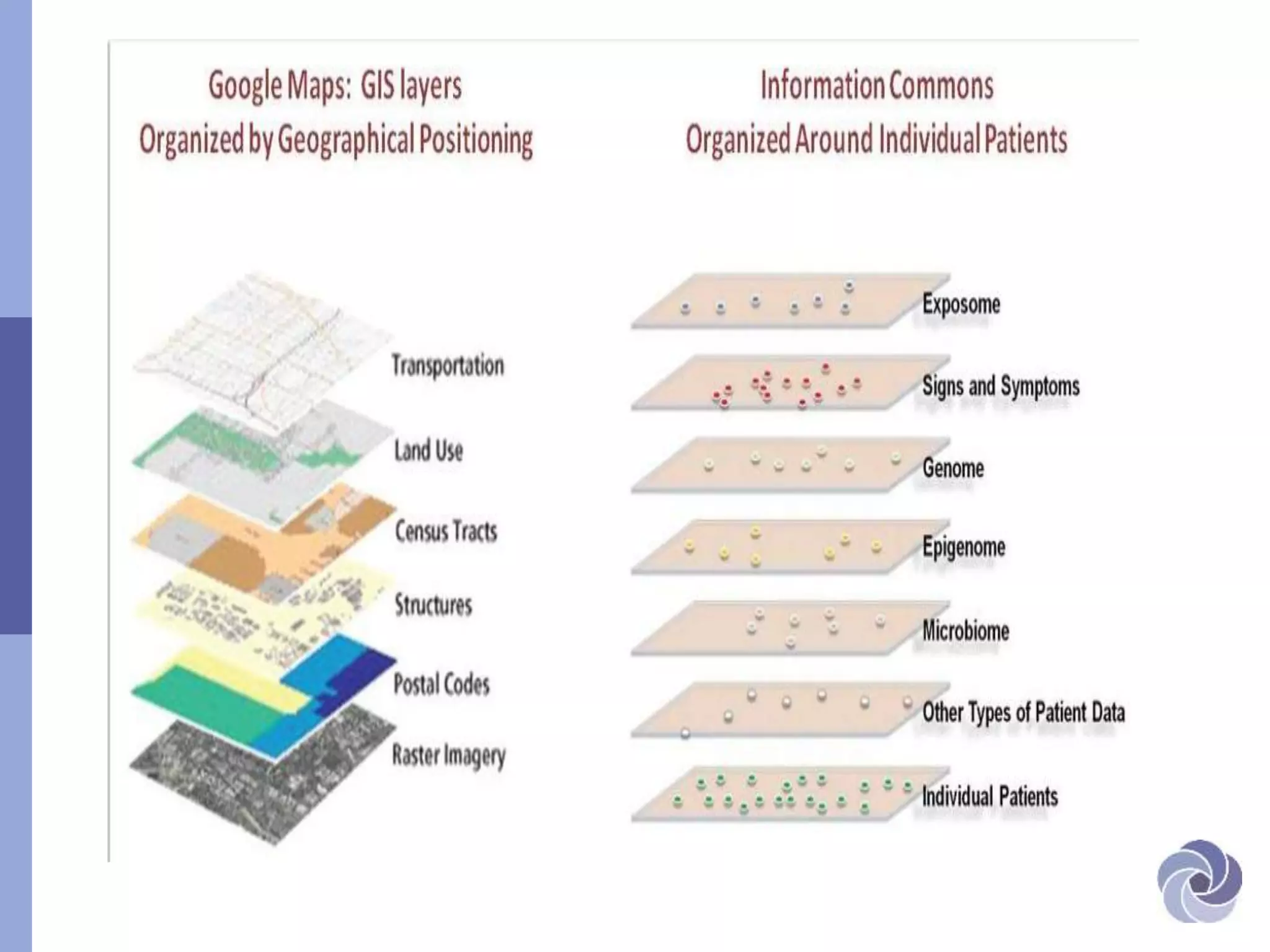
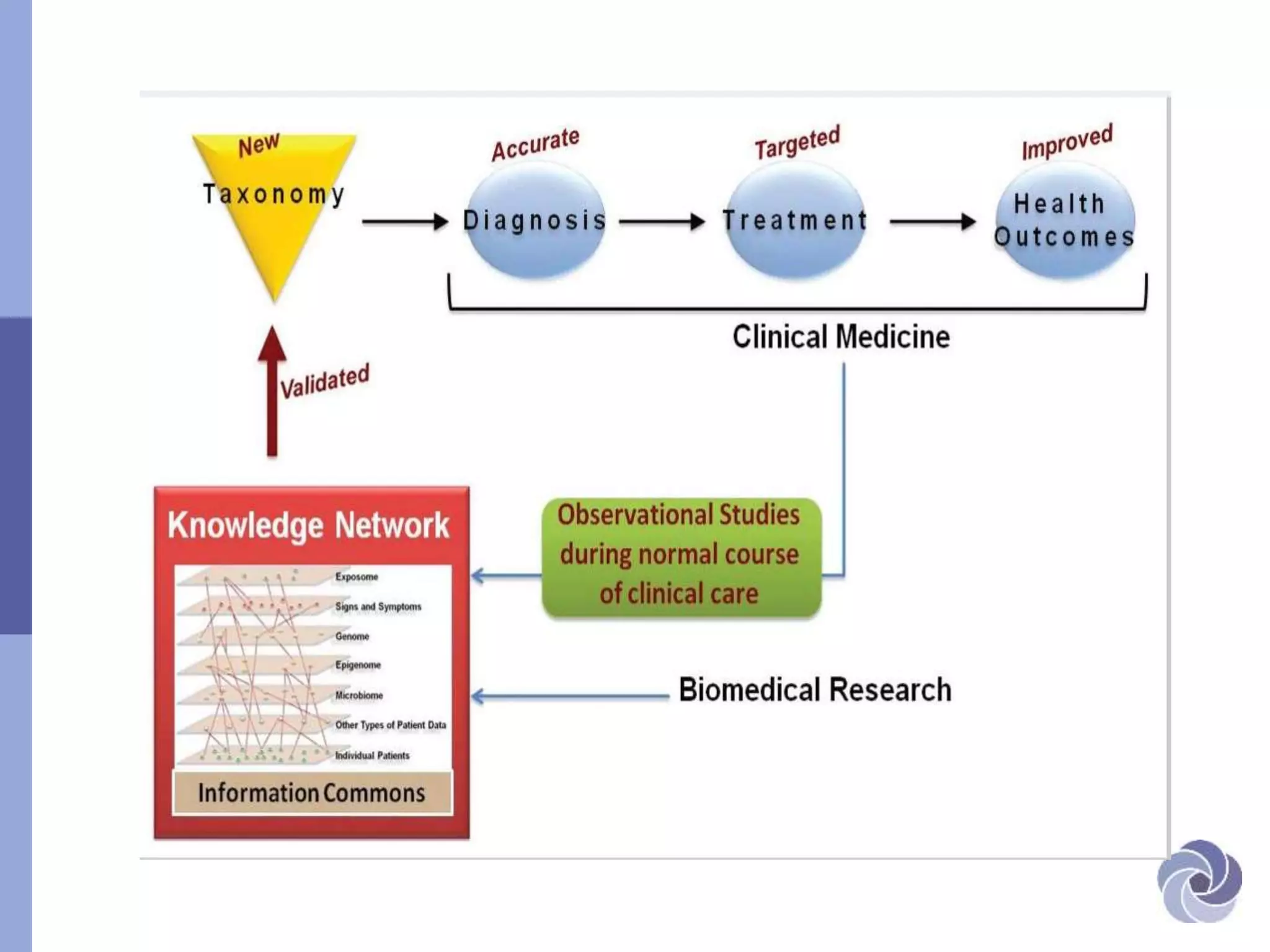
“Information commons” policy questions
 Consent
How much choice can and should patients have?
Can health data be uploaded without consent?
 Governance
Who decides about data access? On what basis?
 Identification of use and mis-use:
What kinds of audit trails are in place? Can mis-
use be identified, with appropriate consequences?
 Communication
What information is owed to people whose data
are included?
EngageUC:
Engaging University
of California
Stakeholders for
Biorepository
Research
Daniel Dohan PhD
Elizabeth Boyd PhD
Barbara Koenig PhD
Jen Hult, MPH
Sarah Dry, MD
Arleen Brown MD
What do Californians want from UC for
biorepository research?
Deliberative Community Engagement
 Two events held, each with 27 random selected
deliberants, 4 days face-to-face, in LA (June 2013)
& SF (September 2013)
 Education: Briefing book, website, expert talks
 Deliberation: Facilitated small/large group
discussions, develop recommendations
 Recommendations: Endorse agreements,
identify disagreements, present results to other
stakeholders
Areas of strong agreement
(partial list)
 Meaningful involvement of community in
oversight
 Public education and communication
 Monitoring and consequences for mis-use
 Clear consent forms, using simple
language
Areas of persistent disagreement
(partial list)
 How community should be represented
 Whether leftover samples can be used
without consent
 Scope of data-sharing
Methods development for
ethical policy-making
 Meaningful ways to engage public
discussion
 Innovative stewardship models
 Mechanisms for accountability

UCSF Informatics Day 2014 - Wylie Burke, "Bioethical Issues in Genomics and Electronic Health Records"

  • 1.
    Bioethical Issues inGenomics and Electronic Health Records Wylie Burke MD PhD Department of Bioethics and Humanities University of Washington 2013-14 Presidential Chair University of California San Francisco
  • 2.
    The challenge…ethically and scientifically “…bigdata becomes transformative when disparate datasets can be linked at the individual person level… [BUT] big biomedical data are scattered across institutions and intentionally isolated to protect patient privacy.” Weber et al JAMA 2014
  • 5.
    Blurring the linebetween clinical care and research  Clinical information  research  Transparency /choices for opting out  Justification for using health information  Adequacy of confidentiality protection  Research information  clinical care  Therapeutic misconception  Premature translation  Participant rights UCSF CT2G Working Group on Clinical-Research Interface (Koenig/Somkin)
  • 6.
    Trust Context specific…  Whomdo you trust to do what?  Who would you trust to handle your money?  Take care of your child?  Use your personal health information? Kohn M. Trust Oxforf Univ Press
  • 7.
    Public campaigns againstresearch use of newborn screening samples http://www.cchfreedom.org/issue.php/14#.U01sHtyuJTk
  • 8.
    “Information commons” policyquestions  Consent How much choice can and should patients have? Can health data be uploaded without consent?  Governance Who decides about data access? On what basis?  Identification of use and mis-use: What kinds of audit trails are in place? Can mis- use be identified, with appropriate consequences?  Communication What information is owed to people whose data are included?
  • 9.
    EngageUC: Engaging University of California Stakeholdersfor Biorepository Research Daniel Dohan PhD Elizabeth Boyd PhD Barbara Koenig PhD Jen Hult, MPH Sarah Dry, MD Arleen Brown MD
  • 10.
    What do Californianswant from UC for biorepository research? Deliberative Community Engagement  Two events held, each with 27 random selected deliberants, 4 days face-to-face, in LA (June 2013) & SF (September 2013)  Education: Briefing book, website, expert talks  Deliberation: Facilitated small/large group discussions, develop recommendations  Recommendations: Endorse agreements, identify disagreements, present results to other stakeholders
  • 11.
    Areas of strongagreement (partial list)  Meaningful involvement of community in oversight  Public education and communication  Monitoring and consequences for mis-use  Clear consent forms, using simple language
  • 12.
    Areas of persistentdisagreement (partial list)  How community should be represented  Whether leftover samples can be used without consent  Scope of data-sharing
  • 13.
    Methods development for ethicalpolicy-making  Meaningful ways to engage public discussion  Innovative stewardship models  Mechanisms for accountability