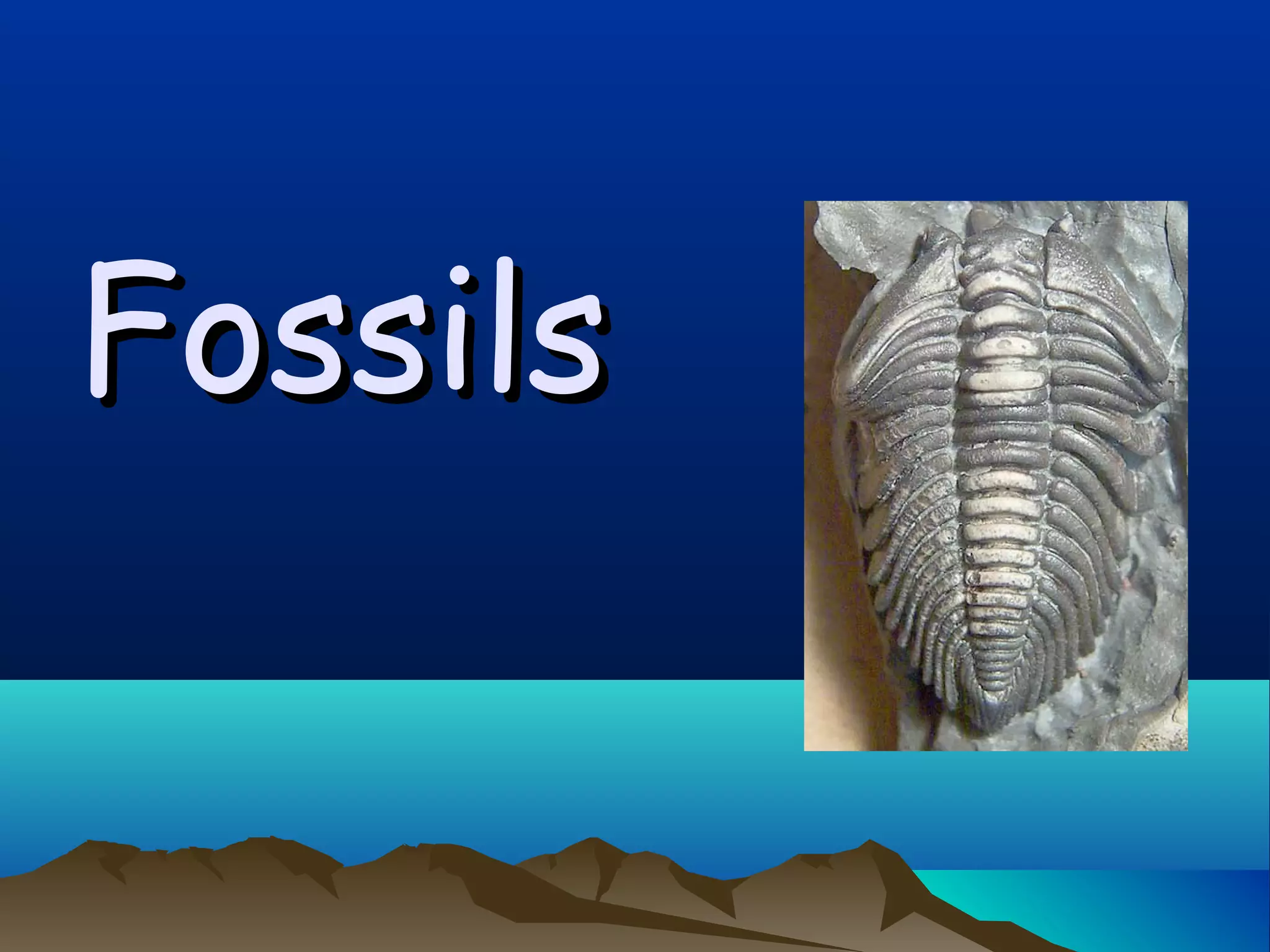
A fossil is defined as an impression, cast, or trace of any organism preserved in rock after the original material has transformed or been removed. Fossils come in various types, including body fossils (actual parts of organisms) and trace fossils (evidence of life without remains). Fossilization occurs under specific conditions, such as rapid burial, lack of oxygen, and the presence of hard body parts.
What is afossil?What is a fossil?
A fossil is an impression, cast,
original material or track of
any animal or plant that is
preserved in rock after the
original organic material is
transformed or removed.
3.
A fossil maybe:A fossil may be:
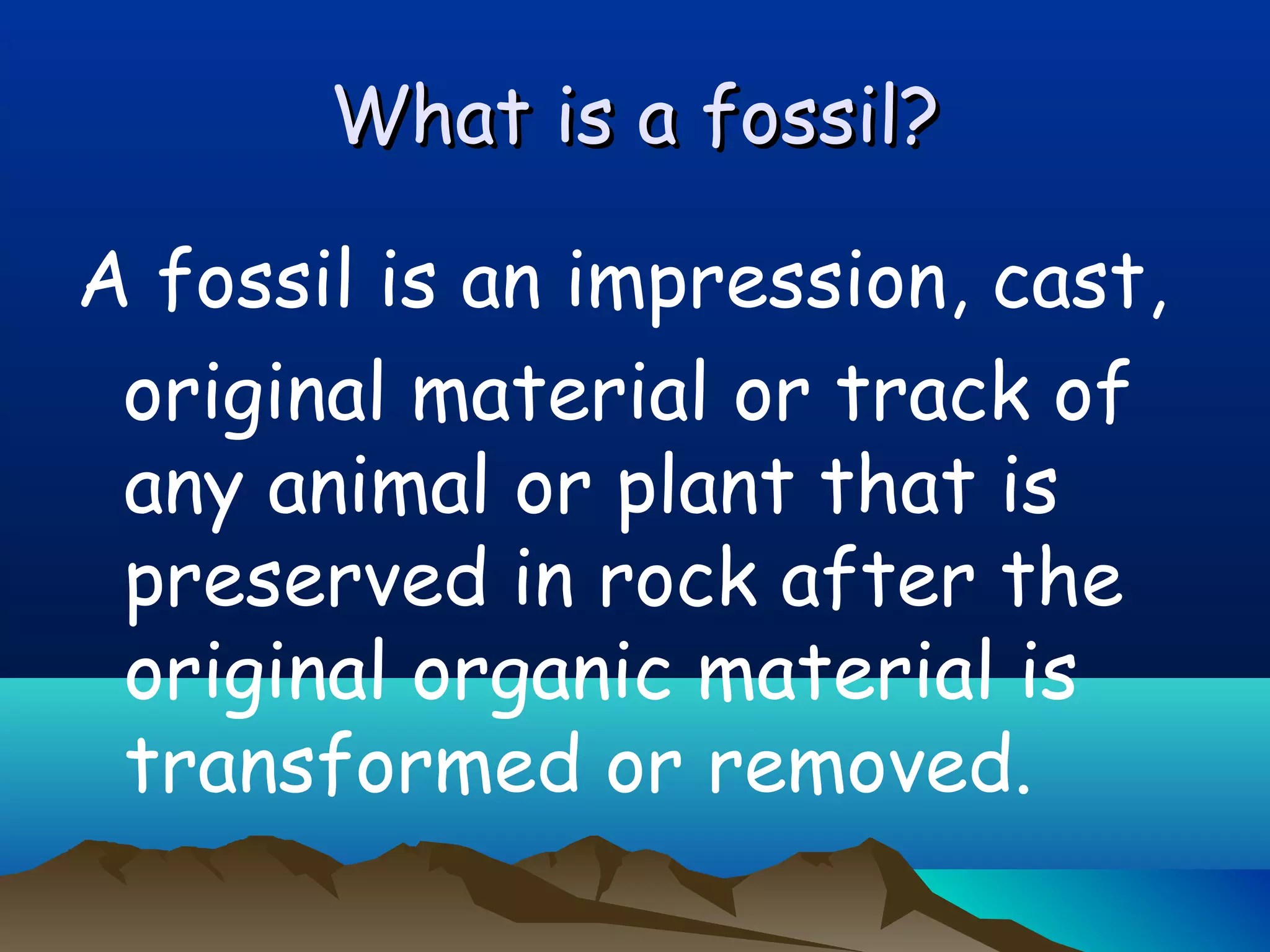
• an original skeleton
or shell;
• a mold or cast;
• material that has
replaced the once
living thing;
• traces such as
footprints or worm
tubes
4.
What conditions promoteWhatconditions promote
fossilization?fossilization?
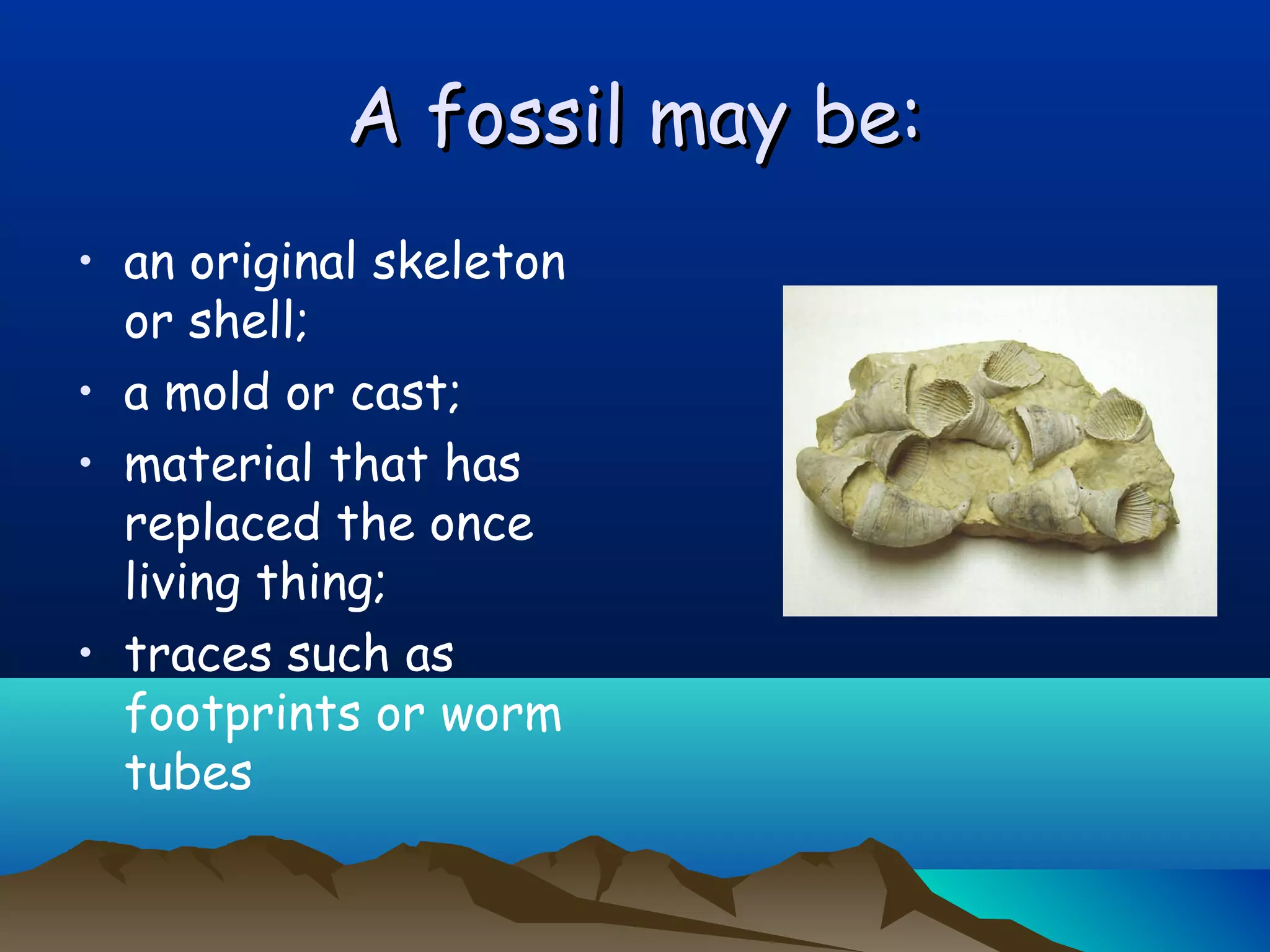
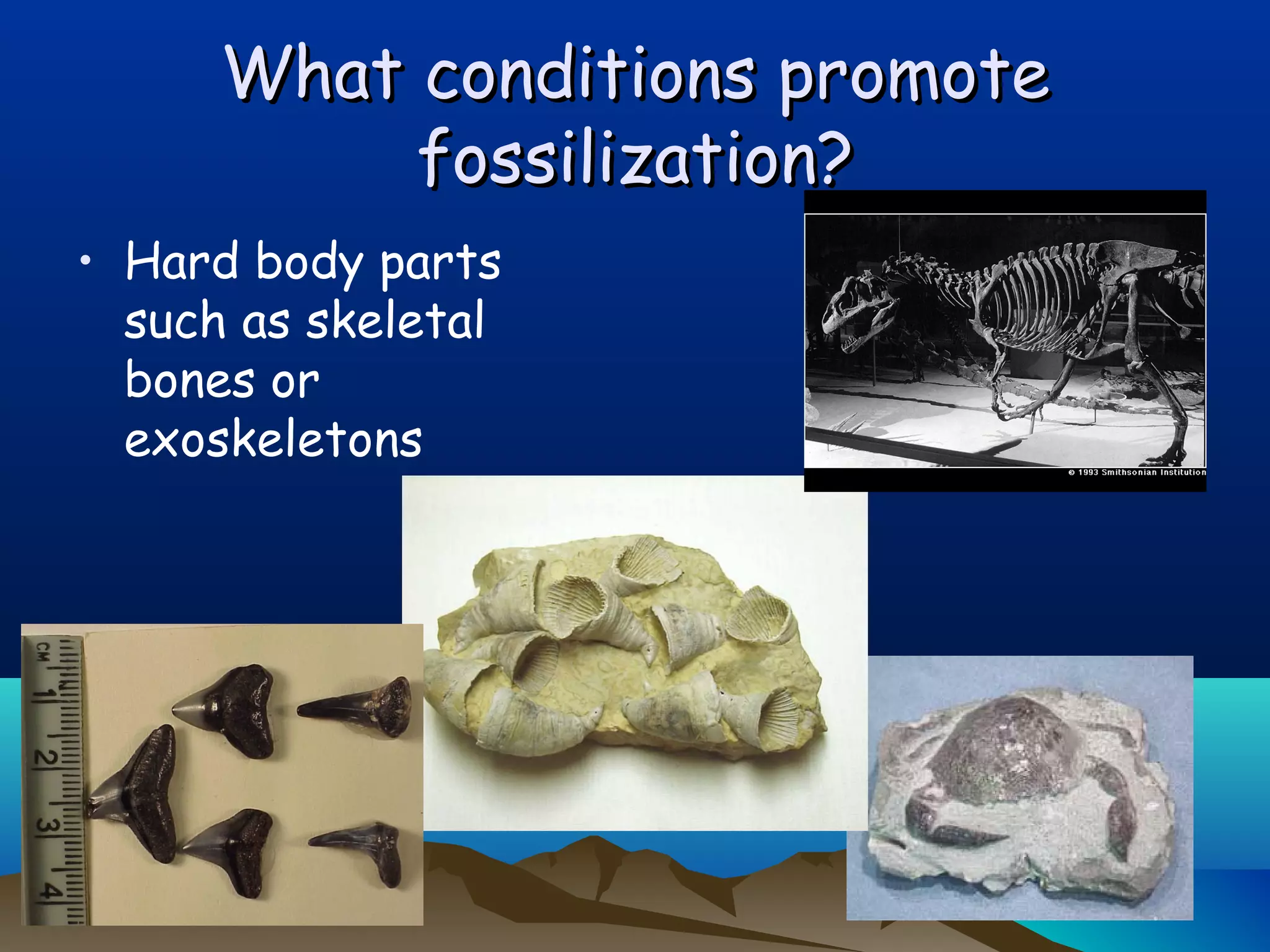
• Hard body parts
such as skeletal
bones or
exoskeletons
5.
What conditions promoteWhatconditions promote
fossilization?fossilization?
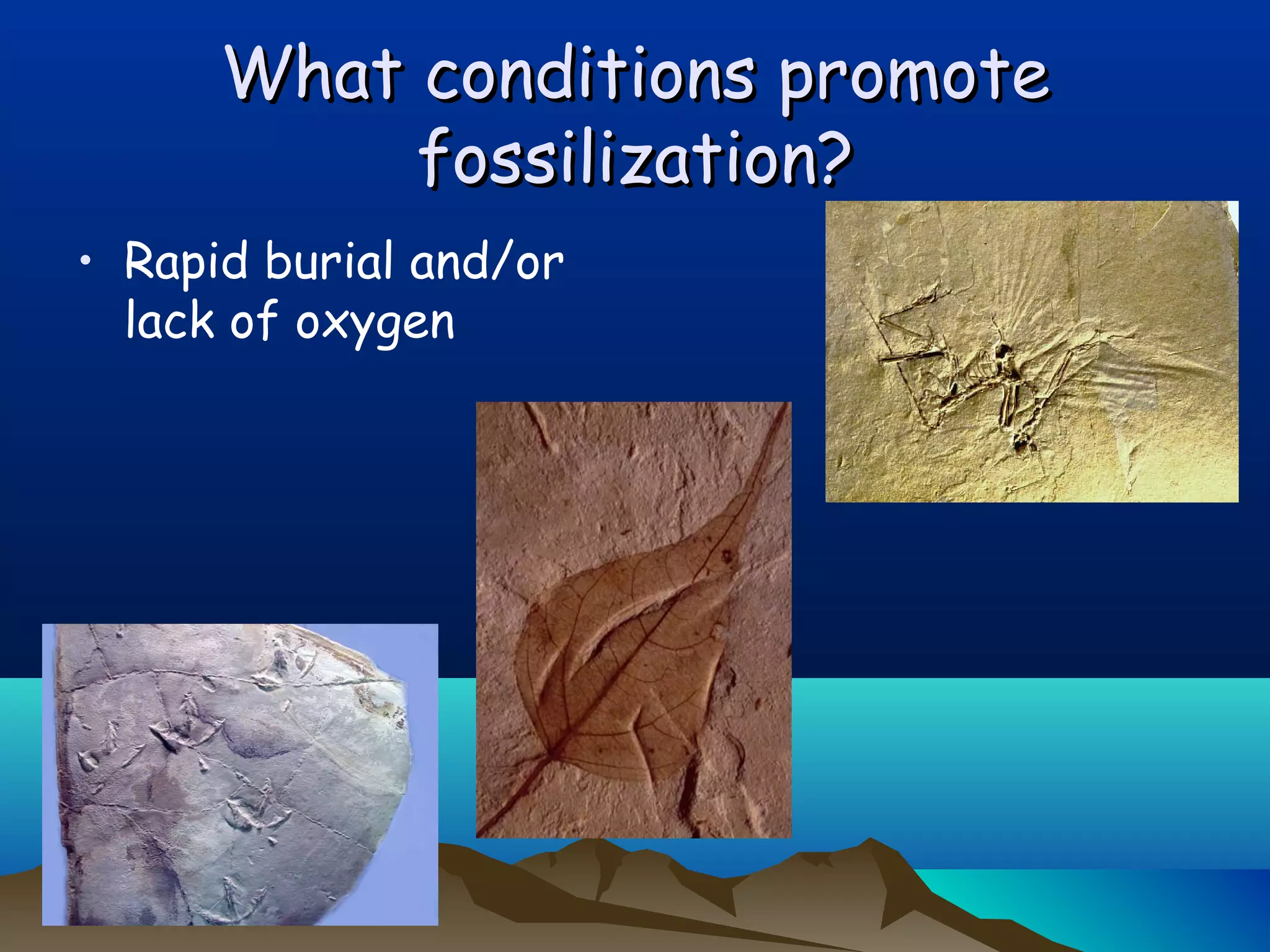
• Rapid burial and/or
lack of oxygen
6.
What are thefossil types?What are the fossil types?
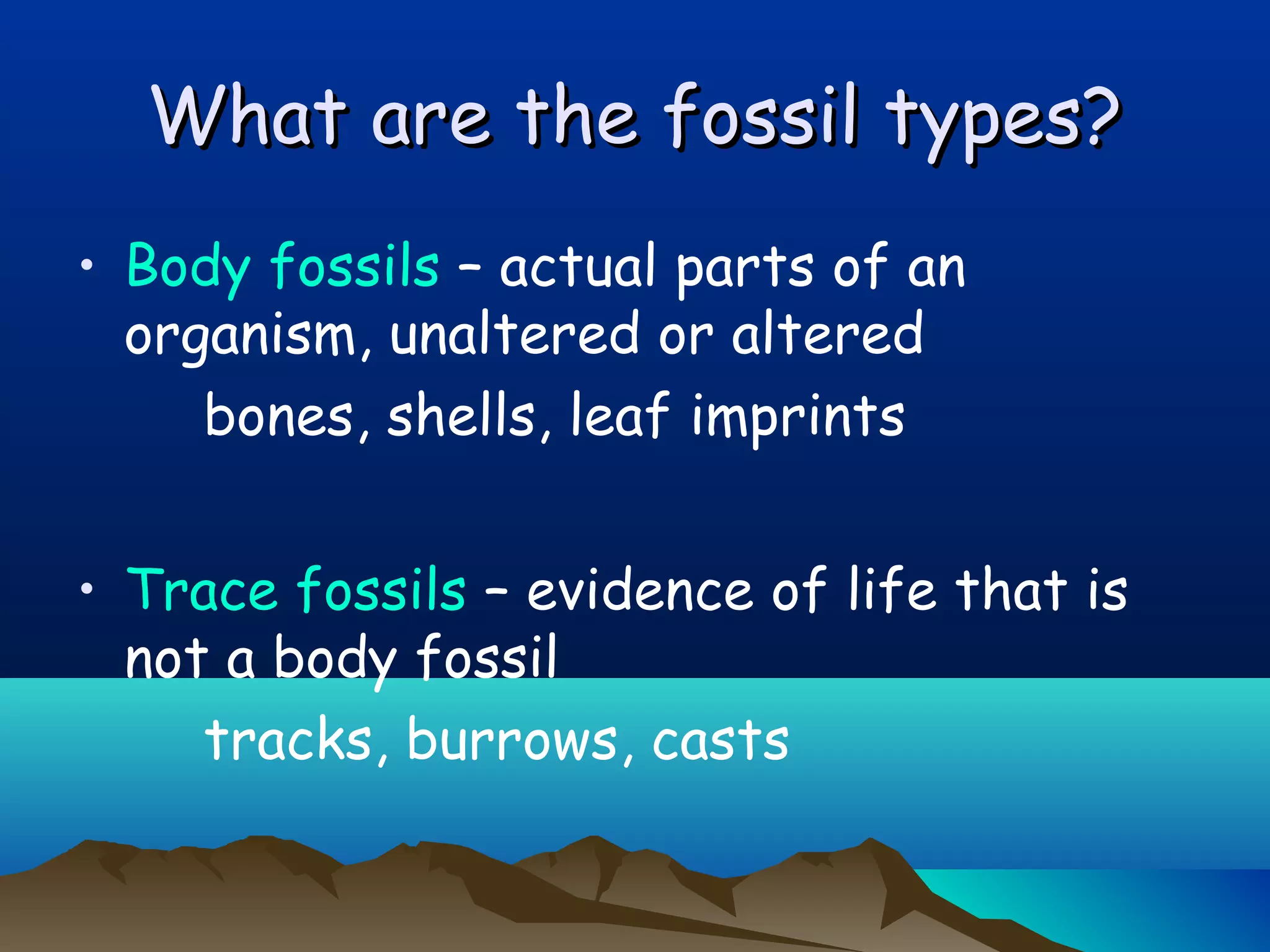
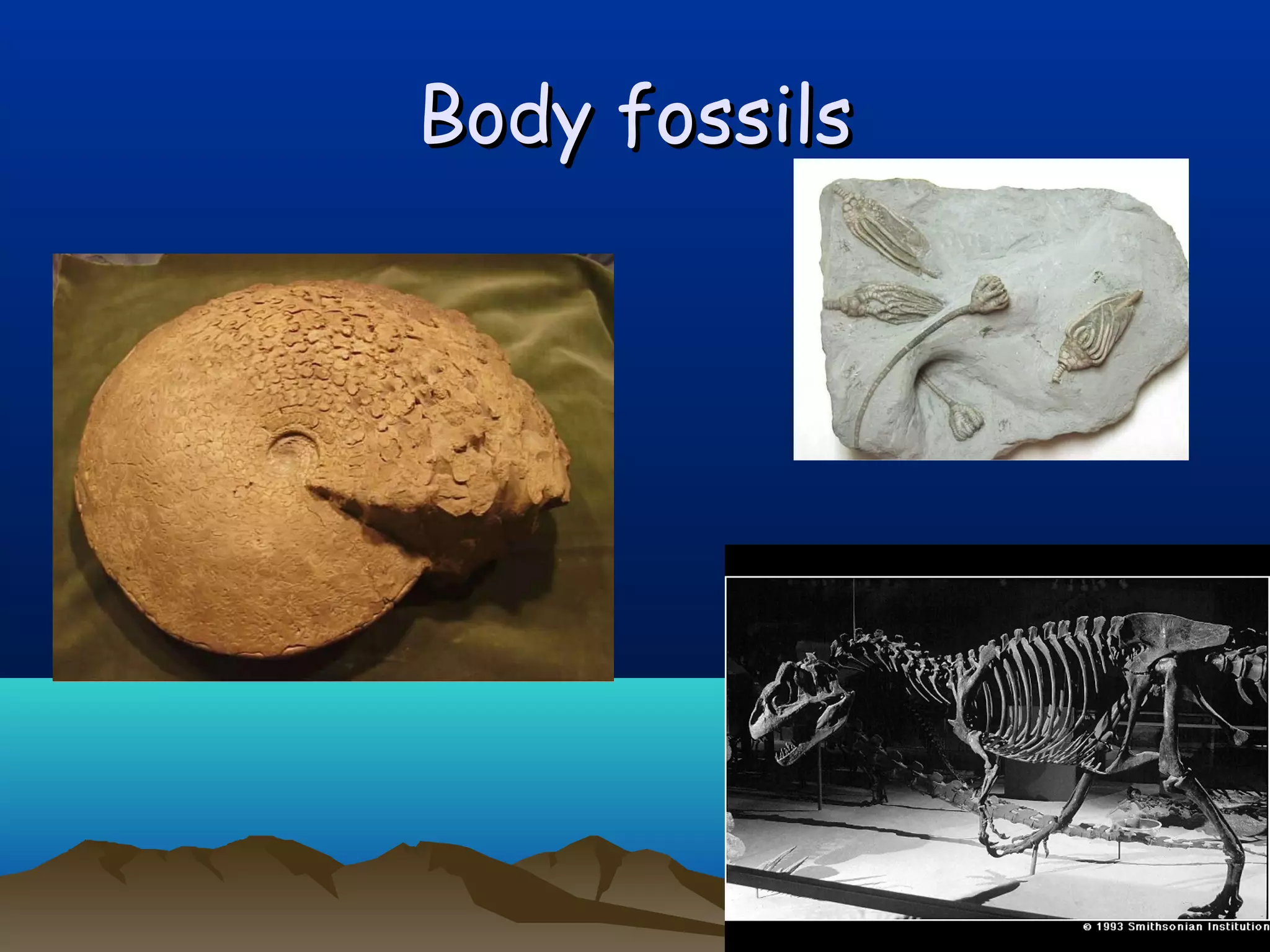
• Body fossils – actual parts of an
organism, unaltered or altered
bones, shells, leaf imprints
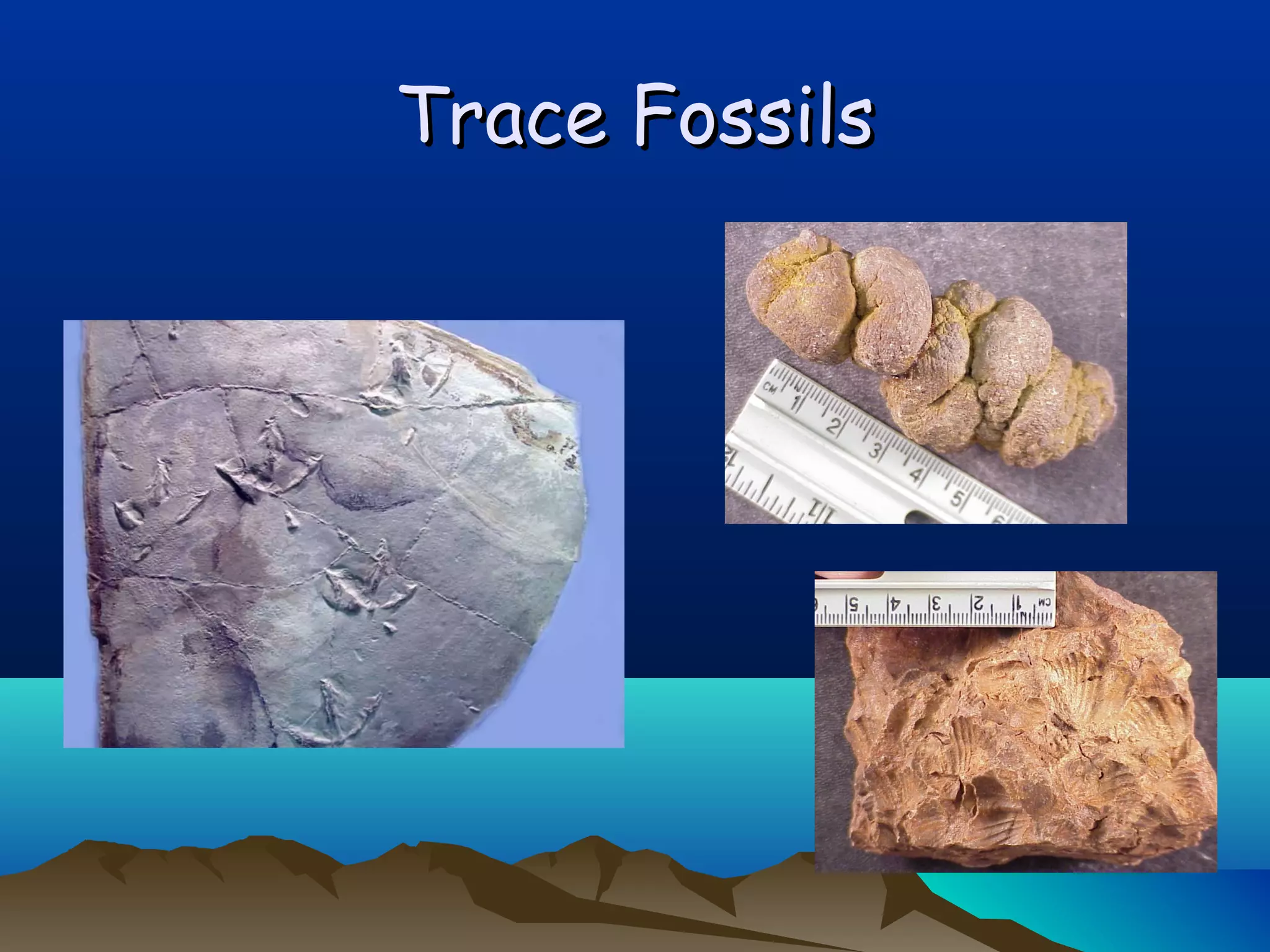
• Trace fossils – evidence of life that is
not a body fossil
tracks, burrows, casts
What are themodes of fossilWhat are the modes of fossil
preservation for body fossils?preservation for body fossils?
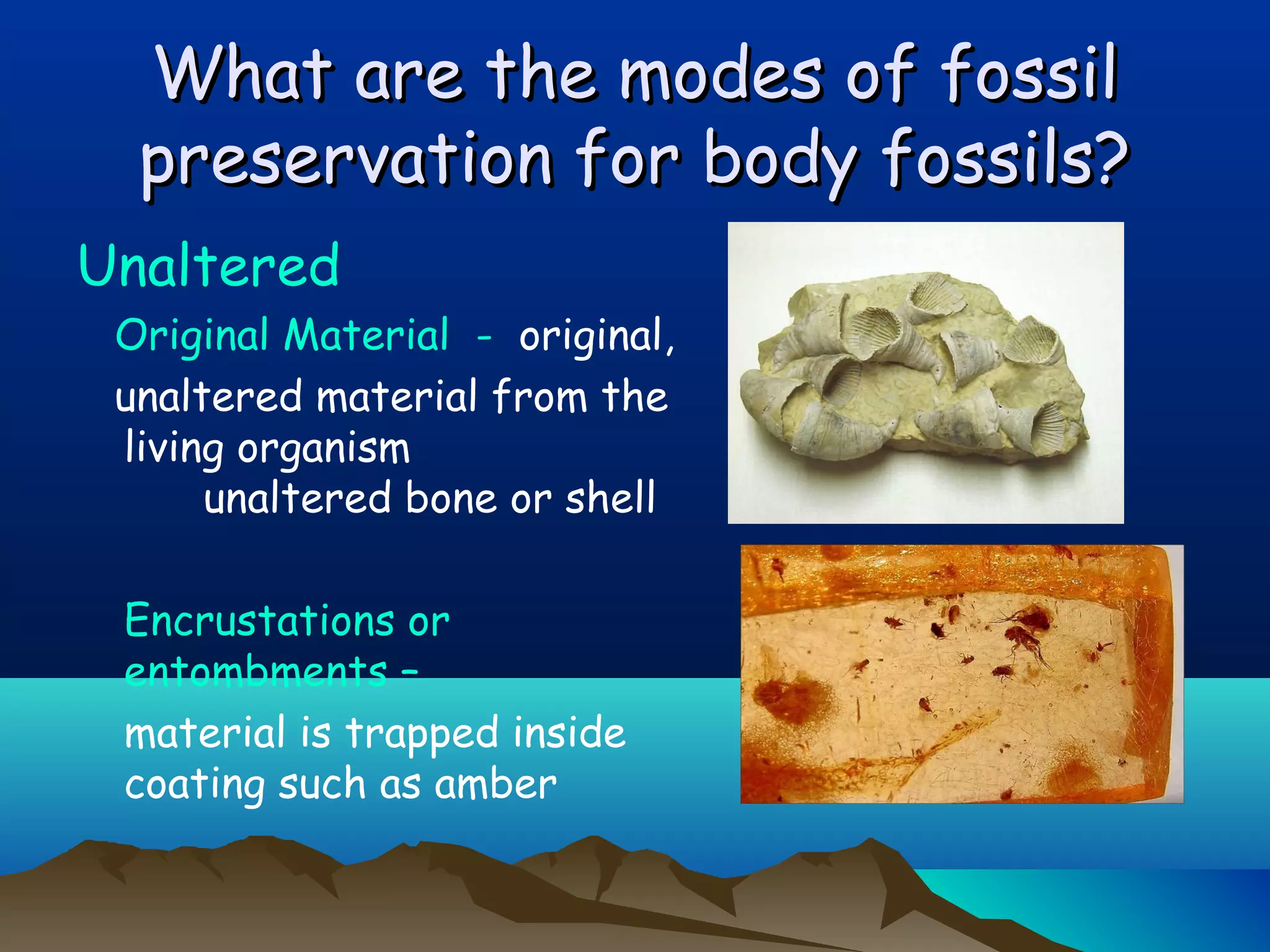
Unaltered
Original Material - original,
unaltered material from the
living organism
unaltered bone or shell
Encrustations or
entombments –
material is trapped inside
coating such as amber
10.
What are themodes of fossilWhat are the modes of fossil
preservation for body fossils?preservation for body fossils?
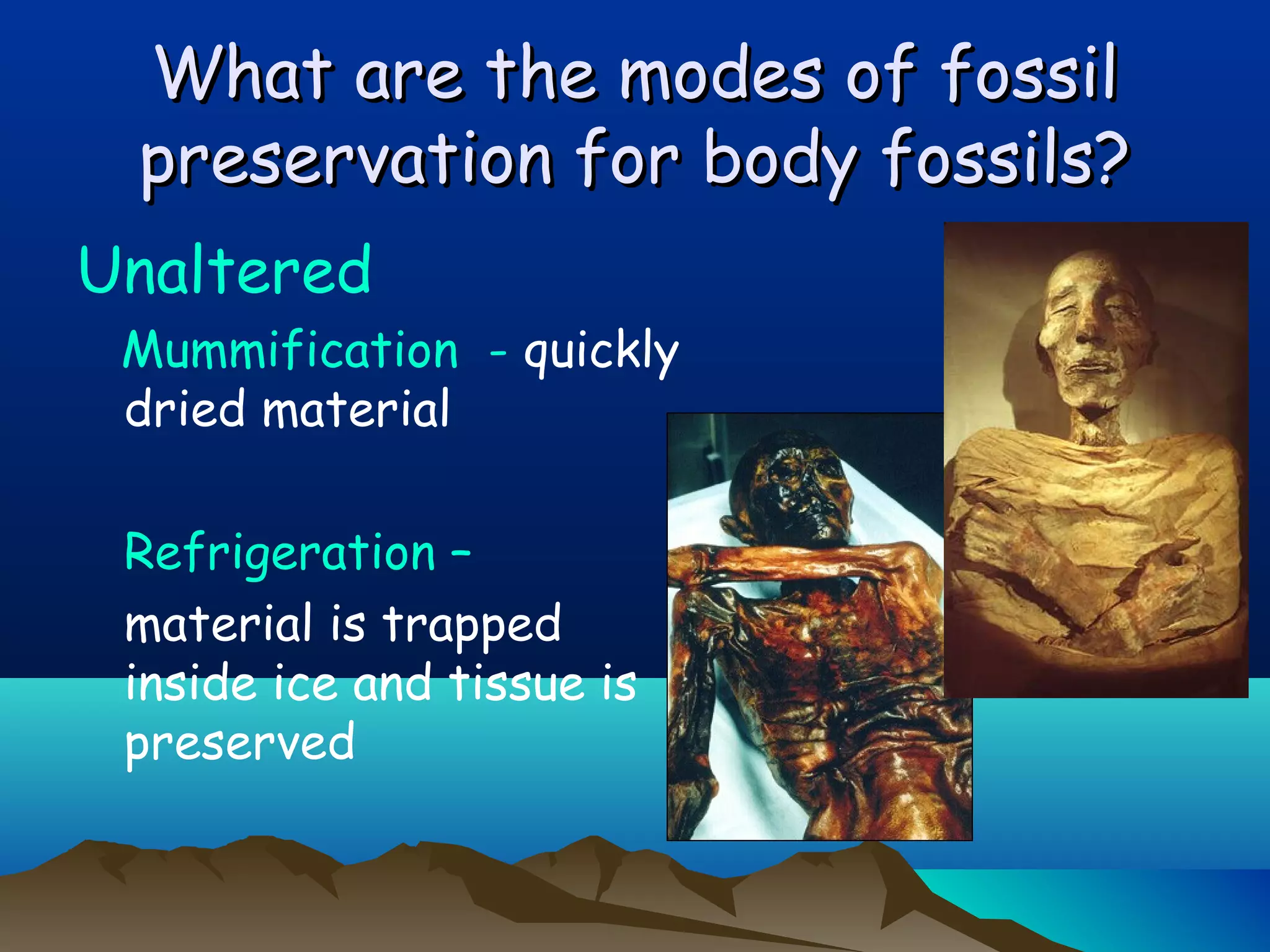
Unaltered
Mummification - quickly
dried material
Refrigeration –
material is trapped
inside ice and tissue is
preserved
11.
What are themodes of fossilWhat are the modes of fossil
preservation?preservation?
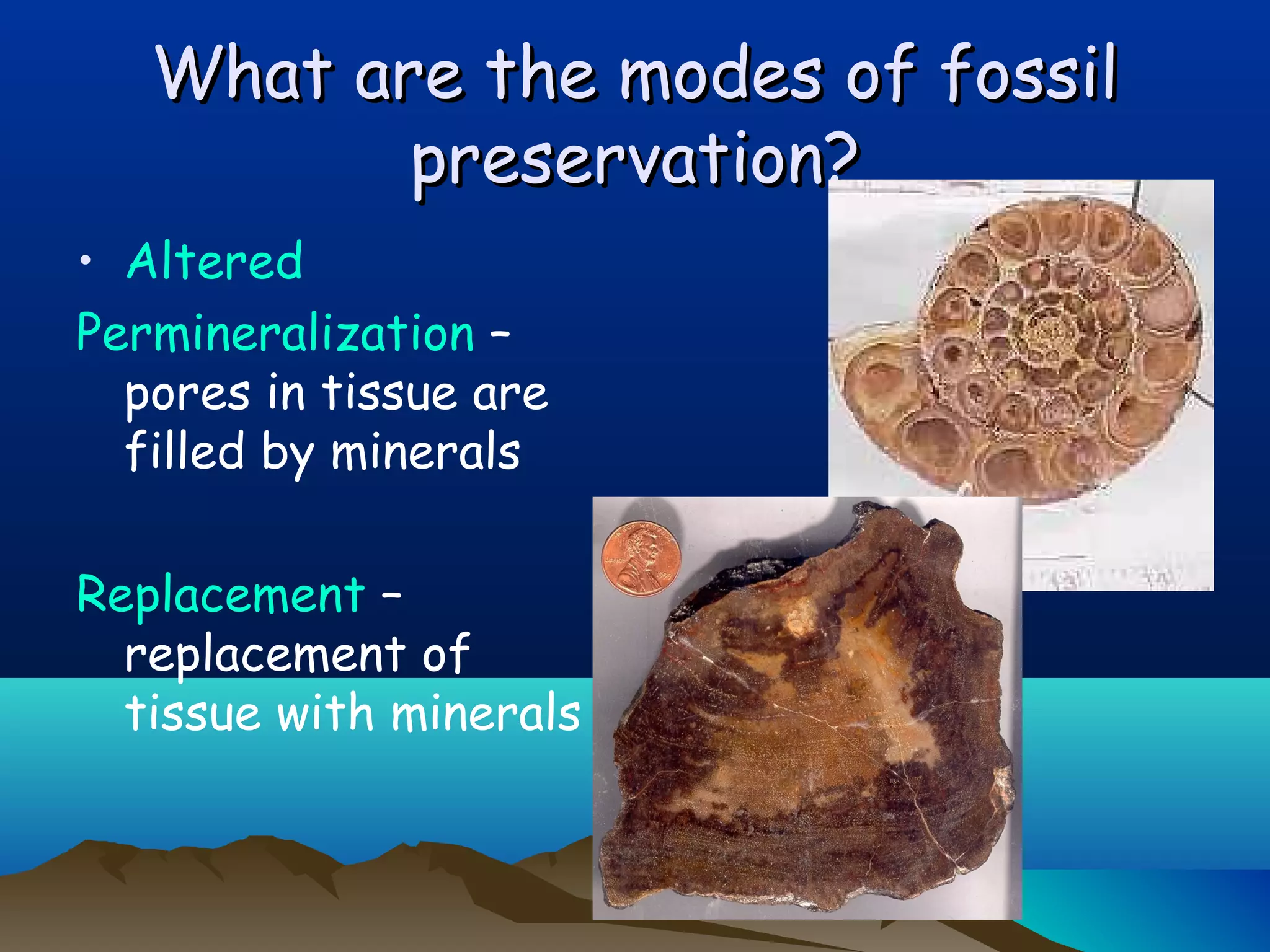
• Altered
Permineralization –
pores in tissue are
filled by minerals
Replacement –
replacement of
tissue with minerals
12.
What are themodes of fossilWhat are the modes of fossil
preservation for body fossils?preservation for body fossils?
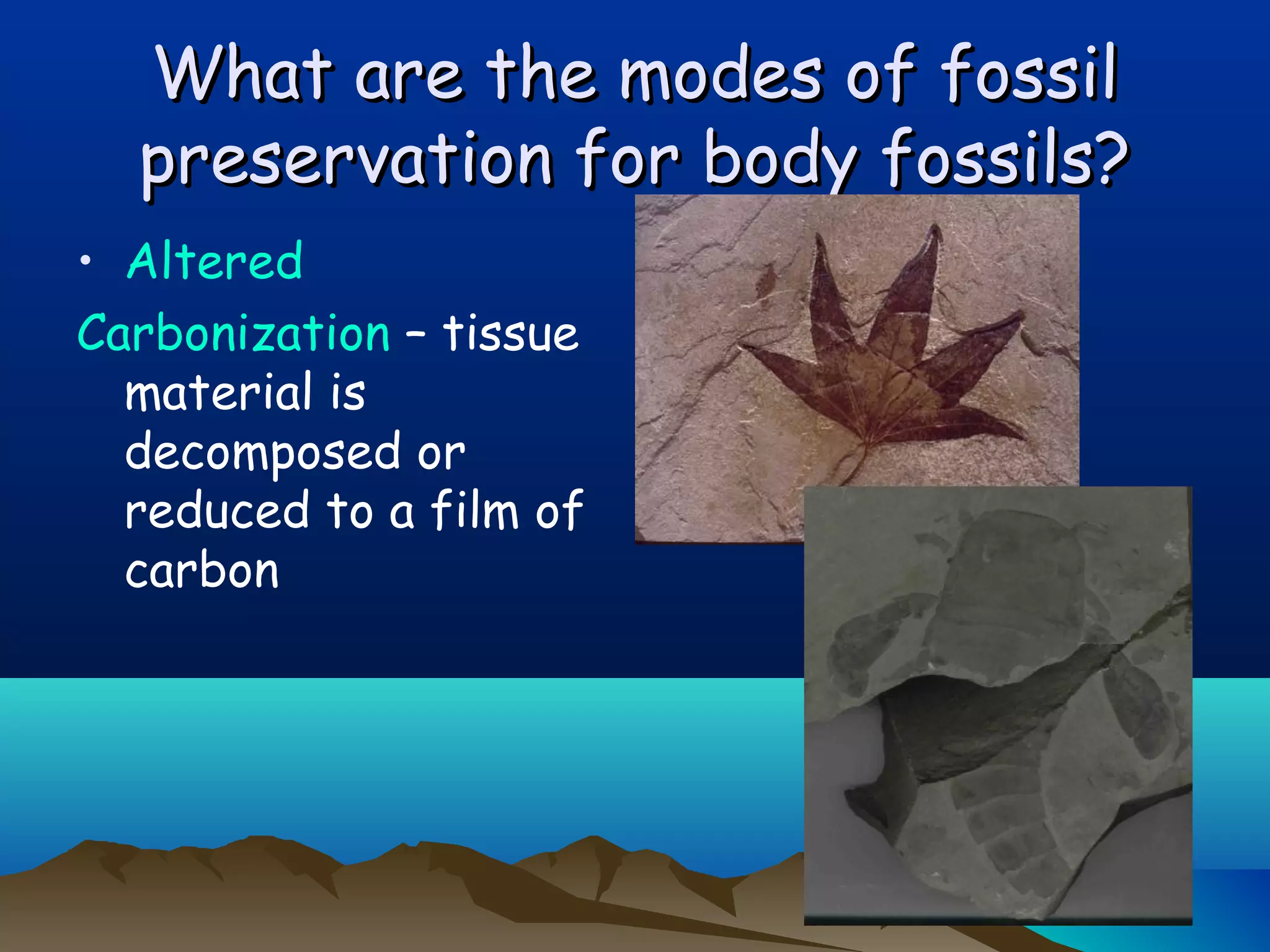
• Altered
Carbonization – tissue
material is
decomposed or
reduced to a film of
carbon
13.
More on tracefossilsMore on trace fossils
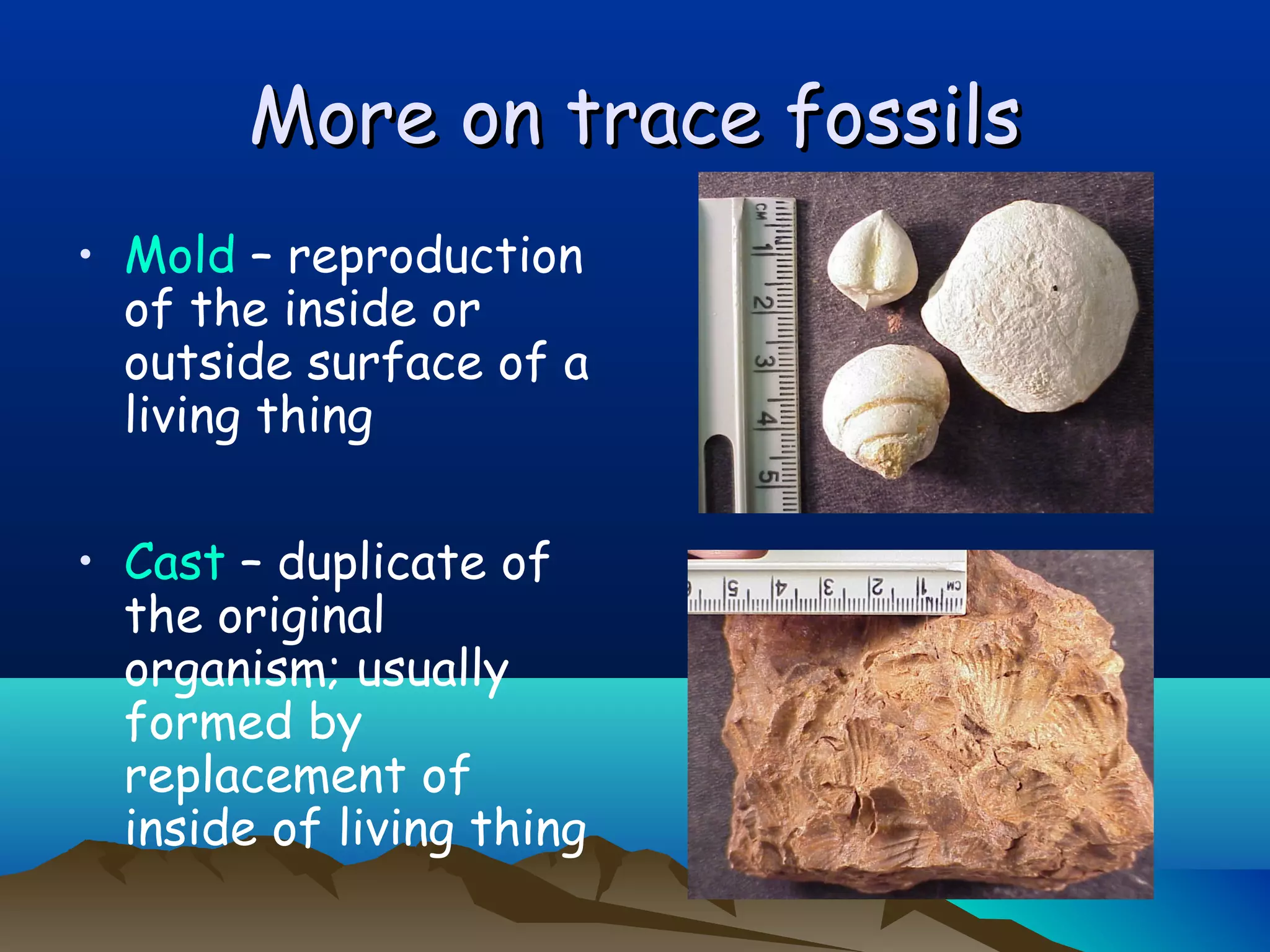
• Mold – reproduction
of the inside or
outside surface of a
living thing
• Cast – duplicate of
the original
organism; usually
formed by
replacement of
inside of living thing
14.
More on tracefossilsMore on trace fossils
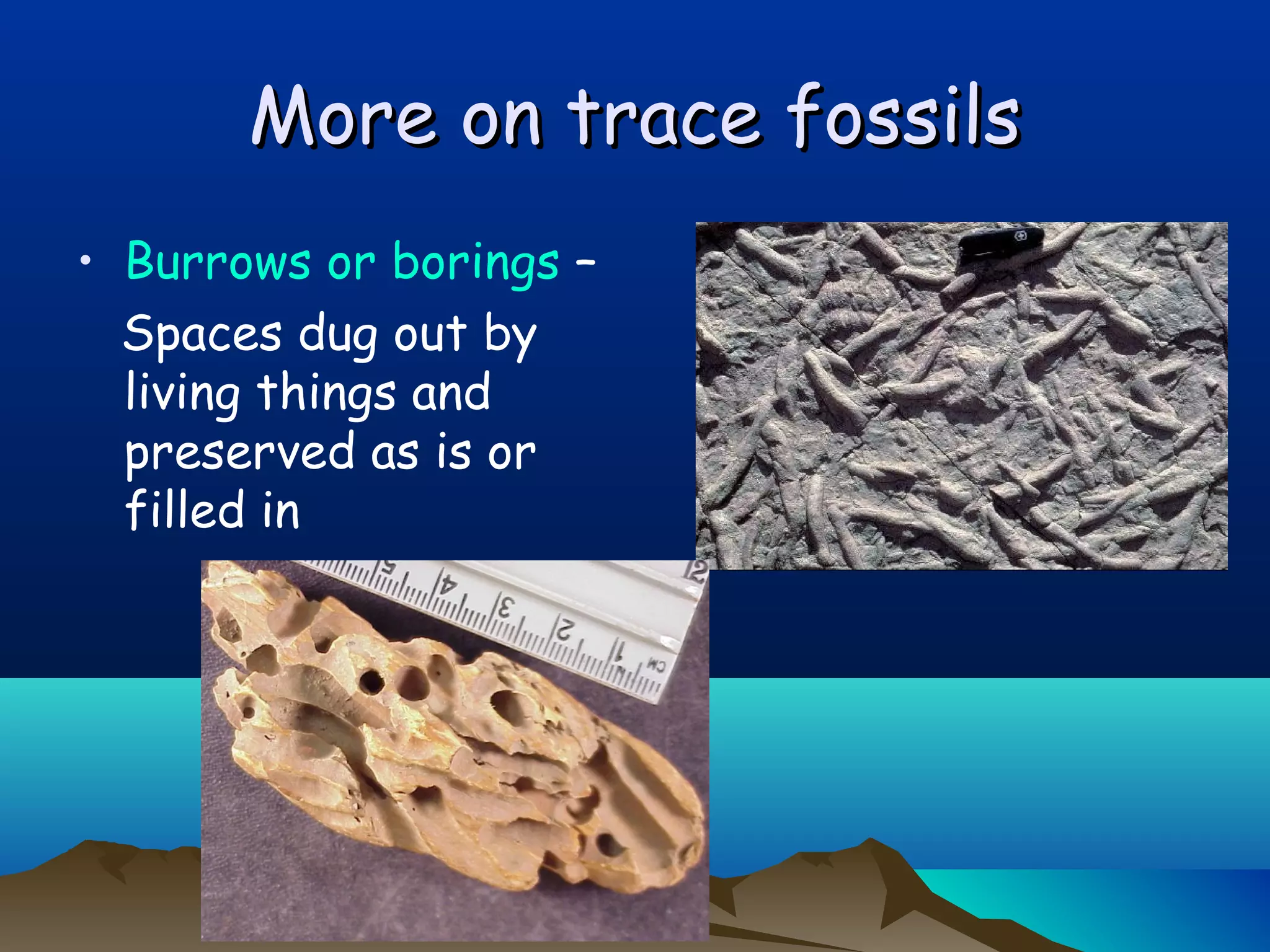
• Burrows or borings –
Spaces dug out by
living things and
preserved as is or
filled in
15.
More on tracefossilsMore on trace fossils
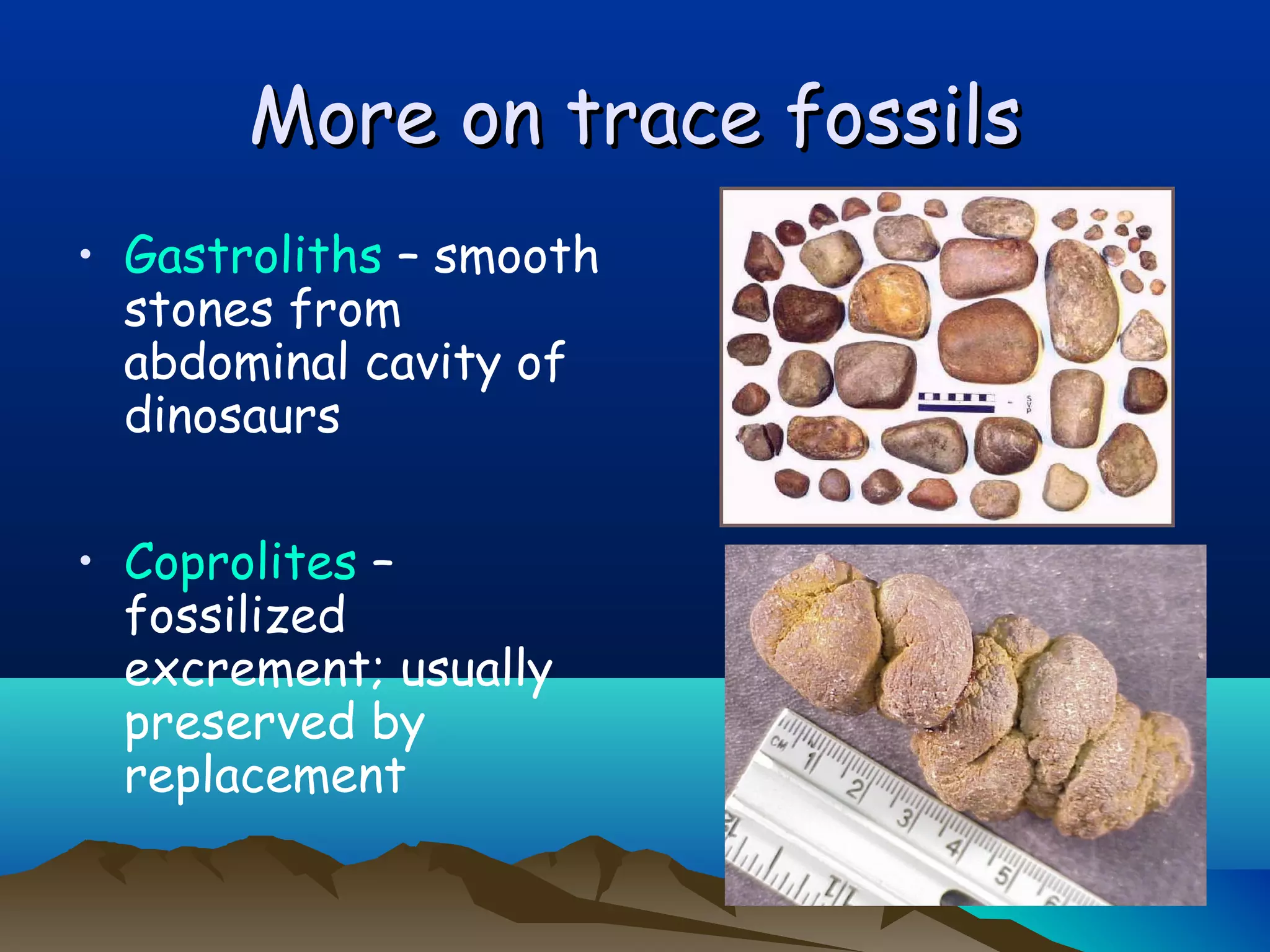
• Gastroliths – smooth
stones from
abdominal cavity of
dinosaurs
• Coprolites –
fossilized
excrement; usually
preserved by
replacement
16.
More on tracefossilsMore on trace fossils
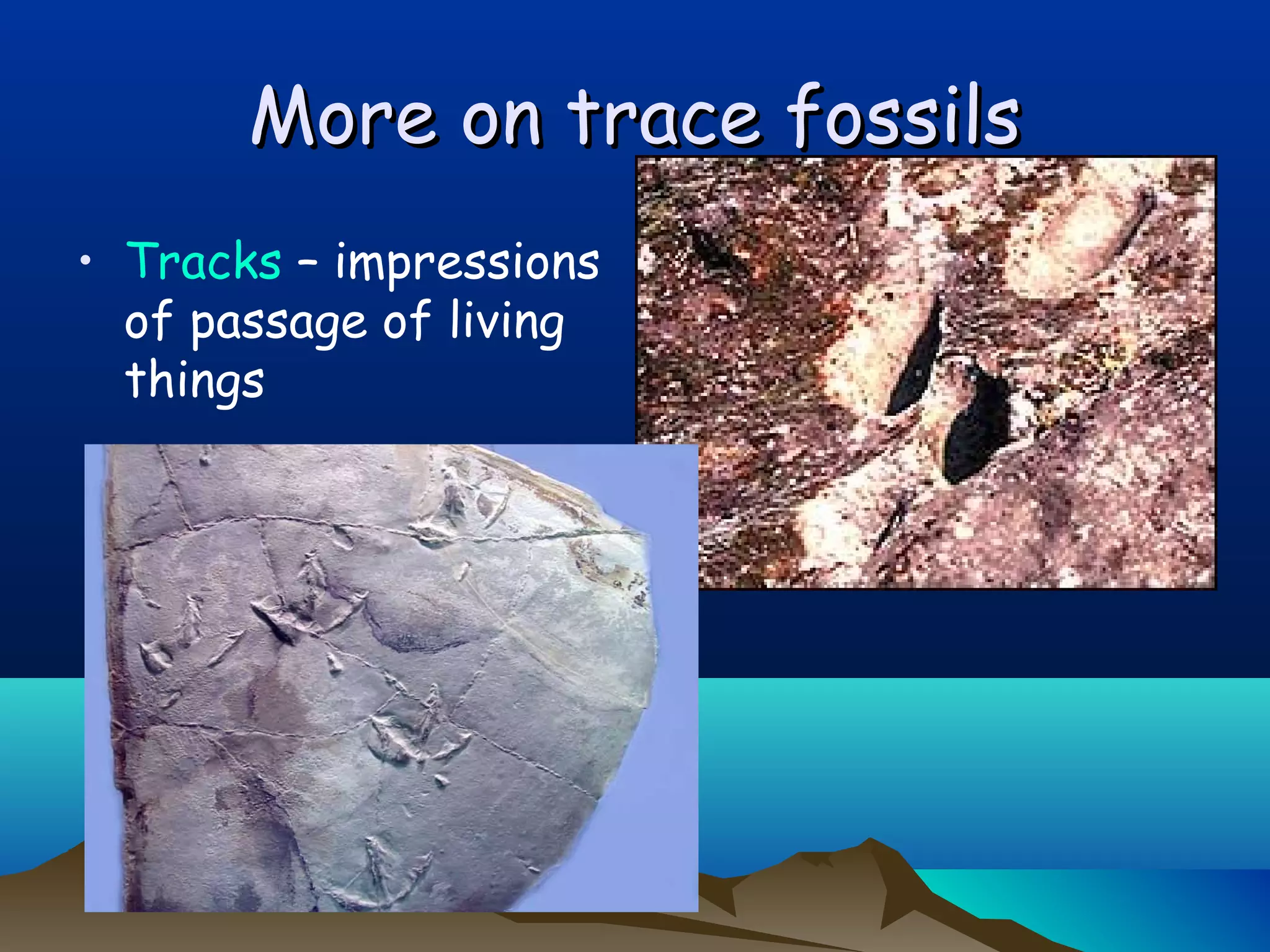
• Tracks – impressions
of passage of living
things