Community Based Stunting
Prevention: the Case for Nutrition
WeeksALLISON FLYNN, MPH
PROGRAM ADVISOR, HEALTH & NUTRITION
CCIH ANNUAL CONFERENCE, 2018
Partnership Starts at the Community
Rwanda: Standard MOH CBNP brought movement on wasting but
not chronic malnutrition
◦12.7% of primary school repetitions are associated with stunting
◦Annual cost of undernutrition: 11.5% of Rwanda’s GDP (CFSVA 2011)
◦Nyamagabe District: 53.5% stunting of children under 5
An issue of child care practices and illness, not just poverty or food
security?
Nutrition Weeks Innovation
Prevent stunting in the 1,000 Day window
◦ Rooted in Positive Deviance/Hearth model
Tested in Tangiraneza “Start Well” Innovation Child Survival Project, 2012-15
Sessions led by Village Nutrition Committees
◦Training cascaded through health system and Integrated Care Groups (which
included a religious leader)
◦Significant mobilization and logistical support from community leaders and
churches
Nutrition Weeks Innovation
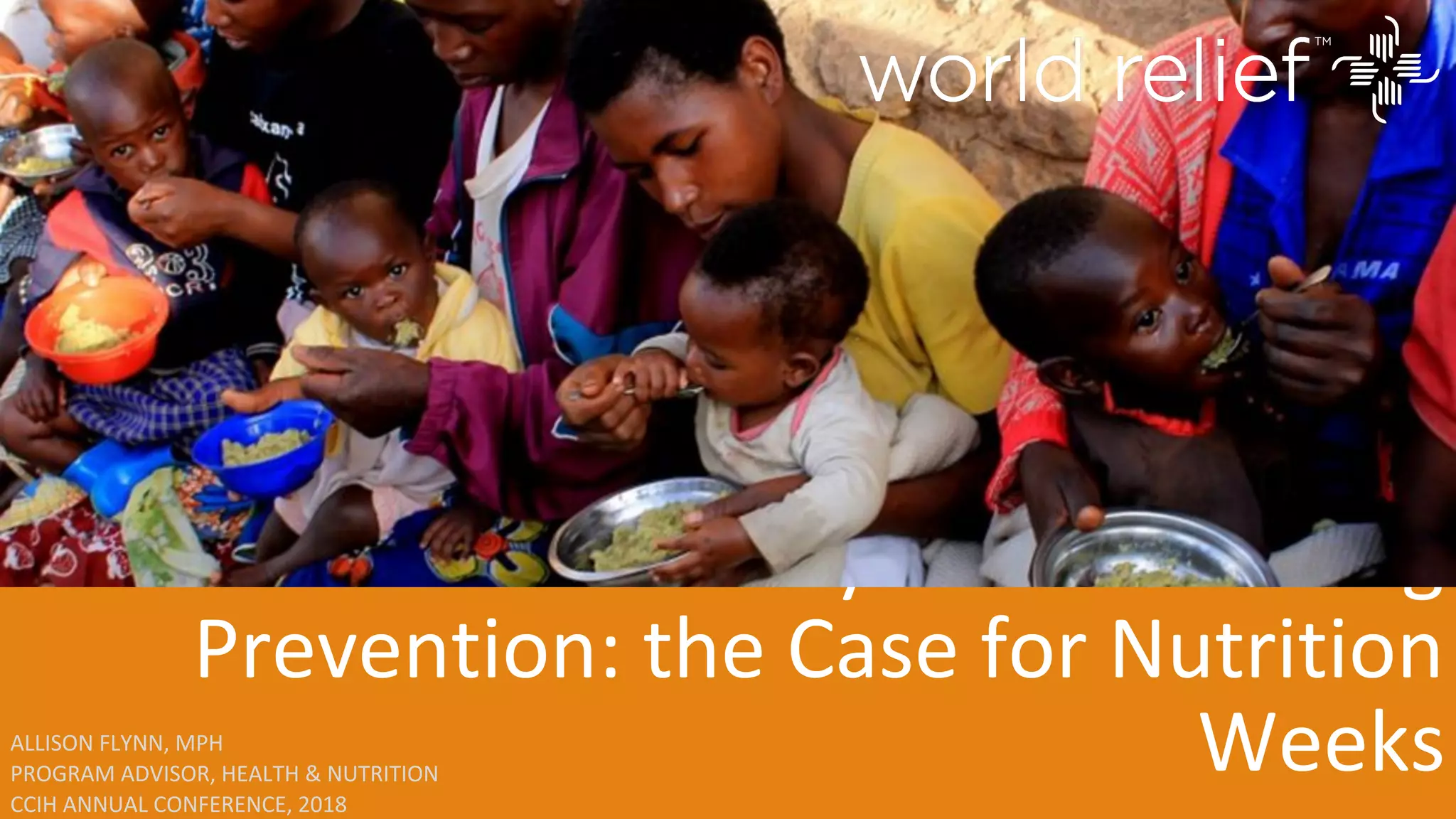
10-15 mothers (pregnant or with a child under 2) gather for a week of intensive,
participatory nutrition learning focusing on key behaviors identified through
formative research
◦Used diverse local foods to cook together daily and practice active feeding
◦Fathers and Grandmothers invited on specific days
Initial community mobilization through community meetings
Follow up and reinforcement through household visits by Integrated Care Group
members
Piloting the Approach
Program implemented from 2012-2015 as part of Tangiraneza “Start
Well” Innovation Child Survival Project (USAID)
◦Nutrition Weeks tested in addition to Integrated Care Groups
implementing Rwanda Community Based Nutrition Protocol in
intervention and comparison areas
NWs held 3 times per year in 283 villages (intervention area)
75.6% of mothers in intervention area participated in NWs
Results
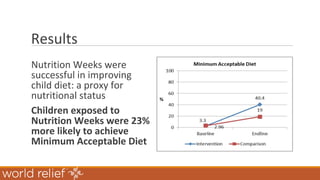
Nutrition Weeks were
successful in improving
child diet: a proxy for
nutritional status
Children exposed to
Nutrition Weeks were 23%
more likely to achieve
Minimum Acceptable Diet
Results: Dietary Diversity & Active Feeding
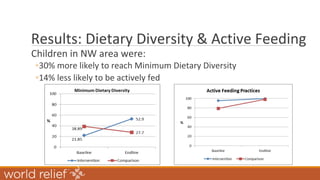
Children in NW area were:
◦30% more likely to reach Minimum Dietary Diversity
◦14% less likely to be actively fed
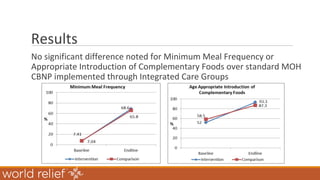
Results
No significant difference noted for Minimum Meal Frequency or
Appropriate Introduction of Complementary Foods over standard MOH
CBNP implemented through Integrated Care Groups
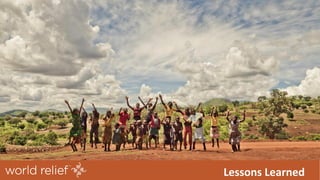
Lessons Learned
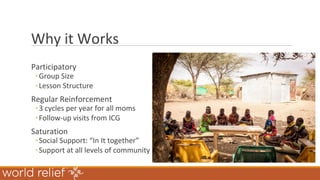
Why it Works
Participatory
◦Group Size
◦Lesson Structure
Regular Reinforcement
◦3 cycles per year for all moms
◦Follow-up visits from ICG
Saturation
◦Social Support: “In It together”
◦Support at all levels of community
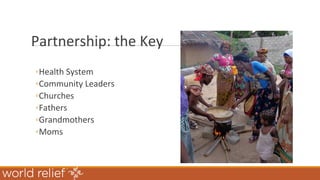
Partnership: the Key
◦Health System
◦Community Leaders
◦Churches
◦Fathers
◦Grandmothers
◦Moms
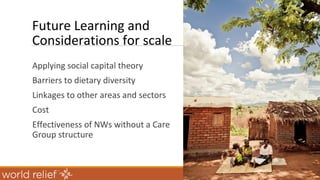
Future Learning and
Considerations for scale
Applying social capital theory
Barriers to dietary diversity
Linkages to other areas and sectors
Cost
Effectiveness of NWs without a Care
Group structure
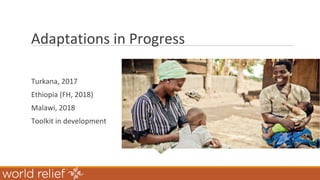
Adaptations in Progress
Turkana, 2017
Ethiopia (FH, 2018)
Malawi, 2018
Toolkit in development
worldrelief.org

World Relief Nutrition Weeks

  • 1.
    Community Based Stunting Prevention:the Case for Nutrition WeeksALLISON FLYNN, MPH PROGRAM ADVISOR, HEALTH & NUTRITION CCIH ANNUAL CONFERENCE, 2018
  • 2.
    Partnership Starts atthe Community Rwanda: Standard MOH CBNP brought movement on wasting but not chronic malnutrition ◦12.7% of primary school repetitions are associated with stunting ◦Annual cost of undernutrition: 11.5% of Rwanda’s GDP (CFSVA 2011) ◦Nyamagabe District: 53.5% stunting of children under 5 An issue of child care practices and illness, not just poverty or food security?
  • 3.
    Nutrition Weeks Innovation Preventstunting in the 1,000 Day window ◦ Rooted in Positive Deviance/Hearth model Tested in Tangiraneza “Start Well” Innovation Child Survival Project, 2012-15 Sessions led by Village Nutrition Committees ◦Training cascaded through health system and Integrated Care Groups (which included a religious leader) ◦Significant mobilization and logistical support from community leaders and churches
  • 4.
    Nutrition Weeks Innovation 10-15mothers (pregnant or with a child under 2) gather for a week of intensive, participatory nutrition learning focusing on key behaviors identified through formative research ◦Used diverse local foods to cook together daily and practice active feeding ◦Fathers and Grandmothers invited on specific days Initial community mobilization through community meetings Follow up and reinforcement through household visits by Integrated Care Group members
  • 5.
    Piloting the Approach Programimplemented from 2012-2015 as part of Tangiraneza “Start Well” Innovation Child Survival Project (USAID) ◦Nutrition Weeks tested in addition to Integrated Care Groups implementing Rwanda Community Based Nutrition Protocol in intervention and comparison areas NWs held 3 times per year in 283 villages (intervention area) 75.6% of mothers in intervention area participated in NWs
  • 6.
    Results Nutrition Weeks were successfulin improving child diet: a proxy for nutritional status Children exposed to Nutrition Weeks were 23% more likely to achieve Minimum Acceptable Diet
  • 7.
    Results: Dietary Diversity& Active Feeding Children in NW area were: ◦30% more likely to reach Minimum Dietary Diversity ◦14% less likely to be actively fed
  • 8.
    Results No significant differencenoted for Minimum Meal Frequency or Appropriate Introduction of Complementary Foods over standard MOH CBNP implemented through Integrated Care Groups
  • 9.
  • 10.
    Why it Works Participatory ◦GroupSize ◦Lesson Structure Regular Reinforcement ◦3 cycles per year for all moms ◦Follow-up visits from ICG Saturation ◦Social Support: “In It together” ◦Support at all levels of community
  • 11.
    Partnership: the Key ◦HealthSystem ◦Community Leaders ◦Churches ◦Fathers ◦Grandmothers ◦Moms
  • 12.
    Future Learning and Considerationsfor scale Applying social capital theory Barriers to dietary diversity Linkages to other areas and sectors Cost Effectiveness of NWs without a Care Group structure
  • 13.
    Adaptations in Progress Turkana,2017 Ethiopia (FH, 2018) Malawi, 2018 Toolkit in development
  • 14.