‘Active’ Partnership


Séamus Mullen
Pubic Health Agency
Outline

Partnership Working to achieve 2
 Programmes:
•   Active Families Programme
•   Health Promoting Homes
Future Direction:
•   Joint Working Arrangements
•   Developed by Western IFH Adulthood and Teenage
    Transition sub groups delivered by PHA/Local
    Councils/Community sector
•   University of Ulster Research – parallel problem
•   Role Modelling Methodology
•   12 week programme – must have parents and teenager
    involved


•   14 Active Families Trainers based in community setting
Pilot Phase:
•   Parents show positive shift in perceptions of their level
    of fitness
•   Young people:
    – Positive shift in morning eating habits/fruit consumption/water intake
    – More emotionally positive
    – Self-esteem raised

•   Strong correlation between parents reported behaviour
    and youths perceptions – understanding increased
    through programme
•   Year 2 changed method of engagement
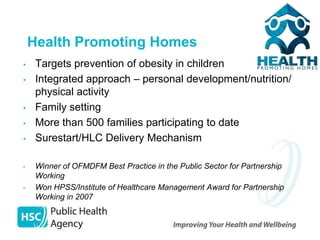
Health Promoting Homes
•    Targets prevention of obesity in children
•    Integrated approach – personal development/nutrition/
     physical activity
•    Family setting
•    More than 500 families participating to date
•    Surestart/HLC Delivery Mechanism

•    Winner of OFMDFM Best Practice in the Public Sector for Partnership
     Working
•    Won HPSS/Institute of Healthcare Management Award for Partnership
     Working in 2007
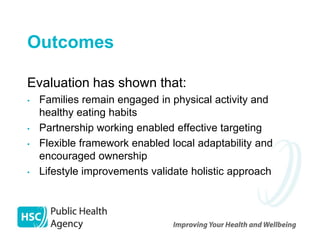
Outcomes

Evaluation has shown that:
•   Families remain engaged in physical activity and
    healthy eating habits
•   Partnership working enabled effective targeting
•   Flexible framework enabled local adaptability and
    encouraged ownership
•   Lifestyle improvements validate holistic approach
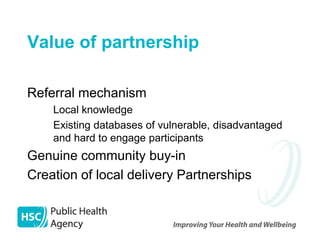
Value of partnership

Referral mechanism
  – Local knowledge
  – Existing databases of vulnerable, disadvantaged
    and hard to engage participants
Genuine community buy-in
Creation of local delivery Partnerships
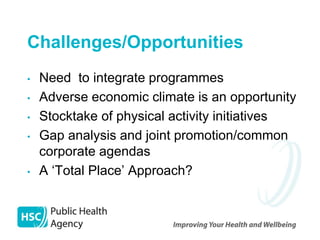
Challenges/Opportunities
•   Need to integrate programmes
•   Adverse economic climate is an opportunity
•   Stocktake of physical activity initiatives
•   Gap analysis and joint promotion/common
    corporate agendas
•   A ‘Total Place’ Approach?
Active Families Project - Mr seamus Mullen, Public Health Agency

Active Families Project - Mr seamus Mullen, Public Health Agency

  • 1.
  • 2.
    Outline Partnership Working toachieve 2 Programmes: • Active Families Programme • Health Promoting Homes Future Direction: • Joint Working Arrangements
  • 3.
    Developed by Western IFH Adulthood and Teenage Transition sub groups delivered by PHA/Local Councils/Community sector • University of Ulster Research – parallel problem • Role Modelling Methodology • 12 week programme – must have parents and teenager involved • 14 Active Families Trainers based in community setting
  • 4.
    Pilot Phase: • Parents show positive shift in perceptions of their level of fitness • Young people: – Positive shift in morning eating habits/fruit consumption/water intake – More emotionally positive – Self-esteem raised • Strong correlation between parents reported behaviour and youths perceptions – understanding increased through programme • Year 2 changed method of engagement
  • 5.
    Health Promoting Homes • Targets prevention of obesity in children • Integrated approach – personal development/nutrition/ physical activity • Family setting • More than 500 families participating to date • Surestart/HLC Delivery Mechanism • Winner of OFMDFM Best Practice in the Public Sector for Partnership Working • Won HPSS/Institute of Healthcare Management Award for Partnership Working in 2007
  • 6.
    Outcomes Evaluation has shownthat: • Families remain engaged in physical activity and healthy eating habits • Partnership working enabled effective targeting • Flexible framework enabled local adaptability and encouraged ownership • Lifestyle improvements validate holistic approach
  • 7.
    Value of partnership Referralmechanism – Local knowledge – Existing databases of vulnerable, disadvantaged and hard to engage participants Genuine community buy-in Creation of local delivery Partnerships
  • 8.
    Challenges/Opportunities • Need to integrate programmes • Adverse economic climate is an opportunity • Stocktake of physical activity initiatives • Gap analysis and joint promotion/common corporate agendas • A ‘Total Place’ Approach?