Welfare Catering
Welfare Catering
• The provision of food and beverages service to
people to fulfil a social obligation is known as
welfare catering.
• It includes catering in hospitals, schools, colleges,
staff canteens, armed forces and prisons.
• It is mainly about providing food at minimal costs.
• It does not serve the purpose of generating profit.
• It does not promote a lucrative food menu.
• Mostly follow a Cyclic Menu that is good enough to
fulfil the nutritional requirements of a human body.
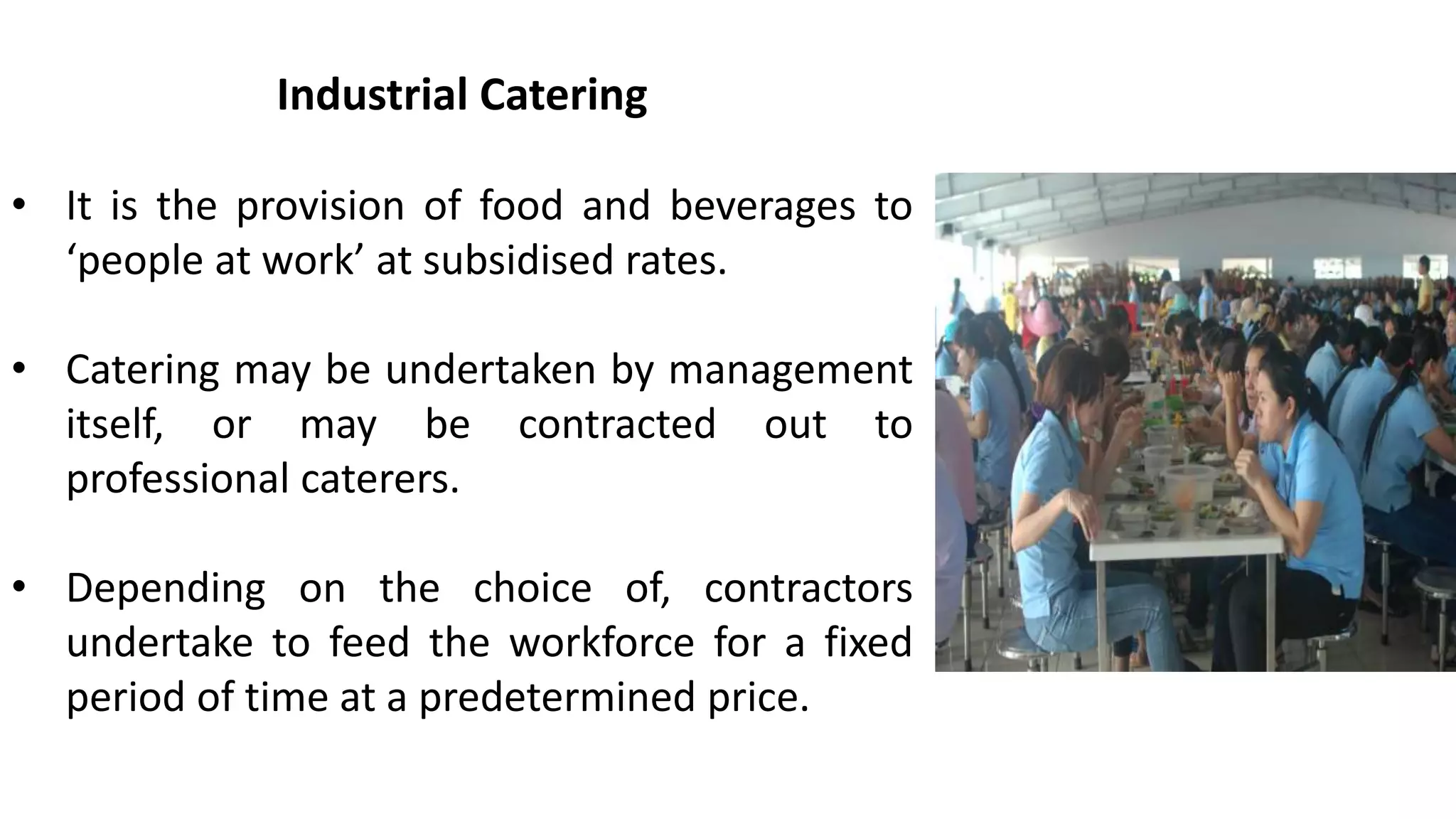
Industrial Catering
• It is the provision of food and beverages to
‘people at work’ at subsidised rates.
• Catering may be undertaken by management
itself, or may be contracted out to
professional caterers.
• Depending on the choice of, contractors
undertake to feed the workforce for a fixed
period of time at a predetermined price.
Institutional Catering
• The provision of food and beverages to students in
teaching institutions at highly subsidised rates is
called institutional catering.
• It is the responsibility of the institutes to provide a
balanced diet to their students.
• The concept is not to earn revenue but to serve
their own social responsibility.
• Catering may be undertaken by management itself,
or may be contracted out to professional caterers.
• The cyclic food menu is mostly based on the
seasonal availability of ingredients.
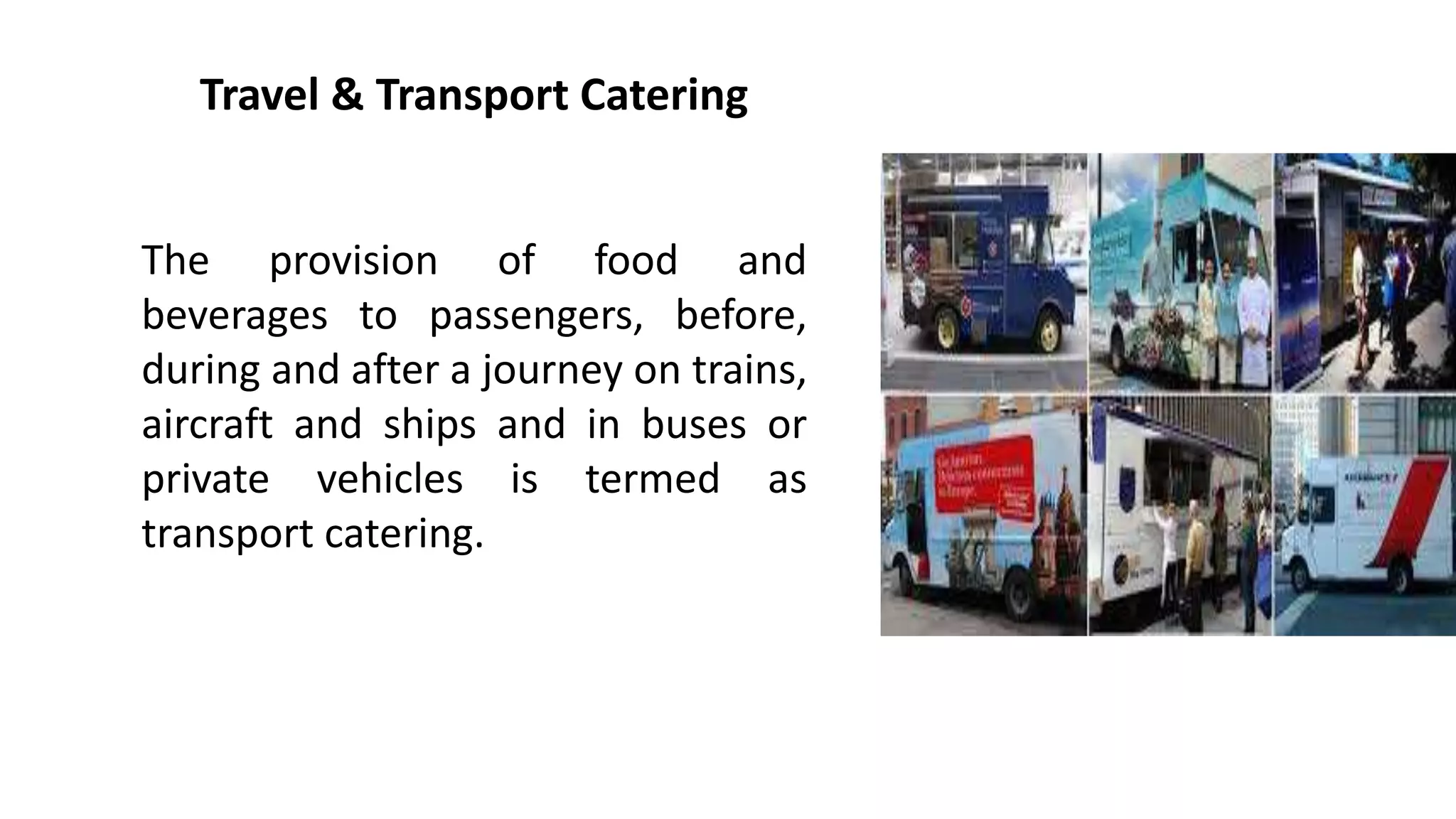
Travel & Transport Catering
The provision of food and
beverages to passengers, before,
during and after a journey on trains,
aircraft and ships and in buses or
private vehicles is termed as
transport catering.
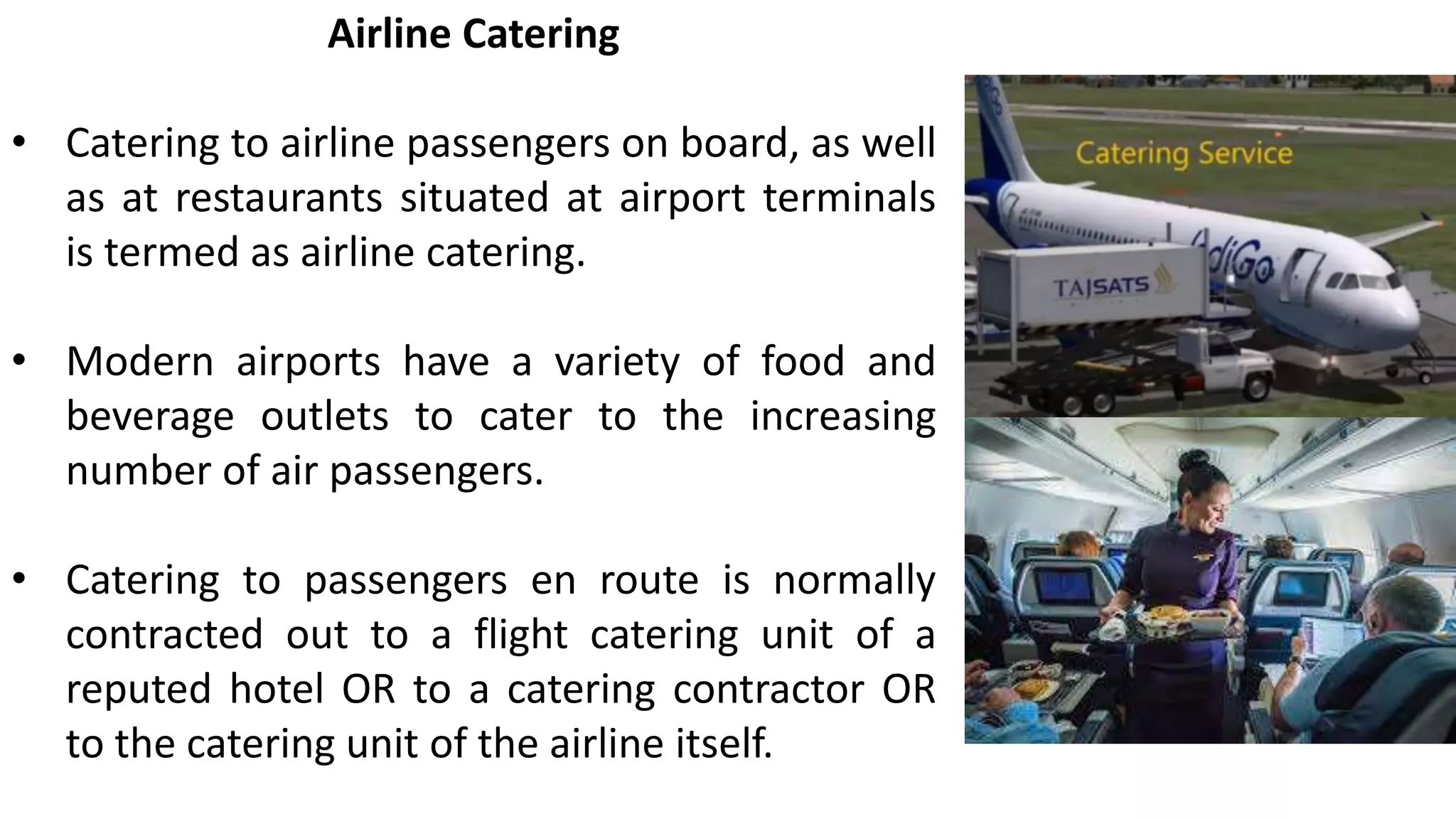
Airline Catering
• Catering to airline passengers on board, as well
as at restaurants situated at airport terminals
is termed as airline catering.
• Modern airports have a variety of food and
beverage outlets to cater to the increasing
number of air passengers.
• Catering to passengers en route is normally
contracted out to a flight catering unit of a
reputed hotel OR to a catering contractor OR
to the catering unit of the airline itself.
Railway Catering
• Catering to railway passengers both during
the journey as well as at railway stations is
called railway catering.
• Travelling by train for long distances can be
very tiring; hence the concept on-board meal
services helps to make the journey less
tedious.
• Luxury trains are also operated by IRCTC. Eg.
Palace on wheels and Maharaja Express
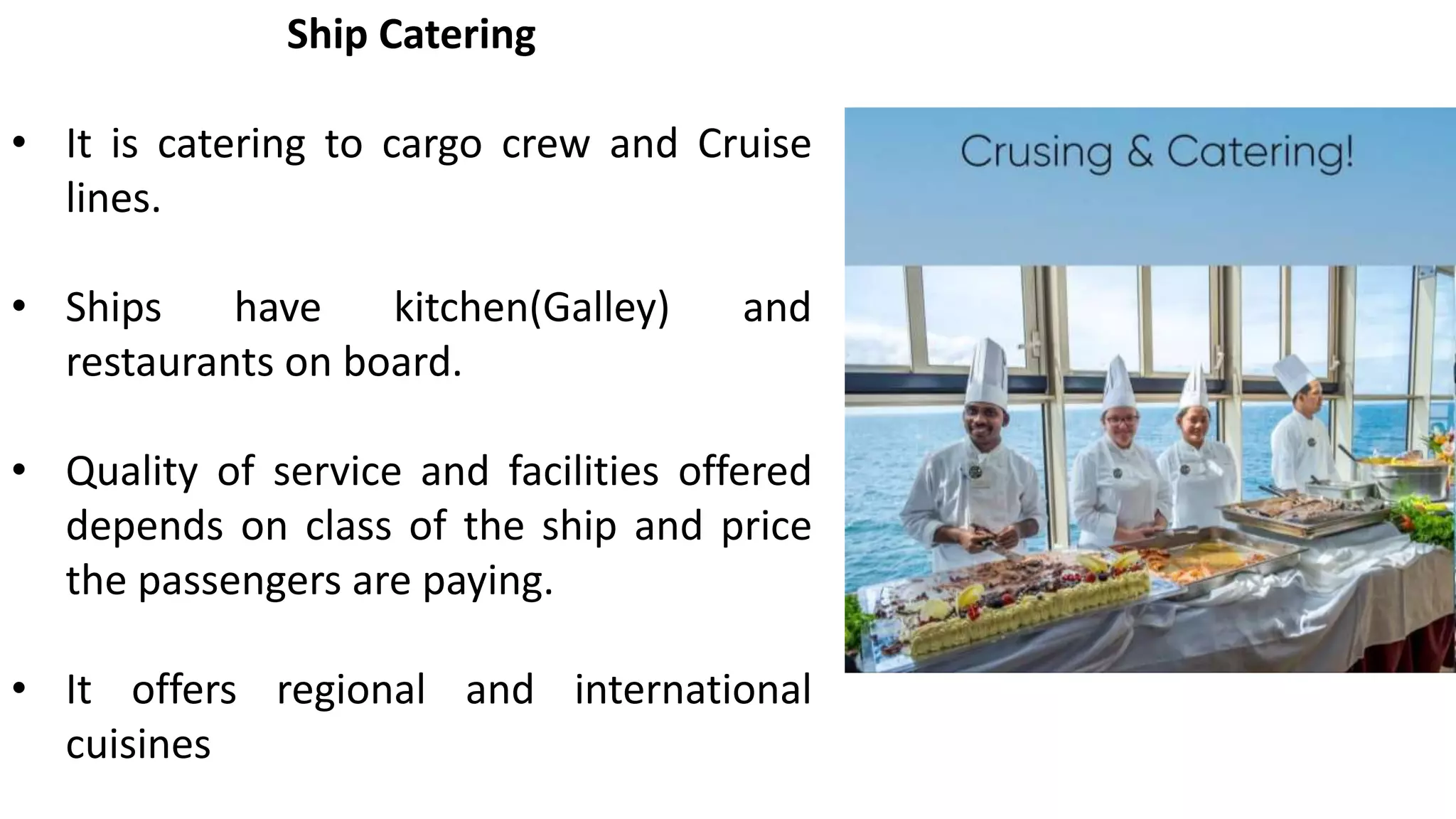
Ship Catering
• It is catering to cargo crew and Cruise
lines.
• Ships have kitchen(Galley) and
restaurants on board.
• Quality of service and facilities offered
depends on class of the ship and price
the passengers are paying.
• It offers regional and international
cuisines

Welfare catering

  • 1.
  • 2.
    Welfare Catering • Theprovision of food and beverages service to people to fulfil a social obligation is known as welfare catering. • It includes catering in hospitals, schools, colleges, staff canteens, armed forces and prisons. • It is mainly about providing food at minimal costs. • It does not serve the purpose of generating profit. • It does not promote a lucrative food menu. • Mostly follow a Cyclic Menu that is good enough to fulfil the nutritional requirements of a human body.
  • 3.
    Industrial Catering • Itis the provision of food and beverages to ‘people at work’ at subsidised rates. • Catering may be undertaken by management itself, or may be contracted out to professional caterers. • Depending on the choice of, contractors undertake to feed the workforce for a fixed period of time at a predetermined price.
  • 4.
    Institutional Catering • Theprovision of food and beverages to students in teaching institutions at highly subsidised rates is called institutional catering. • It is the responsibility of the institutes to provide a balanced diet to their students. • The concept is not to earn revenue but to serve their own social responsibility. • Catering may be undertaken by management itself, or may be contracted out to professional caterers. • The cyclic food menu is mostly based on the seasonal availability of ingredients.
  • 5.
    Travel & TransportCatering The provision of food and beverages to passengers, before, during and after a journey on trains, aircraft and ships and in buses or private vehicles is termed as transport catering.
  • 6.
    Airline Catering • Cateringto airline passengers on board, as well as at restaurants situated at airport terminals is termed as airline catering. • Modern airports have a variety of food and beverage outlets to cater to the increasing number of air passengers. • Catering to passengers en route is normally contracted out to a flight catering unit of a reputed hotel OR to a catering contractor OR to the catering unit of the airline itself.
  • 7.
    Railway Catering • Cateringto railway passengers both during the journey as well as at railway stations is called railway catering. • Travelling by train for long distances can be very tiring; hence the concept on-board meal services helps to make the journey less tedious. • Luxury trains are also operated by IRCTC. Eg. Palace on wheels and Maharaja Express
  • 8.
    Ship Catering • Itis catering to cargo crew and Cruise lines. • Ships have kitchen(Galley) and restaurants on board. • Quality of service and facilities offered depends on class of the ship and price the passengers are paying. • It offers regional and international cuisines