Participant Observation and Field Research
Key themesWhat is ethnography?AccessTypes of sites Key informantsWhat role to play?How to do itNew types of ethnography
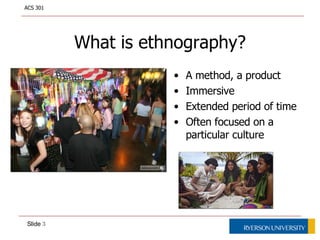
What is ethnography?A method, a productImmersiveExtended period of timeOften focused on a particular culture
What is Ethnography?What is ethnography?
Ethnographic skillsInterviewingObservingTypes of observationsOvert vs. covertEthical issuesCorporate ethnography case studiesNokiaNovo NordiskIntelPradaFamous Ethnographies
ObservingEthnographic skill No. 1Denver, CO: Scooters in local supermarket: represents shoppers’ need to avoid walking while shoppingToronto, Ontario: Intentional manipulation of corporate logo: symbolizes resistance.
InterviewingEthnographic Skill No. 2Or in a “foreign” cultureCan happen in a workplace “culture”
Overt versus covertTypes of observationOvertCovertEthnographer informs participants of their study and is transparent about research.Ethnography does not inform participants of the study and must balance ethical issue of deception.
Ethical implicationsInformed consentProtection of privacyHarm to participantsDeception
Great ethnographiesCrestwood Heights, John Seeley: classic study of what is now known to be Toronto’s Forest Hill neighbourhoodAll of Our Kin: Carol Stack’s nuanced study of African American women’s intertwined livesStreet Corner Society: William Foote Whyte’s “Chicago school” of urban ethnographyLearning to Labour: Paul Willis’s study of working class British boys becoming working class men
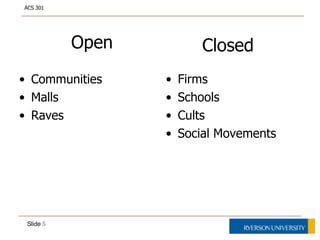
Gaining access to closed sitesOpenCommunitiesMallsRavesClosedFirmsSchoolsHospitalsNeed permission and introductions from a gatekeeperNo permission required, but must be accepted by the group. Go through gatekeepers.
Case studiesCorporate EthnographyResearched how consumers in developing countries deal with diabetes. Uncovered unmet needs in diabetes treatmentEthnography in Asia and Africa lead to “image only” cell phone design with long battery lifeEmploys 24 full-time ethnographers to research computer use in the home, at work, and in the mobile space
Case Study: Prada shoppingCorporate EthnographyEmbedded RFID tags in clothes so shoppers can easily find complete outfitsCreated frosted glass doors for changing rooms that turn to windows at the touch of a buttonMirrors have a 5-second delay allowing shoppers to see the view from behind
OpenClosedCommunitiesMallsRavesFirms
Schools
Cults
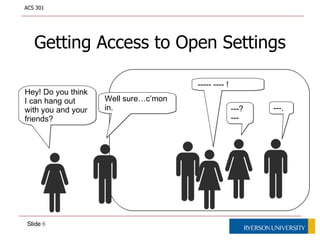
Social MovementsGetting Access to Open Settings----- ---- !Hey! Do you think I can hang out with you and your friends?Well sure…c’mon in.---.---? ---
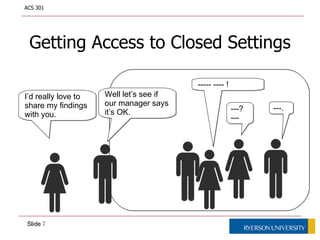
Getting Access to Closed Settings----- ---- !Well let’s see if our manager says it’s OK.I’d really love to share my findings with you.---.---? ---
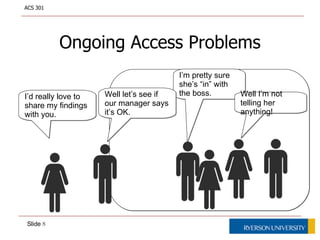
Ongoing Access ProblemsI’m pretty sure she’s “in” with the boss.Well I’m not telling her anything!Well let’s see if our manager says it’s OK.I’d really love to share my findings with you.
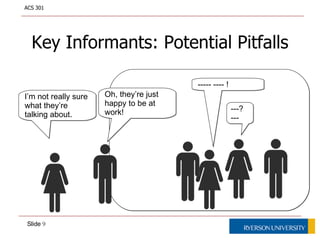
Key Informants: Potential PitfallsYou often hear only the key informants’ point of view.Oh, they’re just happy to be at work!I’m not really sure what they’re talking about.---? -------- ---- !
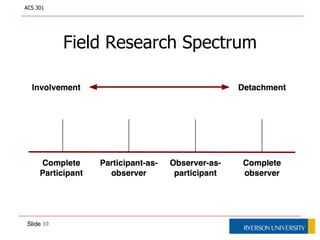
Field Research Spectrum
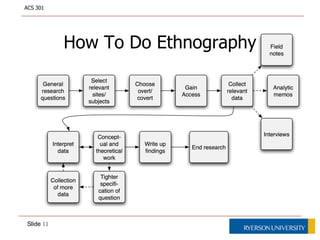
How To Do Ethnography
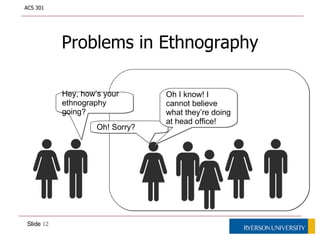
Problems in Ethnography“Going native” is identifying with your participants and ceasing to be a “researcher.”Oh I know! I cannot believe what they’re doing at head office!Hey, how’s your ethnography going?Oh! Sorry?
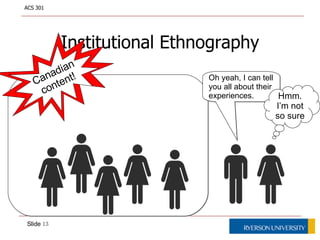
Oh yeah, I can tell you all about their experiences. Hmm. I’m not so sureInstitutional EthnographyCanadian content!
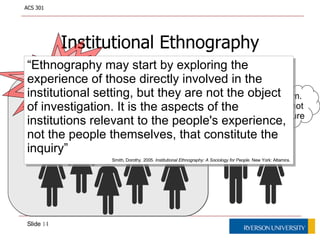
Oh yeah, I can tell you all about their experiences. Hmm. I’m not so sureInstitutional EthnographyCanadian content!“Ethnography may start by exploring the experience of those directly involved in the institutional setting, but they are not the object of investigation. It is the aspects of the institutions relevant to the people's experience, not the people themselves, that constitute the inquiry”Smith, Dorothy. 2005. Institutional Ethnography: A Sociology for People. New York: Altamira.

How To Do Ethnography and Field Research

  • 1.
  • 2.
    Key themesWhat isethnography?AccessTypes of sites Key informantsWhat role to play?How to do itNew types of ethnography
  • 3.
    What is ethnography?Amethod, a productImmersiveExtended period of timeOften focused on a particular culture
  • 4.
  • 5.
    Ethnographic skillsInterviewingObservingTypes ofobservationsOvert vs. covertEthical issuesCorporate ethnography case studiesNokiaNovo NordiskIntelPradaFamous Ethnographies
  • 6.
    ObservingEthnographic skill No.1Denver, CO: Scooters in local supermarket: represents shoppers’ need to avoid walking while shoppingToronto, Ontario: Intentional manipulation of corporate logo: symbolizes resistance.
  • 7.
    InterviewingEthnographic Skill No.2Or in a “foreign” cultureCan happen in a workplace “culture”
  • 8.
    Overt versus covertTypesof observationOvertCovertEthnographer informs participants of their study and is transparent about research.Ethnography does not inform participants of the study and must balance ethical issue of deception.
  • 9.
    Ethical implicationsInformed consentProtectionof privacyHarm to participantsDeception
  • 10.
    Great ethnographiesCrestwood Heights,John Seeley: classic study of what is now known to be Toronto’s Forest Hill neighbourhoodAll of Our Kin: Carol Stack’s nuanced study of African American women’s intertwined livesStreet Corner Society: William Foote Whyte’s “Chicago school” of urban ethnographyLearning to Labour: Paul Willis’s study of working class British boys becoming working class men
  • 11.
    Gaining access toclosed sitesOpenCommunitiesMallsRavesClosedFirmsSchoolsHospitalsNeed permission and introductions from a gatekeeperNo permission required, but must be accepted by the group. Go through gatekeepers.
  • 12.
    Case studiesCorporate EthnographyResearchedhow consumers in developing countries deal with diabetes. Uncovered unmet needs in diabetes treatmentEthnography in Asia and Africa lead to “image only” cell phone design with long battery lifeEmploys 24 full-time ethnographers to research computer use in the home, at work, and in the mobile space
  • 13.
    Case Study: PradashoppingCorporate EthnographyEmbedded RFID tags in clothes so shoppers can easily find complete outfitsCreated frosted glass doors for changing rooms that turn to windows at the touch of a buttonMirrors have a 5-second delay allowing shoppers to see the view from behind
  • 14.
  • 15.
  • 16.
  • 17.
    Social MovementsGetting Accessto Open Settings----- ---- !Hey! Do you think I can hang out with you and your friends?Well sure…c’mon in.---.---? ---
  • 18.
    Getting Access toClosed Settings----- ---- !Well let’s see if our manager says it’s OK.I’d really love to share my findings with you.---.---? ---
  • 19.
    Ongoing Access ProblemsI’mpretty sure she’s “in” with the boss.Well I’m not telling her anything!Well let’s see if our manager says it’s OK.I’d really love to share my findings with you.
  • 20.
    Key Informants: PotentialPitfallsYou often hear only the key informants’ point of view.Oh, they’re just happy to be at work!I’m not really sure what they’re talking about.---? -------- ---- !
  • 21.
  • 22.
    How To DoEthnography
  • 23.
    Problems in Ethnography“Goingnative” is identifying with your participants and ceasing to be a “researcher.”Oh I know! I cannot believe what they’re doing at head office!Hey, how’s your ethnography going?Oh! Sorry?
  • 24.
    Oh yeah, Ican tell you all about their experiences. Hmm. I’m not so sureInstitutional EthnographyCanadian content!
  • 25.
    Oh yeah, Ican tell you all about their experiences. Hmm. I’m not so sureInstitutional EthnographyCanadian content!“Ethnography may start by exploring the experience of those directly involved in the institutional setting, but they are not the object of investigation. It is the aspects of the institutions relevant to the people's experience, not the people themselves, that constitute the inquiry”Smith, Dorothy. 2005. Institutional Ethnography: A Sociology for People. New York: Altamira.
  • 26.
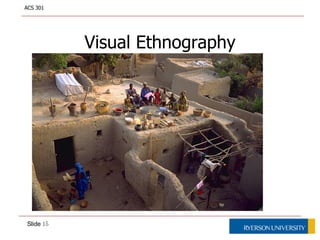
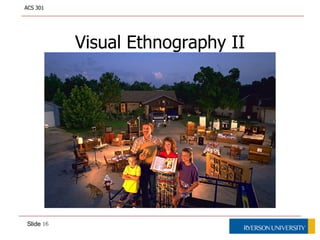
    Visual EthnographyDocumenting participants’lives using photography or video.
  • 27.
  • 28.
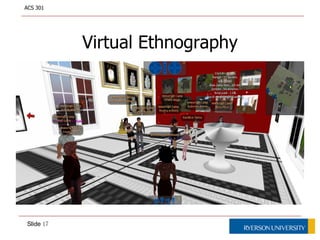
    Virtual EthnographyParticipate virtuallyin an online “place.” SeeHine, Christine. 2000. Virtual Ethnography. London: Sage.