
![WG SOCIAL LEARNING Computer and Information Services Graz University of Technology Martin Ebner [email_address]](https://image.slidesharecdn.com/web-20-technology-future-interfaces-for-technology-enhanced-learning2480/85/Web-2-0-Technology-Future-Interfaces-for-Technology-Enhanced-Learning-19-320.jpg)

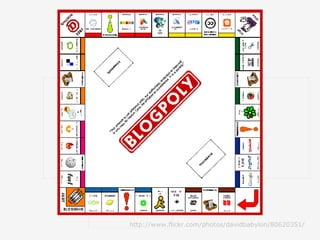
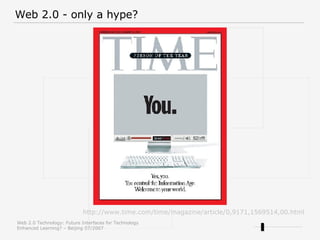
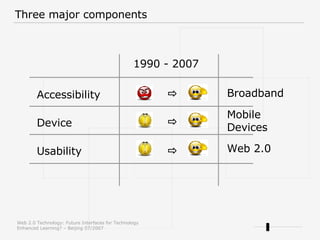
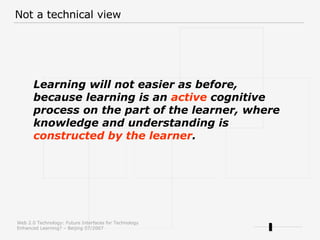
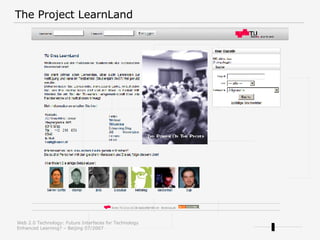
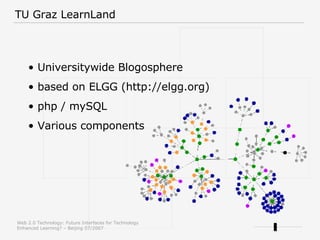
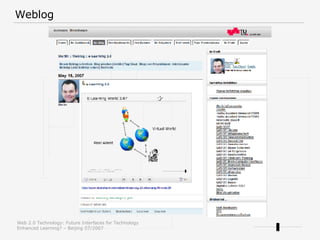
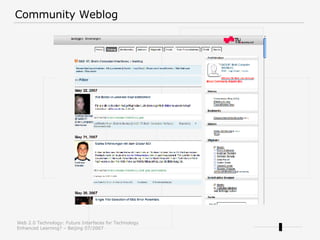
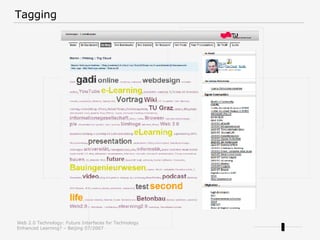
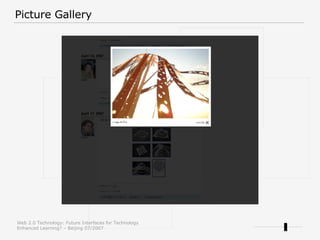
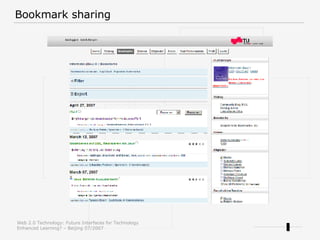
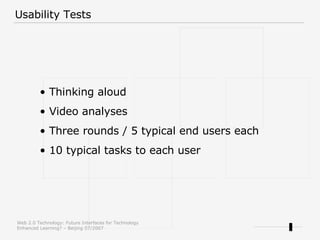
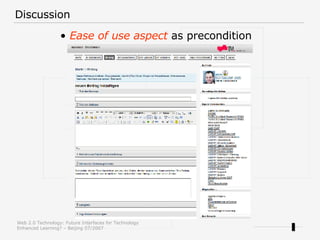
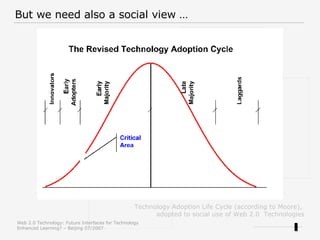
The document discusses the potential of Web 2.0 technologies to enhance technology-enabled learning. It presents three major components that will influence this: accessibility due to broadband and mobile devices, usability improvements to devices from 1990-2007, and the rise of Web 2.0. The author cautions that learning will still require active cognitive effort from learners and describes a project called LearnLand that uses Web 2.0 tools like weblogs, tagging, and sharing to create a university-wide blogosphere for social learning. Usability testing was conducted and showed that ease of use is important though a social view is also needed to understand technology adoption.


![ReDesign your lecture Canvas [eng]](https://cdn.slidesharecdn.com/ss_thumbnails/redesigncanvas14102020en-201101164407-thumbnail.jpg?width=640&height=640&fit=bounds)
![ReDesign your lecture Canvas [de]](https://cdn.slidesharecdn.com/ss_thumbnails/redesigncanvas14102020de-201101164130-thumbnail.jpg?width=640&height=640&fit=bounds)
![MOOC-Maker Canvas [eng]](https://cdn.slidesharecdn.com/ss_thumbnails/14102020mooc-makercanvasen-201101163251-thumbnail.jpg?width=640&height=640&fit=bounds)
![MOOC-Maker Canvas [de]](https://cdn.slidesharecdn.com/ss_thumbnails/14102020mooc-makercanvasde-201101162419-thumbnail.jpg?width=640&height=640&fit=bounds)


