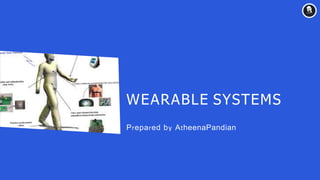
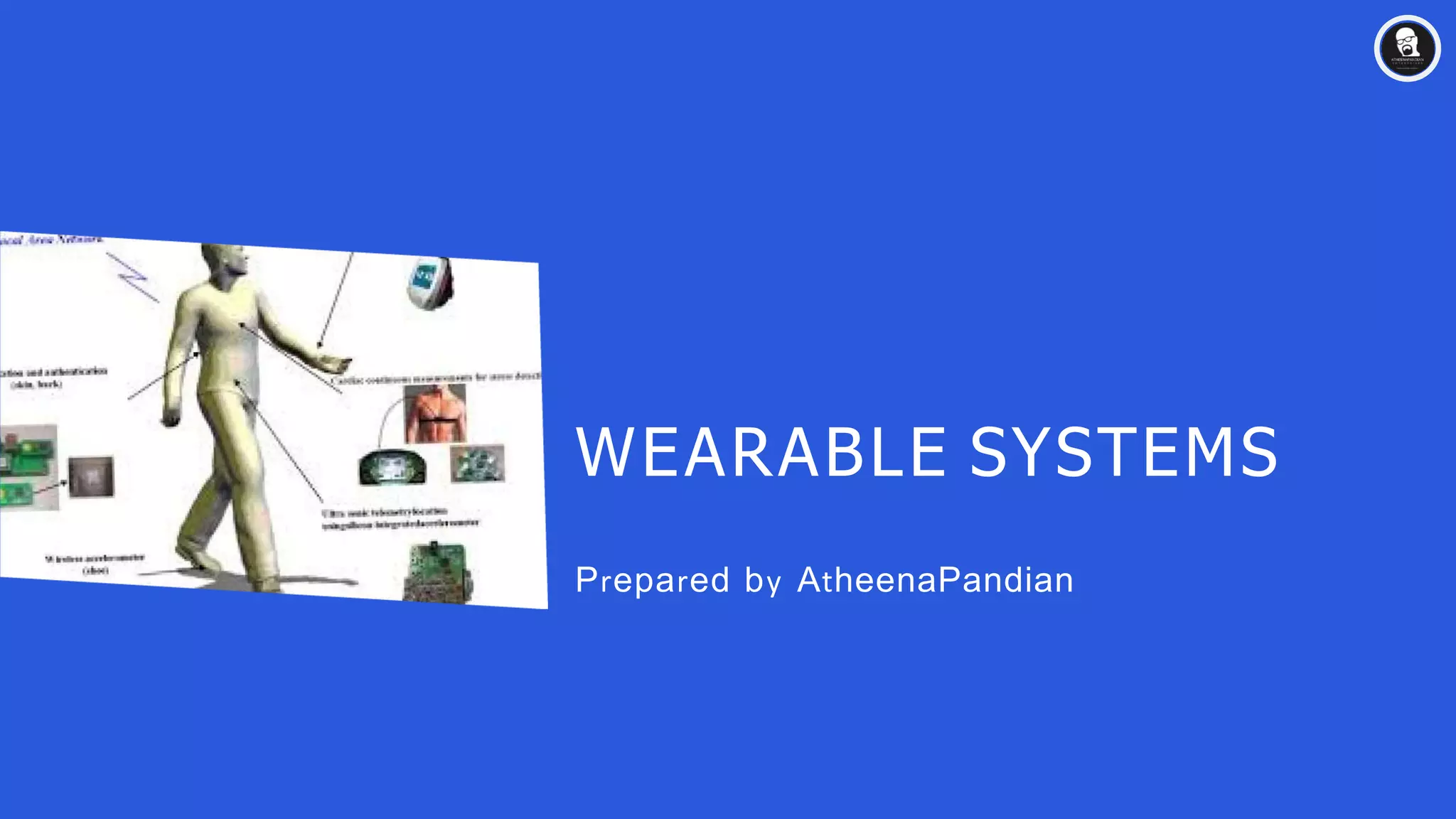

WEARABLE SYSTEMS
Prepared by AtheenaPandian
1. What is Sensor?
2. What is Wearable devices
3. Need for wearable systems
Unit 1
Sensors
What is
Sensor
?
A sensor is a device that
detects and responds to
some type of input from the
physical environment. The
specific input could be light,
heat, motion, moisture,
pressure, or any one of a
great number of other
environmental phenomena.
Every sensor has different principle of operation, based on
the type of physical quantity it is measuring. The idea is to
create a change in the property/properties
of sensor (such as resistance, density, shape, temperature
etc) as a function of the physical quantity under
measurement.
Principle of Sensor
Different types of sensors
1. Temperature Sensor
2. Proximity Sensor
3. Accelerometer
4. IR Sensor (Infrared Sensor)Pressure Sensor
5. Light Sensor
6. Ultrasonic Sensor
7. Smoke, Gas and Alcohol Sensor etc......
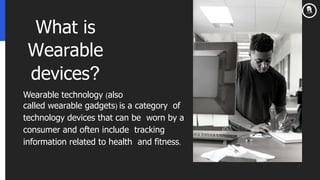
Wearable technology (also
called wearable gadgets) is a category of
technology devices that can be worn by a
consumer and often include tracking
information related to health and fitness.
What is
Wearable
devices?
How this wearable
device works?
Sensors can also be attached around a wearable
device to allow them to monitor various activity in the
area. Most sensors can track motion, brain activity,
heart activity, and muscle activity.
Miniature computers are also inside some wearable
devices, similar to how smartphones have miniature
processors inside of them.
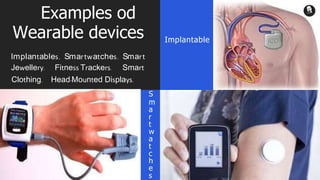
Examples od
Wearable devices
Implantables. Smartwatches. Smart
Jewellery.
Clothing.
Fitness Trackers. Smart
Head-Mounted Displays.
Implantable
Private
Headquarters
Presentations are communication tools
that can be used as demonstrations.
S
m
a
r
t
w
a
t
c
h
e
s
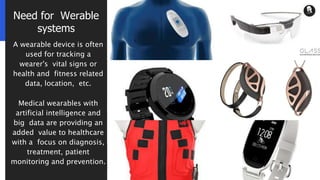
Need for Werable
systems
A wearable device is often
used for tracking a
wearer's vital signs or
health and fitness related
data, location, etc.
Medical wearables with
artificial intelligence and
big data are providing an
added value to healthcare
with a focus on diagnosis,
treatment, patient
monitoring and prevention.
Need for Wearable
systems To diagnose, monitor and
prevent future illnesses,
healthcare professionals now
routinely use wearable
devices such as fitness trackers
or phones. By monitoring
physiological data and behavior,
these devices boost self-
awareness and encourage
behavior change.
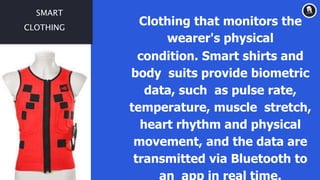
SMART
CLOTHING
Clothing that monitors the
wearer's physical
condition. Smart shirts and
body suits provide biometric
data, such as pulse rate,
temperature, muscle stretch,
heart rhythm and physical
movement, and the data are
transmitted via Bluetooth to
an app in real time.
A T H E E N A P A N D I A N
T h a n k y o u

Wearable system introduction (2)

  • 1.
  • 2.
    1. What isSensor? 2. What is Wearable devices 3. Need for wearable systems Unit 1 Sensors
  • 3.
    What is Sensor ? A sensoris a device that detects and responds to some type of input from the physical environment. The specific input could be light, heat, motion, moisture, pressure, or any one of a great number of other environmental phenomena.
  • 4.
    Every sensor hasdifferent principle of operation, based on the type of physical quantity it is measuring. The idea is to create a change in the property/properties of sensor (such as resistance, density, shape, temperature etc) as a function of the physical quantity under measurement. Principle of Sensor
  • 5.
    Different types ofsensors 1. Temperature Sensor 2. Proximity Sensor 3. Accelerometer 4. IR Sensor (Infrared Sensor)Pressure Sensor 5. Light Sensor 6. Ultrasonic Sensor 7. Smoke, Gas and Alcohol Sensor etc......
  • 6.
    Wearable technology (also calledwearable gadgets) is a category of technology devices that can be worn by a consumer and often include tracking information related to health and fitness. What is Wearable devices?
  • 7.
    How this wearable deviceworks? Sensors can also be attached around a wearable device to allow them to monitor various activity in the area. Most sensors can track motion, brain activity, heart activity, and muscle activity. Miniature computers are also inside some wearable devices, similar to how smartphones have miniature processors inside of them.
  • 8.
    Examples od Wearable devices Implantables.Smartwatches. Smart Jewellery. Clothing. Fitness Trackers. Smart Head-Mounted Displays. Implantable Private Headquarters Presentations are communication tools that can be used as demonstrations. S m a r t w a t c h e s
  • 9.
    Need for Werable systems Awearable device is often used for tracking a wearer's vital signs or health and fitness related data, location, etc. Medical wearables with artificial intelligence and big data are providing an added value to healthcare with a focus on diagnosis, treatment, patient monitoring and prevention.
  • 10.
    Need for Wearable systemsTo diagnose, monitor and prevent future illnesses, healthcare professionals now routinely use wearable devices such as fitness trackers or phones. By monitoring physiological data and behavior, these devices boost self- awareness and encourage behavior change.
  • 11.
    SMART CLOTHING Clothing that monitorsthe wearer's physical condition. Smart shirts and body suits provide biometric data, such as pulse rate, temperature, muscle stretch, heart rhythm and physical movement, and the data are transmitted via Bluetooth to an app in real time.
  • 12.
    A T HE E N A P A N D I A N T h a n k y o u