WEARABLE BIOSENSORS H.S.RAJU
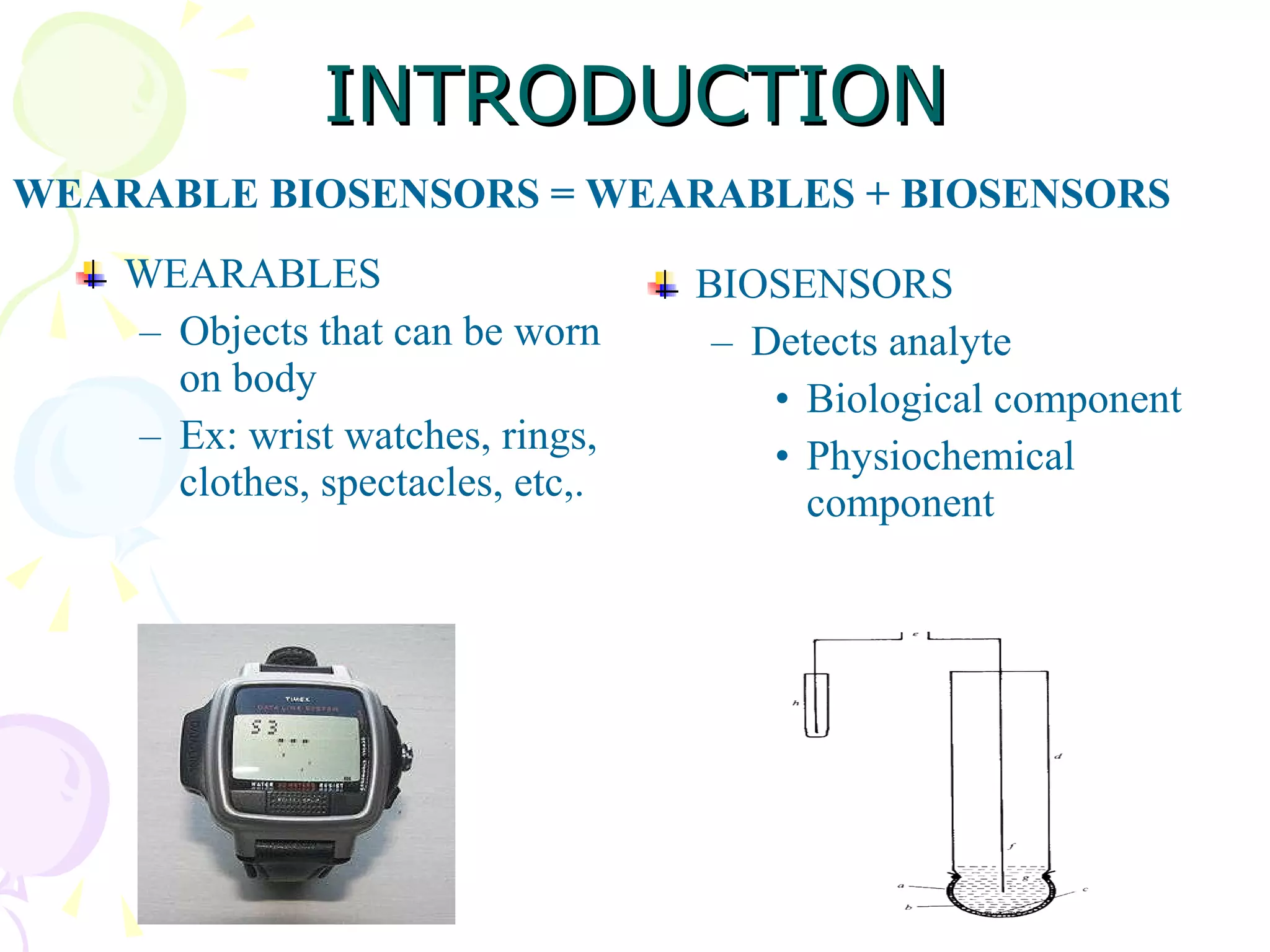
INTRODUCTION WEARABLES Objects that can be worn on body Ex: wrist watches, rings, clothes, spectacles, etc,. BIOSENSORS Detects analyte Biological component Physiochemical component WEARABLE BIOSENSORS = WEARABLES + BIOSENSORS
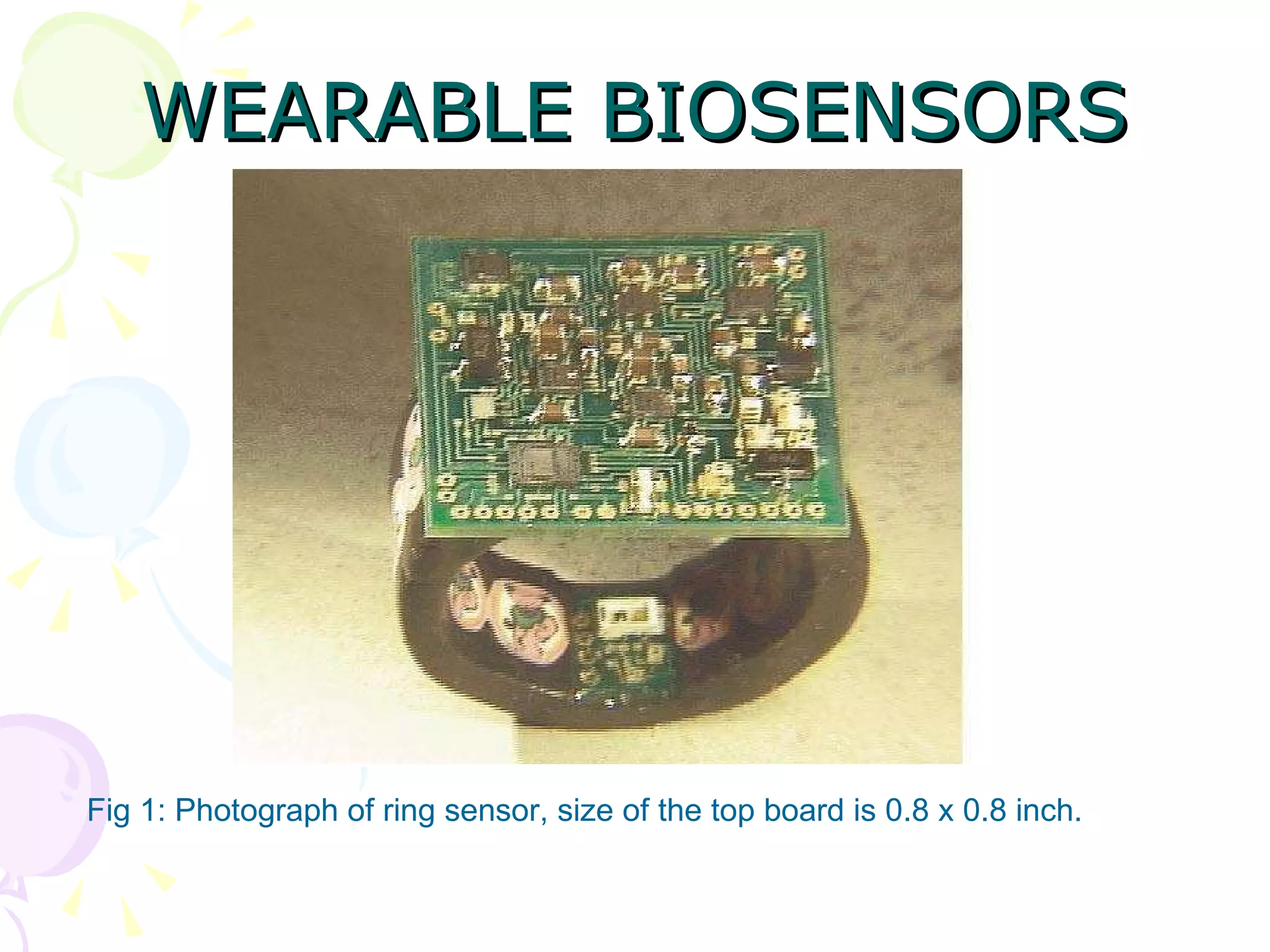
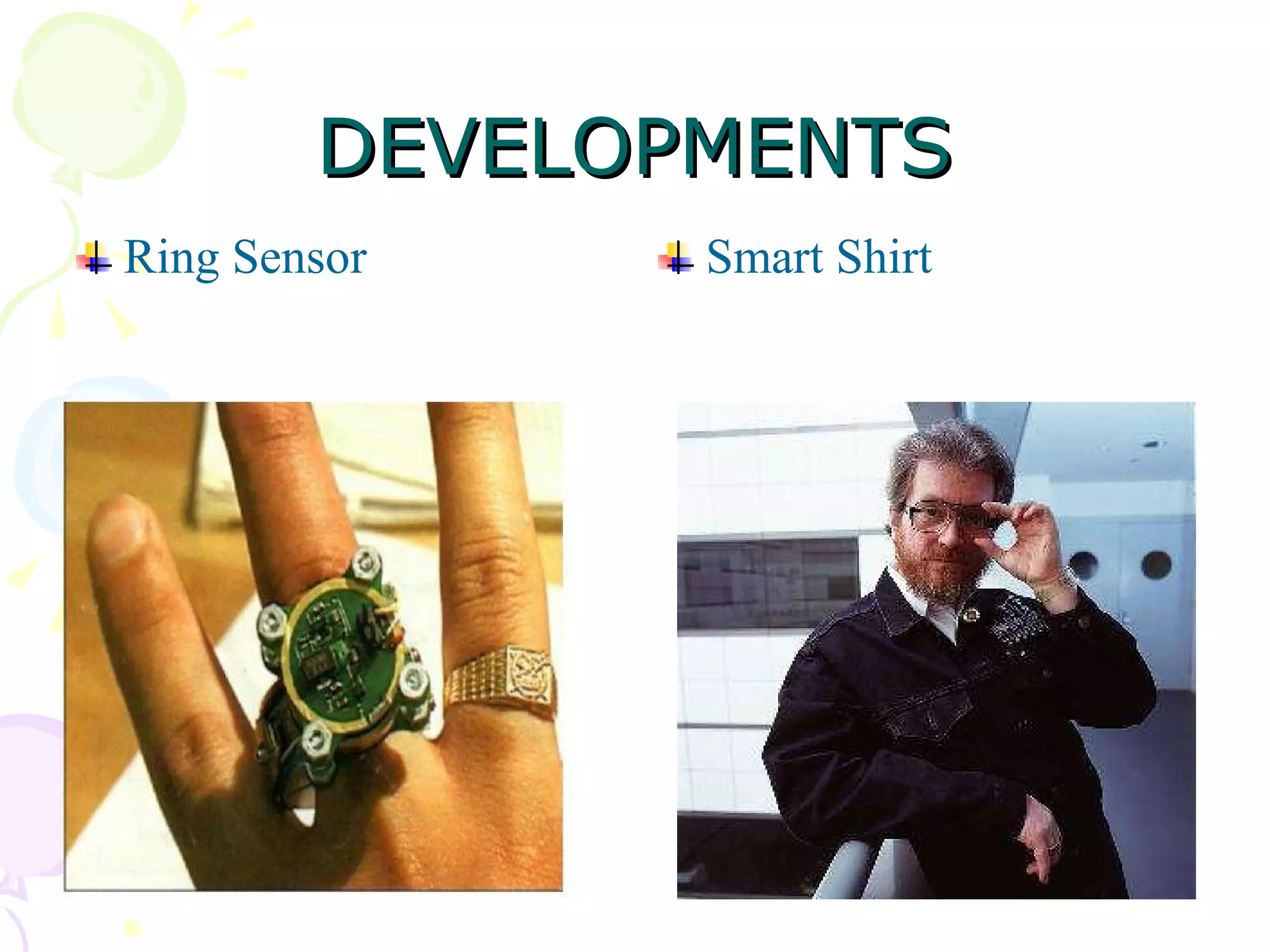
WEARABLE BIOSENSORS Fig 1: Photograph of ring sensor, size of the top board is 0.8 x 0.8 inch.
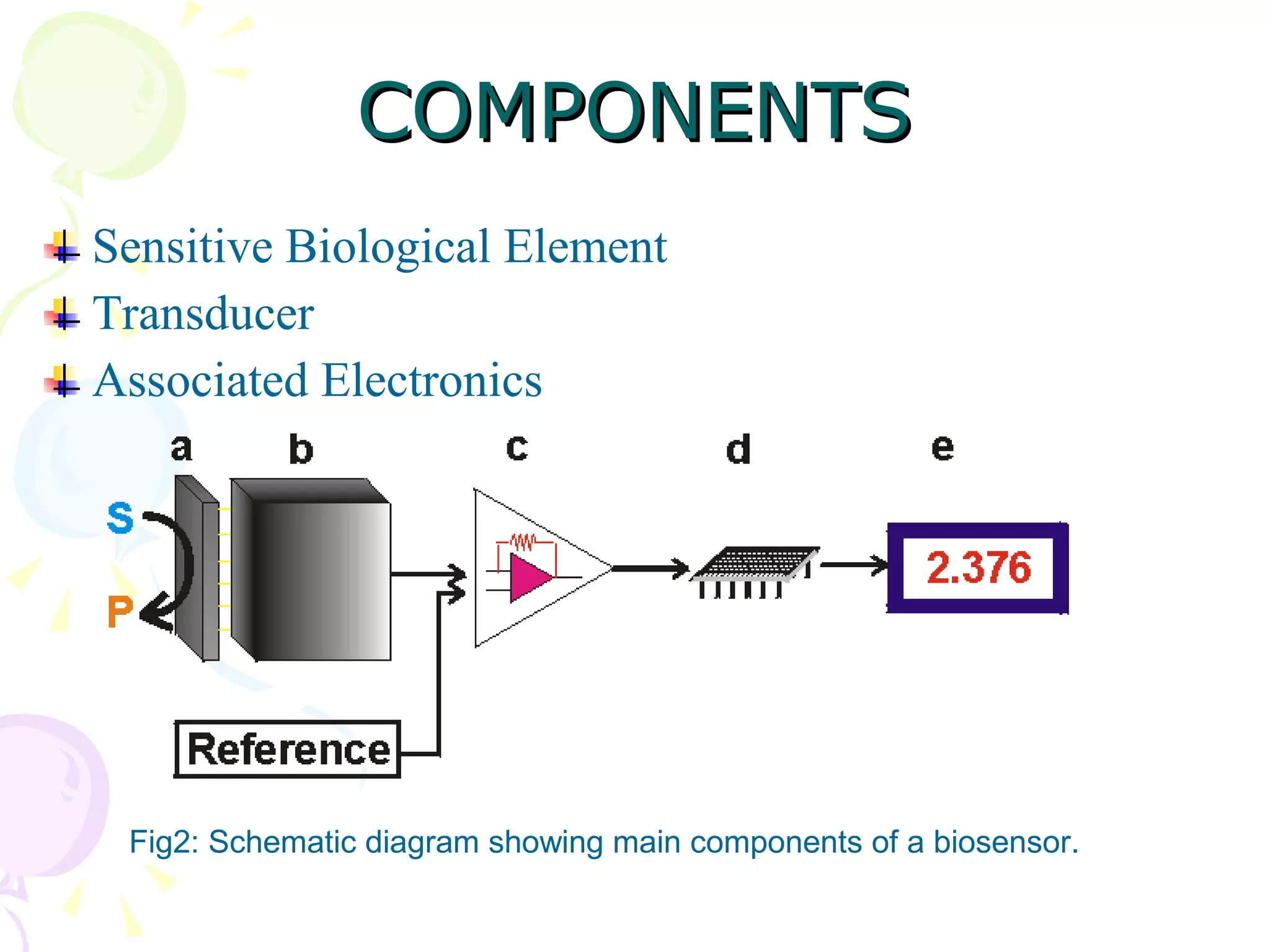
COMPONENTS Sensitive Biological Element Transducer  Associated Electronics Fig2: Schematic diagram showing main components of a biosensor.
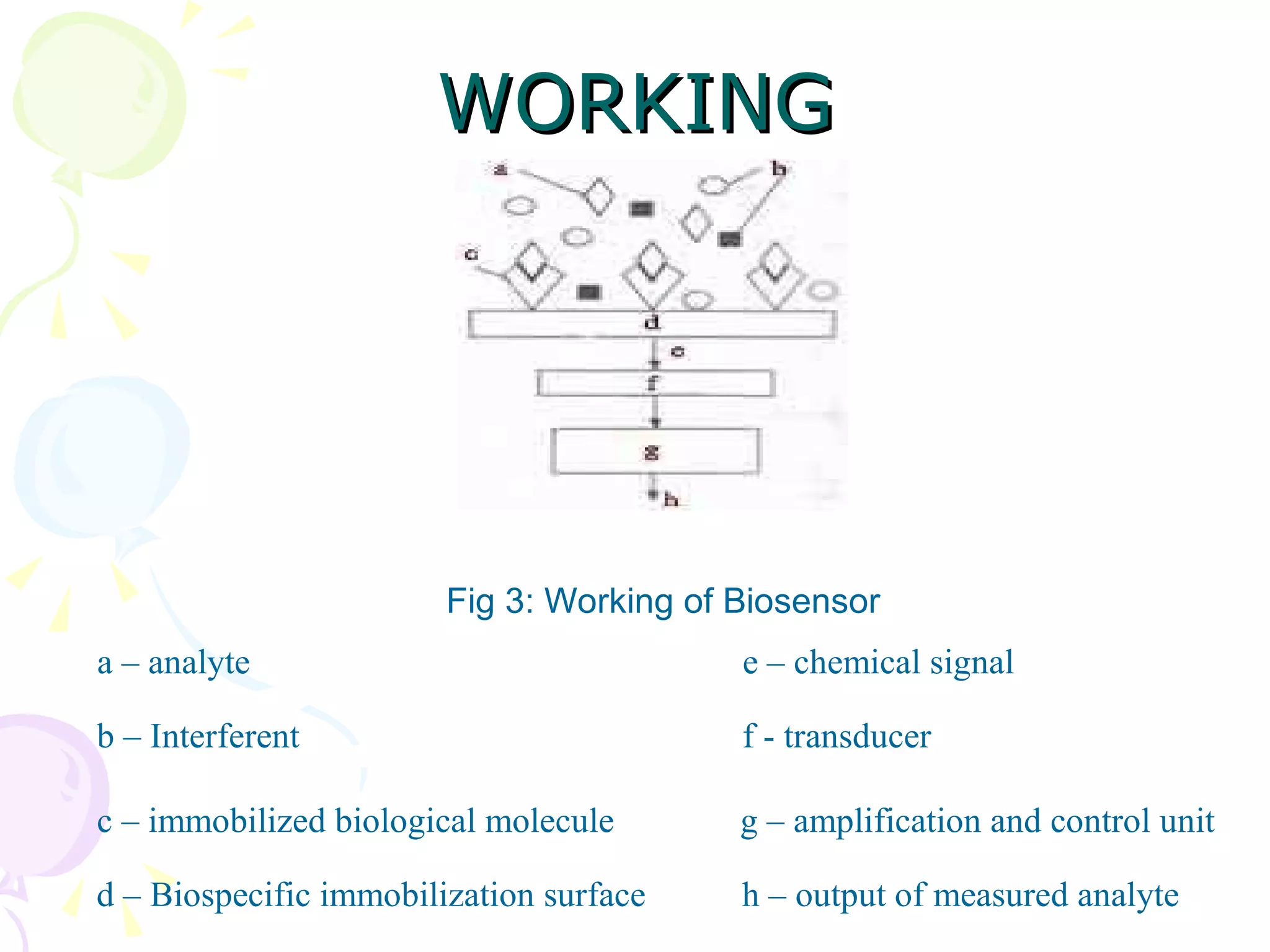
WORKING Fig 3: Working of Biosensor a – analyte b – Interferent c – immobilized biological molecule d – Biospecific immobilization surface e – chemical signal f - transducer g – amplification and control unit h – output of measured analyte
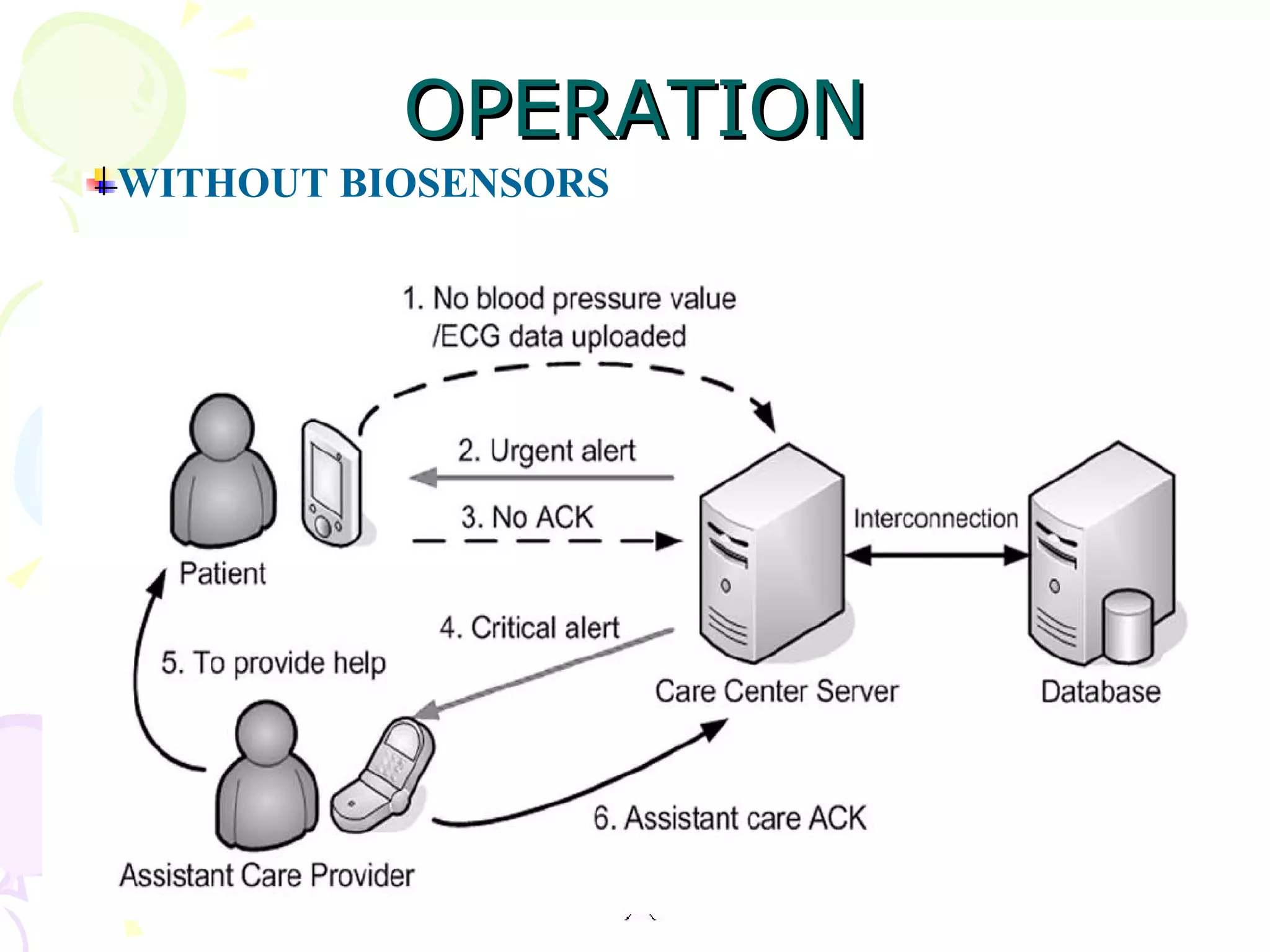
OPERATION WITHOUT BIOSENSORS
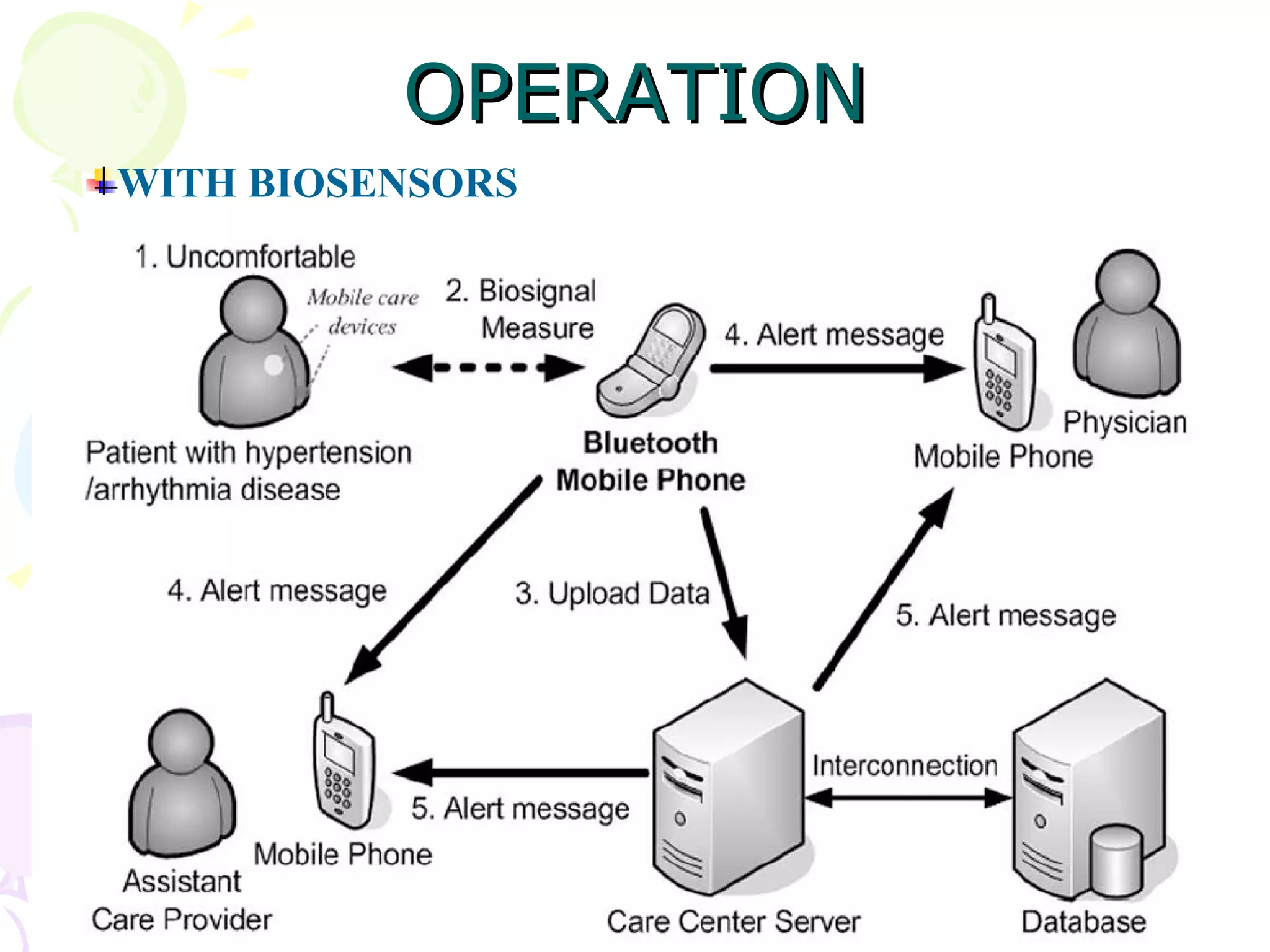
OPERATION WITH BIOSENSORS
TYPES OF BIOSENSORS Calorimetric biosensors Potentiometric biosensors Amperometric biosensors Optical biosensors Piezo-electric biosensors Immunosensors
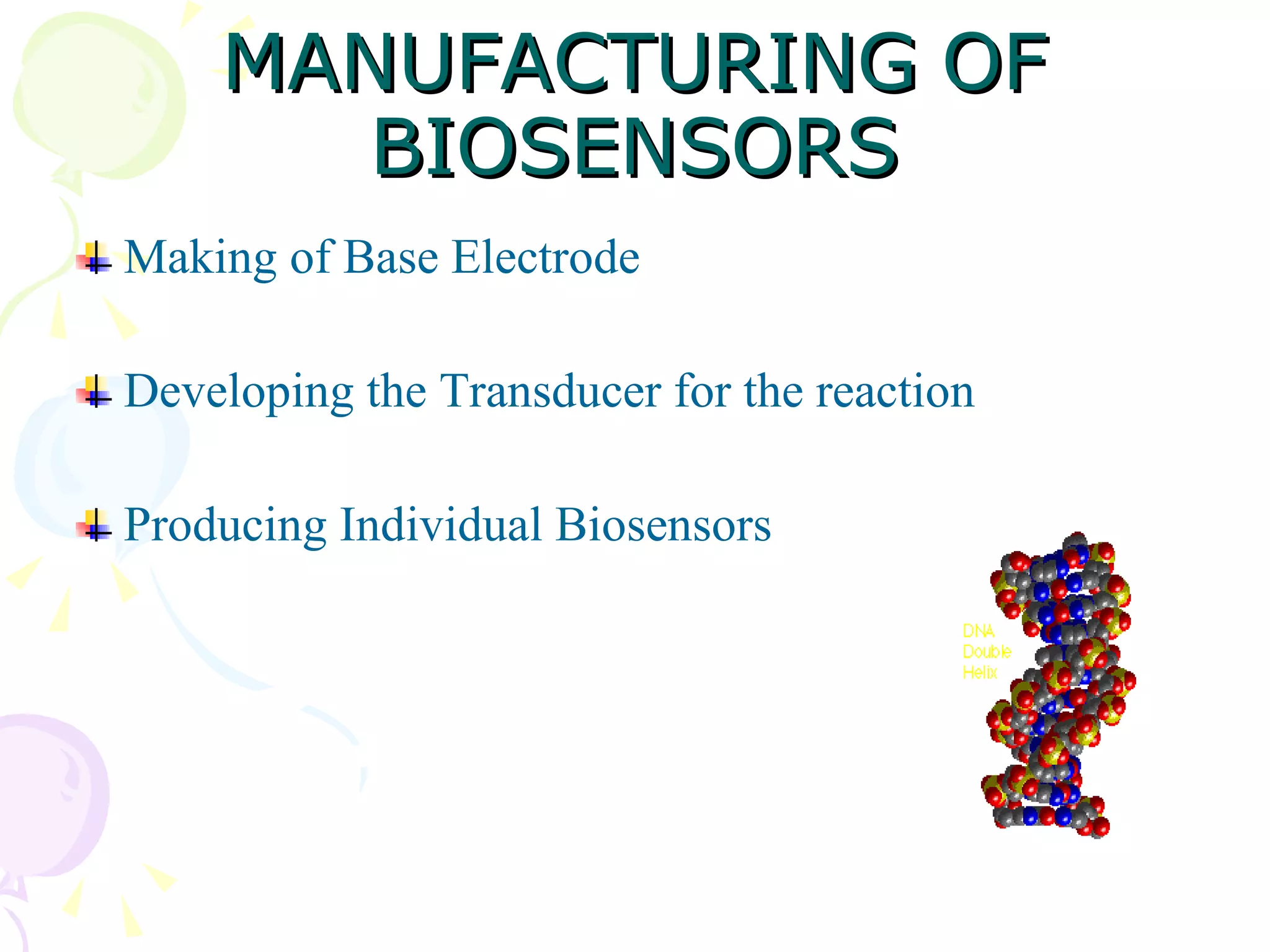
MANUFACTURING   OF BIOSENSORS Making of Base Electrode Developing the Transducer for the reaction Producing Individual Biosensors
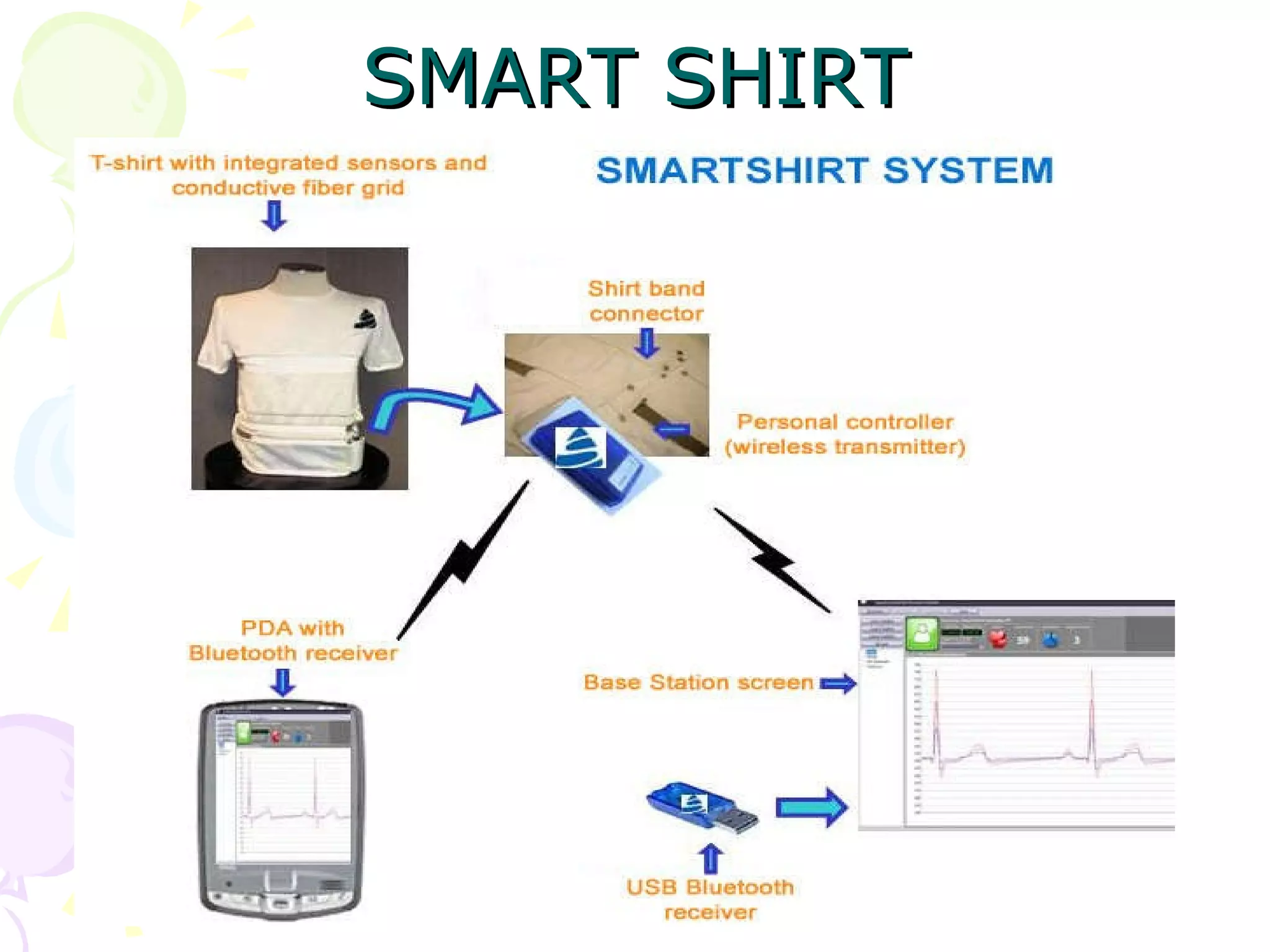
DEVELOPMENTS Ring Sensor Smart Shirt
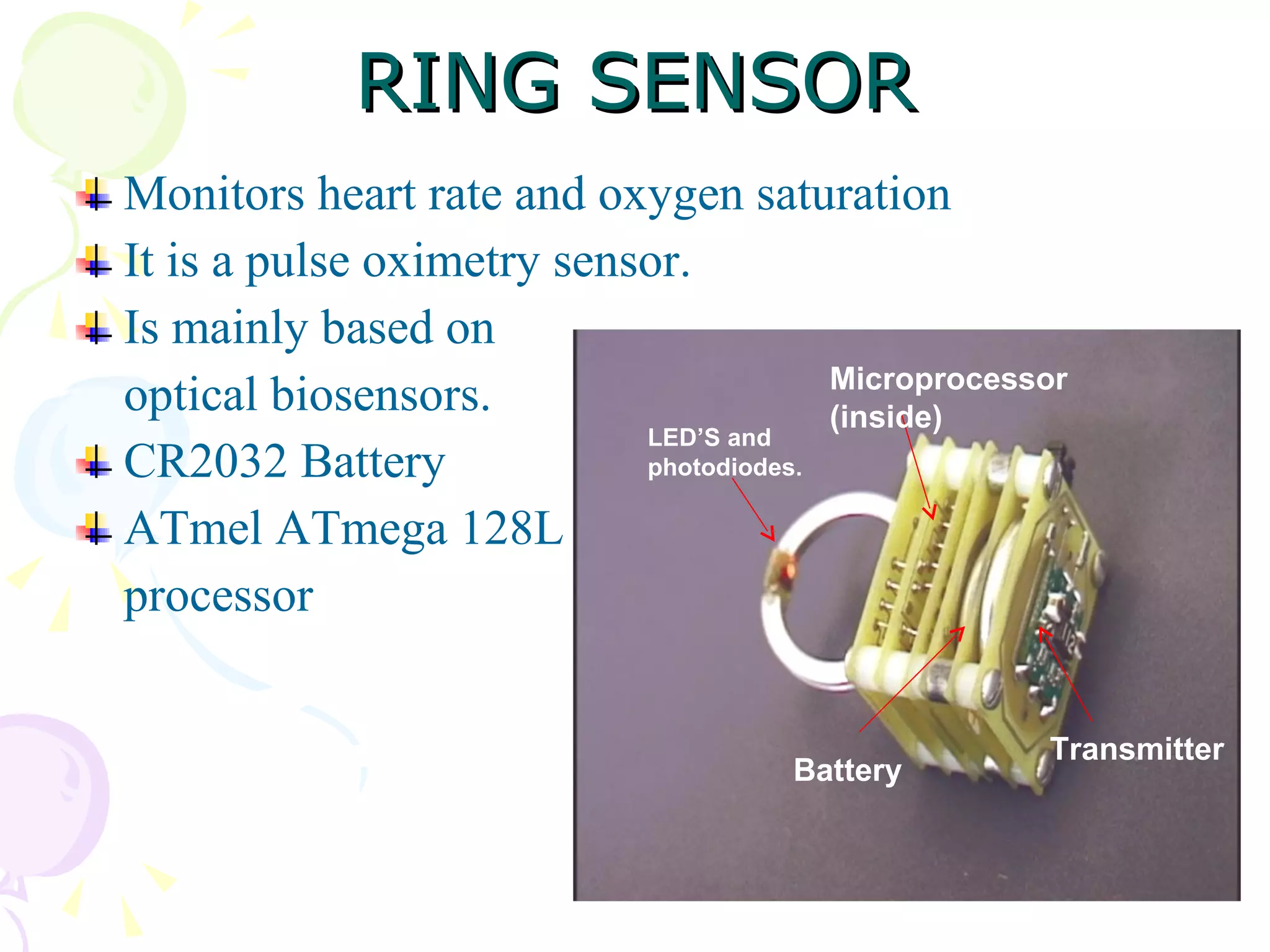
RING SENSOR Monitors heart rate and oxygen saturation It is a pulse oximetry sensor. Is mainly based on  optical biosensors. CR2032 Battery ATmel ATmega 128L processor LED’S and photodiodes. Microprocessor (inside) Battery Transmitter
Continuous monitoring. Easy to use. Reducing hospitalization fee. Initial cost is high. Limited number of physiological parameters can be  monitored  Advantages Disadvantages
SMART SHIRT
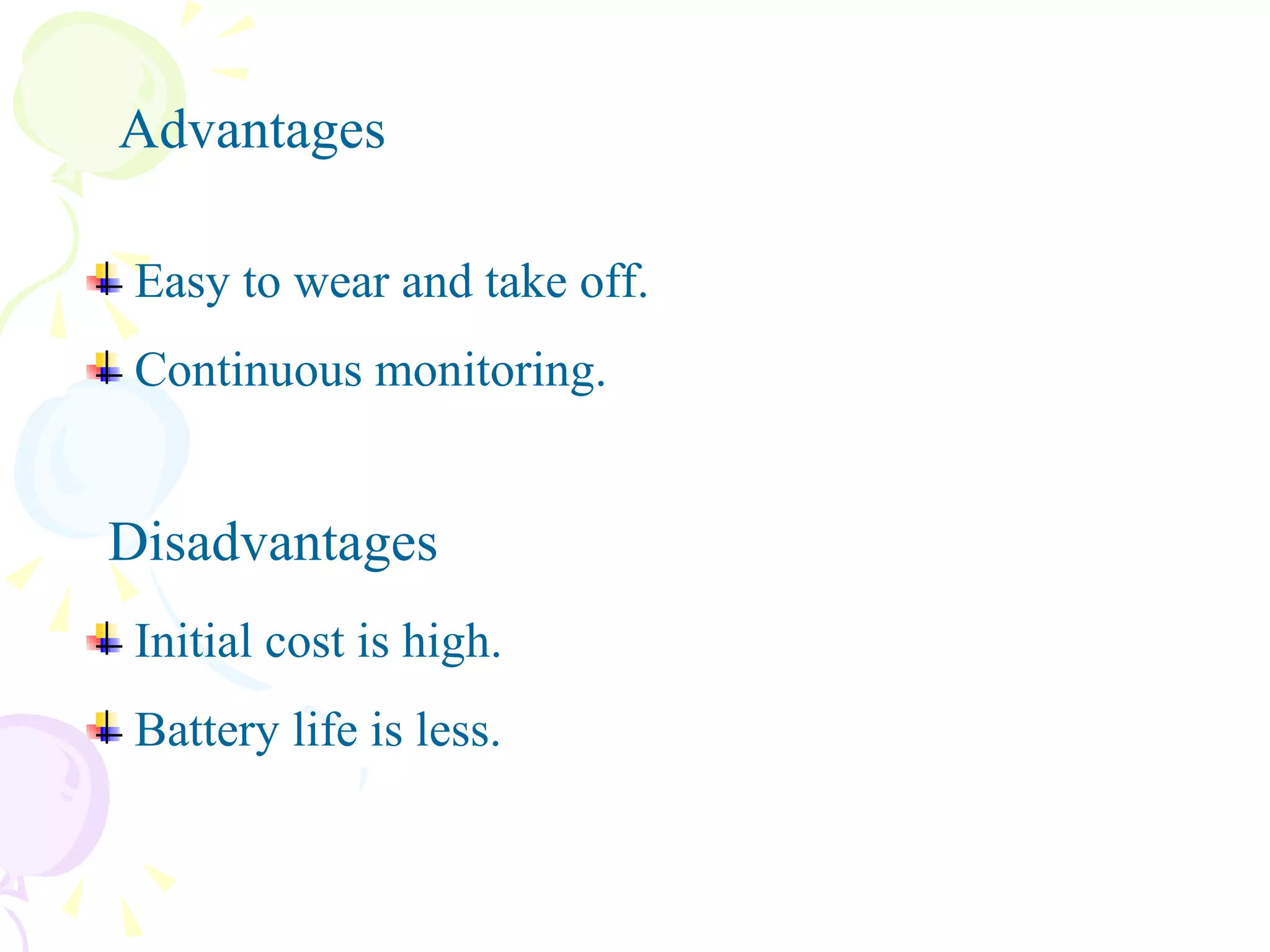
Easy to wear and take off. Continuous monitoring. Initial cost is high. Battery life is less. Advantages Disadvantages
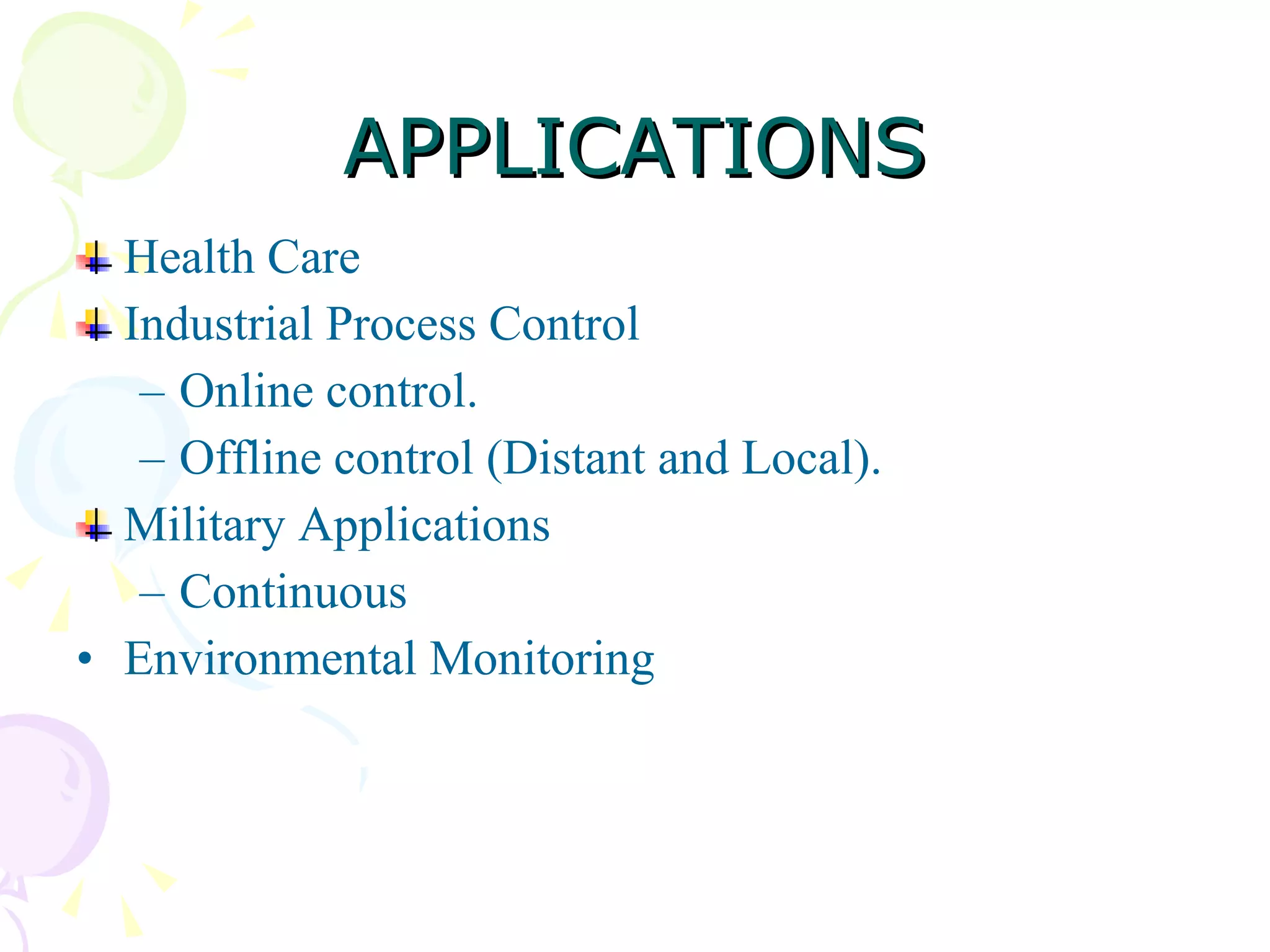
APPLICATIONS Health Care Industrial Process Control Online control. Offline control (Distant and Local).  Military Applications Continuous  Environmental Monitoring
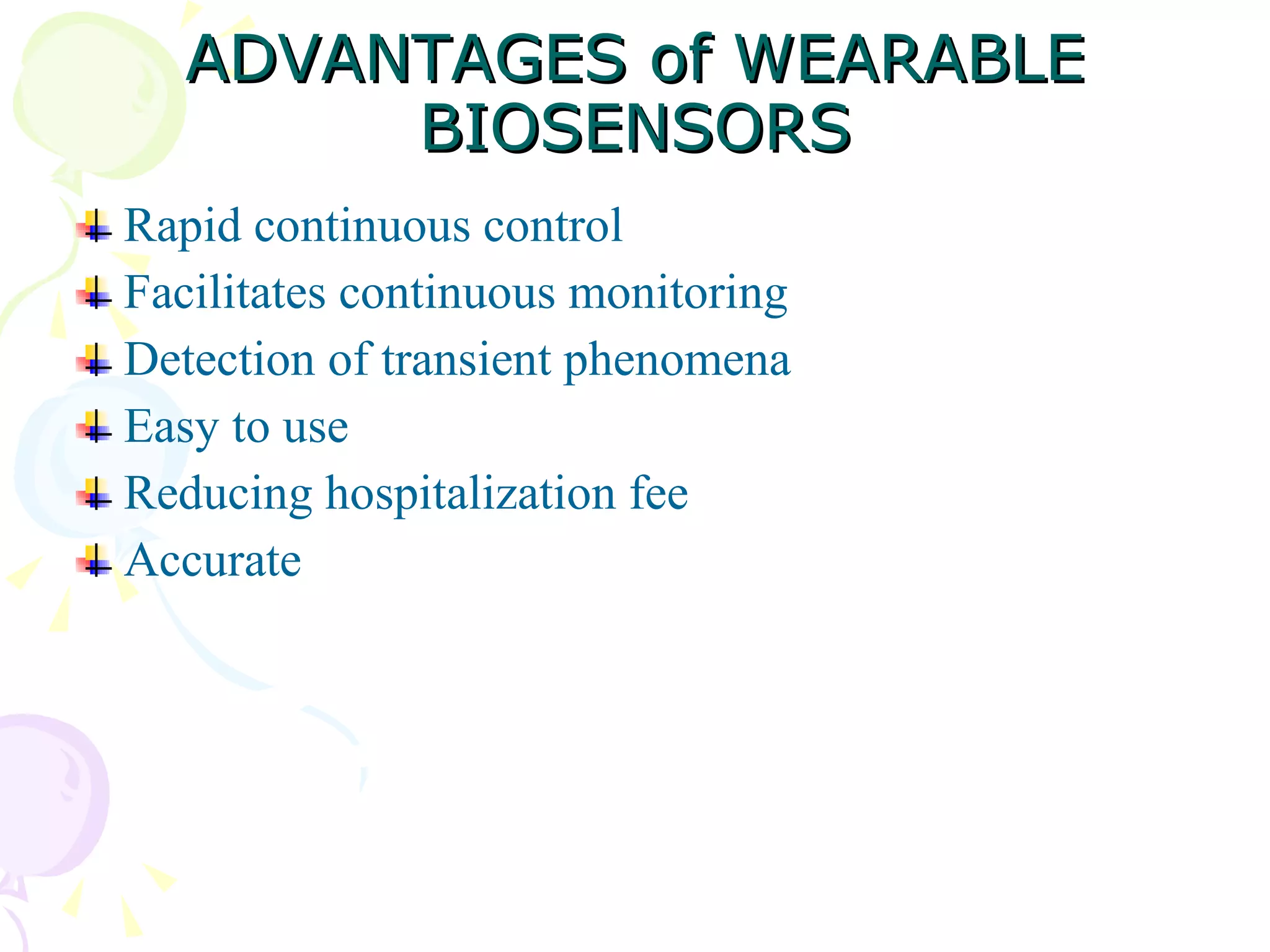
ADVANTAGES of WEARABLE BIOSENSORS Rapid continuous control Facilitates continuous monitoring Detection of transient phenomena Easy to use Reducing hospitalization fee Accurate
Heat sterilization is not possible Membrane may be fouled by deposits Intoxication of cells present in biosensor Changes can put mechanical and chemical stress on the biosensor Initial cost is high Battery life is less DISADVANTAGES of WEARABLE BIOSENSORS
FUTURE TRENDS Magneto biosensors Flame retardants Personal care products Greater use of home-based monitoring and treatment Intelligent control of medication delivery (e.g. insulin delivery based directly on  blood glucose levels) Greater use of nanotechnology and micro fluidics (“lab on a chip”) Implementation using biochemistry, chemistry, thin-film physics, and electronics
CONCLUSION Applied to a restricted area of the potential market Limitations: sensitivity, response time, and lifetime  Immobilization techniques nanotechnology, miniaturization, and multisensor Improvement in the affinity, specificity, and mass production of the molecular recognition components Development of advanced receptors and molecular recognition elements
REFERENCES www.smartshirt.gatech.edu www.wearables.gatech.edu www.wikipedia.org/wiki/Biosensor www.lsbu.ac.uk/biology/enztech/biosensors www.molecular-plant-biotechnology.info/enzyme-technology/types-of-biosensors www.printedelectronicworld.com/articles/manufacturing_microfluidic_biosensors www.studentsguide.in/biotechnology-genomics/biosensor-biotechnology-tools/working-principle-of-biosensors www.google.com

Wearable Biosensors Presentation

  • 1.
  • 2.
    INTRODUCTION WEARABLES Objectsthat can be worn on body Ex: wrist watches, rings, clothes, spectacles, etc,. BIOSENSORS Detects analyte Biological component Physiochemical component WEARABLE BIOSENSORS = WEARABLES + BIOSENSORS
  • 3.
    WEARABLE BIOSENSORS Fig1: Photograph of ring sensor, size of the top board is 0.8 x 0.8 inch.
  • 4.
    COMPONENTS Sensitive BiologicalElement Transducer Associated Electronics Fig2: Schematic diagram showing main components of a biosensor.
  • 5.
    WORKING Fig 3:Working of Biosensor a – analyte b – Interferent c – immobilized biological molecule d – Biospecific immobilization surface e – chemical signal f - transducer g – amplification and control unit h – output of measured analyte
  • 6.
  • 7.
  • 8.
    TYPES OF BIOSENSORSCalorimetric biosensors Potentiometric biosensors Amperometric biosensors Optical biosensors Piezo-electric biosensors Immunosensors
  • 9.
    MANUFACTURING OF BIOSENSORS Making of Base Electrode Developing the Transducer for the reaction Producing Individual Biosensors
  • 10.
  • 11.
    RING SENSOR Monitorsheart rate and oxygen saturation It is a pulse oximetry sensor. Is mainly based on optical biosensors. CR2032 Battery ATmel ATmega 128L processor LED’S and photodiodes. Microprocessor (inside) Battery Transmitter
  • 12.
    Continuous monitoring. Easyto use. Reducing hospitalization fee. Initial cost is high. Limited number of physiological parameters can be monitored Advantages Disadvantages
  • 13.
  • 14.
    Easy to wearand take off. Continuous monitoring. Initial cost is high. Battery life is less. Advantages Disadvantages
  • 15.
    APPLICATIONS Health CareIndustrial Process Control Online control. Offline control (Distant and Local). Military Applications Continuous Environmental Monitoring
  • 16.
    ADVANTAGES of WEARABLEBIOSENSORS Rapid continuous control Facilitates continuous monitoring Detection of transient phenomena Easy to use Reducing hospitalization fee Accurate
  • 17.
    Heat sterilization isnot possible Membrane may be fouled by deposits Intoxication of cells present in biosensor Changes can put mechanical and chemical stress on the biosensor Initial cost is high Battery life is less DISADVANTAGES of WEARABLE BIOSENSORS
  • 18.
    FUTURE TRENDS Magnetobiosensors Flame retardants Personal care products Greater use of home-based monitoring and treatment Intelligent control of medication delivery (e.g. insulin delivery based directly on blood glucose levels) Greater use of nanotechnology and micro fluidics (“lab on a chip”) Implementation using biochemistry, chemistry, thin-film physics, and electronics
  • 19.
    CONCLUSION Applied toa restricted area of the potential market Limitations: sensitivity, response time, and lifetime Immobilization techniques nanotechnology, miniaturization, and multisensor Improvement in the affinity, specificity, and mass production of the molecular recognition components Development of advanced receptors and molecular recognition elements
  • 20.
    REFERENCES www.smartshirt.gatech.edu www.wearables.gatech.eduwww.wikipedia.org/wiki/Biosensor www.lsbu.ac.uk/biology/enztech/biosensors www.molecular-plant-biotechnology.info/enzyme-technology/types-of-biosensors www.printedelectronicworld.com/articles/manufacturing_microfluidic_biosensors www.studentsguide.in/biotechnology-genomics/biosensor-biotechnology-tools/working-principle-of-biosensors www.google.com