WEARABLE BIOSENSORS
Contents
 Introduction
 Need for a wearable biosensor
 What is Wearable Biosensor
 Components of a Biosensor
 Ring Sensor
 Smart Shirt
 Future trends
 Conclusion
 References
INTRODUCTION
 WEARABLE BIOSENSORS = WEARABLE + BIOSENSOR
 WEARABLES :- BIOSENSORS :-
 Objects that can be worn - Detect analyte
on body -Biological
component
Ex: wrist watch, rings, -Physiochemical
component
clothes, spectacles, etc…
COMPONENTS OF A BIOSENSOR
 Sensitive Biological Element
 Transducer
 Associated Electronics
How does a biosensor works?
 Use of wearable monitoring devices allows
continuous monitoring of physiological signal
 Wearable systems are totally non-obstructive
devices that allow physicians to overcome the
limitation of ambulatory technology
 Detect event predictive of possible worsening of
the patient’s clinical situations
Need for a wearable biosensor
 Remote monitoring of patients
 Training support for athletes
 Monitoring of individuals who work with
hazardous elements
 Tracking of professional truck driver’s vital
signs to alert then of fatique
What is a Wearable Biosensor?
 Wearable monitoring device that allows continuous
monitoring of physiological signals.
 They rely on wireless sensors enclosed in items that can
be worn, such as ring or shirt.
 The data sets recorded using these systems are then
processed to detect patient’s clinical situations.
 Biosensor is an analytical device, which convert a
biological response into electrical signal.
OPERATION
WITH BIOSENSOR :-
 WITHOUT BIOSENSORS :-
OPERATION
WITHOUT BIOSENSOR :-
TYPES OF BIOSENSORS
 Calorimetric biosensor
 Potentiometric biosensors
 Amperometric biosensors
 Optical biosensors
 Piezo-electric biosensors
 Immunosensors
MANUFACTURING OF BIOSENSORS
 Making of Base Electrode
 Developing the Transducer for the reaction
 Producing Individual Biosensors
DEVELOPMENTS
 Ring Sensor
 Smart Shirt
RING SENSOR
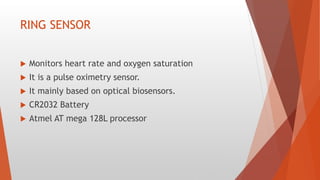
 Monitors heart rate and oxygen saturation
 It is a pulse oximetry sensor.
 It mainly based on optical biosensors.
 CR2032 Battery
 Atmel AT mega 128L processor
SMART SHIRT
Advantages
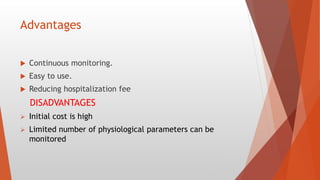
 Continuous monitoring.
 Easy to use.
 Reducing hospitalization fee
DISADVANTAGES
 Initial cost is high
 Limited number of physiological parameters can be
monitored
APPLICATIONS
 Health Care
 Industrial process Control
 - Online control
 - Offline control
 Mititary Applications
 - Continuous
 Environmental Monitoring
ADVANTAGES of WEARABLE BIOSENSORS
 Rapid continuous control
 Facilitates continuous monitoring
 Detection of transient phenomena
 Easy to use
 Reducing hospitalization fee
 Accurate
DISADVANTAGE of WEARABLE
BIOSENSORS
 Heat sterilization is not possible
 Intoxication of cell present in biosensor
 Changes can put mechanical and chemical stress on the
biosensor
 Initial cost is high
 Battery life is less
FUTURE TRENDS
 Magneto biosensors
 Flame retardants
 Personal care products
 Greater use of home-based monitoring and treatment
 Intelligent control of medication delivery (e.g. insulin
delivery based directly on blood glucose levels)
 Greater use of nanotechnology and micro fluidics (“lab on
a chio”0
 Implementation using Biochemistry, Chemistry, thin-film
physics, and electronics.
REFERENCE
 www.samrtshirt.gtech.edu
 www.wearable.gtech.edu
 www.Wikipedia.org/wiki/Biosensor
 www.Isbu.ac.uk/biology/enztech/biosensors
 www.molecular-plant-biotechnology.info/enzyme-technology/types-of-
biosensors
 www.printdelectronicworld.com/areticle/manufacturing_microfluidic_biosens
ors
 www.google.com
THANK YOU

WEARABLE BIOSENSORS.pptx

  • 1.
  • 2.
    Contents  Introduction  Needfor a wearable biosensor  What is Wearable Biosensor  Components of a Biosensor  Ring Sensor  Smart Shirt  Future trends  Conclusion  References
  • 3.
    INTRODUCTION  WEARABLE BIOSENSORS= WEARABLE + BIOSENSOR  WEARABLES :- BIOSENSORS :-  Objects that can be worn - Detect analyte on body -Biological component Ex: wrist watch, rings, -Physiochemical component clothes, spectacles, etc…
  • 4.
    COMPONENTS OF ABIOSENSOR  Sensitive Biological Element  Transducer  Associated Electronics
  • 5.
    How does abiosensor works?  Use of wearable monitoring devices allows continuous monitoring of physiological signal  Wearable systems are totally non-obstructive devices that allow physicians to overcome the limitation of ambulatory technology  Detect event predictive of possible worsening of the patient’s clinical situations
  • 6.
    Need for awearable biosensor  Remote monitoring of patients  Training support for athletes  Monitoring of individuals who work with hazardous elements  Tracking of professional truck driver’s vital signs to alert then of fatique
  • 7.
    What is aWearable Biosensor?  Wearable monitoring device that allows continuous monitoring of physiological signals.  They rely on wireless sensors enclosed in items that can be worn, such as ring or shirt.  The data sets recorded using these systems are then processed to detect patient’s clinical situations.  Biosensor is an analytical device, which convert a biological response into electrical signal.
  • 8.
    OPERATION WITH BIOSENSOR :- WITHOUT BIOSENSORS :-
  • 9.
  • 10.
    TYPES OF BIOSENSORS Calorimetric biosensor  Potentiometric biosensors  Amperometric biosensors  Optical biosensors  Piezo-electric biosensors  Immunosensors
  • 11.
    MANUFACTURING OF BIOSENSORS Making of Base Electrode  Developing the Transducer for the reaction  Producing Individual Biosensors
  • 12.
  • 13.
    RING SENSOR  Monitorsheart rate and oxygen saturation  It is a pulse oximetry sensor.  It mainly based on optical biosensors.  CR2032 Battery  Atmel AT mega 128L processor
  • 14.
  • 15.
    Advantages  Continuous monitoring. Easy to use.  Reducing hospitalization fee DISADVANTAGES  Initial cost is high  Limited number of physiological parameters can be monitored
  • 16.
    APPLICATIONS  Health Care Industrial process Control  - Online control  - Offline control  Mititary Applications  - Continuous  Environmental Monitoring
  • 17.
    ADVANTAGES of WEARABLEBIOSENSORS  Rapid continuous control  Facilitates continuous monitoring  Detection of transient phenomena  Easy to use  Reducing hospitalization fee  Accurate
  • 18.
    DISADVANTAGE of WEARABLE BIOSENSORS Heat sterilization is not possible  Intoxication of cell present in biosensor  Changes can put mechanical and chemical stress on the biosensor  Initial cost is high  Battery life is less
  • 19.
    FUTURE TRENDS  Magnetobiosensors  Flame retardants  Personal care products  Greater use of home-based monitoring and treatment  Intelligent control of medication delivery (e.g. insulin delivery based directly on blood glucose levels)  Greater use of nanotechnology and micro fluidics (“lab on a chio”0  Implementation using Biochemistry, Chemistry, thin-film physics, and electronics.
  • 20.
    REFERENCE  www.samrtshirt.gtech.edu  www.wearable.gtech.edu www.Wikipedia.org/wiki/Biosensor  www.Isbu.ac.uk/biology/enztech/biosensors  www.molecular-plant-biotechnology.info/enzyme-technology/types-of- biosensors  www.printdelectronicworld.com/areticle/manufacturing_microfluidic_biosens ors  www.google.com
  • 21.