
Watercolor First Day
Summer 2016
Glenn Hirsch, Instructor
watercolor is about
COLOR
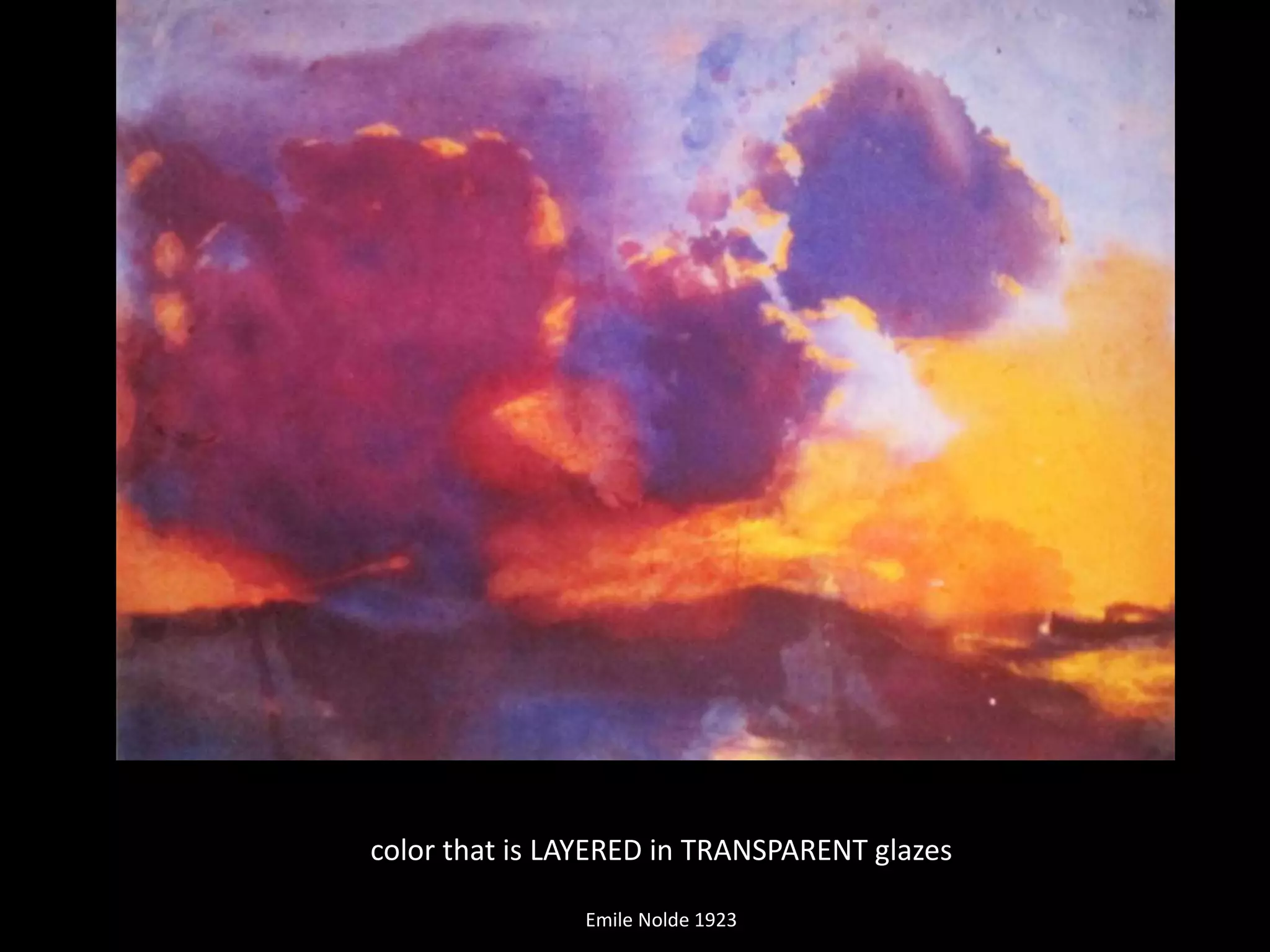
color that is LAYERED in TRANSPARENT glazes
Emile Nolde 1923
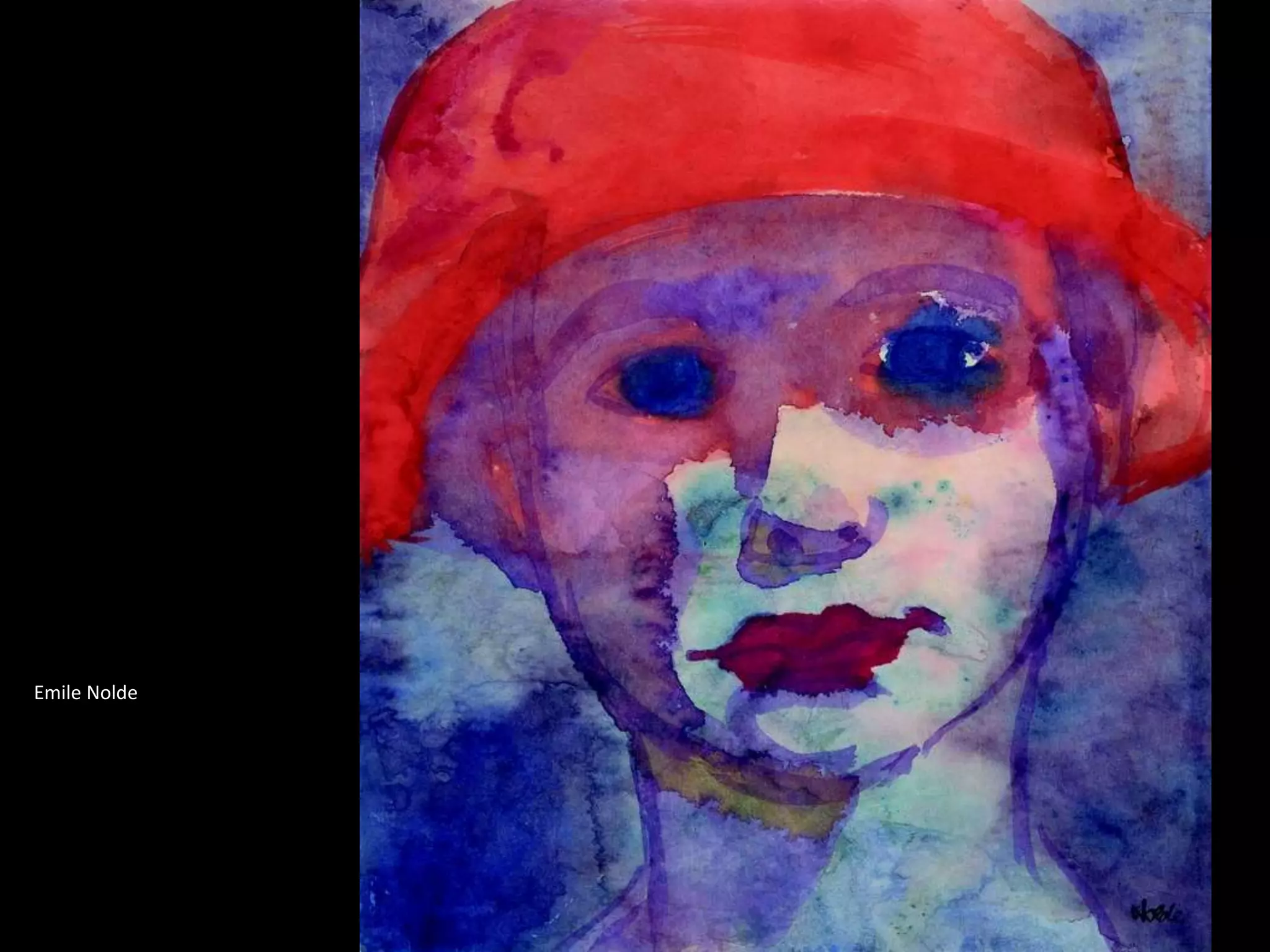
Emile Nolde
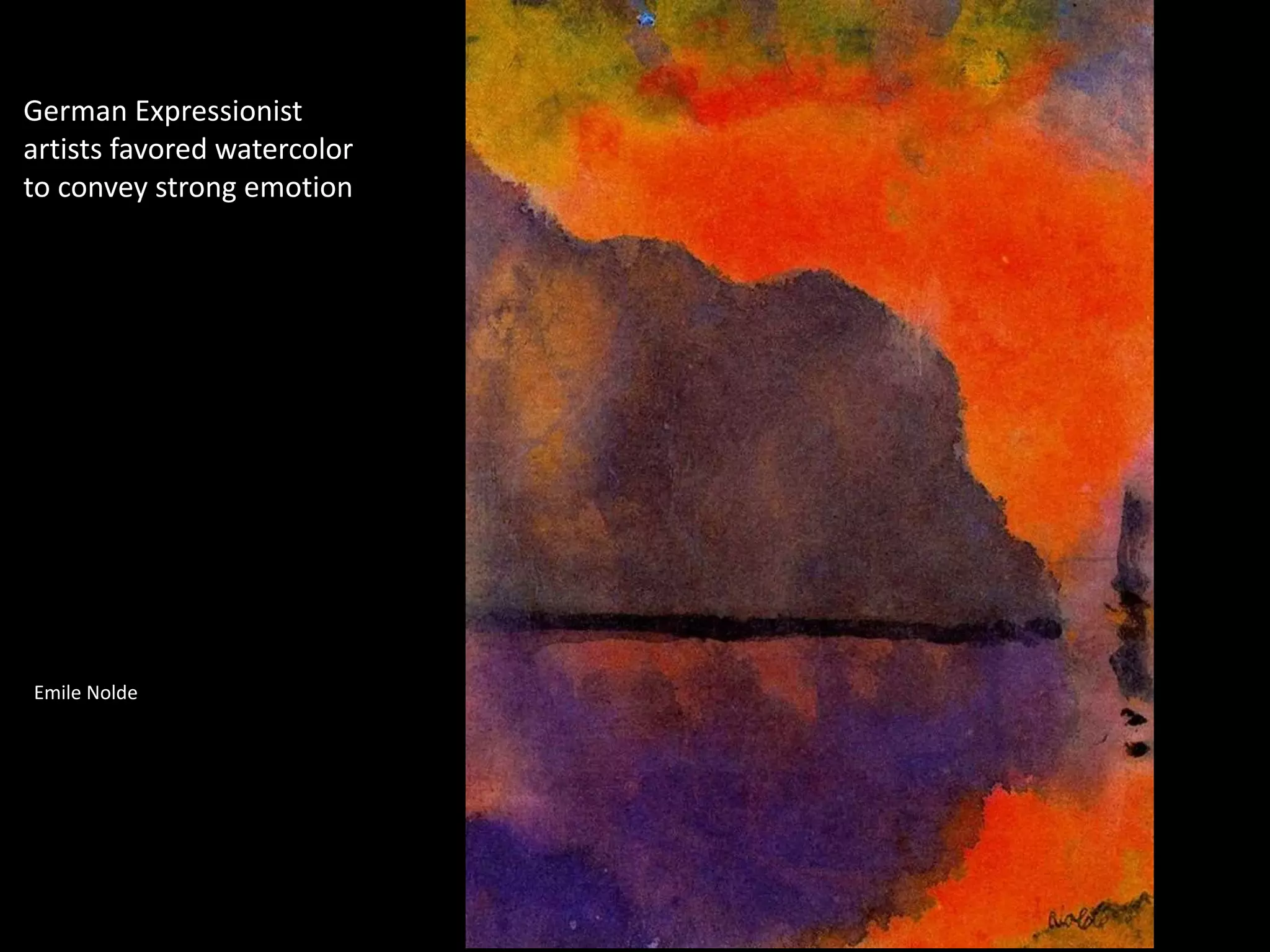
Emile Nolde
German Expressionist
artists favored watercolor
to convey strong emotion
watercolor is about
WATER
flowing, spontaneous and free
John Singer Sargent, c. 1912
John Singer Sargent, c. 1920
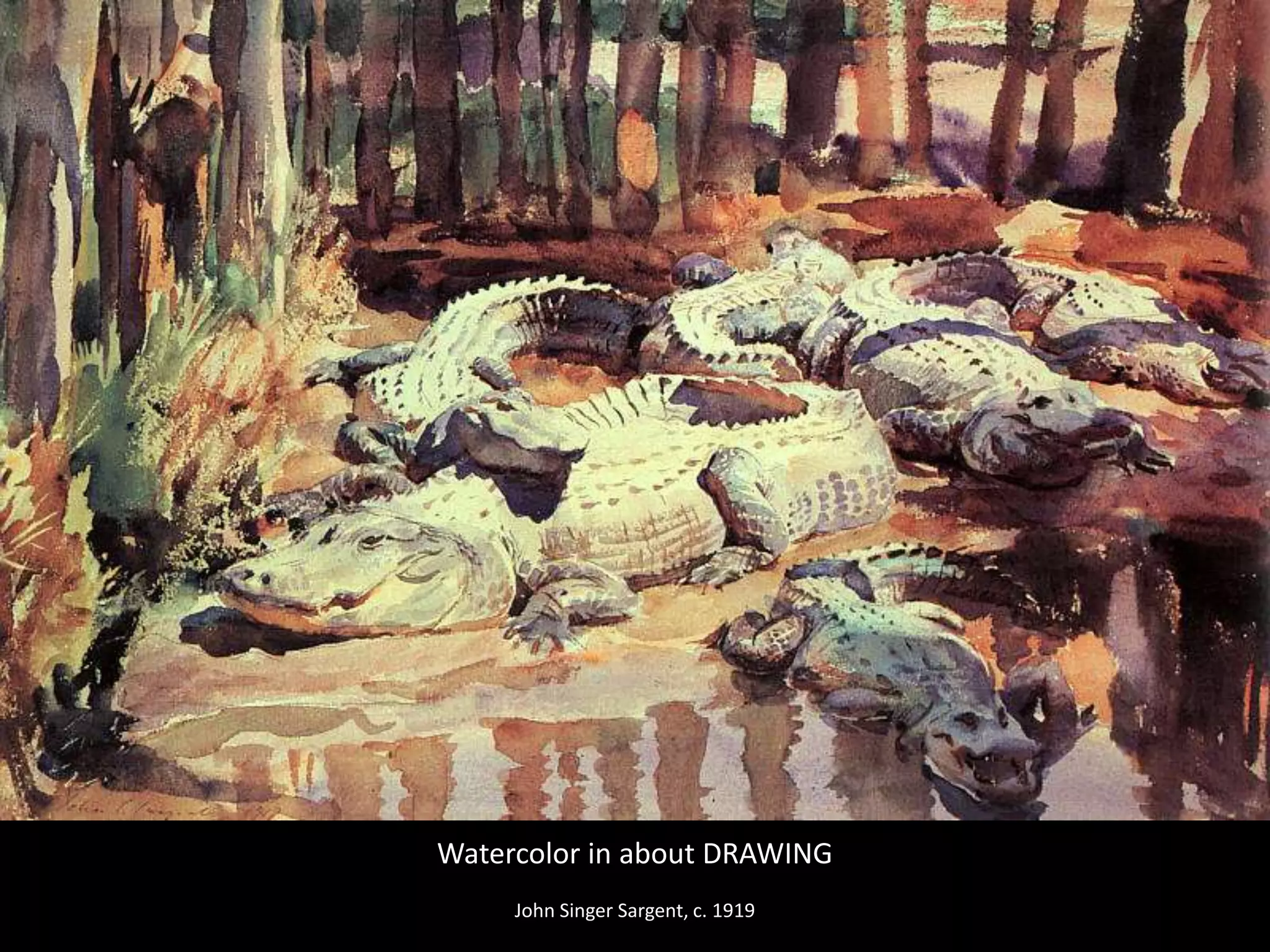
Watercolor in about DRAWING
John Singer Sargent, c. 1919
Watercolor is about PORTABILITY
allows painting outside, capturing the moment
Joseph Turner, Venice Sunrise, 1840, 8 x10 in
watercolor is about the
BRUSH
Brush technique can be smooth and
seamless, or wild and free or ...
something in between
Oskar Kokoschka, c. 1922
A really flowing brush- a wild party !
Andre Derain, c. 1910
Georgia O'Keefe, c. 1920
When brush marks are minimized, then watercolor can also achieve
amazing photo realism!
Mary Snowden, c. 1985
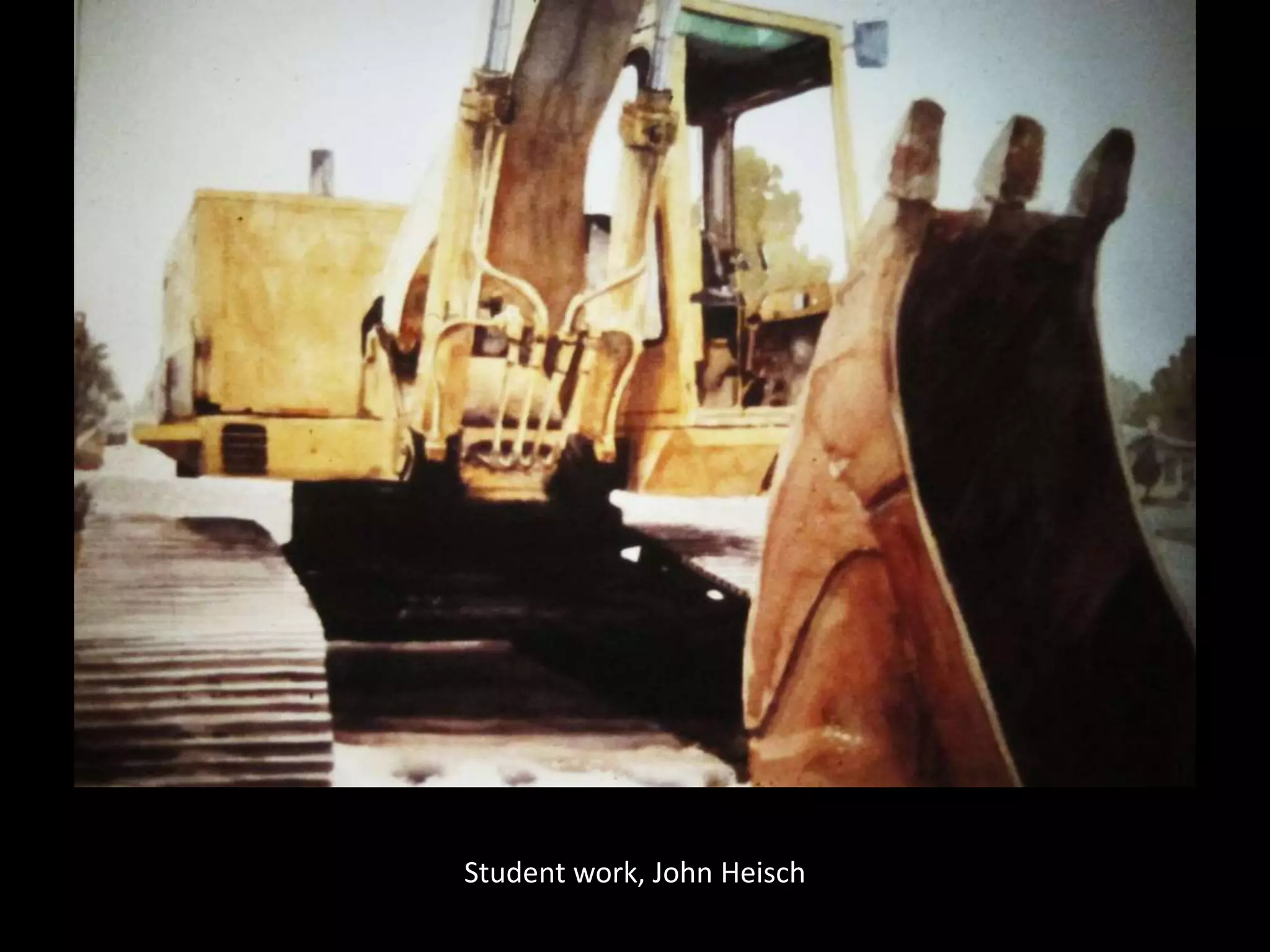
“Photorealist“ watercolor like this demands perfect drawing
which is then patiently 'colored-in'
Richard McLean, 1975
Robert Bechtel, 1985
Student work, John Heisch
watercolor in
HISTORY
ARTISTS FAMOUS FOR THEIR WATERCOLORS
Franklin Booth
Franz Marc
Fred Martin
Frederick Childe Hassam
Georgia O'Keefe
Gerard Richter
Gustave Dore
Helen Frankenthaler
Honore Daumier
John Constable
John James Audubon
John Marin
John Singer Sargent
Joseph William Turner
Joseph Raffael
Lisbeth Spenger
Louise Stanley
Mary Cassat
Mary Snowden
Maurice Prendergast
Paul Cezanne Paul Klee
Philip Pearlstein
Raoul Dufy
Robert Bechtle
Sam Francis
Thomas Eakins
Thomas Gainsborough
Thomas Moran
Wassily Kandinsky
William Blake
Winslow Homer
Albrecht Dürer
Anders Zorn
Andrew Wyeth
Arthur Dove
Arthur Rackham
Arthur Szyk
Charles Burchfield
Charles Demuth
Edmund Dulac
Edward Hopper
Egon Schiele
Emil Nolde
Eric Fischl
Ernst Ludwig Kirchner
Eugene Delacroix
Francesco Clemente
watercolor was traditionally used to plan large, complex oil paintings
Eugene Delacroix, c. 1835
Watercolor was traditionally used to capture nature
Claude Lorraine, 1630
Before photography,
watercolor was used by
explorers to document
their travels
Karl Bodmer (1809-1893),
Portrait of Kiäsax
Watercolor
was popular
among the
French
Impressionists
Berthe Morisot, 1885
Watercolor has always
been favored by artists
who use their
imagination.
Gustav Moreau (1826-1898)
Sappho
Watercolor has always
been favored by artists
who use their
imagination.
Study for sculpture by
Claus Oldenberg, 1964
Today many contemporary artists continue to use watercolor as their primary medium
Elizabeth Peyton
Elizabeth Peyton
what is
watercolor
made of?
watercolor is powdered pigment suspended in gum arabic,
with a little glycerin and honey added.
pigmentsare derived from minerals, plants or metals
gum arabic is exuded by acacia trees, used in the food industry,
in glue, as the binder for watercolor paints, and in incense.
glycerinis a colorless, sweet, viscous liquid formed as a byproduct in
soap manufacture. It is used as an emollient and laxative, and for making
explosives and antifreeze.
honeyadded so it's more gooey!
what is watercolor
technique?
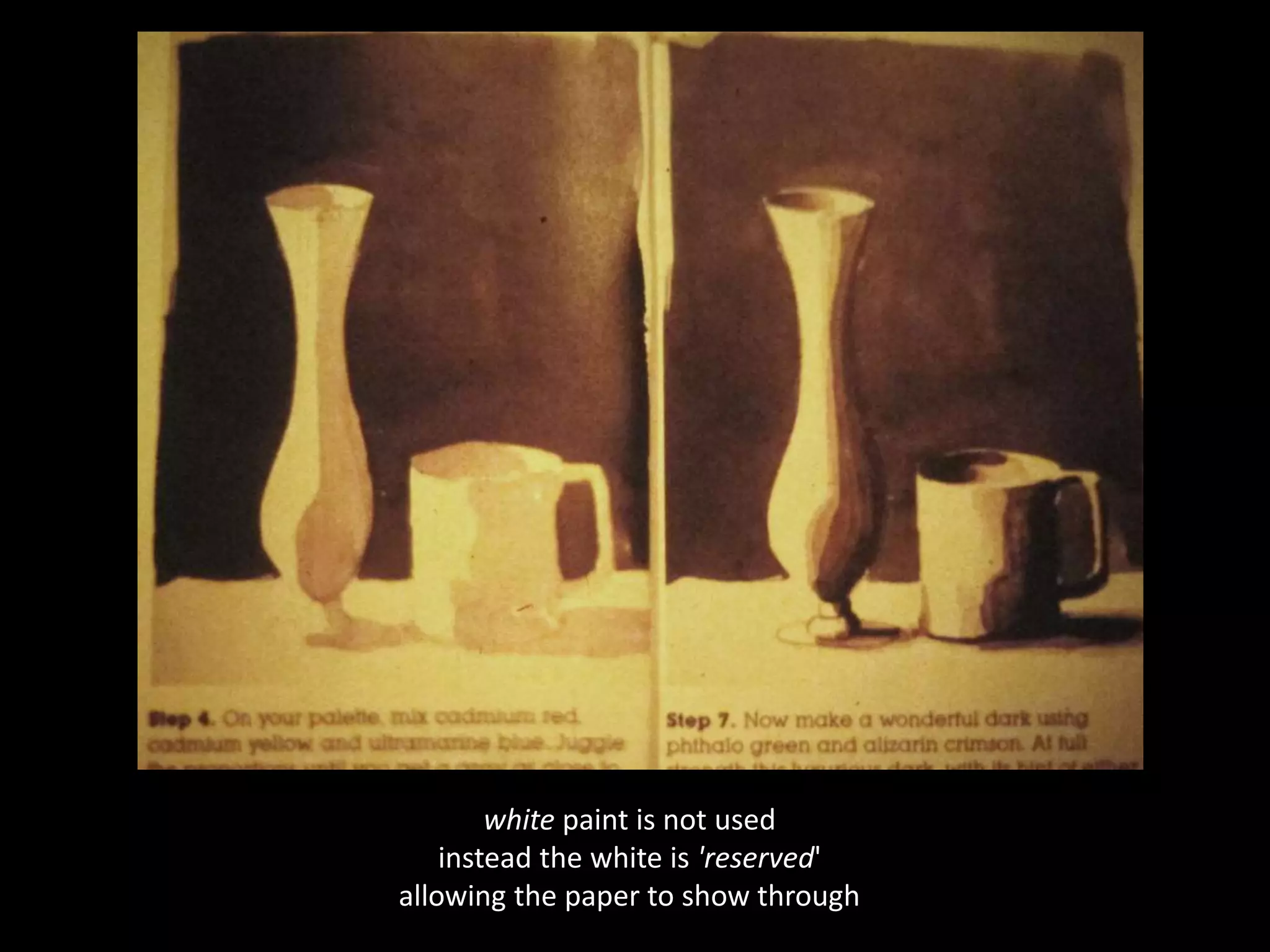
control the value of the color by DILUTING IT WITH WATER–
start with very light tones and only use dark at the end
In a landscape, light tones recede and dark tones advance
paint the background first and let it DRY
white paint is not used
instead the white is 'reserved'
allowing the paper to show through
Andrew Wyeth
Andrew Wyeth
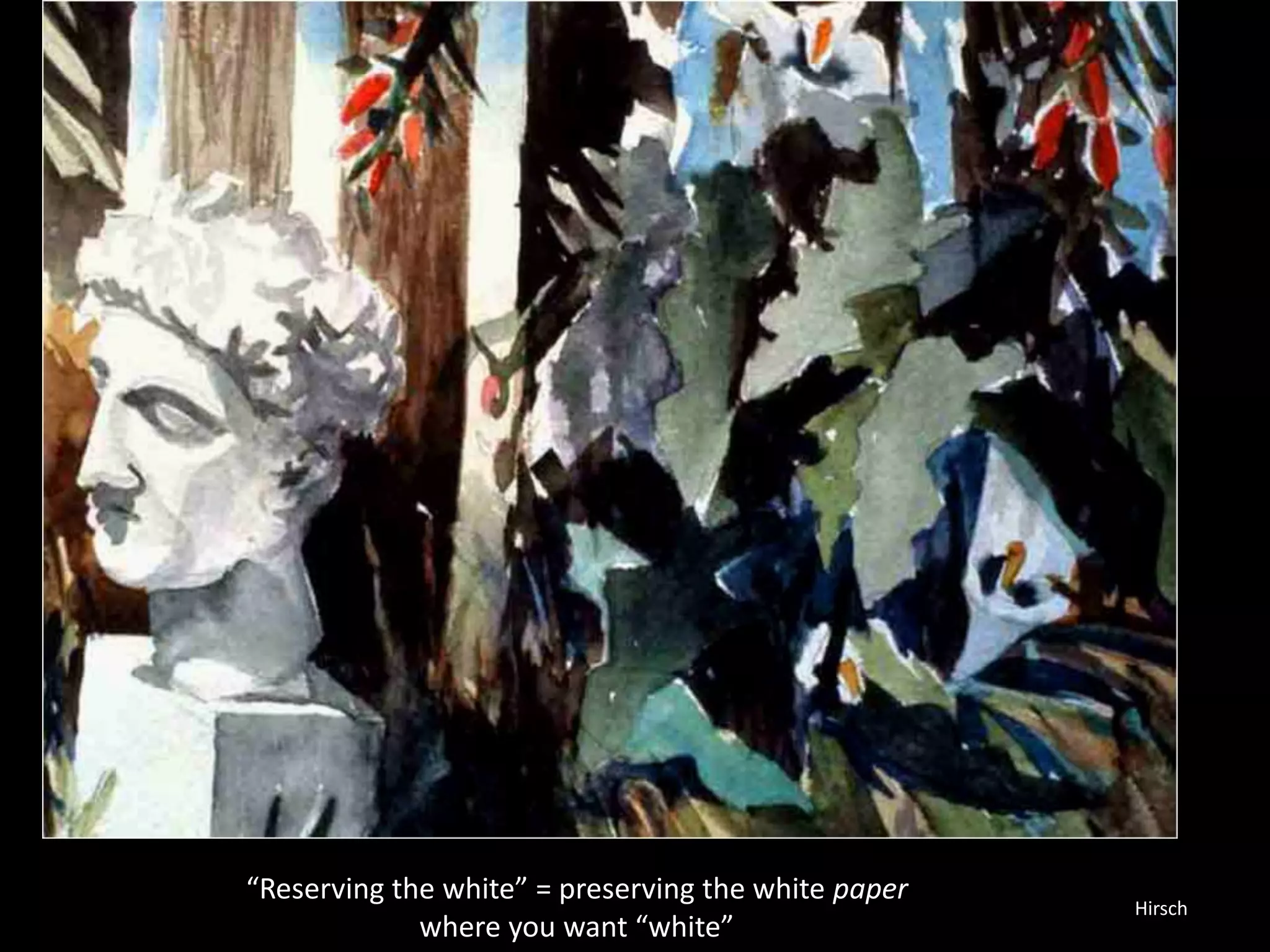
“Reserving the white” = preserving the white paper
where you want “white”
Hirsch
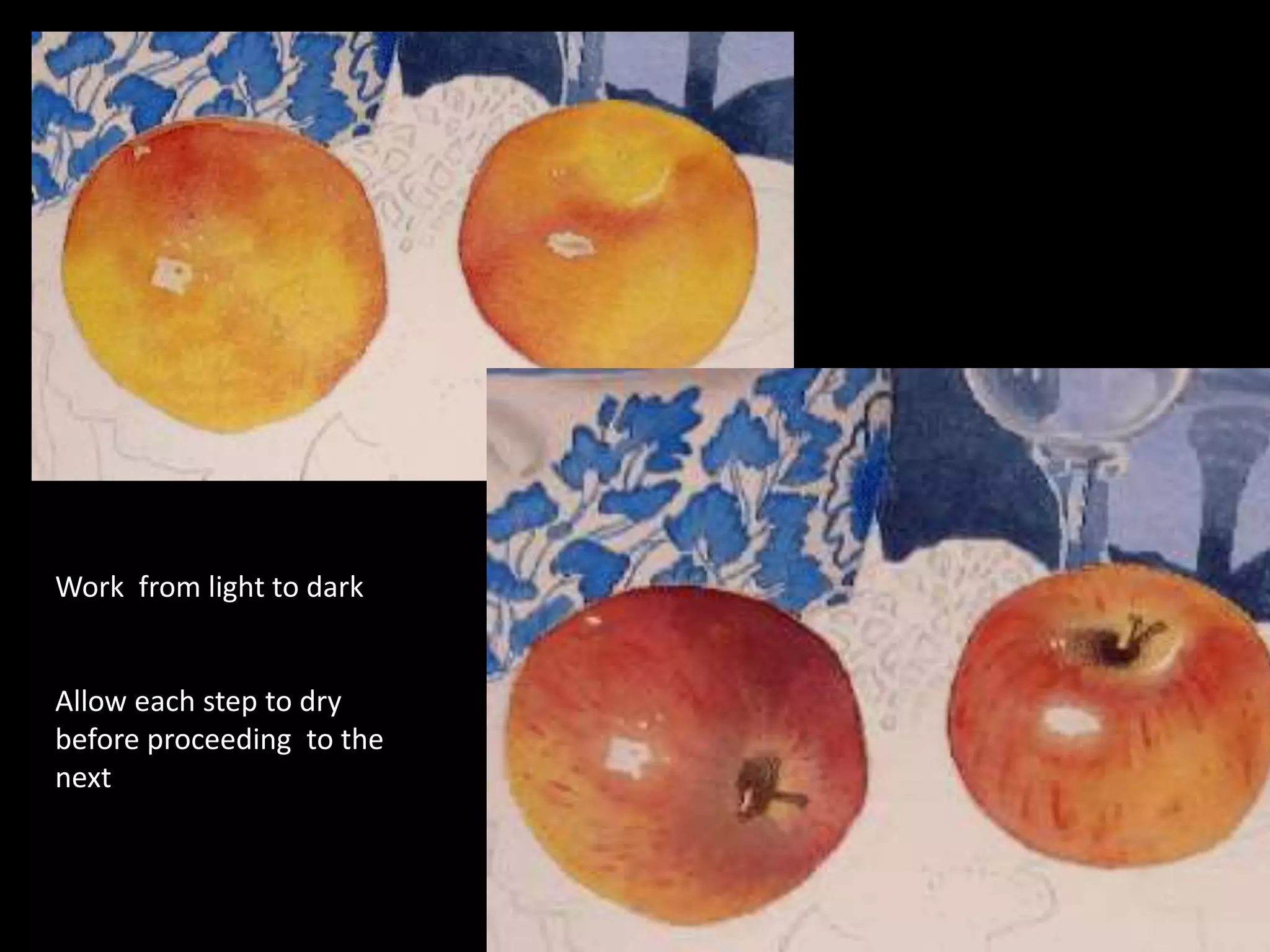
Work from light to dark
Allow each step to dry
before proceeding to the
next
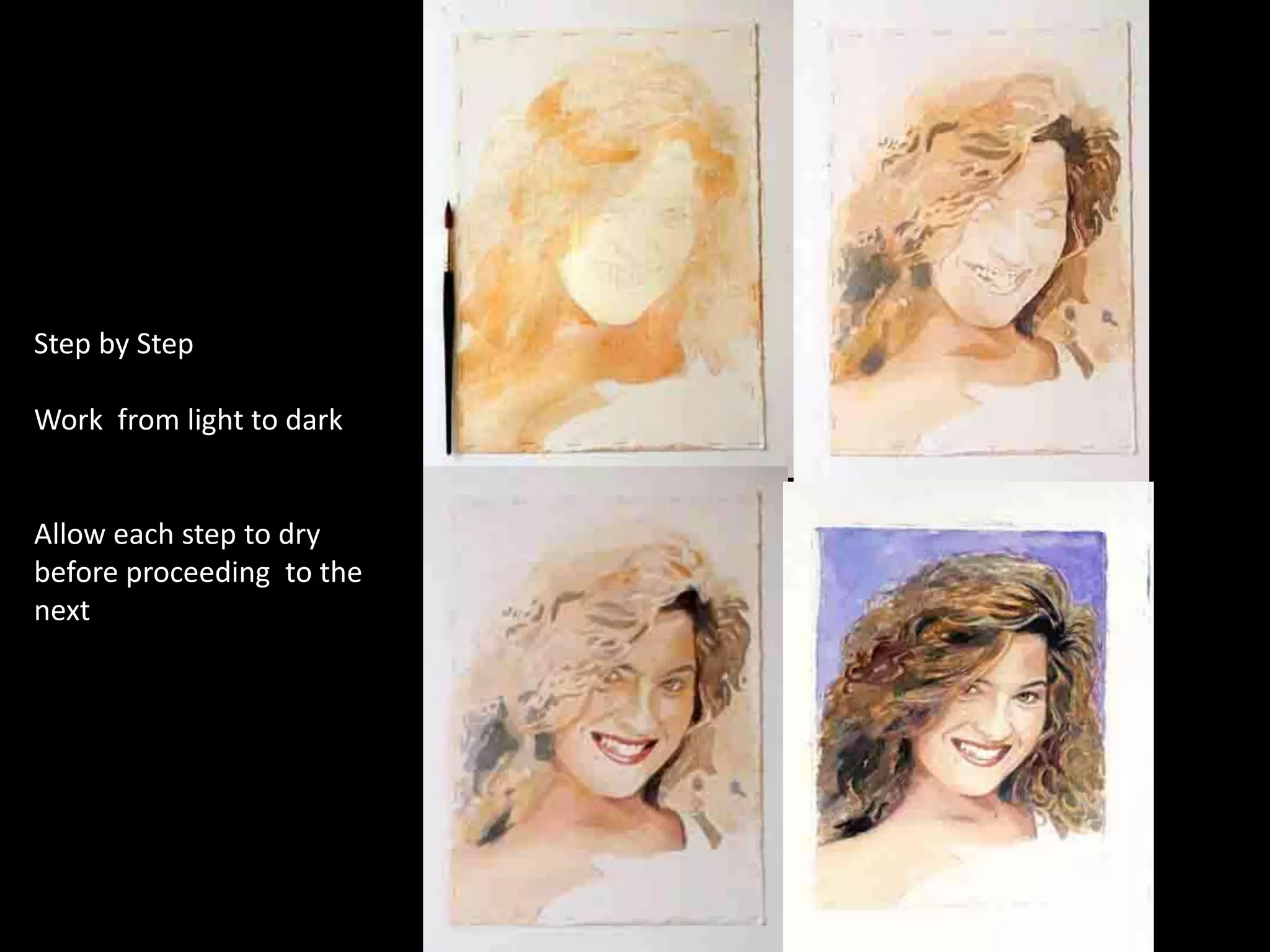
Step by Step
Work from light to dark
Allow each step to dry
before proceeding to the
next
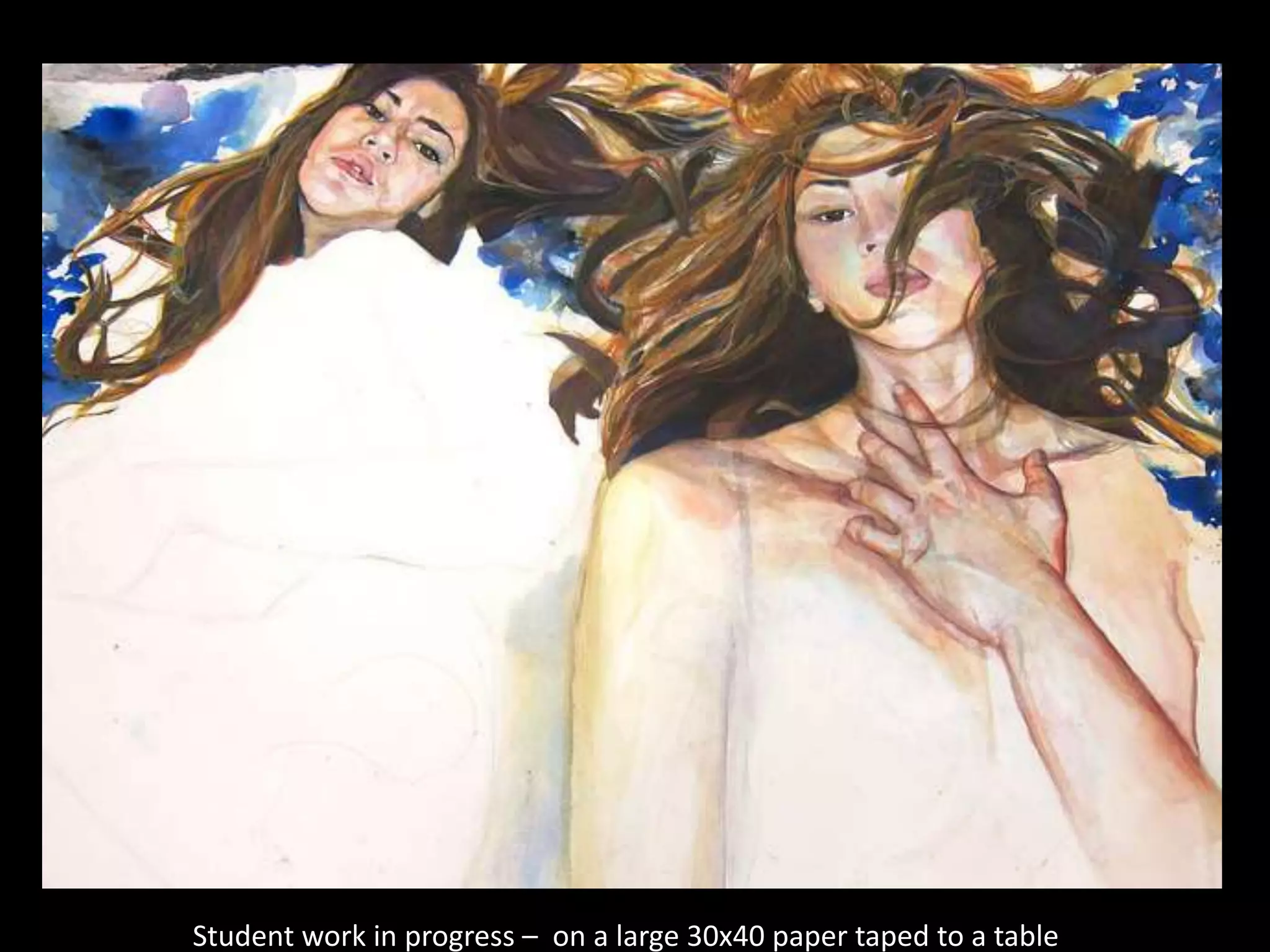
Student work in progress – on a large 30x40 paper taped to a table
the brown and pink is painted underneath, and then the dark blue sky is painted on top,
after the bottom layer is dry !
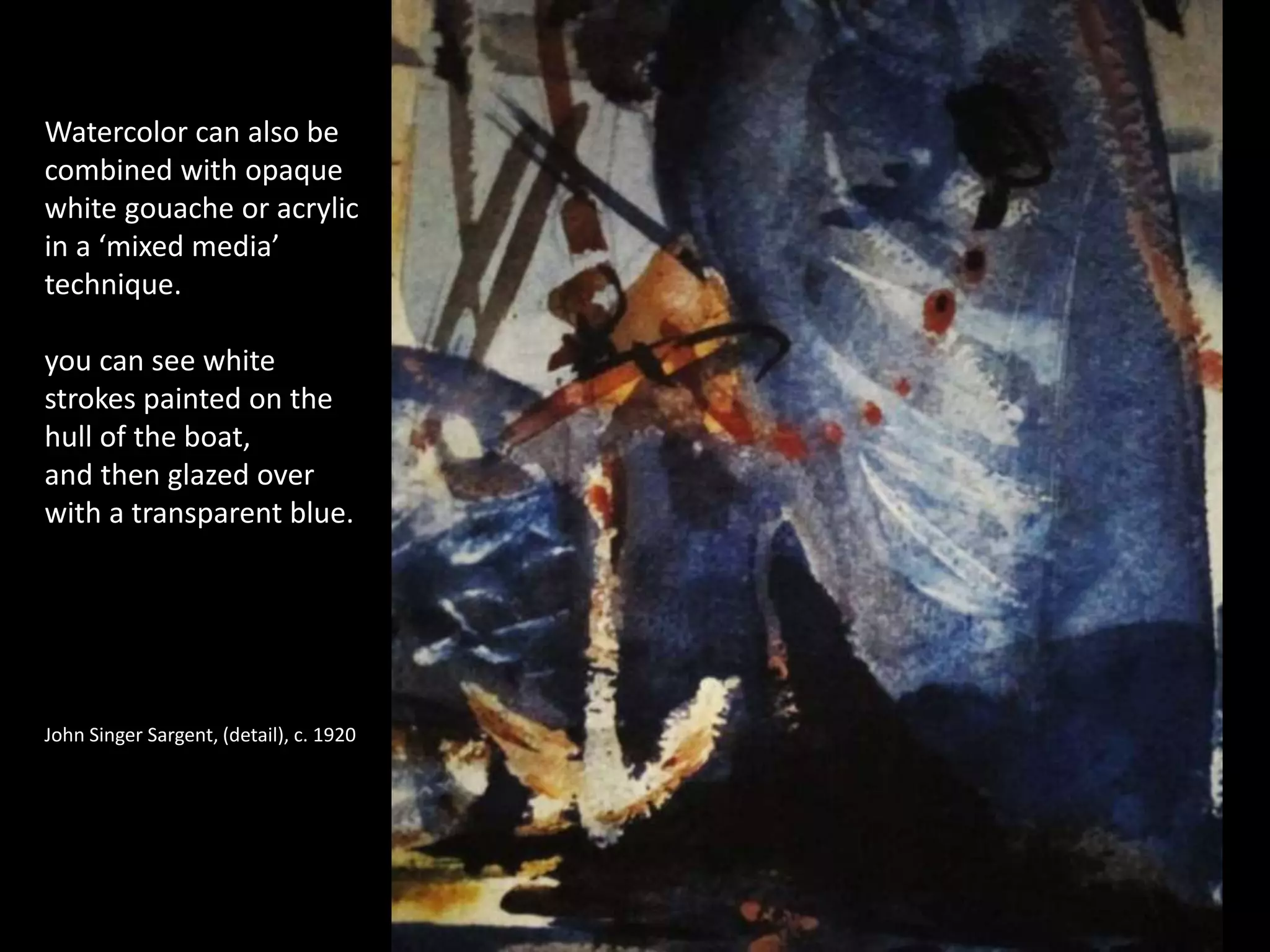
Watercolor can also be
combined with opaque
white gouache or acrylic
in a ‘mixed media’
technique.
you can see white
strokes painted on the
hull of the boat,
and then glazed over
with a transparent blue.
John Singer Sargent, (detail), c. 1920
Color
‘Theory’
we use warm and cool versions of each color to enhance the feeling of “light”
the chromatic scale
• Light to dark
• Bright to dull
• Warm to cool
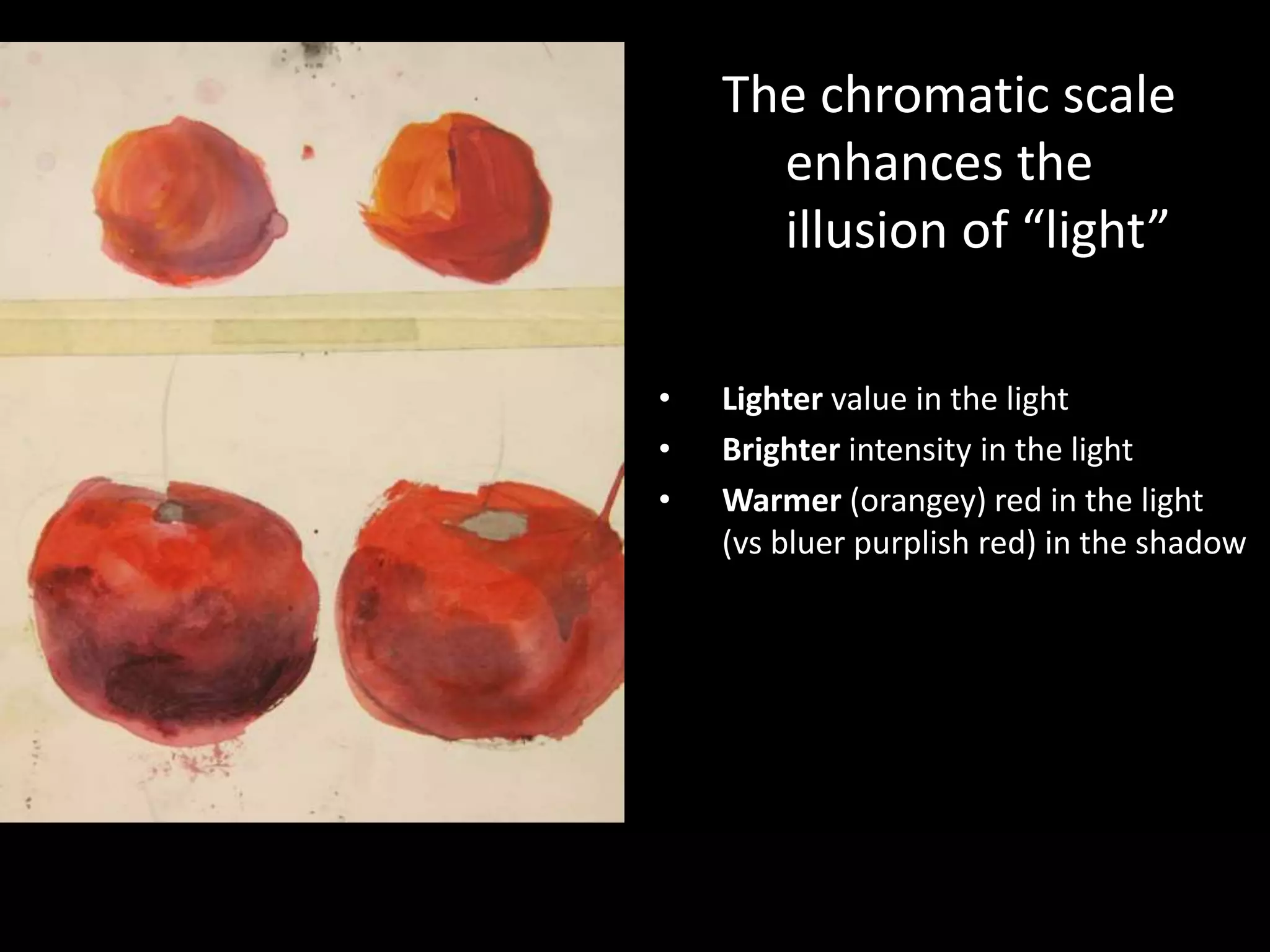
The chromatic scale
enhances the
illusion of “light”
• Lighter value in the light
• Brighter intensity in the light
• Warmer (orangey) red in the light
(vs bluer purplish red) in the shadow
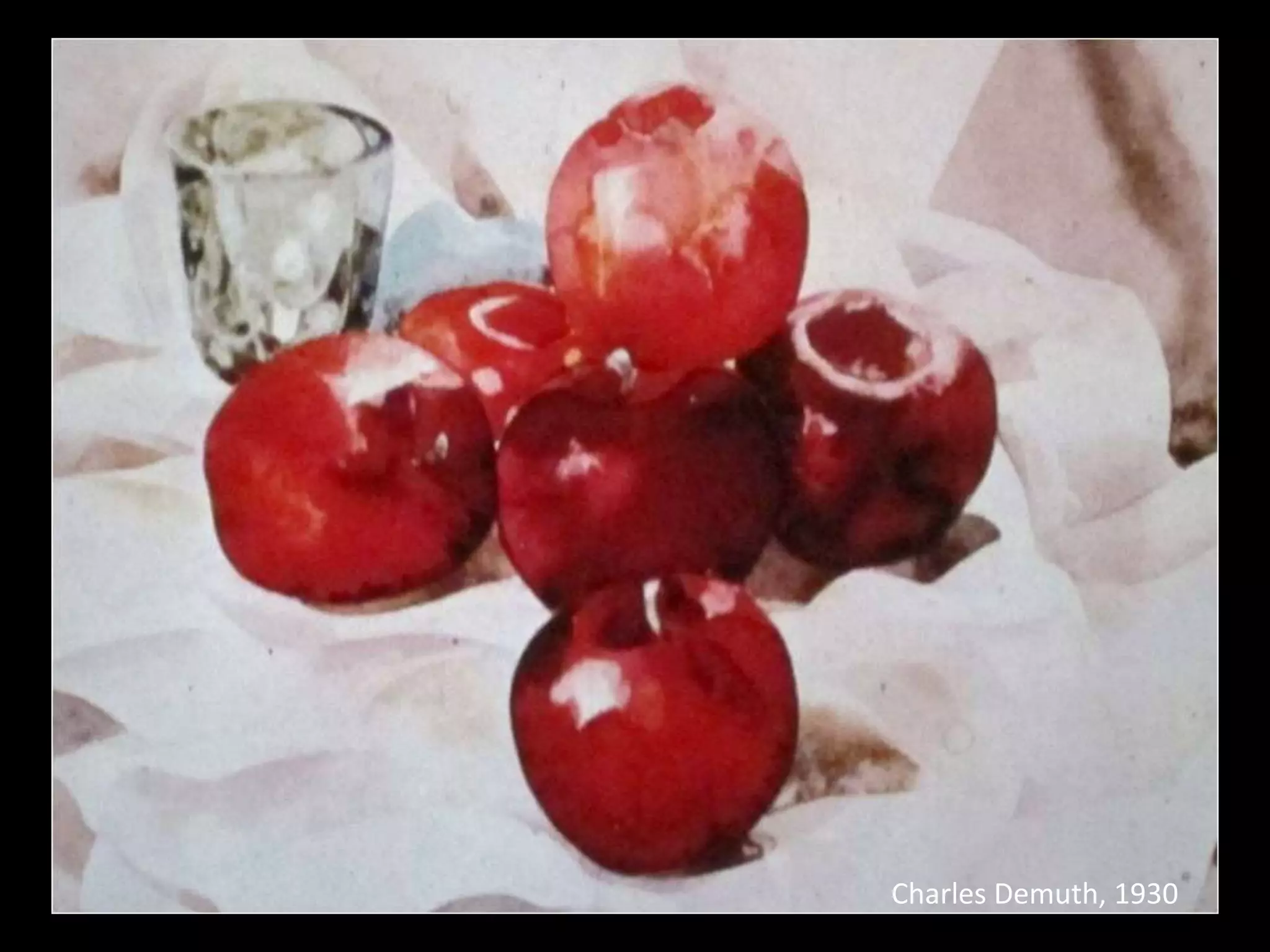
Charles Demuth, 1930
What’s
ahead:
syllabus
week by
week
Week 2
still life (apples)
+ more color ‘theory’
next week bring an apple to class
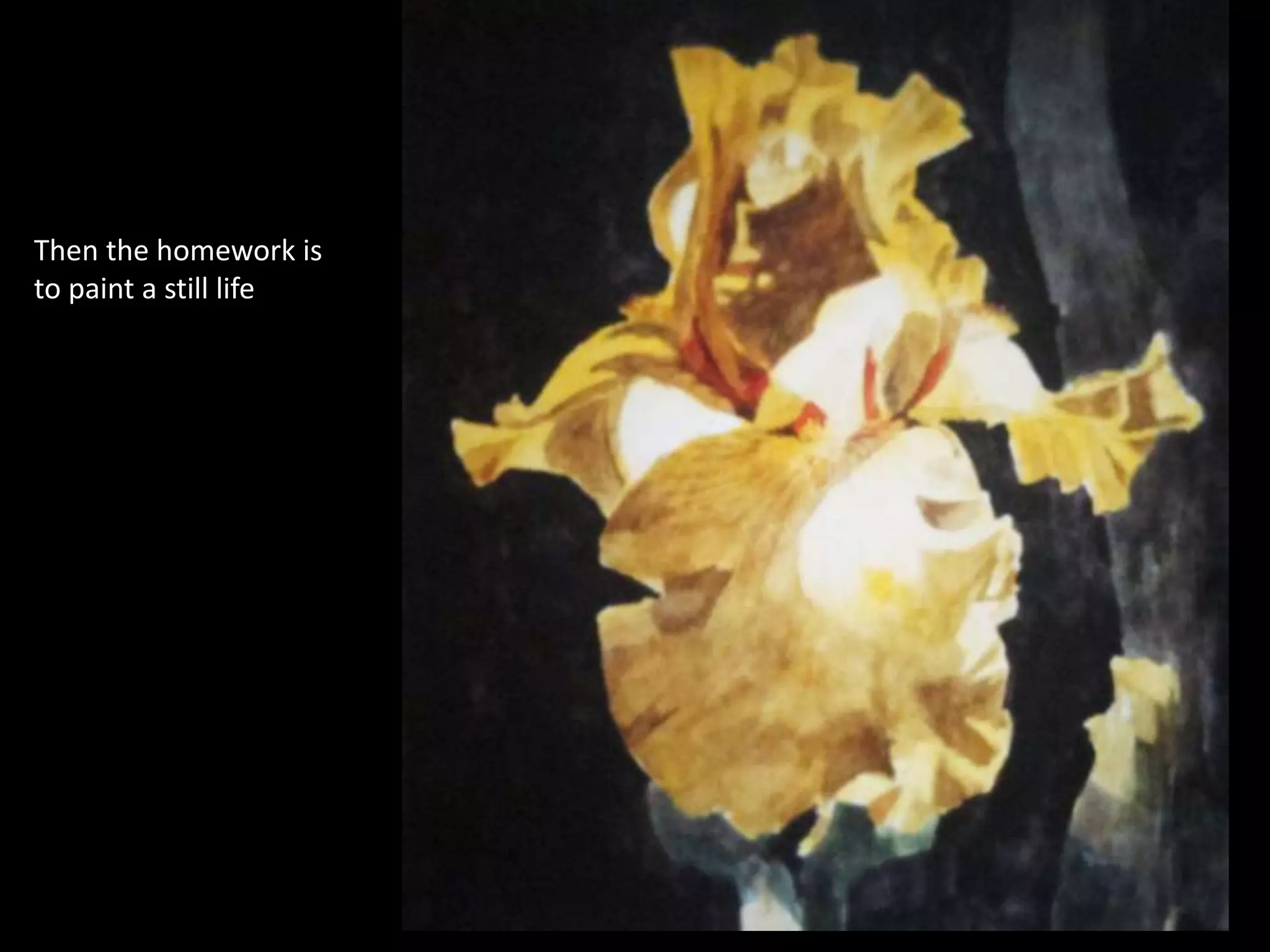
Then the homework is
to paint a still life
Joseph Raffael
week 3:
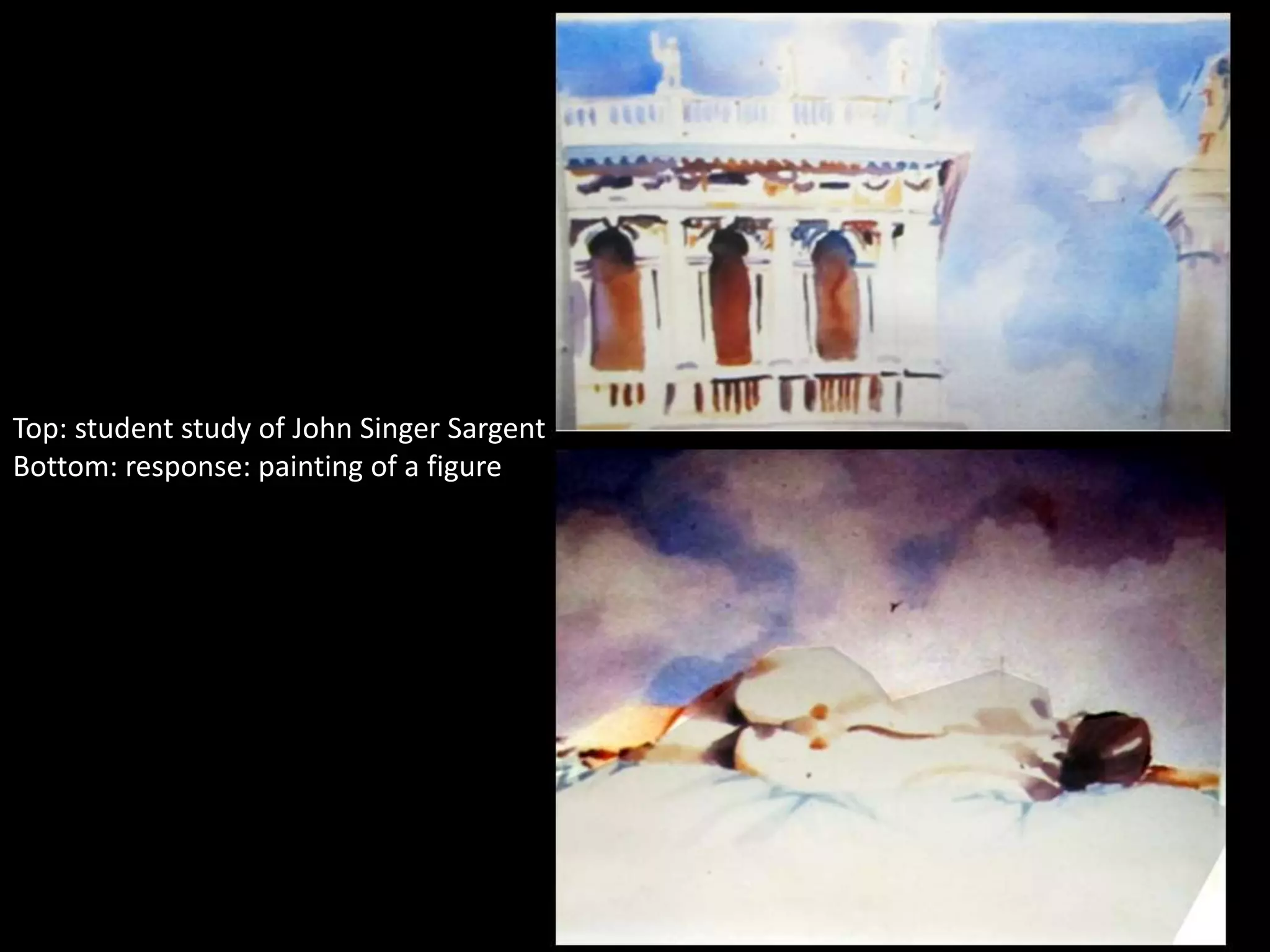
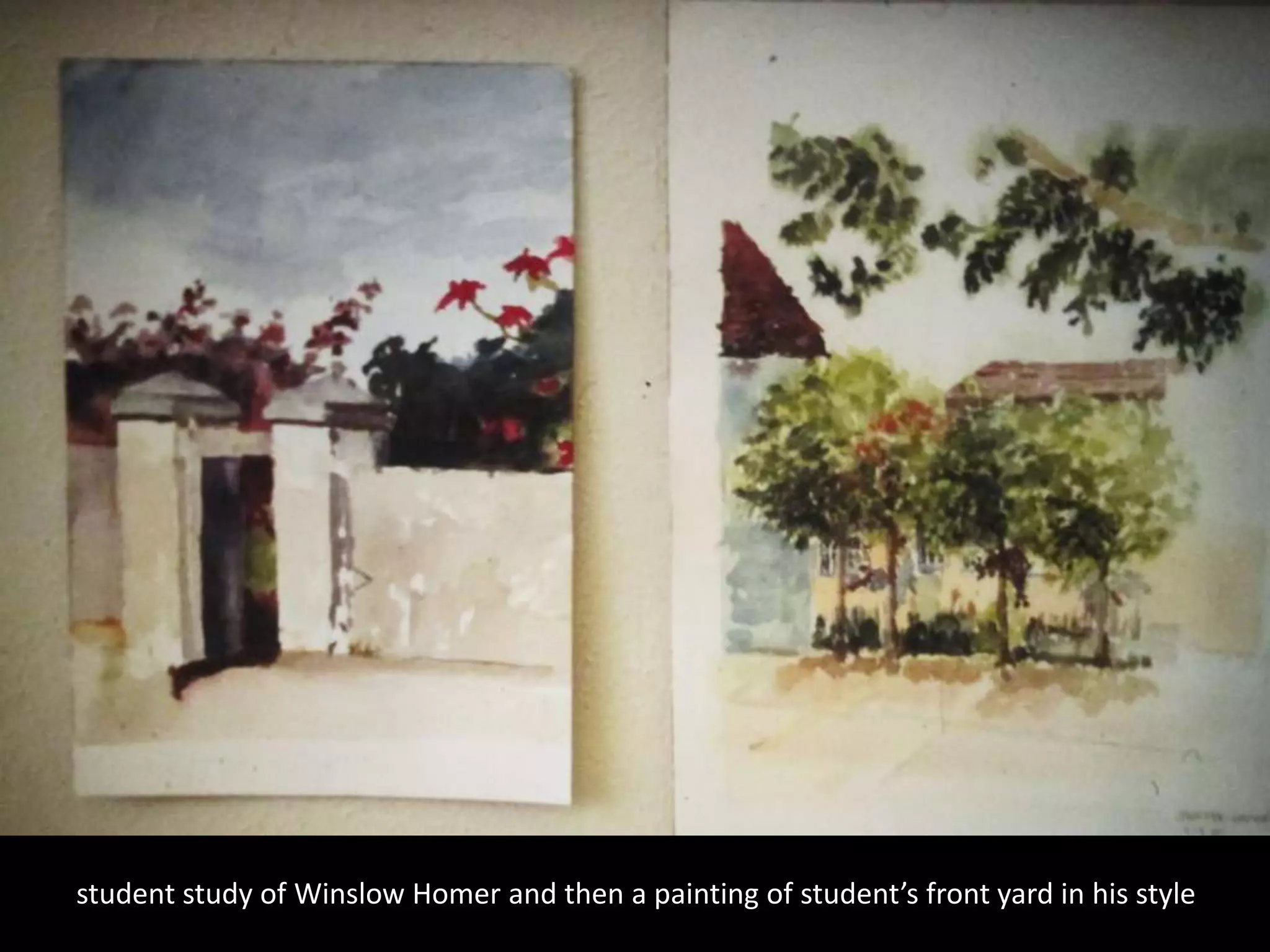
paint a master study
and then an
original response to it
Student study of
Winslow Homer
and response
(working from a
photo)
study of Oskar Kokoschka and student response
(working from a National Geographic photo)
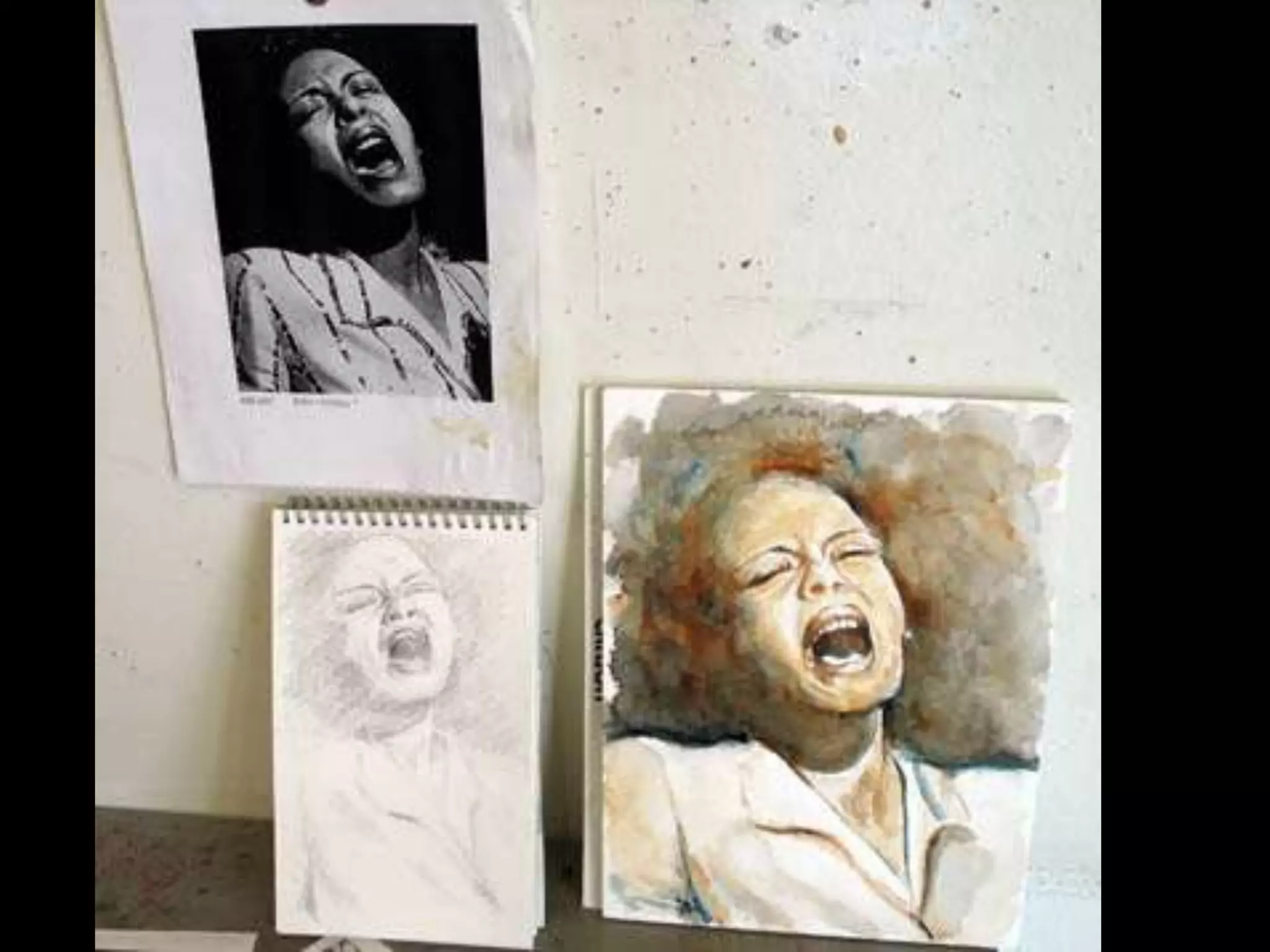
Top: student study of John Singer Sargent
Bottom: response: painting of a figure
student study of Winslow Homer and then a painting of student’s front yard in his style
Weeks 3-4:
trees and landscape space
John Singer Sargent, 1900
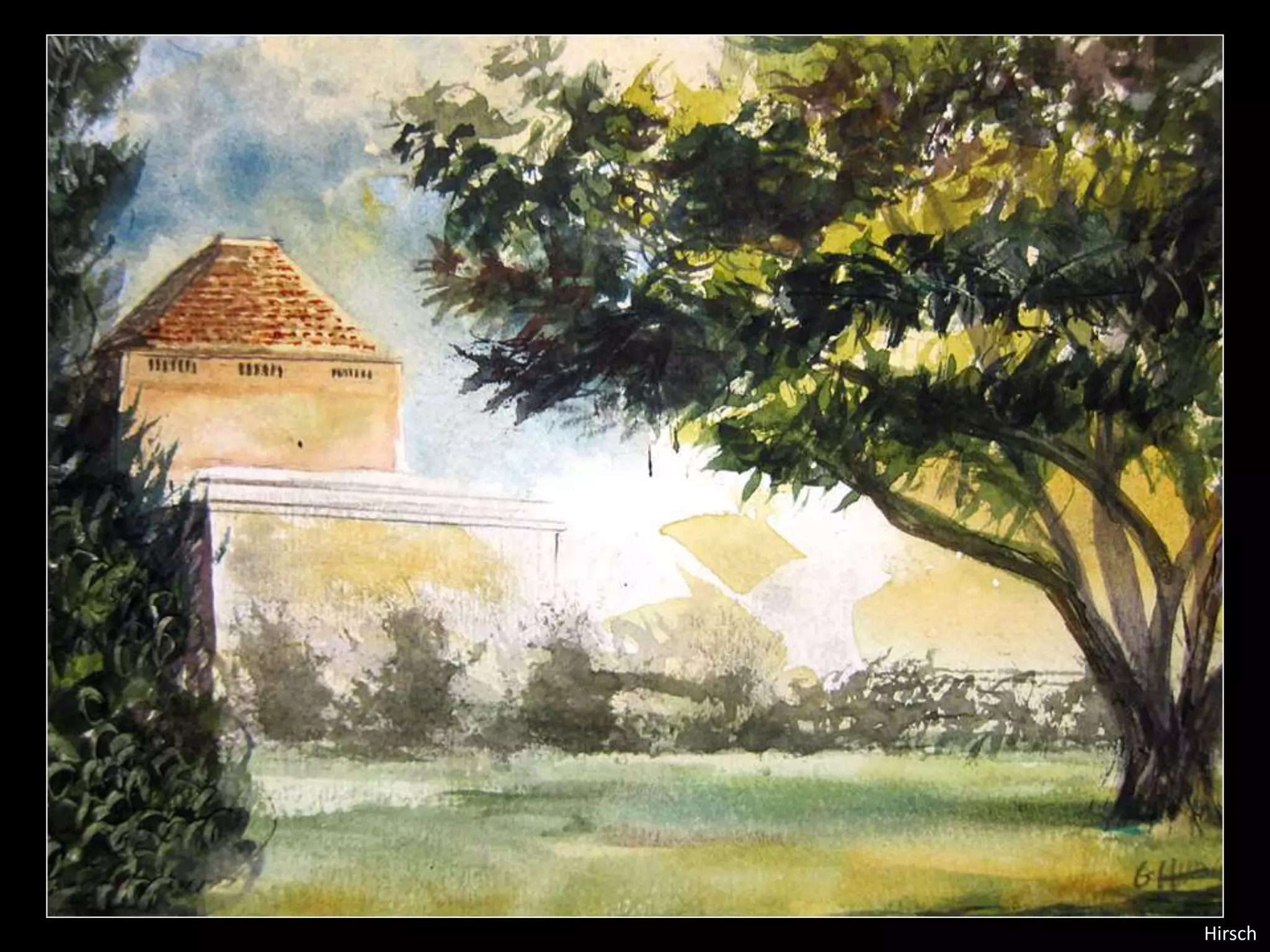
Hirsch
Hirsch
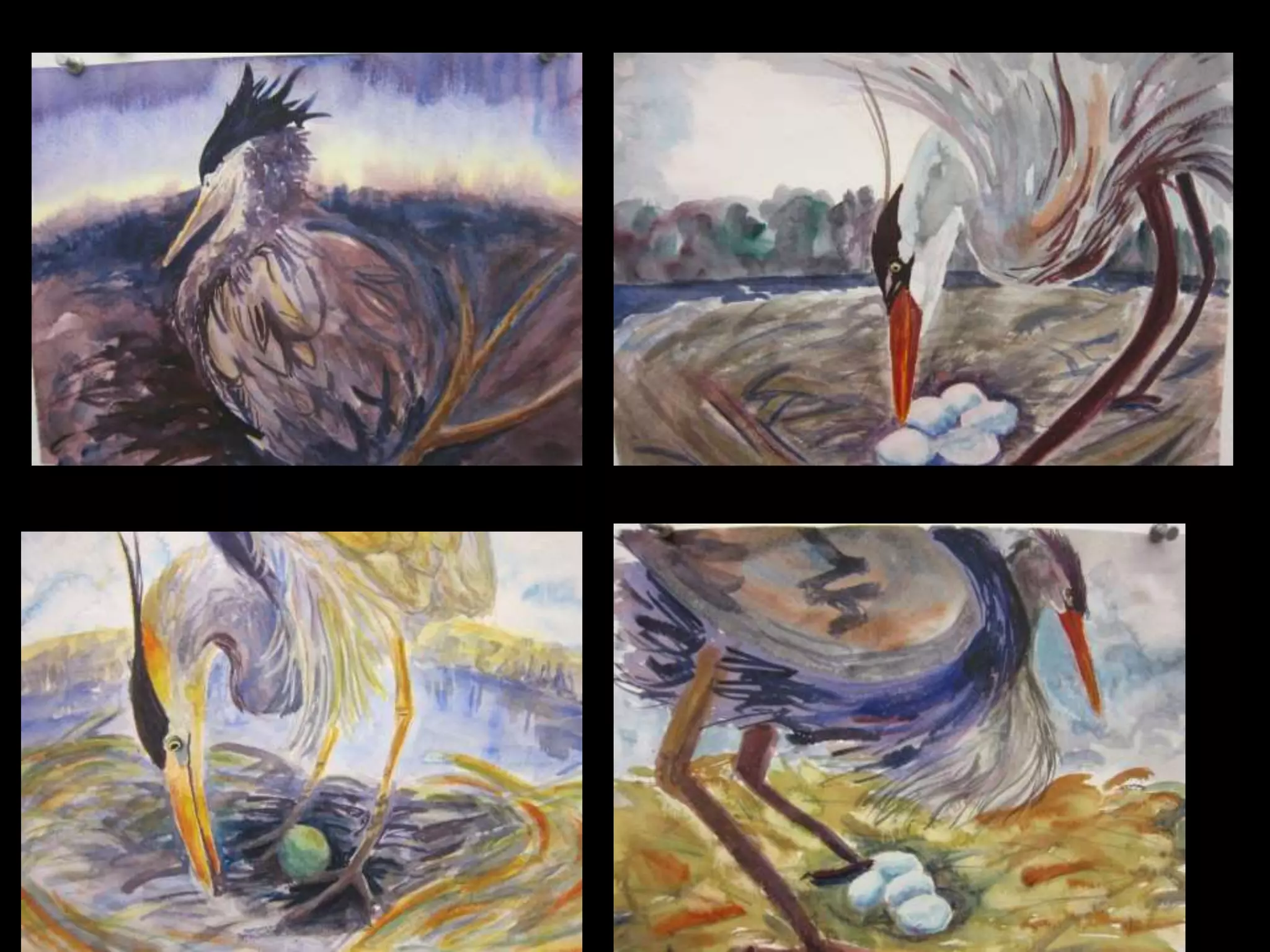
Student work
Susan Shipley
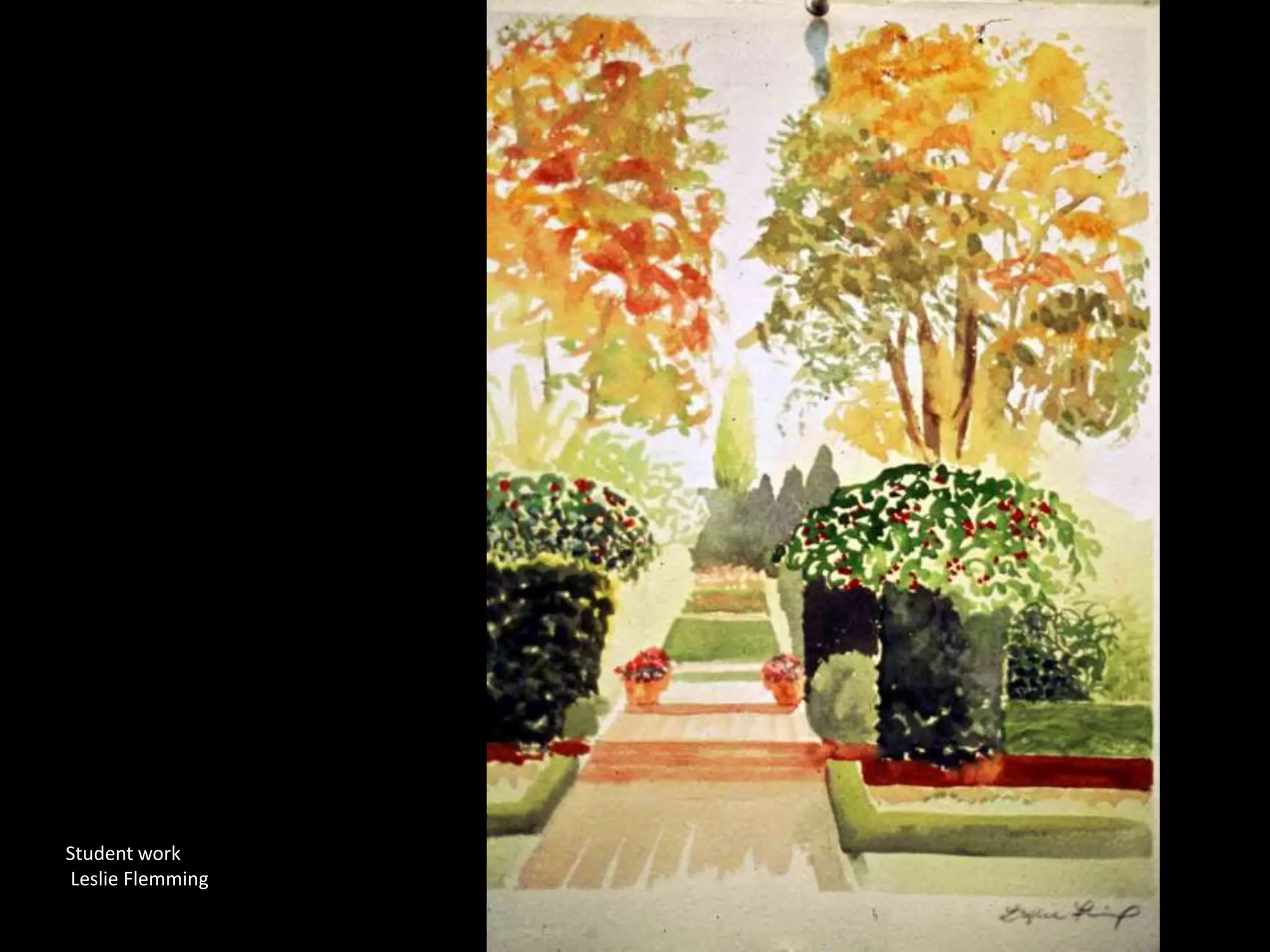
Student work
Leslie Flemming
Student work
Kevin Dame
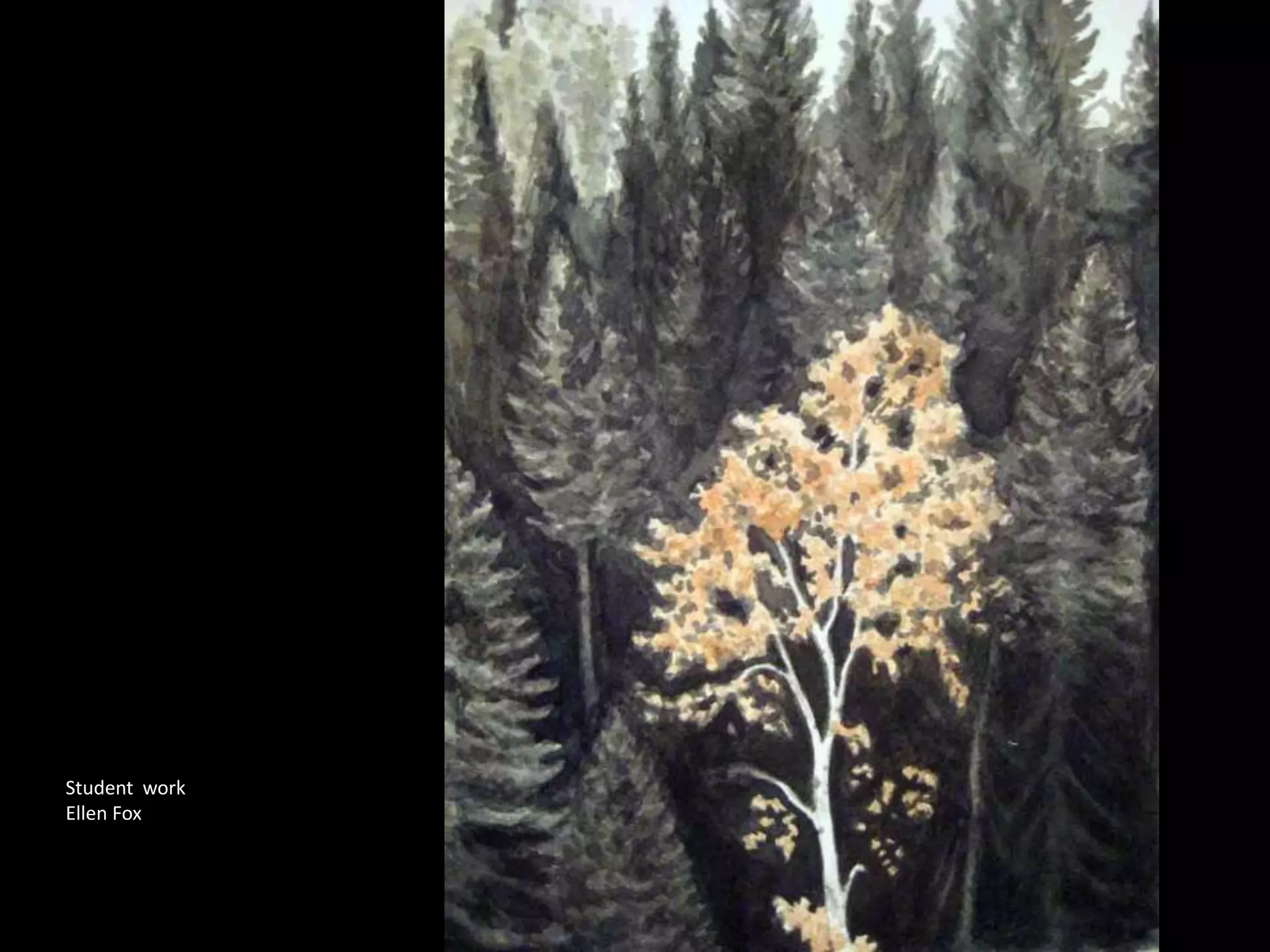
Student work
Ellen Fox
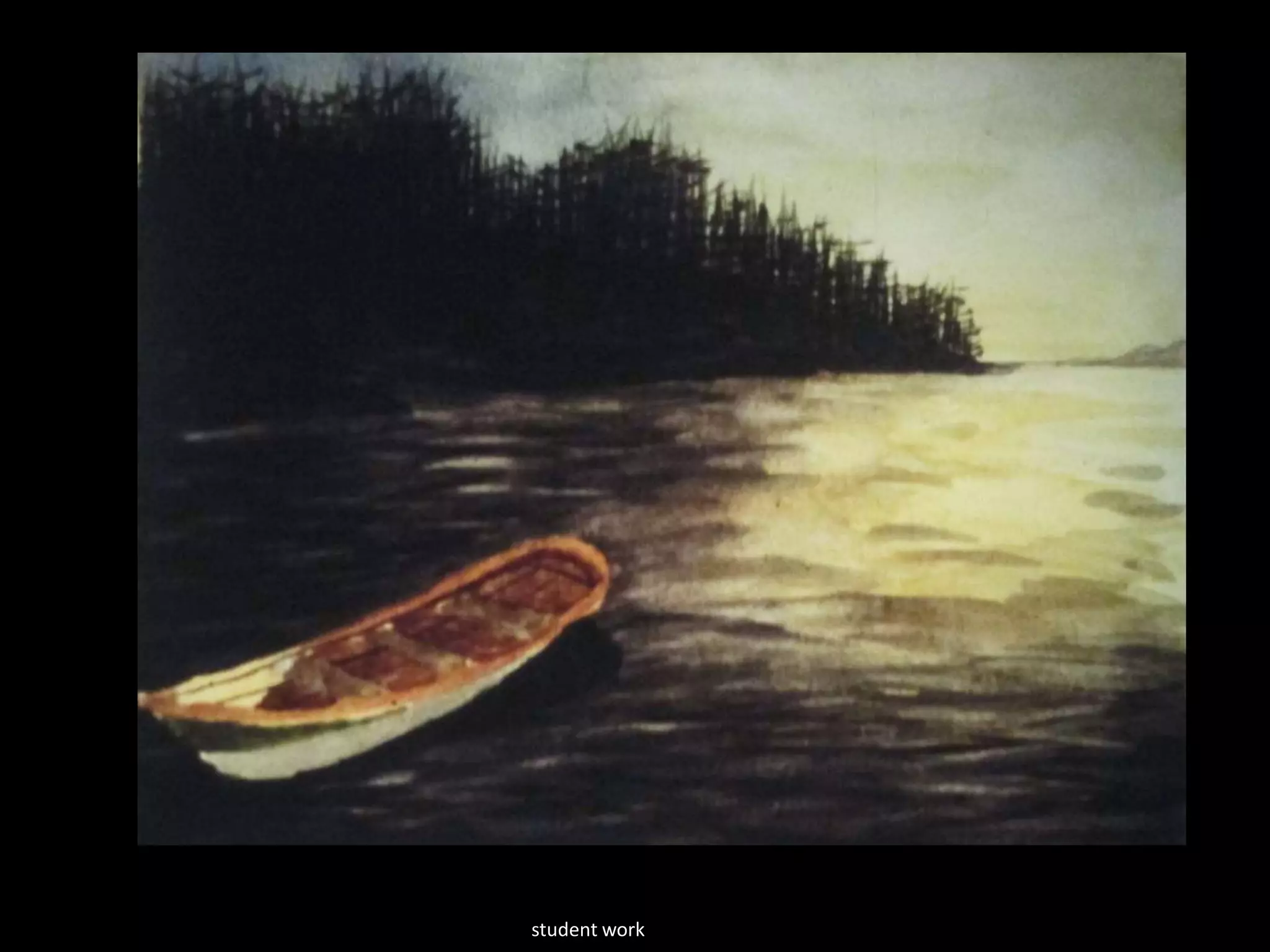
student work
week 6-7
portraits
John Singer Sargent, 1910
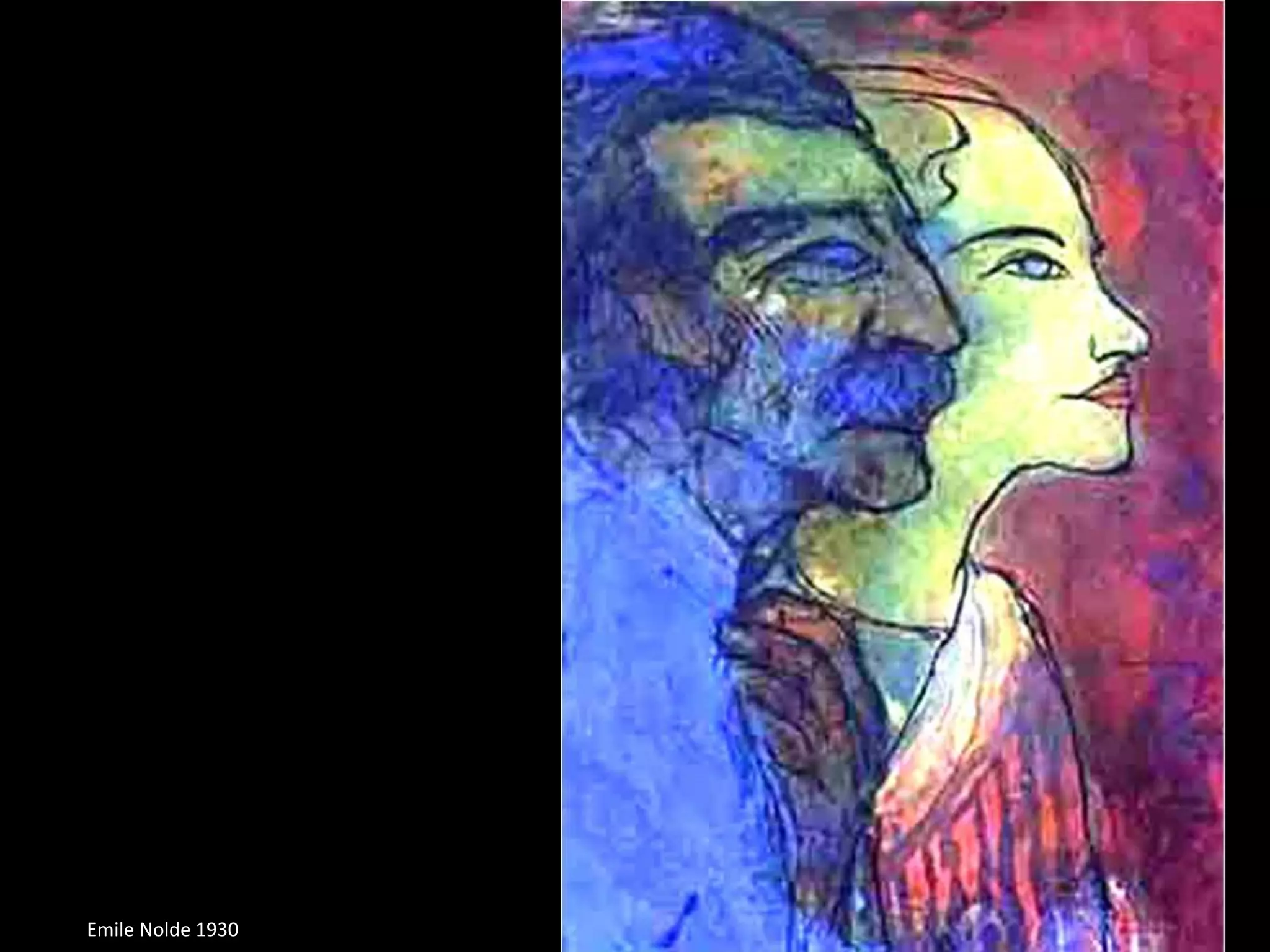
Emile Nolde 1930
Louise Stanley 1996
weeks 8-9-10
course project:
a series of 3+ paintings
what we’ll do today
ABSTRACTION
exploring the brush
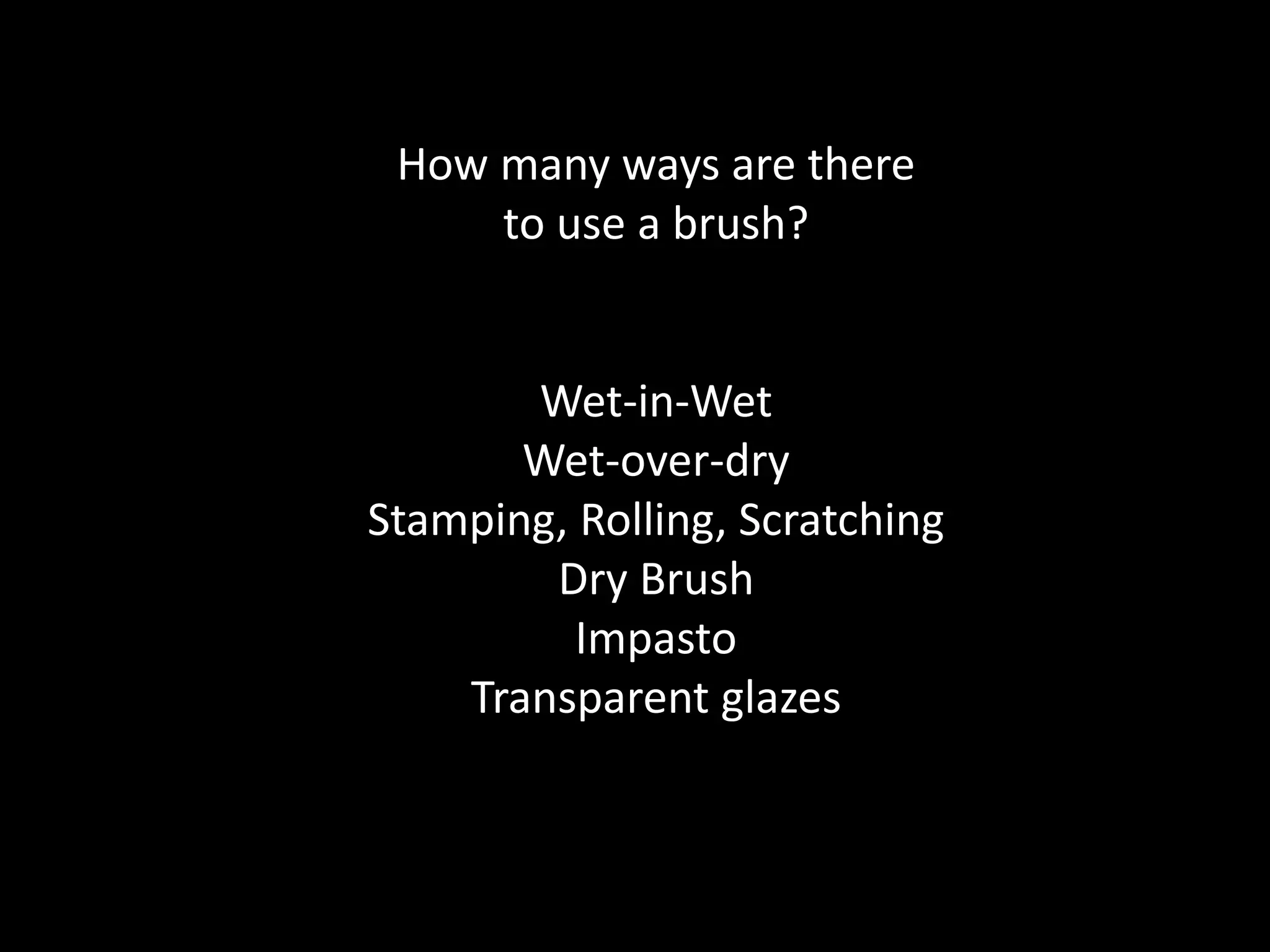
How many ways are there
to use a brush?
Wet-in-Wet
Wet-over-dry
Stamping, Rolling, Scratching
Dry Brush
Impasto
Transparent glazes
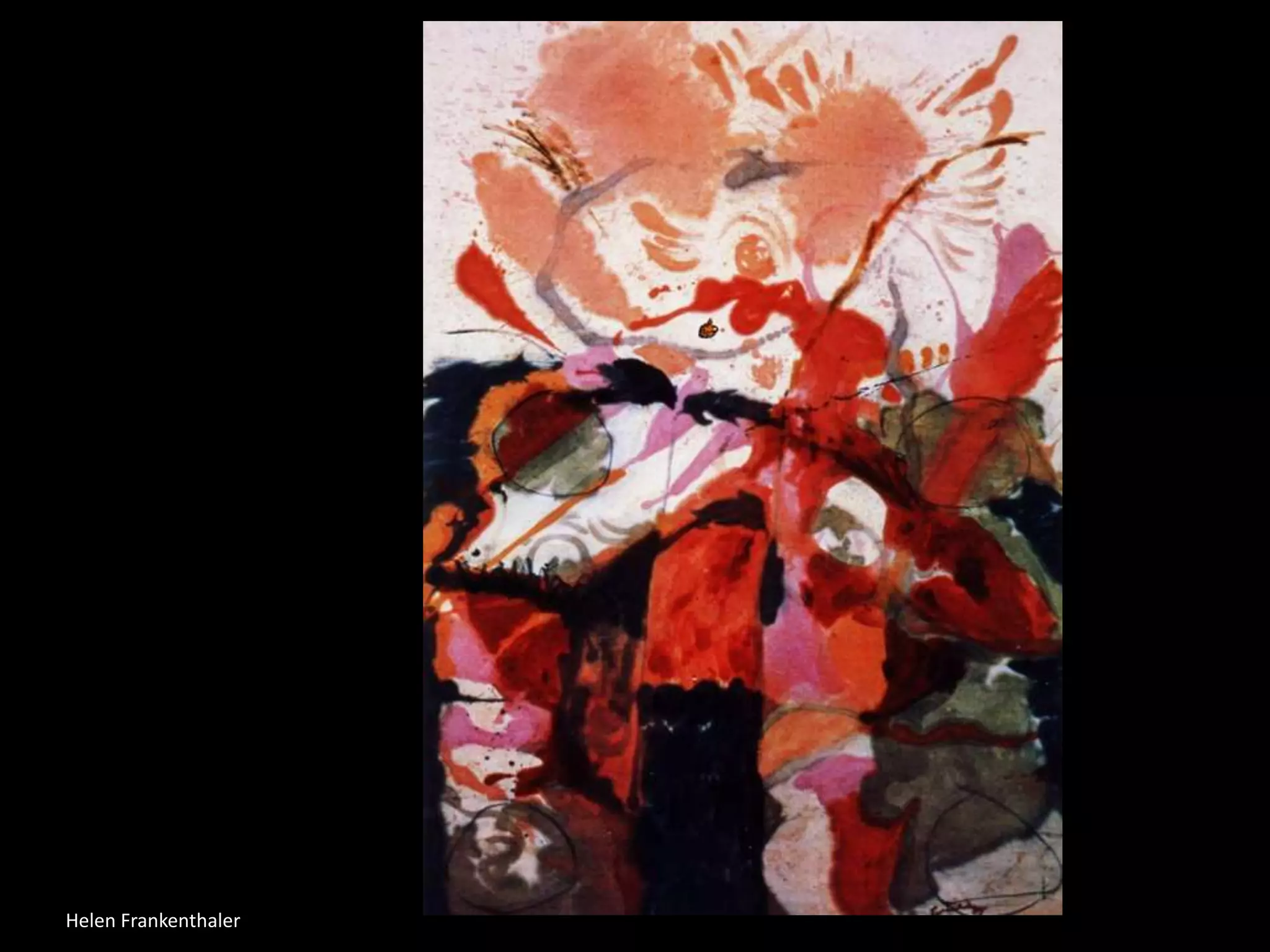
Helen Frankenthaler
Mark Rothko
Fred Martin
Fred Martin

Watercolor Flow, Color, Concept and History