Watercolor Painting Tips 
for Beginners
Overviews 
From a technical point of view, learning to use watercolor 
is simple: add water to the paint, put brush on paper, and 
you're painting. It's the beginning of an exciting and 
intriguing artistic journey. These 10 watercolor painting 
tips will help you avoid basic mistakes and get better 
results right from the start.
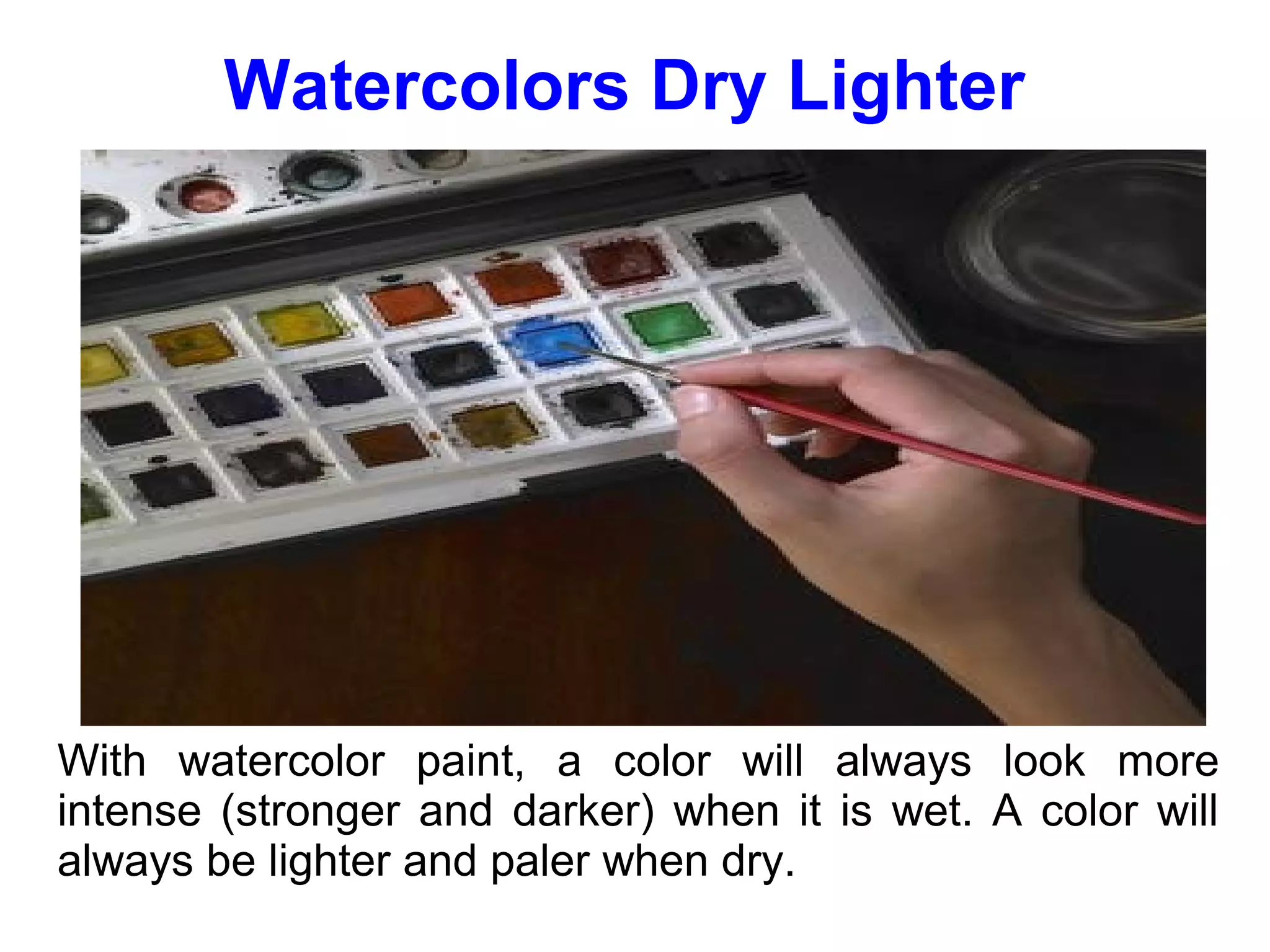
Watercolors Dry Lighter 
With watercolor paint, a color will always look more 
intense (stronger and darker) when it is wet. A color will 
always be lighter and paler when dry.
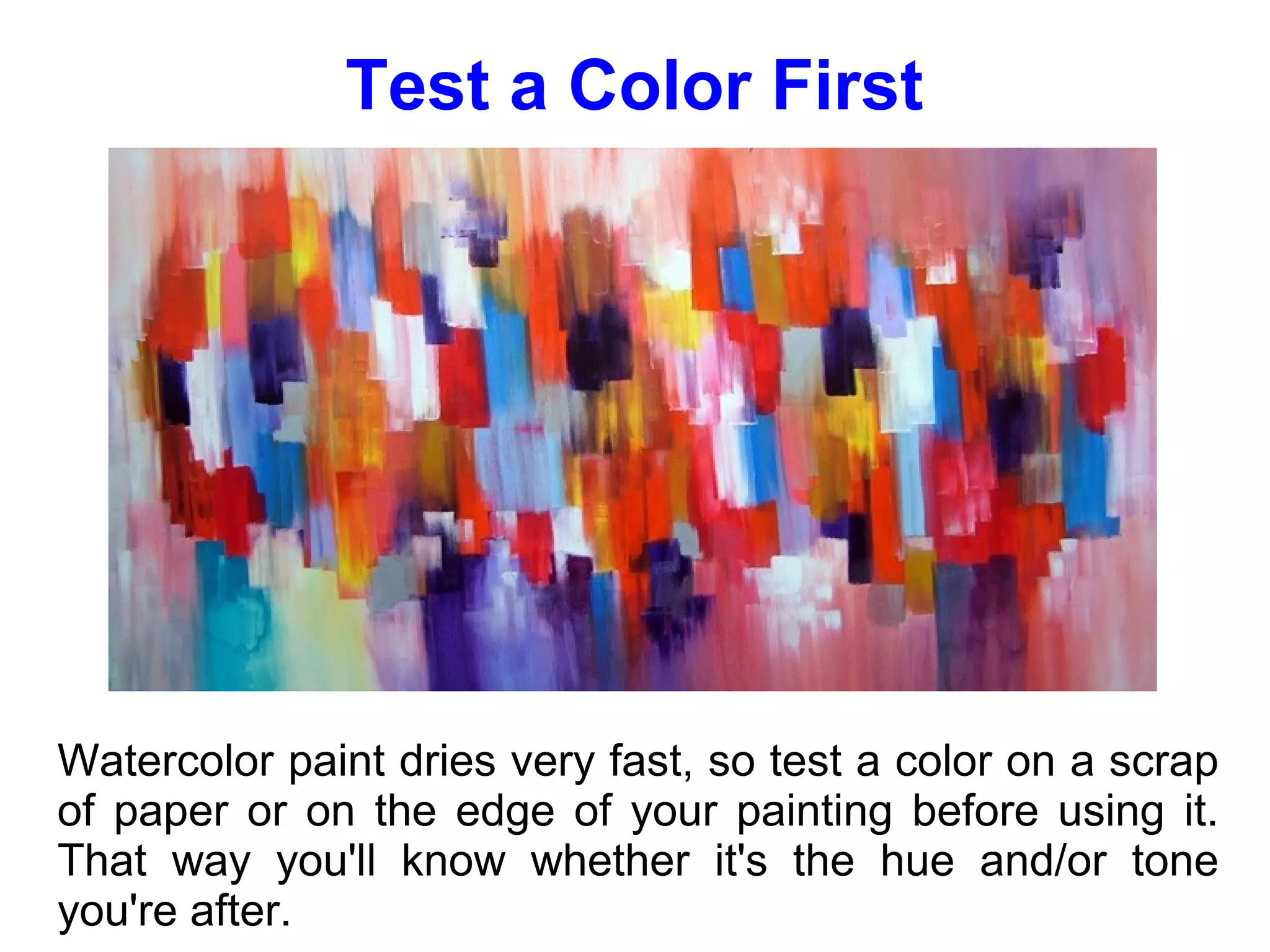
Test a Color First 
Watercolor paint dries very fast, so test a color on a scrap 
of paper or on the edge of your painting before using it. 
That way you'll know whether it's the hue and/or tone 
you're after.
Dry Watercolor Remains Soluble 
Even once watercolor paint has dried, it remains water 
soluble. You can re-wet the dried paint with water on a 
brush and it will 'turn' back into paint. This means you can 
lift the paint off the paper to fix a mistake, lighten a color 
by removing some of it, or even mix it with new paint.
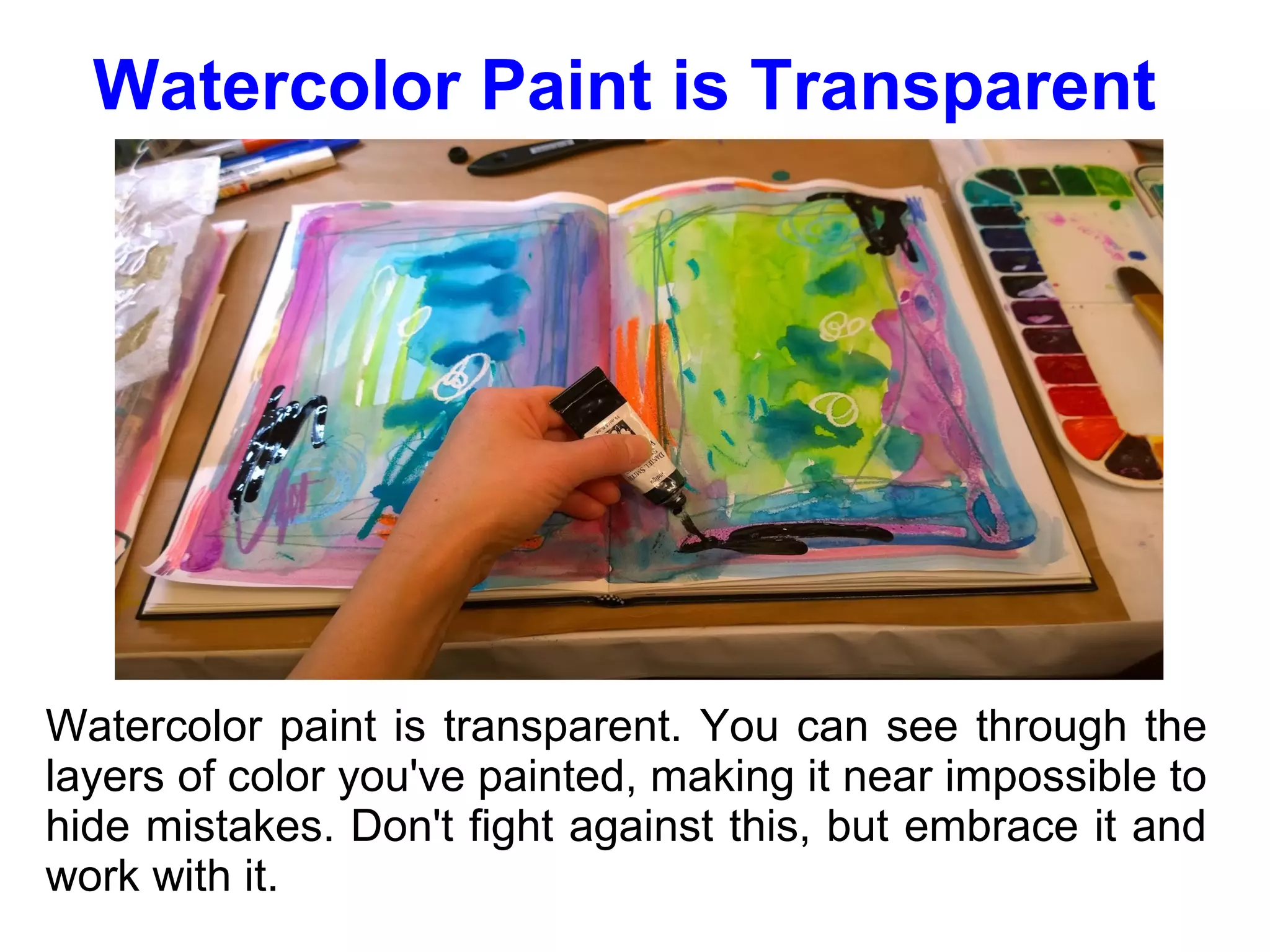
Watercolor Paint is Transparent 
Watercolor paint is transparent. You can see through the 
layers of color you've painted, making it near impossible to 
hide mistakes. Don't fight against this, but embrace it and 
work with it.
Light to Dark 
Because the white in watercolor comes from the white of 
the paper, not the paint itself, the usual advice is to paint 
from light to dark. To start with the lightest colors and 
tones, and build your way up to the darkest.
Use a Decent Watercolor Brush 
Rather have just one, good brush than a handful of cheap 
ones that splay out and drop hairs. It'll save you a lot of 
frustration. A good brush retains its shape so you can get 
a very fine brushmark from the point; it holds a good 
quantity of paint so you need to reload it less often
Watercolor painting tips for beginners

Watercolor painting tips for beginners

  • 1.
  • 2.
    Overviews From atechnical point of view, learning to use watercolor is simple: add water to the paint, put brush on paper, and you're painting. It's the beginning of an exciting and intriguing artistic journey. These 10 watercolor painting tips will help you avoid basic mistakes and get better results right from the start.
  • 3.
    Watercolors Dry Lighter With watercolor paint, a color will always look more intense (stronger and darker) when it is wet. A color will always be lighter and paler when dry.
  • 4.
    Test a ColorFirst Watercolor paint dries very fast, so test a color on a scrap of paper or on the edge of your painting before using it. That way you'll know whether it's the hue and/or tone you're after.
  • 5.
    Dry Watercolor RemainsSoluble Even once watercolor paint has dried, it remains water soluble. You can re-wet the dried paint with water on a brush and it will 'turn' back into paint. This means you can lift the paint off the paper to fix a mistake, lighten a color by removing some of it, or even mix it with new paint.
  • 6.
    Watercolor Paint isTransparent Watercolor paint is transparent. You can see through the layers of color you've painted, making it near impossible to hide mistakes. Don't fight against this, but embrace it and work with it.
  • 7.
    Light to Dark Because the white in watercolor comes from the white of the paper, not the paint itself, the usual advice is to paint from light to dark. To start with the lightest colors and tones, and build your way up to the darkest.
  • 8.
    Use a DecentWatercolor Brush Rather have just one, good brush than a handful of cheap ones that splay out and drop hairs. It'll save you a lot of frustration. A good brush retains its shape so you can get a very fine brushmark from the point; it holds a good quantity of paint so you need to reload it less often