Marci Godfrey
MARK ROTHKO: HUMAN BEING
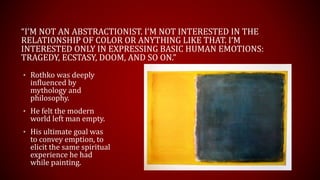
“I‘M NOT AN ABSTRACTIONIST. I‘M NOT INTERESTED IN THE
RELATIONSHIP OF COLOR OR ANYTHING LIKE THAT. I‘M
INTERESTED ONLY IN EXPRESSING BASIC HUMAN EMOTIONS:
TRAGEDY, ECSTASY, DOOM, AND SO ON.”
• Rothko was deeply
influenced by
mythology and
philosophy.
• He felt the modern
world left man empty.
• His ultimate goal was
to convey emption, to
elicit the same spiritual
experience he had
while painting.
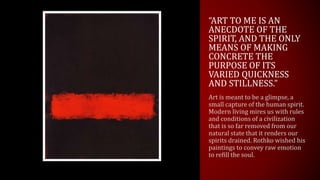
“ART TO ME IS AN
ANECDOTE OF THE
SPIRIT, AND THE ONLY
MEANS OF MAKING
CONCRETE THE
PURPOSE OF ITS
VARIED QUICKNESS
AND STILLNESS.”
Art is meant to be a glimpse, a
small capture of the human spirit.
Modern living mires us with rules
and conditions of a civilization
that is so far removed from our
natural state that it renders our
spirits drained. Rothko wished his
paintings to convey raw emotion
to refill the soul.
“THE FACT THAT PEOPLE BREAK DOWN
AND CRY WHEN CONFRONTED WITH MY
PICTURES SHOWS THAT I CAN
COMMUNICATE BASIC HUMAN EMOTIONS.
THE PEOPLE WHO WEEP BEFORE MY
PICTURES ARE HAVING THE SAME
RELIGIOUS EXPERIENCE I HAD WHEN
PAINTING THEM.”
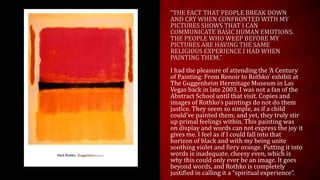
I had the pleasure of attending the ‘A Century
of Painting: From Renoir to Rothko’ exhibit at
The Guggenheim Hermitage Museum in Las
Vegas back in late 2003. I was not a fan of the
Abstract School until that visit. Copies and
images of Rothko’s paintings do not do them
justice. They seem so simple, as if a child
could've painted them; and yet, they truly stir
up primal feelings within. This painting was
on display and words can not express the joy it
gives me. I feel as if I could fall into that
horizon of black and with my being unite
soothing violet and fiery orange. Putting it into
words is inadequate, cheesy even, which is
why this could only ever be an image. It goes
beyond words, and Rothko is completely
justified in calling it a “spiritual experience”.
“IT IS WITH UTMOST RELUCTANCE THAT I FOUND THE FIGURE COULD NOT
SERVE MY PURPOSES. BUT A TIME CAME WHEN NONE OF US COULD USE
THE FIGURE WITHOUT MUTILATING IT.”
Entrance to Subway, 1938 Untitled, Unknown
“THE PROGRESSION OF A
PAINTER’S WORK AS IT
TRAVELS IN TIME FROM
POINT TO POINT, WILL BE
TOWARD CLARITY…
TOWARD THE
ELIMINATION OF
OBSTACLES BETWEEN THE
PAINTER AND THE IDEA…
AND THE IDEA AND THE
OBSERVER. TO ACHIEVE
THIS CLARITY IS
INEVITABLY TO BE
UNDERSTOOD.”
Rothko eventually abandoned
painting figures as they hindered
his ability to convey the desired
emotion. The world had changed
after WW2; painters could no
longer paint “the figure without
mutilating it”.
“SINCE MY PICTURES ARE LARGE, COLORFUL AND UNFRAMED, AND SINCE
MUSEUM WALLS ARE USUALLY IMMENSE AND FORMIDABLE, THERE IS A DANGER
THAT THE PICTURES RELATE THEMSELVES AS DECORATIVE AREAS TO THE
WALLS. THIS WOULD BE A DISTORTION OF THEIR MEANING, SINCE THE PICTURES
ARE INTIMATE AND INTENSE, AND ARE THE OPPOSITE OF DECORATIVE.”
“I ALSO HANG THE
PICTURES LOW RATHER
THAN HIGH, AND
PARTICULARLY IN THE
CASE OF THE LARGEST
ONES, OFTEN AS CLOSE TO
THE FLOOR AS FEASIBLE,
FOR THAT IS THE WAY
THEY ARE PAINTED.”
Rothko was more concerned with
how his paintings were presented
and observed than any monetary
gain, this is especially illustrated
by the Four Season‘s commission
that fell through. He wanted them
observed as he painted them, up
close and personal. He was trying
to share an experience, not just a
pigment.
“I DO NOT BELIEVE THERE WAS EVER A QUESTION OF BEING ABSTRACT OR
REPRESENTATIONAL. IT IS REALLY A MATTER OF ENDING THIS SILENCE
AND SOLITUDE, OF BREATHING, AND STRETCHING ONE’S ARMS AGAIN
TRANSCENDENTAL EXPERIENCES BECAME POSSIBLE.”
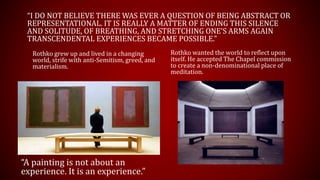
Rothko wanted the world to reflect upon
itself. He accepted The Chapel commission
to create a non-denominational place of
meditation.
Rothko grew up and lived in a changing
world, strife with anti-Semitism, greed, and
materialism.
“A painting is not about an
experience. It is an experience.”
Mark Rothko
ONE DOES NOT PAINT
FOR DESIGN STUDENTS
OR HISTORIANS BUT
FOR HUMAN BEINGS,
AND THE REACTION IN
HUMAN TERMS IS THE
ONLY THING THAT IS
REALLY SATISFACTORY
TO THE ARTIST.
BIBLIOGRAPHY
ARTcyclopedia - Mark Rothko. n.d. 9 March 2015.
<artcyclopedia.com/artists/rothko_mark.html>.
Chrysler Museum of Art - Mark Rothko: Perceptions of Being. n.d. 9 March
2015. <chrysler.org/exhibitions/rothko-perceptions-of-being/>.
Guggenheim. n.d. 11 March 2015. <guggenheim.org/new-
york/collections/collection-online/artists/bios/1190>.
MarkRothko.org Artist Retrospective. n.d. 6 March 2015.
<markrothko.org>.
MoMA - Museum of Modern Art. n.d. 10 March 2015. <moma.org>.
Power of Art: Rothko. Perf. Simon Schama. BBC, 2006.
<youtube.com/watch?v=s6xLztH36kY>.
Rivers and Tides. Dir. Thomas Riedelsheimer. Perf. Andy Goldsworthy.
2001. <youtube.com/watch?v=xQiHfgFnY_A>.
Rothko Chapel. n.d. 9 March 2015. <rothkochapel.org/>.
Tate. n.d. 9 March 2015. <tate.org.uk/art/artists/mark-rothko-1875>.
TheArtStory.org - Mark Rothko. n.d. 10 March 2014.
<theartstory.org/artist-rothko-mark.htm>.
WikiArt. n.d. 11 March 2015. <wikiart.org/en/mark-rothko>.

Mark rothko

  • 1.
  • 2.
    “I‘M NOT ANABSTRACTIONIST. I‘M NOT INTERESTED IN THE RELATIONSHIP OF COLOR OR ANYTHING LIKE THAT. I‘M INTERESTED ONLY IN EXPRESSING BASIC HUMAN EMOTIONS: TRAGEDY, ECSTASY, DOOM, AND SO ON.” • Rothko was deeply influenced by mythology and philosophy. • He felt the modern world left man empty. • His ultimate goal was to convey emption, to elicit the same spiritual experience he had while painting.
  • 3.
    “ART TO MEIS AN ANECDOTE OF THE SPIRIT, AND THE ONLY MEANS OF MAKING CONCRETE THE PURPOSE OF ITS VARIED QUICKNESS AND STILLNESS.” Art is meant to be a glimpse, a small capture of the human spirit. Modern living mires us with rules and conditions of a civilization that is so far removed from our natural state that it renders our spirits drained. Rothko wished his paintings to convey raw emotion to refill the soul.
  • 4.
    “THE FACT THATPEOPLE BREAK DOWN AND CRY WHEN CONFRONTED WITH MY PICTURES SHOWS THAT I CAN COMMUNICATE BASIC HUMAN EMOTIONS. THE PEOPLE WHO WEEP BEFORE MY PICTURES ARE HAVING THE SAME RELIGIOUS EXPERIENCE I HAD WHEN PAINTING THEM.” I had the pleasure of attending the ‘A Century of Painting: From Renoir to Rothko’ exhibit at The Guggenheim Hermitage Museum in Las Vegas back in late 2003. I was not a fan of the Abstract School until that visit. Copies and images of Rothko’s paintings do not do them justice. They seem so simple, as if a child could've painted them; and yet, they truly stir up primal feelings within. This painting was on display and words can not express the joy it gives me. I feel as if I could fall into that horizon of black and with my being unite soothing violet and fiery orange. Putting it into words is inadequate, cheesy even, which is why this could only ever be an image. It goes beyond words, and Rothko is completely justified in calling it a “spiritual experience”.
  • 5.
    “IT IS WITHUTMOST RELUCTANCE THAT I FOUND THE FIGURE COULD NOT SERVE MY PURPOSES. BUT A TIME CAME WHEN NONE OF US COULD USE THE FIGURE WITHOUT MUTILATING IT.” Entrance to Subway, 1938 Untitled, Unknown
  • 6.
    “THE PROGRESSION OFA PAINTER’S WORK AS IT TRAVELS IN TIME FROM POINT TO POINT, WILL BE TOWARD CLARITY… TOWARD THE ELIMINATION OF OBSTACLES BETWEEN THE PAINTER AND THE IDEA… AND THE IDEA AND THE OBSERVER. TO ACHIEVE THIS CLARITY IS INEVITABLY TO BE UNDERSTOOD.” Rothko eventually abandoned painting figures as they hindered his ability to convey the desired emotion. The world had changed after WW2; painters could no longer paint “the figure without mutilating it”.
  • 7.
    “SINCE MY PICTURESARE LARGE, COLORFUL AND UNFRAMED, AND SINCE MUSEUM WALLS ARE USUALLY IMMENSE AND FORMIDABLE, THERE IS A DANGER THAT THE PICTURES RELATE THEMSELVES AS DECORATIVE AREAS TO THE WALLS. THIS WOULD BE A DISTORTION OF THEIR MEANING, SINCE THE PICTURES ARE INTIMATE AND INTENSE, AND ARE THE OPPOSITE OF DECORATIVE.”
  • 8.
    “I ALSO HANGTHE PICTURES LOW RATHER THAN HIGH, AND PARTICULARLY IN THE CASE OF THE LARGEST ONES, OFTEN AS CLOSE TO THE FLOOR AS FEASIBLE, FOR THAT IS THE WAY THEY ARE PAINTED.” Rothko was more concerned with how his paintings were presented and observed than any monetary gain, this is especially illustrated by the Four Season‘s commission that fell through. He wanted them observed as he painted them, up close and personal. He was trying to share an experience, not just a pigment.
  • 9.
    “I DO NOTBELIEVE THERE WAS EVER A QUESTION OF BEING ABSTRACT OR REPRESENTATIONAL. IT IS REALLY A MATTER OF ENDING THIS SILENCE AND SOLITUDE, OF BREATHING, AND STRETCHING ONE’S ARMS AGAIN TRANSCENDENTAL EXPERIENCES BECAME POSSIBLE.” Rothko wanted the world to reflect upon itself. He accepted The Chapel commission to create a non-denominational place of meditation. Rothko grew up and lived in a changing world, strife with anti-Semitism, greed, and materialism. “A painting is not about an experience. It is an experience.”
  • 10.
    Mark Rothko ONE DOESNOT PAINT FOR DESIGN STUDENTS OR HISTORIANS BUT FOR HUMAN BEINGS, AND THE REACTION IN HUMAN TERMS IS THE ONLY THING THAT IS REALLY SATISFACTORY TO THE ARTIST.
  • 11.
    BIBLIOGRAPHY ARTcyclopedia - MarkRothko. n.d. 9 March 2015. <artcyclopedia.com/artists/rothko_mark.html>. Chrysler Museum of Art - Mark Rothko: Perceptions of Being. n.d. 9 March 2015. <chrysler.org/exhibitions/rothko-perceptions-of-being/>. Guggenheim. n.d. 11 March 2015. <guggenheim.org/new- york/collections/collection-online/artists/bios/1190>. MarkRothko.org Artist Retrospective. n.d. 6 March 2015. <markrothko.org>. MoMA - Museum of Modern Art. n.d. 10 March 2015. <moma.org>. Power of Art: Rothko. Perf. Simon Schama. BBC, 2006. <youtube.com/watch?v=s6xLztH36kY>. Rivers and Tides. Dir. Thomas Riedelsheimer. Perf. Andy Goldsworthy. 2001. <youtube.com/watch?v=xQiHfgFnY_A>. Rothko Chapel. n.d. 9 March 2015. <rothkochapel.org/>. Tate. n.d. 9 March 2015. <tate.org.uk/art/artists/mark-rothko-1875>. TheArtStory.org - Mark Rothko. n.d. 10 March 2014. <theartstory.org/artist-rothko-mark.htm>. WikiArt. n.d. 11 March 2015. <wikiart.org/en/mark-rothko>.