HEAVEN ON EARTH!!! BUT DO WE  CARE ?? A PROJECT ON WATER POLLUTION.
“ WHEN THE QUALITY OR COMPOSITION OF WATER CHANGES DIRECTLY OR INDIRECTLY AS A RESULT OF MANS ACTIVITIES SUCH THAT IT BECOMES UNFIT FOR ANY PURPOSE IT IS SAID TO BE POLLUTED”
 
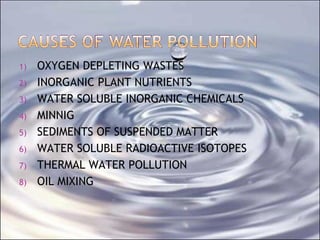
OXYGEN DEPLETING WASTES INORGANIC PLANT NUTRIENTS WATER SOLUBLE INORGANIC CHEMICALS MINNIG SEDIMENTS OF SUSPENDED MATTER WATER SOLUBLE RADIOACTIVE ISOTOPES THERMAL WATER POLLUTION OIL MIXING
 
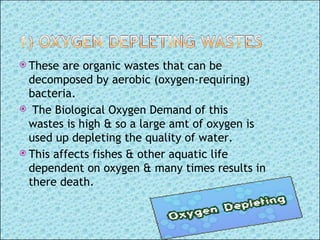
These are organic wastes that can be decomposed by aerobic (oxygen-requiring) bacteria.  The Biological Oxygen Demand of this wastes is high & so a large amt of oxygen is used up depleting the quality of water. This affects fishes & other aquatic life dependent on oxygen & many times results in there death.
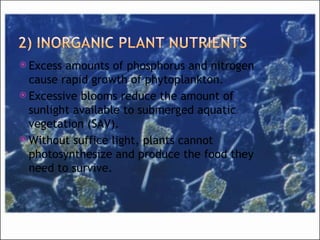
Excess amounts of phosphorus and nitrogen cause rapid growth of phytoplankton. Excessive blooms reduce the amount of sunlight available to submerged aquatic vegetation (SAV). Without suffice light, plants cannot photosynthesize and produce the food they need to survive.
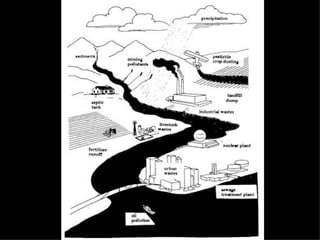
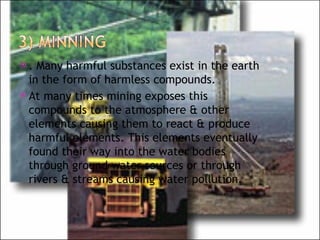
. Many harmful substances exist in the earth in the form of harmless compounds. At many times mining exposes this compounds to the atmosphere & other elements causing them to react & produce harmful elements. This elements eventually found their way into the water bodies through ground water sources or through rivers & streams causing water pollution.
Thermal pollution is defined as deleterious increases or reductions in normal water temperatures of receiving waters caused by the disposal of · Heat increases biological oxidation.     · Heat decreases oxygen saturation content of water and decreases rate of natural reoxygenation. · The net effect of heat is generally detrimental during warm months of year. · Winter effect may be beneficial in colder climates, where ice conditions are broken up and surface aeration is provided for fish and aquatic life. heat from human-made facilities.
When forests are "clear cut," the root systems that previously held soil in place die and sediment is free to run off into nearby streams, rivers, and lakes. Thus, not only does clearcutting have serious effects on plant and animal biodiversity in the forest, the increased amount of sediment running off the land into nearby bodies of water seriously affects fish and other aquatic life. Poor farming practices that leave soil exposed to the elements also contribute to sediment pollution in water.
Even nuclear energy is among the causes of water pollution. Radioactive water pollution has a number sources, including The normal operation of nuclear power stations (i.e. from the nuclear waste);  The mining and refining of uranium and thorium; and  The use of radioactive materials in industrial, medical, and scientific processes.
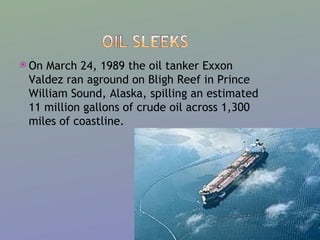
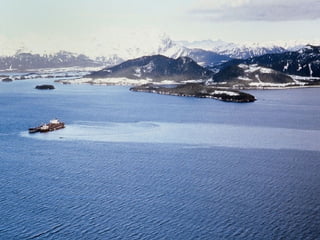
On March 24, 1989 the oil tanker Exxon Valdez ran aground on Bligh Reef in Prince William Sound, Alaska, spilling an estimated 11 million gallons of crude oil across 1,300 miles of coastline.
 
These include acids, salts,& compounds of toxic metals like mercury & lead. The deposit of this chemicals highly affect the quality of water. They interfere in the normal cycle of marine life. Over acidity and saltiness is highly harmful.


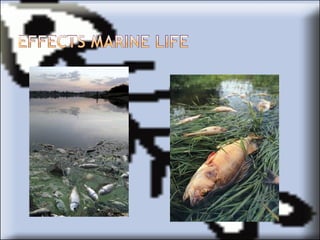
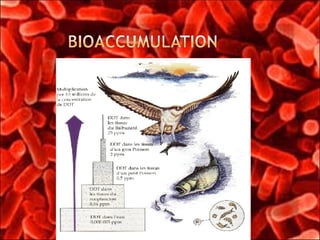
SPREAD OF DISEASES AFFECTS MARINE LIFE REDUCES PORTABLITY OF WATER FURTHER RESULTS IN SOIL POLLUTION EUTROPHICATION BIOACCUMULATION
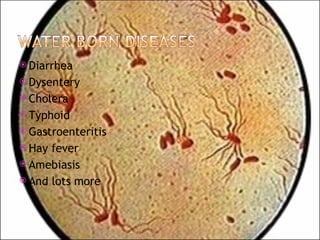
Diarrhea Dysentery Cholera Typhoid Gastroenteritis Hay fever Amebiasis And lots more
 
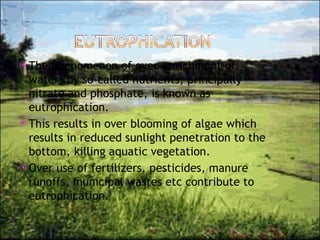
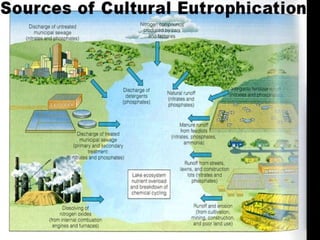
The phenomenon of over-enrichment of waters by so-called nutrients, principally nitrate and phosphate, is known as eutrophication. This results in over blooming of algae which results in reduced sunlight penetration to the bottom, killing aquatic vegetation. Over use of fertilizers, pesticides, manure runoffs, municipal wastes etc contribute to eutrophication.
 
 
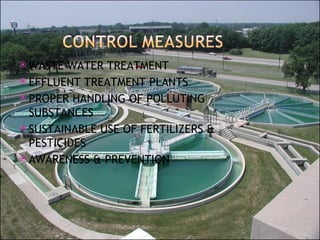
WASTE WATER TREATMENT EFFLUENT TREATMENT PLANTS PROPER HANDLING OF POLLUTING SUBSTANCES SUSTAINABLE USE OF FERTILIZERS & PESTICIDES AWARENESS & PREVENTION
 
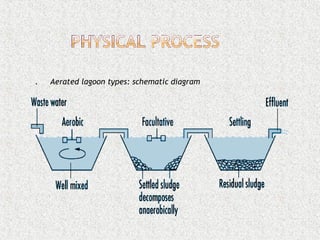
.     Aerated lagoon types: schematic diagram
 
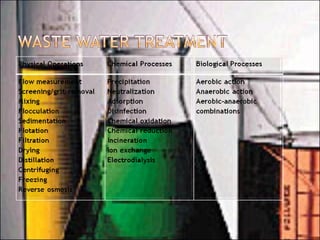
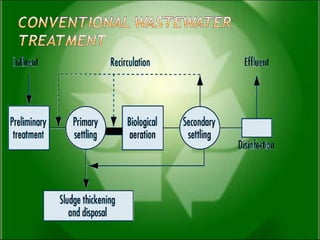
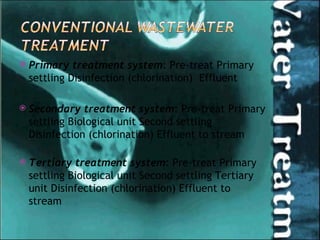
Primary treatment system : Pre-treat Primary settling Disinfection (chlorination)  Effluent  Secondary treatment system : Pre-treat Primary settling Biological unit Second settling Disinfection (chlorination) Effluent to stream Tertiary treatment system : Pre-treat Primary settling Biological unit Second settling Tertiary unit Disinfection (chlorination) Effluent to stream
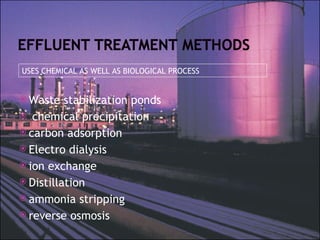
Waste stabilization ponds chemical precipitation carbon adsorption Electro dialysis ion exchange Distillation ammonia stripping reverse osmosis USES CHEMICAL AS WELL AS BIOLOGICAL PROCESS
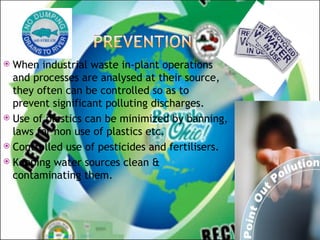
When industrial waste in-plant operations and processes are analysed at their source, they often can be controlled so as to prevent significant polluting discharges. Use of plastics can be minimized by banning, laws for non use of plastics etc. Controlled use of pesticides and fertilisers. Keeping water sources clean & contaminating them.
THANK YOU

Water Polution

  • 1.
    HEAVEN ON EARTH!!!BUT DO WE CARE ?? A PROJECT ON WATER POLLUTION.
  • 2.
    “ WHEN THEQUALITY OR COMPOSITION OF WATER CHANGES DIRECTLY OR INDIRECTLY AS A RESULT OF MANS ACTIVITIES SUCH THAT IT BECOMES UNFIT FOR ANY PURPOSE IT IS SAID TO BE POLLUTED”
  • 3.
  • 4.
    OXYGEN DEPLETING WASTESINORGANIC PLANT NUTRIENTS WATER SOLUBLE INORGANIC CHEMICALS MINNIG SEDIMENTS OF SUSPENDED MATTER WATER SOLUBLE RADIOACTIVE ISOTOPES THERMAL WATER POLLUTION OIL MIXING
  • 5.
  • 6.
    These are organicwastes that can be decomposed by aerobic (oxygen-requiring) bacteria. The Biological Oxygen Demand of this wastes is high & so a large amt of oxygen is used up depleting the quality of water. This affects fishes & other aquatic life dependent on oxygen & many times results in there death.
  • 7.
    Excess amounts ofphosphorus and nitrogen cause rapid growth of phytoplankton. Excessive blooms reduce the amount of sunlight available to submerged aquatic vegetation (SAV). Without suffice light, plants cannot photosynthesize and produce the food they need to survive.
  • 8.
    . Many harmfulsubstances exist in the earth in the form of harmless compounds. At many times mining exposes this compounds to the atmosphere & other elements causing them to react & produce harmful elements. This elements eventually found their way into the water bodies through ground water sources or through rivers & streams causing water pollution.
  • 9.
    Thermal pollution isdefined as deleterious increases or reductions in normal water temperatures of receiving waters caused by the disposal of · Heat increases biological oxidation.     · Heat decreases oxygen saturation content of water and decreases rate of natural reoxygenation. · The net effect of heat is generally detrimental during warm months of year. · Winter effect may be beneficial in colder climates, where ice conditions are broken up and surface aeration is provided for fish and aquatic life. heat from human-made facilities.
  • 10.
    When forests are"clear cut," the root systems that previously held soil in place die and sediment is free to run off into nearby streams, rivers, and lakes. Thus, not only does clearcutting have serious effects on plant and animal biodiversity in the forest, the increased amount of sediment running off the land into nearby bodies of water seriously affects fish and other aquatic life. Poor farming practices that leave soil exposed to the elements also contribute to sediment pollution in water.
  • 11.
    Even nuclear energyis among the causes of water pollution. Radioactive water pollution has a number sources, including The normal operation of nuclear power stations (i.e. from the nuclear waste); The mining and refining of uranium and thorium; and The use of radioactive materials in industrial, medical, and scientific processes.
  • 12.
    On March 24,1989 the oil tanker Exxon Valdez ran aground on Bligh Reef in Prince William Sound, Alaska, spilling an estimated 11 million gallons of crude oil across 1,300 miles of coastline.
  • 13.
  • 14.
    These include acids,salts,& compounds of toxic metals like mercury & lead. The deposit of this chemicals highly affect the quality of water. They interfere in the normal cycle of marine life. Over acidity and saltiness is highly harmful.
  • 15.
  • 16.
  • 17.
  • 18.
  • 19.
    SPREAD OF DISEASESAFFECTS MARINE LIFE REDUCES PORTABLITY OF WATER FURTHER RESULTS IN SOIL POLLUTION EUTROPHICATION BIOACCUMULATION
  • 20.
    Diarrhea Dysentery CholeraTyphoid Gastroenteritis Hay fever Amebiasis And lots more
  • 21.
  • 22.
    The phenomenon ofover-enrichment of waters by so-called nutrients, principally nitrate and phosphate, is known as eutrophication. This results in over blooming of algae which results in reduced sunlight penetration to the bottom, killing aquatic vegetation. Over use of fertilizers, pesticides, manure runoffs, municipal wastes etc contribute to eutrophication.
  • 23.
  • 24.
  • 25.
    WASTE WATER TREATMENTEFFLUENT TREATMENT PLANTS PROPER HANDLING OF POLLUTING SUBSTANCES SUSTAINABLE USE OF FERTILIZERS & PESTICIDES AWARENESS & PREVENTION
  • 26.
  • 27.
    .     Aerated lagoontypes: schematic diagram
  • 28.
  • 29.
    Primary treatment system: Pre-treat Primary settling Disinfection (chlorination)  Effluent Secondary treatment system : Pre-treat Primary settling Biological unit Second settling Disinfection (chlorination) Effluent to stream Tertiary treatment system : Pre-treat Primary settling Biological unit Second settling Tertiary unit Disinfection (chlorination) Effluent to stream
  • 30.
    Waste stabilization pondschemical precipitation carbon adsorption Electro dialysis ion exchange Distillation ammonia stripping reverse osmosis USES CHEMICAL AS WELL AS BIOLOGICAL PROCESS
  • 31.
    When industrial wastein-plant operations and processes are analysed at their source, they often can be controlled so as to prevent significant polluting discharges. Use of plastics can be minimized by banning, laws for non use of plastics etc. Controlled use of pesticides and fertilisers. Keeping water sources clean & contaminating them.
  • 32.