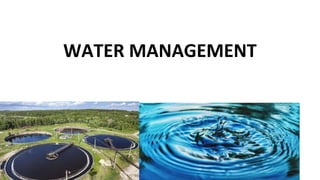
WATER MANAGEMENT
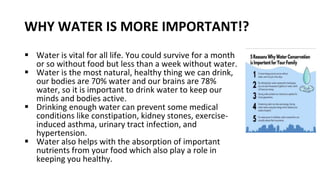
INTODUCTION ABOUT WATER
 There is no life without water, when we look at ocean or
large lakes we may feel there is no need to conserve
water but conserving water has become a prime
environmental concern.
 Clean water is becoming increasing scarce globally in the
last two decades the rapid growth of industrialization
and urbanization has created negative impacts on
lithosphere, atmosphere and hydrosphere.
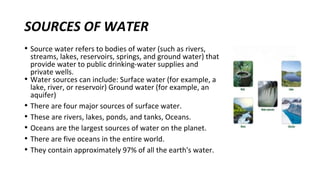
WHY WATER IS MORE IMPORTANT!?
 Water is vital for all life. You could survive for a month
or so without food but less than a week without water.
 Water is the most natural, healthy thing we can drink,
our bodies are 70% water and our brains are 78%
water, so it is important to drink water to keep our
minds and bodies active.
 Drinking enough water can prevent some medical
conditions like constipation, kidney stones, exercise-
induced asthma, urinary tract infection, and
hypertension.
 Water also helps with the absorption of important
nutrients from your food which also play a role in
keeping you healthy.
SOURCES OF WATER
• Source water refers to bodies of water (such as rivers,
streams, lakes, reservoirs, springs, and ground water) that
provide water to public drinking-water supplies and
private wells.
• Water sources can include: Surface water (for example, a
lake, river, or reservoir) Ground water (for example, an
aquifer)
• There are four major sources of surface water.
• These are rivers, lakes, ponds, and tanks, Oceans.
• Oceans are the largest sources of water on the planet.
• There are five oceans in the entire world.
• They contain approximately 97% of all the earth's water.
Types of water managemment
• Water management is the activity of planning, developing, distributing and optimum use of water
resources under defined water polices and regulations.
• It includes: management of water treatment of drinking water, industrial water, sewage or
wastewater, management of water resources, management of flood protection, management of
irrigation, and management of the water table.
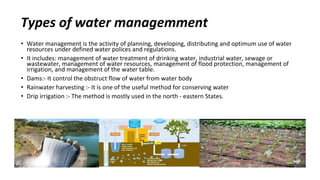
• Dams:- It control the obstruct flow of water from water body
• Rainwater harvesting :- It is one of the useful method for conserving water
• Drip irrigation :- The method is mostly used in the north - eastern States.
AN INDIVIDUAL ROLE IN WATER
CONSERVATION
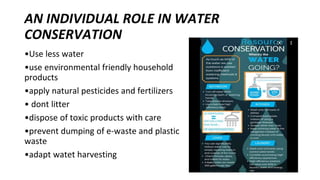
•Use less water
•use environmental friendly household
products
•apply natural pesticides and fertilizers
• dont litter
•dispose of toxic products with care
•prevent dumping of e-waste and plastic
waste
•adapt watet harvesting
Techniques to conserve water
 According to survey report: agriculture is the largest
consumer of water.
 About 70 percentage of water is used for irrigation.
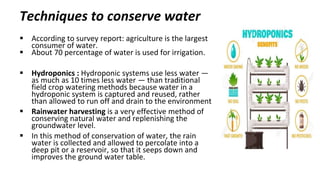
 Hydroponics : Hydroponic systems use less water —
as much as 10 times less water — than traditional
field crop watering methods because water in a
hydroponic system is captured and reused, rather
than allowed to run off and drain to the environment
 Rainwater harvesting is a very effective method of
conserving natural water and replenishing the
groundwater level.
 In this method of conservation of water, the rain
water is collected and allowed to percolate into a
deep pit or a reservoir, so that it seeps down and
improves the ground water table.
Solution for future
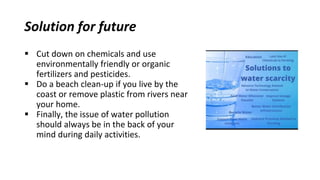
 Cut down on chemicals and use
environmentally friendly or organic
fertilizers and pesticides.
 Do a beach clean-up if you live by the
coast or remove plastic from rivers near
your home.
 Finally, the issue of water pollution
should always be in the back of your
mind during daily activities.
HOW TREE PREVENT
WATER POLLUTION
 Trees reduces the run
off by breaking thus
allowing the water to
flow down to the drunk
and in to the earth below
the trees.
 This prevents storm
water from carrying
pollutants to the ocean.
CONCLUSION
I think that we have to change our habits .
Water pollution arises from accidental and
delibrate harmful substances on land and
dumping of petro chemicals at sea,over usage
of pesticides and fertilizers and sewage
systems,all of which results in contamination
of both surface and ground water.
Water pollution is serious issue and preventive
measures are essential . It is the second most
important environmental issue,next to air
pollution.

water management (1).pptx

  • 1.
  • 2.
    INTODUCTION ABOUT WATER There is no life without water, when we look at ocean or large lakes we may feel there is no need to conserve water but conserving water has become a prime environmental concern.  Clean water is becoming increasing scarce globally in the last two decades the rapid growth of industrialization and urbanization has created negative impacts on lithosphere, atmosphere and hydrosphere.
  • 3.
    WHY WATER ISMORE IMPORTANT!?  Water is vital for all life. You could survive for a month or so without food but less than a week without water.  Water is the most natural, healthy thing we can drink, our bodies are 70% water and our brains are 78% water, so it is important to drink water to keep our minds and bodies active.  Drinking enough water can prevent some medical conditions like constipation, kidney stones, exercise- induced asthma, urinary tract infection, and hypertension.  Water also helps with the absorption of important nutrients from your food which also play a role in keeping you healthy.
  • 4.
    SOURCES OF WATER •Source water refers to bodies of water (such as rivers, streams, lakes, reservoirs, springs, and ground water) that provide water to public drinking-water supplies and private wells. • Water sources can include: Surface water (for example, a lake, river, or reservoir) Ground water (for example, an aquifer) • There are four major sources of surface water. • These are rivers, lakes, ponds, and tanks, Oceans. • Oceans are the largest sources of water on the planet. • There are five oceans in the entire world. • They contain approximately 97% of all the earth's water.
  • 5.
    Types of watermanagemment • Water management is the activity of planning, developing, distributing and optimum use of water resources under defined water polices and regulations. • It includes: management of water treatment of drinking water, industrial water, sewage or wastewater, management of water resources, management of flood protection, management of irrigation, and management of the water table. • Dams:- It control the obstruct flow of water from water body • Rainwater harvesting :- It is one of the useful method for conserving water • Drip irrigation :- The method is mostly used in the north - eastern States.
  • 6.
    AN INDIVIDUAL ROLEIN WATER CONSERVATION •Use less water •use environmental friendly household products •apply natural pesticides and fertilizers • dont litter •dispose of toxic products with care •prevent dumping of e-waste and plastic waste •adapt watet harvesting
  • 7.
    Techniques to conservewater  According to survey report: agriculture is the largest consumer of water.  About 70 percentage of water is used for irrigation.  Hydroponics : Hydroponic systems use less water — as much as 10 times less water — than traditional field crop watering methods because water in a hydroponic system is captured and reused, rather than allowed to run off and drain to the environment  Rainwater harvesting is a very effective method of conserving natural water and replenishing the groundwater level.  In this method of conservation of water, the rain water is collected and allowed to percolate into a deep pit or a reservoir, so that it seeps down and improves the ground water table.
  • 8.
    Solution for future Cut down on chemicals and use environmentally friendly or organic fertilizers and pesticides.  Do a beach clean-up if you live by the coast or remove plastic from rivers near your home.  Finally, the issue of water pollution should always be in the back of your mind during daily activities.
  • 9.
    HOW TREE PREVENT WATERPOLLUTION  Trees reduces the run off by breaking thus allowing the water to flow down to the drunk and in to the earth below the trees.  This prevents storm water from carrying pollutants to the ocean.
  • 10.
    CONCLUSION I think thatwe have to change our habits . Water pollution arises from accidental and delibrate harmful substances on land and dumping of petro chemicals at sea,over usage of pesticides and fertilizers and sewage systems,all of which results in contamination of both surface and ground water. Water pollution is serious issue and preventive measures are essential . It is the second most important environmental issue,next to air pollution.