2
3
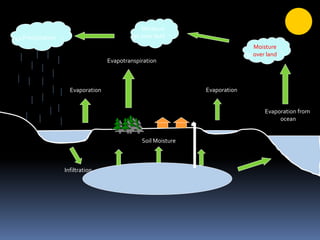
Did you know that the water you drank this
morning might have been the same water a
dinosaur drank millions of years ago?
There is the same amount of water on Earth
today as there has always been.The water
keeps moving around in an endless cycle
called the water cycle.
Precipitation
Moisture
over land
Evapotranspiration
Infiltration
Moisture
over land
Evaporation from
ocean
EvaporationEvaporation
Soil Moisture
5
6
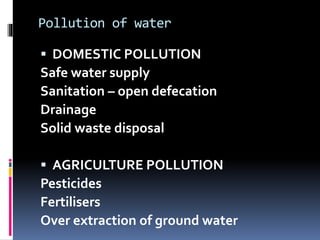
Pollution of water
 DOMESTIC POLLUTION
Safe water supply
Sanitation – open defecation
Drainage
Solid waste disposal
 AGRICULTURE POLLUTION
Pesticides
Fertilisers
Over extraction of ground water
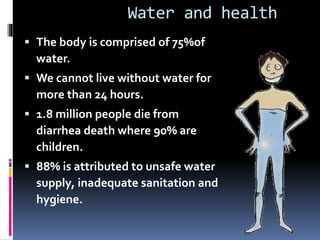
Water and health
 The body is comprised of 75%of
water.
 We cannot live without water for
more than 24 hours.
 1.8 million people die from
diarrhea death where 90% are
children.
 88% is attributed to unsafe water
supply, inadequate sanitation and
hygiene.
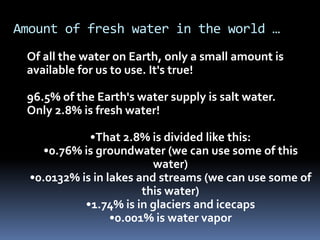
Amount of fresh water in the world …
Of all the water on Earth, only a small amount is
available for us to use. It's true!
96.5% of the Earth's water supply is salt water.
Only 2.8% is fresh water!
•That 2.8% is divided like this:
•0.76% is groundwater (we can use some of this
water)
•0.0132% is in lakes and streams (we can use some of
this water)
•1.74% is in glaciers and icecaps
•0.001% is water vapor
Sanitation
 Don’t defecate in the open
 Always wash yourself
 Use toilets where they are
 Don’t defecate near water sources
 Dispose of your waste in a responsible manner
 Reuse your bathing water
Environment
 Don’t throw your household waste near
drinking water sources
 Clean your house and surroundings daily
 Don’t throw paper, plastic, households wastes
into open drains that run through the street
 Throw litter into a bin and dispose of it
properly
 Don’t cut down trees but grow more plants
 See that the drains are not blocked
In 1955, an Indian citizen had 5000 cubic
meters of water at her disposal.Today
she has less than 1500 and it will get
lesser in the future.
 More than 1 billion people in the world
have no access to improved water
sources and nearly 2/3 live in Asia.
13
Saving water starts with you
 Wash fruits, vegetables in a pan of water
rather than running water
 Collect the water you use for rinsing
produce and reuse it to water houseplants.
 Check your water meter and track your bills
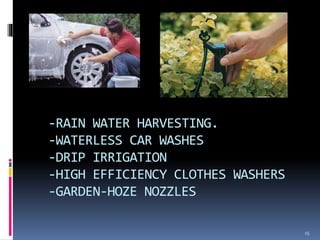
-RAIN WATER HARVESTING.
-WATERLESS CAR WASHES
-DRIP IRRIGATION
-HIGH EFFICIENCY CLOTHES WASHERS
-GARDEN-HOZE NOZZLES
15
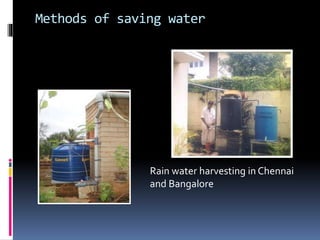
Methods of saving water
Rain water harvesting in Chennai
and Bangalore
17

SAVE WATER SAVE LIFE

  • 2.
  • 3.
    3 Did you knowthat the water you drank this morning might have been the same water a dinosaur drank millions of years ago? There is the same amount of water on Earth today as there has always been.The water keeps moving around in an endless cycle called the water cycle.
  • 4.
  • 5.
  • 6.
  • 7.
    Pollution of water DOMESTIC POLLUTION Safe water supply Sanitation – open defecation Drainage Solid waste disposal  AGRICULTURE POLLUTION Pesticides Fertilisers Over extraction of ground water
  • 8.
    Water and health The body is comprised of 75%of water.  We cannot live without water for more than 24 hours.  1.8 million people die from diarrhea death where 90% are children.  88% is attributed to unsafe water supply, inadequate sanitation and hygiene.
  • 9.
    Amount of freshwater in the world … Of all the water on Earth, only a small amount is available for us to use. It's true! 96.5% of the Earth's water supply is salt water. Only 2.8% is fresh water! •That 2.8% is divided like this: •0.76% is groundwater (we can use some of this water) •0.0132% is in lakes and streams (we can use some of this water) •1.74% is in glaciers and icecaps •0.001% is water vapor
  • 10.
    Sanitation  Don’t defecatein the open  Always wash yourself  Use toilets where they are  Don’t defecate near water sources  Dispose of your waste in a responsible manner  Reuse your bathing water
  • 11.
    Environment  Don’t throwyour household waste near drinking water sources  Clean your house and surroundings daily  Don’t throw paper, plastic, households wastes into open drains that run through the street  Throw litter into a bin and dispose of it properly  Don’t cut down trees but grow more plants  See that the drains are not blocked
  • 12.
    In 1955, anIndian citizen had 5000 cubic meters of water at her disposal.Today she has less than 1500 and it will get lesser in the future.  More than 1 billion people in the world have no access to improved water sources and nearly 2/3 live in Asia.
  • 13.
  • 14.
    Saving water startswith you  Wash fruits, vegetables in a pan of water rather than running water  Collect the water you use for rinsing produce and reuse it to water houseplants.  Check your water meter and track your bills
  • 15.
    -RAIN WATER HARVESTING. -WATERLESSCAR WASHES -DRIP IRRIGATION -HIGH EFFICIENCY CLOTHES WASHERS -GARDEN-HOZE NOZZLES 15
  • 16.
    Methods of savingwater Rain water harvesting in Chennai and Bangalore
  • 17.