Water in the Atmosphere
Water vapor
❖ Water vapour or aqueous vapor, is the gaseous phase of water.
❖ Water vapor is not one of the abundant materials in atmosphere .
It is found in varying amounts ranging from nearly zero to a
maximum of four to five percent by volume. Yet this relatively
rare ingredients of air is one of the most vital.
❖ Water vapor is totally invisible. If you see a cloud, fog, or mist,
these are all liquid water, not water vapor.
❖ Water vapor is extremely important to the weather
How moisture enters the air?
Plants help water get into the atmosphere
through a process called transpiration! After
absorbing water from the ground, plants “sweat”
water vapor through their leaves to stay.
Water can also get into the atmosphere from snow and
ice. Instead of melting, some frozen water change into
water vapor gas and goes into the atmosphere through a
process called sublimation
Measurement of atmospheric moisture
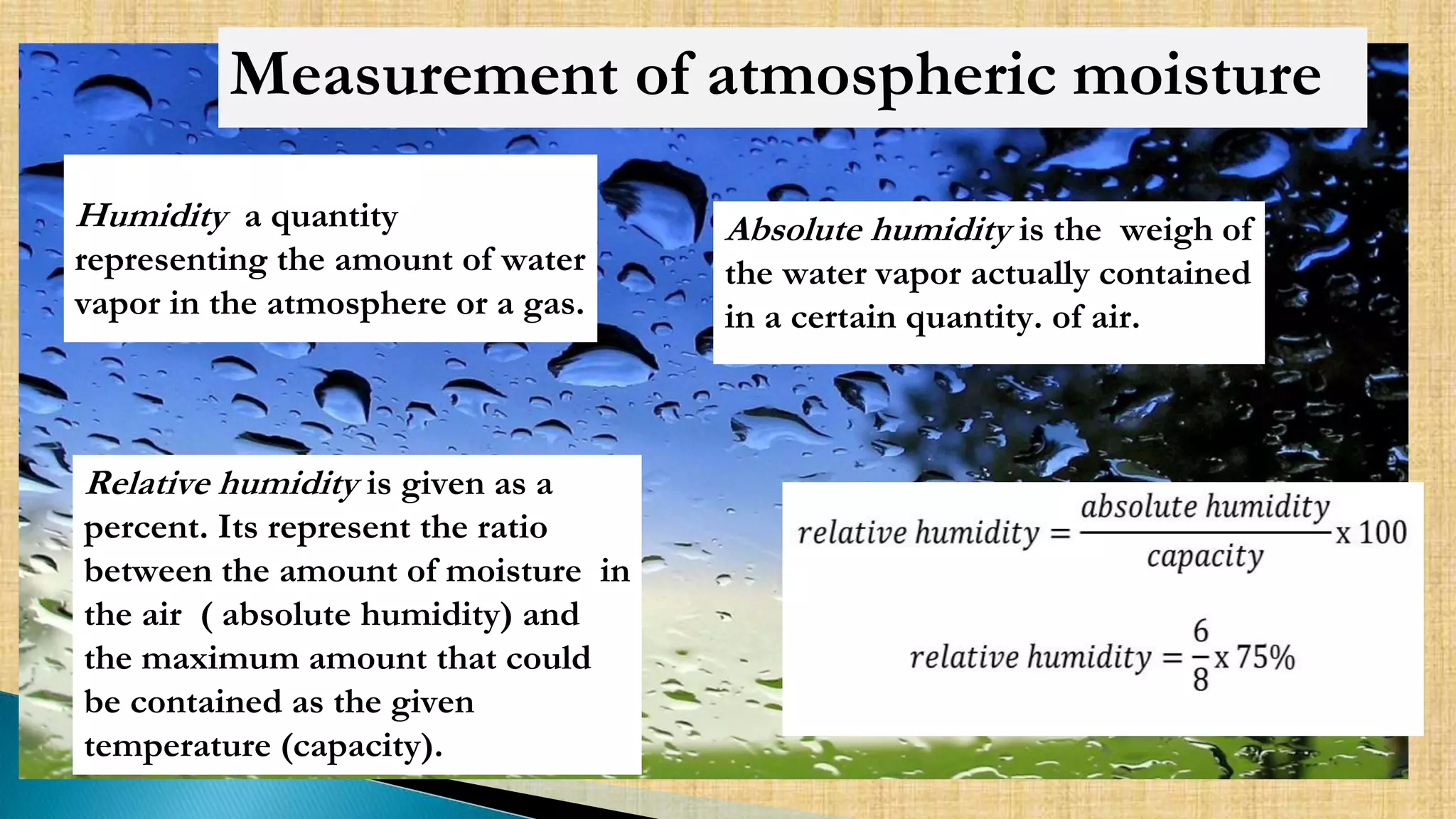
Humidity a quantity
representing the amount of water
vapor in the atmosphere or a gas.
Absolute humidity is the weigh of
the water vapor actually contained
in a certain quantity. of air.
Relative humidity is given as a
percent. Its represent the ratio
between the amount of moisture in
the air ( absolute humidity) and
the maximum amount that could
be contained as the given
temperature (capacity).
How water leaves the air?
Before moisture can be removed from the air, it may first be
change from the vapor to a liquid or solid. The water vapor in the
air is changed into liquid or ice largely by cooling. When the
temperature is lowered, the capacity of the air for the water is
reduced. As air is cooled, a point is reached at witch the amount
of water vapor the air holds is equal to its capacity.
Dew point the atmospheric
temperature (varying according to
pressure and humidity) below which
water droplets begin to condense and
dew can form.
The Formation of Clouds
1. High clouds
Cirrus Clouds
Cirrocumulus Clouds
cirrostratus-clouds
2.Middle Clouds
altocumulus clouds
Altostratus cloud
3. Low clouds
Stratus Clouds
Stratocumulus clouds
nimbostratus clouds
4.clouds with vertical development
Cumulonimbus cloud formation
Cumulus cloud
Fog
Formation of the rain
Precipitation of Moisture
Precipitation All forms of
moisture falling from the
atmosphere
Coalescence of Cloud Droplets
Schematic illustration of the
collision-coalescence process,
also showing a large raindrop
breaking up
Cloud Seeding
Other type of precipitation
snow crystal pattern
Heavy Hailstorm
Floods Parts of
Bulgaria's Sofia
ice pellets
(ice + storm winter )
Thank you for listening….
The end
Reported by
Danica Fran

Water in the Atmosphere

  • 1.
    Water in theAtmosphere
  • 2.
    Water vapor ❖ Watervapour or aqueous vapor, is the gaseous phase of water. ❖ Water vapor is not one of the abundant materials in atmosphere . It is found in varying amounts ranging from nearly zero to a maximum of four to five percent by volume. Yet this relatively rare ingredients of air is one of the most vital. ❖ Water vapor is totally invisible. If you see a cloud, fog, or mist, these are all liquid water, not water vapor. ❖ Water vapor is extremely important to the weather
  • 3.
  • 4.
    Plants help waterget into the atmosphere through a process called transpiration! After absorbing water from the ground, plants “sweat” water vapor through their leaves to stay. Water can also get into the atmosphere from snow and ice. Instead of melting, some frozen water change into water vapor gas and goes into the atmosphere through a process called sublimation
  • 5.
    Measurement of atmosphericmoisture Humidity a quantity representing the amount of water vapor in the atmosphere or a gas. Absolute humidity is the weigh of the water vapor actually contained in a certain quantity. of air. Relative humidity is given as a percent. Its represent the ratio between the amount of moisture in the air ( absolute humidity) and the maximum amount that could be contained as the given temperature (capacity).
  • 7.
    How water leavesthe air? Before moisture can be removed from the air, it may first be change from the vapor to a liquid or solid. The water vapor in the air is changed into liquid or ice largely by cooling. When the temperature is lowered, the capacity of the air for the water is reduced. As air is cooled, a point is reached at witch the amount of water vapor the air holds is equal to its capacity. Dew point the atmospheric temperature (varying according to pressure and humidity) below which water droplets begin to condense and dew can form.
  • 8.
  • 10.
    1. High clouds CirrusClouds Cirrocumulus Clouds cirrostratus-clouds
  • 11.
  • 12.
    3. Low clouds StratusClouds Stratocumulus clouds nimbostratus clouds
  • 13.
    4.clouds with verticaldevelopment Cumulonimbus cloud formation Cumulus cloud
  • 14.
  • 15.
    Formation of therain Precipitation of Moisture Precipitation All forms of moisture falling from the atmosphere
  • 16.
    Coalescence of CloudDroplets Schematic illustration of the collision-coalescence process, also showing a large raindrop breaking up Cloud Seeding
  • 17.
    Other type ofprecipitation snow crystal pattern Heavy Hailstorm Floods Parts of Bulgaria's Sofia ice pellets (ice + storm winter )
  • 18.
    Thank you forlistening…. The end Reported by Danica Fran