WATER
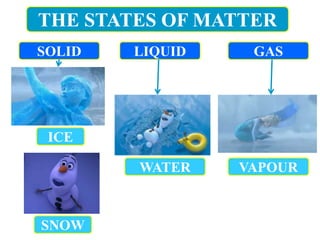
THE STATES OF MATTER
SOLID LIQUID GAS
ICE
WATER VAPOUR
SNOW
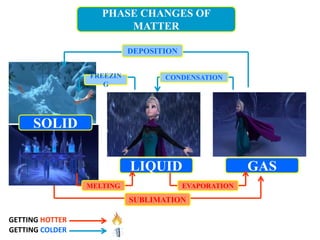
SOLID
LIQUID GAS
GETTING HOTTER
GETTING COLDER
PHASE CHANGES OF
MATTER
MELTING EVAPORATION
FREEZIN
G
CONDENSATION
SUBLIMATION
DEPOSITION
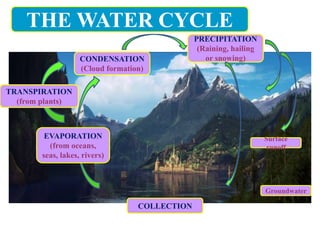
THE WATER CYCLE
EVAPORATION
(from oceans,
seas, lakes, rivers)
CONDENSATION
(Cloud formation)
PRECIPITATION
(Raining, hailing
or snowing)
TRANSPIRATION
(from plants)
COLLECTION
Surface
runoff
Groundwater
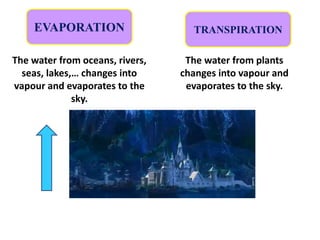
EVAPORATION
The water from oceans, rivers,
seas, lakes,… changes into
vapour and evaporates to the
sky.
TRANSPIRATION
The water from plants
changes into vapour and
evaporates to the sky.
CONDENSATION
The water vapour in the air gets
cold and changes back into liquid
(water drops), forming clouds.
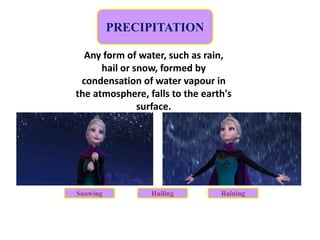
PRECIPITATION
Any form of water, such as rain,
hail or snow, formed by
condensation of water vapour in
the atmosphere, falls to the earth's
surface.
Snowing RainingHailing
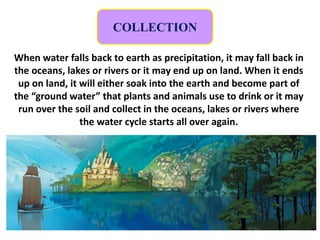
COLLECTION
When water falls back to earth as precipitation, it may fall back in
the oceans, lakes or rivers or it may end up on land. When it ends
up on land, it will either soak into the earth and become part of
the “ground water” that plants and animals use to drink or it may
run over the soil and collect in the oceans, lakes or rivers where
the water cycle starts all over again.

Water cycle

  • 1.
  • 2.
    THE STATES OFMATTER SOLID LIQUID GAS ICE WATER VAPOUR SNOW
  • 3.
    SOLID LIQUID GAS GETTING HOTTER GETTINGCOLDER PHASE CHANGES OF MATTER MELTING EVAPORATION FREEZIN G CONDENSATION SUBLIMATION DEPOSITION
  • 4.
    THE WATER CYCLE EVAPORATION (fromoceans, seas, lakes, rivers) CONDENSATION (Cloud formation) PRECIPITATION (Raining, hailing or snowing) TRANSPIRATION (from plants) COLLECTION Surface runoff Groundwater
  • 5.
    EVAPORATION The water fromoceans, rivers, seas, lakes,… changes into vapour and evaporates to the sky. TRANSPIRATION The water from plants changes into vapour and evaporates to the sky.
  • 6.
    CONDENSATION The water vapourin the air gets cold and changes back into liquid (water drops), forming clouds.
  • 7.
    PRECIPITATION Any form ofwater, such as rain, hail or snow, formed by condensation of water vapour in the atmosphere, falls to the earth's surface. Snowing RainingHailing
  • 8.
    COLLECTION When water fallsback to earth as precipitation, it may fall back in the oceans, lakes or rivers or it may end up on land. When it ends up on land, it will either soak into the earth and become part of the “ground water” that plants and animals use to drink or it may run over the soil and collect in the oceans, lakes or rivers where the water cycle starts all over again.