WATER
CYCLE
Four stages of Water Cycle are:

1. Evaporation
2. Condensation
3. Precipitation
4. Accumulation
EVAPORATION
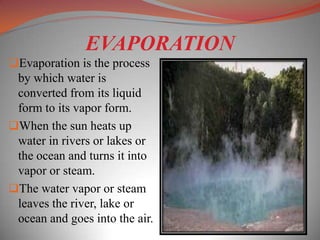
Evaporation is the process
 by which water is
 converted from its liquid
 form to its vapor form.
When the sun heats up
 water in rivers or lakes or
 the ocean and turns it into
 vapor or steam.
The water vapor or steam
 leaves the river, lake or
 ocean and goes into the air.
Examples of Evaporation:
 Steam rising from a pot of water


 Puddles that have dried up


 Water sitting in a bowl that seems to ‘disappear’ after
  a few days
CONDENSATION
Condensation is opposite of
 Evaporation.
It is the process by which
 water is converted from its
 vapor form to the liquid
 form.
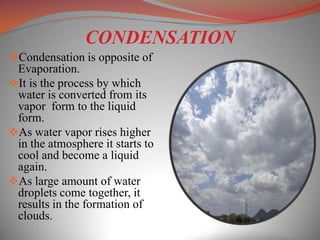
As water vapor rises higher
 in the atmosphere it starts to
 cool and become a liquid
 again.
As large amount of water
 droplets come together, it
 results in the formation of
 clouds.
Examples of Condensation
 Water droplets forming on the outside of your water
 glass.

 A foggy mirror in a bathroom


 Foggy windows in a car
PRECIPITATION
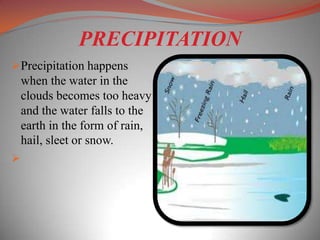
Precipitation happens
    when the water in the
    clouds becomes too heavy
    and the water falls to the
    earth in the form of rain,
    hail, sleet or snow.

ACCUMULATION
 Accumulation is the collection of
  rain water or snow as it melts and
  goes back into the earth’s rivers,
  lakes, streams and oceans. When
  water falls back to earth as
  precipitation, it may fall back
  in the oceans, lakes or rivers or
  it may end up on land. When it
  ends up on land, it will either
  soak into the earth and become
  part of the “ground water” that
  plants and animals use to drink
  or it may run over the soil and
  collect in the oceans, lakes or
  rivers where the cycle starts

Water cycle final

  • 1.
  • 2.
    Four stages ofWater Cycle are: 1. Evaporation 2. Condensation 3. Precipitation 4. Accumulation
  • 3.
    EVAPORATION Evaporation is theprocess by which water is converted from its liquid form to its vapor form. When the sun heats up water in rivers or lakes or the ocean and turns it into vapor or steam. The water vapor or steam leaves the river, lake or ocean and goes into the air.
  • 4.
    Examples of Evaporation: Steam rising from a pot of water  Puddles that have dried up  Water sitting in a bowl that seems to ‘disappear’ after a few days
  • 5.
    CONDENSATION Condensation is oppositeof Evaporation. It is the process by which water is converted from its vapor form to the liquid form. As water vapor rises higher in the atmosphere it starts to cool and become a liquid again. As large amount of water droplets come together, it results in the formation of clouds.
  • 6.
    Examples of Condensation Water droplets forming on the outside of your water glass.  A foggy mirror in a bathroom  Foggy windows in a car
  • 7.
    PRECIPITATION Precipitation happens when the water in the clouds becomes too heavy and the water falls to the earth in the form of rain, hail, sleet or snow. 
  • 8.
    ACCUMULATION  Accumulation isthe collection of rain water or snow as it melts and goes back into the earth’s rivers, lakes, streams and oceans. When water falls back to earth as precipitation, it may fall back in the oceans, lakes or rivers or it may end up on land. When it ends up on land, it will either soak into the earth and become part of the “ground water” that plants and animals use to drink or it may run over the soil and collect in the oceans, lakes or rivers where the cycle starts