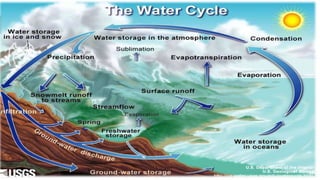
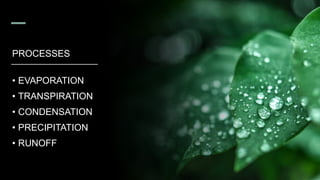
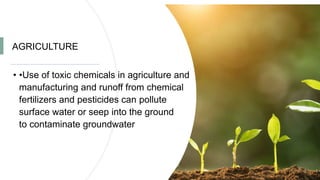
The water cycle consists of evaporation, transpiration, condensation, precipitation, and runoff. Evaporation occurs when water is heated by the sun and changes from a liquid to a gas. Transpiration is when water vapor is released from plants. Condensation happens when water vapor in the atmosphere cools and changes back to a liquid, forming clouds. Precipitation describes when this condensed water falls back to Earth as rain, snow, or hail. Runoff then transports this water across land through streams, rivers, and other pathways. Human activities like deforestation, urbanization, and agriculture can impact the water cycle by changing infiltration, runoff, and groundwater levels.



![Polymer [ बहुलक ] Chemistry Notes PDF - Irfanullah Mehar - JJ Sir Chemistry.pdf](https://cdn.slidesharecdn.com/ss_thumbnails/polymerchemistrynotespdf-irfanullahmehar-jjsirchemistry-260210172118-3f9b37f7-thumbnail.jpg?width=640&height=640&fit=bounds)


