HYDROLOGY
CEPC 9
Hydrology and Hydrologic Cycle
Module 1, Lesson 1
What is the difference
between HYDROLOGY
and HYDRAULICS?
What is HYDROLOGIC
CYCLE?
Hydrology is defined as the
circulation of water and its
constituents through the
hydrologic cycle, or the
quantification of flows that
are ultimately produced by
precipitation. It deals with
precipitation (rain, snow,
sleet, hail, etc.), evaporation,
infiltration, groundwater flow,
surface runoff, streamflow,
and the transport of
substances dissolved or
suspended in flowing water.
Hydraulics is defined as
the study of the mechanical
behavior of water in physical
systems. In engineering
terms, hydraulics is the
analysis of how surface,
and/or subsurface flows
move from one point to the
next. Hydraulic analysis is
used to evaluate flow in
rivers, streams, storm drain
networks, water aqueducts,
water lines, sewers, etc.
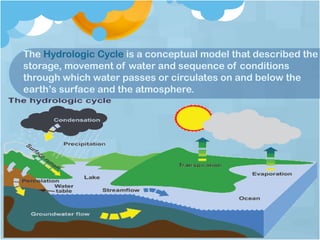
The Hydrologic Cycle is a conceptual model that described the
storage, movement of water and sequence of conditions
through which water passes or circulates on and below the
earth’s surface and the atmosphere.
Interrelationships of Phases of Hydrologic Cycle
Evaporation
It is the process in which liquid changes to gas
Evapotranspiration
It is the combined net effect of evaporation and
transpiration. It is also the combination of water released to the
atmosphere by evaporation and transpiration.
Transpiration
It is the process by which plants return moisture to the air.
Plants take up water through their roots and loses some of the water
through pores in their leaves. As hot air passes over the surface of the
leaves, the moisture absorbs the heat and evaporates into the air.
Interrelationships of Phases of Hydrologic Cycle
Condensation
It is the cooling of water vapor until it becomes liquid
Precipitation
The moisture that falls from the atmosphere as rain, snow, sleet
or hail
Interception
Refers to the precipitation that does not reach the soil, but is instead
intercepted by the leaves, branches of plants and and the forest floor. It occurs in
the canopy, and in the forest floor or litter layer.
Sublimation
It is the conversion of solid phase to gaseous phase without
passing the liquid phase. It is most often used to describe the
process of snow and ice changing into water vapor in the air
without first melting into water.
Interrelationships of Phases of Hydrologic Cycle
Runoff
Is the movement of water, usually from precipitation, across the
earth’s surface towards stream channels, lakes, oceans or depressions
or low points of the earth’s surface.
2 Kinds of Runoff
1. Surface Runoff
Is the water from rain, snowmelt , or other sources that flows
over the land surface.
2. Subsurface Runoff
It is the flow of water beneath the earth’s surface.
Interrelationships of Phases of Hydrologic Cycle
Transport
It is the movement of water through the atmosphere, specifically
from over the oceans to over land.
Infiltration and Percolation
 Infiltration
It is the entry of water into the soil surface
 Percolation
It is the downward movement of water trough soil and rocks
Human Processes that
affect the Water Cycle
Storage of water in reservoir
Mining
Irrigation Urbanization
Combustion
Deforestation
Storage of water in Reservoir
A reservoir is a storage
space for liquids. By building dams
and reservoirs, water will be stored
and therefore less water will flow
over the surface and through
underground stores, back to the
river. This can result in a lowering
of the water table. They can also
have an impact on where it rains.
Dams and reservoirs increase evaporation, resulting in
increased cloud formation in these areas.
Cloud formation would therefore be altered, changing
levels of precipitation.
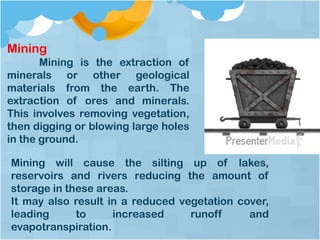
Mining
Mining is the extraction of
minerals or other geological
materials from the earth. The
extraction of ores and minerals.
This involves removing vegetation,
then digging or blowing large holes
in the ground.
Mining will cause the silting up of lakes,
reservoirs and rivers reducing the amount of
storage in these areas.
It may also result in a reduced vegetation cover,
leading to increased runoff and
evapotranspiration.
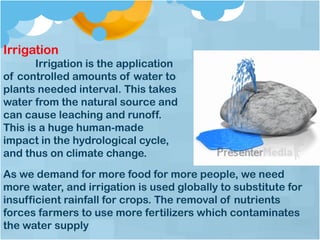
Irrigation
Irrigation is the application
of controlled amounts of water to
plants needed interval. This takes
water from the natural source and
can cause leaching and runoff.
This is a huge human-made
impact in the hydrological cycle,
and thus on climate change.
As we demand for more food for more people, we need
more water, and irrigation is used globally to substitute for
insufficient rainfall for crops. The removal of nutrients
forces farmers to use more fertilizers which contaminates
the water supply
Combustion
combustion is a chemical
process in which fuel reacts
with oxidant to give out heat.
The release of heat can
produce light in a form of
flame. The increasing use of
fossil fuels raises the earth’s
temperature through gases
better trapping infrared
radiation, thus increasing
evaporation, and the melting of
ice.
Deforestation
Deforestation is the the
cutting down or burning of
trees. It increases the amount of
runoff water and it decreases
evapotranspiration, therefore
decreasing cloud formation. As
there are no longer tree roots to
take up ground water or leaves
to intercept precipitation, this
leads to more extreme river
flows and the areas can be more
susceptible to drought and
flooding.
Urbanization
Urbanization is the
expansion of towns and cities.
This will reduce the amount of
natural vegetation available and
replace it with impermeable
surfaces and drains. This will
increase surface runoff and
also evaporation, leading to
higher river levels.
It will also reduce the water
table as less water is being
returned to underground
stores.
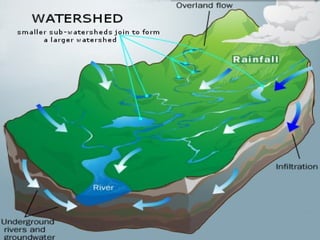
What is a WATERSHED?
A watershed is the land area that
drains water to a particular
stream, river, estuary or bay. It is a
land feature that can be identified
by tracing a line along the highest
elevations between two areas on a
map.
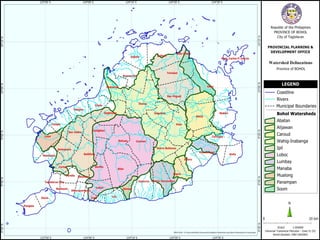
What is WATERSHED DELINEATION
and its importance?
Watershed Delineation is the process of identifying the
drainage area of a point or set of points. It is also drawing or
plotting lines to a map to identify watershed’s boundaries.
Watershed delineation is important since it provides better
understanding of hydrologic relationships. It also helps us
develop a better understanding of how climate affects water
supply, and allows us to make rational planning and
management decisions.
Happiness is an
inside job. Don’t
assign anyone else
that much power over
your life

Hydrology module one for Civil engineers

  • 1.
  • 2.
    Hydrology and HydrologicCycle Module 1, Lesson 1
  • 3.
    What is thedifference between HYDROLOGY and HYDRAULICS? What is HYDROLOGIC CYCLE?
  • 4.
    Hydrology is definedas the circulation of water and its constituents through the hydrologic cycle, or the quantification of flows that are ultimately produced by precipitation. It deals with precipitation (rain, snow, sleet, hail, etc.), evaporation, infiltration, groundwater flow, surface runoff, streamflow, and the transport of substances dissolved or suspended in flowing water. Hydraulics is defined as the study of the mechanical behavior of water in physical systems. In engineering terms, hydraulics is the analysis of how surface, and/or subsurface flows move from one point to the next. Hydraulic analysis is used to evaluate flow in rivers, streams, storm drain networks, water aqueducts, water lines, sewers, etc.
  • 5.
    The Hydrologic Cycleis a conceptual model that described the storage, movement of water and sequence of conditions through which water passes or circulates on and below the earth’s surface and the atmosphere.
  • 6.
    Interrelationships of Phasesof Hydrologic Cycle Evaporation It is the process in which liquid changes to gas Evapotranspiration It is the combined net effect of evaporation and transpiration. It is also the combination of water released to the atmosphere by evaporation and transpiration. Transpiration It is the process by which plants return moisture to the air. Plants take up water through their roots and loses some of the water through pores in their leaves. As hot air passes over the surface of the leaves, the moisture absorbs the heat and evaporates into the air.
  • 7.
    Interrelationships of Phasesof Hydrologic Cycle Condensation It is the cooling of water vapor until it becomes liquid Precipitation The moisture that falls from the atmosphere as rain, snow, sleet or hail Interception Refers to the precipitation that does not reach the soil, but is instead intercepted by the leaves, branches of plants and and the forest floor. It occurs in the canopy, and in the forest floor or litter layer. Sublimation It is the conversion of solid phase to gaseous phase without passing the liquid phase. It is most often used to describe the process of snow and ice changing into water vapor in the air without first melting into water.
  • 8.
    Interrelationships of Phasesof Hydrologic Cycle Runoff Is the movement of water, usually from precipitation, across the earth’s surface towards stream channels, lakes, oceans or depressions or low points of the earth’s surface. 2 Kinds of Runoff 1. Surface Runoff Is the water from rain, snowmelt , or other sources that flows over the land surface. 2. Subsurface Runoff It is the flow of water beneath the earth’s surface.
  • 9.
    Interrelationships of Phasesof Hydrologic Cycle Transport It is the movement of water through the atmosphere, specifically from over the oceans to over land. Infiltration and Percolation  Infiltration It is the entry of water into the soil surface  Percolation It is the downward movement of water trough soil and rocks
  • 10.
    Human Processes that affectthe Water Cycle Storage of water in reservoir Mining Irrigation Urbanization Combustion Deforestation
  • 11.
    Storage of waterin Reservoir A reservoir is a storage space for liquids. By building dams and reservoirs, water will be stored and therefore less water will flow over the surface and through underground stores, back to the river. This can result in a lowering of the water table. They can also have an impact on where it rains. Dams and reservoirs increase evaporation, resulting in increased cloud formation in these areas. Cloud formation would therefore be altered, changing levels of precipitation.
  • 12.
    Mining Mining is theextraction of minerals or other geological materials from the earth. The extraction of ores and minerals. This involves removing vegetation, then digging or blowing large holes in the ground. Mining will cause the silting up of lakes, reservoirs and rivers reducing the amount of storage in these areas. It may also result in a reduced vegetation cover, leading to increased runoff and evapotranspiration.
  • 13.
    Irrigation Irrigation is theapplication of controlled amounts of water to plants needed interval. This takes water from the natural source and can cause leaching and runoff. This is a huge human-made impact in the hydrological cycle, and thus on climate change. As we demand for more food for more people, we need more water, and irrigation is used globally to substitute for insufficient rainfall for crops. The removal of nutrients forces farmers to use more fertilizers which contaminates the water supply
  • 14.
    Combustion combustion is achemical process in which fuel reacts with oxidant to give out heat. The release of heat can produce light in a form of flame. The increasing use of fossil fuels raises the earth’s temperature through gases better trapping infrared radiation, thus increasing evaporation, and the melting of ice.
  • 15.
    Deforestation Deforestation is thethe cutting down or burning of trees. It increases the amount of runoff water and it decreases evapotranspiration, therefore decreasing cloud formation. As there are no longer tree roots to take up ground water or leaves to intercept precipitation, this leads to more extreme river flows and the areas can be more susceptible to drought and flooding.
  • 16.
    Urbanization Urbanization is the expansionof towns and cities. This will reduce the amount of natural vegetation available and replace it with impermeable surfaces and drains. This will increase surface runoff and also evaporation, leading to higher river levels. It will also reduce the water table as less water is being returned to underground stores.
  • 17.
    What is aWATERSHED? A watershed is the land area that drains water to a particular stream, river, estuary or bay. It is a land feature that can be identified by tracing a line along the highest elevations between two areas on a map.
  • 19.
    What is WATERSHEDDELINEATION and its importance? Watershed Delineation is the process of identifying the drainage area of a point or set of points. It is also drawing or plotting lines to a map to identify watershed’s boundaries. Watershed delineation is important since it provides better understanding of hydrologic relationships. It also helps us develop a better understanding of how climate affects water supply, and allows us to make rational planning and management decisions.
  • 21.
    Happiness is an insidejob. Don’t assign anyone else that much power over your life