NAME – BALWINDER SINGH
ROLL NO. - 1452100
WALL COVERING
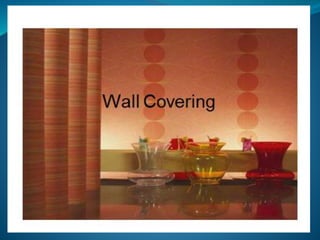
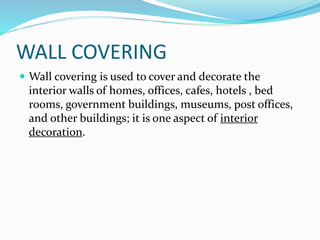
 Wall covering is used to cover and decorate the
interior walls of homes, offices, cafes, hotels , bed
rooms, government buildings, museums, post offices,
and other buildings; it is one aspect of interior
decoration.
TYPES OF WALL COVERING
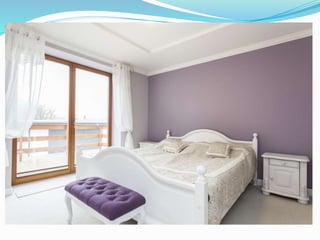
 PAINT
 WALLPAPER
 WOODEN WALL COVERING
 FABRIC WALL COVERING
 METAL WALL COVERING
 GLASS WALL COVERING
 CERAMIC TILES
 STONE WALL COVERING
 VINYL
 PLASTIC WALL COVERING
 Despite the fact that there are many different types of
house paint, most fall into one of two categories: oil
and water. Oil-based house paint is referred to
as alkyd, while the water-based type is commonly
called latex or acrylic. The main differences between
the two are their drying processes, their finishes, and
the ease or difficulty of clean up.
 Oil-based paint takes longer to dry than the water-
based variety, but it contains additives to help speed
up the drying process. Oil paints also create a harder,
glossier finish, and require special chemicals for clean
up. Water based paints, on the other hand, dry quickly
as moisture evaporates. Their finish is not as shiny or
as durable, but the ease of clean up makes them a
popular choice. They can be cleaned up with warm
water and a bit of mild detergent.
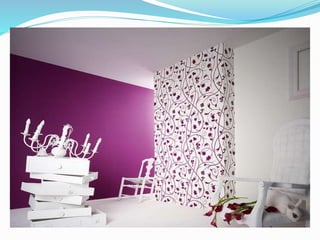
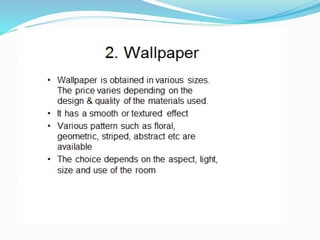
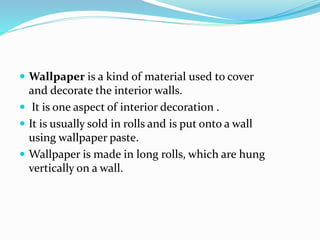
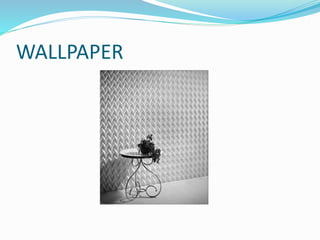
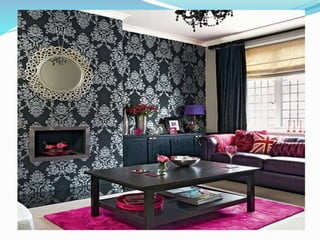
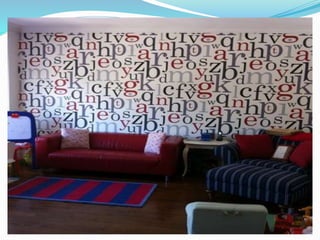
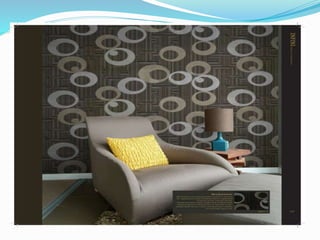
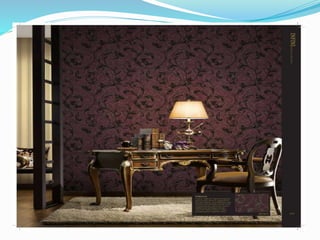
 Wallpaper is a kind of material used to cover
and decorate the interior walls.
 It is one aspect of interior decoration .
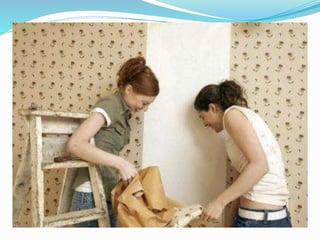
 It is usually sold in rolls and is put onto a wall
using wallpaper paste.
 Wallpaper is made in long rolls, which are hung
vertically on a wall.
WALLPAPER
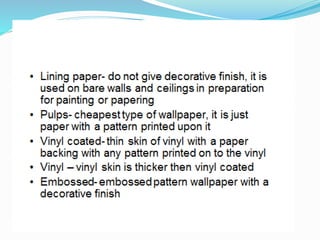
VINYL WALL COVERING
 As its name indicates, this wallpaper has been treated
with acrylic vinyl or polyvinyl chloride. They are easy
to clean and unaffected by longterm exposure
to humidity or grease. Vinyl coated wallpaper is
especially recommended for bathroom, kitchen and
even basement walls for specifically this reason. This
type is scrubbable and strippable. This type is good for
almost any climate. It's also easy to clean, scrubbable
and peels off easily from the wall when it's time for
removal.
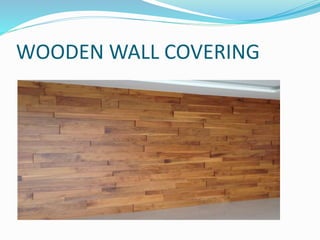
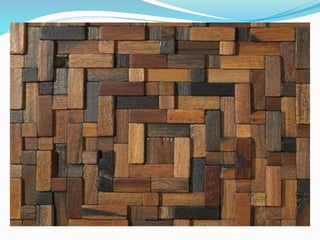
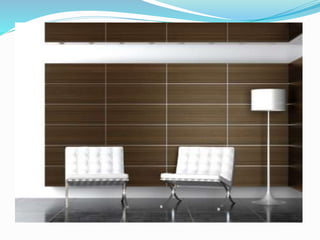
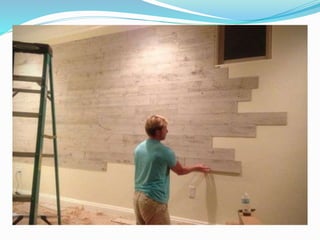
WOODEN WALL COVERING
STONE WALL COVERING
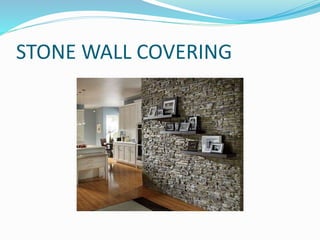
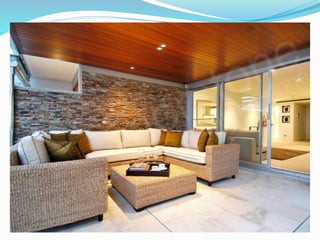
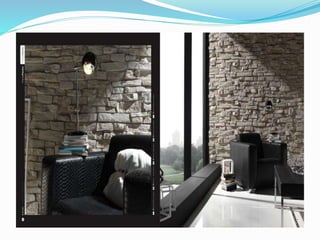
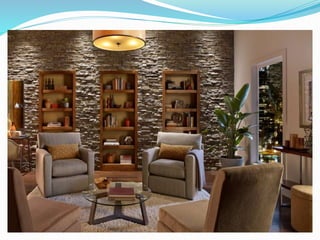
 The purpose of a natural stone veneer is to provide a
given structure with the appearance of an
actual stone masonry work; that is, the structures are
made to look like real stone walls. Since
actual stone masonry can be quite expensive, given
the sourcing of the natural stones from distant
quarries and the dressing needed to prepare them for
construction, natural stone veneers are the next best
and comparatively more affordable alternative.
STONE WALL COVERING
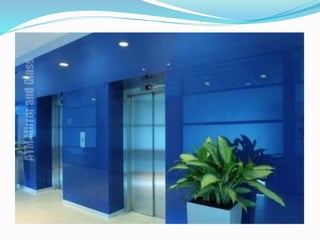
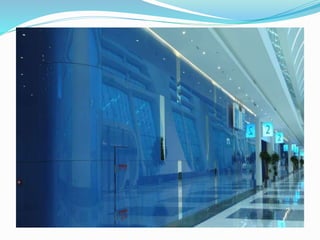
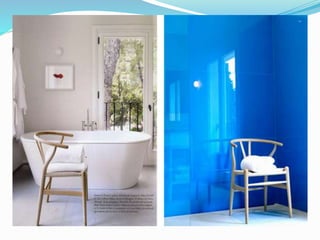
 Glass wall tile is a popular addition to kitchens and
bathrooms in today's home remodeling
projects. Glass tile is available in many different
textures, finishes, colors and styles. The great thing
about glass wall tile is that it reflects light and can give
bathrooms and kitchens an airy, sparkling look.
METAL WALL COVERING
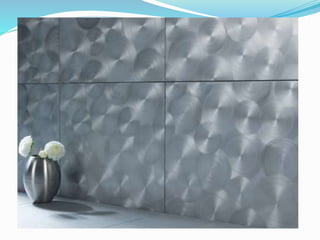
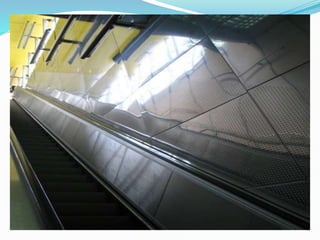
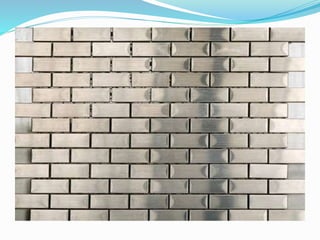
 Metal is a popular and versatile type of wall cladding,
particularly for building exteriors. Copperand its
alloys, brass, and bronze are some of the most popular
choices. Other metals, such as aluminum, may also be
used to achieve more durability, and typically also
come in a wider range of finishes and colors.
Sometimes the finished product is smooth and shiny,
but it can also be textured, weathered, or patterned. A
lot depends on the owner, the designer, and the overall
vision they’re trying to achieve.
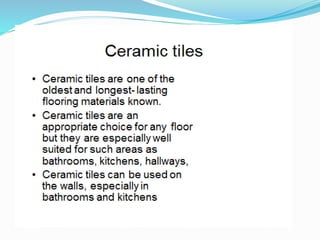
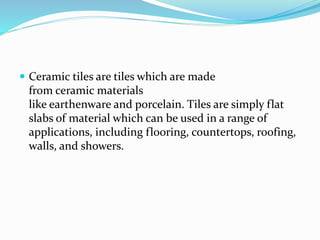
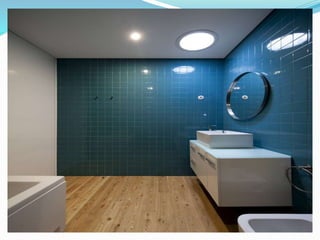
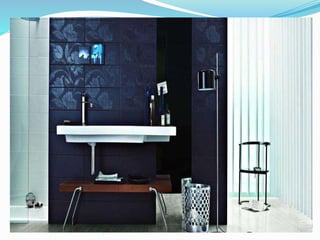
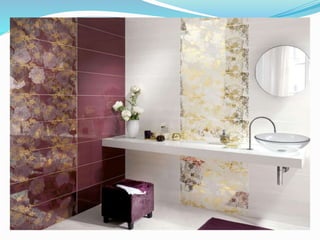
 Ceramic tiles are tiles which are made
from ceramic materials
like earthenware and porcelain. Tiles are simply flat
slabs of material which can be used in a range of
applications, including flooring, countertops, roofing,
walls, and showers.
FABRIC WALL COVERING
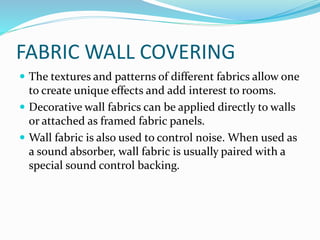
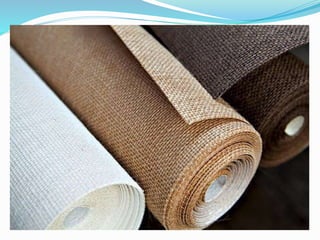
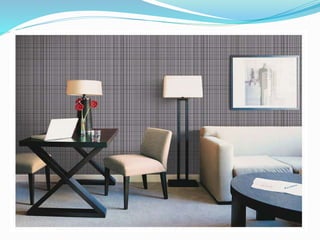
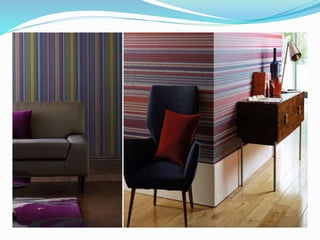
 The textures and patterns of different fabrics allow one
to create unique effects and add interest to rooms.
 Decorative wall fabrics can be applied directly to walls
or attached as framed fabric panels.
 Wall fabric is also used to control noise. When used as
a sound absorber, wall fabric is usually paired with a
special sound control backing.
Wall covering bob
Wall covering bob
Wall covering bob
Wall covering bob

Wall covering bob

  • 1.
    NAME – BALWINDERSINGH ROLL NO. - 1452100
  • 3.
    WALL COVERING  Wallcovering is used to cover and decorate the interior walls of homes, offices, cafes, hotels , bed rooms, government buildings, museums, post offices, and other buildings; it is one aspect of interior decoration.
  • 4.
    TYPES OF WALLCOVERING  PAINT  WALLPAPER  WOODEN WALL COVERING  FABRIC WALL COVERING  METAL WALL COVERING  GLASS WALL COVERING  CERAMIC TILES  STONE WALL COVERING  VINYL  PLASTIC WALL COVERING
  • 6.
     Despite thefact that there are many different types of house paint, most fall into one of two categories: oil and water. Oil-based house paint is referred to as alkyd, while the water-based type is commonly called latex or acrylic. The main differences between the two are their drying processes, their finishes, and the ease or difficulty of clean up.
  • 7.
     Oil-based painttakes longer to dry than the water- based variety, but it contains additives to help speed up the drying process. Oil paints also create a harder, glossier finish, and require special chemicals for clean up. Water based paints, on the other hand, dry quickly as moisture evaporates. Their finish is not as shiny or as durable, but the ease of clean up makes them a popular choice. They can be cleaned up with warm water and a bit of mild detergent.
  • 11.
     Wallpaper isa kind of material used to cover and decorate the interior walls.  It is one aspect of interior decoration .  It is usually sold in rolls and is put onto a wall using wallpaper paste.  Wallpaper is made in long rolls, which are hung vertically on a wall.
  • 12.
  • 17.
    VINYL WALL COVERING As its name indicates, this wallpaper has been treated with acrylic vinyl or polyvinyl chloride. They are easy to clean and unaffected by longterm exposure to humidity or grease. Vinyl coated wallpaper is especially recommended for bathroom, kitchen and even basement walls for specifically this reason. This type is scrubbable and strippable. This type is good for almost any climate. It's also easy to clean, scrubbable and peels off easily from the wall when it's time for removal.
  • 22.
  • 27.
    STONE WALL COVERING The purpose of a natural stone veneer is to provide a given structure with the appearance of an actual stone masonry work; that is, the structures are made to look like real stone walls. Since actual stone masonry can be quite expensive, given the sourcing of the natural stones from distant quarries and the dressing needed to prepare them for construction, natural stone veneers are the next best and comparatively more affordable alternative.
  • 28.
  • 33.
     Glass walltile is a popular addition to kitchens and bathrooms in today's home remodeling projects. Glass tile is available in many different textures, finishes, colors and styles. The great thing about glass wall tile is that it reflects light and can give bathrooms and kitchens an airy, sparkling look.
  • 38.
    METAL WALL COVERING Metal is a popular and versatile type of wall cladding, particularly for building exteriors. Copperand its alloys, brass, and bronze are some of the most popular choices. Other metals, such as aluminum, may also be used to achieve more durability, and typically also come in a wider range of finishes and colors. Sometimes the finished product is smooth and shiny, but it can also be textured, weathered, or patterned. A lot depends on the owner, the designer, and the overall vision they’re trying to achieve.
  • 44.
     Ceramic tilesare tiles which are made from ceramic materials like earthenware and porcelain. Tiles are simply flat slabs of material which can be used in a range of applications, including flooring, countertops, roofing, walls, and showers.
  • 48.
    FABRIC WALL COVERING The textures and patterns of different fabrics allow one to create unique effects and add interest to rooms.  Decorative wall fabrics can be applied directly to walls or attached as framed fabric panels.  Wall fabric is also used to control noise. When used as a sound absorber, wall fabric is usually paired with a special sound control backing.