FABRICS FOR INTERIOR
      TEXTILES
ROLE OF FABRICS FOR INTERIOR TEXTILES

 Fabric protects interior color from fading and furnishing from
  detoriation from sunlight

 It protects from sun glare and it lends protection from night
  blackness at evening

 Fabrics lends privacy to any degree that is needed

 It can make summer room cooler and reduce an air
  conditioning load in the summer

 Fabric increases livability and work ability of a small place
PROPERTIES REQUIRED

 Good light fastness
 Good resistance to seam slippage
 Good resistance to pilling
 Stain repellency
 Good fastness to sponging
 Flame Retardency
 Appearance retention
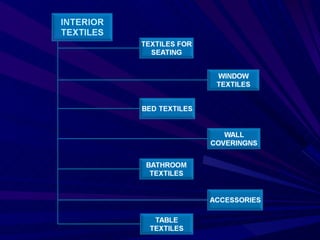
TEXTILES FOR SEATING

MAIN AREAS OF
   APPLICATIONS ARE:
2. Sofa covers
3. Chair cushions
4. Chair pads

FABRICS USED:
7. Acrylic fiber velvets
8. Alone polyester
9. Alone cotton
10. Polyester/Cotton
    blends
WINDOW TEXTILES

MAIN AREAS OF APPLICATIONS:


 Sheer curtains
 Curtains and drapes
 Reflective textiles
 Blinds
SHEER CURTAINS
FEATURE:
Semi transparent material
e.g. burnout style

FABRICS USED:
6. Polyester/cotton blend
7. Cotton
8. Polyester
9. Nylon .(to make it attractive
   embroidery is done)
CURTAINS AND DRAPES
FABRICS USED:


3.   Polyester/cotton blend
4.   Cotton
5.   Viscose rayon
6.   Polyester
7.   Acrylic
8.   Silk
REFLECTIVE TEXTILES

FEATURE:
It doesn't allow U-V rays to enter inside a room

HOW ?
One side is normal fabric and the other side is aluminum
film which serves the purpose

FABRICS USED:
9. Polyester
10. Cotton
Normal fabric Aluminum Film

                     Sun light


                     U-V rays
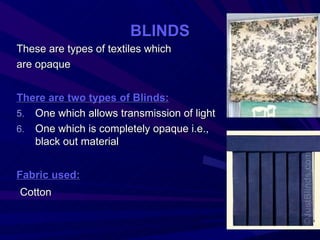
BLINDS
These are types of textiles which
are opaque


There are two types of Blinds:
5. One which allows transmission of light
6. One which is completely opaque i.e.,
   black out material


Fabric used:
Cotton
BED TEXTILES

MAIN AREAS OF APPLICATION:


3.   Sheets and pillow cases
4.   Blankets
5.   Mattress covers
6.   Dust ruffles
SHEETS & PILLOW CASES

This is a major soft goods category


FABRICS USED:
4. Cotton
5. Polyester/cotton blend
BLANKETS
 Solid color, raised wool , acrylic fiber,
  and acrylic polyester fiber blends

 Cotton terry blankets


 Thermal blankets made from wool,
  acrylic, polyester and polyester acrylic
  blends

 Blankets are constructed by stitch
  bonding technique
MATTRESS COVERS

Mattress covers are having same match with bed sheets,
    pillow cases, blankets ,etc…

FABRICS USED:
4. Cotton
5. Polyester
6. Viscose rayon
Dust ruffles
 They are the lower part of bed
            sheets


FARICS USED:
5. Cotton
6. Polyester
7. Polyester/ cotton blends
WALL COVERINGS
Why to use fabrics for wall
  coverings ???
Because fabrics absorbs sound.
They have a unique property to
absorb sound waves within the
Material
Any material can be used???
No, material which are fibrous in
nature can be used

Fabrics used:
Jute, Flax
WALL HANGINGS
  Types of wall hanging:
2. Hand tufted
3. Embroidered


Fabrics or material used:
6. Jute
7. Cotton
8. Viscose
TEXTILES FOR SCREEN AND ROOM
            DIVIDERS
Here functions of interior
textiles are:


 To provide space demarcation


 To absorb sound


 To create pleasant and colorful
  working environment
BATHROOM TEXTILES

MAIN AREAS OF APPLICATION:


3. Shower curtains
4. Terry toweling
SHOWER CURTAINS
Before :
Cheaper plastics membranes were used


Disadvantage:
 Their propensity to splitting and tearing
 Now textile materials are used are used


Fabrics used :
Any type of material can be used but should
have water repellency
TERRY TOWELING
Terry toweling is used in


3. Bathrobes
4. Towels


Fabrics used:
Cotton
ACCECSSORIES

AREAS OF APPLICATION :


3. Floor cushions
4. Lamp shade fabrics
FLOOR CUSHIONS
 Floor cushions don’t have specific place
  or some specific use

 They are only for comfort and rest
  where ever one lies on the floor like in
  hall room


Fabrics used:

 1.Cotton
 2.Polyester/cotton blend
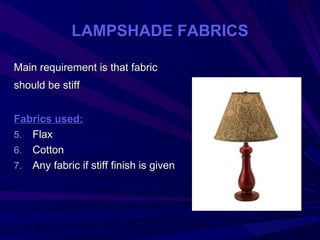
LAMPSHADE FABRICS

Main requirement is that fabric
should be stiff


Fabrics used:
5. Flax
6. Cotton
7. Any fabric if stiff finish is given
TABLE TEXTILES

MAIN AREAS OF APPLICATION :


3.   Table cloths
4.   Table mats
TABLE CLOTHS

Table Cloth: It is of several types

 Colour woven printed types of linen cotton
  material

 Embroidered types.


 Non-woven types, which include spun
  bonded Nylon and spun laced polyester
  fibre.
TABLE MATS

Just to make Table cloth
more attractive having
matching with table cloth


Fabrics to be used:
   Cotton
   Polyester/cotton blend
DEVELOPMENT


DuPont Textiles and interiors (DTI) introduced a new
Teflon fabric protector with dust mite control for use in
bedding and upholstery. With Ciba specialty chemicals
DTI is elevated ease care benefit of Teflon.
ADVANTAGES OBTAINED
1.The stain repellency provides
   investor barriers, causing liquids
   to bead up and rolls off the
   fabric while release technology
   prevents the fiber from holding
   stains and soils so they can be
   easily washed off.
2. Water repellency.
3. This treatment has no impact on
   touch, handle and breathability.
4. Protection from dust mites.
5. And more importantly it is eco
   -friendly
Interior textiles

Interior textiles

  • 1.
  • 2.
    ROLE OF FABRICSFOR INTERIOR TEXTILES  Fabric protects interior color from fading and furnishing from detoriation from sunlight  It protects from sun glare and it lends protection from night blackness at evening  Fabrics lends privacy to any degree that is needed  It can make summer room cooler and reduce an air conditioning load in the summer  Fabric increases livability and work ability of a small place
  • 3.
    PROPERTIES REQUIRED  Goodlight fastness  Good resistance to seam slippage  Good resistance to pilling  Stain repellency  Good fastness to sponging  Flame Retardency  Appearance retention
  • 5.
    TEXTILES FOR SEATING MAINAREAS OF APPLICATIONS ARE: 2. Sofa covers 3. Chair cushions 4. Chair pads FABRICS USED: 7. Acrylic fiber velvets 8. Alone polyester 9. Alone cotton 10. Polyester/Cotton blends
  • 6.
    WINDOW TEXTILES MAIN AREASOF APPLICATIONS:  Sheer curtains  Curtains and drapes  Reflective textiles  Blinds
  • 7.
    SHEER CURTAINS FEATURE: Semi transparentmaterial e.g. burnout style FABRICS USED: 6. Polyester/cotton blend 7. Cotton 8. Polyester 9. Nylon .(to make it attractive embroidery is done)
  • 8.
    CURTAINS AND DRAPES FABRICSUSED: 3. Polyester/cotton blend 4. Cotton 5. Viscose rayon 6. Polyester 7. Acrylic 8. Silk
  • 9.
    REFLECTIVE TEXTILES FEATURE: It doesn'tallow U-V rays to enter inside a room HOW ? One side is normal fabric and the other side is aluminum film which serves the purpose FABRICS USED: 9. Polyester 10. Cotton
  • 10.
    Normal fabric AluminumFilm Sun light U-V rays
  • 11.
    BLINDS These are typesof textiles which are opaque There are two types of Blinds: 5. One which allows transmission of light 6. One which is completely opaque i.e., black out material Fabric used: Cotton
  • 12.
    BED TEXTILES MAIN AREASOF APPLICATION: 3. Sheets and pillow cases 4. Blankets 5. Mattress covers 6. Dust ruffles
  • 13.
    SHEETS & PILLOWCASES This is a major soft goods category FABRICS USED: 4. Cotton 5. Polyester/cotton blend
  • 14.
    BLANKETS  Solid color,raised wool , acrylic fiber, and acrylic polyester fiber blends  Cotton terry blankets  Thermal blankets made from wool, acrylic, polyester and polyester acrylic blends  Blankets are constructed by stitch bonding technique
  • 15.
    MATTRESS COVERS Mattress coversare having same match with bed sheets, pillow cases, blankets ,etc… FABRICS USED: 4. Cotton 5. Polyester 6. Viscose rayon
  • 16.
    Dust ruffles Theyare the lower part of bed sheets FARICS USED: 5. Cotton 6. Polyester 7. Polyester/ cotton blends
  • 17.
    WALL COVERINGS Why touse fabrics for wall coverings ??? Because fabrics absorbs sound. They have a unique property to absorb sound waves within the Material Any material can be used??? No, material which are fibrous in nature can be used Fabrics used: Jute, Flax
  • 18.
    WALL HANGINGS Types of wall hanging: 2. Hand tufted 3. Embroidered Fabrics or material used: 6. Jute 7. Cotton 8. Viscose
  • 19.
    TEXTILES FOR SCREENAND ROOM DIVIDERS Here functions of interior textiles are:  To provide space demarcation  To absorb sound  To create pleasant and colorful working environment
  • 20.
    BATHROOM TEXTILES MAIN AREASOF APPLICATION: 3. Shower curtains 4. Terry toweling
  • 21.
    SHOWER CURTAINS Before : Cheaperplastics membranes were used Disadvantage:  Their propensity to splitting and tearing  Now textile materials are used are used Fabrics used : Any type of material can be used but should have water repellency
  • 22.
    TERRY TOWELING Terry towelingis used in 3. Bathrobes 4. Towels Fabrics used: Cotton
  • 23.
    ACCECSSORIES AREAS OF APPLICATION: 3. Floor cushions 4. Lamp shade fabrics
  • 24.
    FLOOR CUSHIONS  Floorcushions don’t have specific place or some specific use  They are only for comfort and rest where ever one lies on the floor like in hall room Fabrics used: 1.Cotton 2.Polyester/cotton blend
  • 25.
    LAMPSHADE FABRICS Main requirementis that fabric should be stiff Fabrics used: 5. Flax 6. Cotton 7. Any fabric if stiff finish is given
  • 26.
    TABLE TEXTILES MAIN AREASOF APPLICATION : 3. Table cloths 4. Table mats
  • 27.
    TABLE CLOTHS Table Cloth:It is of several types  Colour woven printed types of linen cotton material  Embroidered types.  Non-woven types, which include spun bonded Nylon and spun laced polyester fibre.
  • 28.
    TABLE MATS Just tomake Table cloth more attractive having matching with table cloth Fabrics to be used: Cotton Polyester/cotton blend
  • 29.
    DEVELOPMENT DuPont Textiles andinteriors (DTI) introduced a new Teflon fabric protector with dust mite control for use in bedding and upholstery. With Ciba specialty chemicals DTI is elevated ease care benefit of Teflon.
  • 30.
    ADVANTAGES OBTAINED 1.The stainrepellency provides investor barriers, causing liquids to bead up and rolls off the fabric while release technology prevents the fiber from holding stains and soils so they can be easily washed off. 2. Water repellency. 3. This treatment has no impact on touch, handle and breathability. 4. Protection from dust mites. 5. And more importantly it is eco -friendly