Walmart Stores’
Discount
Operations
Strategic Management
- GROUP 2
Aditi Mittal 20DM275
Ashmita 20DM269
Avnish Bhutani 20DM289
Arnav Mahajan 20DM288
Abhishek Patil 20DM271
Sabhya Bajaj 20DM262
INTRODUCTION
• Sam Walton the richest person in the
United States. With his four children, he owned
stock worth $2.8 billion. That put him $1 billion ahead of
the next person on the list, H. Ross Perot. By the end of
April 1986, Walton's net worth had
swelled by another $1.6 billion.
• Walmart Inc. is a multinational retail corporation that
operates a chain of hypermarkets, discount department
stores, and grocery stores from the United States,
headquartered in Bentonville, Arkansas.
• Our case focuses on discount stores and wholesale clubs.
• Major competitors : K-mart, Target, Venture, Caldor
FRAMING
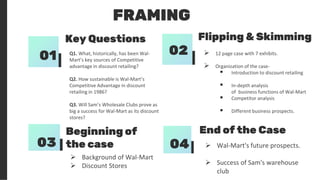
Key Questions
Q1. What, historically, has been Wal-
Mart’s key sources of Competitive
advantage in discount retailing?​
Q2. How sustainable is Wal-Mart’s
Competitive Advantage in discount
retailing in 1986?​
Q3. Will Sam’s Wholesale Clubs prove as
big a success for Wal-Mart as its discount
stores?​
01
Beginning of
the case
 Background of Wal-Mart​
 Discount Stores
03
End of the Case
 Wal-Mart's future prospects.​
 Success of Sam's warehouse
club​
04
Flipping & Skimming
 12 page case with 7 exhibits.​
 Organization of the case-
 Introduction to discount retailing​
 In-depth analysis
of business functions of Wal-Mart​
 Competitor analysis​
 Different business prospects.​
02
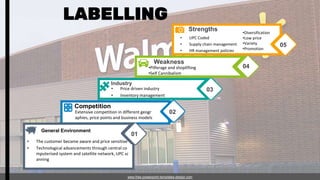
LABELLING
www.free-powerpoint-templates-design.com
03
• Price driven industry
• Inventory management
Industry
04
Weakness
05
• UPC Coded
• Supply chain management
• HR management policies
Strengths
02
Extensive competition in different geogr
aphies, price points and business models
.
Competition
01
• The customer became aware and price sensitive
• Technological advancements through central co
mputerised system and satellite network, UPC sc
anning
General Environment
•Diversification
•Low price
•Variety
•Promotion
•Pilferage and shoplifting
•Self Cannibalism
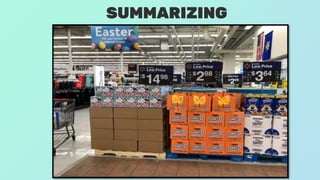
SUMMARIZING
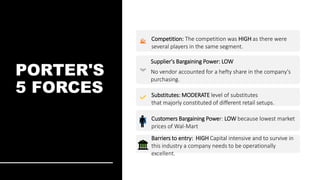
PORTER'S
5 FORCES
Competition: The competition was HIGH as there were
several players in the same segment.
Supplier's Bargaining Power: LOW
No vendor accounted for a hefty share in the company's
purchasing.
Substitutes: MODERATE level of substitutes
that majorly constituted of different retail setups.
Customers Bargaining Power: LOW because lowest market
prices of Wal-Mart
Barriers to entry: HIGH Capital intensive and to survive in
this industry a company needs to be operationally
excellent.
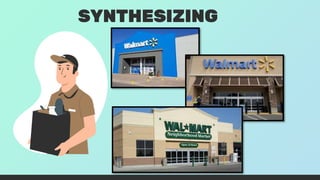
SYNTHESIZING
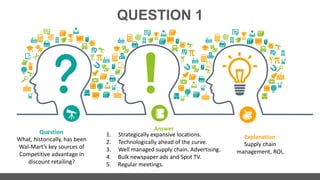
QUESTION 1
What, historically, has been
Wal-Mart’s key sources of
Competitive advantage in
discount retailing?
Question 1. Strategically expansive locations.
2. Technologically ahead of the curve.
3. Well managed supply chain. Advertising.
4. Bulk newspaper ads and Spot TV.
5. Regular meetings.​
Answer
Supply chain
management, ROI,​
Explanation
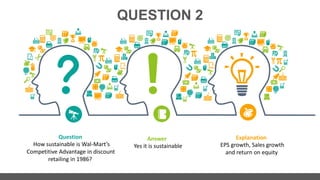
QUESTION 2
How sustainable is Wal-Mart’s
Competitive Advantage in discount
retailing in 1986?
Question
Yes it is sustainable
Answer
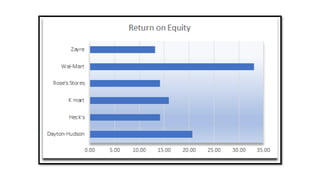
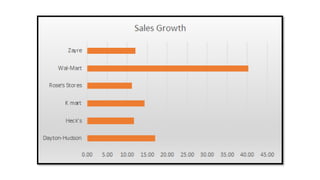
EPS growth, Sales growth
and return on equity​
Explanation
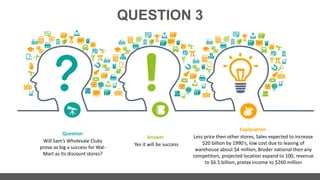
QUESTION 3
Will Sam’s Wholesale Clubs
prove as big a success for Wal-
Mart as its discount stores?​
Question
Yes it will be success
Answer Less price then other stores, Sales expected to increase
$20 billion by 1990's, low cost due to leasing of
warehouse about $4 million, Broder national then any
competitors, projected location expand to 100, revenue
to $6.5 billion, pretax income to $260 million​
Explanation
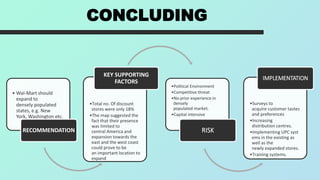
• Wal-Mart should
expand to
densely populated
states, e.g. New
York, Washington etc.
RECOMMENDATION
•Total no. Of discount
stores were only 18%
•The map suggested the
fact that their presence
was limited to
central America and
expansion towards the
east and the west coast
could prove to be
an important location to
expand
KEY SUPPORTING
FACTORS
•Political Environment
•Competitive threat
•No prior experience in
densely
populated market.
•Capital intensive
RISK
•Surveys to
acquire customer tastes
and preferences
•Increasing
distribution centres.
•Implementing UPC syst
ems in the existing as
well as the
newly expanded stores.
•Training systems.
IMPLEMENTATION
CONCLUDING
CREDITS: This presentation template was created by
Slidesgo, including icons by Flaticon, and infographics
& images by Freepik.
We are open for questions.
Thank You!

Wal mart stors' discount operations

  • 1.
    Walmart Stores’ Discount Operations Strategic Management -GROUP 2 Aditi Mittal 20DM275 Ashmita 20DM269 Avnish Bhutani 20DM289 Arnav Mahajan 20DM288 Abhishek Patil 20DM271 Sabhya Bajaj 20DM262
  • 2.
    INTRODUCTION • Sam Waltonthe richest person in the United States. With his four children, he owned stock worth $2.8 billion. That put him $1 billion ahead of the next person on the list, H. Ross Perot. By the end of April 1986, Walton's net worth had swelled by another $1.6 billion. • Walmart Inc. is a multinational retail corporation that operates a chain of hypermarkets, discount department stores, and grocery stores from the United States, headquartered in Bentonville, Arkansas. • Our case focuses on discount stores and wholesale clubs. • Major competitors : K-mart, Target, Venture, Caldor
  • 3.
    FRAMING Key Questions Q1. What,historically, has been Wal- Mart’s key sources of Competitive advantage in discount retailing?​ Q2. How sustainable is Wal-Mart’s Competitive Advantage in discount retailing in 1986?​ Q3. Will Sam’s Wholesale Clubs prove as big a success for Wal-Mart as its discount stores?​ 01 Beginning of the case  Background of Wal-Mart​  Discount Stores 03 End of the Case  Wal-Mart's future prospects.​  Success of Sam's warehouse club​ 04 Flipping & Skimming  12 page case with 7 exhibits.​  Organization of the case-  Introduction to discount retailing​  In-depth analysis of business functions of Wal-Mart​  Competitor analysis​  Different business prospects.​ 02
  • 4.
    LABELLING www.free-powerpoint-templates-design.com 03 • Price drivenindustry • Inventory management Industry 04 Weakness 05 • UPC Coded • Supply chain management • HR management policies Strengths 02 Extensive competition in different geogr aphies, price points and business models . Competition 01 • The customer became aware and price sensitive • Technological advancements through central co mputerised system and satellite network, UPC sc anning General Environment •Diversification •Low price •Variety •Promotion •Pilferage and shoplifting •Self Cannibalism
  • 5.
  • 6.
    PORTER'S 5 FORCES Competition: Thecompetition was HIGH as there were several players in the same segment. Supplier's Bargaining Power: LOW No vendor accounted for a hefty share in the company's purchasing. Substitutes: MODERATE level of substitutes that majorly constituted of different retail setups. Customers Bargaining Power: LOW because lowest market prices of Wal-Mart Barriers to entry: HIGH Capital intensive and to survive in this industry a company needs to be operationally excellent.
  • 7.
  • 8.
    QUESTION 1 What, historically,has been Wal-Mart’s key sources of Competitive advantage in discount retailing? Question 1. Strategically expansive locations. 2. Technologically ahead of the curve. 3. Well managed supply chain. Advertising. 4. Bulk newspaper ads and Spot TV. 5. Regular meetings.​ Answer Supply chain management, ROI,​ Explanation
  • 9.
    QUESTION 2 How sustainableis Wal-Mart’s Competitive Advantage in discount retailing in 1986? Question Yes it is sustainable Answer EPS growth, Sales growth and return on equity​ Explanation
  • 10.
    QUESTION 3 Will Sam’sWholesale Clubs prove as big a success for Wal- Mart as its discount stores?​ Question Yes it will be success Answer Less price then other stores, Sales expected to increase $20 billion by 1990's, low cost due to leasing of warehouse about $4 million, Broder national then any competitors, projected location expand to 100, revenue to $6.5 billion, pretax income to $260 million​ Explanation
  • 13.
    • Wal-Mart should expandto densely populated states, e.g. New York, Washington etc. RECOMMENDATION •Total no. Of discount stores were only 18% •The map suggested the fact that their presence was limited to central America and expansion towards the east and the west coast could prove to be an important location to expand KEY SUPPORTING FACTORS •Political Environment •Competitive threat •No prior experience in densely populated market. •Capital intensive RISK •Surveys to acquire customer tastes and preferences •Increasing distribution centres. •Implementing UPC syst ems in the existing as well as the newly expanded stores. •Training systems. IMPLEMENTATION CONCLUDING
  • 14.
    CREDITS: This presentationtemplate was created by Slidesgo, including icons by Flaticon, and infographics & images by Freepik. We are open for questions. Thank You!