Wafer Front
End
Manufacturin
g: A Step-by-
Step Guide
Introductio
n
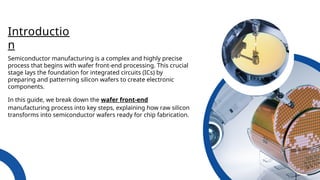
Semiconductor manufacturing is a complex and highly precise
process that begins with wafer front-end processing. This crucial
stage lays the foundation for integrated circuits (ICs) by
preparing and patterning silicon wafers to create electronic
components.
In this guide, we break down the wafer front-end
manufacturing process into key steps, explaining how raw silicon
transforms into semiconductor wafers ready for chip fabrication.
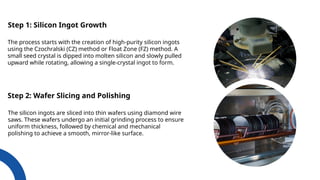
The process starts with the creation of high-purity silicon ingots
using the Czochralski (CZ) method or Float Zone (FZ) method. A
small seed crystal is dipped into molten silicon and slowly pulled
upward while rotating, allowing a single-crystal ingot to form.
The silicon ingots are sliced into thin wafers using diamond wire
saws. These wafers undergo an initial grinding process to ensure
uniform thickness, followed by chemical and mechanical
polishing to achieve a smooth, mirror-like surface.
Step 1: Silicon Ingot Growth
Step 2: Wafer Slicing and Polishing
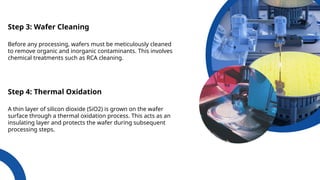
Before any processing, wafers must be meticulously cleaned
to remove organic and inorganic contaminants. This involves
chemical treatments such as RCA cleaning.
A thin layer of silicon dioxide (SiO2) is grown on the wafer
surface through a thermal oxidation process. This acts as an
insulating layer and protects the wafer during subsequent
processing steps.
Step 3: Wafer Cleaning
Step 4: Thermal Oxidation
Step 5: Photolithography
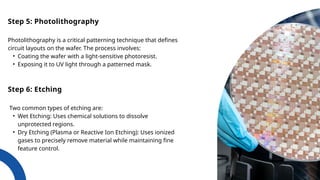
Photolithography is a critical patterning technique that defines
circuit layouts on the wafer. The process involves:
• Coating the wafer with a light-sensitive photoresist.
• Exposing it to UV light through a patterned mask.
Step 6: Etching
Two common types of etching are:
• Wet Etching: Uses chemical solutions to dissolve
unprotected regions.
• Dry Etching (Plasma or Reactive Ion Etching): Uses ionized
gases to precisely remove material while maintaining fine
feature control.
Step 7: Ion
Implantation and
Doping
Step 8: Thin
Film
Deposition
To modify the electrical properties of the
silicon, ion implantation introduces
dopant atoms (such as phosphorus or
boron) into specific regions of the wafer.
Several layers of materials, including
dielectric films, metals, and polysilicon,
are deposited onto the wafer using
techniques such as:
• Chemical Vapor Deposition (CVD)
• Physical Vapor Deposition (PVD)
• Atomic Layer Deposition (ALD)
Wafer front-end manufacturing is a meticulously controlled process that
enables the creation of advanced semiconductor devices. Each step, from
silicon ingot growth to electrical testing, plays a vital role in ensuring high-
performance chips.
Whether you're an engineer, researcher, or technology enthusiast,
understanding the wafer front-end process provides insight into how the
electronic devices we use daily are made.
Contact
Us:
https://www.kensingtonlabs.com/
sales@kensingtonlabs.com
510.324.0126
Thank
You

Wafer Front End Manufacturing A Step-by-Step Guide

  • 1.
  • 2.
    Introductio n Semiconductor manufacturing isa complex and highly precise process that begins with wafer front-end processing. This crucial stage lays the foundation for integrated circuits (ICs) by preparing and patterning silicon wafers to create electronic components. In this guide, we break down the wafer front-end manufacturing process into key steps, explaining how raw silicon transforms into semiconductor wafers ready for chip fabrication.
  • 3.
    The process startswith the creation of high-purity silicon ingots using the Czochralski (CZ) method or Float Zone (FZ) method. A small seed crystal is dipped into molten silicon and slowly pulled upward while rotating, allowing a single-crystal ingot to form. The silicon ingots are sliced into thin wafers using diamond wire saws. These wafers undergo an initial grinding process to ensure uniform thickness, followed by chemical and mechanical polishing to achieve a smooth, mirror-like surface. Step 1: Silicon Ingot Growth Step 2: Wafer Slicing and Polishing
  • 4.
    Before any processing,wafers must be meticulously cleaned to remove organic and inorganic contaminants. This involves chemical treatments such as RCA cleaning. A thin layer of silicon dioxide (SiO2) is grown on the wafer surface through a thermal oxidation process. This acts as an insulating layer and protects the wafer during subsequent processing steps. Step 3: Wafer Cleaning Step 4: Thermal Oxidation
  • 5.
    Step 5: Photolithography Photolithographyis a critical patterning technique that defines circuit layouts on the wafer. The process involves: • Coating the wafer with a light-sensitive photoresist. • Exposing it to UV light through a patterned mask. Step 6: Etching Two common types of etching are: • Wet Etching: Uses chemical solutions to dissolve unprotected regions. • Dry Etching (Plasma or Reactive Ion Etching): Uses ionized gases to precisely remove material while maintaining fine feature control.
  • 6.
    Step 7: Ion Implantationand Doping Step 8: Thin Film Deposition To modify the electrical properties of the silicon, ion implantation introduces dopant atoms (such as phosphorus or boron) into specific regions of the wafer. Several layers of materials, including dielectric films, metals, and polysilicon, are deposited onto the wafer using techniques such as: • Chemical Vapor Deposition (CVD) • Physical Vapor Deposition (PVD) • Atomic Layer Deposition (ALD)
  • 7.
    Wafer front-end manufacturingis a meticulously controlled process that enables the creation of advanced semiconductor devices. Each step, from silicon ingot growth to electrical testing, plays a vital role in ensuring high- performance chips. Whether you're an engineer, researcher, or technology enthusiast, understanding the wafer front-end process provides insight into how the electronic devices we use daily are made.
  • 8.
  • 9.