Vowel Diagram
Teaching ESL
/i/ or /iː/
see
vowel /i/
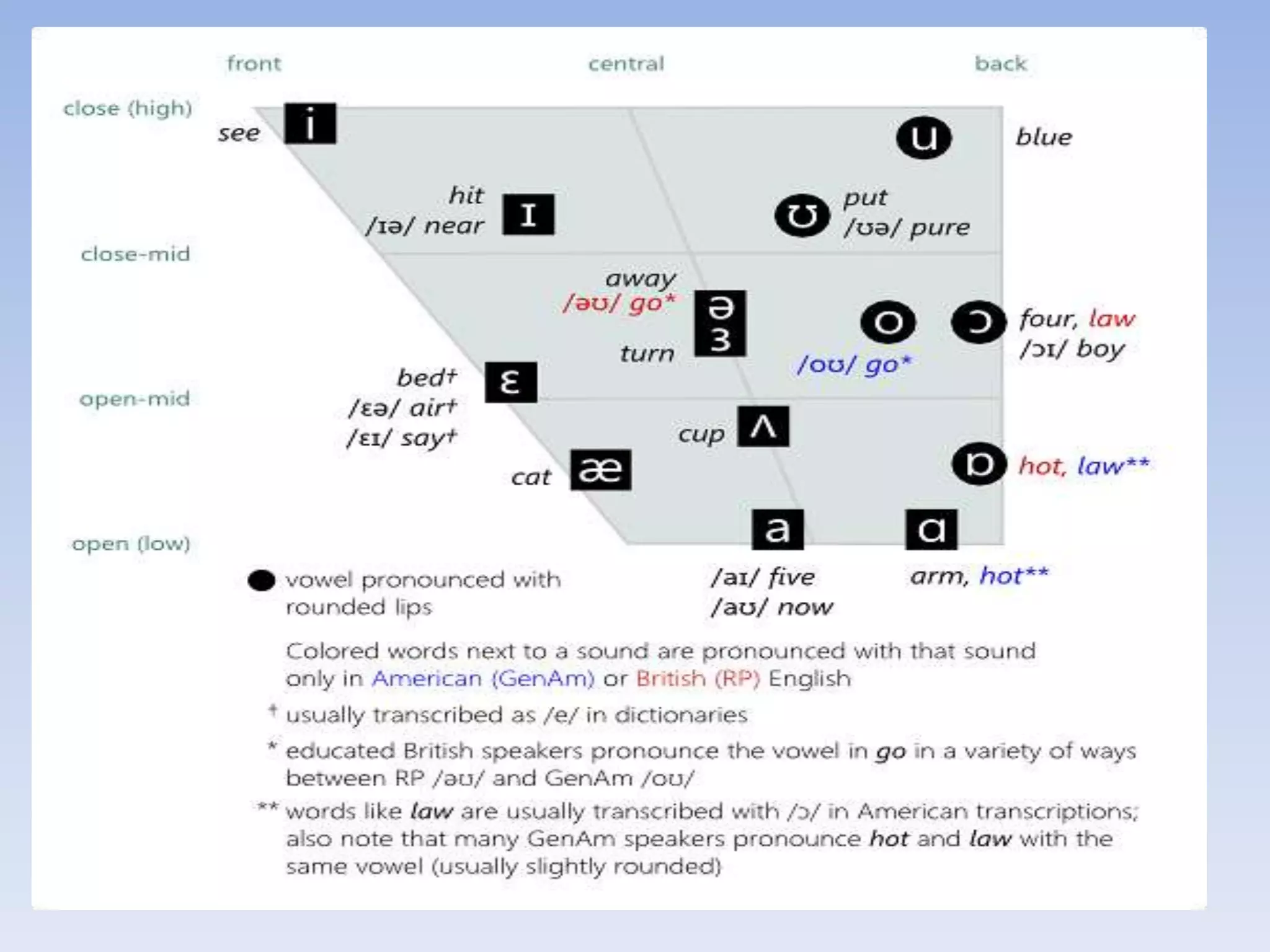
- the position of "front" & "close (high)“
- the tip of the tongue still touches the
bottom teeth, but the front of the tongue
will be placed high and touch the very
front roof of the mouth.
- the lips are very spread out when
saying /i/.
/ɪ/
hit
vowel /ɪ/
- the position of between "front" & "central“,
also in "close-mid" position
- the tip of the tongue still touches the bottom
teeth, but the front of the tongue is placed
high and in the position between the front &
the central roof of the mouth.
- the front of the tongue does not touch the
roof of the mouth.
- the lips are still spread out but less so than
with /i/.
/u/
blue
vowel /u/
- the position of "back" & "close (high)“
- the tip of the tongue still touches the
bottom teeth, but the back of the tongue
is raised very high and touches the very
far back of the roof of the mouth
- the lips are very rounded in this position
/ʊ/
put
vowel /ʊ/
- the position somehow between "central" &
"back“, also in the position "close-mid“
- the tip of the tongue still touches the bottom
teeth, but the back of the tongue is raised high
and somehow between the middle and the
back of the roof of the mouth
- the lips are rounded in this case but less
rounded than /u/
/ə/
put
vowel /ə/
- the "central" position, also in between
"close-mid" & "open-mid“
- the tip of the tongue still touches the bottom
teeth, but the middle of the tongue is raised
right to the middle of the mouth
- the tongue does not touch the middle of the
roof of the mouth
- the lips are neutral in this position
/æ/
cat
vowel /æ/
- the middle of "open-mid" & "open (low)“, also
stays between "front" and "central“
- the tip of the tongue still touches the bottom
teeth, but the whole tongue is low but not really
low like /a/
- the front of the tongue somehow stays in the
position between the front and the middle of
the roof of the mouth, but the front of the
tongue is closer to the middle of the roof of the
mouth than to the front of the roof of the mouth
- the lips are spread out in this case
/ə/ vs. /ʌ/
In English, the only real difference between
these two is that [ʌ] occurs in stressed
syllables, and [ə] occurs in unstressed syllables.
There is a slight acoustic difference between
the two ([ʌ] is supposed to be a tiny bit lower
and possibly backer than [ə]), but it is so slight
that it is virtually indistinguishable.
Presentedby:Jay-arA.Padernal,BSEdMajorinEnglish,
UniversityofMindanao

Vowel Diagram (Teaching ESL)

  • 1.
  • 3.
  • 4.
    vowel /i/ - theposition of "front" & "close (high)“ - the tip of the tongue still touches the bottom teeth, but the front of the tongue will be placed high and touch the very front roof of the mouth. - the lips are very spread out when saying /i/.
  • 6.
  • 7.
    vowel /ɪ/ - theposition of between "front" & "central“, also in "close-mid" position - the tip of the tongue still touches the bottom teeth, but the front of the tongue is placed high and in the position between the front & the central roof of the mouth. - the front of the tongue does not touch the roof of the mouth. - the lips are still spread out but less so than with /i/.
  • 9.
  • 10.
    vowel /u/ - theposition of "back" & "close (high)“ - the tip of the tongue still touches the bottom teeth, but the back of the tongue is raised very high and touches the very far back of the roof of the mouth - the lips are very rounded in this position
  • 12.
  • 13.
    vowel /ʊ/ - theposition somehow between "central" & "back“, also in the position "close-mid“ - the tip of the tongue still touches the bottom teeth, but the back of the tongue is raised high and somehow between the middle and the back of the roof of the mouth - the lips are rounded in this case but less rounded than /u/
  • 15.
  • 16.
    vowel /ə/ - the"central" position, also in between "close-mid" & "open-mid“ - the tip of the tongue still touches the bottom teeth, but the middle of the tongue is raised right to the middle of the mouth - the tongue does not touch the middle of the roof of the mouth - the lips are neutral in this position
  • 18.
  • 19.
    vowel /æ/ - themiddle of "open-mid" & "open (low)“, also stays between "front" and "central“ - the tip of the tongue still touches the bottom teeth, but the whole tongue is low but not really low like /a/ - the front of the tongue somehow stays in the position between the front and the middle of the roof of the mouth, but the front of the tongue is closer to the middle of the roof of the mouth than to the front of the roof of the mouth - the lips are spread out in this case
  • 22.
    /ə/ vs. /ʌ/ InEnglish, the only real difference between these two is that [ʌ] occurs in stressed syllables, and [ə] occurs in unstressed syllables. There is a slight acoustic difference between the two ([ʌ] is supposed to be a tiny bit lower and possibly backer than [ə]), but it is so slight that it is virtually indistinguishable.
  • 30.