










How to Teach
Vowel Pronunciation
in English
to Korean students (ESL)
1. Listen and repeat
• You say the target sound and have
your students repeat it after you.
If you are teaching a long word with
multiple syllables, start with the final
syllable of the word and have your class
repeat it.
• Then add the penultimate syllable and
say the two together having your class
repeat after you. Work backwards in this
manner until your students are able to
pronounce the entire word correctly.
2. Isolation
• Instead of presenting a certain sound as
part of a complete word in English, you
can simply pronounce the sound itself
repeatedly. When you do, your students
can say it along with you repeatedly,
focusing on the small differences in the
correct pronunciation and also engraining
the sound pattern into their minds.
3. Minimal pairs
• A minimal pair is two words that vary in
only one sound.
For example, rat and rate are minimal pairs
because only the vowel sound differs
between the two words. Others
are pin and pen, dim and dime,
and bat and pat. You can use minimal pairs
to help your students with their pronunciation
by focusing on one particular sound. In
addition to the pronunciation benefits, your
students will also expand their
vocabularies.
4. Record and replay
• By using a device to record what your
students are actually saying, you have
empirical data to play back for each
person.
Encourage him to listen to what he actually
said rather than what he thinks he said. You
may also want him to compare a recording
of a native speaker against his recording of
himself. In this way, your students will
have a more objective understanding of
their true pronunciation and be able to
take steps to correct it.
5. Use a mirror
• You can always encourage your students
to look at your mouth and face as you
pronounce certain sounds, but they will
also benefit from seeing what
movements they are making as they
speak. Sometimes, becoming aware of
the physical movements involved in
pronunciation is all your students will
need to correct pronunciation issues of
which they are unaware.
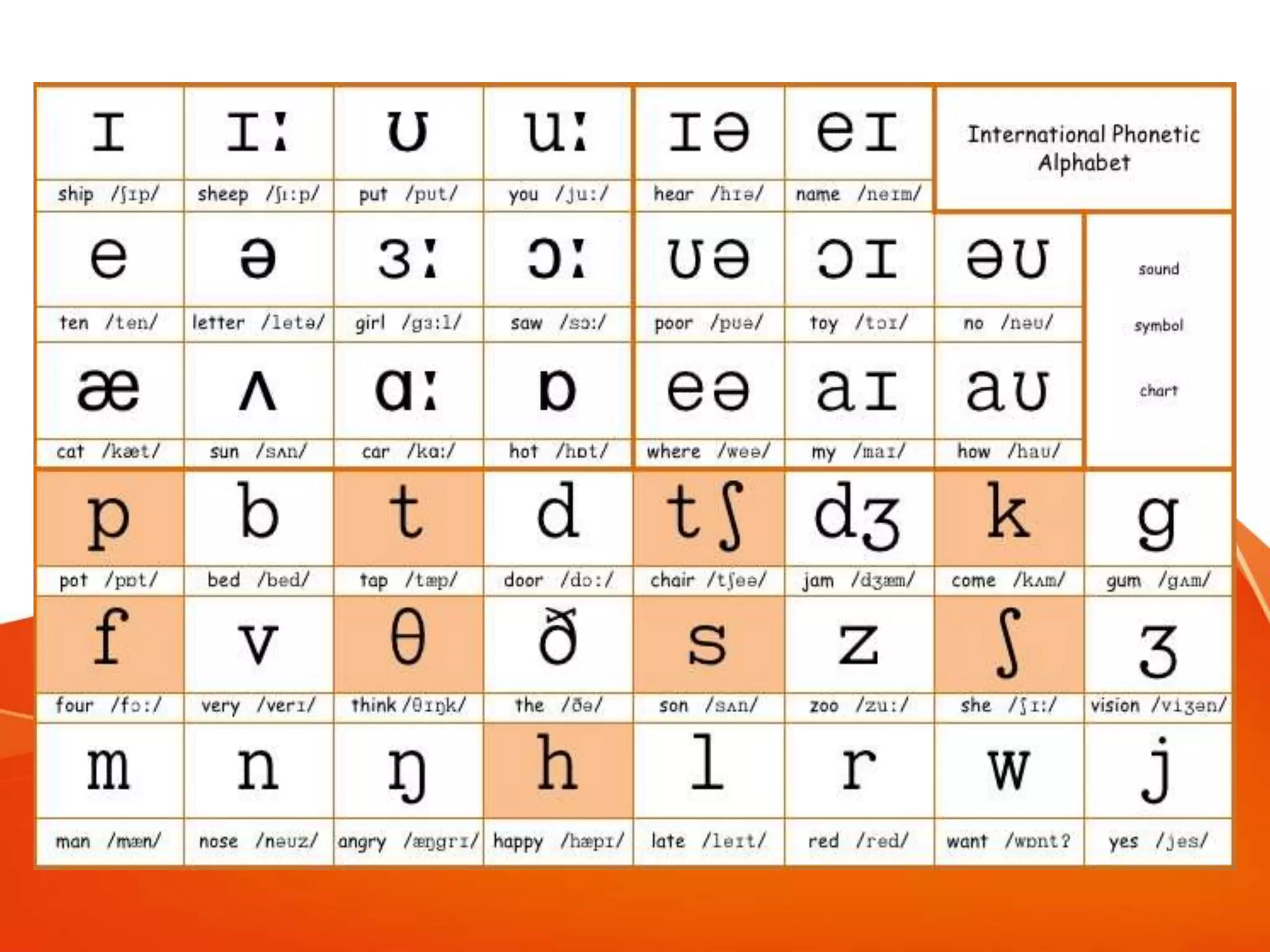
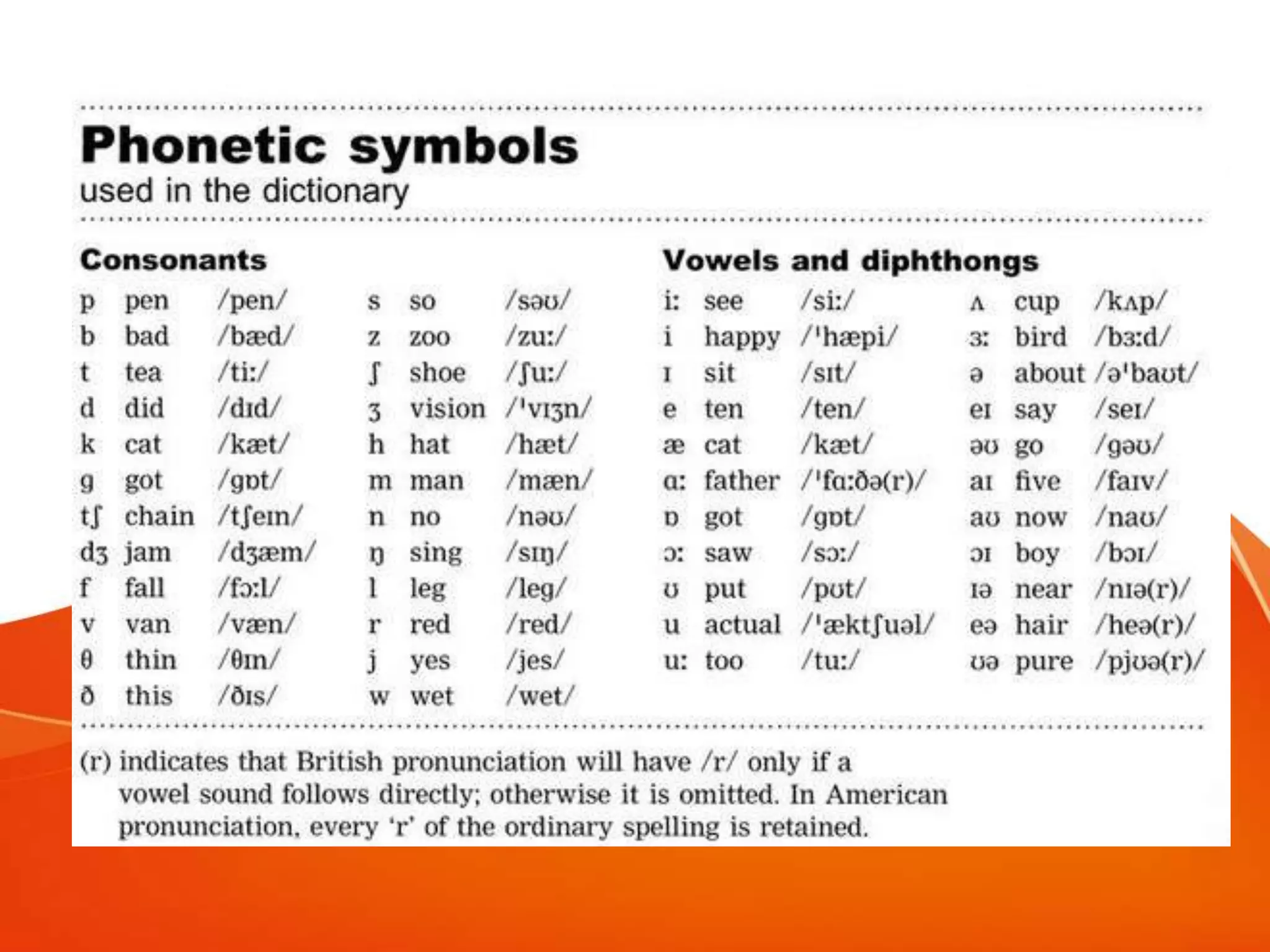
6. Phonetics
• When your students are facing a
pronunciation challenge, it could be
that English spelling is adding to the
mystery of the spoken word. Instead of
spelling new vocabulary out on the white
board, try using phonetic symbols to
represent the sounds rather than
the alphabet to represent the spelling.
The word seat would be written /si:t/ and
eat would be written /i:t/.
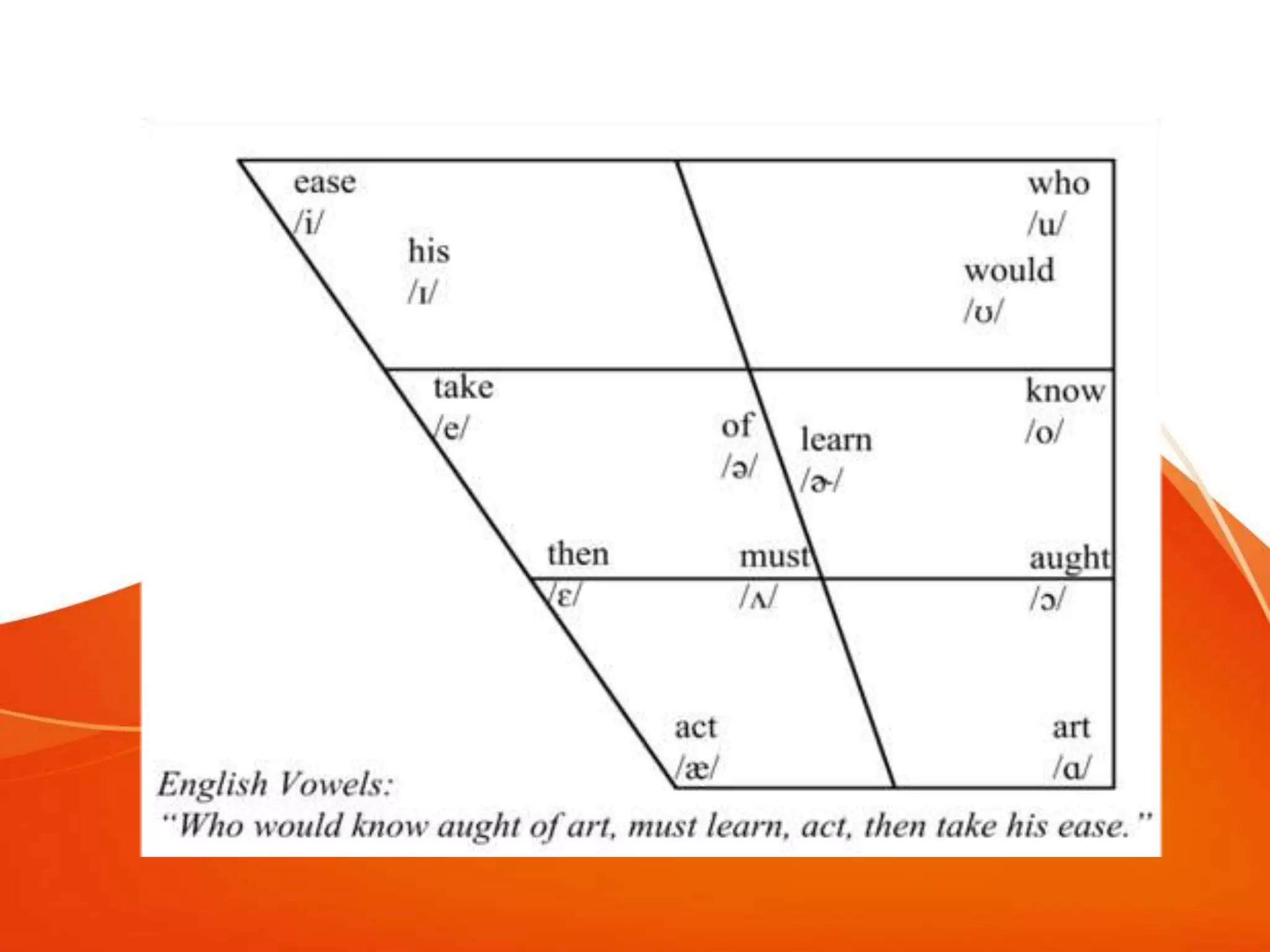
7. Show a vowel diagram
• If you are using phonetic symbols to help
you teach vowel pronunciation, a diagram
of where each English vowel sound is
produced can be eye opening for your
students. Print copies to distribute in class
or show your students where they can find
this diagram online. They may have an
easier time distinguishing between similar
sounds because they are produced in
different areas of the mouth.
8. Sing
• Singing can be a good way for ESL
students to practice their vowel
pronunciation. Because singing requires a
person to maintain vowel sounds over
more than just a moment, it can give your
students a chance to focus in on the target
sound and adjust what sound she is
making.
9. Tongue twisters
• Though tongue twisters are probably
more popular for practicing consonant
pronunciation, they are still a valuable
resource for vowel practice. Not only are
they a challenge to your students’
pronunciation abilities, they add an
element of fun to the classroom that can
help your students relax and therefore free
them to be more daring in their attempts at
English.
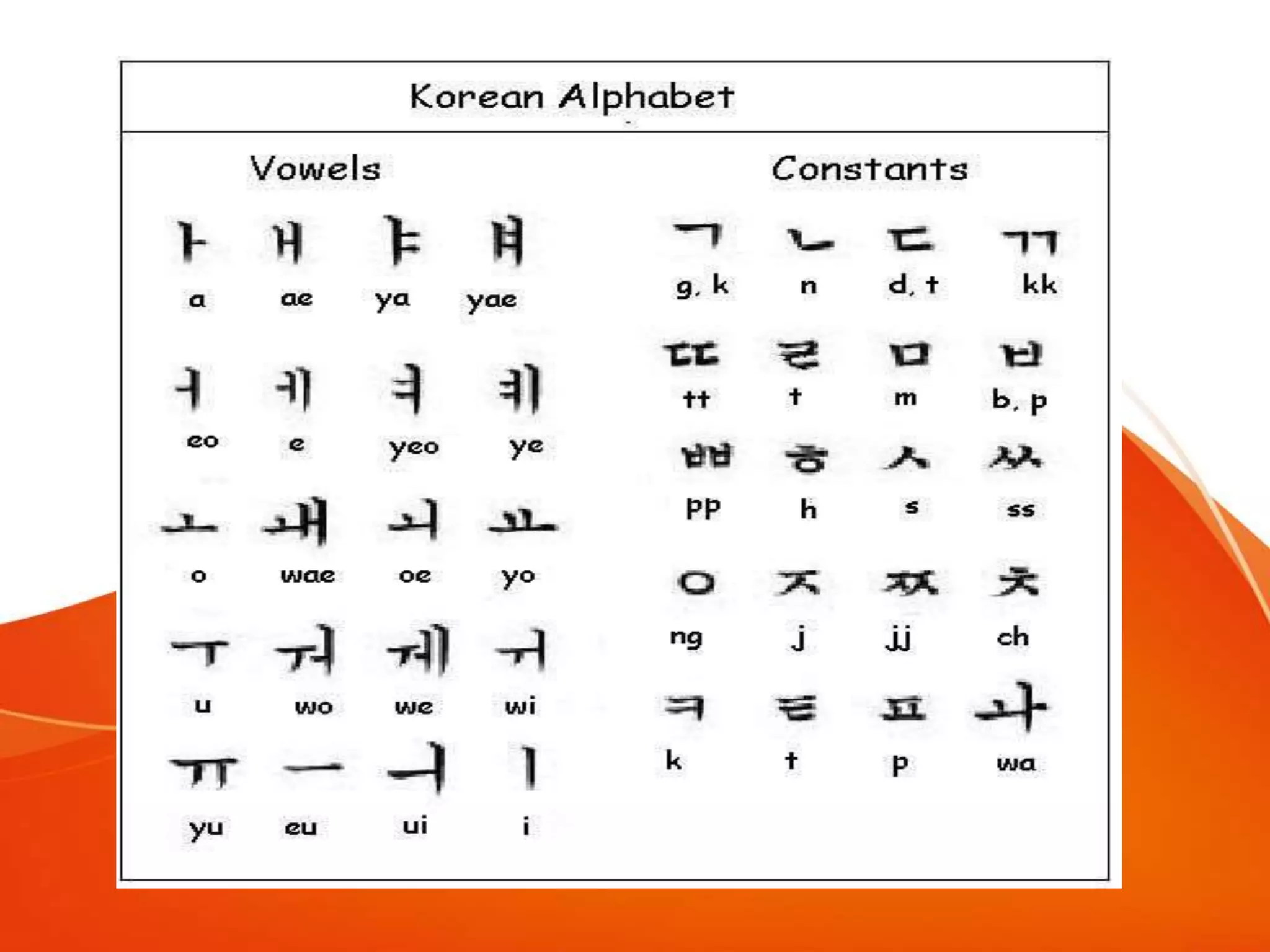
9. Target specific sounds that may
be similar to their native language
Presentedby:Jay-arA.Padernal,BSEdMajorinEnglish,
UniversityofMindanao

How to Teach Vowel Pronunciation in English (For ESL Students)

  • 1.
    How to Teach VowelPronunciation in English to Korean students (ESL)
  • 2.
  • 3.
    • You saythe target sound and have your students repeat it after you. If you are teaching a long word with multiple syllables, start with the final syllable of the word and have your class repeat it. • Then add the penultimate syllable and say the two together having your class repeat after you. Work backwards in this manner until your students are able to pronounce the entire word correctly.
  • 4.
  • 5.
    • Instead ofpresenting a certain sound as part of a complete word in English, you can simply pronounce the sound itself repeatedly. When you do, your students can say it along with you repeatedly, focusing on the small differences in the correct pronunciation and also engraining the sound pattern into their minds.
  • 6.
  • 7.
    • A minimalpair is two words that vary in only one sound. For example, rat and rate are minimal pairs because only the vowel sound differs between the two words. Others are pin and pen, dim and dime, and bat and pat. You can use minimal pairs to help your students with their pronunciation by focusing on one particular sound. In addition to the pronunciation benefits, your students will also expand their vocabularies.
  • 8.
  • 9.
    • By usinga device to record what your students are actually saying, you have empirical data to play back for each person. Encourage him to listen to what he actually said rather than what he thinks he said. You may also want him to compare a recording of a native speaker against his recording of himself. In this way, your students will have a more objective understanding of their true pronunciation and be able to take steps to correct it.
  • 10.
    5. Use amirror
  • 11.
    • You canalways encourage your students to look at your mouth and face as you pronounce certain sounds, but they will also benefit from seeing what movements they are making as they speak. Sometimes, becoming aware of the physical movements involved in pronunciation is all your students will need to correct pronunciation issues of which they are unaware.
  • 12.
  • 13.
    • When yourstudents are facing a pronunciation challenge, it could be that English spelling is adding to the mystery of the spoken word. Instead of spelling new vocabulary out on the white board, try using phonetic symbols to represent the sounds rather than the alphabet to represent the spelling. The word seat would be written /si:t/ and eat would be written /i:t/.
  • 14.
    7. Show avowel diagram
  • 15.
    • If youare using phonetic symbols to help you teach vowel pronunciation, a diagram of where each English vowel sound is produced can be eye opening for your students. Print copies to distribute in class or show your students where they can find this diagram online. They may have an easier time distinguishing between similar sounds because they are produced in different areas of the mouth.
  • 19.
  • 20.
    • Singing canbe a good way for ESL students to practice their vowel pronunciation. Because singing requires a person to maintain vowel sounds over more than just a moment, it can give your students a chance to focus in on the target sound and adjust what sound she is making.
  • 21.
  • 22.
    • Though tonguetwisters are probably more popular for practicing consonant pronunciation, they are still a valuable resource for vowel practice. Not only are they a challenge to your students’ pronunciation abilities, they add an element of fun to the classroom that can help your students relax and therefore free them to be more daring in their attempts at English.
  • 23.
    9. Target specificsounds that may be similar to their native language
  • 25.