IMPOSTORS AMONG
CREWMATES
There is 1 Impostor among us
Contents of this PRESENTATION
Here’s what you’ll find in this POWERPOINT presentation:
o This presentation focuses mainly on volcanoes.
o Facts and trivias about volcanoes.
o What to do:
● Before
● During
● After
o To create awareness about:
● Volcanic Hazards
● How it affects your health.
Whoa!
You’re about to find
out many incredible
things about
volcanoes!
What is a volcano?
● A volcano is a rupture in the crust of a planetary-mass
object, such as Earth, that allows hot lava, volcanic
ash, and gases to escape from a magma chamber below the
surface.
● On Earth, volcanoes are most often found where tectonic
plates are diverging or converging, and most found
underwater.
● Volcano refer to the eruption of hot molten lava
from below the surface of Earth.
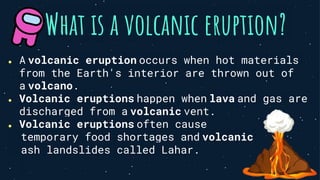
What is a volcanic eruption?
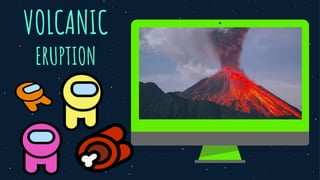
● A volcanic eruption occurs when hot materials
from the Earth's interior are thrown out of
a volcano.
● Volcanic eruptions happen when lava and gas are
discharged from a volcanic vent.
● Volcanic eruptions often cause
temporary food shortages and volcanic
ash landslides called Lahar.
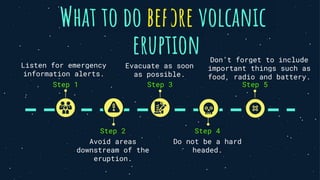
What to do before volcanic
Step 3
Evacuate as soon
as possible.
Step 1
Listen for emergency
information alerts.
Step 4
Do not be a hard
headed.
Step 2
Avoid areas
downstream of the
eruption.
Step 5
Don’t forget to include
important things such as
food, radio and battery.
eruption
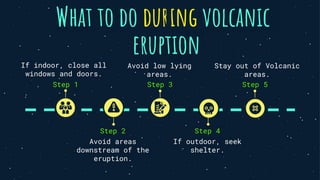
What to do during volcanic
Step 3
Avoid low lying
areas.
Step 1
If indoor, close all
windows and doors.
Step 4
If outdoor, seek
shelter.
Step 2
Avoid areas
downstream of the
eruption.
Step 5
Stay out of Volcanic
areas.
eruption
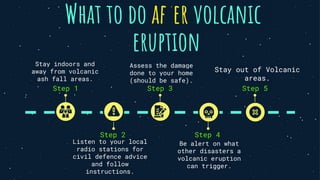
What to do after volcanic
Step 3
Be alert on what
other disasters a
volcanic eruption
can trigger.
Step 1
Listen to your local
radio stations for
civil defence advice
and follow
instructions.
Step 4
Assess the damage
done to your home
(should be safe).
Step 2
Stay indoors and
away from volcanic
ash fall areas.
Step 5
Stay out of Volcanic
areas.
eruption
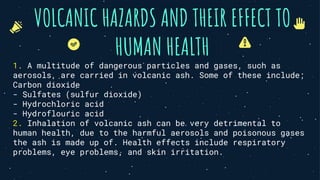
VOLCANIC HAZARDS AND THEIR EFFECT TO
HUMAN HEALTH
1. A multitude of dangerous particles and gases, such as
aerosols, are carried in volcanic ash. Some of these include;
Carbon dioxide
- Sulfates (sulfur dioxide)
- Hydrochloric acid
- Hydroflouric acid
2. Inhalation of volcanic ash can be very detrimental to
human health, due to the harmful aerosols and poisonous gases
the ash is made up of. Health effects include respiratory
problems, eye problems, and skin irritation.
VOLCANIC HAZARDS AND THEIR EFFECT TO
HUMAN HEALTH
3. Volcanic ash contaminates the biosphere through inhalation
by humans and animals, and can also effect crops growing in
an area with large amounts of ash. When inhaled, the fibers
are deposited in air passages and on lung cells.
4. One long-term effect of volcanic ash is silicosis.
Silicosis is a disease resulting in lung impairment and
scarring, from exposure to particles of free crystalline
silica. Minerals that are associated with silicosis include
quartz, cristobalite, and tridymite, all potentially present
in volcanic ash.
5. Volcanic ash can also contaminate the water supply.
Trivia and
facts
The Skeld
Mira HQ
An erupting volcano
can trigger tsunamis,
flash floods,
earthquakes, mudflows
and rock falls..
In an eruption, gases
and rock shoot up
through the opening
and spill over or
fill the air with
lava fragments.
Eruptions can cause
lava flows, hot ash
flows, mudslides,
avalanches, falling
ash and floods.
Polus
Volcanic lightning
occurs mostly
within the cloud of
ash during an
eruption, and is
created by the
friction of the ash
rushing to the
surface.
01
02
03
Mira HQ
The most deadly
eruptions have occurred
in Indonesia, with tens
of thousands of lives
lost to starvation,
tsunami (as a result of
the eruption), ash
flows, and mudflows.
04
EMERGENCY HOTLINES
NATIONAL
EMERGENCY
HOTLINE
911
National Police
Hotline
117
(02) 8722-0650
Red Cross
143
(02) 8527-8385 to 95
Bureau of Fire
Protection
(02) 8426-0219
(02) 8426-3812
CALL
CALL
CALL
CALL
CALL
CALL
CALL
CALL
VOLCANIC
ERUPTION
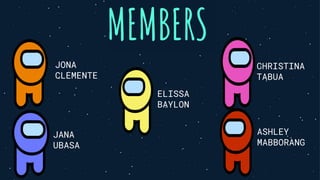
MEMBERS
ELISSA
BAYLON
JANA
UBASA
JONA
CLEMENTE
CHRISTINA
TABUA
ASHLEY
MABBORANG

Volcanic Eruption (Grade09-Dalton)

  • 1.
  • 2.
    Contents of thisPRESENTATION Here’s what you’ll find in this POWERPOINT presentation: o This presentation focuses mainly on volcanoes. o Facts and trivias about volcanoes. o What to do: ● Before ● During ● After o To create awareness about: ● Volcanic Hazards ● How it affects your health.
  • 3.
    Whoa! You’re about tofind out many incredible things about volcanoes!
  • 4.
    What is avolcano? ● A volcano is a rupture in the crust of a planetary-mass object, such as Earth, that allows hot lava, volcanic ash, and gases to escape from a magma chamber below the surface. ● On Earth, volcanoes are most often found where tectonic plates are diverging or converging, and most found underwater. ● Volcano refer to the eruption of hot molten lava from below the surface of Earth.
  • 5.
    What is avolcanic eruption? ● A volcanic eruption occurs when hot materials from the Earth's interior are thrown out of a volcano. ● Volcanic eruptions happen when lava and gas are discharged from a volcanic vent. ● Volcanic eruptions often cause temporary food shortages and volcanic ash landslides called Lahar.
  • 6.
    What to dobefore volcanic Step 3 Evacuate as soon as possible. Step 1 Listen for emergency information alerts. Step 4 Do not be a hard headed. Step 2 Avoid areas downstream of the eruption. Step 5 Don’t forget to include important things such as food, radio and battery. eruption
  • 7.
    What to doduring volcanic Step 3 Avoid low lying areas. Step 1 If indoor, close all windows and doors. Step 4 If outdoor, seek shelter. Step 2 Avoid areas downstream of the eruption. Step 5 Stay out of Volcanic areas. eruption
  • 8.
    What to doafter volcanic Step 3 Be alert on what other disasters a volcanic eruption can trigger. Step 1 Listen to your local radio stations for civil defence advice and follow instructions. Step 4 Assess the damage done to your home (should be safe). Step 2 Stay indoors and away from volcanic ash fall areas. Step 5 Stay out of Volcanic areas. eruption
  • 9.
    VOLCANIC HAZARDS ANDTHEIR EFFECT TO HUMAN HEALTH 1. A multitude of dangerous particles and gases, such as aerosols, are carried in volcanic ash. Some of these include; Carbon dioxide - Sulfates (sulfur dioxide) - Hydrochloric acid - Hydroflouric acid 2. Inhalation of volcanic ash can be very detrimental to human health, due to the harmful aerosols and poisonous gases the ash is made up of. Health effects include respiratory problems, eye problems, and skin irritation.
  • 10.
    VOLCANIC HAZARDS ANDTHEIR EFFECT TO HUMAN HEALTH 3. Volcanic ash contaminates the biosphere through inhalation by humans and animals, and can also effect crops growing in an area with large amounts of ash. When inhaled, the fibers are deposited in air passages and on lung cells. 4. One long-term effect of volcanic ash is silicosis. Silicosis is a disease resulting in lung impairment and scarring, from exposure to particles of free crystalline silica. Minerals that are associated with silicosis include quartz, cristobalite, and tridymite, all potentially present in volcanic ash. 5. Volcanic ash can also contaminate the water supply.
  • 11.
    Trivia and facts The Skeld MiraHQ An erupting volcano can trigger tsunamis, flash floods, earthquakes, mudflows and rock falls.. In an eruption, gases and rock shoot up through the opening and spill over or fill the air with lava fragments. Eruptions can cause lava flows, hot ash flows, mudslides, avalanches, falling ash and floods. Polus Volcanic lightning occurs mostly within the cloud of ash during an eruption, and is created by the friction of the ash rushing to the surface. 01 02 03 Mira HQ The most deadly eruptions have occurred in Indonesia, with tens of thousands of lives lost to starvation, tsunami (as a result of the eruption), ash flows, and mudflows. 04
  • 12.
    EMERGENCY HOTLINES NATIONAL EMERGENCY HOTLINE 911 National Police Hotline 117 (02)8722-0650 Red Cross 143 (02) 8527-8385 to 95 Bureau of Fire Protection (02) 8426-0219 (02) 8426-3812 CALL CALL CALL CALL CALL CALL CALL CALL
  • 13.
  • 14.