What is a Volcanic Eruption ? 
Volcanic Eruption occurs when 
magma from deep inside the 
earth pushes up through the 
mantle and crust. 
Volcanic Eruption releases lava, 
steam and gases into the 
atmosphere.
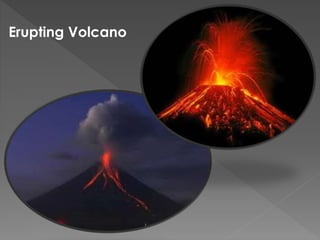
Erupting Volcano
Lava flows 
Poisonous gases 
Ashfalls 
Pyroclastic flows 
Lahars; and 
Volcanic debris avalanches
Volcano assessment, 
monitoring, and early 
eruption detection is essential 
for mitigating volcanic 
hazards. The assessment 
indicates the types of hazards 
this particular volcano is 
capable of.
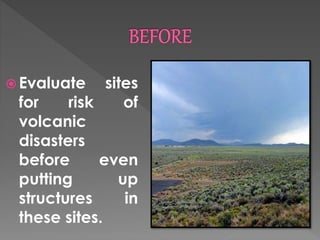
Evaluate sites 
for risk of 
volcanic 
disasters 
before even 
putting up 
structures in 
these sites.
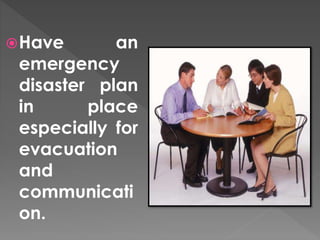
Have an 
emergency 
disaster plan 
in place 
especially for 
evacuation 
and 
communicati 
on.
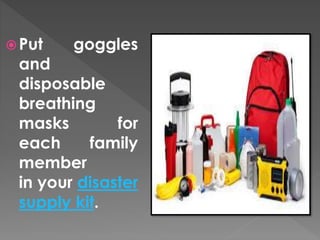
Put goggles 
and 
disposable 
breathing 
masks for 
each family 
member 
in your disaster 
supply kit.
Be prepared for the 
hazards that can 
accompany volcanoes: 
›mudflows and flash floods 
›landslides and rock falls 
›earthquakes 
›Ash fall and acid rain 
›tsunamis
Prioritize the safety of kids 
before other things. If you 
have relatives or friends 
who are far from the 
volcano, take your 
children there until such 
time that your place is 
safe.
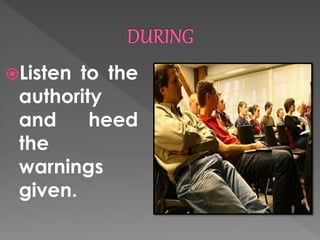
Listen to the 
authority 
and heed 
the 
warnings 
given.
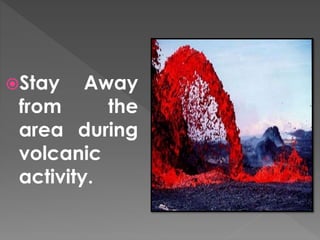
Stay Away 
from the 
area during 
volcanic 
activity.
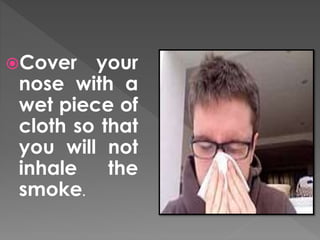
Cover your 
nose with a 
wet piece of 
cloth so that 
you will not 
inhale the 
smoke.
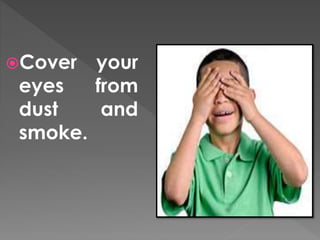
Cover your 
eyes from 
dust and 
smoke.
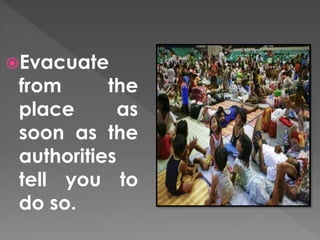
Evacuate 
from the 
place as 
soon as the 
authorities 
tell you to 
do so.
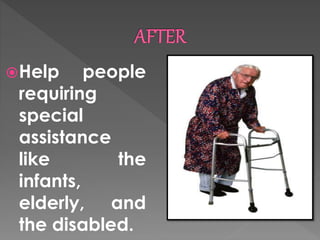
Help people 
requiring 
special 
assistance 
like the 
infants, 
elderly, and 
the disabled.
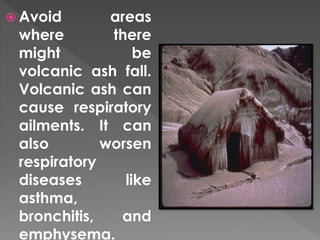
 Avoid areas 
where there 
might be 
volcanic ash fall. 
Volcanic ash can 
cause respiratory 
ailments. It can 
also worsen 
respiratory 
diseases like 
asthma, 
bronchitis, and 
emphysema.
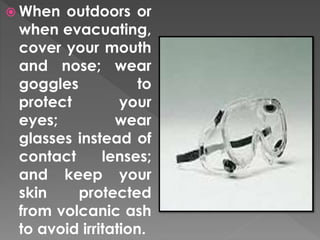
 When outdoors or 
when evacuating, 
cover your mouth 
and nose; wear 
goggles to 
protect your 
eyes; wear 
glasses instead of 
contact lenses; 
and keep your 
skin protected 
from volcanic ash 
to avoid irritation.
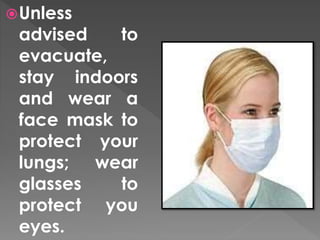
Unless 
advised to 
evacuate, 
stay indoors 
and wear a 
face mask to 
protect your 
lungs; wear 
glasses to 
protect you 
eyes.
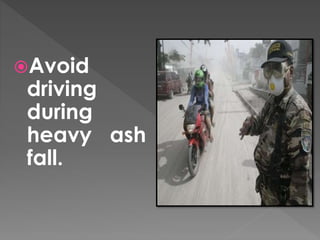
Avoid 
driving 
during 
heavy ash 
fall.

Awareness on Volcanic Eruption

  • 2.
    What is aVolcanic Eruption ? Volcanic Eruption occurs when magma from deep inside the earth pushes up through the mantle and crust. Volcanic Eruption releases lava, steam and gases into the atmosphere.
  • 3.
  • 5.
    Lava flows Poisonousgases Ashfalls Pyroclastic flows Lahars; and Volcanic debris avalanches
  • 6.
    Volcano assessment, monitoring,and early eruption detection is essential for mitigating volcanic hazards. The assessment indicates the types of hazards this particular volcano is capable of.
  • 8.
    Evaluate sites forrisk of volcanic disasters before even putting up structures in these sites.
  • 9.
    Have an emergency disaster plan in place especially for evacuation and communicati on.
  • 10.
    Put goggles and disposable breathing masks for each family member in your disaster supply kit.
  • 11.
    Be prepared forthe hazards that can accompany volcanoes: ›mudflows and flash floods ›landslides and rock falls ›earthquakes ›Ash fall and acid rain ›tsunamis
  • 12.
    Prioritize the safetyof kids before other things. If you have relatives or friends who are far from the volcano, take your children there until such time that your place is safe.
  • 13.
    Listen to the authority and heed the warnings given.
  • 14.
    Stay Away fromthe area during volcanic activity.
  • 15.
    Cover your nosewith a wet piece of cloth so that you will not inhale the smoke.
  • 16.
    Cover your eyesfrom dust and smoke.
  • 17.
    Evacuate from the place as soon as the authorities tell you to do so.
  • 18.
    Help people requiring special assistance like the infants, elderly, and the disabled.
  • 19.
     Avoid areas where there might be volcanic ash fall. Volcanic ash can cause respiratory ailments. It can also worsen respiratory diseases like asthma, bronchitis, and emphysema.
  • 20.
     When outdoorsor when evacuating, cover your mouth and nose; wear goggles to protect your eyes; wear glasses instead of contact lenses; and keep your skin protected from volcanic ash to avoid irritation.
  • 21.
    Unless advised to evacuate, stay indoors and wear a face mask to protect your lungs; wear glasses to protect you eyes.
  • 22.
    Avoid driving during heavy ash fall.