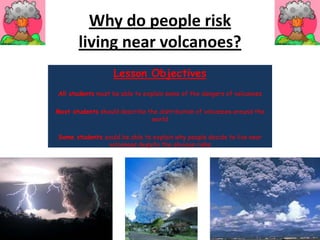
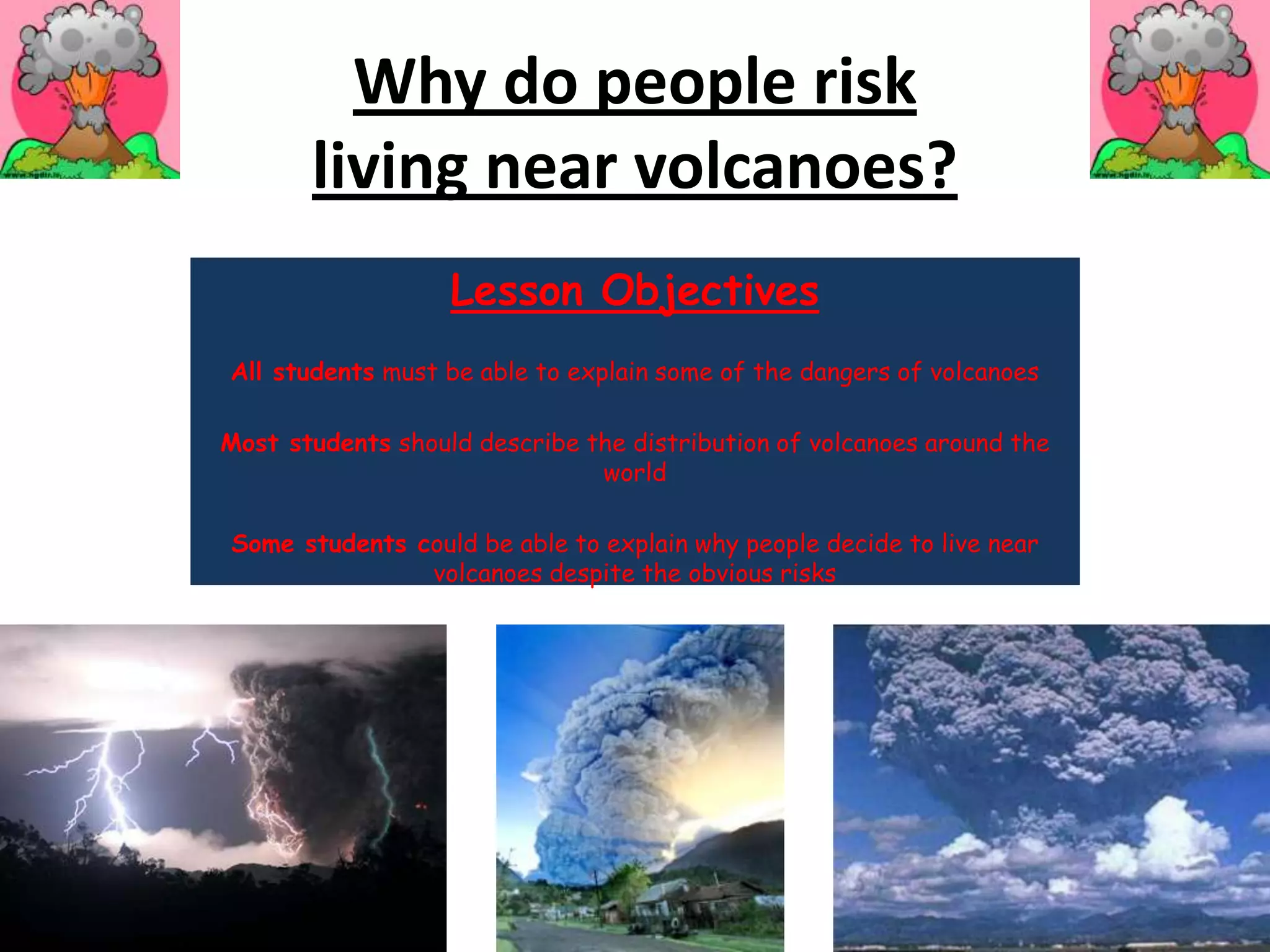
Why do people risk living near volcanoes?Lesson ObjectivesAll studentsmust be able to explain some of the dangers of volcanoes Most studentsshould describe the distribution of volcanoes around the world Some students could be able to explain why people decide to live near volcanoes despite the obvious risks
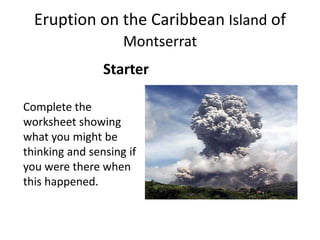
Eruption on the Caribbean Island of MontserratStarterComplete the worksheet showing what you might be thinking and sensing if you were there when this happened.
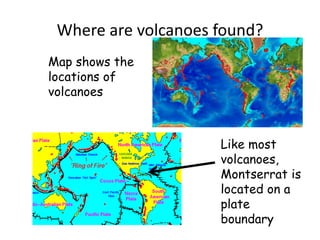
Where are volcanoes found?Map shows the locations of volcanoesLike most volcanoes, Montserrat is located on a plate boundary
Volcanic dangersVolcanoes that have erupted recently are called active volcanoes.  We will look at a few of the main dangers.Volcanoes that have not erupted for a long time are called dormant volcanoes.There are many different volcanic eruptions and these produce several hazards.Video clip
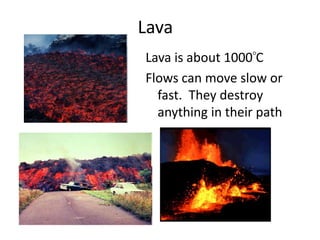
LavaLava is about 1000 CFlows can move slow or fast.  They destroy anything in their path
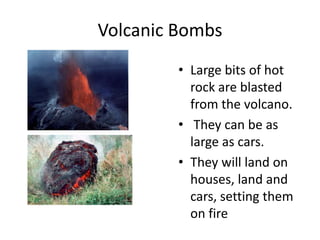
Volcanic BombsLarge bits of hot rock are blasted from the volcano.  They can be as large as cars.They will land on houses, land and cars, setting them on fire
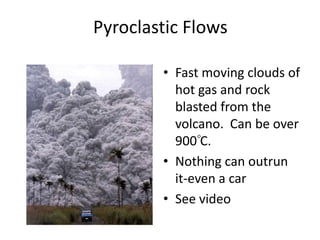
Pyroclastic Flows Fast moving clouds of hot gas and rock blasted from the volcano.  Can be over 900 C.Nothing can outrun it-even a carSee video
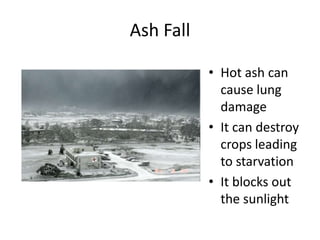
Ash FallHot ash can cause lung damageIt can destroy crops leading to starvationIt blocks out the sunlight
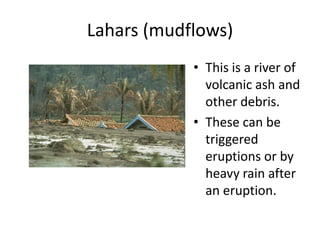
Lahars (mudflows)This is a river of volcanic ash and other debris.These can be triggered eruptions or by heavy rain after an eruption.
Why do people live near volcanoes?Today, about 500 million people live on or close to volcanoes.  Why?At first it may seem odd that people would want to live close to a volcano.  We have seen the dangers. Yet, throughout history, people have deliberately chosen to risk all the dangers and live near them.  Some people even live on the slopes of active volcanoes that have erupted within living memory.So what the benefits of volcanoes?
I’m Rich!
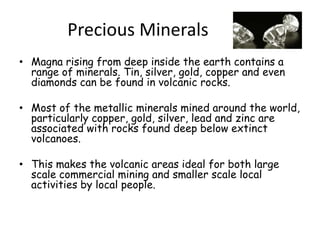
Precious MineralsMagna rising from deep inside the earth contains a range of minerals. Tin, silver, gold, copper and even diamonds can be found in volcanic rocks. Most of the metallic minerals mined around the world, particularly copper, gold, silver, lead and zinc are associated with rocks found deep below extinct volcanoes. This makes the volcanic areas ideal for both large scale commercial mining and smaller scale local activities by local people.
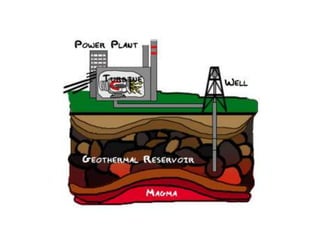
Geothermal EnergyGeothermal energy means heat energy from the earth. The heat from underground steam is used to drive turbines and produce electricity, or to heat water supplies. that are then used to provide household heating and hot water. Countries such as Iceland and New-Zealand make use of geothermal power.  Two thirds of Iceland's electricity coming from steam powered turbines. See video clip
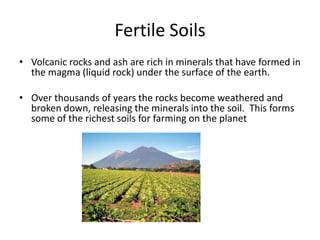
Fertile SoilsVolcanic rocks and ash are rich in minerals that have formed in the magma (liquid rock) under the surface of the earth.Over thousands of years the rocks become weathered and broken down, releasing the minerals into the soil.  This forms some of the richest soils for farming on the planet
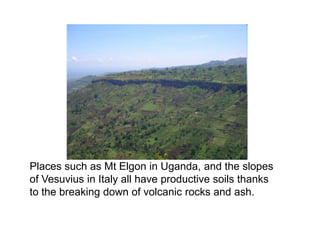
Places such as Mt Elgon in Uganda, and the slopes of Vesuvius in Italy all have productive soils thanks to the breaking down of volcanic rocks and ash.
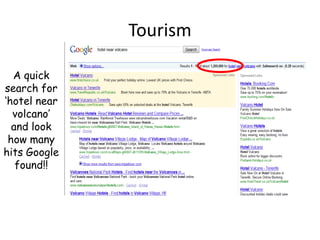
A quick search for ‘hotel near volcano’ and look how many hits Google found!!Tourism
TourismVolcanoes attract millions of visitors every year. They are examples of nature at its most extreme!Even the less active volcanoes that are just puffing out steam and smoke are impressive sights.Tourism creates jobs in shops, restaurants, hotels and tourist centres / national parks.  Locals economies can profit from volcanoes throughout the year, whereas skiing, for example, has only a limited winter season.
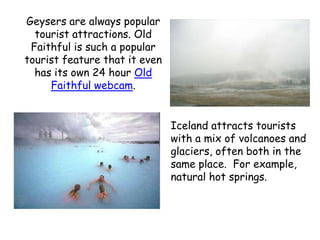
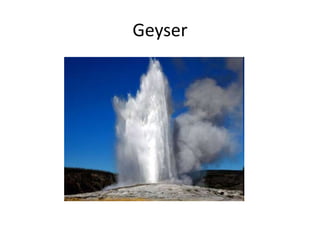
Geysers are always popular tourist attractions. Old Faithful is such a popular tourist feature that it even has its own 24 hour Old Faithful webcam. Iceland attracts tourists with a mix of volcanoes and glaciers, often both in the same place.  For example, natural hot springs.
Geyser
Why do people live near volcanoes?For many people, the benefits of living near to a volcano outweigh the potential dangers.Many people in areas close to volcanoes many not be able to afford to move to alternative areas.For example, if you were a farmer in Uganda, if you move away from the good soils near the volcano, you won’t be able to grow any crops.
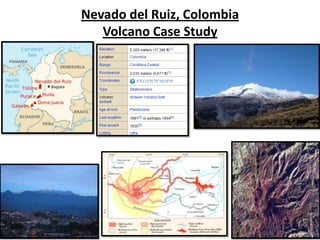
Nevado del Ruiz, ColombiaVolcano Case Study
Complete the tableTry to pick out the important information on the Nevado Del Ruiz volcano and its impacts on the surrounding  area  Try to get at least 6 facts4 or more positive points4 or more negative points/dangers

Volcanic hazards and people

  • 1.
    Why do peoplerisk living near volcanoes?Lesson ObjectivesAll studentsmust be able to explain some of the dangers of volcanoes Most studentsshould describe the distribution of volcanoes around the world Some students could be able to explain why people decide to live near volcanoes despite the obvious risks
  • 2.
    Eruption on theCaribbean Island of MontserratStarterComplete the worksheet showing what you might be thinking and sensing if you were there when this happened.
  • 3.
    Where are volcanoesfound?Map shows the locations of volcanoesLike most volcanoes, Montserrat is located on a plate boundary
  • 4.
    Volcanic dangersVolcanoes thathave erupted recently are called active volcanoes. We will look at a few of the main dangers.Volcanoes that have not erupted for a long time are called dormant volcanoes.There are many different volcanic eruptions and these produce several hazards.Video clip
  • 5.
    LavaLava is about1000 CFlows can move slow or fast. They destroy anything in their path
  • 6.
    Volcanic BombsLarge bitsof hot rock are blasted from the volcano. They can be as large as cars.They will land on houses, land and cars, setting them on fire
  • 7.
    Pyroclastic Flows Fastmoving clouds of hot gas and rock blasted from the volcano. Can be over 900 C.Nothing can outrun it-even a carSee video
  • 8.
    Ash FallHot ashcan cause lung damageIt can destroy crops leading to starvationIt blocks out the sunlight
  • 9.
    Lahars (mudflows)This isa river of volcanic ash and other debris.These can be triggered eruptions or by heavy rain after an eruption.
  • 10.
    Why do peoplelive near volcanoes?Today, about 500 million people live on or close to volcanoes. Why?At first it may seem odd that people would want to live close to a volcano. We have seen the dangers. Yet, throughout history, people have deliberately chosen to risk all the dangers and live near them. Some people even live on the slopes of active volcanoes that have erupted within living memory.So what the benefits of volcanoes?
  • 11.
  • 12.
    Precious MineralsMagna risingfrom deep inside the earth contains a range of minerals. Tin, silver, gold, copper and even diamonds can be found in volcanic rocks. Most of the metallic minerals mined around the world, particularly copper, gold, silver, lead and zinc are associated with rocks found deep below extinct volcanoes. This makes the volcanic areas ideal for both large scale commercial mining and smaller scale local activities by local people.
  • 14.
    Geothermal EnergyGeothermal energymeans heat energy from the earth. The heat from underground steam is used to drive turbines and produce electricity, or to heat water supplies. that are then used to provide household heating and hot water. Countries such as Iceland and New-Zealand make use of geothermal power. Two thirds of Iceland's electricity coming from steam powered turbines. See video clip
  • 15.
    Fertile SoilsVolcanic rocksand ash are rich in minerals that have formed in the magma (liquid rock) under the surface of the earth.Over thousands of years the rocks become weathered and broken down, releasing the minerals into the soil. This forms some of the richest soils for farming on the planet
  • 16.
    Places such asMt Elgon in Uganda, and the slopes of Vesuvius in Italy all have productive soils thanks to the breaking down of volcanic rocks and ash.
  • 17.
    A quick searchfor ‘hotel near volcano’ and look how many hits Google found!!Tourism
  • 18.
    TourismVolcanoes attract millionsof visitors every year. They are examples of nature at its most extreme!Even the less active volcanoes that are just puffing out steam and smoke are impressive sights.Tourism creates jobs in shops, restaurants, hotels and tourist centres / national parks. Locals economies can profit from volcanoes throughout the year, whereas skiing, for example, has only a limited winter season.
  • 19.
    Geysers are alwayspopular tourist attractions. Old Faithful is such a popular tourist feature that it even has its own 24 hour Old Faithful webcam. Iceland attracts tourists with a mix of volcanoes and glaciers, often both in the same place. For example, natural hot springs.
  • 20.
  • 21.
    Why do peoplelive near volcanoes?For many people, the benefits of living near to a volcano outweigh the potential dangers.Many people in areas close to volcanoes many not be able to afford to move to alternative areas.For example, if you were a farmer in Uganda, if you move away from the good soils near the volcano, you won’t be able to grow any crops.
  • 22.
    Nevado del Ruiz,ColombiaVolcano Case Study
  • 23.
    Complete the tableTryto pick out the important information on the Nevado Del Ruiz volcano and its impacts on the surrounding area Try to get at least 6 facts4 or more positive points4 or more negative points/dangers