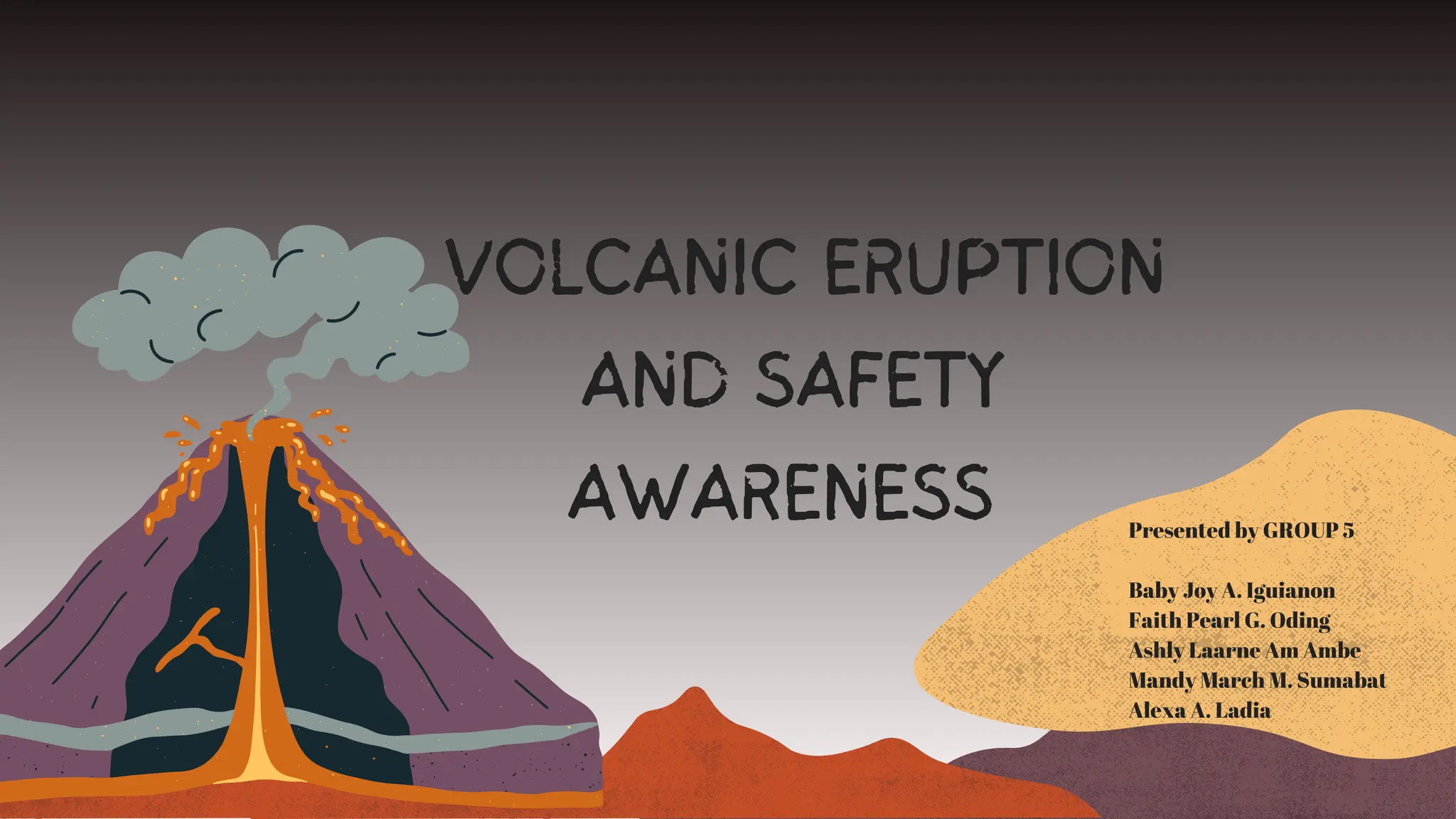
VOLCANIC ERUPTION
AND SAFETY
AWARENESSPresented by GROUP 5
Baby Joy A. Iguianon
Faith Pearl G. Oding
Ashly Laarne Am Ambe
Mandy March M. Sumabat
Alexa A. Ladia
2.
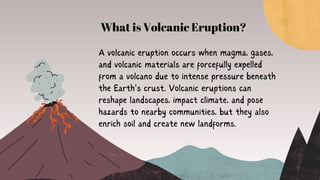
A volcanic eruptionoccurs when magma, gases,
and volcanic materials are forcefully expelled
from a volcano due to intense pressure beneath
the Earth's crust. Volcanic eruptions can
reshape landscapes, impact climate, and pose
hazards to nearby communities, but they also
enrich soil and create new landforms.
What is Volcanic Eruption?
1. Know theRisks:
Identify if your area is near an active volcano.
- Learn about potential hazards.
2. Prepare an Emergency Plan:
Designate evacuation routes and meeting points.
3. Create an Emergency Kit:
- Include essentials like food, water, first aid supplies, masks, and radios.
4. Stay Informed and Reinforce Your Home.
Before A Volcanic Eruption
5.
1. Follow OfficialWarnings:
- Evacuate immediately if instructed.
2. Protect Yourself:
- Wear long-sleeved clothing, masks, and goggles.
3. Seek Shelter:
- Stay indoors and close windows to prevent ash entry.
4. Avoid Dangerous Areas:
- Stay away from rivers and valleys that may channel lahars
or pyroclastic flows.
During A Volcano Eruption
6.
1. Ensure Safety:
-Wait for official clearance before returning.
2. Clean Ash Safely:
- Wear protective gear and dampen ash before cleaning.
3. Inspect for Damage:
- Check for structural damage and water contamination.
4. Monitor Health and Help Your Community.
After A Volcanic Eruption
These are thekey hazards of volcanic eruptions:
- Lava flows: Slow-moving but destructive.
- Ashfall: Causes respiratory issues and damages
infrastructure
- Pyroclastic flows: Extremely fast and deadly.
- Lahars: Volcanic mudflows that flood valleys.
- Toxic gases: Dangerous in low-lying areas.



![Polymer [ बहुलक ] Chemistry Notes PDF - Irfanullah Mehar - JJ Sir Chemistry.pdf](https://cdn.slidesharecdn.com/ss_thumbnails/polymerchemistrynotespdf-irfanullahmehar-jjsirchemistry-260210172118-3f9b37f7-thumbnail.jpg?width=640&height=640&fit=bounds)


