Vital Pulp Therapy
M Rafi Waiez
Araak Oral & Dental Care
Vital Pulp Therapy
 Definition: Vital pulp therapy is defined as a treatment that aims to
preserve and maintain pulp tissue.
 specially indicated for young permanent teeth because of the high healing
capacity of pulp tissue.
 Dental pulp importance:
1. forms secondary dentin, peritubular dentin, and reparative dentin
2. keeps the dentin moist.
3. provides the protective resistance to mastication forces.
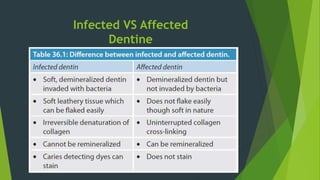
Infected VS Affected
Dentine
Indirect Pulp Capping (IPC)
Indications
 Deep carious lesion near the pulp tissue but not involving it

No history of spontaneous toothache or history of mild
 discomfort from chemical and thermal stimuli

No tenderness to percussion
Contraindications of IPC
 Presence of pulp exposure
 Radiographic evidence of pulp pathology
 History of spontaneous toothache
 Tooth sensitive to percussion
 Mobility present
 Root resorption or radicular disease is present radiographically
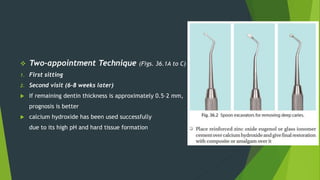
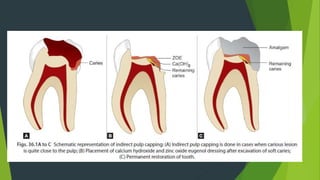
 Two-appointment Technique (Figs. 36.1A to C)
1. First sitting
2. Second visit (6–8 weeks later)
 If remaining dentin thickness is approximately 0.5–2 mm,
prognosis is better
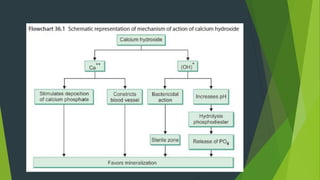
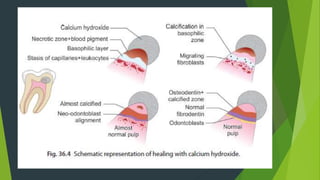
 calcium hydroxide has been used successfully
due to its high pH and hard tissue formation
Ideal Requirements of a Pulp Capping
Agent
 maintain pulp vitality
 bactericidal or bacteriostatic
 provide bacterial seal
 stimulate reparative dentin formation
 radiopaque
 resist the forces under restoration
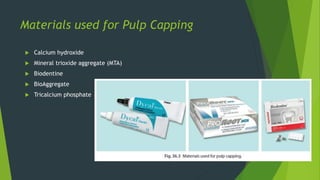
Materials used for Pulp Capping
 Calcium hydroxide
 Mineral trioxide aggregate (MTA)
 Biodentine
 BioAggregate
 Tricalcium phosphate
MTA
It was developed by Torabinajad in 1990s.
It contains:
 ‰
. Tricalcium silicate
 ‰
. Dicalcium silicate
 ‰
. Tricalcium aluminate
 ‰
. Bismuth oxide
 ‰
. Calcium sulfate
 ‰
. Tetracalcium aluminoferrite
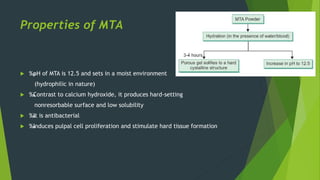
Properties of MTA
 ‰
. pH of MTA is 12.5 and sets in a moist environment
(hydrophilic in nature)
 ‰
. Contrast to calcium hydroxide, it produces hard-setting
nonresorbable surface and low solubility
 ‰
. It is antibacterial
 ‰
. Induces pulpal cell proliferation and stimulate hard tissue formation
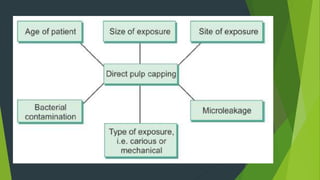
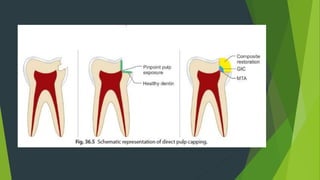
Direct Pulp Capping
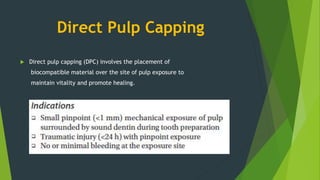
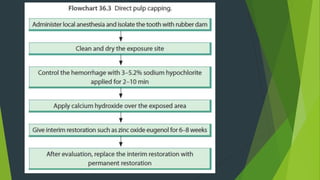
 Direct pulp capping (DPC) involves the placement of
biocompatible material over the site of pulp exposure to
maintain vitality and promote healing.
DPC contraindication
Why DPC is not Recommended in
Primary Teeth?
 1. McDonalds (1956): Localization of infection and
inflammation in primary teeth is poorer than in permanent teeth.
 2. Rayner and Southam (1979): Effects of dentinal caries are seen very rapidly
in primary teeth than the permanent teeth.
 3. Kennedy and Kopel (1985): Due to presence of thin enamel and dentinal
layers, primary pulp gets rapidly affected by caries. Once the pulp gets
exposed by caries, prognosis for DPC is poor.
 4. Kennedy (1985): Undifferentiated mesenchymal cells may differentiate into
osteoclasts in response to pulp capping material resulting in internal
resorption
 5. Stanley (1985): Primary teeth show incidences of increased resorption
because of already happening root resorption process
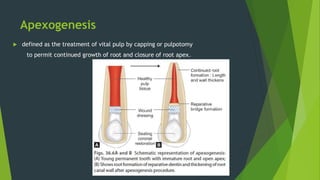
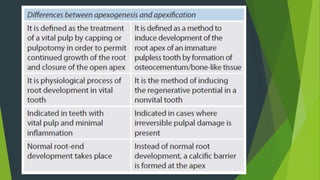
Apexogenesis
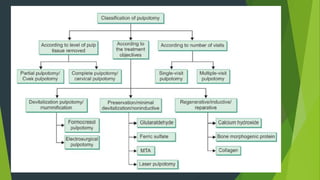
 defined as the treatment of vital pulp by capping or pulpotomy
to permit continued growth of root and closure of root apex.
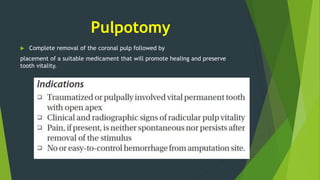
Pulpotomy
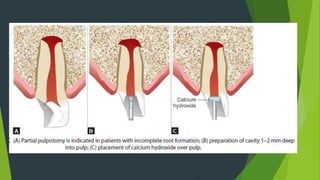
 Complete removal of the coronal pulp followed by
placement of a suitable medicament that will promote healing and preserve
tooth vitality.
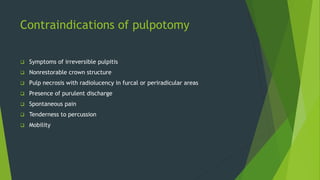
Contraindications of pulpotomy
 Symptoms of irreversible pulpitis
 Nonrestorable crown structure
 Pulp necrosis with radiolucency in furcal or periradicular areas
 Presence of purulent discharge
 Spontaneous pain
 Tenderness to percussion
 Mobility
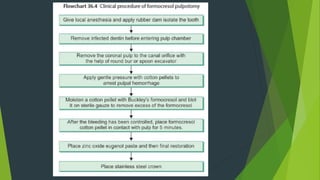
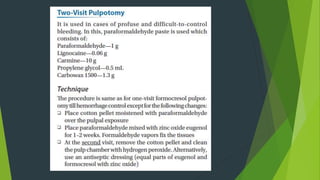
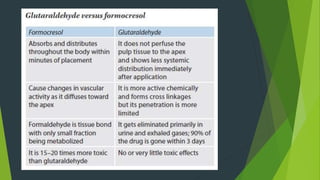
Formocresol Pulpotomy
 preferred in primary teeth due to high (98%) clinical and radiographic success
rate.
 Buckley’s formocresol consists of
 Formaldehyde 19%
 Tricresol 35%
 Glycerin 15%
 Water 31%
MTA pulpotomy
 recent material used for pulpotomies with a high rate of success.
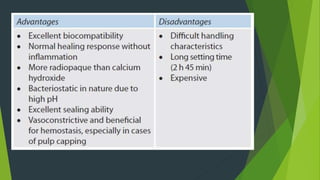
 It has excellent biocompatibility, an alkaline pH, radiopacity, high sealing
ability, and promotes regeneration of the original tissues.
 Technique:
 Isolate the tooth with a rubber dam and remove coronal pulp.
 Place the MTA over the pulp stump
 and close the tooth with temporary cement until the apex
of the tooth close.
Apexification (Root-End Closure)
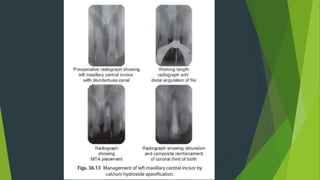
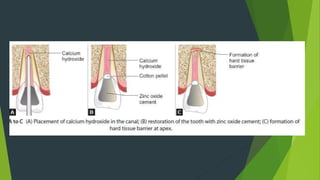
 Apexification is defined as the method to induce a calcific
barrier across an open apex of an immature pulpless tooth.
 Apexification commonly performed in:
o traumatized incisors which have lost vitality
o carious exposure
o dens invagination with an immature root
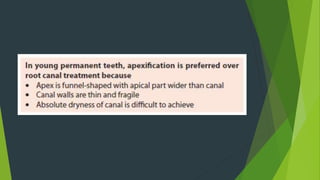
 Apex in young permanent teeth
1. flaring apical foramen (blunderbuss apex)
2. parallel to convergent apex
Cont…
 The time taken for this process for completion may range
from 6 weeks to 18 months.
 The final obturation of the canal should be carried out when there is:
 ‰
. Absence of any symptoms
 ‰
. Absence of any fistula or sinus
 ‰
. Absence or decrease in mobility
 ‰
. Evidence of firm stop both clinically as well as
radiographically
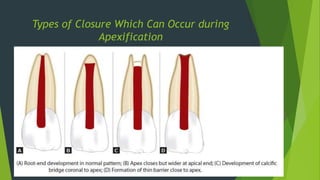
Types of Closure Which Can Occur during
Apexification
Short-Term Apexification with MTA
(One-Visit Apexification)
 MTA reduces the time needed for completion of the root
canal treatment and restoration of the tooth.
 Advantages of this technique
 Apical barrier is achieved in one visit.
 patient compliance is less crucial
 dentin does not lose its physical properties
 allows earlier restoration and thus minimizing the likelihood of root fracture.
MTA Apexification Technique
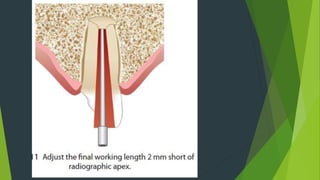
 Carry the MTA using special carrier and compact 2-mm thick plug of MTA into
the apical 4–5 mm
 using hand condensers or ultrasonic activation
 Cover MTA with wet cotton pellet
 seal the tooth with a temporary restoration
 After a few days, obturate the root canal filling using warm gutta-percha and
give coronal restoration.
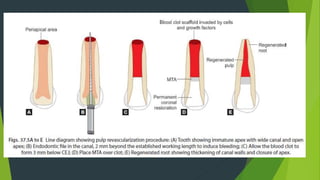
Revascularization
 This new approach for treatment of immature necrotic and infected
permanent teeth is based on the observation of
 spontaneous revascularization that occasionally occurs in
the immature teeth after traumatic injury.
 With revascularization,
 root lengthening
 apical closure
 Thickening of the canal walls is expected, thus improving the long term
of the young tooth.
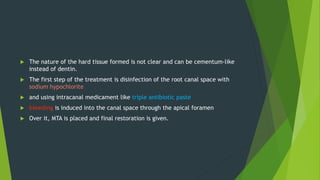
 The nature of the hard tissue formed is not clear and can be cementum-like
instead of dentin.
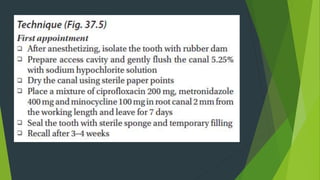
 The first step of the treatment is disinfection of the root canal space with
sodium hypochlorite
 and using intracanal medicament like triple antibiotic paste
 bleeding is induced into the canal space through the apical foramen
 Over it, MTA is placed and final restoration is given.
Vital Pulp Therapy.pptxVital Pulp Therapy.pptx

Vital Pulp Therapy.pptxVital Pulp Therapy.pptx

  • 1.
    Vital Pulp Therapy MRafi Waiez Araak Oral & Dental Care
  • 2.
    Vital Pulp Therapy Definition: Vital pulp therapy is defined as a treatment that aims to preserve and maintain pulp tissue.  specially indicated for young permanent teeth because of the high healing capacity of pulp tissue.  Dental pulp importance: 1. forms secondary dentin, peritubular dentin, and reparative dentin 2. keeps the dentin moist. 3. provides the protective resistance to mastication forces.
  • 4.
  • 5.
    Indirect Pulp Capping(IPC) Indications  Deep carious lesion near the pulp tissue but not involving it  No history of spontaneous toothache or history of mild  discomfort from chemical and thermal stimuli  No tenderness to percussion
  • 6.
    Contraindications of IPC Presence of pulp exposure  Radiographic evidence of pulp pathology  History of spontaneous toothache  Tooth sensitive to percussion  Mobility present  Root resorption or radicular disease is present radiographically
  • 7.
     Two-appointment Technique(Figs. 36.1A to C) 1. First sitting 2. Second visit (6–8 weeks later)  If remaining dentin thickness is approximately 0.5–2 mm, prognosis is better  calcium hydroxide has been used successfully due to its high pH and hard tissue formation
  • 9.
    Ideal Requirements ofa Pulp Capping Agent  maintain pulp vitality  bactericidal or bacteriostatic  provide bacterial seal  stimulate reparative dentin formation  radiopaque  resist the forces under restoration
  • 10.
    Materials used forPulp Capping  Calcium hydroxide  Mineral trioxide aggregate (MTA)  Biodentine  BioAggregate  Tricalcium phosphate
  • 14.
    MTA It was developedby Torabinajad in 1990s. It contains:  ‰ . Tricalcium silicate  ‰ . Dicalcium silicate  ‰ . Tricalcium aluminate  ‰ . Bismuth oxide  ‰ . Calcium sulfate  ‰ . Tetracalcium aluminoferrite
  • 15.
    Properties of MTA ‰ . pH of MTA is 12.5 and sets in a moist environment (hydrophilic in nature)  ‰ . Contrast to calcium hydroxide, it produces hard-setting nonresorbable surface and low solubility  ‰ . It is antibacterial  ‰ . Induces pulpal cell proliferation and stimulate hard tissue formation
  • 17.
    Direct Pulp Capping Direct pulp capping (DPC) involves the placement of biocompatible material over the site of pulp exposure to maintain vitality and promote healing.
  • 18.
  • 22.
    Why DPC isnot Recommended in Primary Teeth?  1. McDonalds (1956): Localization of infection and inflammation in primary teeth is poorer than in permanent teeth.  2. Rayner and Southam (1979): Effects of dentinal caries are seen very rapidly in primary teeth than the permanent teeth.  3. Kennedy and Kopel (1985): Due to presence of thin enamel and dentinal layers, primary pulp gets rapidly affected by caries. Once the pulp gets exposed by caries, prognosis for DPC is poor.  4. Kennedy (1985): Undifferentiated mesenchymal cells may differentiate into osteoclasts in response to pulp capping material resulting in internal resorption  5. Stanley (1985): Primary teeth show incidences of increased resorption because of already happening root resorption process
  • 23.
    Apexogenesis  defined asthe treatment of vital pulp by capping or pulpotomy to permit continued growth of root and closure of root apex.
  • 24.
    Pulpotomy  Complete removalof the coronal pulp followed by placement of a suitable medicament that will promote healing and preserve tooth vitality.
  • 25.
    Contraindications of pulpotomy Symptoms of irreversible pulpitis  Nonrestorable crown structure  Pulp necrosis with radiolucency in furcal or periradicular areas  Presence of purulent discharge  Spontaneous pain  Tenderness to percussion  Mobility
  • 28.
    Formocresol Pulpotomy  preferredin primary teeth due to high (98%) clinical and radiographic success rate.  Buckley’s formocresol consists of  Formaldehyde 19%  Tricresol 35%  Glycerin 15%  Water 31%
  • 33.
    MTA pulpotomy  recentmaterial used for pulpotomies with a high rate of success.  It has excellent biocompatibility, an alkaline pH, radiopacity, high sealing ability, and promotes regeneration of the original tissues.  Technique:  Isolate the tooth with a rubber dam and remove coronal pulp.  Place the MTA over the pulp stump  and close the tooth with temporary cement until the apex of the tooth close.
  • 34.
    Apexification (Root-End Closure) Apexification is defined as the method to induce a calcific barrier across an open apex of an immature pulpless tooth.  Apexification commonly performed in: o traumatized incisors which have lost vitality o carious exposure o dens invagination with an immature root  Apex in young permanent teeth 1. flaring apical foramen (blunderbuss apex) 2. parallel to convergent apex
  • 39.
    Cont…  The timetaken for this process for completion may range from 6 weeks to 18 months.  The final obturation of the canal should be carried out when there is:  ‰ . Absence of any symptoms  ‰ . Absence of any fistula or sinus  ‰ . Absence or decrease in mobility  ‰ . Evidence of firm stop both clinically as well as radiographically
  • 42.
    Types of ClosureWhich Can Occur during Apexification
  • 44.
    Short-Term Apexification withMTA (One-Visit Apexification)  MTA reduces the time needed for completion of the root canal treatment and restoration of the tooth.  Advantages of this technique  Apical barrier is achieved in one visit.  patient compliance is less crucial  dentin does not lose its physical properties  allows earlier restoration and thus minimizing the likelihood of root fracture.
  • 45.
    MTA Apexification Technique Carry the MTA using special carrier and compact 2-mm thick plug of MTA into the apical 4–5 mm  using hand condensers or ultrasonic activation  Cover MTA with wet cotton pellet  seal the tooth with a temporary restoration  After a few days, obturate the root canal filling using warm gutta-percha and give coronal restoration.

  • 47.
    Revascularization  This newapproach for treatment of immature necrotic and infected permanent teeth is based on the observation of  spontaneous revascularization that occasionally occurs in the immature teeth after traumatic injury.  With revascularization,  root lengthening  apical closure  Thickening of the canal walls is expected, thus improving the long term of the young tooth.
  • 48.
     The natureof the hard tissue formed is not clear and can be cementum-like instead of dentin.  The first step of the treatment is disinfection of the root canal space with sodium hypochlorite  and using intracanal medicament like triple antibiotic paste  bleeding is induced into the canal space through the apical foramen  Over it, MTA is placed and final restoration is given.