Visual angle
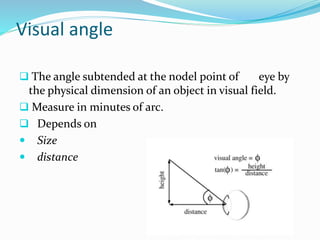
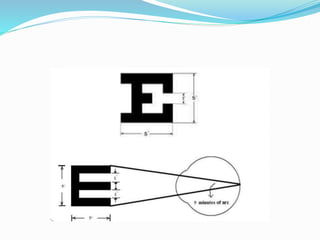
 The angle subtended at the nodel point of eye by
the physical dimension of an object in visual field.
 Measure in minutes of arc.
 Depends on
 Size
 distance
Visual acuity
 Reciprocal of minimum resolvable visual angle.
 Measure of form sense.
 Spatial limit of visual discrimination.
Theories of visual acuity
Receptor theory-
If the image fall on 2 cones separated by an
unilluminated cone, then the points of light
would be perceived as 2 distinct source.
 two adjacent point can be recognized as separate
when they subtend an angle of 1 minute of arc.
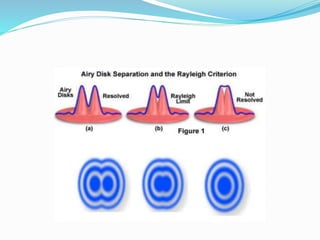
Rayleigh criterion for resolution
2 point (unresolved) sources are resolved from each
other when separated by at least the radius of airy disc.
The central disc is surrounded by less instance
concentric rings. (airy disc)
Components of measurement of
vision
 Visual acuity
 Field of vision
 Color vision
 BSV
Components of visual acuity
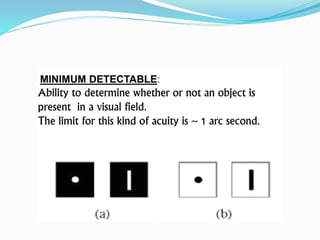
Minimum detectable (visible)
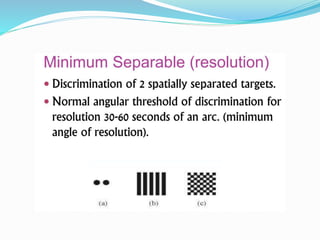
Minimum separable(resolution)
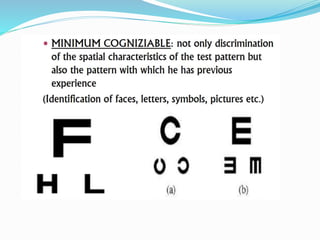
Minimum cognizable(recognition)
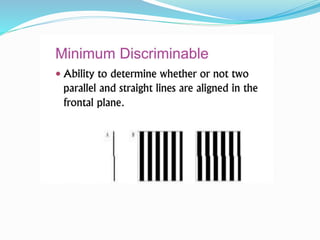
Minimum discriminable(hyperacuity)
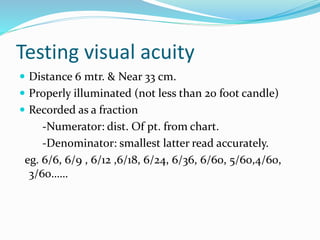
Testing visual acuity
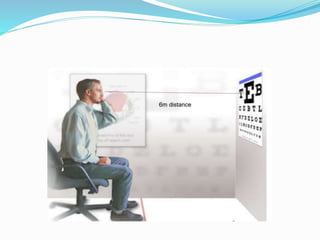
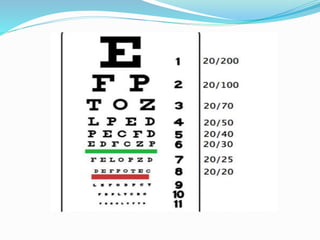
 Distance 6 mtr. & Near 33 cm.
 Properly illuminated (not less than 20 foot candle)
 Recorded as a fraction
-Numerator: dist. Of pt. from chart.
-Denominator: smallest latter read accurately.
eg. 6/6, 6/9 , 6/12 ,6/18, 6/24, 6/36, 6/60, 5/60,4/60,
3/60……
 Finger counting CF-1 , CF-2 , CF-3
 HM+/-
 Perception of light
 Projection of rays
 Each eye should be check separate for both dist. & near
, with or without glasses.
Variables in visual acuity
external internal
 Lighting level is not constant
 Variability in contrast.
 Chart is not kept clean
 Distance .
 Incidental glare.
 Wearing dirty eye glasses.
 Tear film abnormalities.
 Corneal surface
abnormalities.
Neurological impairment
 Motility defects viz. nystagmus.
 Visual field defects.
 Optic nerve defects.
 Pupil abnormality.
 impairment of drugs, legal or illicit.
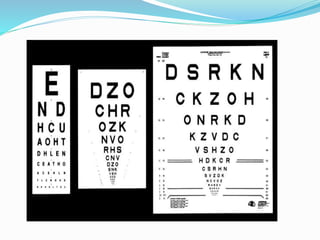
Distance acuity chart
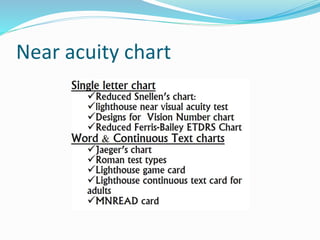
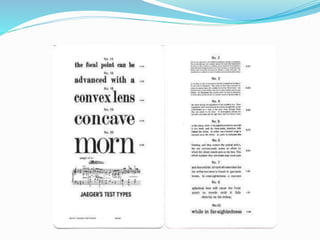
Near acuity chart
VA Assesment in infants
 Blink response
 Pupillary reflex-after 29th week of gestation.
 Fixation reflex-2 week to 2month.
 Follow movements-horizontal tracking
vertical tracking
 central , steady & maintained (CSM) method of rating.
 Optokinetic nystagmus test
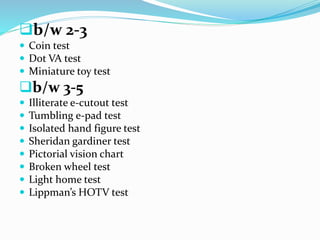
 Preferential looking test
 Visual evoked response
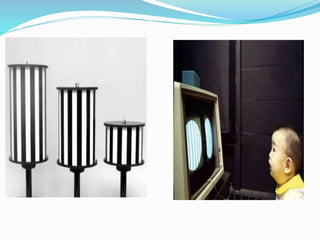
 Catford drum test
 Cardiff acuity test
b/w 1-2
 Boeck candy test
 Worth’s ivory ball test
 Sheridan’s ball test
b/w 2-3
 Coin test
 Dot VA test
 Miniature toy test
b/w 3-5
 Illiterate e-cutout test
 Tumbling e-pad test
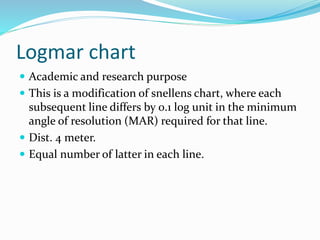
 Isolated hand figure test
 Sheridan gardiner test
 Pictorial vision chart
 Broken wheel test
 Light home test
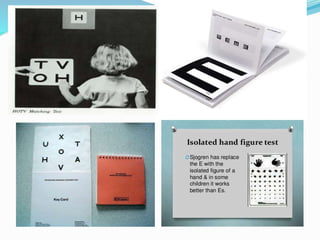
 Lippman’s HOTV test
Logmar chart
 Academic and research purpose
 This is a modification of snellens chart, where each
subsequent line differs by 0.1 log unit in the minimum
angle of resolution (MAR) required for that line.
 Dist. 4 meter.
 Equal number of latter in each line.
Potential acuity test
These test are used to assess the visual acuity of eye in
which it is not possible to see macula bcz of cat.
 pinhole test
 bluefield entopic phenomena-abiliy to see white dots
when blue light diffusely illuminates retina.
 interferometers
Hyperacuity
 Human eye is capable of seeing more than the ability
of the retinal cones to resolve.
 It is due to the involvement of higher cortical centers
in the parietal cortex , for Ex.
 Vernier acuity
 Stereo acuity
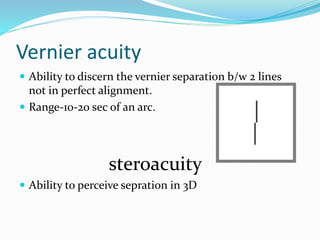
Vernier acuity
 Ability to discern the vernier separation b/w 2 lines
not in perfect alignment.
 Range-10-20 sec of an arc.
steroacuity
 Ability to perceive sepration in 3D
Miscellaneous
 The Directional sensitivity of retina is referred to
Stiles- crawford effect.
Visual angle by Neha sharma

Visual angle by Neha sharma

  • 1.
    Visual angle  Theangle subtended at the nodel point of eye by the physical dimension of an object in visual field.  Measure in minutes of arc.  Depends on  Size  distance
  • 2.
    Visual acuity  Reciprocalof minimum resolvable visual angle.  Measure of form sense.  Spatial limit of visual discrimination.
  • 3.
    Theories of visualacuity Receptor theory- If the image fall on 2 cones separated by an unilluminated cone, then the points of light would be perceived as 2 distinct source.  two adjacent point can be recognized as separate when they subtend an angle of 1 minute of arc.
  • 4.
    Rayleigh criterion forresolution 2 point (unresolved) sources are resolved from each other when separated by at least the radius of airy disc. The central disc is surrounded by less instance concentric rings. (airy disc)
  • 6.
    Components of measurementof vision  Visual acuity  Field of vision  Color vision  BSV
  • 7.
    Components of visualacuity Minimum detectable (visible) Minimum separable(resolution) Minimum cognizable(recognition) Minimum discriminable(hyperacuity)
  • 12.
    Testing visual acuity Distance 6 mtr. & Near 33 cm.  Properly illuminated (not less than 20 foot candle)  Recorded as a fraction -Numerator: dist. Of pt. from chart. -Denominator: smallest latter read accurately. eg. 6/6, 6/9 , 6/12 ,6/18, 6/24, 6/36, 6/60, 5/60,4/60, 3/60……
  • 14.
     Finger countingCF-1 , CF-2 , CF-3  HM+/-  Perception of light  Projection of rays  Each eye should be check separate for both dist. & near , with or without glasses.
  • 16.
    Variables in visualacuity external internal  Lighting level is not constant  Variability in contrast.  Chart is not kept clean  Distance .  Incidental glare.  Wearing dirty eye glasses.  Tear film abnormalities.  Corneal surface abnormalities.
  • 17.
    Neurological impairment  Motilitydefects viz. nystagmus.  Visual field defects.  Optic nerve defects.  Pupil abnormality.  impairment of drugs, legal or illicit.
  • 18.
  • 20.
  • 22.
    VA Assesment ininfants  Blink response  Pupillary reflex-after 29th week of gestation.  Fixation reflex-2 week to 2month.  Follow movements-horizontal tracking vertical tracking  central , steady & maintained (CSM) method of rating.
  • 23.
     Optokinetic nystagmustest  Preferential looking test  Visual evoked response  Catford drum test  Cardiff acuity test
  • 25.
    b/w 1-2  Boeckcandy test  Worth’s ivory ball test  Sheridan’s ball test
  • 26.
    b/w 2-3  Cointest  Dot VA test  Miniature toy test b/w 3-5  Illiterate e-cutout test  Tumbling e-pad test  Isolated hand figure test  Sheridan gardiner test  Pictorial vision chart  Broken wheel test  Light home test  Lippman’s HOTV test
  • 28.
    Logmar chart  Academicand research purpose  This is a modification of snellens chart, where each subsequent line differs by 0.1 log unit in the minimum angle of resolution (MAR) required for that line.  Dist. 4 meter.  Equal number of latter in each line.
  • 30.
    Potential acuity test Thesetest are used to assess the visual acuity of eye in which it is not possible to see macula bcz of cat.  pinhole test  bluefield entopic phenomena-abiliy to see white dots when blue light diffusely illuminates retina.  interferometers
  • 31.
    Hyperacuity  Human eyeis capable of seeing more than the ability of the retinal cones to resolve.  It is due to the involvement of higher cortical centers in the parietal cortex , for Ex.  Vernier acuity  Stereo acuity
  • 32.
    Vernier acuity  Abilityto discern the vernier separation b/w 2 lines not in perfect alignment.  Range-10-20 sec of an arc. steroacuity  Ability to perceive sepration in 3D
  • 33.
    Miscellaneous  The Directionalsensitivity of retina is referred to Stiles- crawford effect.