Visitors and Residents
USEFUL SOCIAL MEDIA
in LIBRARIES
Visitors and Residents
USEFUL SOCIAL MEDIA
in LIBRARIES
#Interlend15
@ned_potter
RAISE YOUR HANDS
Keep your hand raised if you’ve heard the term
DIGITAL NATIVE
RAISE YOUR HANDS
KEEP YOUR HAND RAISED IF YOU
CONSIDER YOURSELF TO BE A
DIGITAL NATIVE
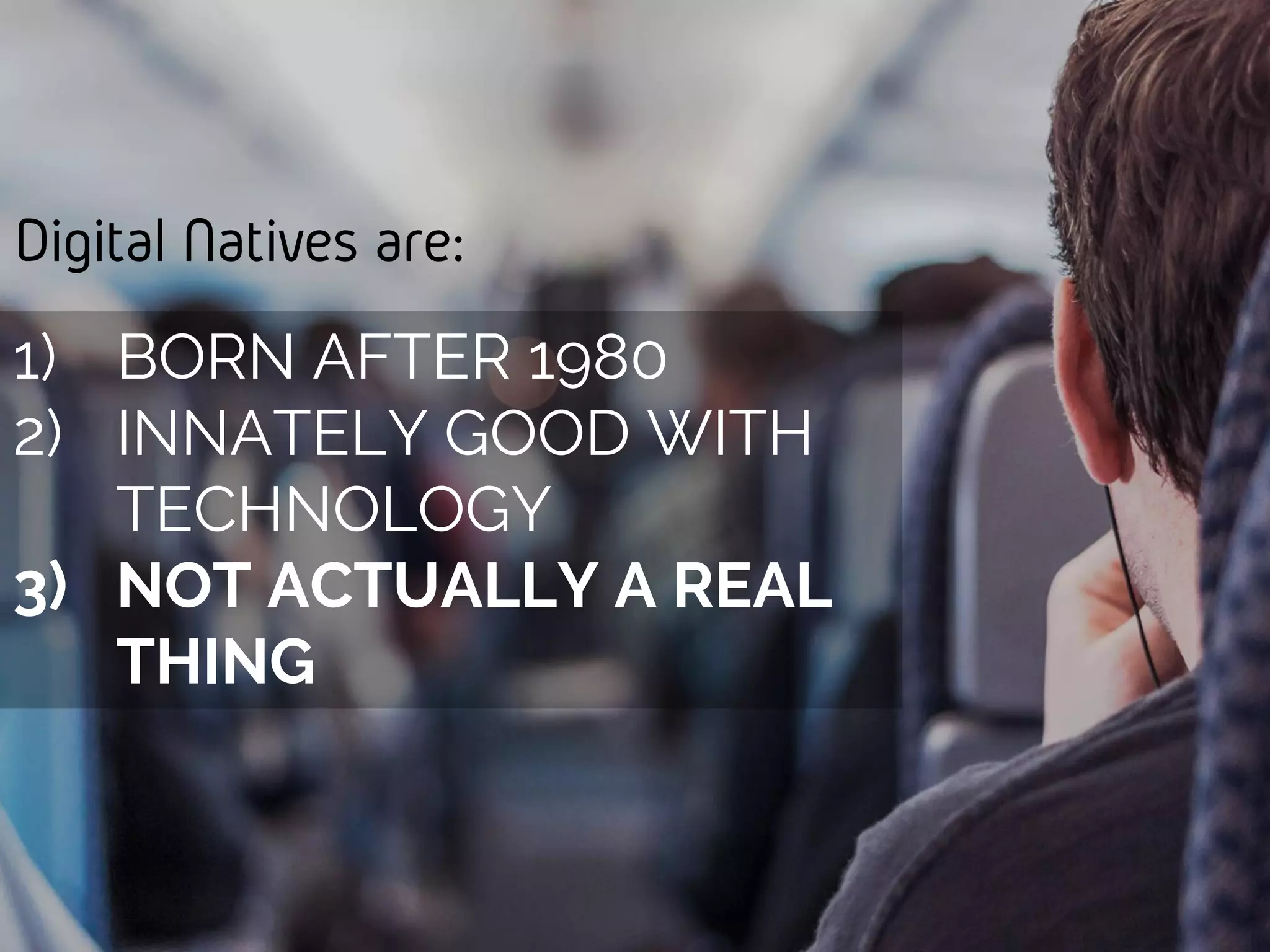
Digital Natives are:
1) BORN AFTER 1980
Digital Natives are:
1) BORN AFTER 1980
2) INNATELY GOOD WITH
TECHNOLOGY
Digital Natives are:
1) BORN AFTER 1980
2) INNATELY GOOD WITH
TECHNOLOGY
3) NOT ACTUALLY A REAL
THING
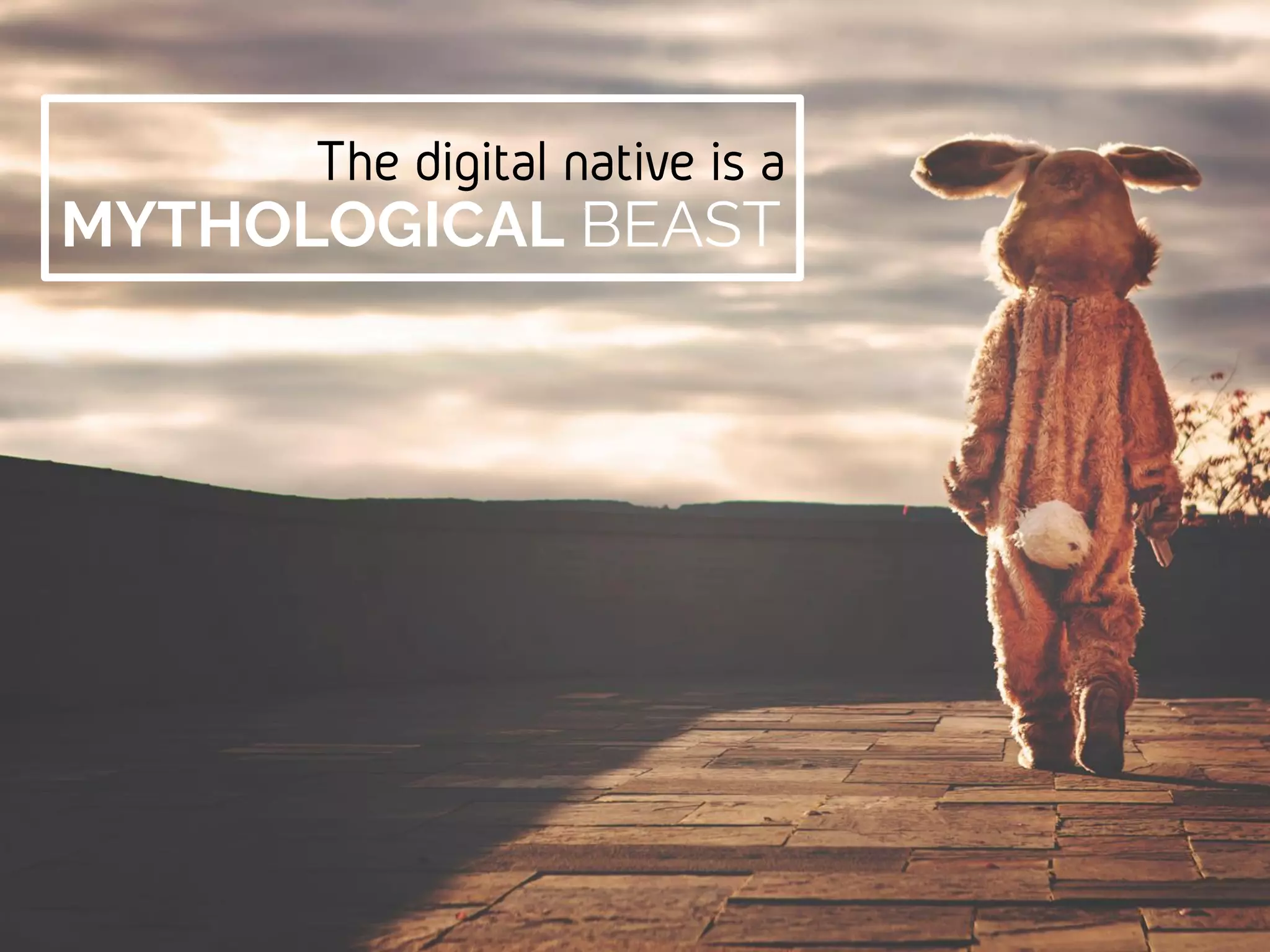
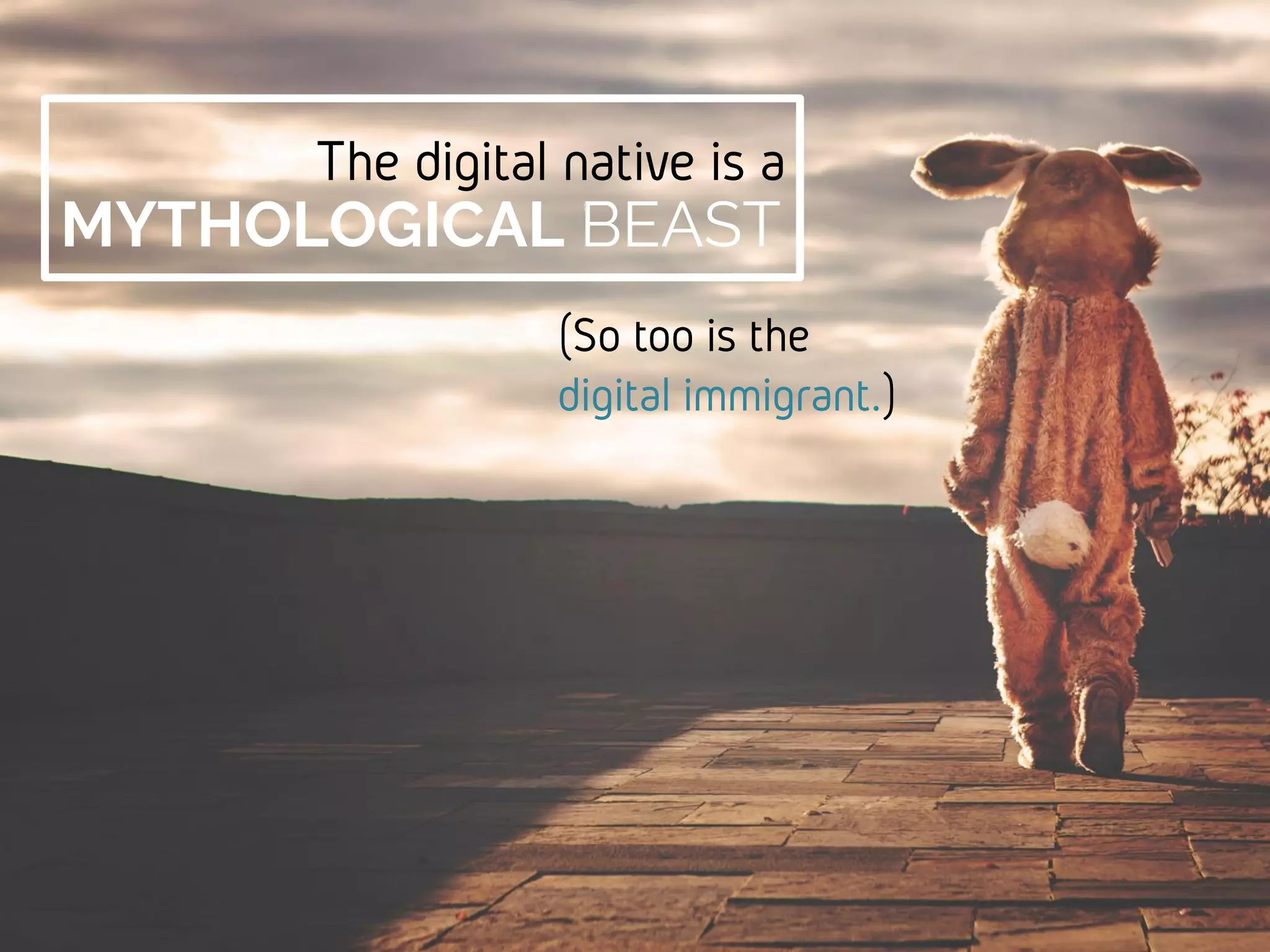
The digital native is a
MYTHOLOGICAL BEAST
MYTHOLOGICAL BEAST
(So too is the
digital immigrant.)
The digital native is a
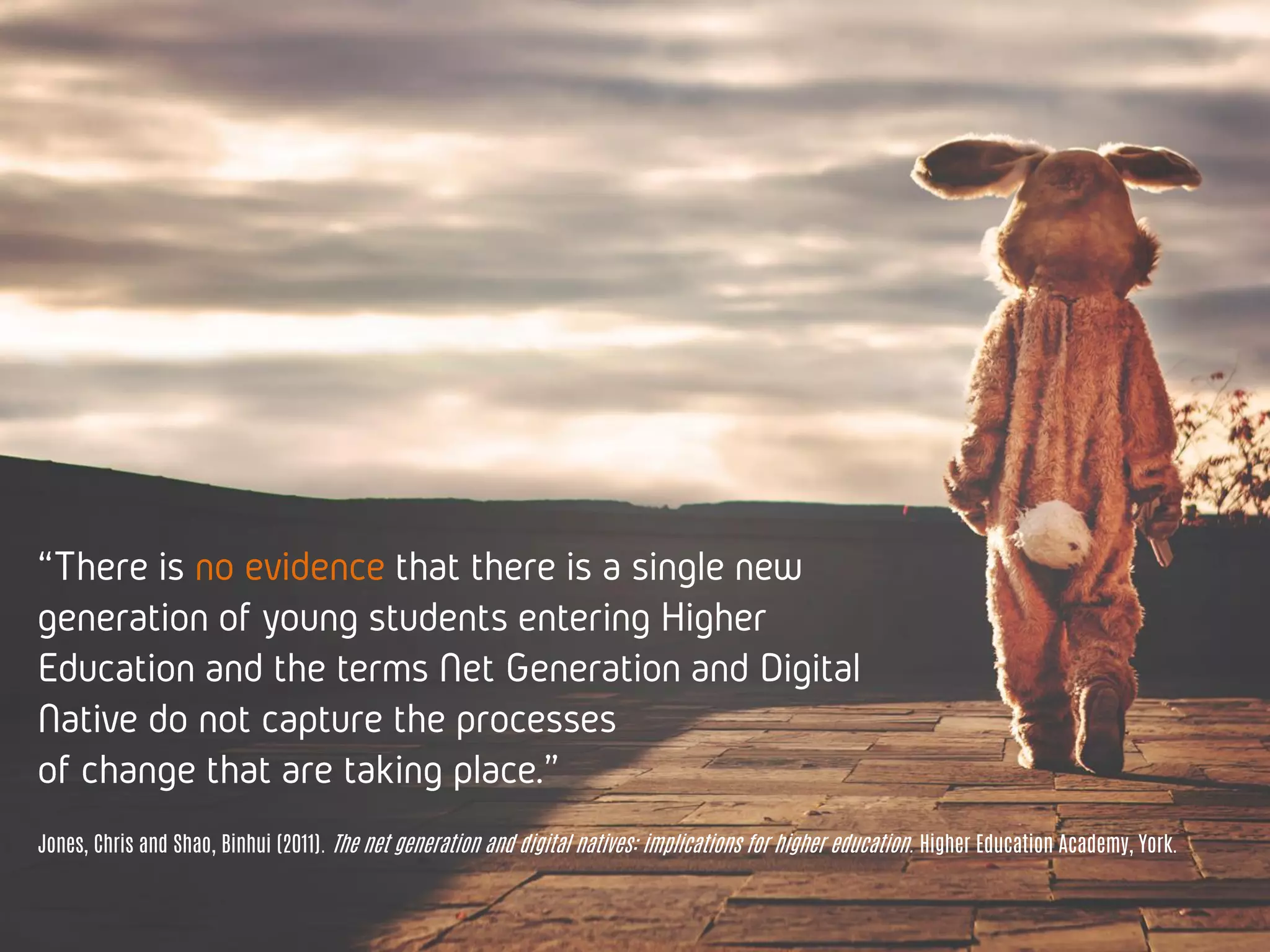
“There is no evidence that there is a single
new generation of young students entering
Higher Education and the terms Net Generation
and Digital Native do not capture the processes
of change that are taking place.”
Jones, Chris and Shao, Binhui (2011). The net generation and digital natives: implications for higher education. Higher Education Academy, York.
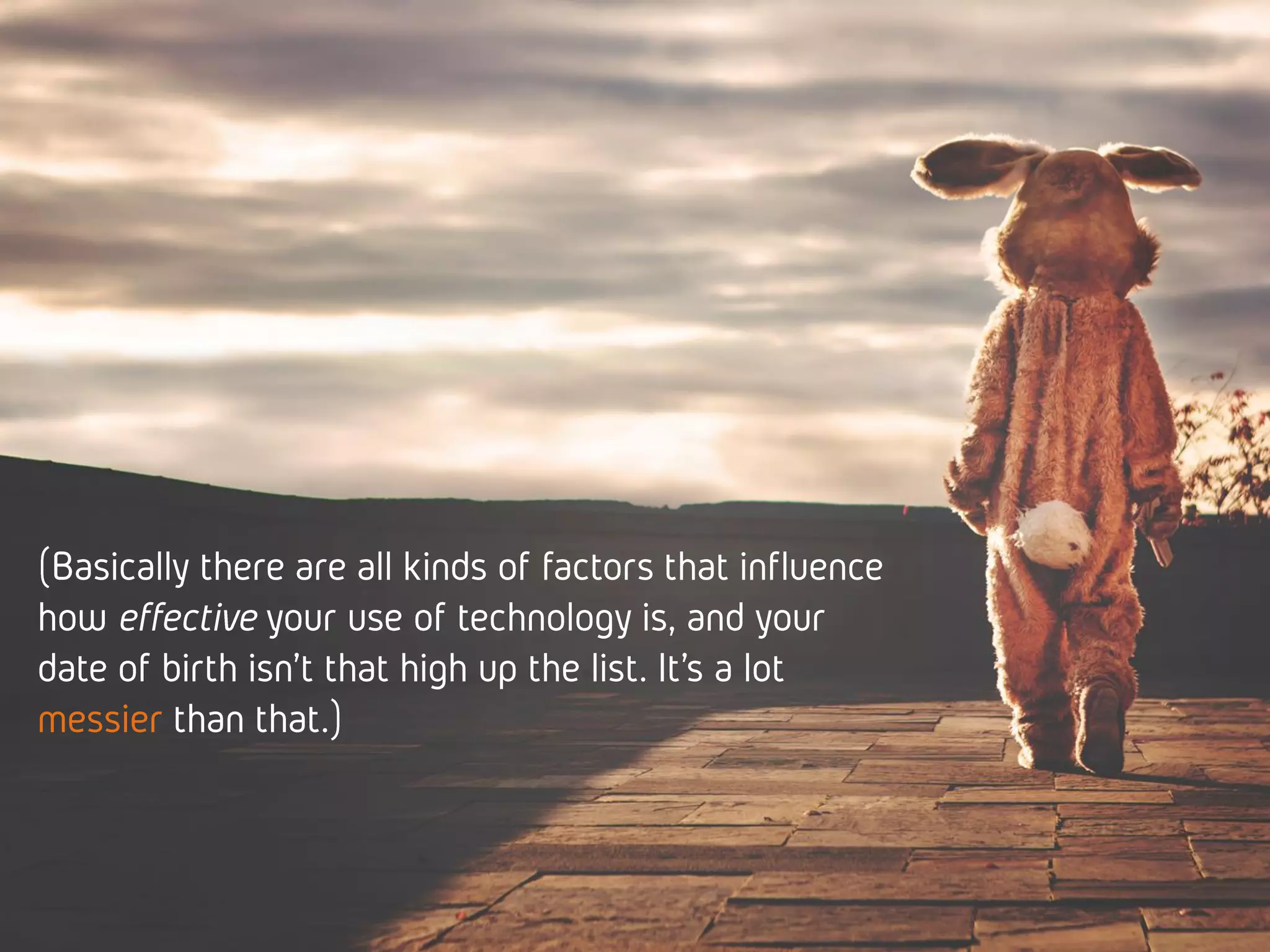
(Basically there are all kinds of factors that
influence how effective your use of technology
is, and your date of birth isn’t that high up the
list. It’s a lot messier than that.)
As we all know, being technologically literate is
not the same as being digitally literate.
Just like
knowing how
kitchen
utensils work
isn’t the same
as being able
to cook a
really nice
meal…
DON’T LET ANYONE
TELL YOU WHAT YOU
CAN AND CAN’T DO
WITH TECHNOLOGY
BASED ON YOUR AGE
NOR SHOULD WE MAKE ANY
ASSUMPTIONS ABOUT STAFF,
STUDENTS OR OTHER USERS
BASED ON
THEIR AGE
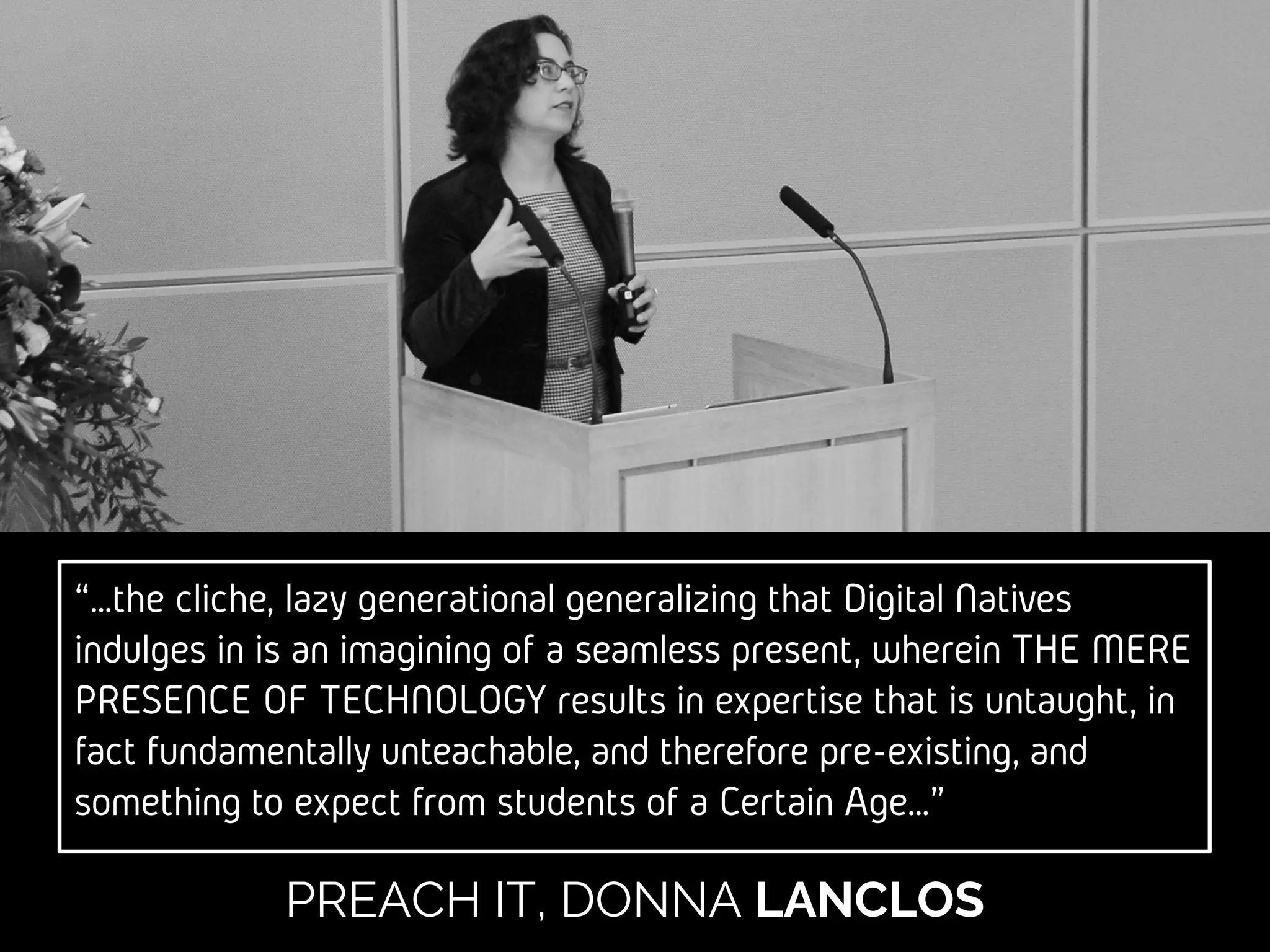
“…the cliche, lazy generational generalizing that Digital
Natives indulges in is an imagining of a seamless present,
wherein THE MERE PRESENCE OF TECHNOLOGY results in
expertise that is untaught, in fact fundamentally unteachable,
and therefore pre-existing, and something to expect from
students of a Certain Age…”
PREACH IT, DONNA LANCLOS
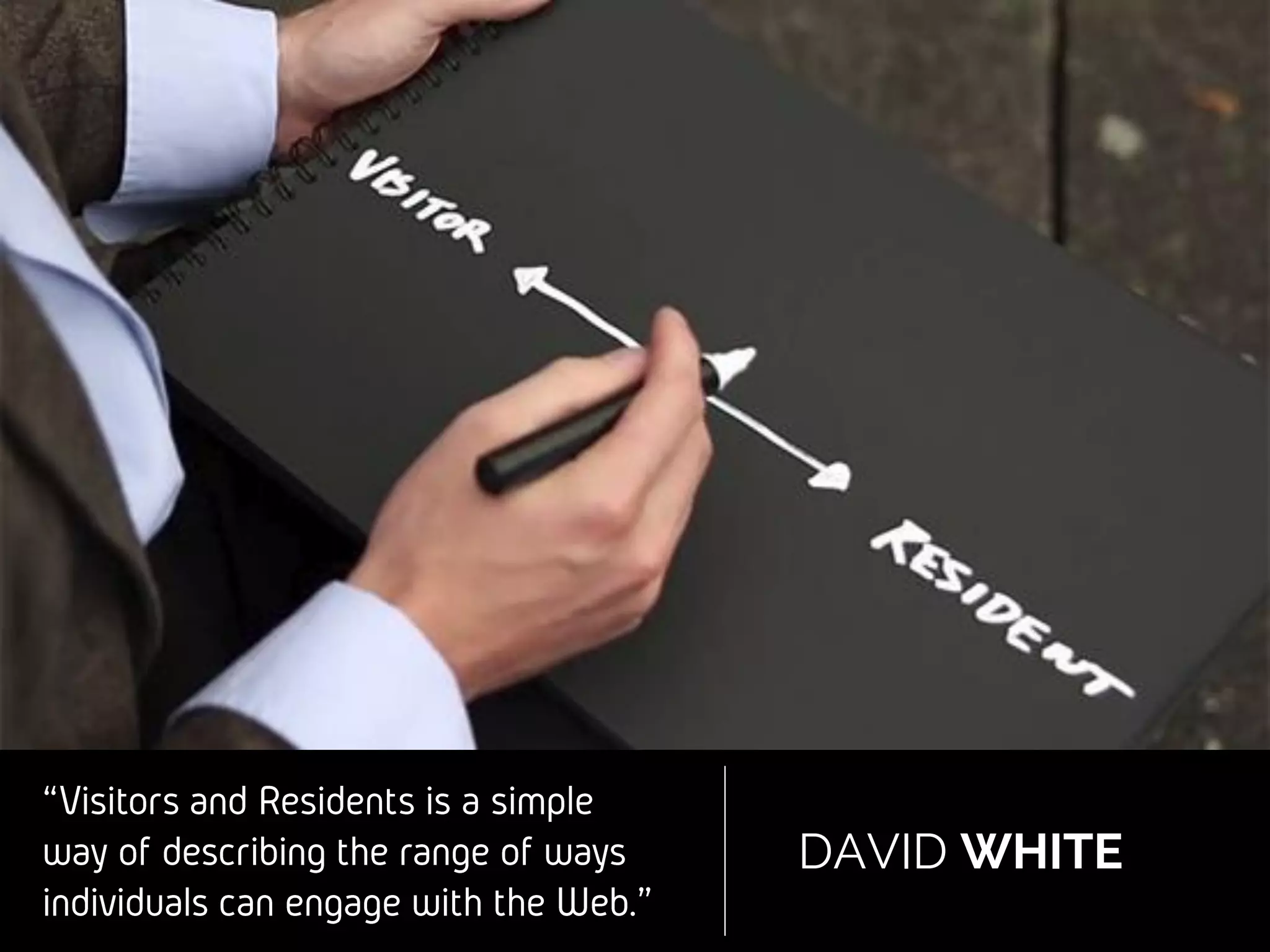
“Visitors and Residents is a simple
way of describing the range of
ways individuals can engage with
the Web.”
DAVID WHITE
“Visitors and Residents is a simple
way of describing the range of
ways individuals can engage with
the Web.”
DAVID WHITE
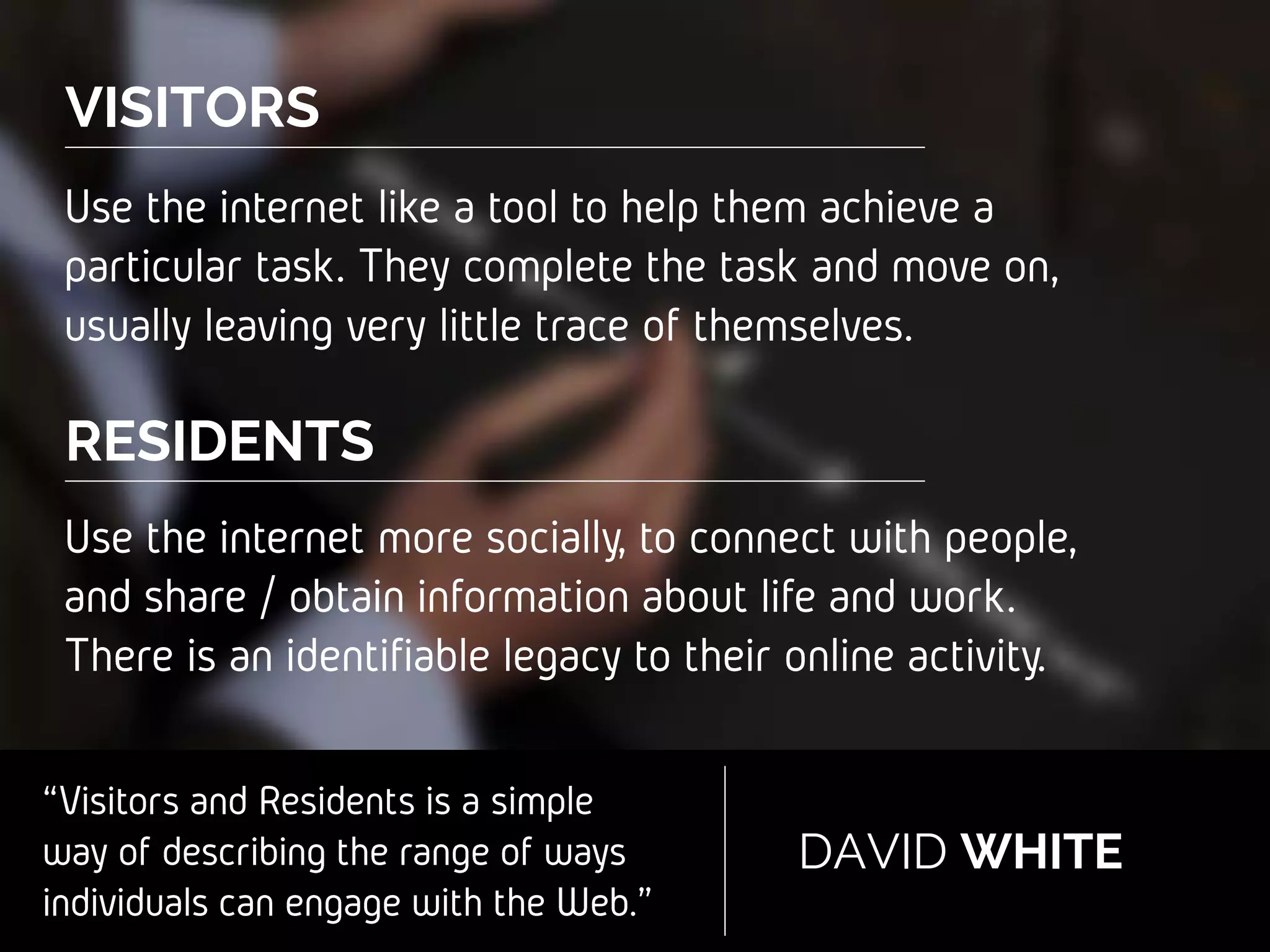
VISITORS
Use the internet like a tool to help them
achieve a particular task. They complete the task
and move on, usually leaving very little trace of
themselves.
“Visitors and Residents is a simple
way of describing the range of
ways individuals can engage with
the Web.”
DAVID WHITE
VISITORS
RESIDENTS
Use the internet like a tool to help them
achieve a particular task. They complete the task
and move on, usually leaving very little trace of
themselves.
Use the internet more socially, to connect with
people, and share / obtain information about
life and work. There is an identifiable legacy to
their online activity.
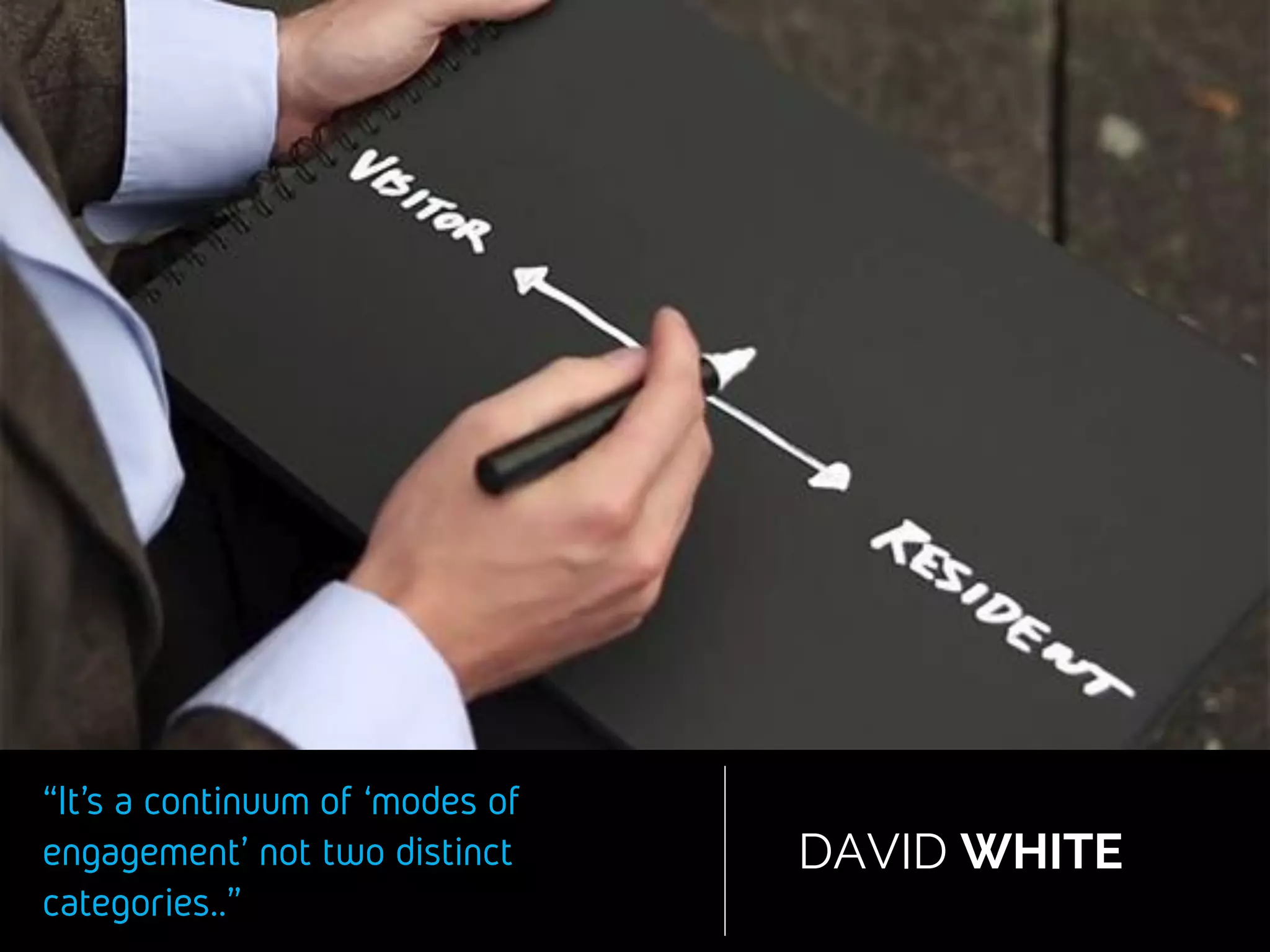
“It’s a continuum of ‘modes
of engagement’ not two
distinct categories..”
DAVID WHITE
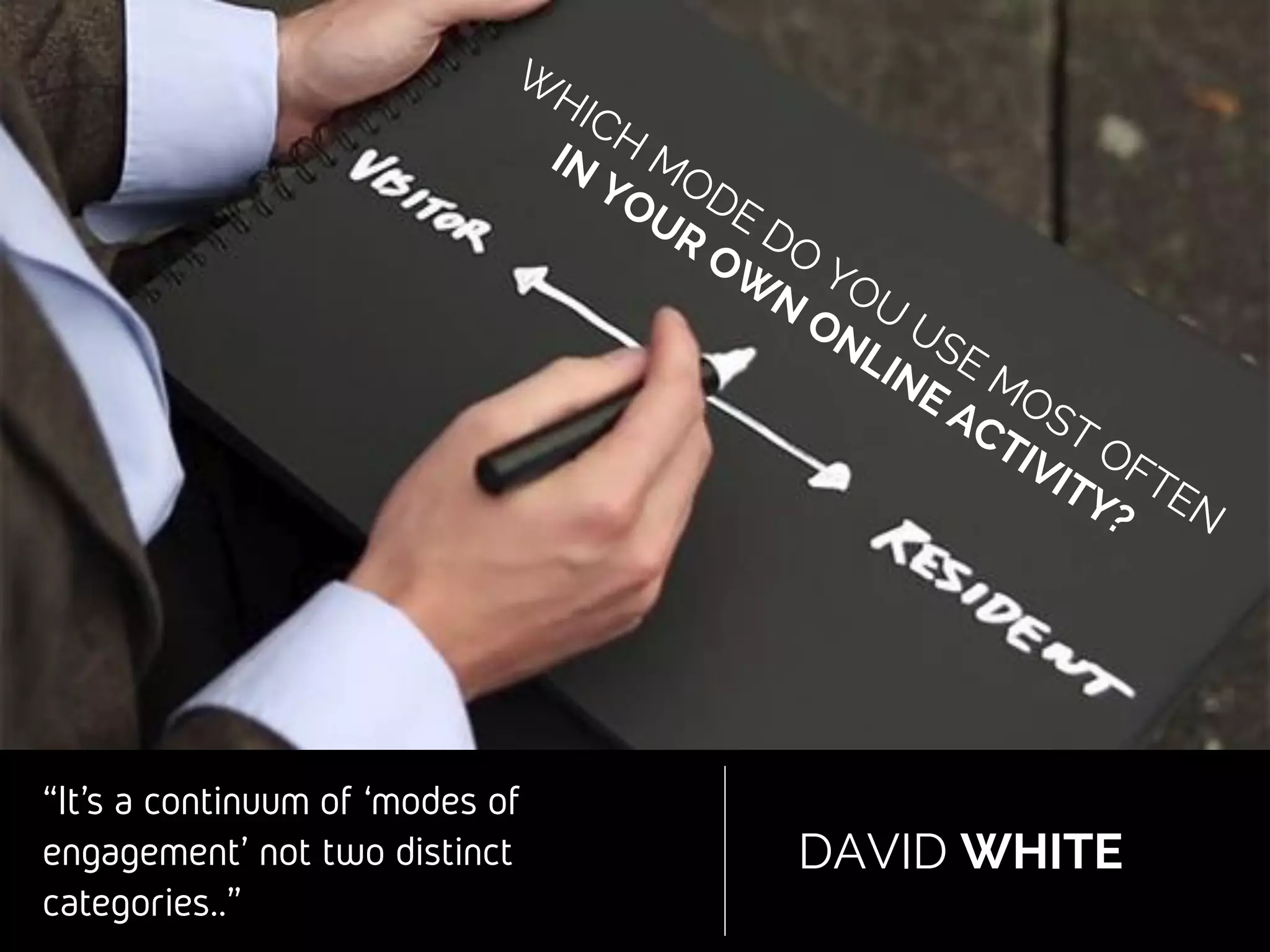
“It’s a continuum of ‘modes
of engagement’ not two
distinct categories..”
DAVID WHITE
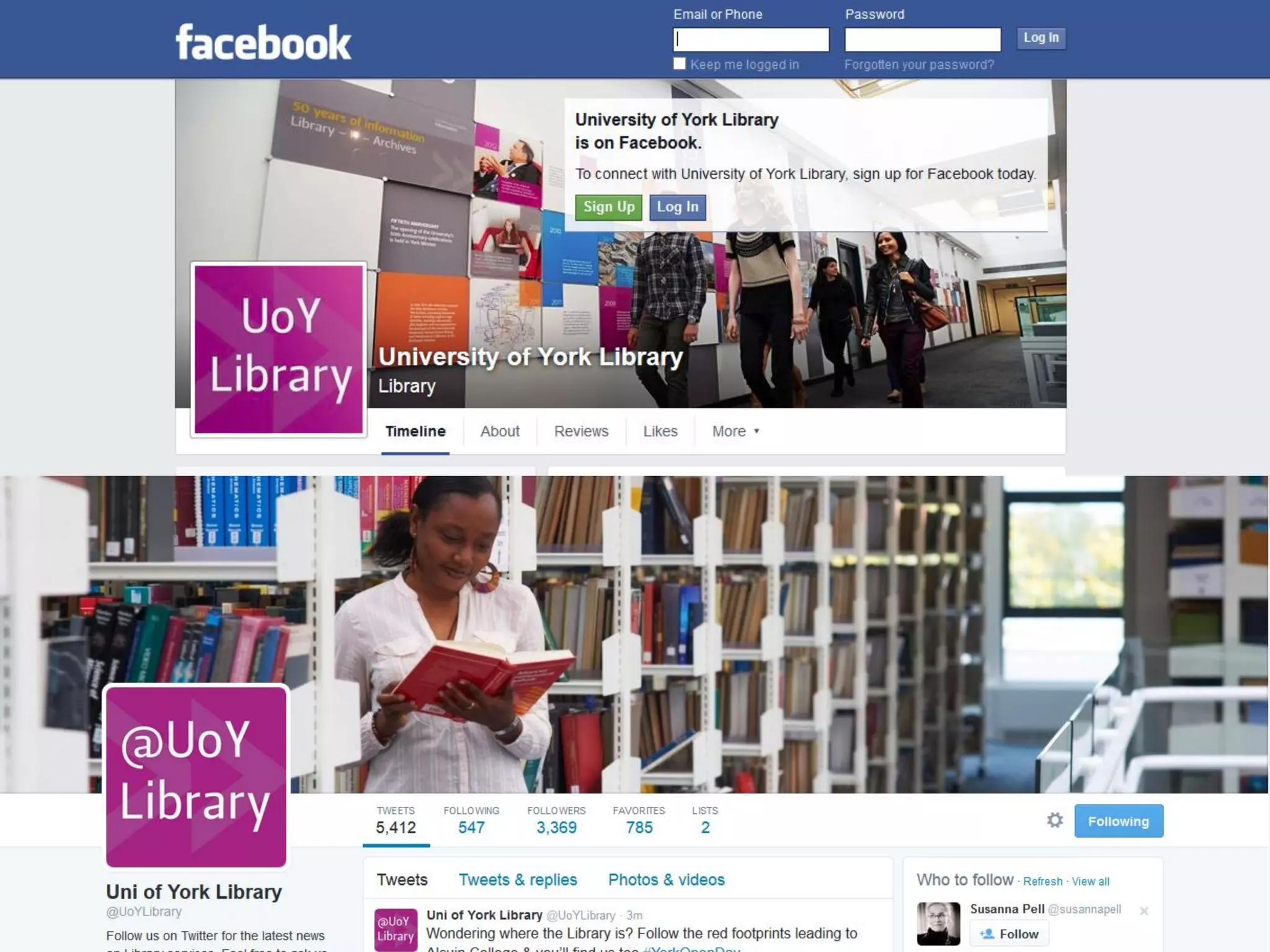
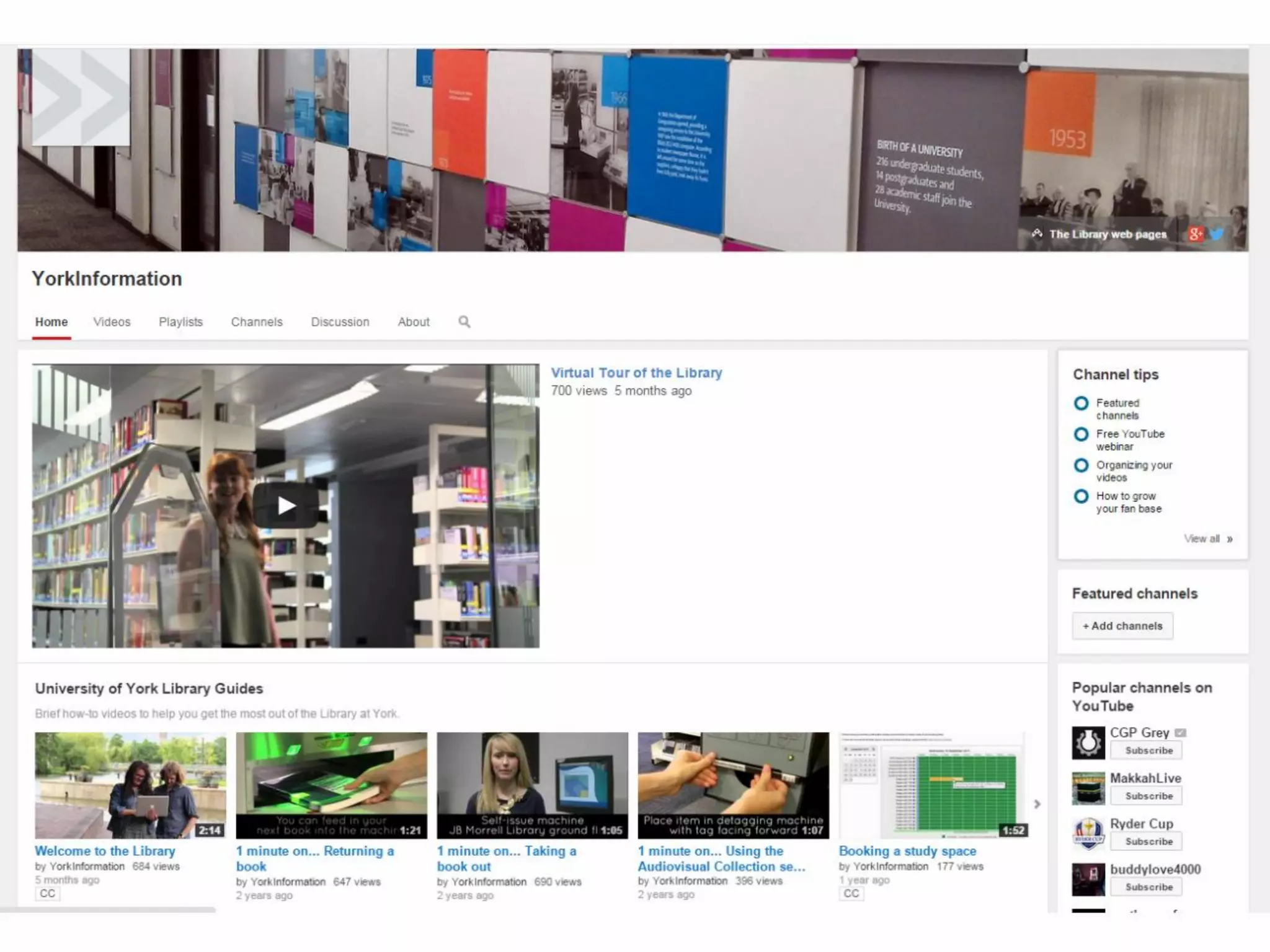
We provide information and help
for people in Visitor mode, via
the website, libguides, and the social
media platforms above
AT THE UNIVERSITY OF YORK
For people closer to the Resident mode end of
the continuum we have Facebook and Twitter
All of these platforms are flexible.
They’re multi-function according
to our student and staff needs
(and the mode they’re in).
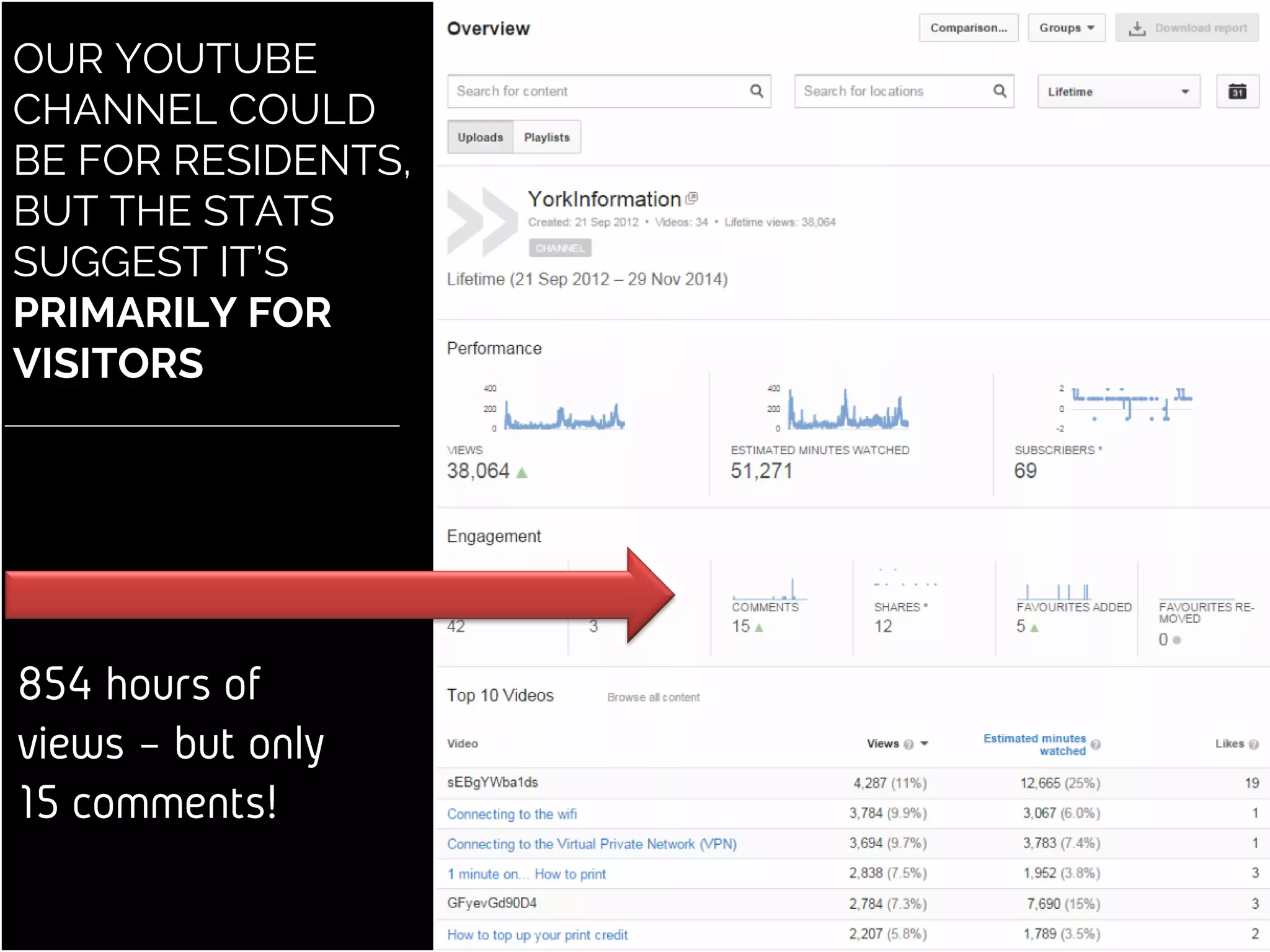
OUR YOUTUBE
CHANNEL COULD
BE FOR RESIDENTS,
BUT THE STATS
SUGGEST IT’S
PRIMARILY FOR
VISITORS
854 hours of
views – but
only 15
comments!
THAT’S ENOUGH
THEORY!
Okay.
Let’s talk specifics.
For actually engaging with
students and staff, twitter is
hard to beat. Its role is
primarily for Residents, but
by embedding it on our
homepage it serves a
function for Visitors too.
TWITTER
The tone is like face-to-
face conversation. This
colloquial nature makes it
ideal for getting feedback
which isn’t extreme…
The most important thing
to remember about
twitter: it’s a conversation.
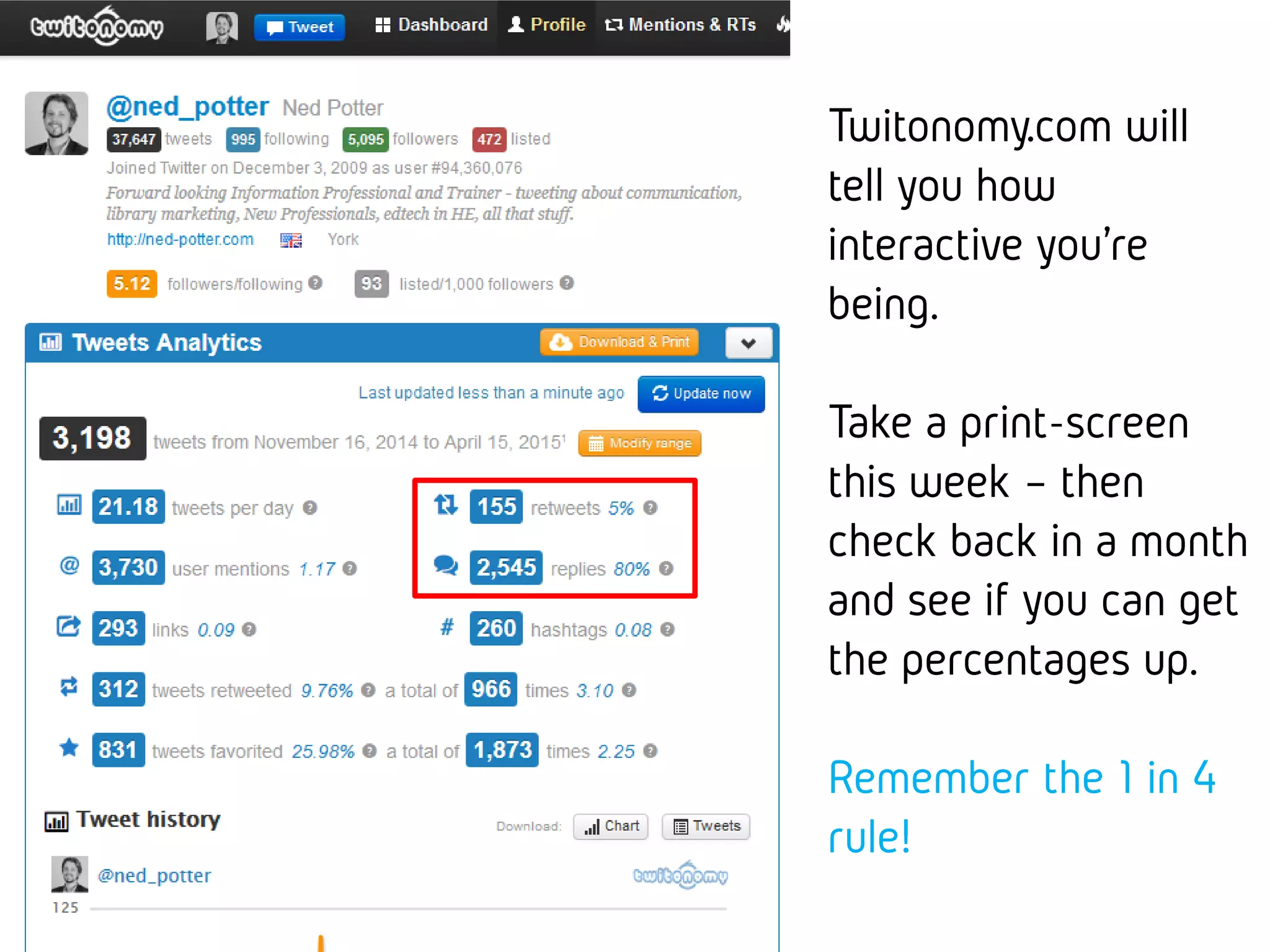
How interactive are you?
Twitonomy.com will tell
you how interactive
you’re being.
Take a print-screen this
week – then check
back in a month and
see if you can get the
percentages up.
Remember the 1 in 4
rule!
DON’T GET CAUGHT UP IN THE NUMBERS;
TRACK ENGAGEMENTS
analytics.twitter.com
is brilliant for this
INSTAGRAM IS COMING!
It now has 300million active users (more than
Twitter), who spend an average of 21 minutes
a day on the site… That seems pretty
Residential.
(41% of internet using 16 – 24 year
olds are on there)
INSTAGRAM IS COMING!
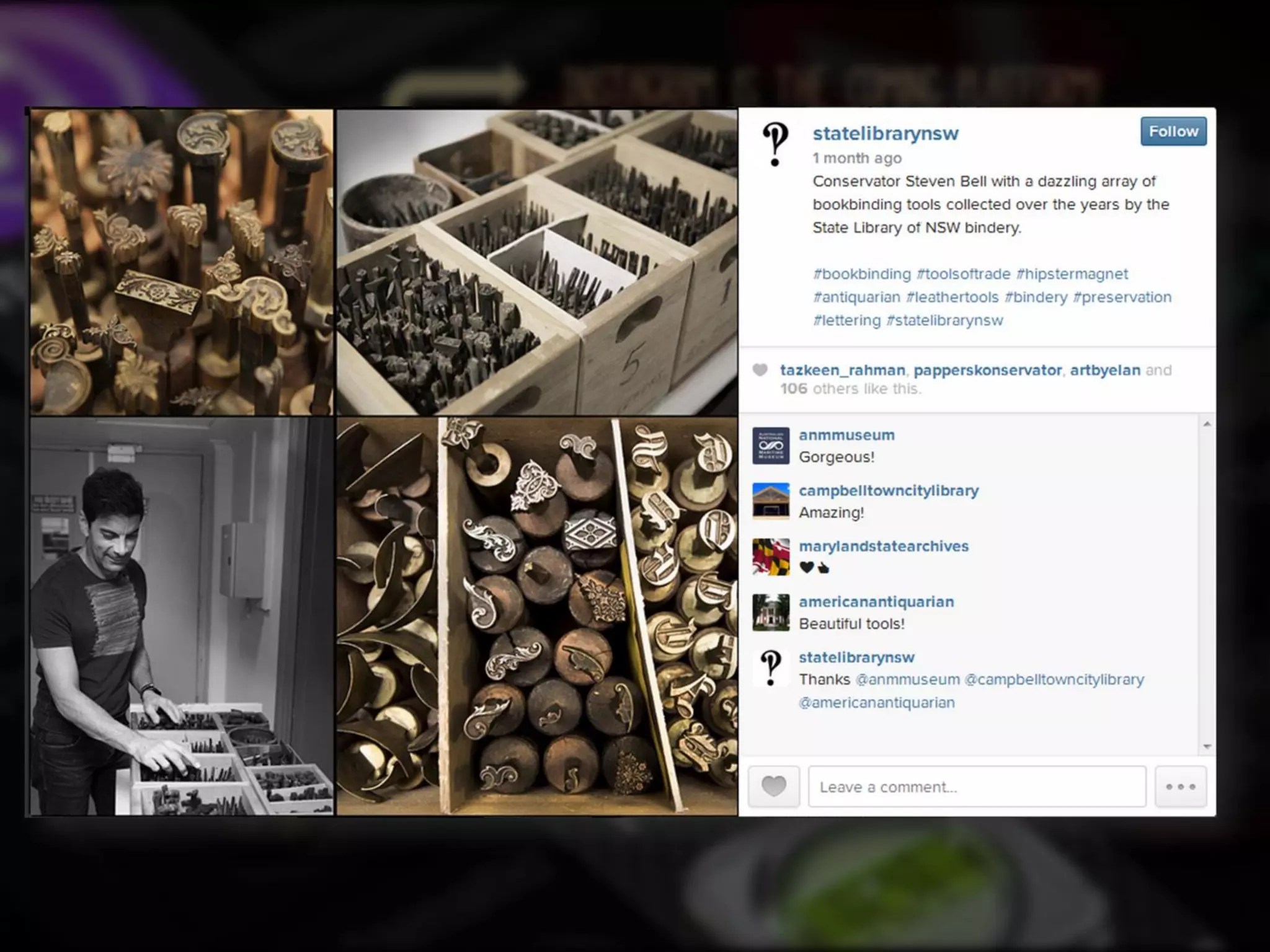
Show off your buildings,
show off your stock.
Show off your
librarians! Provide
behind the
scenes access,
sneak peeks.
It now has 300million active users (more than
Twitter), who spend an average of 21 minutes
a day on the site… That seems pretty
Residential.
(41% of internet using 16 – 24 year
olds are on there)
INSTAGRAM IS COMING!
Or host a hashtag contest:
“Share a photo of you in the
library using the hashtag
#librarycontest to win a
prize!”
INSTAGRAM IS COMING!
Above all,
make it
specific.
Ideally, each social media
platform your library runs
should perform a
particular role for
your users (even
if there’s some
overlap).
BLOGGING IS DEAD; LONG LIVE BLOGGING!
(Blogging used to be more Residential, with a thriving blogosphere.
That’s less the case now, but does it matter? I’d argue not. For the
Visitors, it doesn’t even matter if they know it’s a blog or not.
It’s just useful information that’s easy to find.)
5 reasons to set up institutional
1) THEY’RE MOBILE READY
Give your users something
to read, even when they
are in the queue for the
bus
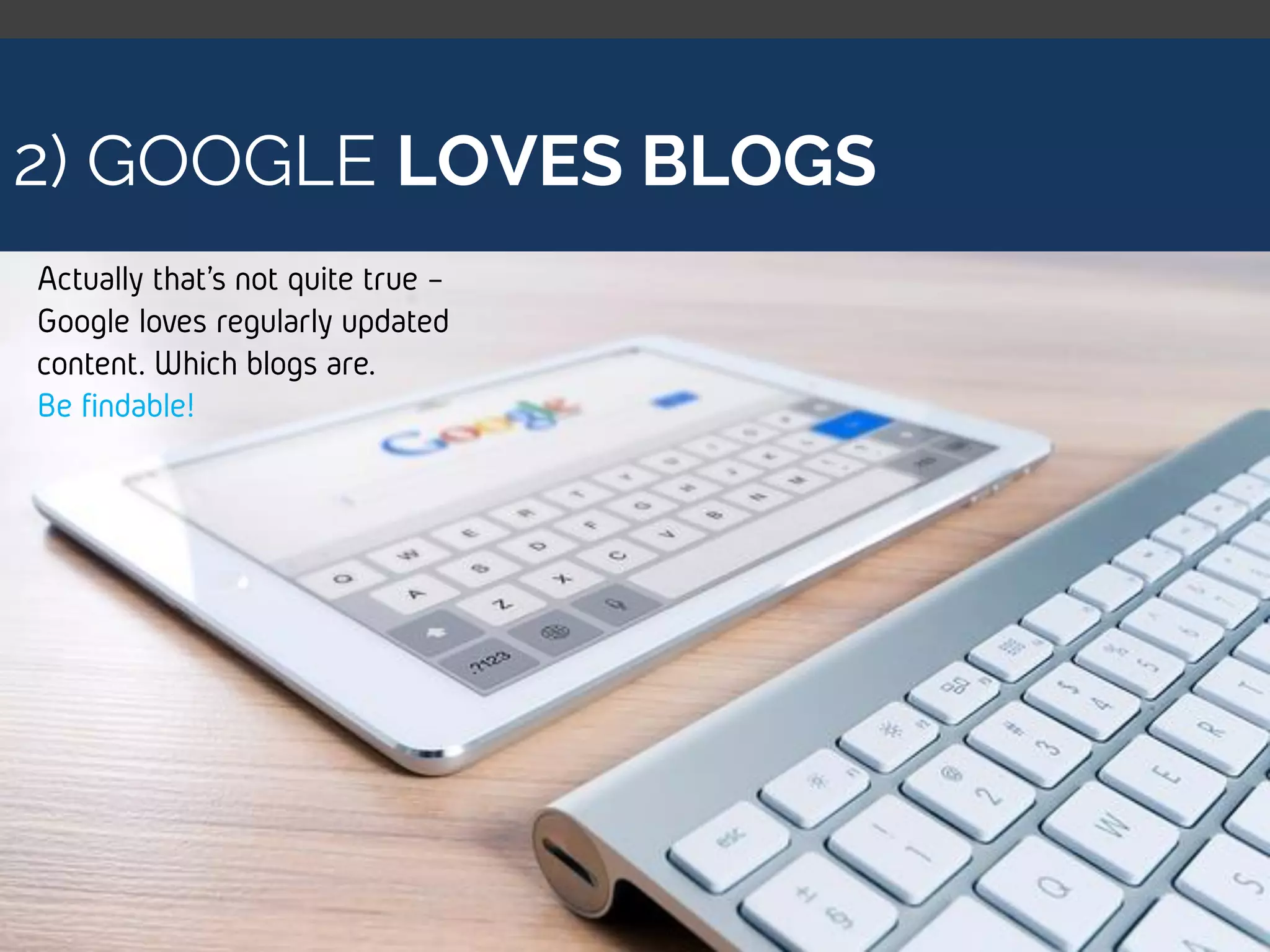
2) GOOGLE LOVES BLOGS
Actually that’s not quite true -
Google loves regularly updated
content. Which blogs are.
Be findable!
3) YOU CAN HAVE LINKS FOR EVERYTHING
A content-pool is not to be
sniffed at. Specific, indexed,
findable information which
you can point people
towards both now and in
the future.
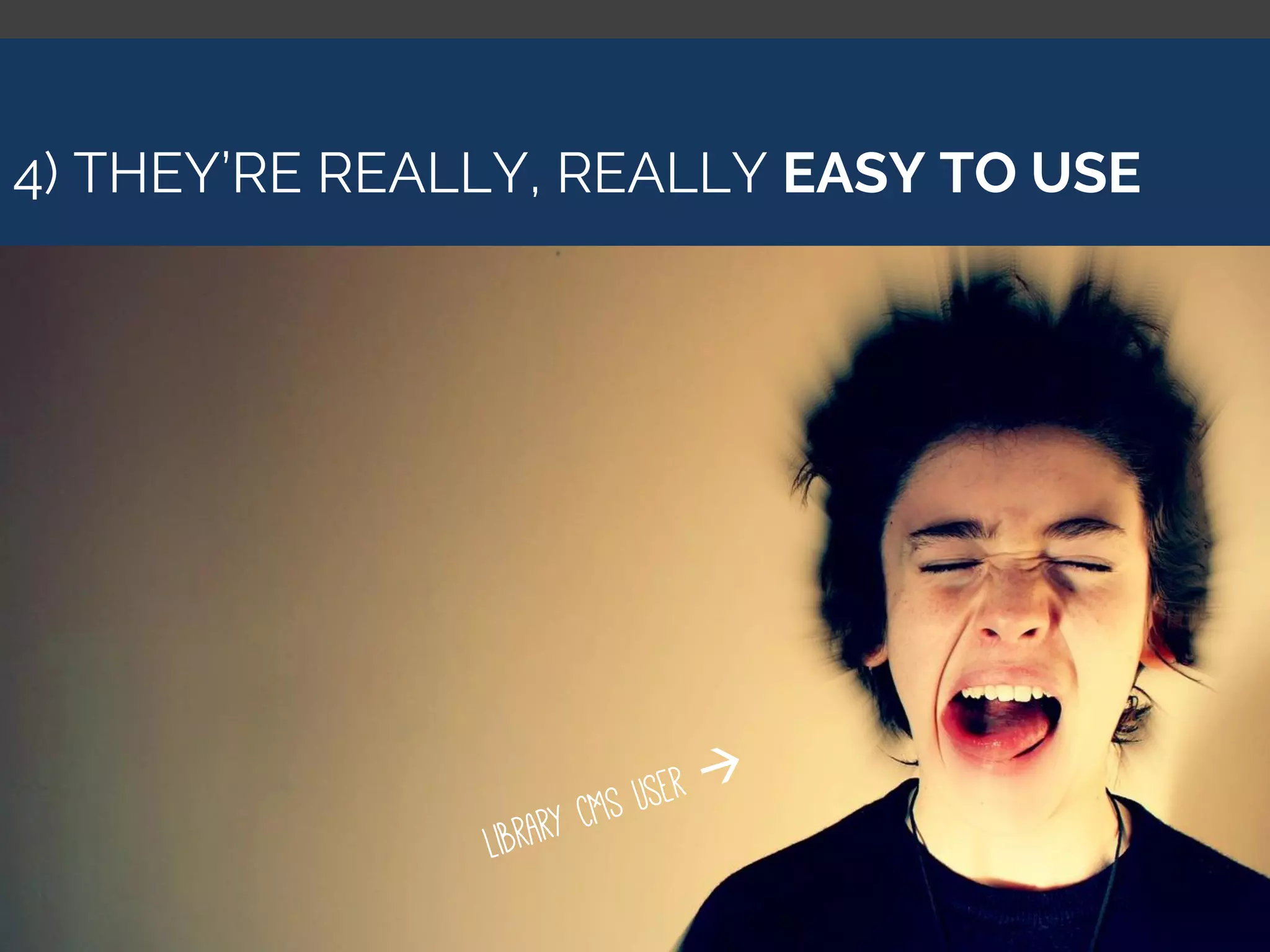
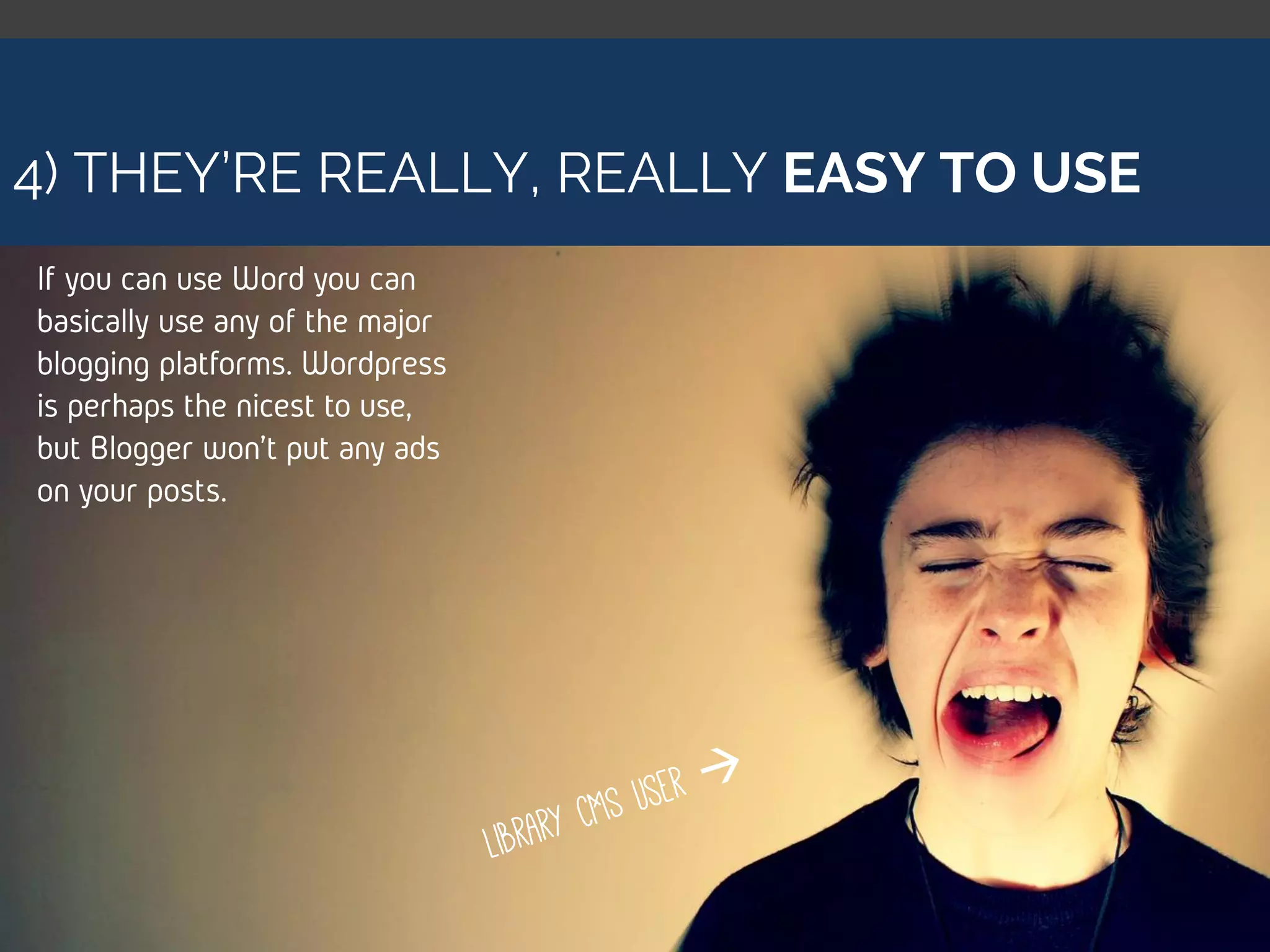
4) THEY’RE REALLY, REALLY EASY TO USE
If you can use Word you
can basically use any of
the major blogging
platforms. Wordpress is
perhaps the nicest to use,
but Blogger won’t put
any ads on your posts.
5) YOU DON’T HAVE TO SPEND ANY MONEY
You can spend money,
of course. But you don’t
have to. The free blogging
options will do the job.
(It’s where all
the young
people are…)
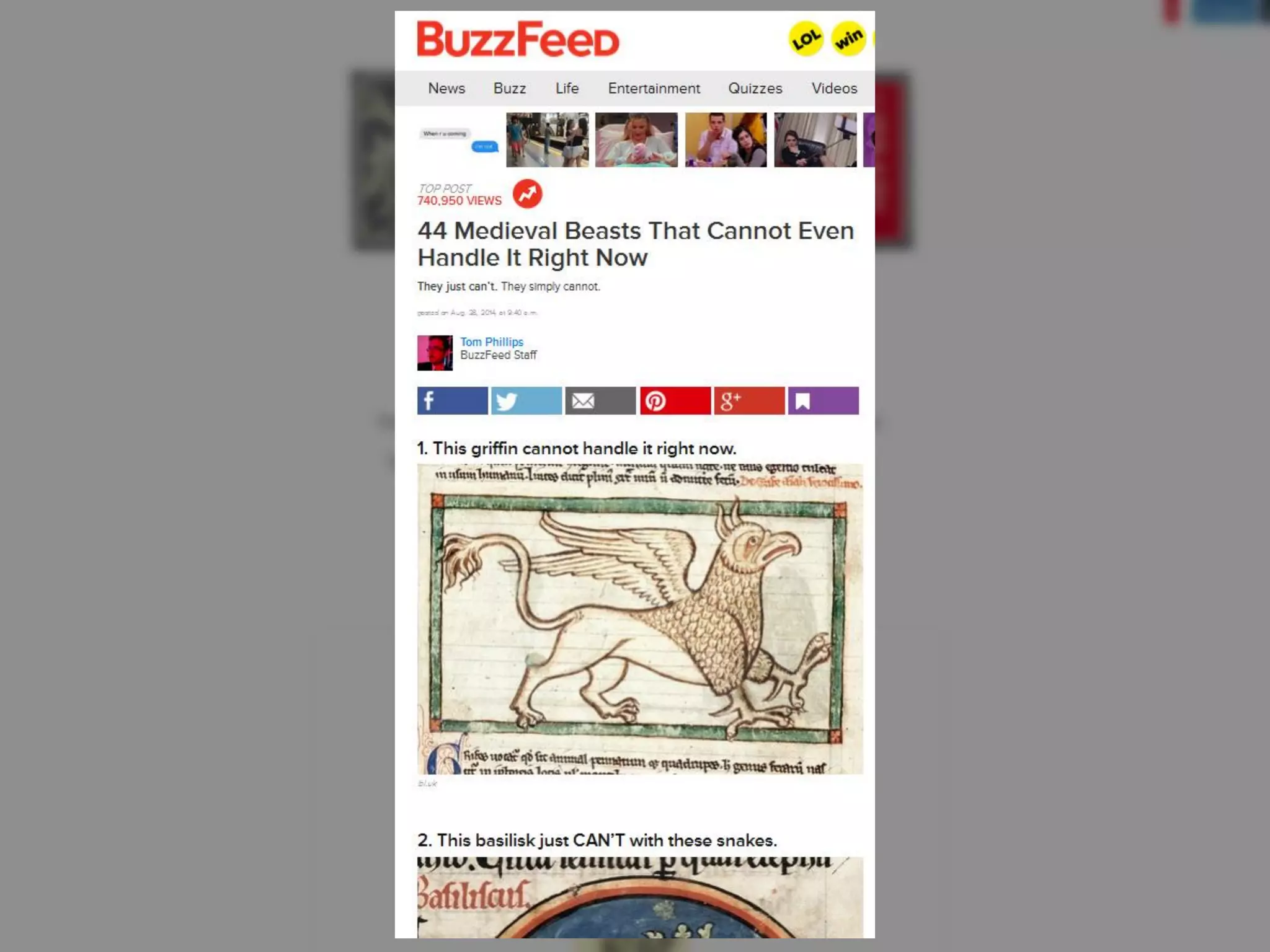
Short posts, lots of
images, animated
GIFS…
Easy to ReBlog
APPEALING TO YOUTH
SUPPLEMENTING EXISTING BLOGS
SHOWCASING SOMETHING VISUAL
Reasons to
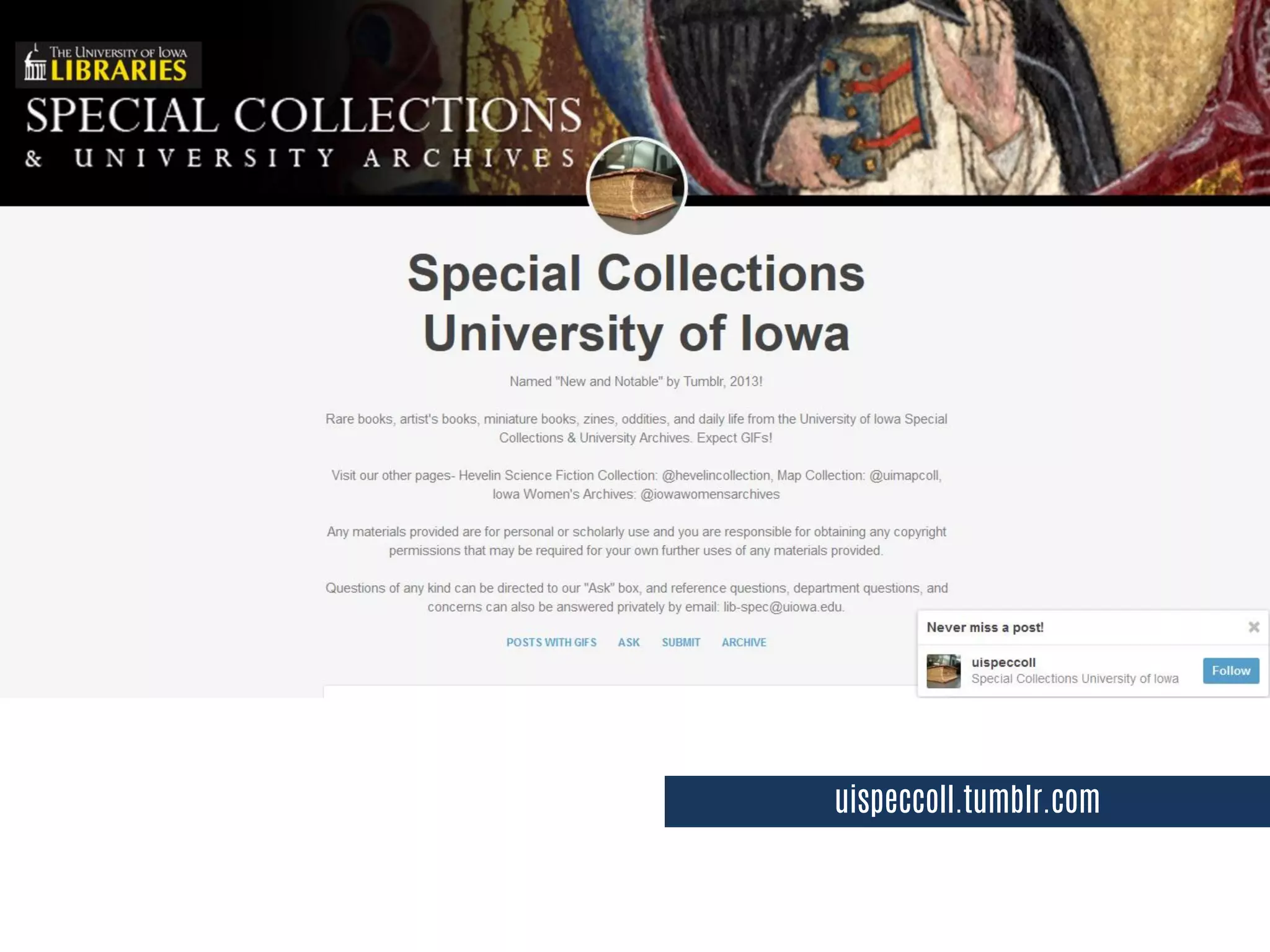
uispeccoll.tumblr.com
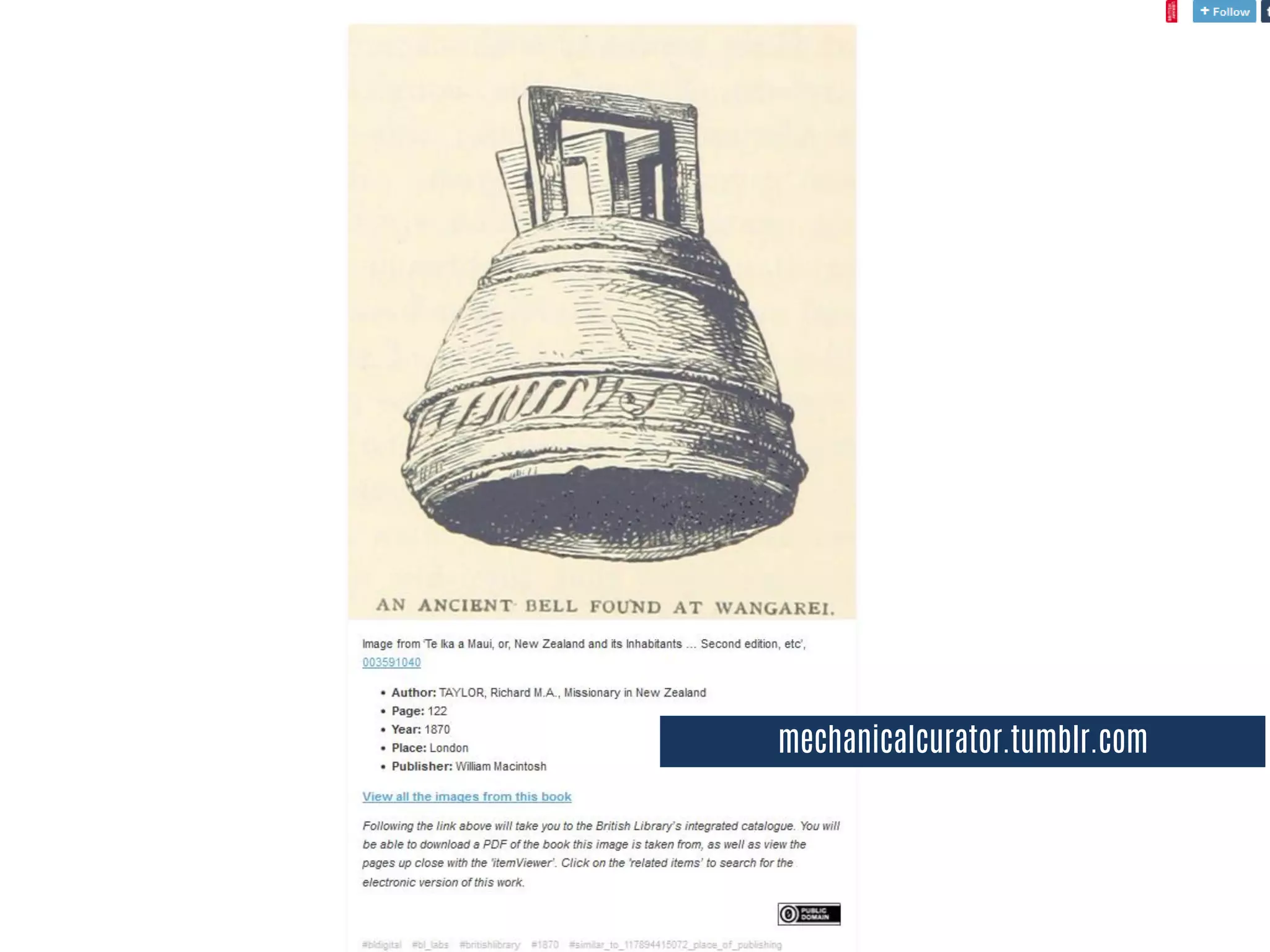
mechanicalcurator.tumblr.com
AND FINALLY
YIKYAK IS A COMPLETELY ANONYMOUS,
LOCATION BASED SOCIAL MEDIA PLATFORM
YIKYAK IS A COMPLETELY ANONYMOUS,
LOCATION BASED SOCIAL MEDIA PLATFORM
In many ways YikYak fits the criteria for being a
Visitor’s social media platform, in that users leave
no trace of themselves by definition. But actually,
many YikYak users are Resident for at least some
of the time.
YIKYAK IS A COMPLETELY ANONYMOUS,
LOCATION BASED SOCIAL MEDIA PLATFORM
In many ways YikYak fits the criteria for being a
Visitor’s social media platform, in that users leave
no trace of themselves by definition. But actually,
many YikYak users are Resident for at least some
of the time.
And they may be discussing your library!
You may well decide
not to interact on
YikYak. But if you’re
an academic library,
it may be at least
worth going on
there, running some
searches, and hearing
what your students
are saying….
Final
CALLS TO ACTION
Fight the urge to make any kind of
assumption about the way people use
technology to find and critically evaluate
information based on
their age.
Make time to provide ways for both
Visitors and Residents to interact with
the Library on social media.
And if you hear people
using ‘digital natives’
uncritically, tell them
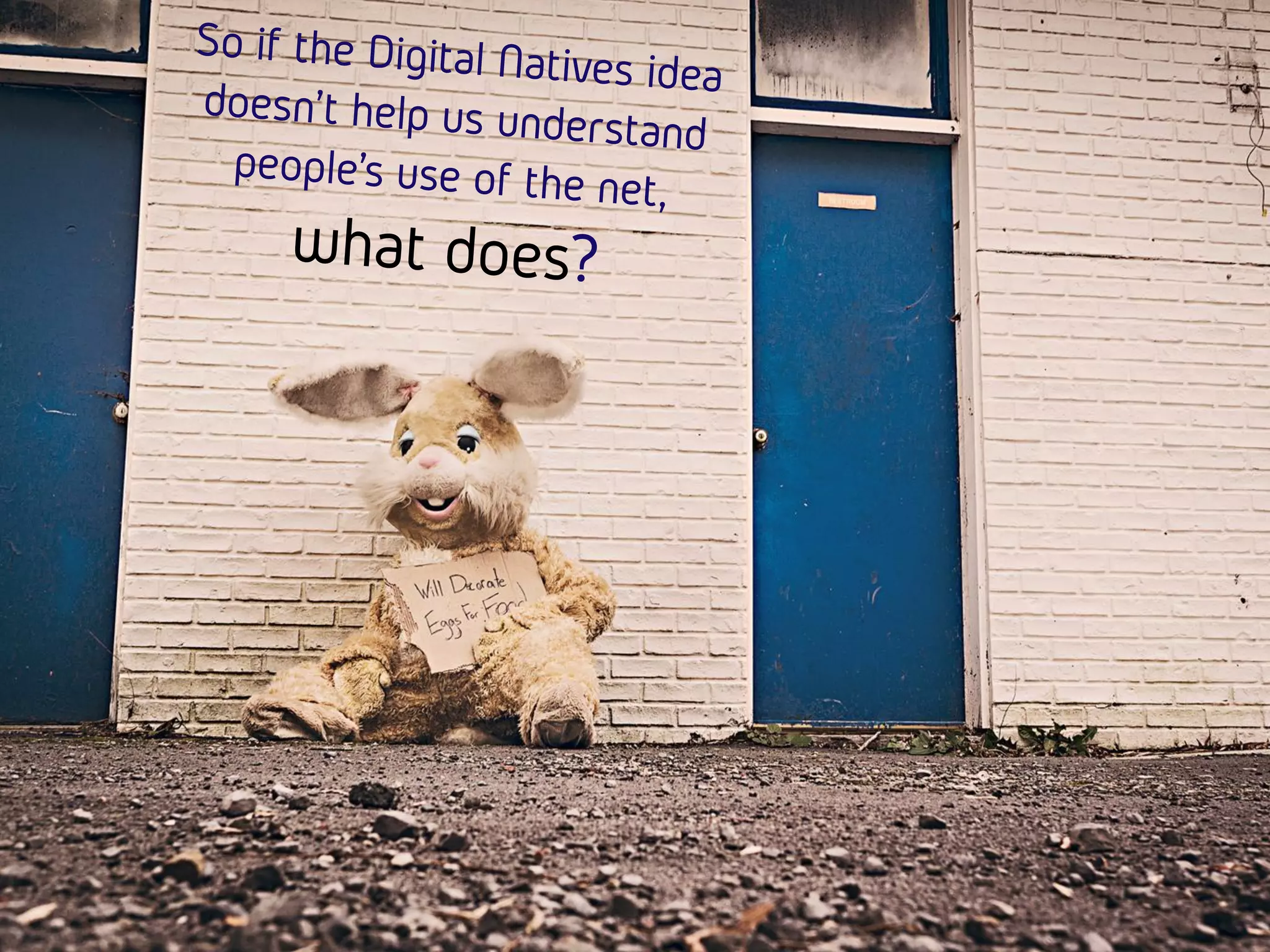
the Digital Native is
as real as the
Easter Bunny…
There is a blog-post to accompany
this presentation here.
ALL IMAGES COPYRIGHT FREE VIA UNSPLASH, GRATISOGRAPHY AND PIXABAY
Except the V&R Continuum courtesy of David White, and Donna Lanclos copyright of David Tilley
MORE ON V&RDonna Lanclos introduced me to the Visitors and Residents
theory as an alternative to thinking about Digital Natives. Here’s
the (fantastic) blogpost from which the quote used in this
presentation was taken. The capitalisation was mine.
David White developed the Visitors and Residents model, with
Alison Le Cornu. Read their paper here, and see Dave’s
introductory website on the topic here. There’s an ongoing
Twitter discussion about Visitors and Residents, which you can
join using the hashtag #vandr.
There’s been much debunking of the Digital Natives myth, but
the particular paper quoted in these slides is available from the
HEA here.
MORE SOCIAL MEDIA
The twitter stats packages mentioned were Twitonomy and
Analytics.
My favourite example of how libraries can use Instagram is
the State Library of New South Wales’ account.
There’s more on reasons to set up an institutional blog here.
The popular University of Iowa tumblr is here. 9 reasons to
love the BL’s Mechanical Curator tumblr here.
You can visit YikYak here; the site is not without controversy,
which is detailed in this useful post from JISC.
@ned_potter
ned-potter.com

Visitors and Residents: useful social media in libraries

  • 1.
    Visitors and Residents USEFULSOCIAL MEDIA in LIBRARIES
  • 2.
    Visitors and Residents USEFULSOCIAL MEDIA in LIBRARIES #Interlend15 @ned_potter
  • 3.
  • 4.
    Keep your handraised if you’ve heard the term DIGITAL NATIVE RAISE YOUR HANDS
  • 5.
    KEEP YOUR HANDRAISED IF YOU CONSIDER YOURSELF TO BE A DIGITAL NATIVE
  • 6.
  • 7.
    Digital Natives are: 1)BORN AFTER 1980
  • 8.
    Digital Natives are: 1)BORN AFTER 1980 2) INNATELY GOOD WITH TECHNOLOGY
  • 9.
    Digital Natives are: 1)BORN AFTER 1980 2) INNATELY GOOD WITH TECHNOLOGY 3) NOT ACTUALLY A REAL THING
  • 10.
    The digital nativeis a MYTHOLOGICAL BEAST
  • 11.
    MYTHOLOGICAL BEAST (So toois the digital immigrant.) The digital native is a
  • 12.
    “There is noevidence that there is a single new generation of young students entering Higher Education and the terms Net Generation and Digital Native do not capture the processes of change that are taking place.” Jones, Chris and Shao, Binhui (2011). The net generation and digital natives: implications for higher education. Higher Education Academy, York.
  • 13.
    (Basically there areall kinds of factors that influence how effective your use of technology is, and your date of birth isn’t that high up the list. It’s a lot messier than that.)
  • 14.
    As we allknow, being technologically literate is not the same as being digitally literate.
  • 15.
    Just like knowing how kitchen utensilswork isn’t the same as being able to cook a really nice meal…
  • 16.
    DON’T LET ANYONE TELLYOU WHAT YOU CAN AND CAN’T DO WITH TECHNOLOGY BASED ON YOUR AGE
  • 17.
    NOR SHOULD WEMAKE ANY ASSUMPTIONS ABOUT STAFF, STUDENTS OR OTHER USERS BASED ON THEIR AGE
  • 18.
    “…the cliche, lazygenerational generalizing that Digital Natives indulges in is an imagining of a seamless present, wherein THE MERE PRESENCE OF TECHNOLOGY results in expertise that is untaught, in fact fundamentally unteachable, and therefore pre-existing, and something to expect from students of a Certain Age…” PREACH IT, DONNA LANCLOS
  • 20.
    “Visitors and Residentsis a simple way of describing the range of ways individuals can engage with the Web.” DAVID WHITE
  • 21.
    “Visitors and Residentsis a simple way of describing the range of ways individuals can engage with the Web.” DAVID WHITE VISITORS Use the internet like a tool to help them achieve a particular task. They complete the task and move on, usually leaving very little trace of themselves.
  • 22.
    “Visitors and Residentsis a simple way of describing the range of ways individuals can engage with the Web.” DAVID WHITE VISITORS RESIDENTS Use the internet like a tool to help them achieve a particular task. They complete the task and move on, usually leaving very little trace of themselves. Use the internet more socially, to connect with people, and share / obtain information about life and work. There is an identifiable legacy to their online activity.
  • 23.
    “It’s a continuumof ‘modes of engagement’ not two distinct categories..” DAVID WHITE
  • 24.
    “It’s a continuumof ‘modes of engagement’ not two distinct categories..” DAVID WHITE
  • 25.
    We provide informationand help for people in Visitor mode, via the website, libguides, and the social media platforms above AT THE UNIVERSITY OF YORK
  • 27.
    For people closerto the Resident mode end of the continuum we have Facebook and Twitter
  • 28.
    All of theseplatforms are flexible. They’re multi-function according to our student and staff needs (and the mode they’re in).
  • 30.
    OUR YOUTUBE CHANNEL COULD BEFOR RESIDENTS, BUT THE STATS SUGGEST IT’S PRIMARILY FOR VISITORS 854 hours of views – but only 15 comments!
  • 31.
  • 32.
    For actually engagingwith students and staff, twitter is hard to beat. Its role is primarily for Residents, but by embedding it on our homepage it serves a function for Visitors too. TWITTER
  • 33.
    The tone islike face-to- face conversation. This colloquial nature makes it ideal for getting feedback which isn’t extreme…
  • 34.
    The most importantthing to remember about twitter: it’s a conversation. How interactive are you?
  • 35.
    Twitonomy.com will tell youhow interactive you’re being. Take a print-screen this week – then check back in a month and see if you can get the percentages up. Remember the 1 in 4 rule!
  • 36.
    DON’T GET CAUGHTUP IN THE NUMBERS; TRACK ENGAGEMENTS
  • 37.
  • 39.
  • 40.
    INSTAGRAM IS COMING! Itnow has 300million active users (more than Twitter), who spend an average of 21 minutes a day on the site… That seems pretty Residential. (41% of internet using 16 – 24 year olds are on there)
  • 41.
    INSTAGRAM IS COMING! Showoff your buildings, show off your stock. Show off your librarians! Provide behind the scenes access, sneak peeks. It now has 300million active users (more than Twitter), who spend an average of 21 minutes a day on the site… That seems pretty Residential. (41% of internet using 16 – 24 year olds are on there)
  • 45.
    INSTAGRAM IS COMING! Orhost a hashtag contest: “Share a photo of you in the library using the hashtag #librarycontest to win a prize!”
  • 47.
    INSTAGRAM IS COMING! Aboveall, make it specific. Ideally, each social media platform your library runs should perform a particular role for your users (even if there’s some overlap).
  • 48.
    BLOGGING IS DEAD;LONG LIVE BLOGGING!
  • 49.
    (Blogging used tobe more Residential, with a thriving blogosphere. That’s less the case now, but does it matter? I’d argue not. For the Visitors, it doesn’t even matter if they know it’s a blog or not. It’s just useful information that’s easy to find.) 5 reasons to set up institutional
  • 50.
  • 51.
    1) THEY’RE MOBILEREADY Give your users something to read, even when they are in the queue for the bus
  • 52.
  • 53.
    2) GOOGLE LOVESBLOGS Actually that’s not quite true - Google loves regularly updated content. Which blogs are. Be findable!
  • 54.
    3) YOU CANHAVE LINKS FOR EVERYTHING
  • 55.
    3) YOU CANHAVE LINKS FOR EVERYTHING A content-pool is not to be sniffed at. Specific, indexed, findable information which you can point people towards both now and in the future.
  • 56.
    4) THEY’RE REALLY,REALLY EASY TO USE
  • 57.
    4) THEY’RE REALLY,REALLY EASY TO USE If you can use Word you can basically use any of the major blogging platforms. Wordpress is perhaps the nicest to use, but Blogger won’t put any ads on your posts.
  • 58.
    5) YOU DON’THAVE TO SPEND ANY MONEY
  • 59.
    5) YOU DON’THAVE TO SPEND ANY MONEY You can spend money, of course. But you don’t have to. The free blogging options will do the job.
  • 61.
    (It’s where all theyoung people are…)
  • 62.
    Short posts, lotsof images, animated GIFS… Easy to ReBlog
  • 63.
    APPEALING TO YOUTH SUPPLEMENTINGEXISTING BLOGS SHOWCASING SOMETHING VISUAL Reasons to
  • 64.
  • 65.
  • 66.
  • 68.
  • 70.
    YIKYAK IS ACOMPLETELY ANONYMOUS, LOCATION BASED SOCIAL MEDIA PLATFORM
  • 71.
    YIKYAK IS ACOMPLETELY ANONYMOUS, LOCATION BASED SOCIAL MEDIA PLATFORM In many ways YikYak fits the criteria for being a Visitor’s social media platform, in that users leave no trace of themselves by definition. But actually, many YikYak users are Resident for at least some of the time.
  • 72.
    YIKYAK IS ACOMPLETELY ANONYMOUS, LOCATION BASED SOCIAL MEDIA PLATFORM In many ways YikYak fits the criteria for being a Visitor’s social media platform, in that users leave no trace of themselves by definition. But actually, many YikYak users are Resident for at least some of the time. And they may be discussing your library!
  • 73.
    You may welldecide not to interact on YikYak. But if you’re an academic library, it may be at least worth going on there, running some searches, and hearing what your students are saying….
  • 74.
  • 75.
    Fight the urgeto make any kind of assumption about the way people use technology to find and critically evaluate information based on their age.
  • 76.
    Make time toprovide ways for both Visitors and Residents to interact with the Library on social media.
  • 77.
    And if youhear people using ‘digital natives’ uncritically, tell them the Digital Native is as real as the Easter Bunny…
  • 78.
    There is ablog-post to accompany this presentation here.
  • 79.
    ALL IMAGES COPYRIGHTFREE VIA UNSPLASH, GRATISOGRAPHY AND PIXABAY Except the V&R Continuum courtesy of David White, and Donna Lanclos copyright of David Tilley
  • 80.
    MORE ON V&RDonnaLanclos introduced me to the Visitors and Residents theory as an alternative to thinking about Digital Natives. Here’s the (fantastic) blogpost from which the quote used in this presentation was taken. The capitalisation was mine. David White developed the Visitors and Residents model, with Alison Le Cornu. Read their paper here, and see Dave’s introductory website on the topic here. There’s an ongoing Twitter discussion about Visitors and Residents, which you can join using the hashtag #vandr. There’s been much debunking of the Digital Natives myth, but the particular paper quoted in these slides is available from the HEA here.
  • 81.
    MORE SOCIAL MEDIA Thetwitter stats packages mentioned were Twitonomy and Analytics. My favourite example of how libraries can use Instagram is the State Library of New South Wales’ account. There’s more on reasons to set up an institutional blog here. The popular University of Iowa tumblr is here. 9 reasons to love the BL’s Mechanical Curator tumblr here. You can visit YikYak here; the site is not without controversy, which is detailed in this useful post from JISC.
  • 82.