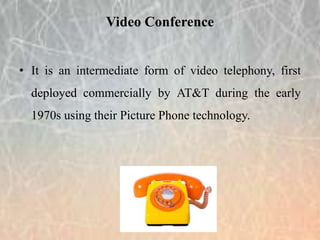
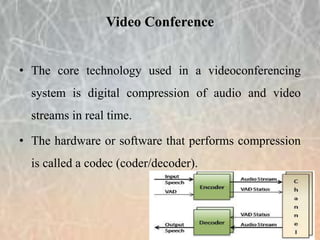
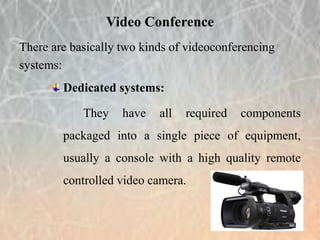
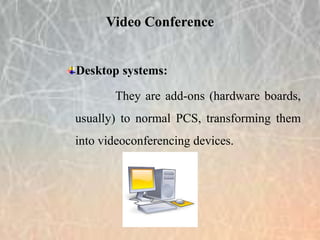
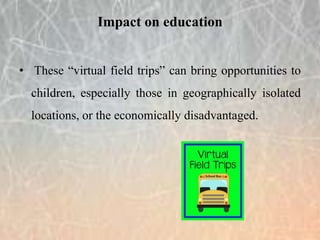
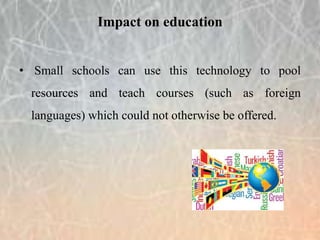


Video conferencing allows two or more locations to interact simultaneously through two-way video and audio transmission. It utilizes digital compression of audio and video streams in real time along with hardware or software codecs. There are two main types of video conferencing systems - dedicated systems that package all components into one unit, and desktop systems that are add-ons to transform PCs into conferencing devices. Video conferencing provides educational benefits such as allowing students and teachers anywhere to participate in classes, enabling virtual field trips, and helping small schools offer more courses.


