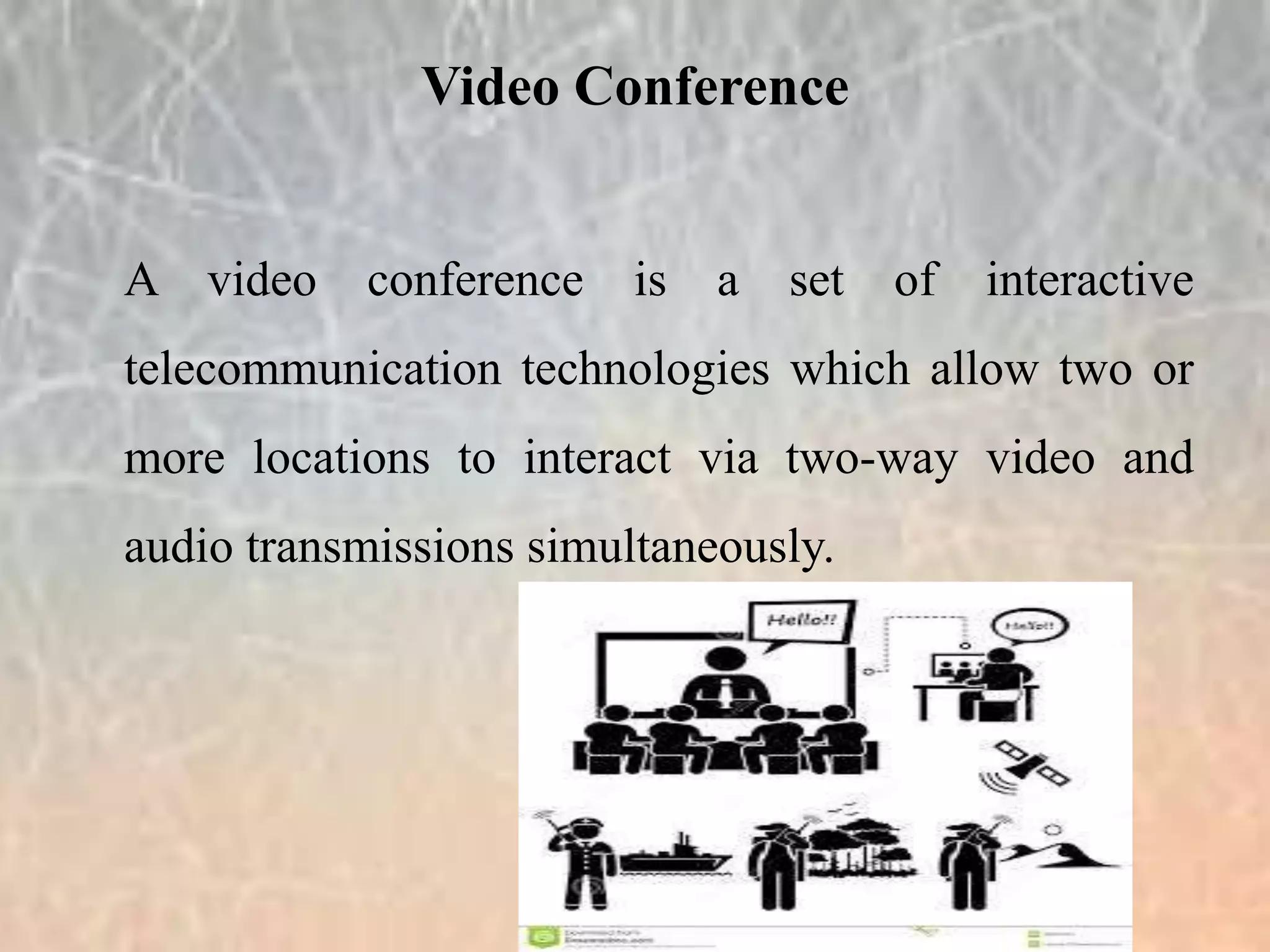
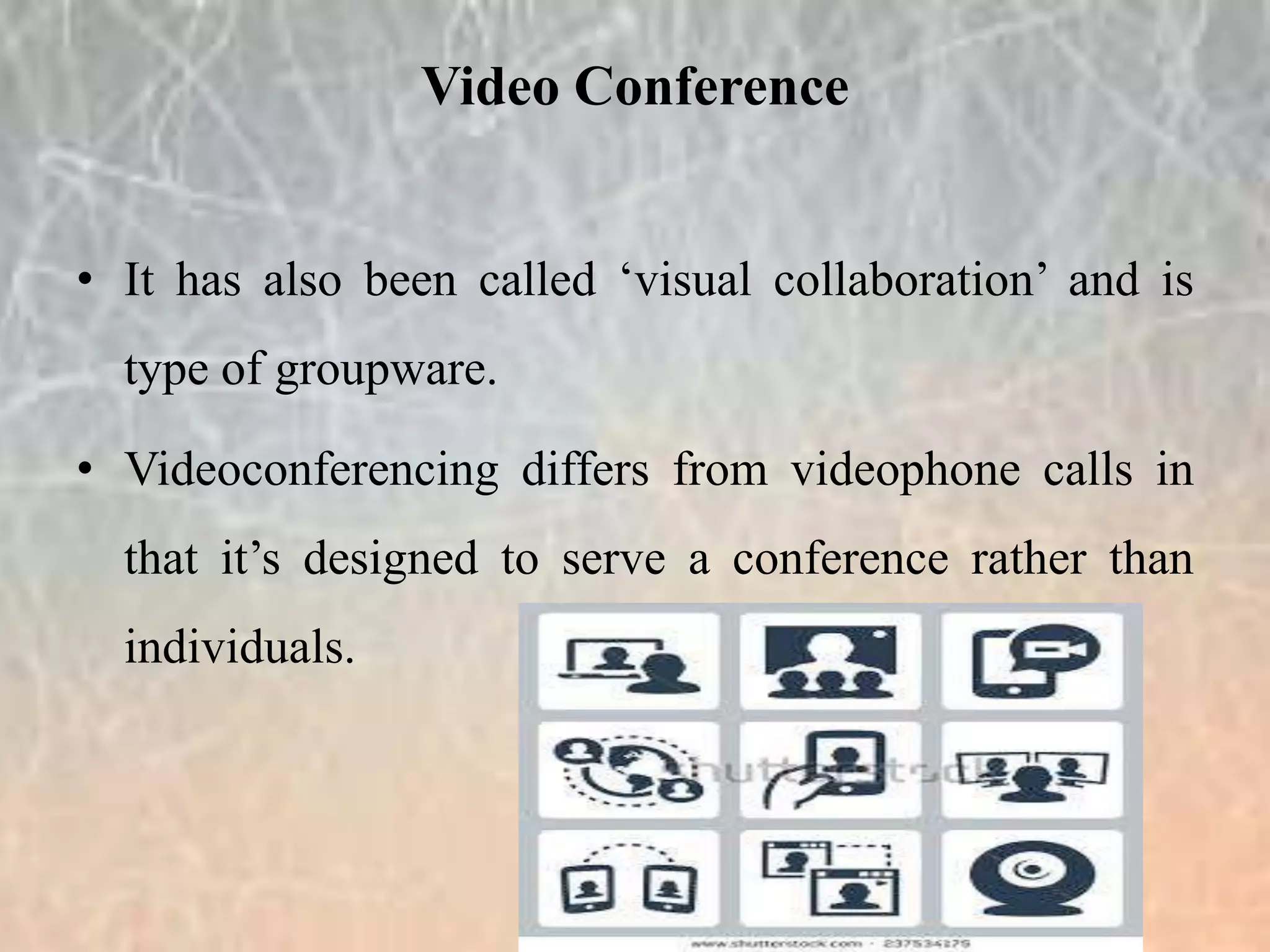
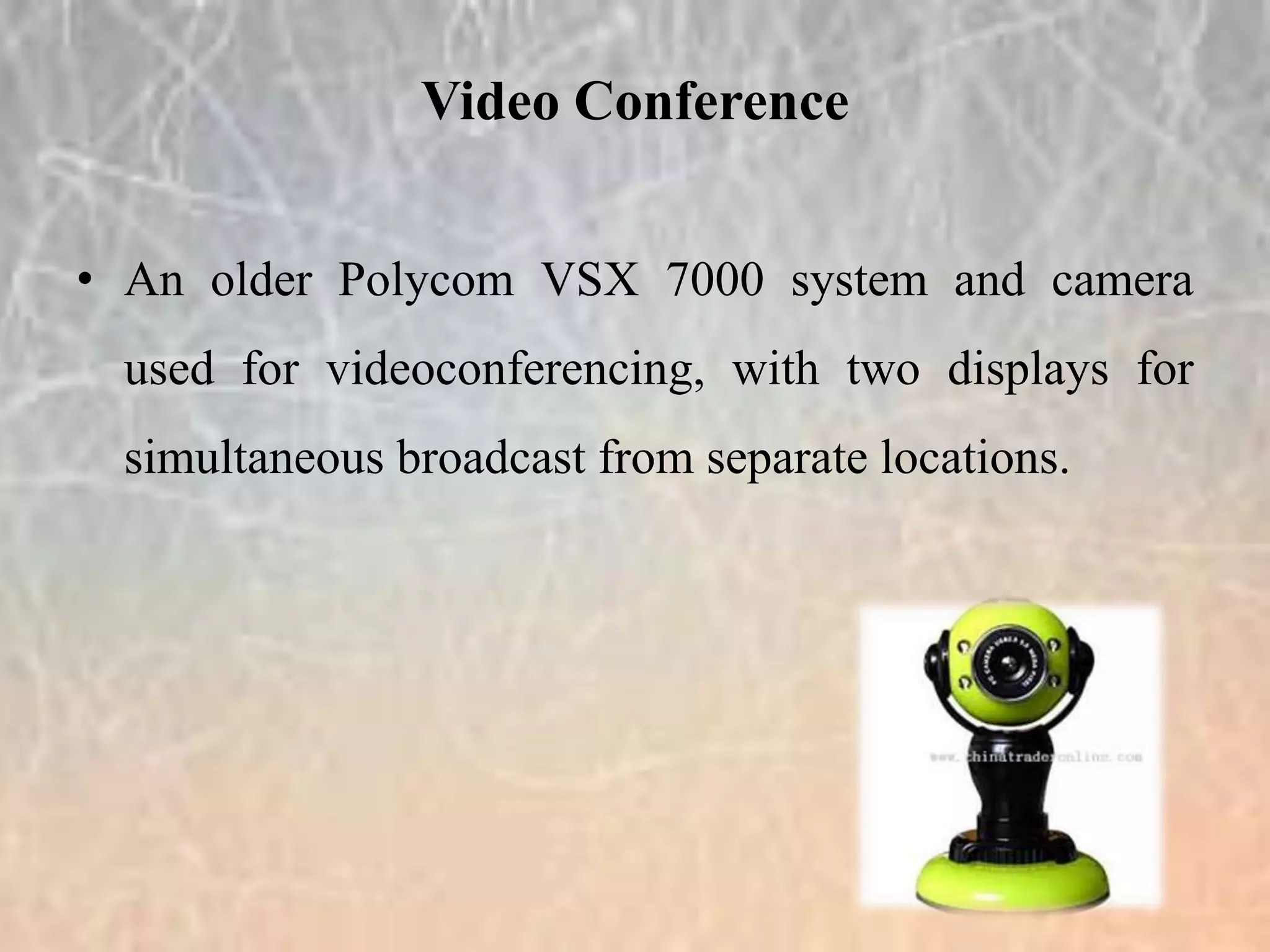
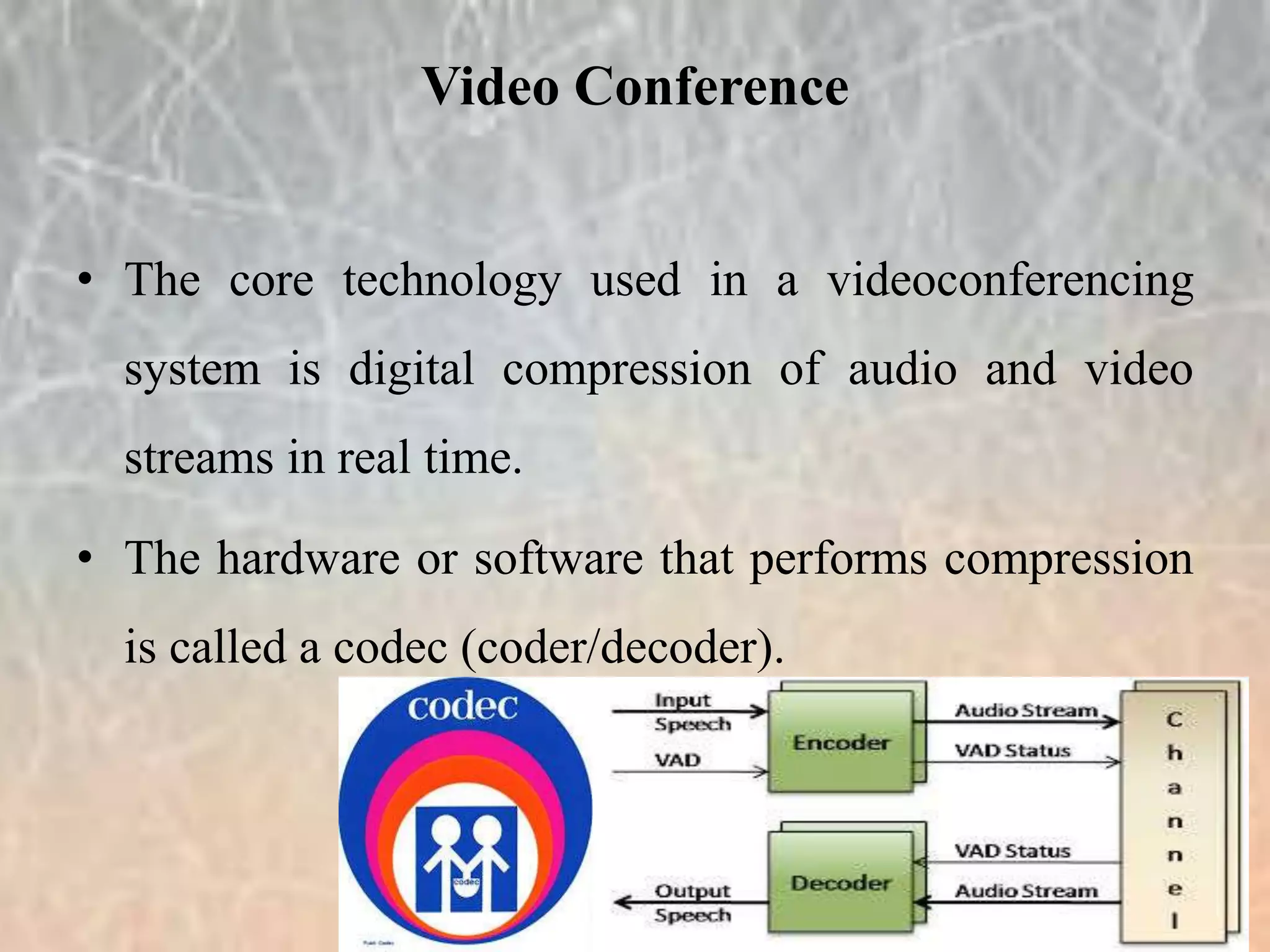
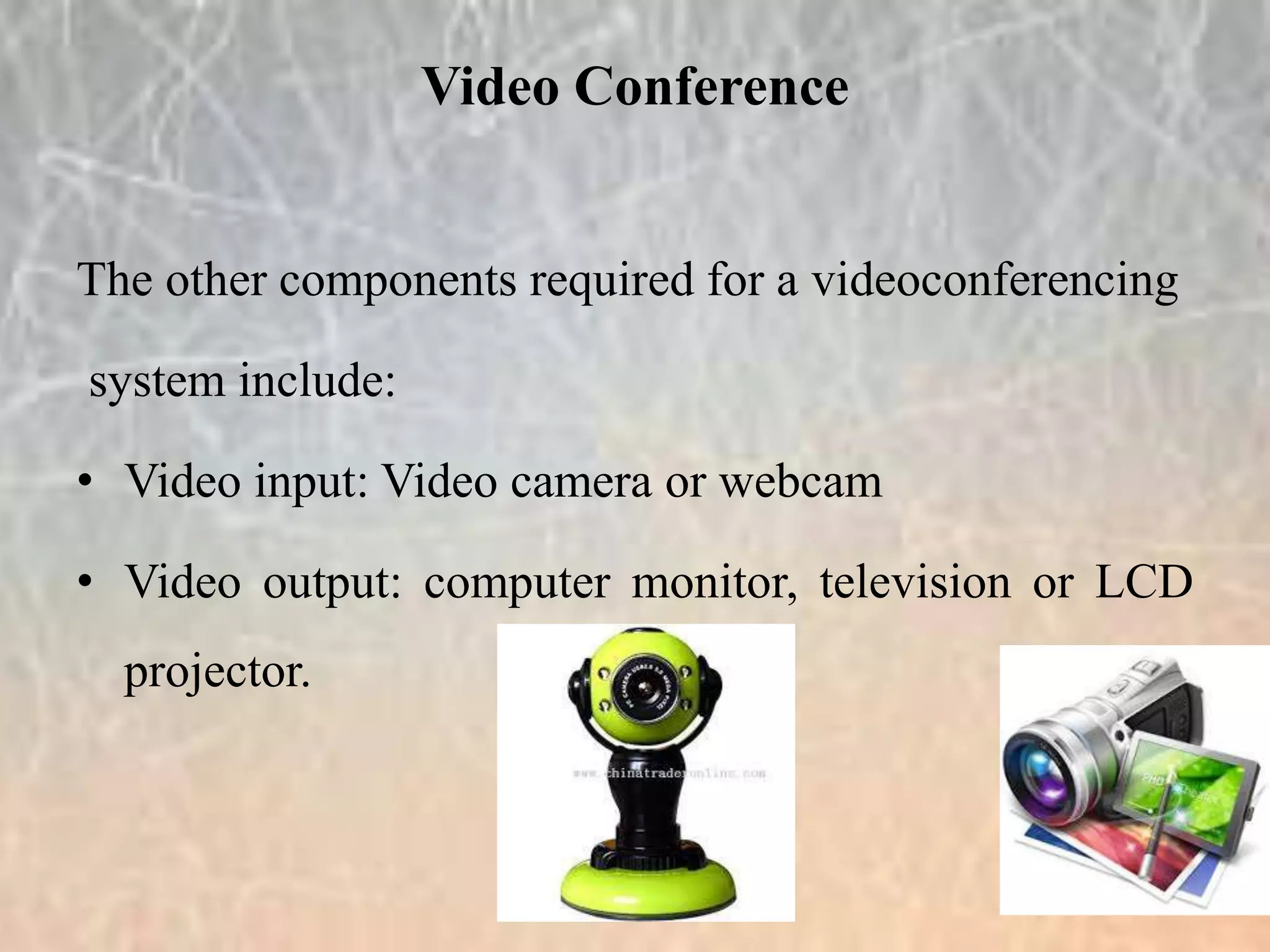
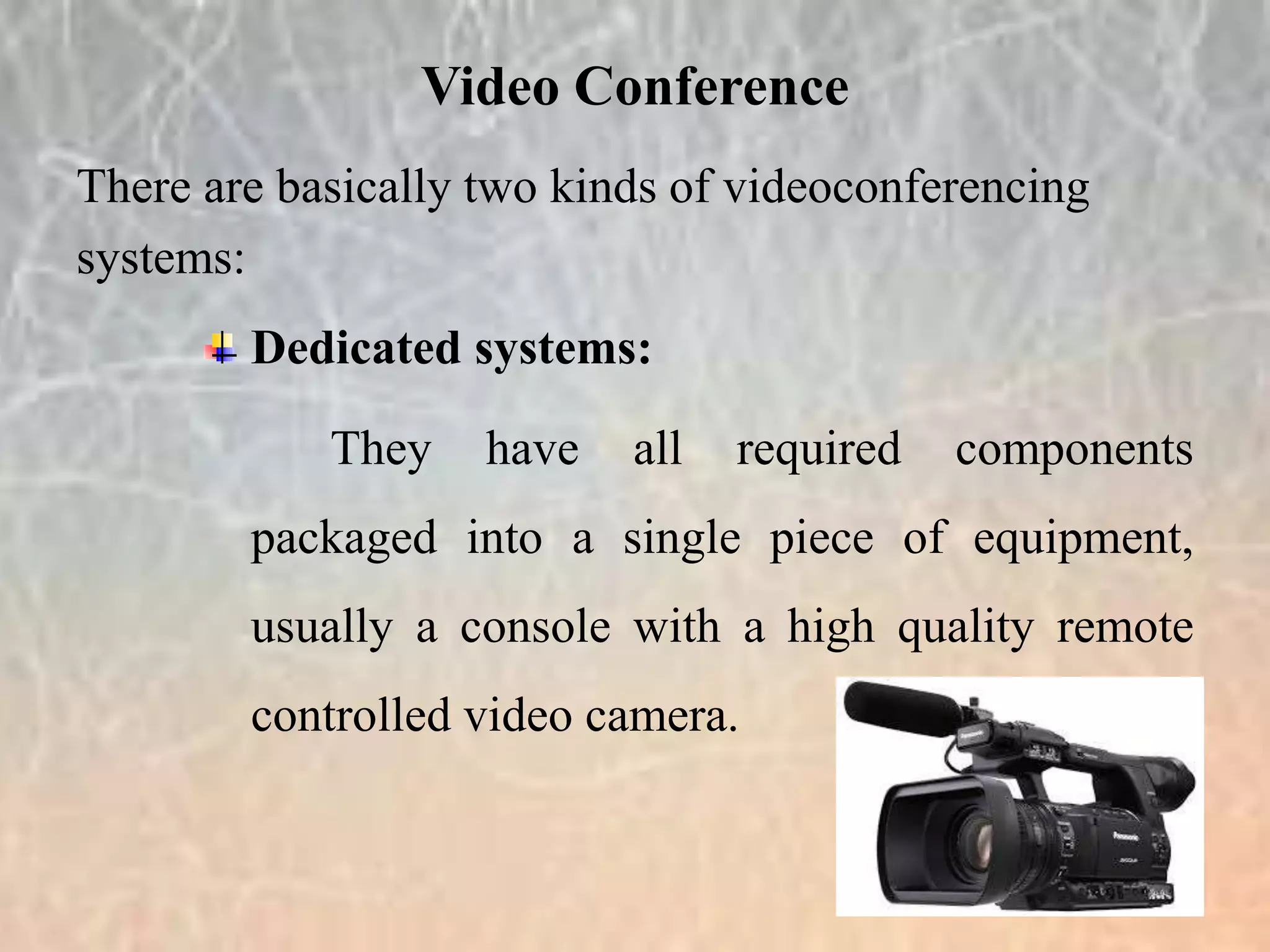
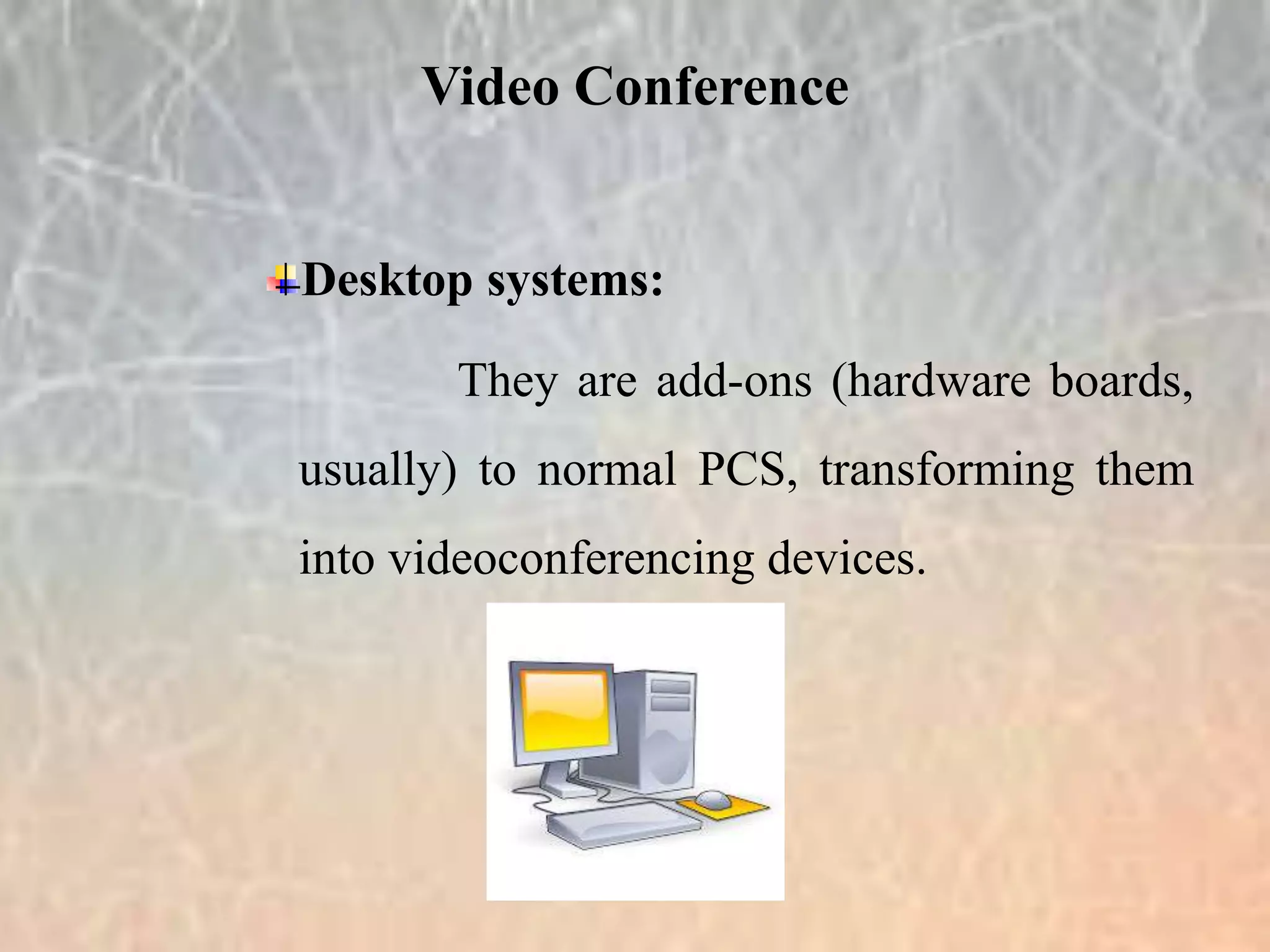
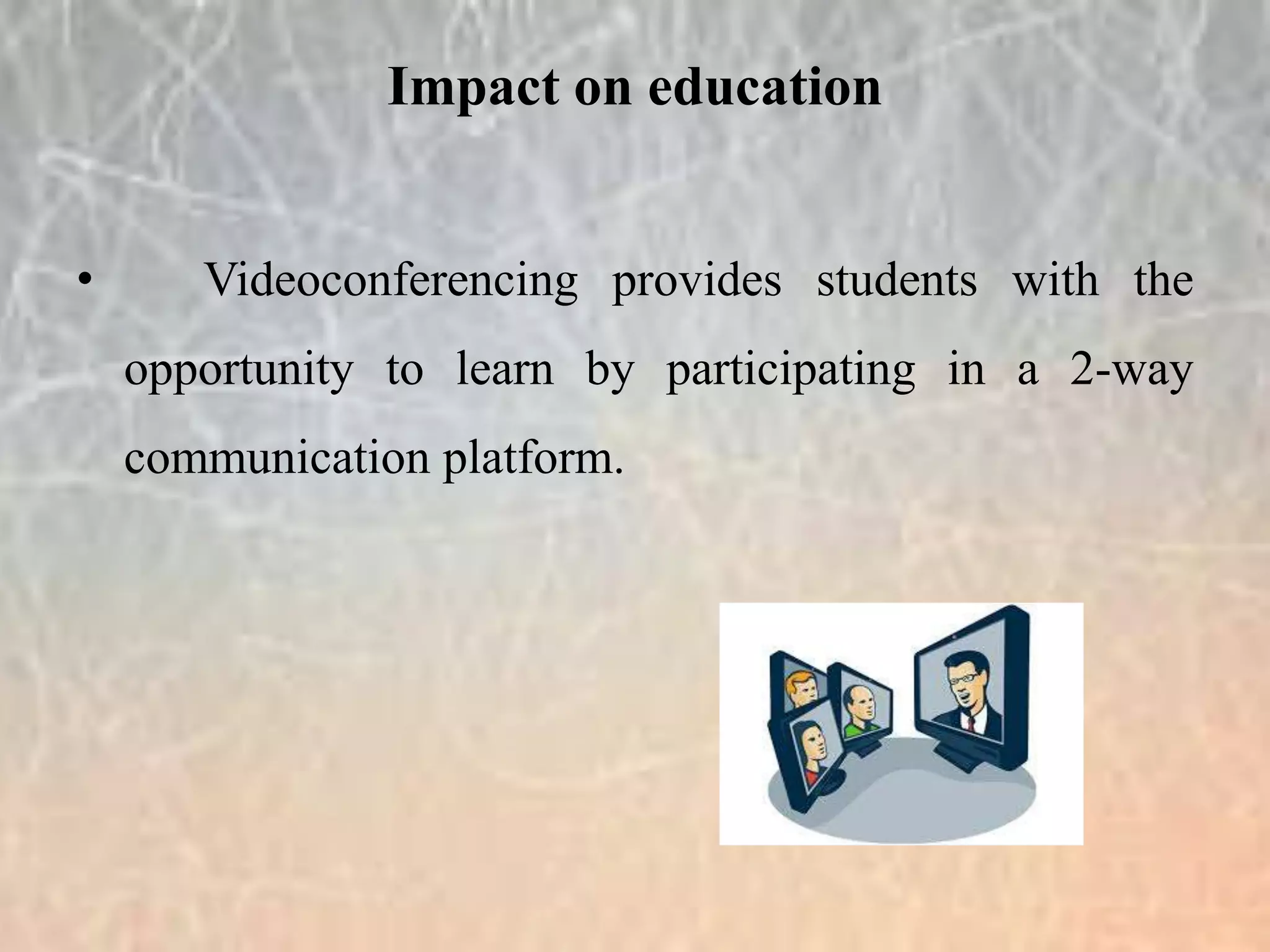
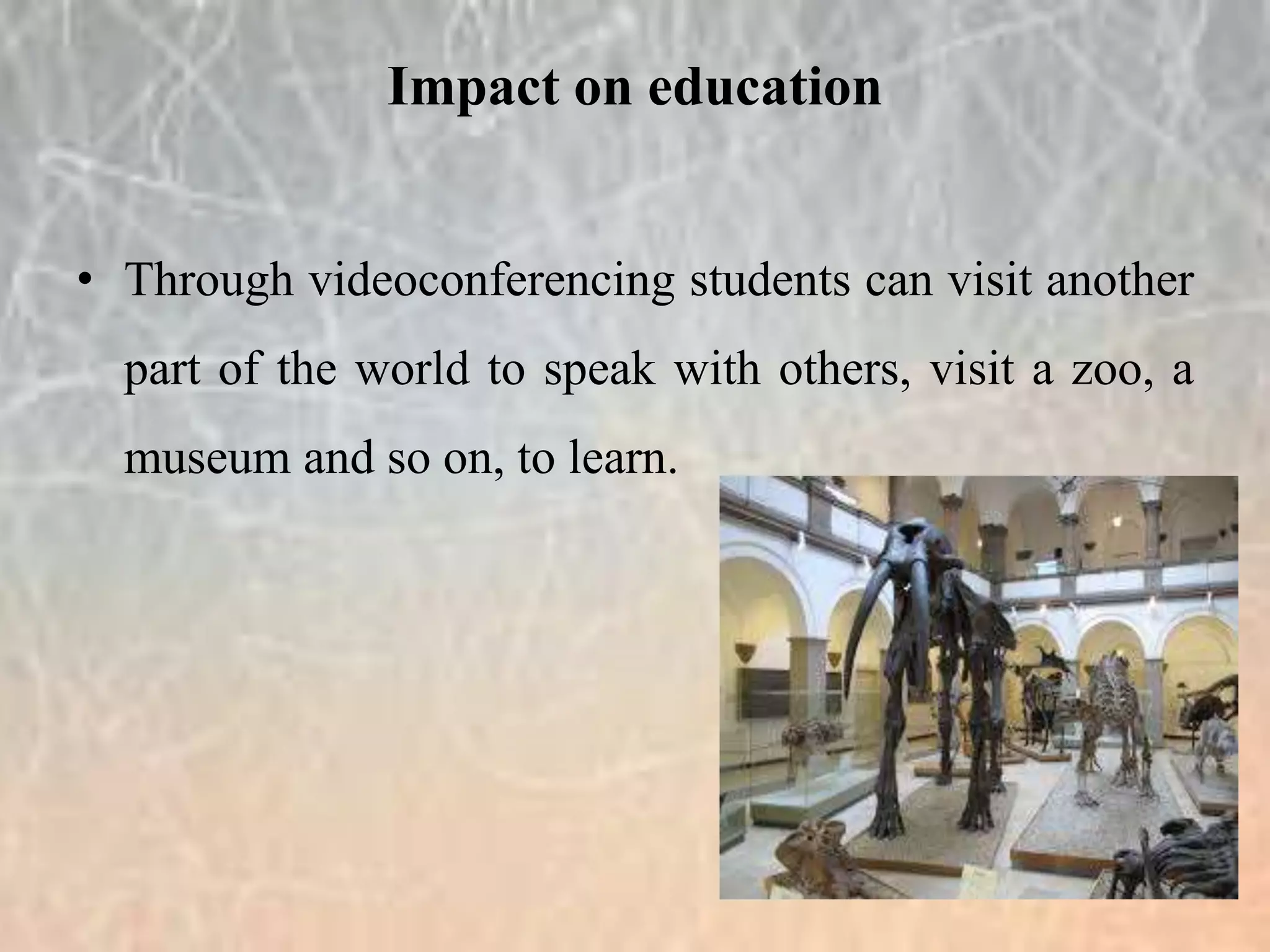
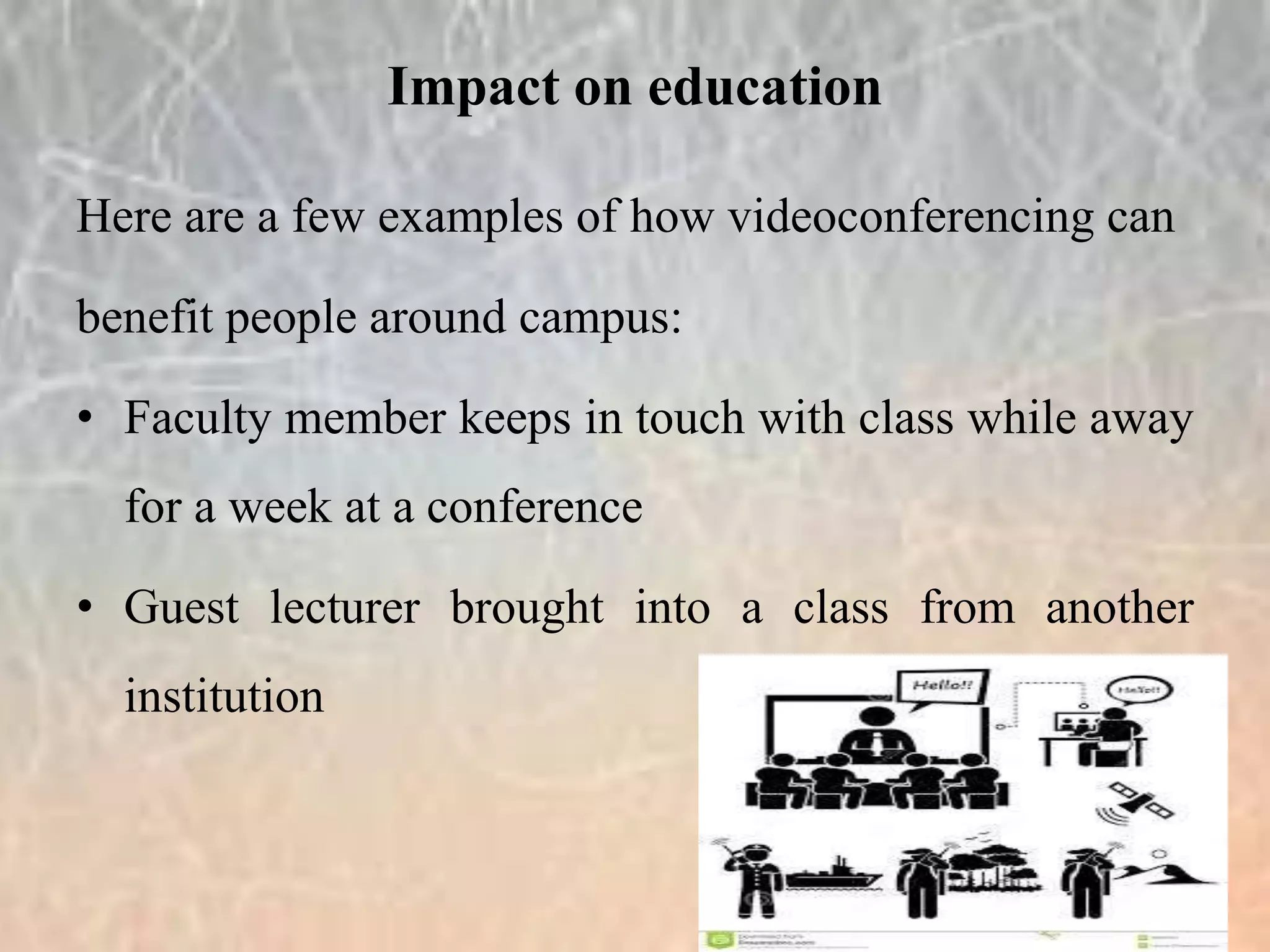


Video conferencing allows two or more locations to interact simultaneously through two-way video and audio. It uses digital compression of audio and video streams in real time. There are two types of video conferencing systems - dedicated systems that have all components packaged together, and desktop systems that are add-ons to transform PCs. Video conferencing benefits education by allowing remote lectures, virtual field trips, and collaboration between schools. It provides opportunities for students in isolated areas to learn from others around the world.


