Seminar Schedule
1. Information about VICAM
2. Information about mycotoxins
• Established in 1985 by leading scientists at
Harvard and MIT together with executives
from the food industry
• Shipment of first mycotoxin testing product
line - 1987
• Shipment of first microbiological testing
product line - 1991
• Established distribution in 97 countries
worldwide - 1999
VICAM HISTORY
VICAM CORPORATE MISSION
• Committed to innovative, rapid tests for
the food industry
• Design tests with superior quality,
value, reliability, ease-of-use and
performance
• Customer Service
• Seek our customer’s input
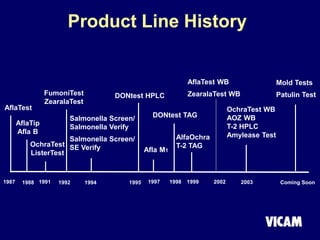
Product Line History
AflaTest
1987 1988 1991 1992 1994 1995 1997 1998 1999 Coming Soon
AflaTip
Afla B
DONtest HPLC
OchraTest
ListerTest Afla M1
DONtest TAG
AlfaOchra
T-2 TAG
Salmonella Screen/
Salmonella Verify
Salmonella Screen/
SE Verify
Mold Tests
Patulin Test
FumoniTest
ZearalaTest
AflaTest WB
ZearalaTest WB
OchraTest WB
AOZ WB
T-2 HPLC
Amylease Test
2002 2003
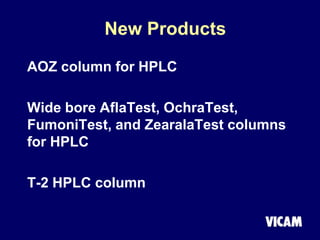
New Products
AOZ column for HPLC
Wide bore AflaTest, OchraTest,
FumoniTest, and ZearalaTest columns
for HPLC
T-2 HPLC column
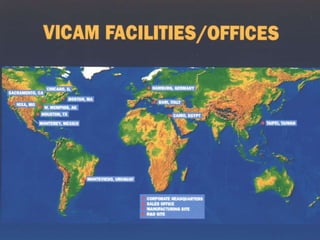
VICAM FACILITIES/OFFICES
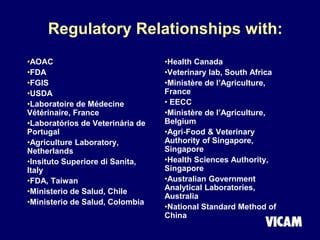
Regulatory Relationships with:
•AOAC
•FDA
•FGIS
•USDA
•Laboratoire de Médecine
Vétérinaire, France
•Laboratórios de Veterinária de
Portugal
•Agriculture Laboratory,
Netherlands
•Insituto Superiore di Sanita,
Italy
•FDA, Taiwan
•Ministerio de Salud, Chile
•Ministerio de Salud, Colombia
•Health Canada
•Veterinary lab, South Africa
•Ministère de I’Agriculture,
France
• EECC
•Ministère de I’Agriculture,
Belgium
•Agri-Food & Veterinary
Authority of Singapore,
Singapore
•Health Sciences Authority,
Singapore
•Australian Government
Analytical Laboratories,
Australia
•National Standard Method of
China
Mycotoxin Tests
• AflaTest – AflaB, Afla-P, AflaM1, AflaTip,
AflaTest WB.
• OchraTest: OchraTest, OchraTest WB.
• FumoniTest
• ZearalaTest: ZearalaTest, ZearalaTest WB.
• DONTest: DON FQ, DONtest HPLC
• T2: T-2 TAG, T-2 HPLC
• Combined columns: AflaOchra, AOZ,
VICAM
Committed to:
• Development of innovative, rapid tests
• Quality
• Market development
• Customer/Distributor Service
Mycotoxins
Mykes: Greek for fungus/mold
Toxicum: Latin for poison/toxin
Mycotoxins of economic, health
and agricultural significance
Mycotoxins are metabolic products of food
spoilage fungi that induce toxic responses when
consumed by animals or people.
Hundreds of mycotoxins have been identified;
They will fall into many different chemical
classes, and induce a wide variety of toxic
responses.
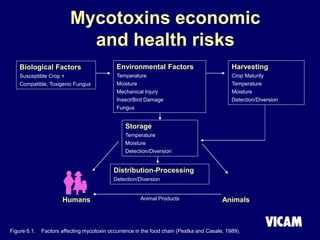
Figure 6.1. Factors affecting mycotoxin occurrence in the food chain (Pestka and Casale, 1989).
Mycotoxins economic
and health risks
Biological Factors
Susceptible Crop +
Compatible, Toxigenic Fungus
Environmental Factors
Temperature
Moisture
Mechanical Injury
Insect/Bird Damage
Fungus
Harvesting
Crop Maturity
Temperature
Moisture
Detection/Diversion
Storage
Temperature
Moisture
Detection/Diversion
Distribution-Processing
Detection/Diversion
Animal Products
Humans Animals
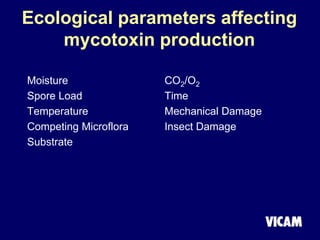
Ecological parameters affecting
mycotoxin production
Moisture
Spore Load
Temperature
Competing Microflora
Substrate
CO2/O2
Time
Mechanical Damage
Insect Damage
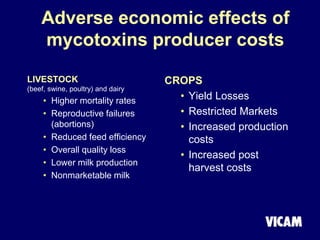
Adverse economic effects of
mycotoxins producer costs
LIVESTOCK
(beef, swine, poultry) and dairy
• Higher mortality rates
• Reproductive failures
(abortions)
• Reduced feed efficiency
• Overall quality loss
• Lower milk production
• Nonmarketable milk
CROPS
• Yield Losses
• Restricted Markets
• Increased production
costs
• Increased post
harvest costs
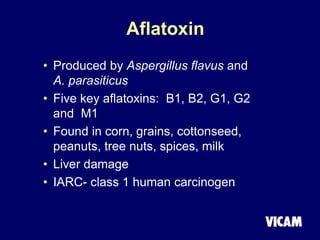
Aflatoxin
• Produced by Aspergillus flavus and
A. parasiticus
• Five key aflatoxins: B1, B2, G1, G2
and M1
• Found in corn, grains, cottonseed,
peanuts, tree nuts, spices, milk
• Liver damage
• IARC- class 1 human carcinogen
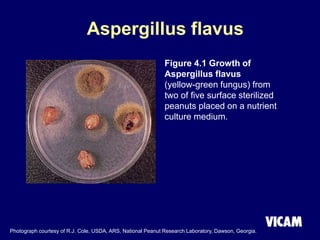
Aspergillus flavus
Figure 4.1 Growth of
Aspergillus flavus
(yellow-green fungus) from
two of five surface sterilized
peanuts placed on a nutrient
culture medium.
Photograph courtesy of R.J. Cole, USDA, ARS, National Peanut Research Laboratory, Dawson, Georgia.
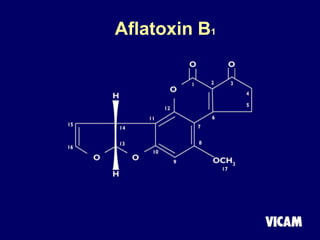
Aflatoxin B1
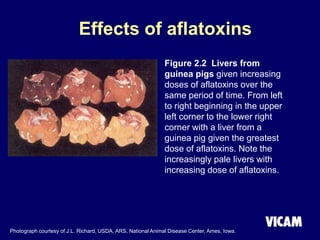
Effects of aflatoxins
Figure 2.2 Livers from
guinea pigs given increasing
doses of aflatoxins over the
same period of time. From left
to right beginning in the upper
left corner to the lower right
corner with a liver from a
guinea pig given the greatest
dose of aflatoxins. Note the
increasingly pale livers with
increasing dose of aflatoxins.
Photograph courtesy of J.L. Richard, USDA, ARS, National Animal Disease Center, Ames, Iowa.
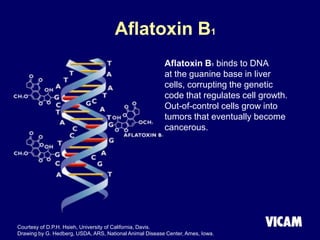
Aflatoxin B1
Courtesy of D.P.H. Hsieh, University of California, Davis.
Drawing by G. Hedberg, USDA, ARS, National Animal Disease Center, Ames, Iowa.
Aflatoxin B1 binds to DNA
at the guanine base in liver
cells, corrupting the genetic
code that regulates cell growth.
Out-of-control cells grow into
tumors that eventually become
cancerous.
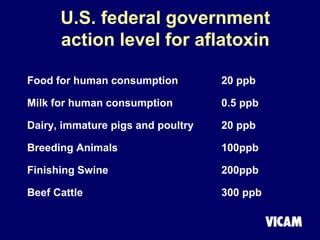
U.S. federal government
action level for aflatoxin
Food for human consumption 20 ppb
Milk for human consumption 0.5 ppb
Dairy, immature pigs and poultry 20 ppb
Breeding Animals 100ppb
Finishing Swine 200ppb
Beef Cattle 300 ppb
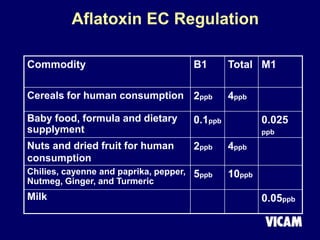
Aflatoxin EC Regulation
Commodity B1 Total M1
Cereals for human consumption 2ppb 4ppb
Baby food, formula and dietary
supplyment
0.1ppb 0.025
ppb
Nuts and dried fruit for human
consumption
2ppb 4ppb
Chilies, cayenne and paprika, pepper,
Nutmeg, Ginger, and Turmeric
5ppb 10ppb
Milk 0.05ppb
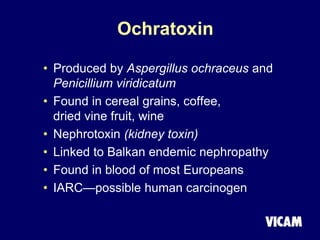
Ochratoxin
• Produced by Aspergillus ochraceus and
Penicillium viridicatum
• Found in cereal grains, coffee,
dried vine fruit, wine
• Nephrotoxin (kidney toxin)
• Linked to Balkan endemic nephropathy
• Found in blood of most Europeans
• IARC—possible human carcinogen
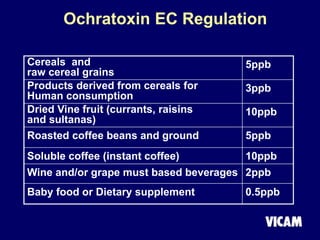
Ochratoxin EC Regulation
Cereals and
raw cereal grains
5ppb
Products derived from cereals for
Human consumption
3ppb
Dried Vine fruit (currants, raisins
and sultanas)
10ppb
Roasted coffee beans and ground 5ppb
Soluble coffee (instant coffee) 10ppb
Wine and/or grape must based beverages 2ppb
Baby food or Dietary supplement 0.5ppb
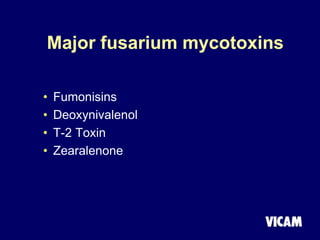
Major fusarium mycotoxins
• Fumonisins
• Deoxynivalenol
• T-2 Toxin
• Zearalenone
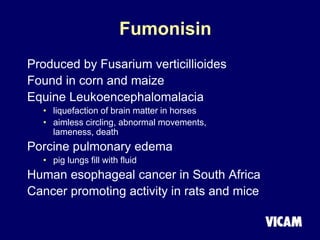
Fumonisin
Produced by Fusarium verticillioides
Found in corn and maize
Equine Leukoencephalomalacia
• liquefaction of brain matter in horses
• aimless circling, abnormal movements,
lameness, death
Porcine pulmonary edema
• pig lungs fill with fluid
Human esophageal cancer in South Africa
Cancer promoting activity in rats and mice
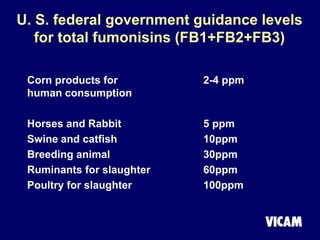
U. S. federal government guidance levels
for total fumonisins (FB1+FB2+FB3)
Corn products for 2-4 ppm
human consumption
Horses and Rabbit 5 ppm
Swine and catfish 10ppm
Breeding animal 30ppm
Ruminants for slaughter 60ppm
Poultry for slaughter 100ppm
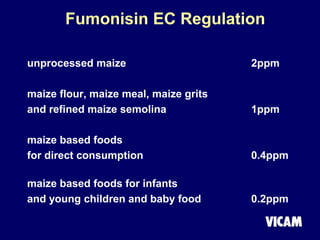
Fumonisin EC Regulation
unprocessed maize 2ppm
maize flour, maize meal, maize grits
and refined maize semolina 1ppm
maize based foods
for direct consumption 0.4ppm
maize based foods for infants
and young children and baby food 0.2ppm
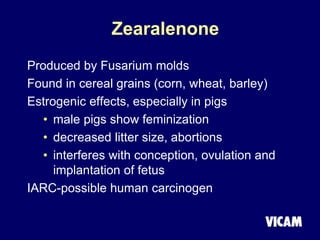
Zearalenone
Produced by Fusarium molds
Found in cereal grains (corn, wheat, barley)
Estrogenic effects, especially in pigs
• male pigs show feminization
• decreased litter size, abortions
• interferes with conception, ovulation and
implantation of fetus
IARC-possible human carcinogen
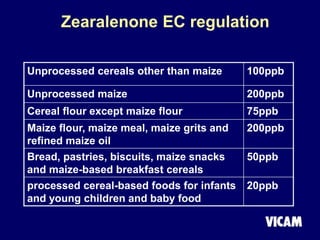
Zearalenone EC regulation
Unprocessed cereals other than maize 100ppb
Unprocessed maize 200ppb
Cereal flour except maize flour 75ppb
Maize flour, maize meal, maize grits and
refined maize oil
200ppb
Bread, pastries, biscuits, maize snacks
and maize-based breakfast cereals
50ppb
processed cereal-based foods for infants
and young children and baby food
20ppb
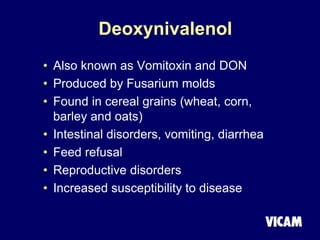
Deoxynivalenol
• Also known as Vomitoxin and DON
• Produced by Fusarium molds
• Found in cereal grains (wheat, corn,
barley and oats)
• Intestinal disorders, vomiting, diarrhea
• Feed refusal
• Reproductive disorders
• Increased susceptibility to disease
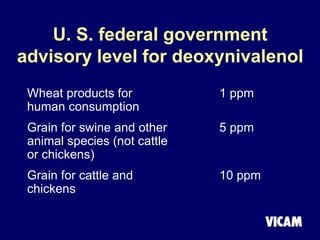
U. S. federal government
advisory level for deoxynivalenol
Wheat products for 1 ppm
human consumption
Grain for swine and other 5 ppm
animal species (not cattle
or chickens)
Grain for cattle and 10 ppm
chickens
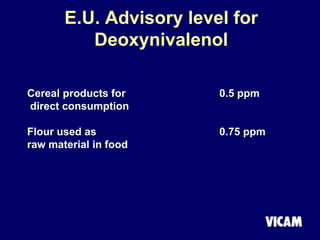
E.U. Advisory level for
Deoxynivalenol
Cereal products for 0.5 ppm
direct consumption
Flour used as 0.75 ppm
raw material in food
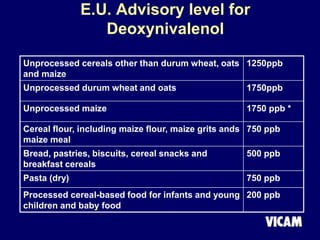
E.U. Advisory level for
Deoxynivalenol
Unprocessed cereals other than durum wheat, oats
and maize
1250ppb
Unprocessed durum wheat and oats 1750ppb
Unprocessed maize 1750 ppb *
Cereal flour, including maize flour, maize grits ands
maize meal
750 ppb
Bread, pastries, biscuits, cereal snacks and
breakfast cereals
500 ppb
Pasta (dry) 750 ppb
Processed cereal-based food for infants and young
children and baby food
200 ppb
T-2
• Produced by Fusarium molds
• Found in cereal grains (wheat, corn, rye)
• Alimentary Toxic Aleukia
• Burning in mouth, throat and stomach
• vomiting, diarrhea, abdominal pain
• bone marrow destruction/decreased
blood production
• hemorrhaging in mucous membranes and organs
• Isolated from “yellow rain”
• Immunosuppressive
E.U. Advisory for T-2 and HT-2
• A maximum level (refers to the sum of T-2
and HT-2 toxin.) will be fixed, if appropriate,
before 1 July 2007.
• T-2 and HT-2 in cereal and cereal products
particularly in oats and oat products is
necessary and of high priority.
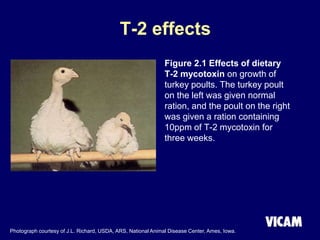
T-2 effects
Figure 2.1 Effects of dietary
T-2 mycotoxin on growth of
turkey poults. The turkey poult
on the left was given normal
ration, and the poult on the right
was given a ration containing
10ppm of T-2 mycotoxin for
three weeks.
Photograph courtesy of J.L. Richard, USDA, ARS, National Animal Disease Center, Ames, Iowa.
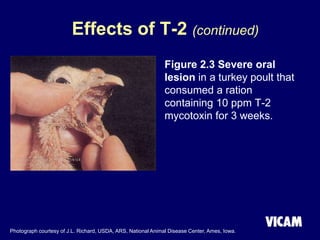
Effects of T-2 (continued)
Figure 2.3 Severe oral
lesion in a turkey poult that
consumed a ration
containing 10 ppm T-2
mycotoxin for 3 weeks.
Photograph courtesy of J.L. Richard, USDA, ARS, National Animal Disease Center, Ames, Iowa.
Vicam Mycotoxin Tests
• Fast
• Quantitative
• Accurate
• Easy
• Safe
• Economical
Team Medical & Scientific Sdn. Bhd.
41, Jalan Anggerik Vanilla T31/T, Kota Kemuning,
40460 Shah Alam, Selangor
Tel : 603-5122 5108 Fax : 603-5122 1608
Email : info@tms-lab.com Blog : tms-lab.blogspot.com
Solely Distribute by :

Vicam Ia Column For Mycotoxins

  • 2.
    Seminar Schedule 1. Informationabout VICAM 2. Information about mycotoxins
  • 3.
    • Established in1985 by leading scientists at Harvard and MIT together with executives from the food industry • Shipment of first mycotoxin testing product line - 1987 • Shipment of first microbiological testing product line - 1991 • Established distribution in 97 countries worldwide - 1999 VICAM HISTORY
  • 4.
    VICAM CORPORATE MISSION •Committed to innovative, rapid tests for the food industry • Design tests with superior quality, value, reliability, ease-of-use and performance • Customer Service • Seek our customer’s input
  • 5.
    Product Line History AflaTest 19871988 1991 1992 1994 1995 1997 1998 1999 Coming Soon AflaTip Afla B DONtest HPLC OchraTest ListerTest Afla M1 DONtest TAG AlfaOchra T-2 TAG Salmonella Screen/ Salmonella Verify Salmonella Screen/ SE Verify Mold Tests Patulin Test FumoniTest ZearalaTest AflaTest WB ZearalaTest WB OchraTest WB AOZ WB T-2 HPLC Amylease Test 2002 2003
  • 6.
    New Products AOZ columnfor HPLC Wide bore AflaTest, OchraTest, FumoniTest, and ZearalaTest columns for HPLC T-2 HPLC column
  • 7.
  • 12.
    Regulatory Relationships with: •AOAC •FDA •FGIS •USDA •Laboratoirede Médecine Vétérinaire, France •Laboratórios de Veterinária de Portugal •Agriculture Laboratory, Netherlands •Insituto Superiore di Sanita, Italy •FDA, Taiwan •Ministerio de Salud, Chile •Ministerio de Salud, Colombia •Health Canada •Veterinary lab, South Africa •Ministère de I’Agriculture, France • EECC •Ministère de I’Agriculture, Belgium •Agri-Food & Veterinary Authority of Singapore, Singapore •Health Sciences Authority, Singapore •Australian Government Analytical Laboratories, Australia •National Standard Method of China
  • 13.
    Mycotoxin Tests • AflaTest– AflaB, Afla-P, AflaM1, AflaTip, AflaTest WB. • OchraTest: OchraTest, OchraTest WB. • FumoniTest • ZearalaTest: ZearalaTest, ZearalaTest WB. • DONTest: DON FQ, DONtest HPLC • T2: T-2 TAG, T-2 HPLC • Combined columns: AflaOchra, AOZ,
  • 14.
    VICAM Committed to: • Developmentof innovative, rapid tests • Quality • Market development • Customer/Distributor Service
  • 15.
    Mycotoxins Mykes: Greek forfungus/mold Toxicum: Latin for poison/toxin
  • 16.
    Mycotoxins of economic,health and agricultural significance Mycotoxins are metabolic products of food spoilage fungi that induce toxic responses when consumed by animals or people. Hundreds of mycotoxins have been identified; They will fall into many different chemical classes, and induce a wide variety of toxic responses.
  • 17.
    Figure 6.1. Factorsaffecting mycotoxin occurrence in the food chain (Pestka and Casale, 1989). Mycotoxins economic and health risks Biological Factors Susceptible Crop + Compatible, Toxigenic Fungus Environmental Factors Temperature Moisture Mechanical Injury Insect/Bird Damage Fungus Harvesting Crop Maturity Temperature Moisture Detection/Diversion Storage Temperature Moisture Detection/Diversion Distribution-Processing Detection/Diversion Animal Products Humans Animals
  • 18.
    Ecological parameters affecting mycotoxinproduction Moisture Spore Load Temperature Competing Microflora Substrate CO2/O2 Time Mechanical Damage Insect Damage
  • 19.
    Adverse economic effectsof mycotoxins producer costs LIVESTOCK (beef, swine, poultry) and dairy • Higher mortality rates • Reproductive failures (abortions) • Reduced feed efficiency • Overall quality loss • Lower milk production • Nonmarketable milk CROPS • Yield Losses • Restricted Markets • Increased production costs • Increased post harvest costs
  • 20.
    Aflatoxin • Produced byAspergillus flavus and A. parasiticus • Five key aflatoxins: B1, B2, G1, G2 and M1 • Found in corn, grains, cottonseed, peanuts, tree nuts, spices, milk • Liver damage • IARC- class 1 human carcinogen
  • 21.
    Aspergillus flavus Figure 4.1Growth of Aspergillus flavus (yellow-green fungus) from two of five surface sterilized peanuts placed on a nutrient culture medium. Photograph courtesy of R.J. Cole, USDA, ARS, National Peanut Research Laboratory, Dawson, Georgia.
  • 22.
  • 23.
    Effects of aflatoxins Figure2.2 Livers from guinea pigs given increasing doses of aflatoxins over the same period of time. From left to right beginning in the upper left corner to the lower right corner with a liver from a guinea pig given the greatest dose of aflatoxins. Note the increasingly pale livers with increasing dose of aflatoxins. Photograph courtesy of J.L. Richard, USDA, ARS, National Animal Disease Center, Ames, Iowa.
  • 24.
    Aflatoxin B1 Courtesy ofD.P.H. Hsieh, University of California, Davis. Drawing by G. Hedberg, USDA, ARS, National Animal Disease Center, Ames, Iowa. Aflatoxin B1 binds to DNA at the guanine base in liver cells, corrupting the genetic code that regulates cell growth. Out-of-control cells grow into tumors that eventually become cancerous.
  • 25.
    U.S. federal government actionlevel for aflatoxin Food for human consumption 20 ppb Milk for human consumption 0.5 ppb Dairy, immature pigs and poultry 20 ppb Breeding Animals 100ppb Finishing Swine 200ppb Beef Cattle 300 ppb
  • 26.
    Aflatoxin EC Regulation CommodityB1 Total M1 Cereals for human consumption 2ppb 4ppb Baby food, formula and dietary supplyment 0.1ppb 0.025 ppb Nuts and dried fruit for human consumption 2ppb 4ppb Chilies, cayenne and paprika, pepper, Nutmeg, Ginger, and Turmeric 5ppb 10ppb Milk 0.05ppb
  • 27.
    Ochratoxin • Produced byAspergillus ochraceus and Penicillium viridicatum • Found in cereal grains, coffee, dried vine fruit, wine • Nephrotoxin (kidney toxin) • Linked to Balkan endemic nephropathy • Found in blood of most Europeans • IARC—possible human carcinogen
  • 28.
    Ochratoxin EC Regulation Cerealsand raw cereal grains 5ppb Products derived from cereals for Human consumption 3ppb Dried Vine fruit (currants, raisins and sultanas) 10ppb Roasted coffee beans and ground 5ppb Soluble coffee (instant coffee) 10ppb Wine and/or grape must based beverages 2ppb Baby food or Dietary supplement 0.5ppb
  • 29.
    Major fusarium mycotoxins •Fumonisins • Deoxynivalenol • T-2 Toxin • Zearalenone
  • 30.
    Fumonisin Produced by Fusariumverticillioides Found in corn and maize Equine Leukoencephalomalacia • liquefaction of brain matter in horses • aimless circling, abnormal movements, lameness, death Porcine pulmonary edema • pig lungs fill with fluid Human esophageal cancer in South Africa Cancer promoting activity in rats and mice
  • 31.
    U. S. federalgovernment guidance levels for total fumonisins (FB1+FB2+FB3) Corn products for 2-4 ppm human consumption Horses and Rabbit 5 ppm Swine and catfish 10ppm Breeding animal 30ppm Ruminants for slaughter 60ppm Poultry for slaughter 100ppm
  • 32.
    Fumonisin EC Regulation unprocessedmaize 2ppm maize flour, maize meal, maize grits and refined maize semolina 1ppm maize based foods for direct consumption 0.4ppm maize based foods for infants and young children and baby food 0.2ppm
  • 33.
    Zearalenone Produced by Fusariummolds Found in cereal grains (corn, wheat, barley) Estrogenic effects, especially in pigs • male pigs show feminization • decreased litter size, abortions • interferes with conception, ovulation and implantation of fetus IARC-possible human carcinogen
  • 34.
    Zearalenone EC regulation Unprocessedcereals other than maize 100ppb Unprocessed maize 200ppb Cereal flour except maize flour 75ppb Maize flour, maize meal, maize grits and refined maize oil 200ppb Bread, pastries, biscuits, maize snacks and maize-based breakfast cereals 50ppb processed cereal-based foods for infants and young children and baby food 20ppb
  • 35.
    Deoxynivalenol • Also knownas Vomitoxin and DON • Produced by Fusarium molds • Found in cereal grains (wheat, corn, barley and oats) • Intestinal disorders, vomiting, diarrhea • Feed refusal • Reproductive disorders • Increased susceptibility to disease
  • 36.
    U. S. federalgovernment advisory level for deoxynivalenol Wheat products for 1 ppm human consumption Grain for swine and other 5 ppm animal species (not cattle or chickens) Grain for cattle and 10 ppm chickens
  • 37.
    E.U. Advisory levelfor Deoxynivalenol Cereal products for 0.5 ppm direct consumption Flour used as 0.75 ppm raw material in food
  • 38.
    E.U. Advisory levelfor Deoxynivalenol Unprocessed cereals other than durum wheat, oats and maize 1250ppb Unprocessed durum wheat and oats 1750ppb Unprocessed maize 1750 ppb * Cereal flour, including maize flour, maize grits ands maize meal 750 ppb Bread, pastries, biscuits, cereal snacks and breakfast cereals 500 ppb Pasta (dry) 750 ppb Processed cereal-based food for infants and young children and baby food 200 ppb
  • 39.
    T-2 • Produced byFusarium molds • Found in cereal grains (wheat, corn, rye) • Alimentary Toxic Aleukia • Burning in mouth, throat and stomach • vomiting, diarrhea, abdominal pain • bone marrow destruction/decreased blood production • hemorrhaging in mucous membranes and organs • Isolated from “yellow rain” • Immunosuppressive
  • 40.
    E.U. Advisory forT-2 and HT-2 • A maximum level (refers to the sum of T-2 and HT-2 toxin.) will be fixed, if appropriate, before 1 July 2007. • T-2 and HT-2 in cereal and cereal products particularly in oats and oat products is necessary and of high priority.
  • 41.
    T-2 effects Figure 2.1Effects of dietary T-2 mycotoxin on growth of turkey poults. The turkey poult on the left was given normal ration, and the poult on the right was given a ration containing 10ppm of T-2 mycotoxin for three weeks. Photograph courtesy of J.L. Richard, USDA, ARS, National Animal Disease Center, Ames, Iowa.
  • 42.
    Effects of T-2(continued) Figure 2.3 Severe oral lesion in a turkey poult that consumed a ration containing 10 ppm T-2 mycotoxin for 3 weeks. Photograph courtesy of J.L. Richard, USDA, ARS, National Animal Disease Center, Ames, Iowa.
  • 43.
    Vicam Mycotoxin Tests •Fast • Quantitative • Accurate • Easy • Safe • Economical
  • 44.
    Team Medical &Scientific Sdn. Bhd. 41, Jalan Anggerik Vanilla T31/T, Kota Kemuning, 40460 Shah Alam, Selangor Tel : 603-5122 5108 Fax : 603-5122 1608 Email : info@tms-lab.com Blog : tms-lab.blogspot.com Solely Distribute by :