VERTICAL TRANSPORTATION
EDS
Vertical transportation
There are 4 types of vertical transportation
 Stairs
 Lifts
 Escalators
 Ramps
Stairs
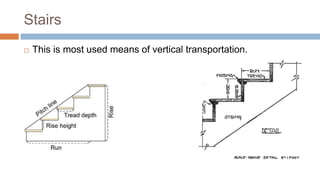
 This is most used means of vertical transportation.
Stair types:
 Straight stairs
 Dog-legged stairs
 Geometrical stairs
 Circular stairs
 Quarter turn newel
 Open newel stairs
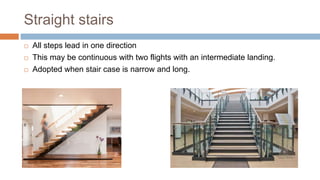
Straight stairs
 All steps lead in one direction
 This may be continuous with two flights with an intermediate landing.
 Adopted when stair case is narrow and long.
Dog-legged stairs
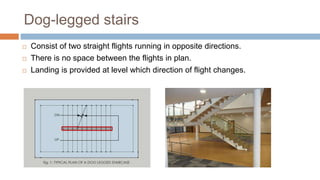
 Consist of two straight flights running in opposite directions.
 There is no space between the flights in plan.
 Landing is provided at level which direction of flight changes.
Geometrical stairs
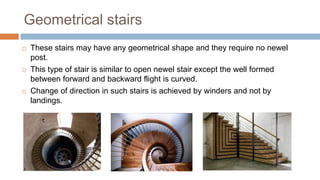
 These stairs may have any geometrical shape and they require no newel
post.
 This type of stair is similar to open newel stair except the well formed
between forward and backward flight is curved.
 Change of direction in such stairs is achieved by winders and not by
landings.
Circular stairs
 All the steps are radiate from a newel post or well hole
 All the steps are winders
 This is provided where space is limited and traffic is casual
Quarter turn newel
 A stair turning through 90 degree with the help of level landing.
 Used in shops and public buildings.
Open newel stairs
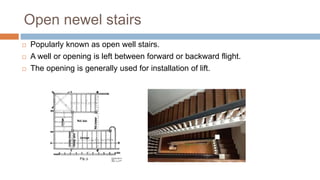
 Popularly known as open well stairs.
 A well or opening is left between forward or backward flight.
 The opening is generally used for installation of lift.
Escalators
 Escalators is a power driven, inclined, continuous stairway used for raising or lowering
passengers.
 Most applications include department stores airports, shopping malls, hotels and public
buildings.
 One of the largest, most expensive machines people use on a regular basis, but also one
of the simplest.
Escalator installation
It includes:
•The escalator,
•The track,
•The trusses or girders,
•The balustrading,
•The step treds
•Landings and
•All the chains and wires and machinery directly connected
with the operation of the escalator.
Ramps
 Ramps are slopping surface that can be used to provide an easy connection
from floor to floor especially when large numbers of people or vehicles are
moving from time to time.
 An exterior location is preferred for ramps, indoor ramps are not recommended because
they take up a great deal of space.
 Ideally the entrance to a ramp should be immediately adjacent to the stairs
 1M=3.28FT
Elevator
 Elevator has been used in building having more then 4 stories
 Lift
 An Appliance designed to transport persons or material between two or more levels in the
vertical or substantially vertical direction by means of a guided car or platform.
 The world elevator is also synonymously used for lift
Types of Elevators
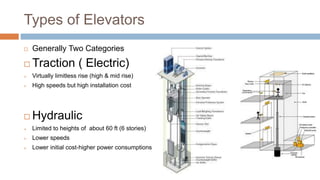
 Generally Two Categories
 Traction ( Electric)
 Virtually limitless rise (high & mid rise)
 High speeds but high installation cost
 Hydraulic
 Limited to heights of about 60 ft (6 stories)
 Lower speeds
 Lower initial cost-higher power consumptions
Elevators
 Traction
 Geared Traction
 Gearless Traction
Elevator
 Roped Hydraulic
 Holed Hydraulic
 Hole-less Hydraulic
bibliography
 http://www.slideshare.net/rameshnayaka/vertical-
transportation-systems
 http://www.slideshare.net/KUNROCKS/elevators-and-
escalators
 http://www.slideshare.net/arkam_slideshare/transportation-
systems-in-buildings
 http://www.slideshare.net/Deborahamberansar/elevators-
escalators

Vertical transportation important

  • 1.
  • 2.
    Vertical transportation There are4 types of vertical transportation  Stairs  Lifts  Escalators  Ramps
  • 3.
    Stairs  This ismost used means of vertical transportation.
  • 4.
    Stair types:  Straightstairs  Dog-legged stairs  Geometrical stairs  Circular stairs  Quarter turn newel  Open newel stairs
  • 5.
    Straight stairs  Allsteps lead in one direction  This may be continuous with two flights with an intermediate landing.  Adopted when stair case is narrow and long.
  • 6.
    Dog-legged stairs  Consistof two straight flights running in opposite directions.  There is no space between the flights in plan.  Landing is provided at level which direction of flight changes.
  • 7.
    Geometrical stairs  Thesestairs may have any geometrical shape and they require no newel post.  This type of stair is similar to open newel stair except the well formed between forward and backward flight is curved.  Change of direction in such stairs is achieved by winders and not by landings.
  • 8.
    Circular stairs  Allthe steps are radiate from a newel post or well hole  All the steps are winders  This is provided where space is limited and traffic is casual
  • 9.
    Quarter turn newel A stair turning through 90 degree with the help of level landing.  Used in shops and public buildings.
  • 10.
    Open newel stairs Popularly known as open well stairs.  A well or opening is left between forward or backward flight.  The opening is generally used for installation of lift.
  • 11.
    Escalators  Escalators isa power driven, inclined, continuous stairway used for raising or lowering passengers.  Most applications include department stores airports, shopping malls, hotels and public buildings.  One of the largest, most expensive machines people use on a regular basis, but also one of the simplest.
  • 12.
    Escalator installation It includes: •Theescalator, •The track, •The trusses or girders, •The balustrading, •The step treds •Landings and •All the chains and wires and machinery directly connected with the operation of the escalator.
  • 13.
    Ramps  Ramps areslopping surface that can be used to provide an easy connection from floor to floor especially when large numbers of people or vehicles are moving from time to time.
  • 14.
     An exteriorlocation is preferred for ramps, indoor ramps are not recommended because they take up a great deal of space.  Ideally the entrance to a ramp should be immediately adjacent to the stairs  1M=3.28FT
  • 15.
    Elevator  Elevator hasbeen used in building having more then 4 stories  Lift  An Appliance designed to transport persons or material between two or more levels in the vertical or substantially vertical direction by means of a guided car or platform.  The world elevator is also synonymously used for lift
  • 16.
    Types of Elevators Generally Two Categories  Traction ( Electric)  Virtually limitless rise (high & mid rise)  High speeds but high installation cost  Hydraulic  Limited to heights of about 60 ft (6 stories)  Lower speeds  Lower initial cost-higher power consumptions
  • 17.
    Elevators  Traction  GearedTraction  Gearless Traction
  • 18.
    Elevator  Roped Hydraulic Holed Hydraulic  Hole-less Hydraulic
  • 19.
    bibliography  http://www.slideshare.net/rameshnayaka/vertical- transportation-systems  http://www.slideshare.net/KUNROCKS/elevators-and- escalators http://www.slideshare.net/arkam_slideshare/transportation- systems-in-buildings  http://www.slideshare.net/Deborahamberansar/elevators- escalators