Verbs
A verb expresses action
or
a state of being.
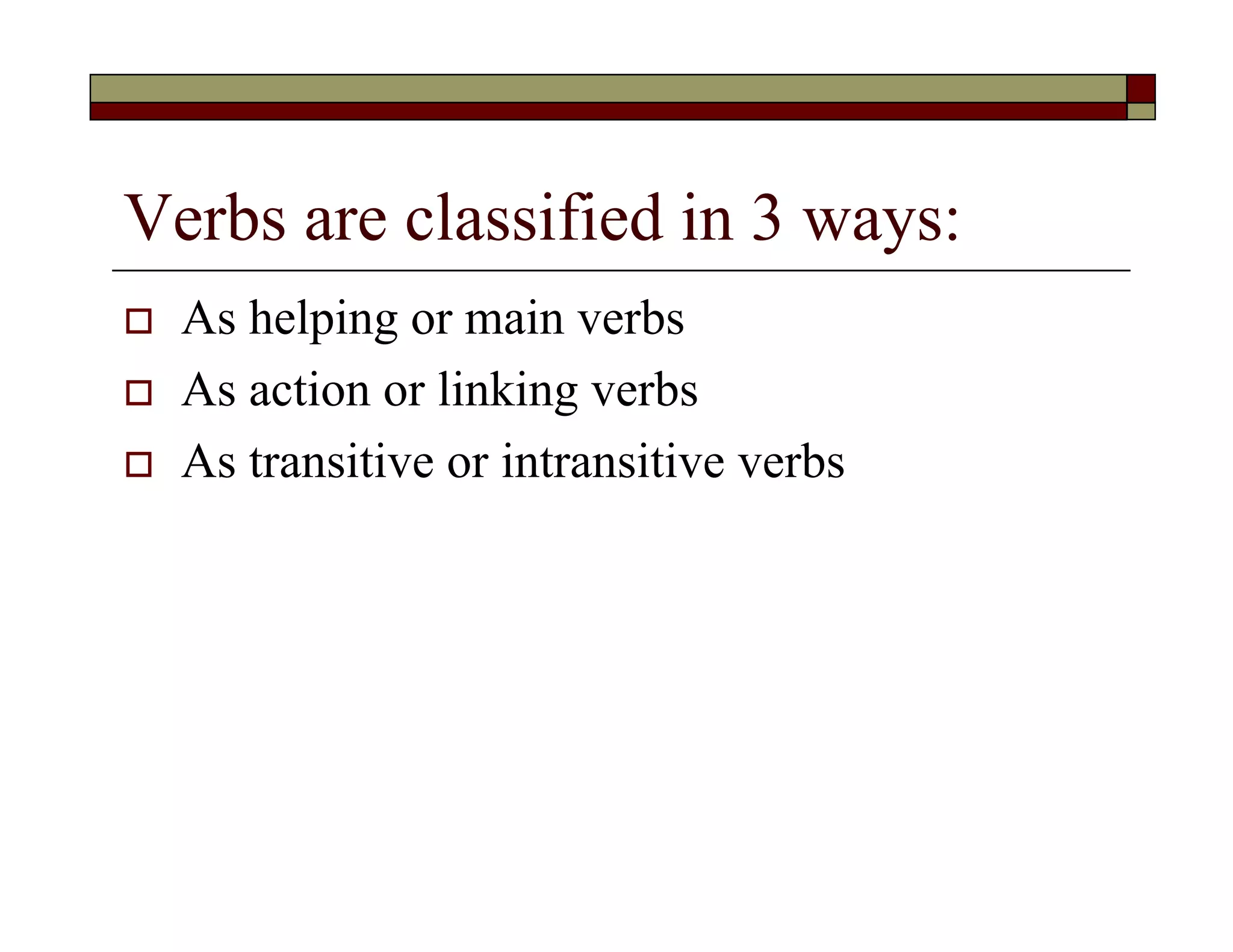
Verbs are classified in 3 ways:
 As helping or main verbs
 As action or linking verbs
 As transitive or intransitive verbs
1. Main Verbs and
Helping Verbs
A helping verb may be separated from the
main verb.
A verb phrase consists of one main verb and
one or more helping verbs.
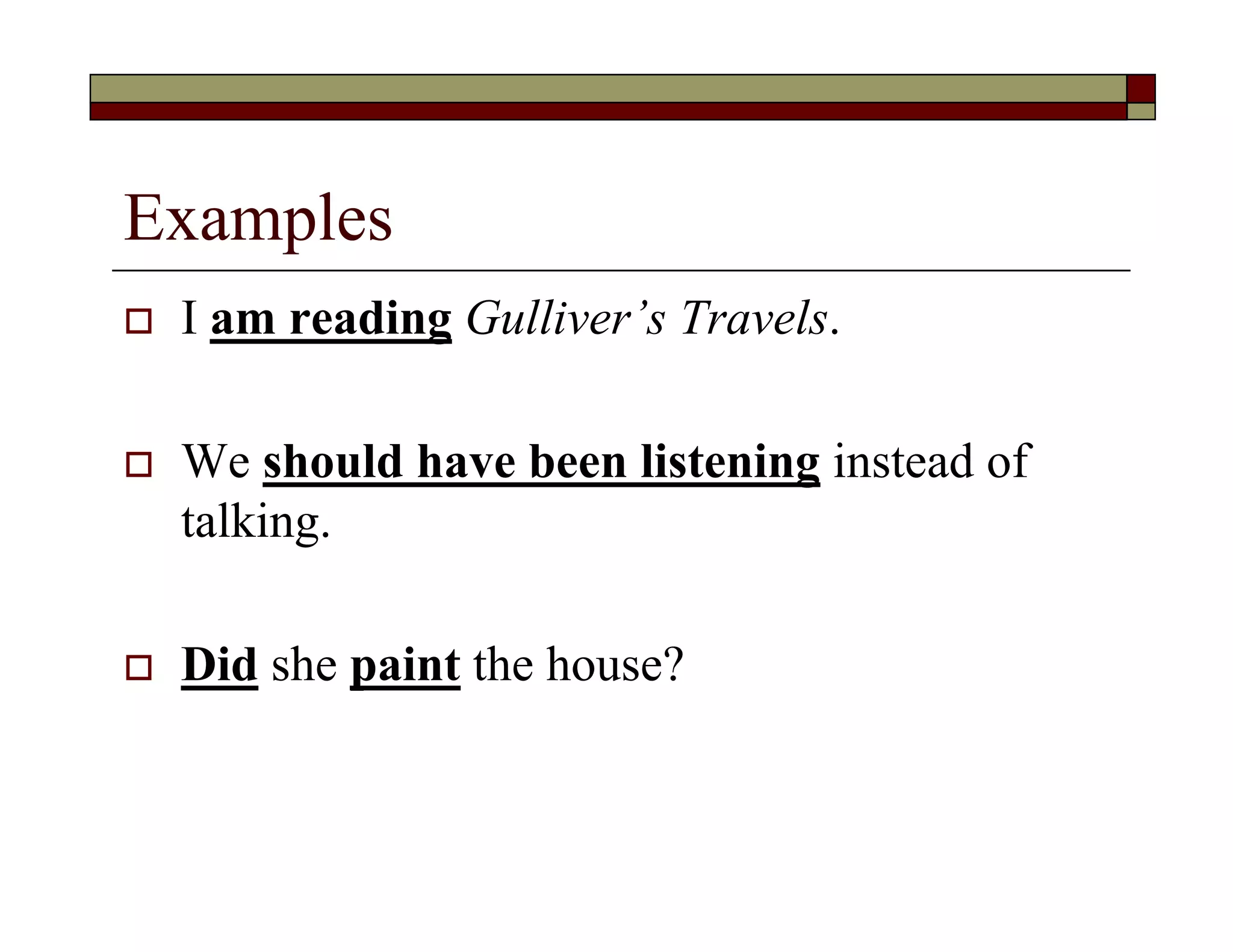
Examples
 I am reading Gulliver’s Travels.
 We should have been listening instead of
talking.
 Did she paint the house?
Commonly Used Helping Verbs
Forms of BE
am, is, are, was, were,
be, being, been
Forms of HAVE
have, having, has, had
Forms of DO
do, does, did
A modal is an auxiliary
verb that is used to
express an attitude
toward the action or
state of being of the
main verb.
MODALS
can, could, may, might,
must, ought, shall,
should, will, would
Not and the contraction of n’t are
never part of a verb phrase
Instead, they are adverbs telling to what extent.
We did not hear you.
We didn’t hear you.
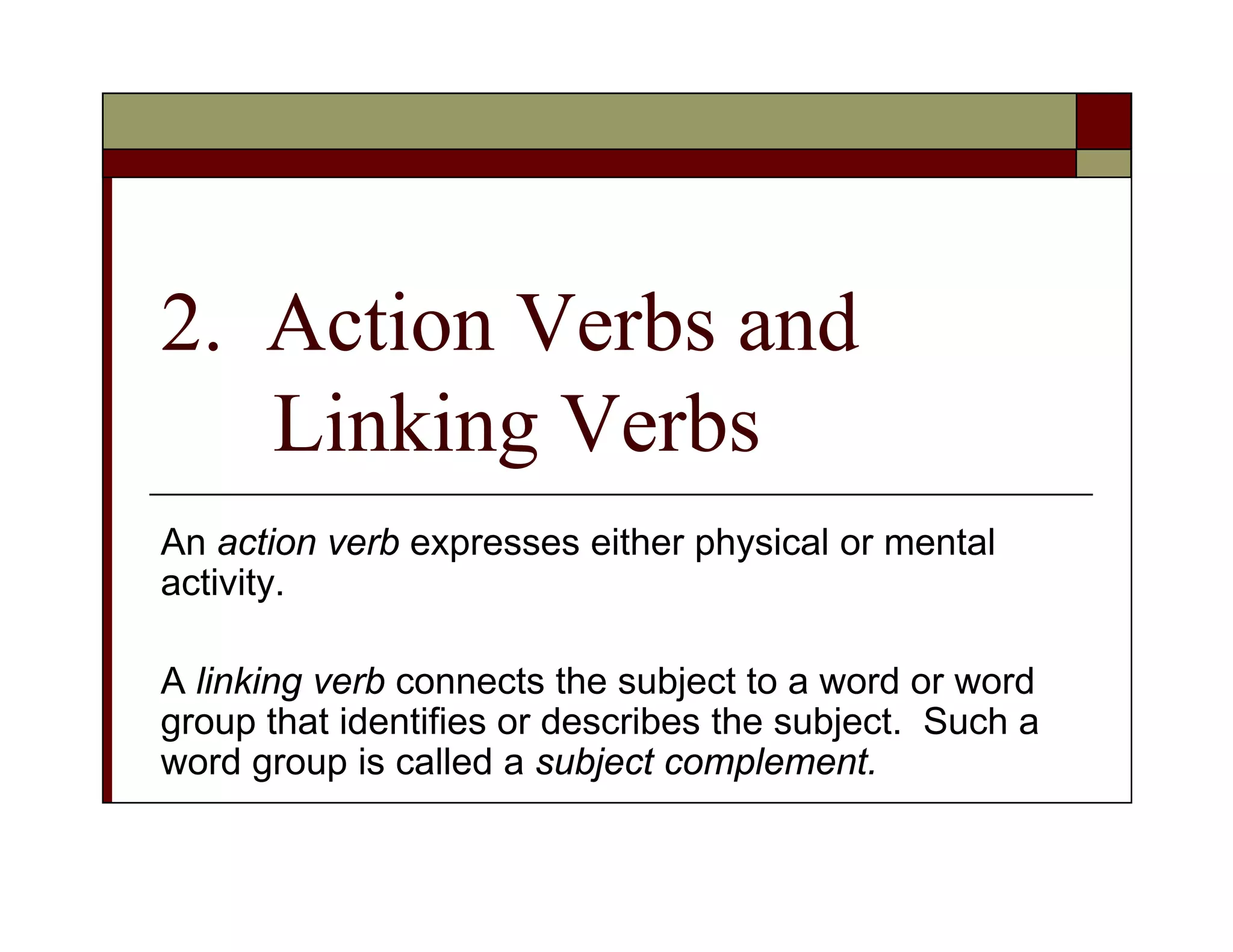
2. Action Verbs and
Linking Verbs
An action verb expresses either physical or mental
activity.
A linking verb connects the subject to a word or word
group that identifies or describes the subject. Such a
word group is called a subject complement.
Commonly Used Linking Verbs
Forms of Be
be were shall have been should be
being shall be will have been would be
am will be can be could be
is has been may be should have been
are have been might be would have been
was had been must be could have been
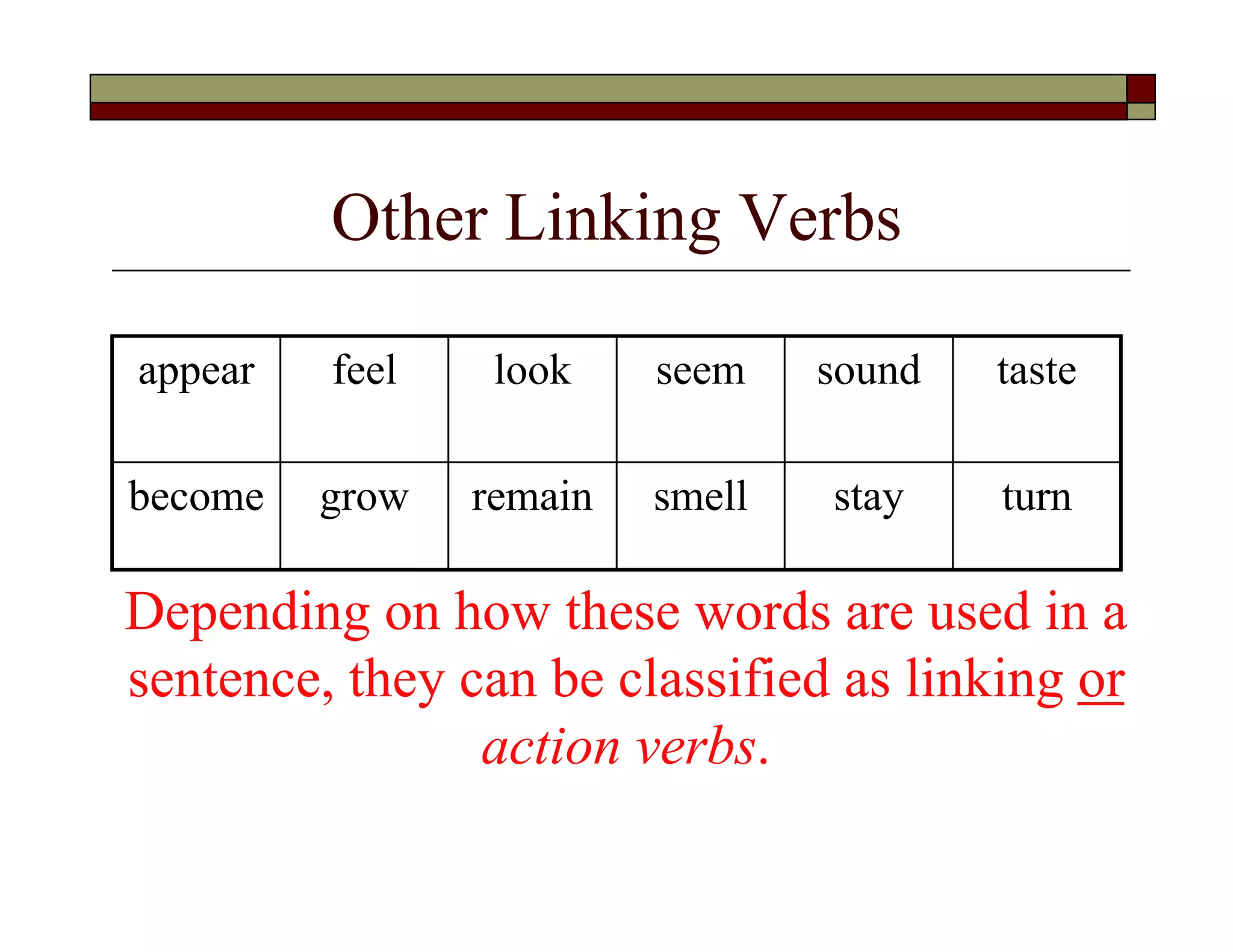
Other Linking Verbs
appear feel look seem sound taste
become grow remain smell stay turn
Depending on how these words are used in a
sentence, they can be classified as linking or
action verbs.
Determination of a Linking Verb
To figure out if a verb is linking or action, substitute a form of the verb BE - the most
common is was. If the sentence makes sense, the verb is most likely a linking verb. If
the sentence doesn’t make sense, the verb is an action verb.
Felt is the past form of feels which is on the linking/action verb list.
Example of Linking:
Joe felt calm at the seashore. - Replace the verb felt with was to see if the sentence
makes sense:
Joe was calm at the seashore. - The sentence makes sense, so the verb is
classified as a linking verb.
Example of Action:
Joe felt the waving strands of kelp. - Replace the verb felt with was to see
if the sentence makes sense:
Joe was the waving strands of kelp. - The sentence doesn’t make sense, so
the verb is classified as an action verb.
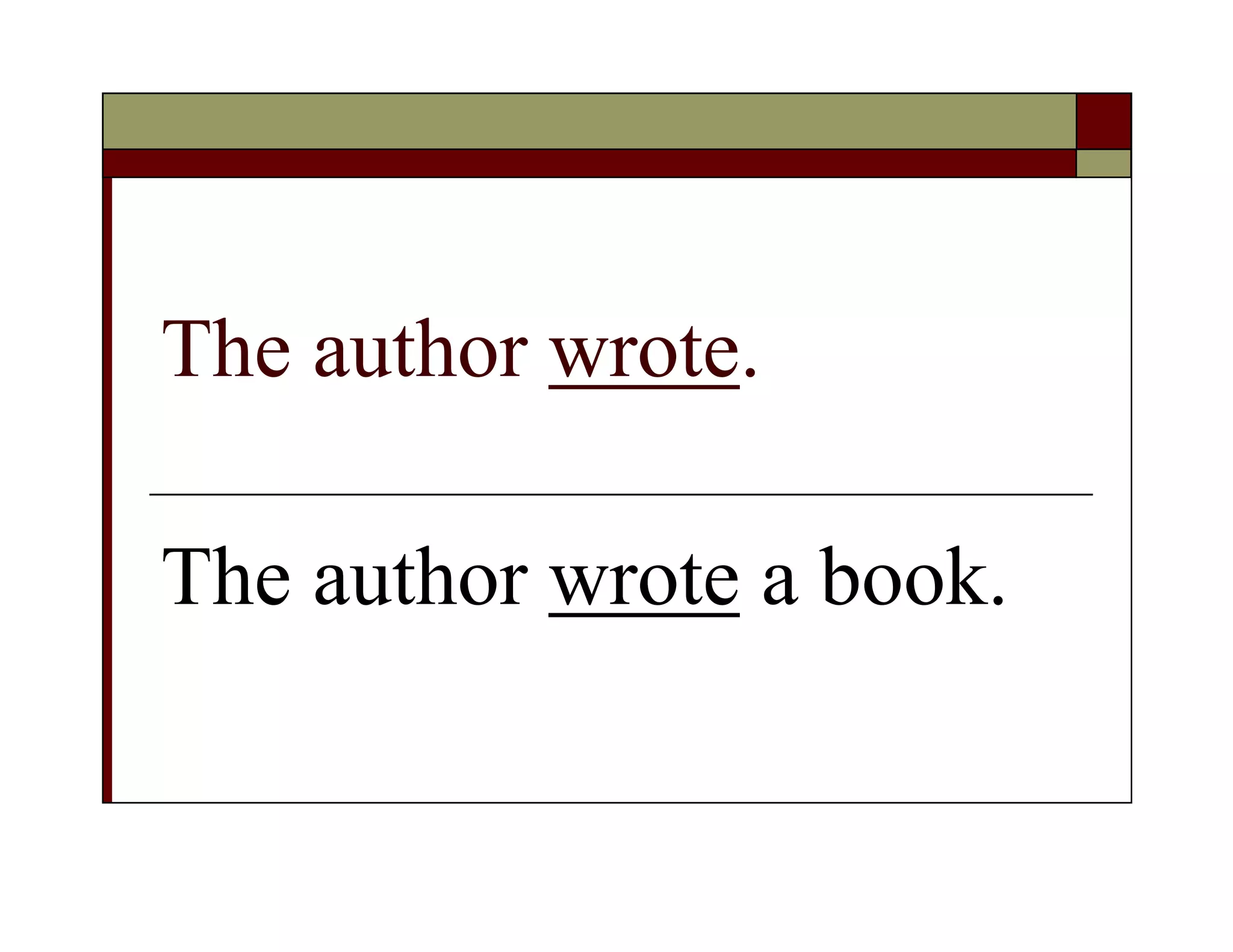
The author wrote.
The author wrote a book.
Direct Object
Only with an action verb can you have a direct
object!
Two key questions to ask yourself when finding
the direct object:
Who receives the action of the verb?
What receives the action of the verb?
If you have an answer, you have a direct object.
Direct object = T / No direct object = I
3. Transitive Verbs
A transitive verb has a direct object – a word that tells
who or what receives the action of the verb.
Only action verbs have direct objects!
Some sentences may have more than one direct
object; in this case, the sentence is said to have a
compound direct object.
Transitive Examples
She trusts her friend.
Who does she trust? = friend = direct object.
Maya Angelou wrote essays.
What did Maya Angelou write? = essays = direct object.
Intransitive Verbs
An intransitive verb
does not
have a direct object.
Intransitive Examples
The audience applauded.
The train stops here.
(Here tells where it stopped;
therefore, here is an adverb.)
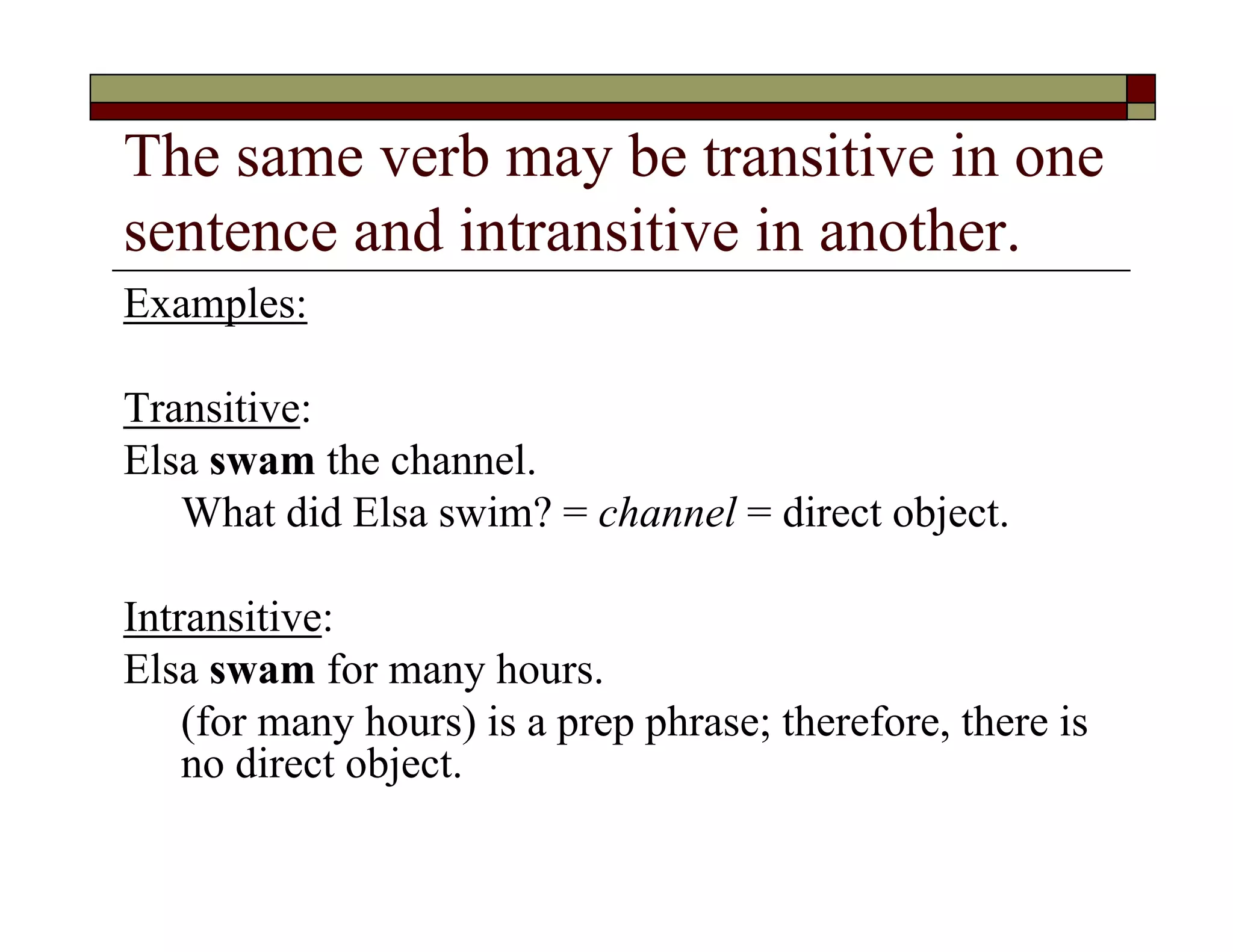
The same verb may be transitive in one
sentence and intransitive in another.
Examples:
Transitive:
Elsa swam the channel.
What did Elsa swim? = channel = direct object.
Intransitive:
Elsa swam for many hours.
(for many hours) is a prep phrase; therefore, there is
no direct object.
Action Verbs can be transitive
or intransitive.
All Linking Verbs are
intransitive.
A verb phrase may be
classified as transitive or
intransitive
and as Action or Linking
Not sure?
Check your dictionary! Most dictionaries group
the definitions of verbs according to whether
the verbs are used transitively (v.t.) or
intransitively (v.i.).

verbs.pdf

  • 1.
    Verbs A verb expressesaction or a state of being.
  • 2.
    Verbs are classifiedin 3 ways:  As helping or main verbs  As action or linking verbs  As transitive or intransitive verbs
  • 3.
    1. Main Verbsand Helping Verbs A helping verb may be separated from the main verb. A verb phrase consists of one main verb and one or more helping verbs.
  • 4.
    Examples  I amreading Gulliver’s Travels.  We should have been listening instead of talking.  Did she paint the house?
  • 5.
    Commonly Used HelpingVerbs Forms of BE am, is, are, was, were, be, being, been Forms of HAVE have, having, has, had Forms of DO do, does, did A modal is an auxiliary verb that is used to express an attitude toward the action or state of being of the main verb. MODALS can, could, may, might, must, ought, shall, should, will, would
  • 6.
    Not and thecontraction of n’t are never part of a verb phrase Instead, they are adverbs telling to what extent. We did not hear you. We didn’t hear you.
  • 7.
    2. Action Verbsand Linking Verbs An action verb expresses either physical or mental activity. A linking verb connects the subject to a word or word group that identifies or describes the subject. Such a word group is called a subject complement.
  • 8.
    Commonly Used LinkingVerbs Forms of Be be were shall have been should be being shall be will have been would be am will be can be could be is has been may be should have been are have been might be would have been was had been must be could have been
  • 9.
    Other Linking Verbs appearfeel look seem sound taste become grow remain smell stay turn Depending on how these words are used in a sentence, they can be classified as linking or action verbs.
  • 10.
    Determination of aLinking Verb To figure out if a verb is linking or action, substitute a form of the verb BE - the most common is was. If the sentence makes sense, the verb is most likely a linking verb. If the sentence doesn’t make sense, the verb is an action verb. Felt is the past form of feels which is on the linking/action verb list. Example of Linking: Joe felt calm at the seashore. - Replace the verb felt with was to see if the sentence makes sense: Joe was calm at the seashore. - The sentence makes sense, so the verb is classified as a linking verb. Example of Action: Joe felt the waving strands of kelp. - Replace the verb felt with was to see if the sentence makes sense: Joe was the waving strands of kelp. - The sentence doesn’t make sense, so the verb is classified as an action verb.
  • 11.
    The author wrote. Theauthor wrote a book.
  • 12.
    Direct Object Only withan action verb can you have a direct object! Two key questions to ask yourself when finding the direct object: Who receives the action of the verb? What receives the action of the verb? If you have an answer, you have a direct object. Direct object = T / No direct object = I
  • 13.
    3. Transitive Verbs Atransitive verb has a direct object – a word that tells who or what receives the action of the verb. Only action verbs have direct objects! Some sentences may have more than one direct object; in this case, the sentence is said to have a compound direct object.
  • 14.
    Transitive Examples She trustsher friend. Who does she trust? = friend = direct object. Maya Angelou wrote essays. What did Maya Angelou write? = essays = direct object.
  • 15.
    Intransitive Verbs An intransitiveverb does not have a direct object.
  • 16.
    Intransitive Examples The audienceapplauded. The train stops here. (Here tells where it stopped; therefore, here is an adverb.)
  • 17.
    The same verbmay be transitive in one sentence and intransitive in another. Examples: Transitive: Elsa swam the channel. What did Elsa swim? = channel = direct object. Intransitive: Elsa swam for many hours. (for many hours) is a prep phrase; therefore, there is no direct object.
  • 18.
    Action Verbs canbe transitive or intransitive. All Linking Verbs are intransitive.
  • 19.
    A verb phrasemay be classified as transitive or intransitive and as Action or Linking
  • 20.
    Not sure? Check yourdictionary! Most dictionaries group the definitions of verbs according to whether the verbs are used transitively (v.t.) or intransitively (v.i.).