Verbs
Report by Darren Tagle & Shaira dela Peña
What are verbs?
A verb is a word which
expresses an action/state
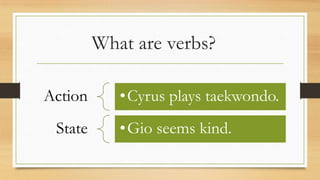
What are verbs?
Action •Cyrus plays taekwondo.
State •Gio seems kind.
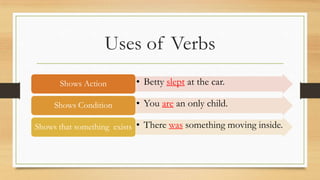
Uses of Verbs
• Betty slept at the car.Shows Action
• You are an only child.Shows Condition
• There was something moving inside.Shows that something exists
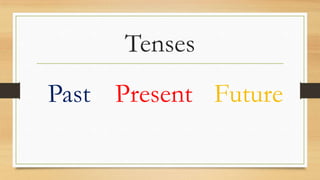
Tenses
Past Present Future
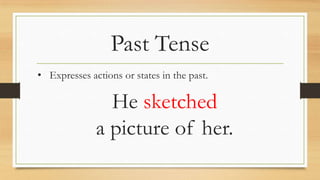
Past Tense
• Expresses actions or states in the past.
He sketched
a picture of her.
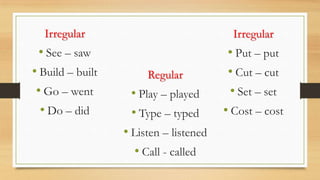
Regular
• Play – played
• Type – typed
• Listen – listened
• Call - called
Irregular
• See – saw
• Build – built
• Go – went
• Do – did
Irregular
• Put – put
• Cut – cut
• Set – set
• Cost – cost
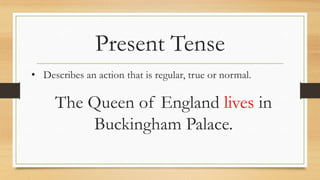
Present Tense
• Describes an action that is regular, true or normal.
The Queen of England lives in
Buckingham Palace.
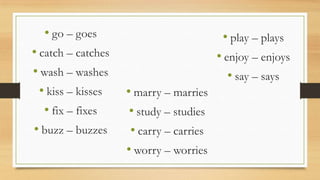
• marry – marries
• study – studies
• carry – carries
• worry – worries
• go – goes
• catch – catches
• wash – washes
• kiss – kisses
• fix – fixes
• buzz – buzzes
• play – plays
• enjoy – enjoys
• say – says
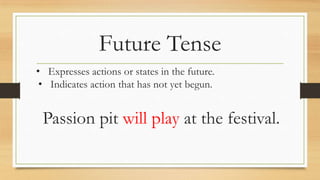
Future Tense
• Expresses actions or states in the future.
• Indicates action that has not yet begun.
Passion pit will play at the festival.
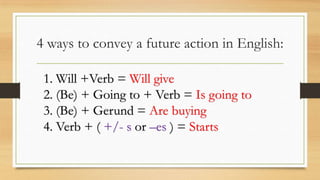
4 ways to convey a future action in English:
1. Will +Verb = Will give
2. (Be) + Going to + Verb = Is going to
3. (Be) + Gerund = Are buying
4. Verb + ( +/- s or –es ) = Starts
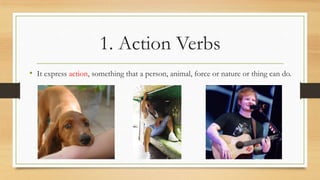
1. Action Verbs
• It express action, something that a person, animal, force or nature or thing can do.
1. Transitive
A verb that
takes an object
2 Kinds of Action Verbs
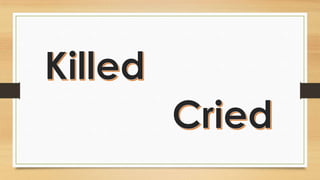
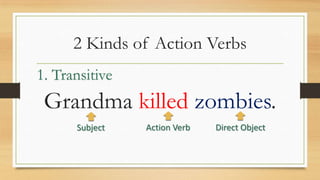
Grandma killed zombies.
1. Transitive
Action Verb Direct ObjectSubject
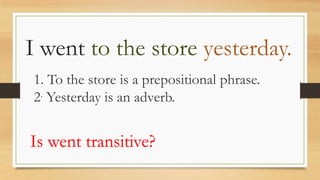
I went to the store yesterday.
1. To the store is a prepositional phrase.
2. Yesterday is an adverb.
Is went transitive?
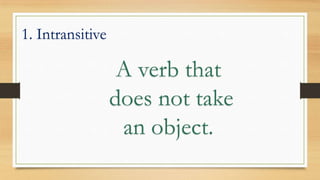
1. Intransitive
A verb that
does not take
an object.
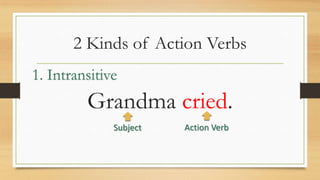
2 Kinds of Action Verbs
Grandma cried.
1. Intransitive
Action VerbSubject
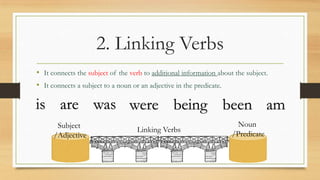
2. Linking Verbs
• It connects the subject of the verb to additional information about the subject.
• It connects a subject to a noun or an adjective in the predicate.
is are was were being been am
Linking Verbs
Subject
/Adjective
Noun
/Predicate
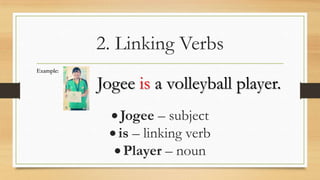
2. Linking Verbs
Jogee – subject
is – linking verb
Player – noun
Example:
Jogee is a volleyball player.
How would you know if it’s an
Action Verb or Linking Verb?
Ralph’s uncle is a chef with a taste for Italian food
Ralph’s uncle = a chef with a taste for Italian food
Linking Verbs
“Ising” is not even a thing that Ralph’s Uncle can do!
How would you know if it’s an
Action Verb or Linking Verb?
VJ was the last person to wake up.
VJ = the last person to wake up.
Linking Verbs
“Wasing” is not even a thing that VJ can do!
appear, feel, grow,
look, prove, remain, s
mell, sound, taste, &
turn.
How do you tell when they are action
verbs and when they are linking verbs?
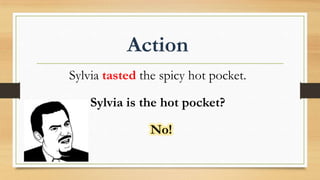
No!
Action
Sylvia tasted the spicy hot pocket.
Sylvia is the hot pocket?
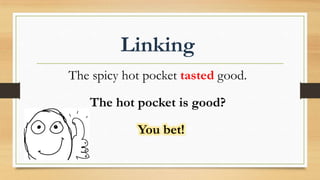
Linking
You bet!
The spicy hot pocket tasted good.
The hot pocket is good?
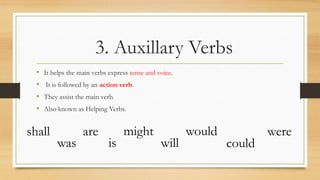
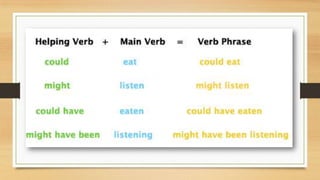
• It helps the main verbs express tense and voice.
• It is followed by an action verb.
• They assist the main verb.
• Also known as Helping Verbs.
3. Auxillary Verbs
shall
will
would
could
might
is
are
was
were
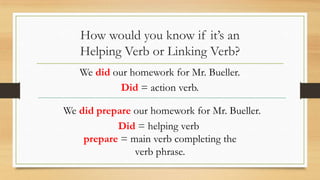
We did our homework for Mr. Bueller.
Did = action verb.
We did prepare our homework for Mr. Bueller.
Did = helping verb
prepare = main verb completing the
verb phrase.
How would you know if it’s an
Helping Verb or Linking Verb?
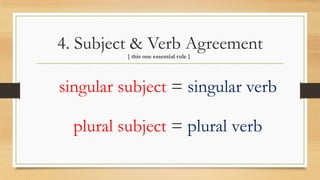
4. Subject & Verb Agreement
{ this one essential rule }
singular subject = singular verb
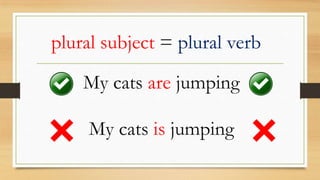
plural subject = plural verb
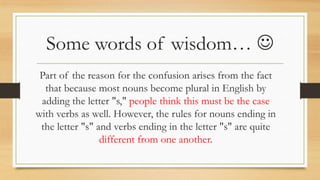
Some words of wisdom… 
Part of the reason for the confusion arises from the fact
that because most nouns become plural in English by
adding the letter "s," people think this must be the case
with verbs as well. However, the rules for nouns ending in
the letter "s" and verbs ending in the letter "s" are quite
different from one another.
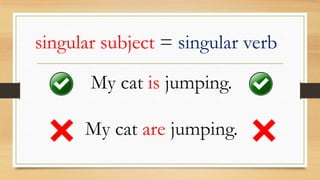
singular subject = singular verb
My cat are jumping.
My cat is jumping.
plural subject = plural verb
My cats is jumping
My cats are jumping
Resources:
-slideshare.net
-wikihow.com
-answers.com
-towson.edu
-thewritingsource.net
-testmagic.com
-ilmoamal.org
-studyskills-englishuse.blogspot.com
-ehow.com
-answers.yahoo.com
-englishclub.com
-ask.com
Etc…
Grammar & Composition in our Changing World
2nd year edition
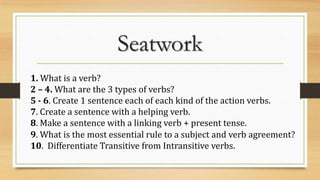
Seatwork
1. What is a verb?
2 – 4. What are the 3 types of verbs?
5 - 6. Create 1 sentence each of each kind of the action verbs.
7. Create a sentence with a helping verb.
8. Make a sentence with a linking verb + present tense.
9. What is the most essential rule to a subject and verb agreement?
10. Differentiate Transitive from Intransitive verbs.

All About Verbs (Brief Summary)

  • 1.
    Verbs Report by DarrenTagle & Shaira dela Peña
  • 4.
    What are verbs? Averb is a word which expresses an action/state
  • 5.
    What are verbs? Action•Cyrus plays taekwondo. State •Gio seems kind.
  • 6.
    Uses of Verbs •Betty slept at the car.Shows Action • You are an only child.Shows Condition • There was something moving inside.Shows that something exists
  • 7.
  • 8.
    Past Tense • Expressesactions or states in the past. He sketched a picture of her.
  • 9.
    Regular • Play –played • Type – typed • Listen – listened • Call - called Irregular • See – saw • Build – built • Go – went • Do – did Irregular • Put – put • Cut – cut • Set – set • Cost – cost
  • 10.
    Present Tense • Describesan action that is regular, true or normal. The Queen of England lives in Buckingham Palace.
  • 11.
    • marry –marries • study – studies • carry – carries • worry – worries • go – goes • catch – catches • wash – washes • kiss – kisses • fix – fixes • buzz – buzzes • play – plays • enjoy – enjoys • say – says
  • 12.
    Future Tense • Expressesactions or states in the future. • Indicates action that has not yet begun. Passion pit will play at the festival.
  • 13.
    4 ways toconvey a future action in English: 1. Will +Verb = Will give 2. (Be) + Going to + Verb = Is going to 3. (Be) + Gerund = Are buying 4. Verb + ( +/- s or –es ) = Starts
  • 14.
    1. Action Verbs •It express action, something that a person, animal, force or nature or thing can do.
  • 16.
    1. Transitive A verbthat takes an object
  • 17.
    2 Kinds ofAction Verbs Grandma killed zombies. 1. Transitive Action Verb Direct ObjectSubject
  • 18.
    I went tothe store yesterday. 1. To the store is a prepositional phrase. 2. Yesterday is an adverb. Is went transitive?
  • 19.
    1. Intransitive A verbthat does not take an object.
  • 20.
    2 Kinds ofAction Verbs Grandma cried. 1. Intransitive Action VerbSubject
  • 21.
    2. Linking Verbs •It connects the subject of the verb to additional information about the subject. • It connects a subject to a noun or an adjective in the predicate. is are was were being been am Linking Verbs Subject /Adjective Noun /Predicate
  • 22.
    2. Linking Verbs Jogee– subject is – linking verb Player – noun Example: Jogee is a volleyball player.
  • 23.
    How would youknow if it’s an Action Verb or Linking Verb? Ralph’s uncle is a chef with a taste for Italian food Ralph’s uncle = a chef with a taste for Italian food Linking Verbs “Ising” is not even a thing that Ralph’s Uncle can do!
  • 24.
    How would youknow if it’s an Action Verb or Linking Verb? VJ was the last person to wake up. VJ = the last person to wake up. Linking Verbs “Wasing” is not even a thing that VJ can do!
  • 25.
    appear, feel, grow, look,prove, remain, s mell, sound, taste, & turn. How do you tell when they are action verbs and when they are linking verbs?
  • 26.
    No! Action Sylvia tasted thespicy hot pocket. Sylvia is the hot pocket?
  • 27.
    Linking You bet! The spicyhot pocket tasted good. The hot pocket is good?
  • 28.
    • It helpsthe main verbs express tense and voice. • It is followed by an action verb. • They assist the main verb. • Also known as Helping Verbs. 3. Auxillary Verbs shall will would could might is are was were
  • 29.
    We did ourhomework for Mr. Bueller. Did = action verb. We did prepare our homework for Mr. Bueller. Did = helping verb prepare = main verb completing the verb phrase. How would you know if it’s an Helping Verb or Linking Verb?
  • 31.
    4. Subject &Verb Agreement { this one essential rule } singular subject = singular verb plural subject = plural verb
  • 32.
    Some words ofwisdom…  Part of the reason for the confusion arises from the fact that because most nouns become plural in English by adding the letter "s," people think this must be the case with verbs as well. However, the rules for nouns ending in the letter "s" and verbs ending in the letter "s" are quite different from one another.
  • 33.
    singular subject =singular verb My cat are jumping. My cat is jumping.
  • 34.
    plural subject =plural verb My cats is jumping My cats are jumping
  • 35.
  • 36.
    Seatwork 1. What isa verb? 2 – 4. What are the 3 types of verbs? 5 - 6. Create 1 sentence each of each kind of the action verbs. 7. Create a sentence with a helping verb. 8. Make a sentence with a linking verb + present tense. 9. What is the most essential rule to a subject and verb agreement? 10. Differentiate Transitive from Intransitive verbs.