VentilatorModes
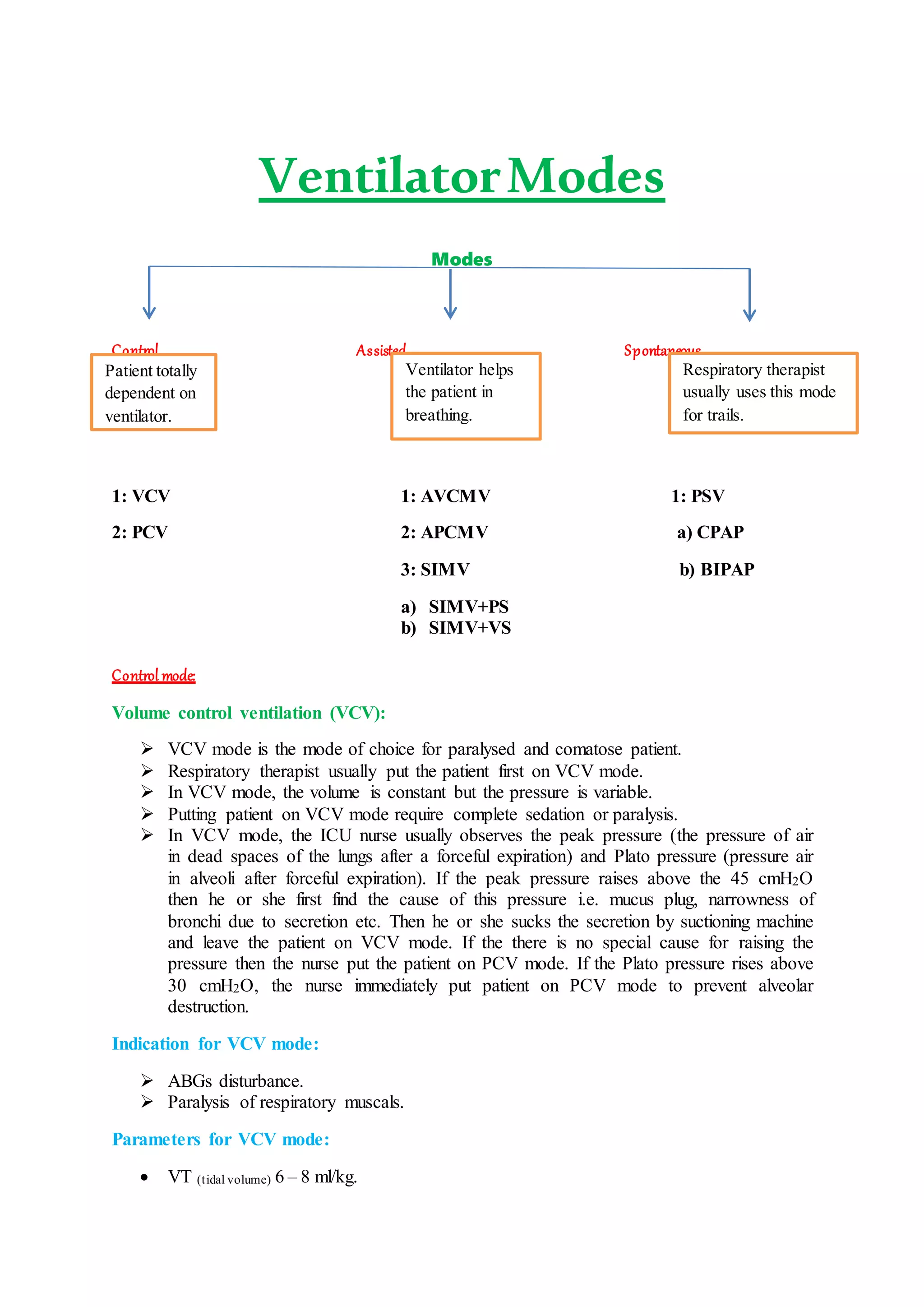
Modes
Control Assisted Spontaneous
1: VCV 1: AVCMV 1: PSV
2: PCV 2: APCMV a) CPAP
3: SIMV b) BIPAP
a) SIMV+PS
b) SIMV+VS
Control mode:
Volume control ventilation (VCV):
 VCV mode is the mode of choice for paralysed and comatose patient.
 Respiratory therapist usually put the patient first on VCV mode.
 In VCV mode, the volume is constant but the pressure is variable.
 Putting patient on VCV mode require complete sedation or paralysis.
 In VCV mode, the ICU nurse usually observes the peak pressure (the pressure of air
in dead spaces of the lungs after a forceful expiration) and Plato pressure (pressure air
in alveoli after forceful expiration). If the peak pressure raises above the 45 cmH2O
then he or she first find the cause of this pressure i.e. mucus plug, narrowness of
bronchi due to secretion etc. Then he or she sucks the secretion by suctioning machine
and leave the patient on VCV mode. If the there is no special cause for raising the
pressure then the nurse put the patient on PCV mode. If the Plato pressure rises above
30 cmH2O, the nurse immediately put patient on PCV mode to prevent alveolar
destruction.
Indication for VCV mode:
 ABGs disturbance.
 Paralysis of respiratory muscals.
Parameters for VCV mode:
 VT (tidal volume) 6 – 8 ml/kg.
Patient totally
dependent on
ventilator.
Ventilator helps
the patient in
breathing.
Respiratory therapist
usually uses this mode
for trails.
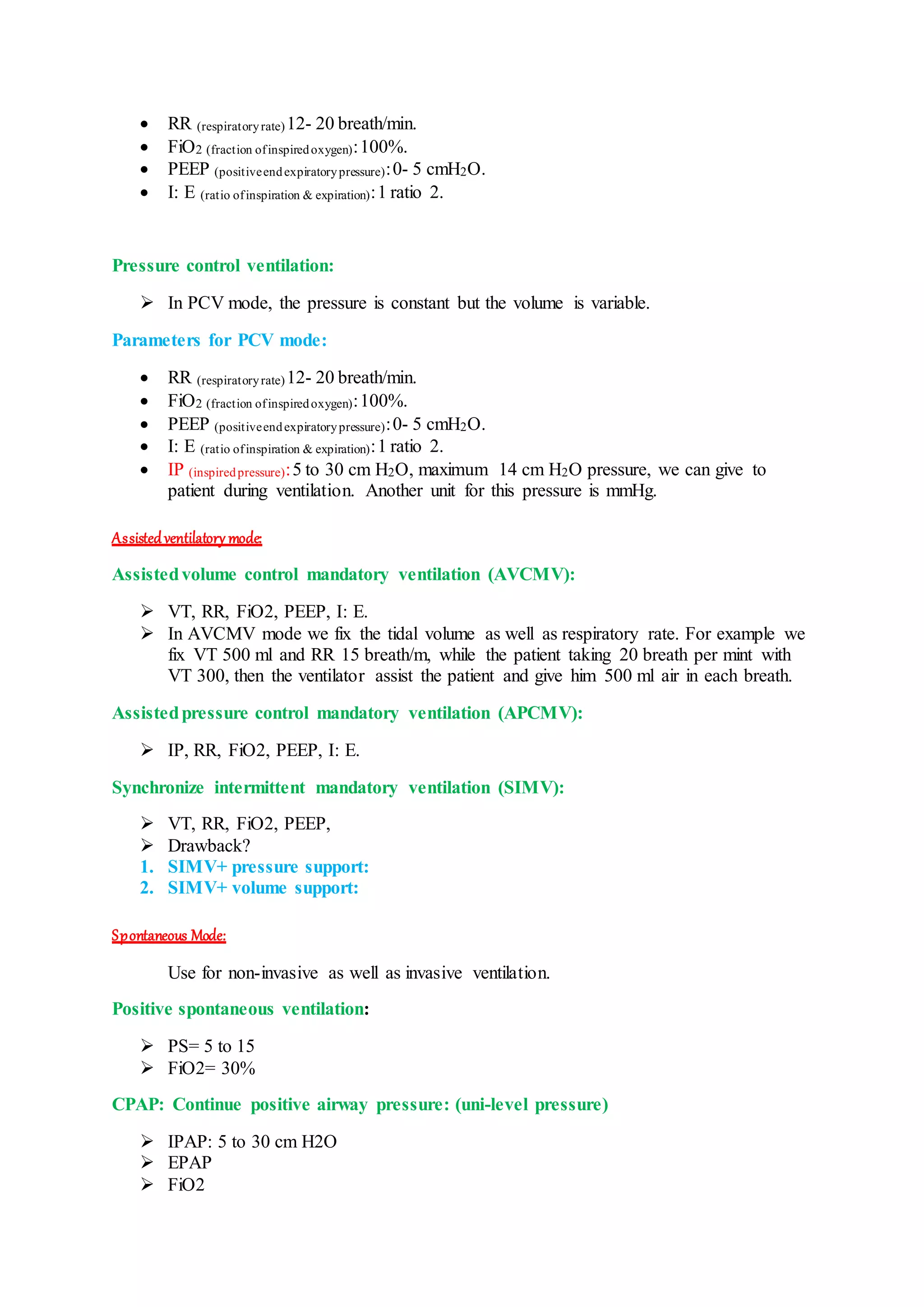
 RR (respiratoryrate)12- 20 breath/min.
 FiO2 (fraction ofinspiredoxygen):100%.
 PEEP (positiveendexpiratorypressure):0- 5 cmH2O.
 I: E (ratio ofinspiration & expiration):1 ratio 2.
Pressure control ventilation:
 In PCV mode, the pressure is constant but the volume is variable.
Parameters for PCV mode:
 RR (respiratoryrate)12- 20 breath/min.
 FiO2 (fraction ofinspiredoxygen):100%.
 PEEP (positiveendexpiratorypressure):0- 5 cmH2O.
 I: E (ratio ofinspiration & expiration):1 ratio 2.
 IP (inspiredpressure):5 to 30 cm H2O, maximum 14 cm H2O pressure, we can give to
patient during ventilation. Another unit for this pressure is mmHg.
Assistedventilatory mode:
Assistedvolume control mandatory ventilation (AVCMV):
 VT, RR, FiO2, PEEP, I: E.
 In AVCMV mode we fix the tidal volume as well as respiratory rate. For example we
fix VT 500 ml and RR 15 breath/m, while the patient taking 20 breath per mint with
VT 300, then the ventilator assist the patient and give him 500 ml air in each breath.
Assistedpressure control mandatory ventilation (APCMV):
 IP, RR, FiO2, PEEP, I: E.
Synchronize intermittent mandatory ventilation (SIMV):
 VT, RR, FiO2, PEEP,
 Drawback?
1. SIMV+ pressure support:
2. SIMV+ volume support:
Spontaneous Mode:
Use for non-invasive as well as invasive ventilation.
Positive spontaneous ventilation:
 PS= 5 to 15
 FiO2= 30%
CPAP: Continue positive airway pressure: (uni-level pressure)
 IPAP: 5 to 30 cm H2O
 EPAP
 FiO2
 Indication: type 1 respiratory failure (decrease oxygen saturation), CHF, pulmonary
edema.
BIPAP: bi-level positive airway pressure:
 IPAP: 5 to 30 cm H2O
 EPAP: 4 to 14 cm H2O
 Indication: CO2 poising, chronic asthma, ABGs disturbance, Type 2 respiratory
failure (decrease oxygen saturation as well as increase carbon dioxides.
Imrankhansalarzai.

Ventilator modes

  • 1.
    VentilatorModes Modes Control Assisted Spontaneous 1:VCV 1: AVCMV 1: PSV 2: PCV 2: APCMV a) CPAP 3: SIMV b) BIPAP a) SIMV+PS b) SIMV+VS Control mode: Volume control ventilation (VCV):  VCV mode is the mode of choice for paralysed and comatose patient.  Respiratory therapist usually put the patient first on VCV mode.  In VCV mode, the volume is constant but the pressure is variable.  Putting patient on VCV mode require complete sedation or paralysis.  In VCV mode, the ICU nurse usually observes the peak pressure (the pressure of air in dead spaces of the lungs after a forceful expiration) and Plato pressure (pressure air in alveoli after forceful expiration). If the peak pressure raises above the 45 cmH2O then he or she first find the cause of this pressure i.e. mucus plug, narrowness of bronchi due to secretion etc. Then he or she sucks the secretion by suctioning machine and leave the patient on VCV mode. If the there is no special cause for raising the pressure then the nurse put the patient on PCV mode. If the Plato pressure rises above 30 cmH2O, the nurse immediately put patient on PCV mode to prevent alveolar destruction. Indication for VCV mode:  ABGs disturbance.  Paralysis of respiratory muscals. Parameters for VCV mode:  VT (tidal volume) 6 – 8 ml/kg. Patient totally dependent on ventilator. Ventilator helps the patient in breathing. Respiratory therapist usually uses this mode for trails.
  • 2.
     RR (respiratoryrate)12-20 breath/min.  FiO2 (fraction ofinspiredoxygen):100%.  PEEP (positiveendexpiratorypressure):0- 5 cmH2O.  I: E (ratio ofinspiration & expiration):1 ratio 2. Pressure control ventilation:  In PCV mode, the pressure is constant but the volume is variable. Parameters for PCV mode:  RR (respiratoryrate)12- 20 breath/min.  FiO2 (fraction ofinspiredoxygen):100%.  PEEP (positiveendexpiratorypressure):0- 5 cmH2O.  I: E (ratio ofinspiration & expiration):1 ratio 2.  IP (inspiredpressure):5 to 30 cm H2O, maximum 14 cm H2O pressure, we can give to patient during ventilation. Another unit for this pressure is mmHg. Assistedventilatory mode: Assistedvolume control mandatory ventilation (AVCMV):  VT, RR, FiO2, PEEP, I: E.  In AVCMV mode we fix the tidal volume as well as respiratory rate. For example we fix VT 500 ml and RR 15 breath/m, while the patient taking 20 breath per mint with VT 300, then the ventilator assist the patient and give him 500 ml air in each breath. Assistedpressure control mandatory ventilation (APCMV):  IP, RR, FiO2, PEEP, I: E. Synchronize intermittent mandatory ventilation (SIMV):  VT, RR, FiO2, PEEP,  Drawback? 1. SIMV+ pressure support: 2. SIMV+ volume support: Spontaneous Mode: Use for non-invasive as well as invasive ventilation. Positive spontaneous ventilation:  PS= 5 to 15  FiO2= 30% CPAP: Continue positive airway pressure: (uni-level pressure)  IPAP: 5 to 30 cm H2O  EPAP  FiO2
  • 3.
     Indication: type1 respiratory failure (decrease oxygen saturation), CHF, pulmonary edema. BIPAP: bi-level positive airway pressure:  IPAP: 5 to 30 cm H2O  EPAP: 4 to 14 cm H2O  Indication: CO2 poising, chronic asthma, ABGs disturbance, Type 2 respiratory failure (decrease oxygen saturation as well as increase carbon dioxides.
  • 4.