Veins : Lower Limb

By:Archan Diviti
Group-1
Veins
 In the circulatory system, veins are blood
vessels that carry blood toward the heart.
 Most veins carry deoxygenated blood from the
tissues back to the heart; exceptions are
the pulmonary and umbilical veins.
 Veins differ from arteries in structure and function;
for example, arteries are more muscular than
veins, veins are often closer to the skin and
contain valves to help keep blood flowing toward
the heart, while arteries carry blood away from
the heart.
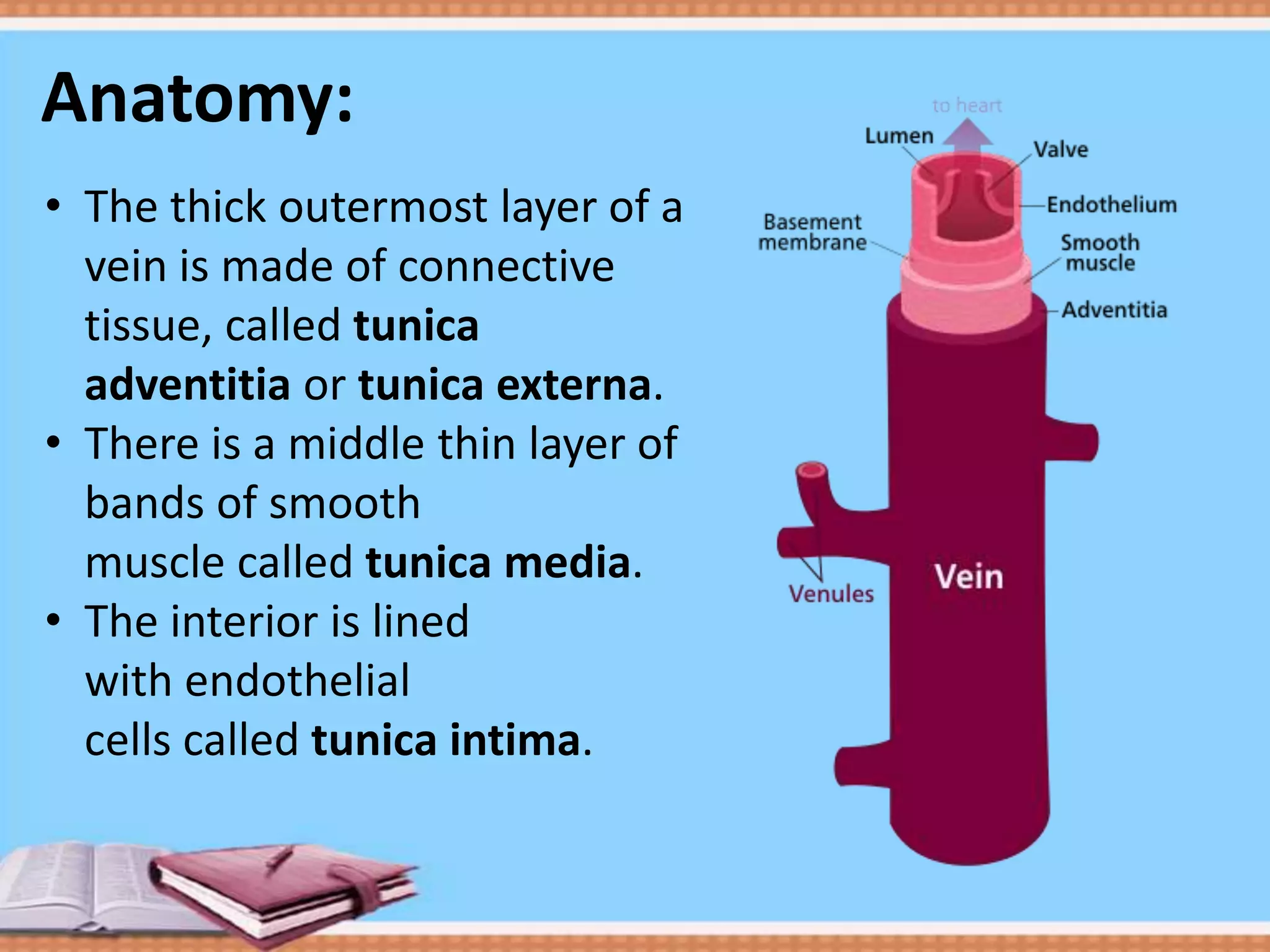
Anatomy:
• The thick outermost layer of a
vein is made of connective
tissue, called tunica
adventitia or tunica externa.
• There is a middle thin layer of
bands of smooth
muscle called tunica media.
• The interior is lined
with endothelial
cells called tunica intima.
Classification
• Superficial veins are those whose course is close to
the surface of the body, and have no corresponding
arteries.
• Deep veins are deeper in the body and have
corresponding arteries.
• Communicating veins (or perforator veins) are veins
that directly connect superficial veins to deep veins.
Eg:-Giacomini vein.
• Pulmonary veins are a set of veins that deliver
oxygenated blood from the lungs to the heart.
• Systemic veins drain the tissues of the body and
deliver deoxygenated blood to the heart.
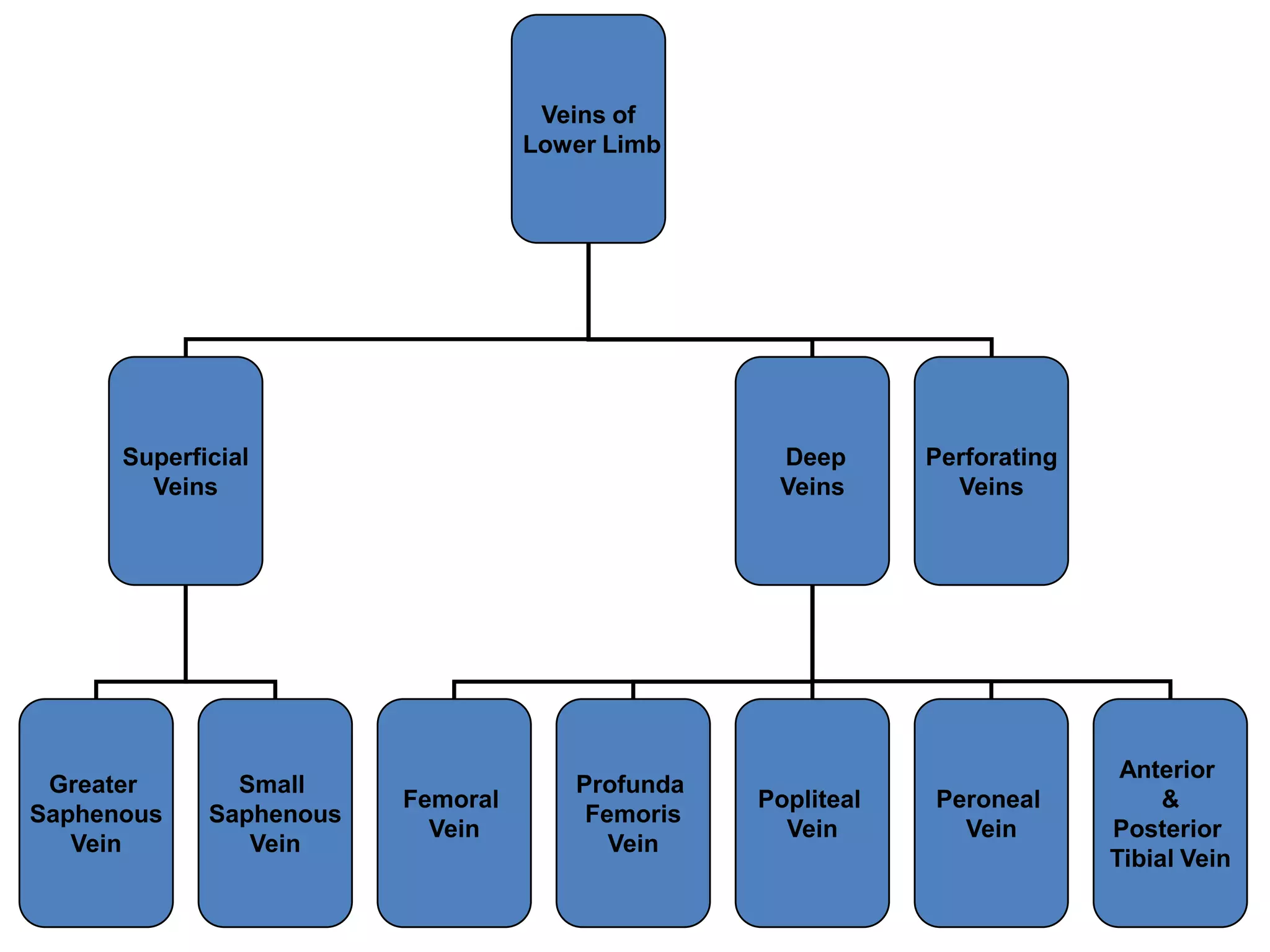
Veins of
Lower Limb

Superficial
Veins

Greater
Saphenous
Vein

Small
Saphenous
Vein

Deep
Veins

Femoral
Vein

Profunda
Femoris
Vein

Popliteal
Vein

Perforating
Veins

Peroneal
Vein

Anterior
&
Posterior
Tibial Vein
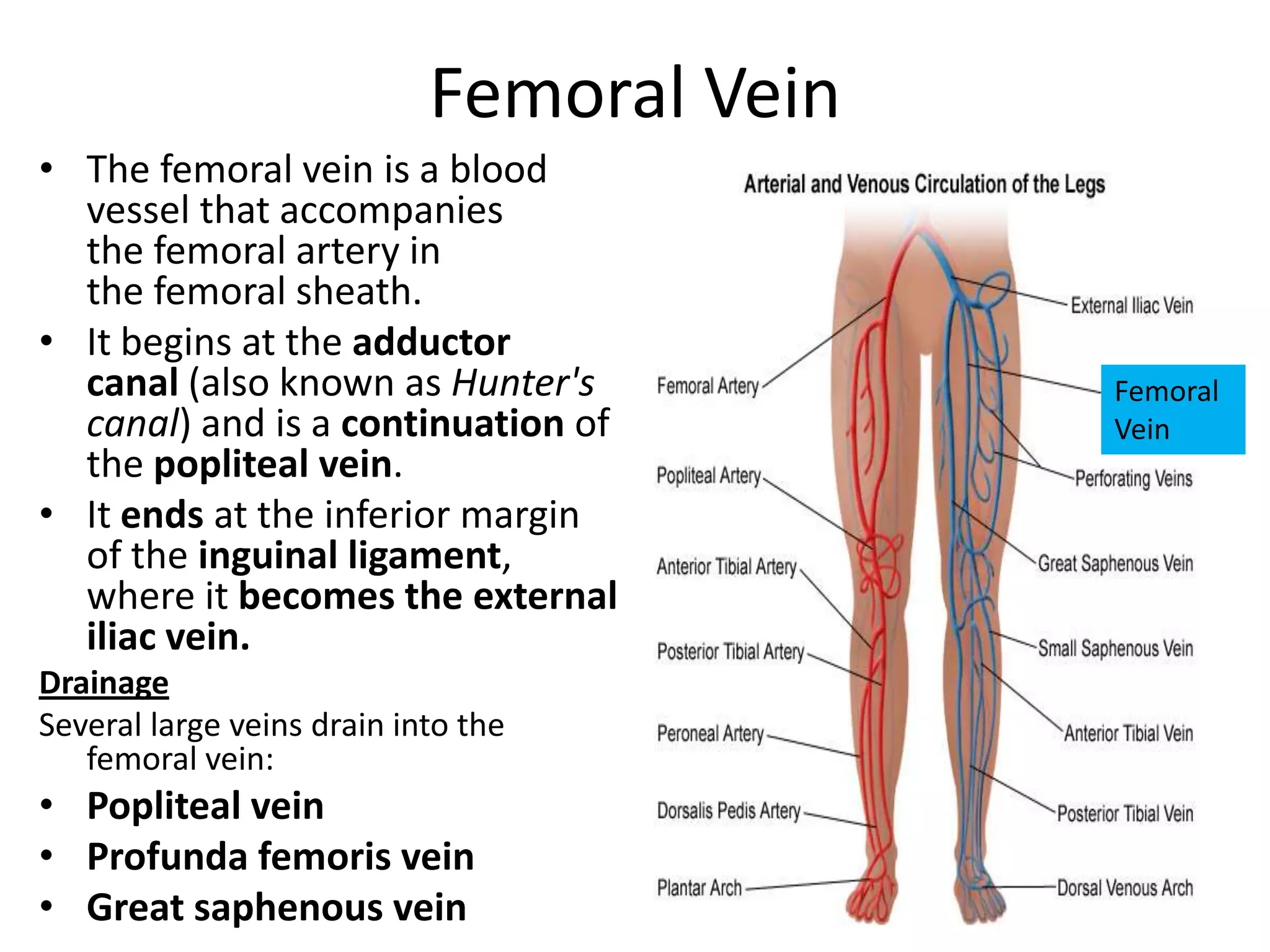
Femoral Vein
• The femoral vein is a blood
vessel that accompanies
the femoral artery in
the femoral sheath.
• It begins at the adductor
canal (also known as Hunter's
canal) and is a continuation of
the popliteal vein.
• It ends at the inferior margin
of the inguinal ligament,
where it becomes the external
iliac vein.
Drainage
Several large veins drain into the
femoral vein:

• Popliteal vein
• Profunda femoris vein
• Great saphenous vein

Femoral
Vein
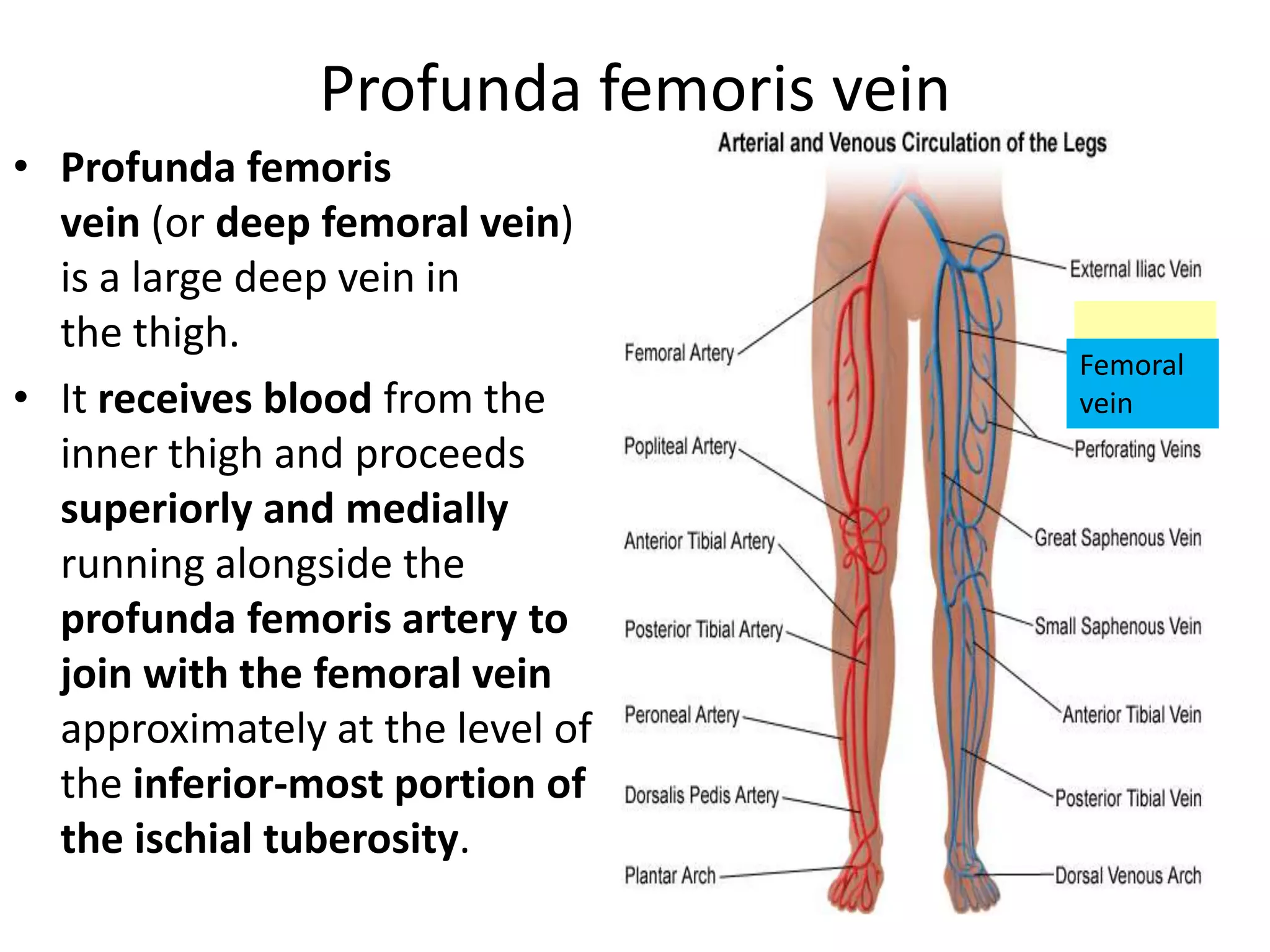
Profunda femoris vein
• Profunda femoris
vein (or deep femoral vein)
is a large deep vein in
the thigh.
• It receives blood from the
inner thigh and proceeds
superiorly and medially
running alongside the
profunda femoris artery to
join with the femoral vein
approximately at the level of
the inferior-most portion of
the ischial tuberosity.

Femoral
vein
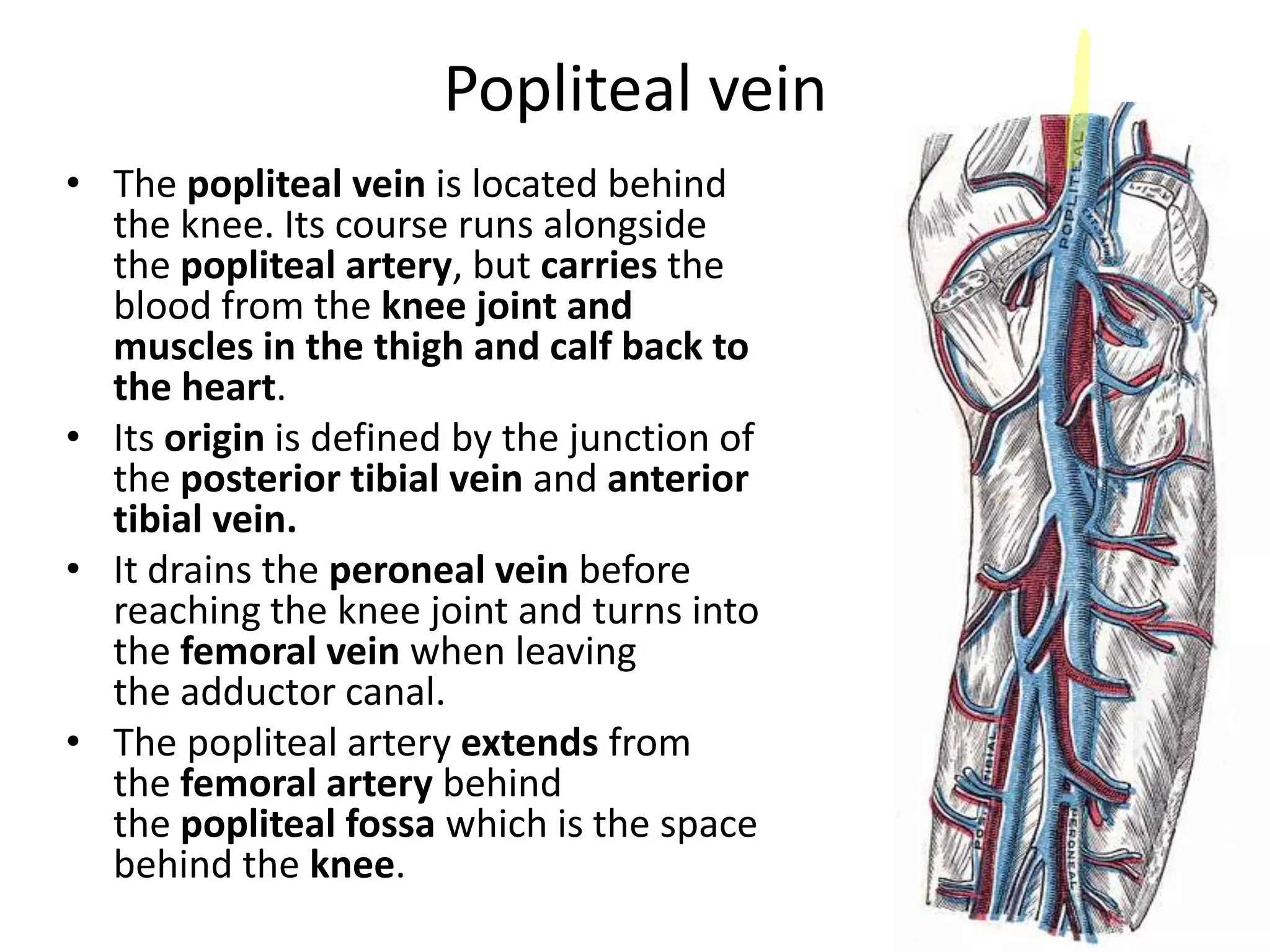
Popliteal vein
• The popliteal vein is located behind
the knee. Its course runs alongside
the popliteal artery, but carries the
blood from the knee joint and
muscles in the thigh and calf back to
the heart.
• Its origin is defined by the junction of
the posterior tibial vein and anterior
tibial vein.
• It drains the peroneal vein before
reaching the knee joint and turns into
the femoral vein when leaving
the adductor canal.
• The popliteal artery extends from
the femoral artery behind
the popliteal fossa which is the space
behind the knee.
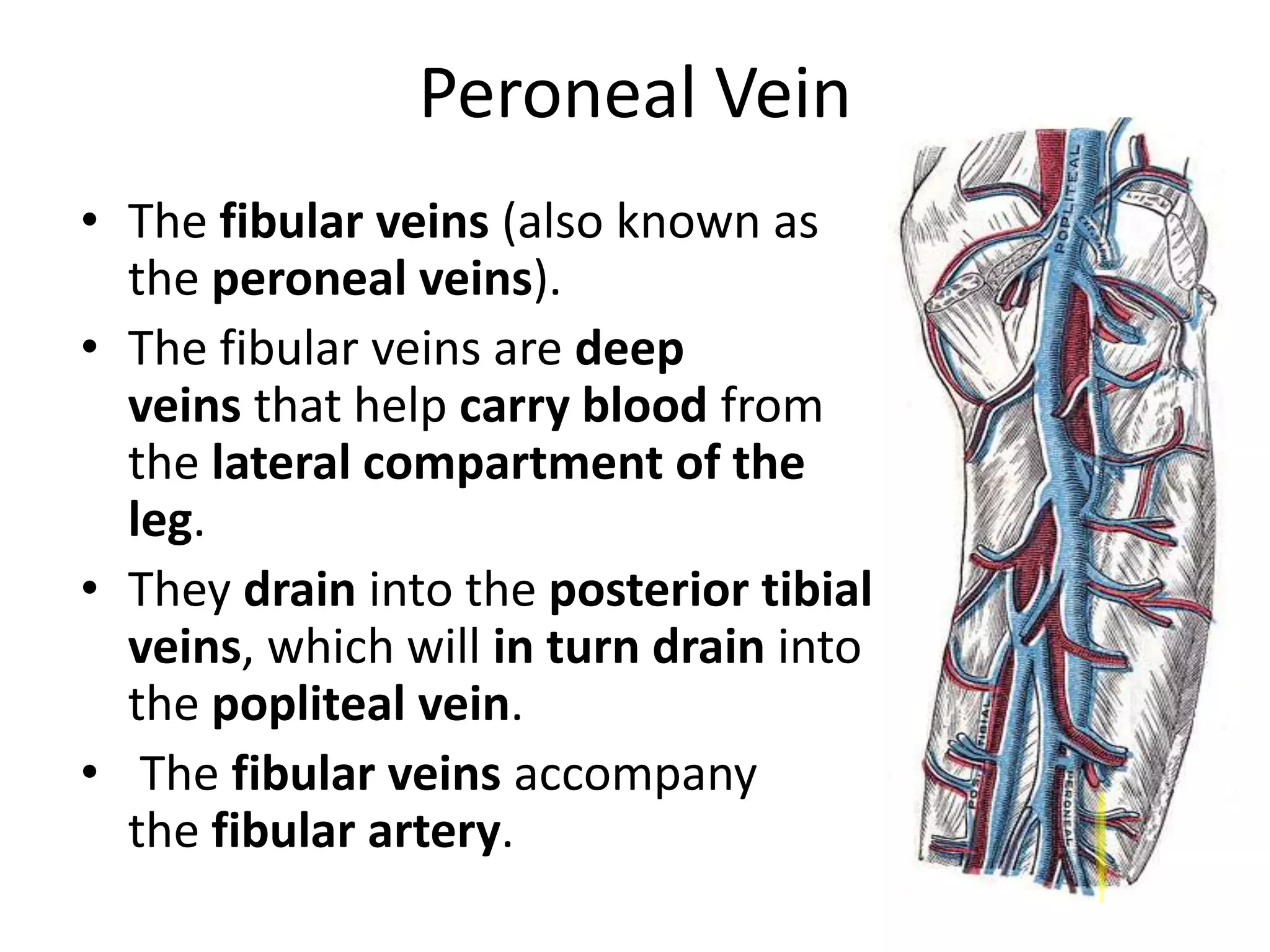
Peroneal Vein
• The fibular veins (also known as
the peroneal veins).
• The fibular veins are deep
veins that help carry blood from
the lateral compartment of the
leg.
• They drain into the posterior tibial
veins, which will in turn drain into
the popliteal vein.
• The fibular veins accompany
the fibular artery.
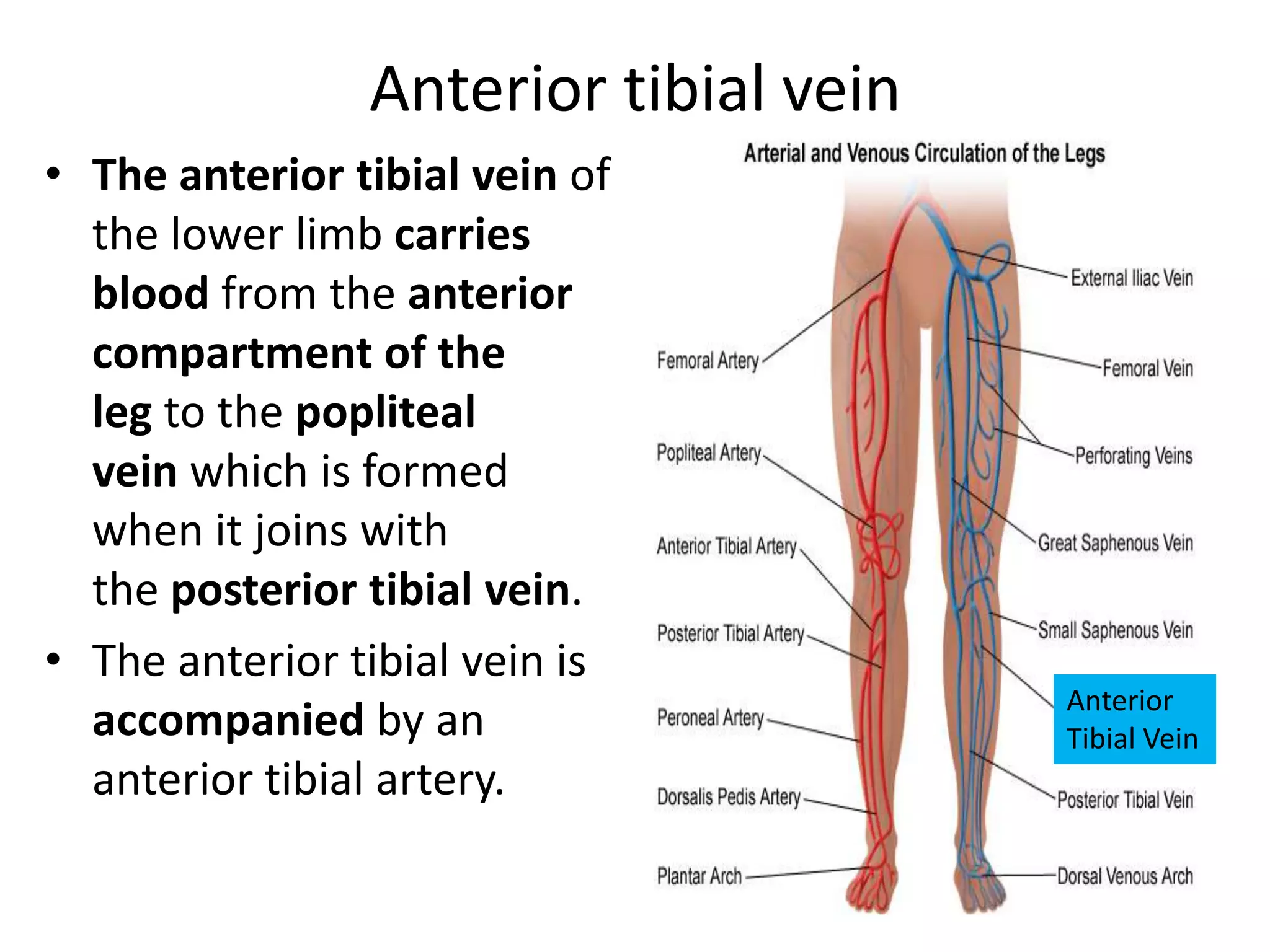
Anterior tibial vein
• The anterior tibial vein of
the lower limb carries
blood from the anterior
compartment of the
leg to the popliteal
vein which is formed
when it joins with
the posterior tibial vein.
• The anterior tibial vein is
accompanied by an
anterior tibial artery.

Anterior
Tibial Vein
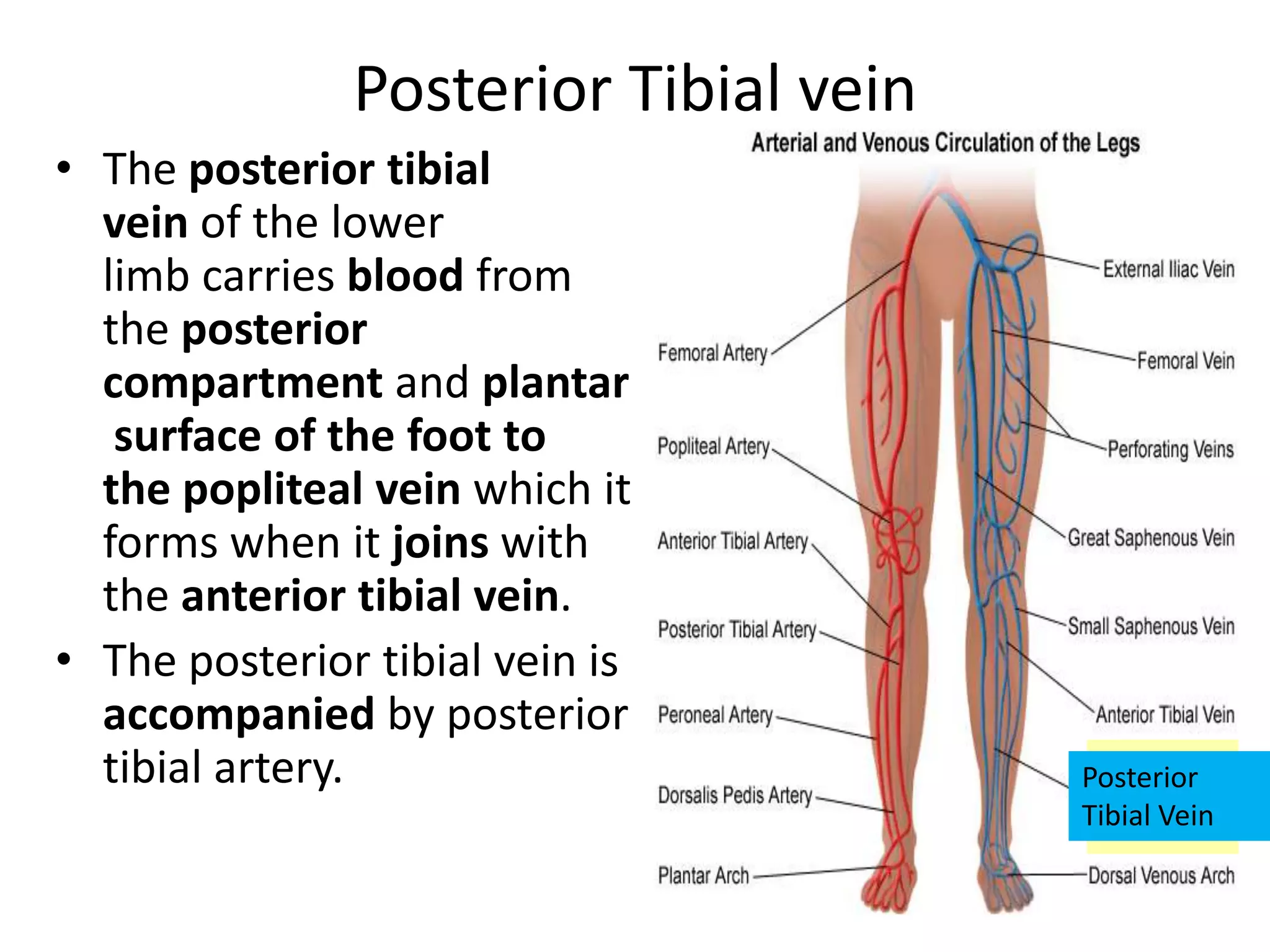
Posterior Tibial vein
• The posterior tibial
vein of the lower
limb carries blood from
the posterior
compartment and plantar
surface of the foot to
the popliteal vein which it
forms when it joins with
the anterior tibial vein.
• The posterior tibial vein is
accompanied by posterior
tibial artery.

Posterior
Tibial Vein
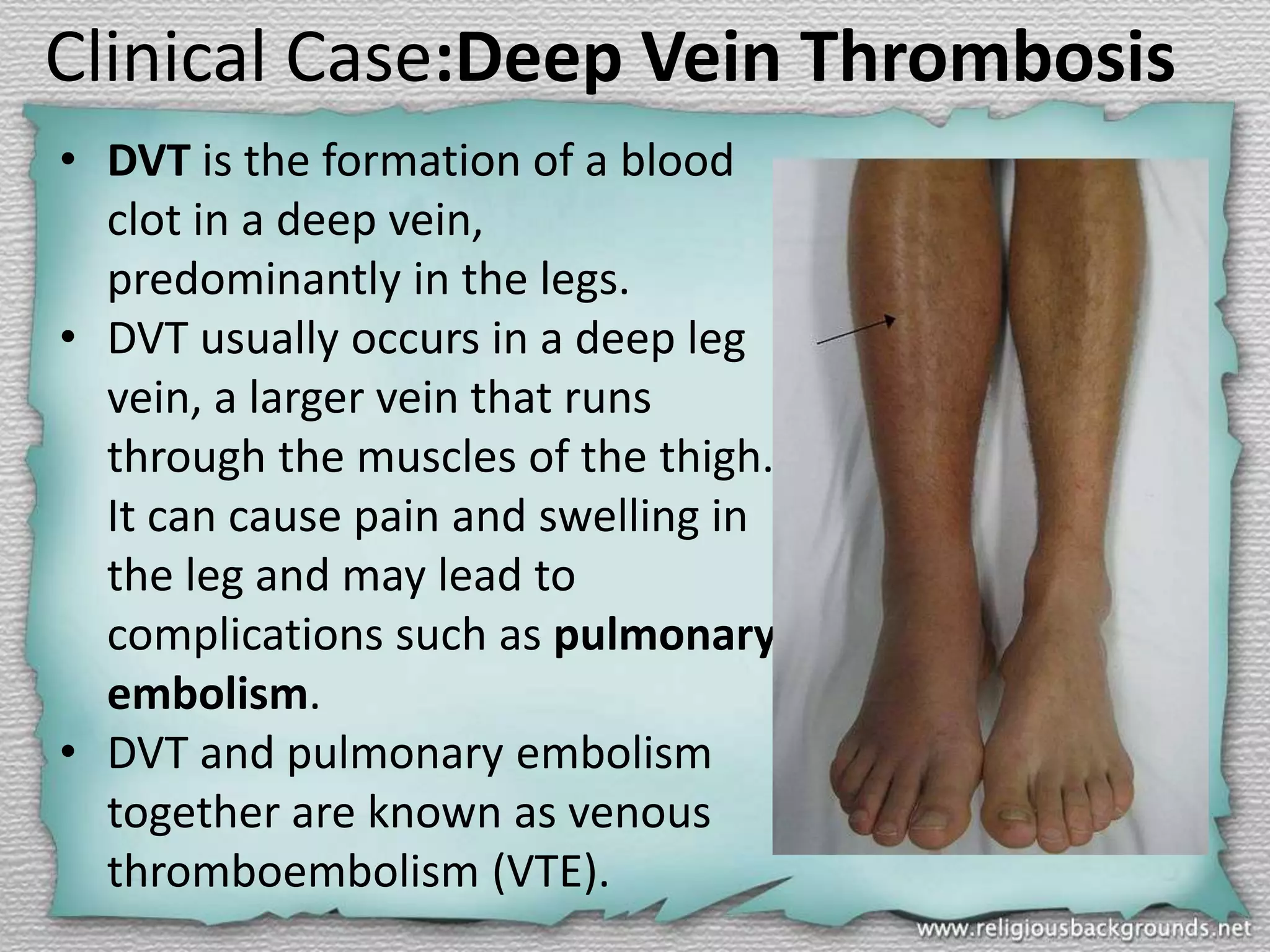
Clinical Case:Deep Vein Thrombosis
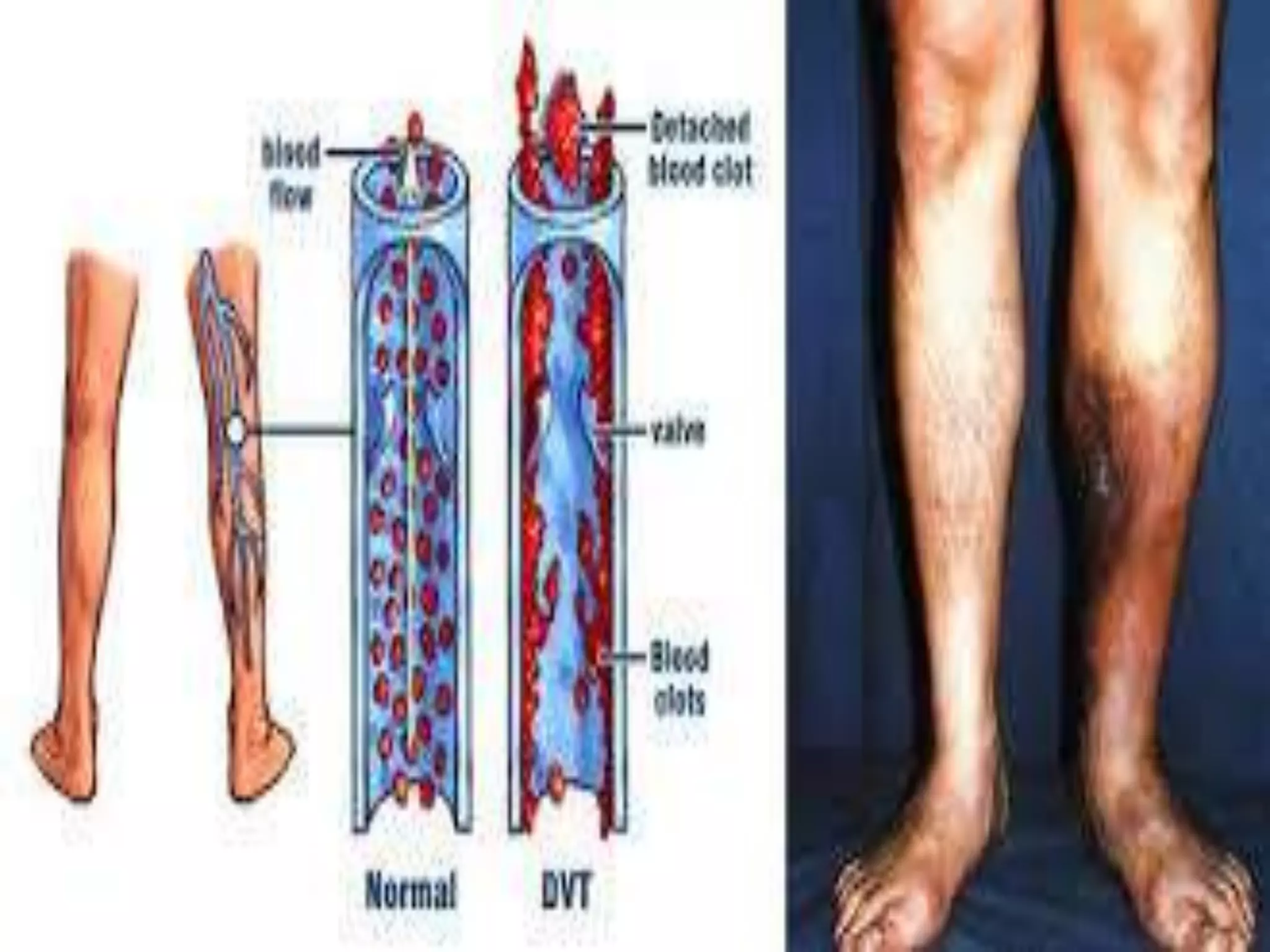
• DVT is the formation of a blood
clot in a deep vein,
predominantly in the legs.
• DVT usually occurs in a deep leg
vein, a larger vein that runs
through the muscles of the thigh.
It can cause pain and swelling in
the leg and may lead to
complications such as pulmonary
embolism.
• DVT and pulmonary embolism
together are known as venous
thromboembolism (VTE).
Signs and Symptoms
 Common signs and symptoms of DVT include
pain, swelling, warmth, redness or discoloration,
and distention of surface veins, although about
half of those with the condition have no
symptoms.
 Symptoms are more often due to other causes,
such as cellulitis, Baker's cyst, musculoskeletal
injury, or lymphedema.
 Other differential diagnoses include hematoma
and connective tissue disorders.
 The leg is usually painful, cyanosed (blue from
lack of oxygen) and edematous (filled with fluid),
which may result in venous gangrene.
Causes
• Anyone can develop it but it becomes more
common with age. As well as age, risk
factors include:
1. Previous venous thromboembolism.
2. A family history of thrombosis
3. Medical conditions such as cancer and
heart failure
4. Inactivity (for example, after an operation)
5. Being overweight or obese.
• In upper-extremity DVT, the most important
risk factor is having a central venous
catheter, and thoracic outlet syndrome also
increases risk.
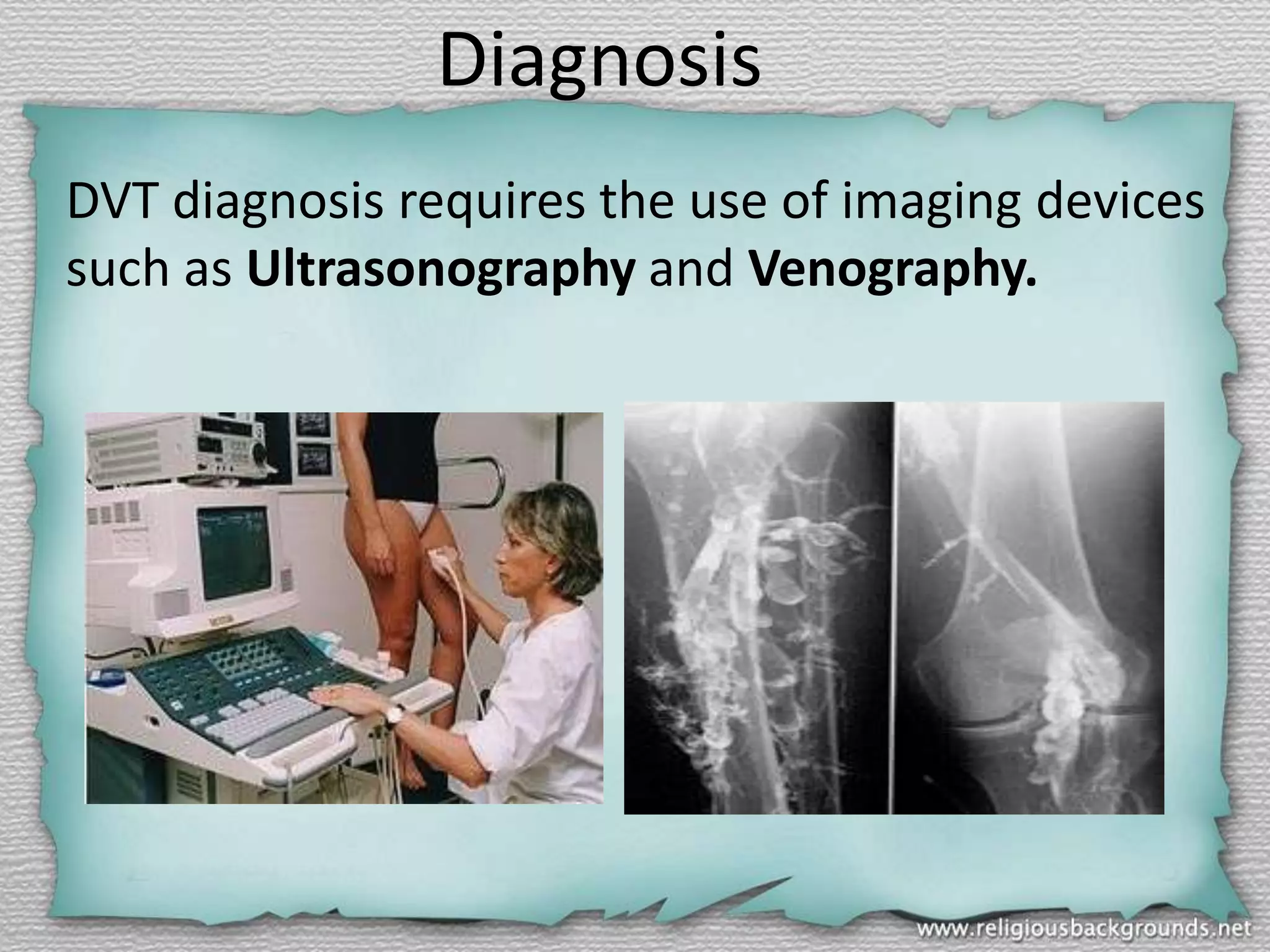
Diagnosis
DVT diagnosis requires the use of imaging devices
such as Ultrasonography and Venography.
Prevention and Treatment
• There are several things you can do to prevent
DVT occurring, such as stopping smoking, losing
weight if you are overweight and walking
regularly to improve the circulation in your legs
• Walking and calf exercises reduce venous stasis
because leg muscle contractions compress the
veins and pump blood up towards the heart.
• Anticoagulation, which prevents further
coagulation but does not act on existing clots, is
the standard treatment for DVT.
• Two different types of anticoagulants are
used to treat DVT:
• (a)Heparin and (b)Warfarin.
• Compression stockings help prevent calf
pain and swelling and lower the risk of ulcers
developing after having a DVT.
• As well as wearing compression stockings,
you might be advised to raise your leg
whenever you are resting. This helps to
relieve the pressure in the veins of the calf
and stops blood and fluid pooling in the calf
itself.
• Aside from anticoagulation, the anti-platelet
drug aspirin might be used in some
orthopedic surgery patients.
Lower limb veins

Lower limb veins

  • 1.
    Veins : LowerLimb By:Archan Diviti Group-1
  • 2.
    Veins  In thecirculatory system, veins are blood vessels that carry blood toward the heart.  Most veins carry deoxygenated blood from the tissues back to the heart; exceptions are the pulmonary and umbilical veins.  Veins differ from arteries in structure and function; for example, arteries are more muscular than veins, veins are often closer to the skin and contain valves to help keep blood flowing toward the heart, while arteries carry blood away from the heart.
  • 3.
    Anatomy: • The thickoutermost layer of a vein is made of connective tissue, called tunica adventitia or tunica externa. • There is a middle thin layer of bands of smooth muscle called tunica media. • The interior is lined with endothelial cells called tunica intima.
  • 4.
    Classification • Superficial veinsare those whose course is close to the surface of the body, and have no corresponding arteries. • Deep veins are deeper in the body and have corresponding arteries. • Communicating veins (or perforator veins) are veins that directly connect superficial veins to deep veins. Eg:-Giacomini vein. • Pulmonary veins are a set of veins that deliver oxygenated blood from the lungs to the heart. • Systemic veins drain the tissues of the body and deliver deoxygenated blood to the heart.
  • 5.
  • 6.
    Femoral Vein • Thefemoral vein is a blood vessel that accompanies the femoral artery in the femoral sheath. • It begins at the adductor canal (also known as Hunter's canal) and is a continuation of the popliteal vein. • It ends at the inferior margin of the inguinal ligament, where it becomes the external iliac vein. Drainage Several large veins drain into the femoral vein: • Popliteal vein • Profunda femoris vein • Great saphenous vein Femoral Vein
  • 7.
    Profunda femoris vein •Profunda femoris vein (or deep femoral vein) is a large deep vein in the thigh. • It receives blood from the inner thigh and proceeds superiorly and medially running alongside the profunda femoris artery to join with the femoral vein approximately at the level of the inferior-most portion of the ischial tuberosity. Femoral vein
  • 8.
    Popliteal vein • Thepopliteal vein is located behind the knee. Its course runs alongside the popliteal artery, but carries the blood from the knee joint and muscles in the thigh and calf back to the heart. • Its origin is defined by the junction of the posterior tibial vein and anterior tibial vein. • It drains the peroneal vein before reaching the knee joint and turns into the femoral vein when leaving the adductor canal. • The popliteal artery extends from the femoral artery behind the popliteal fossa which is the space behind the knee.
  • 9.
    Peroneal Vein • Thefibular veins (also known as the peroneal veins). • The fibular veins are deep veins that help carry blood from the lateral compartment of the leg. • They drain into the posterior tibial veins, which will in turn drain into the popliteal vein. • The fibular veins accompany the fibular artery.
  • 10.
    Anterior tibial vein •The anterior tibial vein of the lower limb carries blood from the anterior compartment of the leg to the popliteal vein which is formed when it joins with the posterior tibial vein. • The anterior tibial vein is accompanied by an anterior tibial artery. Anterior Tibial Vein
  • 11.
    Posterior Tibial vein •The posterior tibial vein of the lower limb carries blood from the posterior compartment and plantar surface of the foot to the popliteal vein which it forms when it joins with the anterior tibial vein. • The posterior tibial vein is accompanied by posterior tibial artery. Posterior Tibial Vein
  • 12.
    Clinical Case:Deep VeinThrombosis • DVT is the formation of a blood clot in a deep vein, predominantly in the legs. • DVT usually occurs in a deep leg vein, a larger vein that runs through the muscles of the thigh. It can cause pain and swelling in the leg and may lead to complications such as pulmonary embolism. • DVT and pulmonary embolism together are known as venous thromboembolism (VTE).
  • 14.
    Signs and Symptoms Common signs and symptoms of DVT include pain, swelling, warmth, redness or discoloration, and distention of surface veins, although about half of those with the condition have no symptoms.  Symptoms are more often due to other causes, such as cellulitis, Baker's cyst, musculoskeletal injury, or lymphedema.  Other differential diagnoses include hematoma and connective tissue disorders.  The leg is usually painful, cyanosed (blue from lack of oxygen) and edematous (filled with fluid), which may result in venous gangrene.
  • 15.
    Causes • Anyone candevelop it but it becomes more common with age. As well as age, risk factors include: 1. Previous venous thromboembolism. 2. A family history of thrombosis 3. Medical conditions such as cancer and heart failure 4. Inactivity (for example, after an operation) 5. Being overweight or obese. • In upper-extremity DVT, the most important risk factor is having a central venous catheter, and thoracic outlet syndrome also increases risk.
  • 16.
    Diagnosis DVT diagnosis requiresthe use of imaging devices such as Ultrasonography and Venography.
  • 17.
    Prevention and Treatment •There are several things you can do to prevent DVT occurring, such as stopping smoking, losing weight if you are overweight and walking regularly to improve the circulation in your legs • Walking and calf exercises reduce venous stasis because leg muscle contractions compress the veins and pump blood up towards the heart. • Anticoagulation, which prevents further coagulation but does not act on existing clots, is the standard treatment for DVT.
  • 18.
    • Two differenttypes of anticoagulants are used to treat DVT: • (a)Heparin and (b)Warfarin. • Compression stockings help prevent calf pain and swelling and lower the risk of ulcers developing after having a DVT. • As well as wearing compression stockings, you might be advised to raise your leg whenever you are resting. This helps to relieve the pressure in the veins of the calf and stops blood and fluid pooling in the calf itself. • Aside from anticoagulation, the anti-platelet drug aspirin might be used in some orthopedic surgery patients.