GREAT
SAPHENOUS VEIN
- Dr.Rithik Katariya
Discription
• The great saphenous vein lies in the
superficial fascia and is easily seen
(Greek saphenous ! easily seen).
• The great saphenous vein is the
longest vein of the body and represents
the pre-axial vein of the lower limb.
• It is also called long saphenous vein
Course :
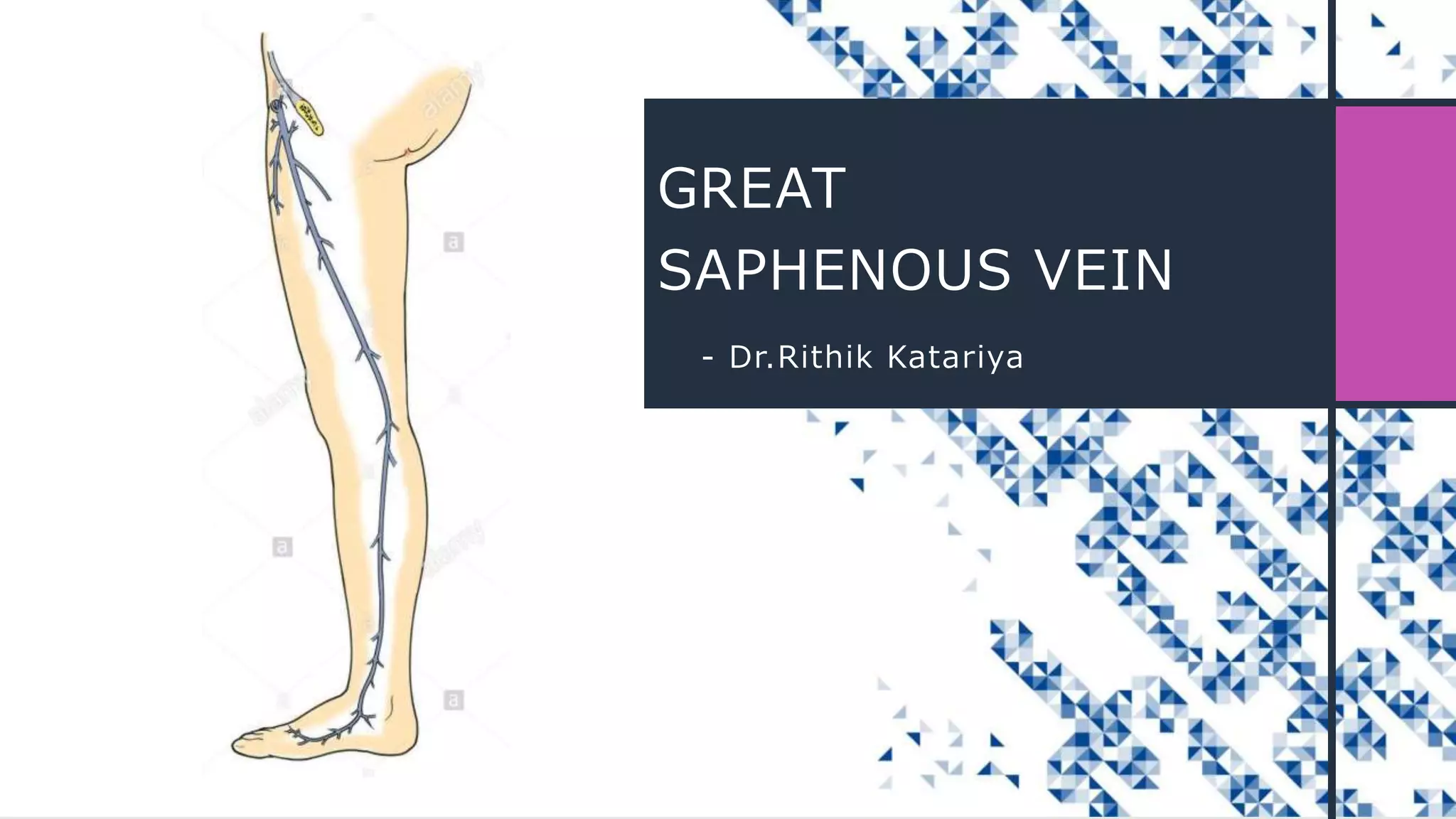
• It is formed on the dorsum of foot by the union
of the medial end of the dorsal venous arch of
the foot and medial marginal vein of the foot.
• The vein runs upward about 2.5 cm in front of the
medial malleolus, crosses obliquely the medial
surface of the lower third of tibia, and then
ascends a little behind the medial border of tibia
to reach the knee, where it lies on the
posteromedial aspect of the knee joint, about one
hand-breadth posterior to the patella;
• from here it runs upward along the medial side
of the thigh to reach the saphenous opening
(fossa ovalis)
• It passes through the saphenous opening after
piercing the cribriform fascia and drains into the
femoral vein after piercing the femoral sheath.
At the commencement:
(a)Medial marginal vein of the big toe.
2. In the leg:
(a) Communicating veins between small saphenous and deep
veins.
(b) Posterior arch vein: [perforaters]
3. Just below the knee:
(a) Anterior veins of the leg. They extend diagonally (upward,
forward, and medially) across the shin and join the great
saphenous vein.
(b) A few veins from the calf which communicates with the
small saphenous vein.
4. In the thigh:
(a)Anterolateral vein.
(b) Posteromedial vein (accessory saphenous vein).
5. Just before piercing the cribriform fascia:
(a) Superficial epigastric vein.
(b) Superficial circumflex iliac vein.
(c) Superficial external pudendal vein.
Tributaries:
Valves:
There are about 10 to 20 valves in the great
saphenous vein, out of which the location of two
needs special mention here:
(a)one, which lies just before it pierces the
cribriform fascia and
(b) the other, which lies at its junction with the
femoral vein (saphenofemoral valve).
(a)The saphenofemoral valve is of great
functional significance.
(b)Absence of (saphenofemoral valve) become
the victim of high venous pressure and
develop varicose vein, which commences at
the saphenofemoral junction and gradually
extends downward.
Surface
Marking :
1. At ankle, it lies 2.5 cm anterior to the
medial malleolus.
2. 2. In leg, it ascends by crossing the
medial surface and medial border of
the tibia.
3. At knee, it lies about a hand’s breadth
posterior to the medial margin of the
patella.
4. In thigh, it ascends obliquely on the
medial aspect of the thigh to reach a
point 3.5–4 cm inferolateral to the pubic
tubercle (saphenofemoral junction).
Clinical
aspects :
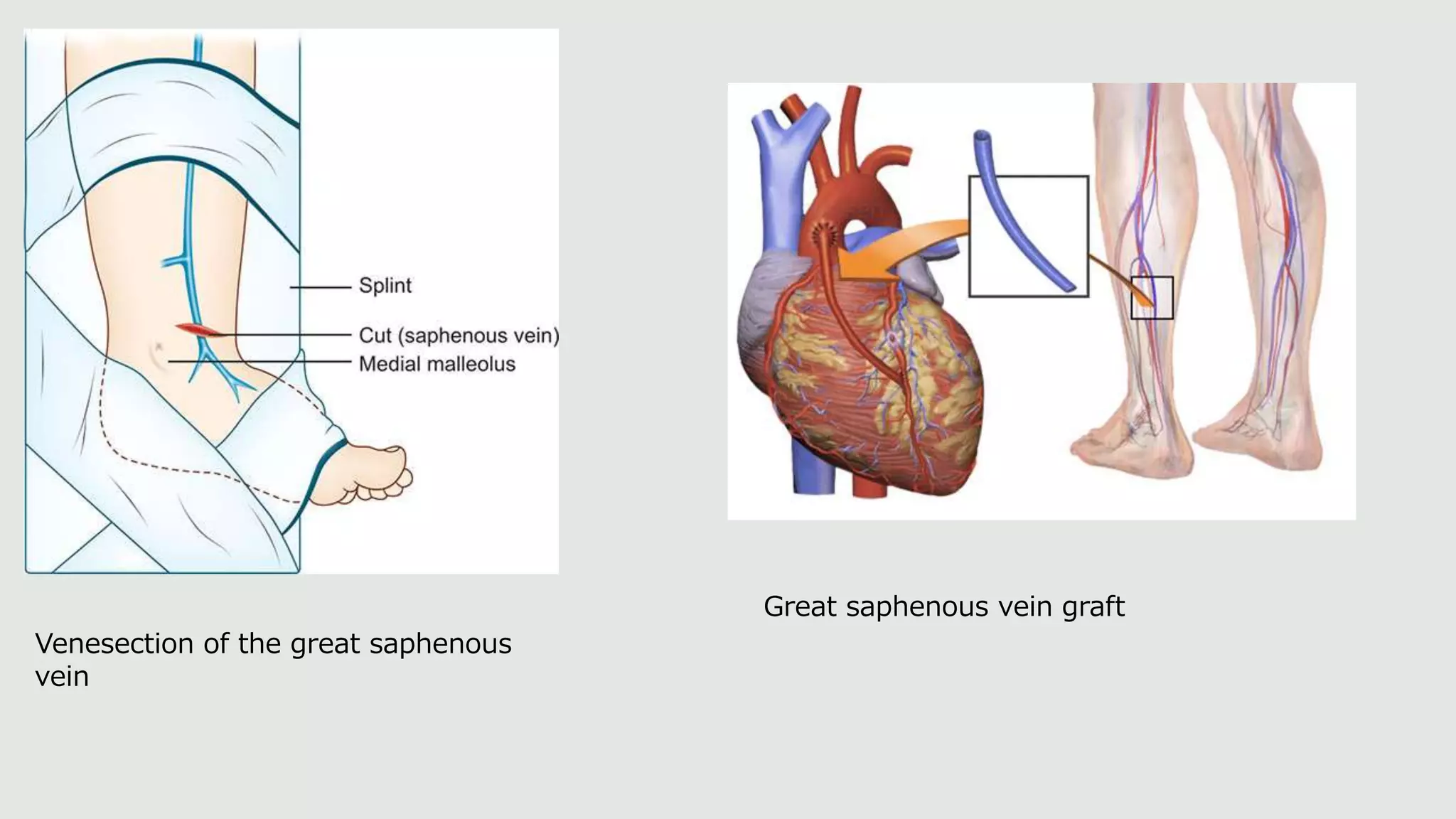
1] Venesection of the great saphenous vein:
The great saphenous vein in front of medial
malleolus at ankle is the most preferred site of
venesection (cut-down) in emergency situation
when the superficial veins elsewhere in the
body are collapsed and invisible, to insert the
canula for prolonged administration of
intravenous fluids.
2] Great saphenous vein graft:
In coronary by pass surgery to relieve the
ischemia of the heart, a segment of great
saphenous vein is removed and used for
aortocoronary grafting to by pass an arterial
obstruction. Due to the presence of valves, the
vein has to be reversed so that its valves do
not obstruct the blood flow.
Venesection of the great saphenous
vein
Great saphenous vein graft
THANKYOU

Great saphenous vein

  • 1.
  • 2.
    Discription • The greatsaphenous vein lies in the superficial fascia and is easily seen (Greek saphenous ! easily seen). • The great saphenous vein is the longest vein of the body and represents the pre-axial vein of the lower limb. • It is also called long saphenous vein
  • 3.
    Course : • Itis formed on the dorsum of foot by the union of the medial end of the dorsal venous arch of the foot and medial marginal vein of the foot. • The vein runs upward about 2.5 cm in front of the medial malleolus, crosses obliquely the medial surface of the lower third of tibia, and then ascends a little behind the medial border of tibia to reach the knee, where it lies on the posteromedial aspect of the knee joint, about one hand-breadth posterior to the patella; • from here it runs upward along the medial side of the thigh to reach the saphenous opening (fossa ovalis) • It passes through the saphenous opening after piercing the cribriform fascia and drains into the femoral vein after piercing the femoral sheath.
  • 4.
    At the commencement: (a)Medialmarginal vein of the big toe. 2. In the leg: (a) Communicating veins between small saphenous and deep veins. (b) Posterior arch vein: [perforaters] 3. Just below the knee: (a) Anterior veins of the leg. They extend diagonally (upward, forward, and medially) across the shin and join the great saphenous vein. (b) A few veins from the calf which communicates with the small saphenous vein. 4. In the thigh: (a)Anterolateral vein. (b) Posteromedial vein (accessory saphenous vein). 5. Just before piercing the cribriform fascia: (a) Superficial epigastric vein. (b) Superficial circumflex iliac vein. (c) Superficial external pudendal vein. Tributaries:
  • 5.
    Valves: There are about10 to 20 valves in the great saphenous vein, out of which the location of two needs special mention here: (a)one, which lies just before it pierces the cribriform fascia and (b) the other, which lies at its junction with the femoral vein (saphenofemoral valve). (a)The saphenofemoral valve is of great functional significance. (b)Absence of (saphenofemoral valve) become the victim of high venous pressure and develop varicose vein, which commences at the saphenofemoral junction and gradually extends downward.
  • 6.
    Surface Marking : 1. Atankle, it lies 2.5 cm anterior to the medial malleolus. 2. 2. In leg, it ascends by crossing the medial surface and medial border of the tibia. 3. At knee, it lies about a hand’s breadth posterior to the medial margin of the patella. 4. In thigh, it ascends obliquely on the medial aspect of the thigh to reach a point 3.5–4 cm inferolateral to the pubic tubercle (saphenofemoral junction).
  • 7.
    Clinical aspects : 1] Venesectionof the great saphenous vein: The great saphenous vein in front of medial malleolus at ankle is the most preferred site of venesection (cut-down) in emergency situation when the superficial veins elsewhere in the body are collapsed and invisible, to insert the canula for prolonged administration of intravenous fluids. 2] Great saphenous vein graft: In coronary by pass surgery to relieve the ischemia of the heart, a segment of great saphenous vein is removed and used for aortocoronary grafting to by pass an arterial obstruction. Due to the presence of valves, the vein has to be reversed so that its valves do not obstruct the blood flow.
  • 8.
    Venesection of thegreat saphenous vein Great saphenous vein graft
  • 9.