Integrated Pest Management (IPM) for Vegetablesby Weston MillerWeston Miller
Preview of PresentationIPM ProcessWeed ManagementIPM Case Studies
Integrated Pest ManagementA strategy to prevent and suppress pests with minimum impact on human health, the environment and non-target organisms.Decision-making process that uses regular monitoring to decide if and when treatments are needed to control a pest, then uses a variety of tactics to keep pest numbers low.
OSU’s IPM MissionEncourage sustainable gardeningIdentify and monitor before acting. Consider management optionsCultural (healthy plants; sanitation)Physical(hand picking)Biological (Bt)Chemical controls (organic or synthetic).Consider least toxic first!
Some ConsiderationsValue of plant ($ and personal)Time constraintsCost of treatmentToxicity of available controlsPersonal gardening philosophy
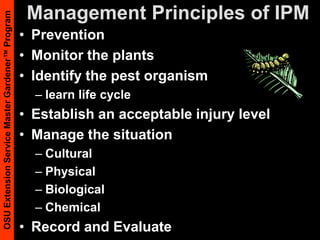
Management Principles of IPMPreventionMonitor the plantsIdentify the pest organism learn life cycleEstablish an acceptable injury levelManage the situationCulturalPhysicalBiologicalChemicalRecord and Evaluate
Cultural Control MethodsGrow healthy plants!
PreventionTake care of soilDrainageRight plant, right placeChoose adapted crops and varieties Resistant varieties
PreventionAvoid over watering or under watering veggies. Plan a watering scheduleIrrigate in the morningIrrigate soil, not plantsProvide air flow.
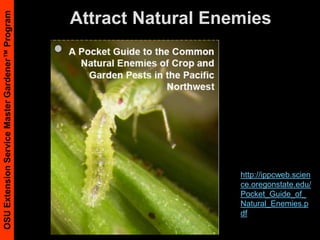
Attract Natural Enemieshttp://ippcweb.science.oregonstate.edu/Pocket_Guide_of_Natural_Enemies.pdf
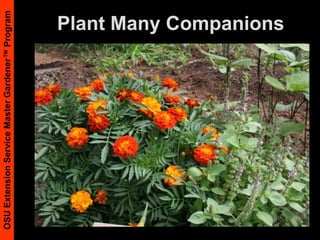
Plant Many Companions
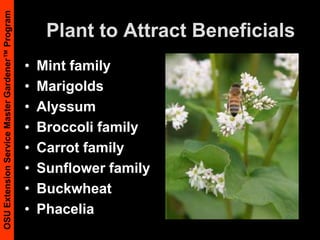
Plant to Attract BeneficialsMint familyMarigoldsAlyssumBroccoli familyCarrot familySunflower familyBuckwheatPhacelia
Physical Control MethodsAre you willing to squash aphids?
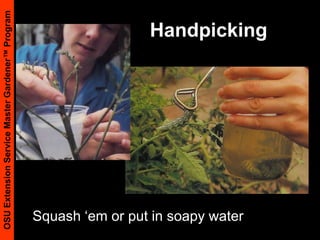
Handpicking Squash ‘em or put in soapy water
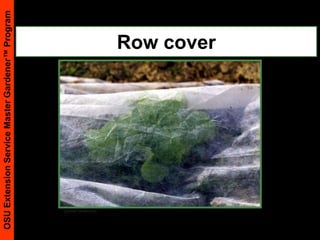
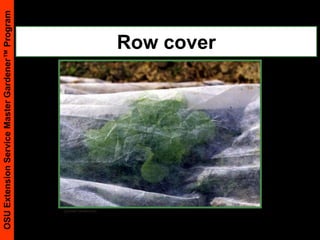
Row cover(Cornell University)
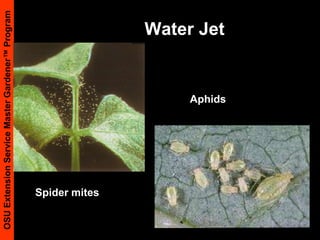
Water JetAphidsAphidsSpider mitesSpider mites
Biological and Chemical Control MethodsFor treatments that you buy:Look for targeted  treatments instead of wide spectrum treatmentsMake sure crop and pest is listed on label
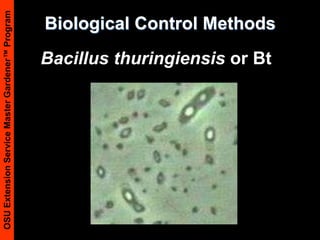
Biological Control MethodsBacillus thuringiensis or Bt
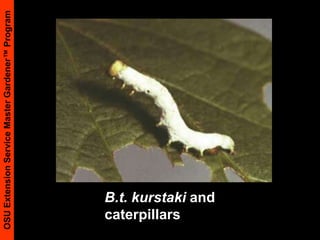
B.t. kurstaki and caterpillars
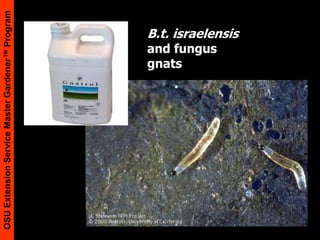
B.t. israelensis and fungus gnats
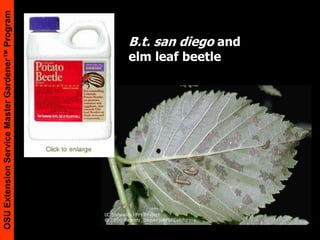
B.t. san diego and elm leaf beetle
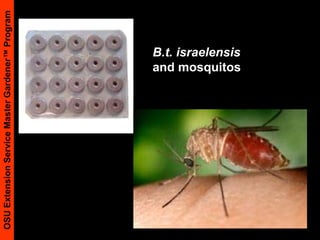
B.t. israelensis and mosquitosDunk
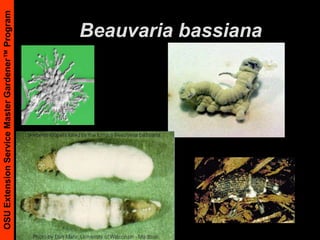
Beauvaria bassiana
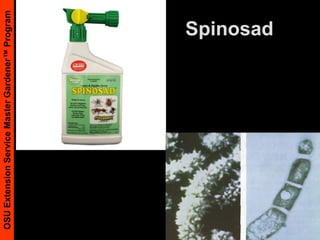
Spinosad
Chemical Methods of Insect Control: BotanicalsNeem (azadirachtin)
Rotenone
PyrethrinsDerived from botanical sourcesBiodegrade rapidlyWidely varying levels of toxicity
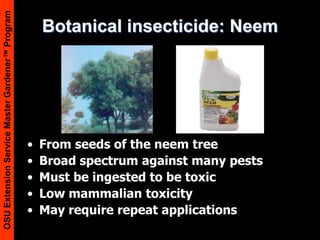
Botanical insecticide: NeemFrom seeds of the neem treeBroad spectrum against many pestsMust be ingested to be toxicLow mammalian toxicityMay require repeat applications
With all purchased control products, please, please:Buy only what you need
Read the product label
Understand the instructions
Follow safety precautions
Use common sense
Properly dispose of containerWeed ManagementConsistent weed control over five years or so can dramatically reduce the weed seed bank and the time needed to control weeds.
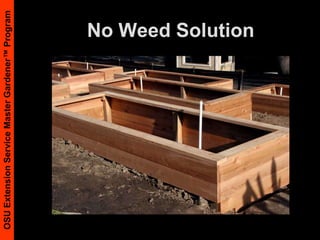
No Weed Solution
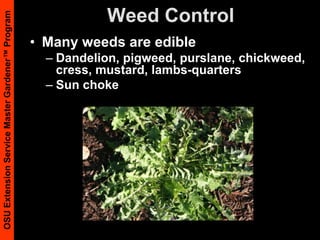
Weed ControlMany weeds are edibleDandelion, pigweed, purslane, chickweed, cress, mustard, lambs-quartersSun choke
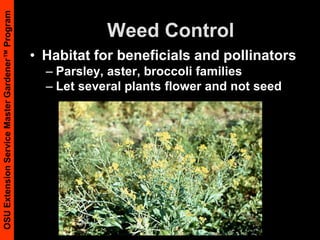
Weed ControlHabitat for beneficials and pollinatorsParsley, aster, broccoli familiesLet several plants flower and not seed
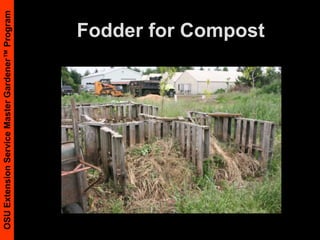
Fodder for Compost
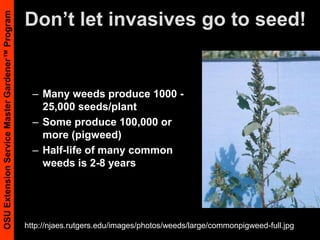
Don’t let invasives go to seed!Many weeds produce 1000 - 25,000 seeds/plant Some produce 100,000 or more (pigweed)Half-life of many common weeds is 2-8 yearshttp://njaes.rutgers.edu/images/photos/weeds/large/commonpigweed-full.jpg
Don’t bring in new weedsAvoid bringing new weeds to the garden in horse manure, compost, or strawHorse Manure must be hot composted. Request records.
Mechanical WeedingUse comfortable toolsBe diligentKill weeds when young (2-3 true leaves)More effective when warm, dry, and windyControl weeds early in crop growth – when they can compete most with crops
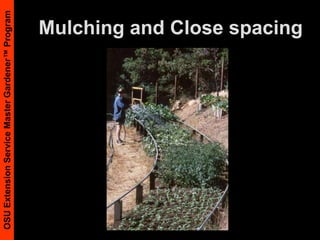
Mulching and Close spacing
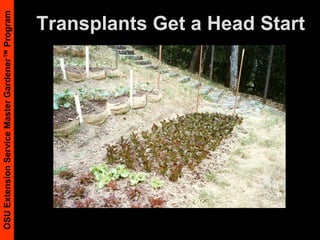
Transplants Get a Head Start
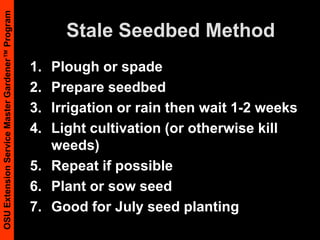
Stale Seedbed MethodPlough or spadePrepare seedbedIrrigation or rain then wait 1-2 weeksLight cultivation (or otherwise kill weeds)Repeat if possiblePlant or sow seedGood for July seed planting
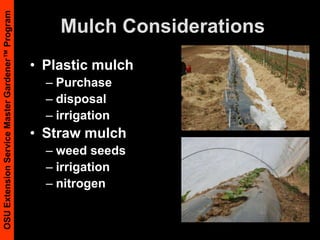
Mulch ConsiderationsPlastic mulchPurchasedisposal  irrigationStraw mulchweed seedsirrigationnitrogen
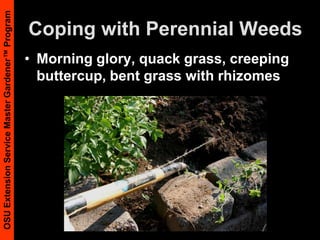
Coping with Perennial WeedsMorning glory, quack grass, creeping buttercup, bent grass with rhizomes
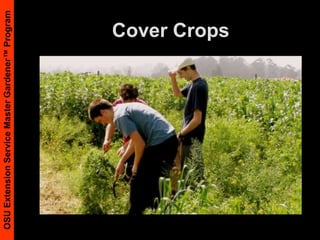
Cover Crops
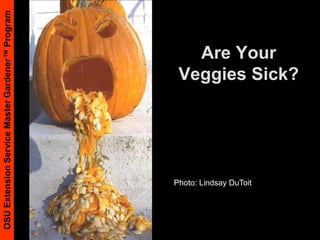
Are Your Veggies Sick?Photo: Lindsay DuToit
Most Plant ProblemsCaused by non-living factorsPoor growing conditionsTemperature extremesPoor water managementSoil compactionMechanical injuryAbiotic factors also make plants susceptible to pests / diseases.
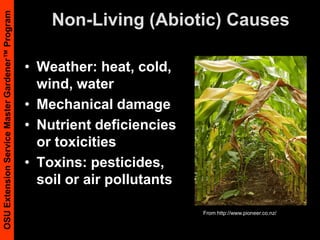
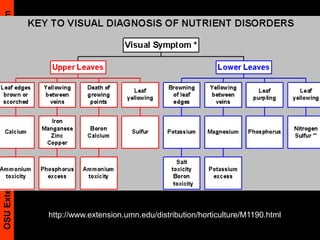
Non-Living (Abiotic) CausesWeather: heat, cold, wind, waterMechanical damageNutrient deficiencies or toxicitiesToxins: pesticides, soil or air pollutantsFrom http://www.pioneer.co.nz/
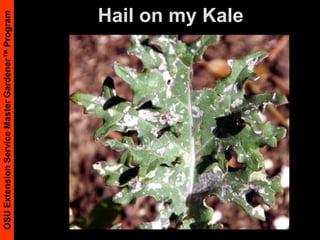
Hail on my Kale
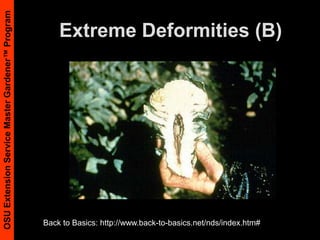
Extreme Deformities (B)Back to Basics: http://www.back-to-basics.net/nds/index.htm#
http://www.extension.umn.edu/distribution/horticulture/M1190.html
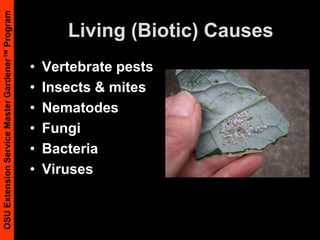
Living (Biotic) CausesVertebrate pestsInsects & mitesNematodesFungiBacteriaViruses
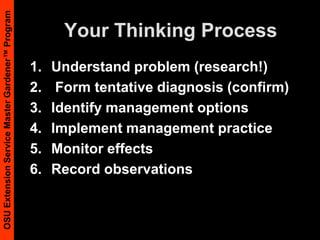
Your Thinking ProcessUnderstand problem (research!) Form tentative diagnosis (confirm)Identify management optionsImplement management practiceMonitor effects Record observations
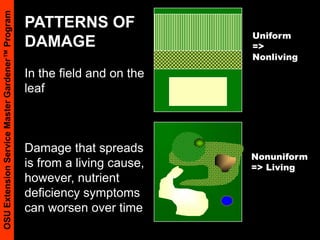
PATTERNS OF DAMAGEIn the field and on the leafDamage that spreads is from a living cause, however, nutrient deficiency symptoms can worsen over timeUniform => NonlivingNonuniform => Living
Diagnosing Plant ProblemsSymptomChange in the plant, ie. yellowing, holes in leaves, wilting, dead tissue, etc.SignThe organism that’s causing the damage, ie. insect, mold, frass, etc.
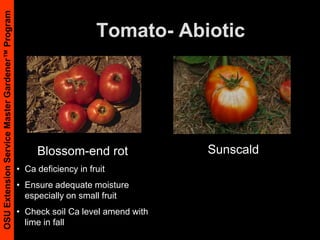
Tomato- AbioticBlossom-end rotCa deficiency in fruit
Ensure adequate moisture especially on small fruit
Check soil Ca level amend with  lime in fallSunscald
Damping Off DiseaseSoil temperatures too cold
Use sterile potting supplies
Buy disease resistant seeds
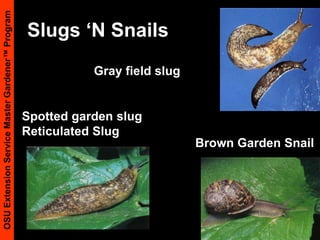
Wait!Slugs ‘N SnailsGray field slugSpotted garden slugReticulated SlugBrown Garden Snail
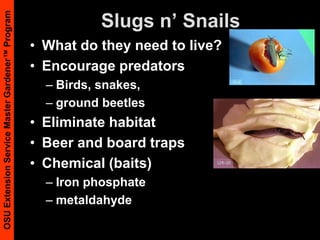
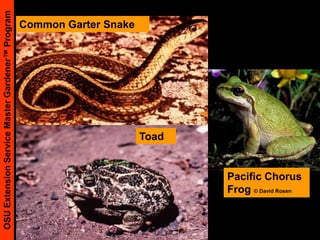
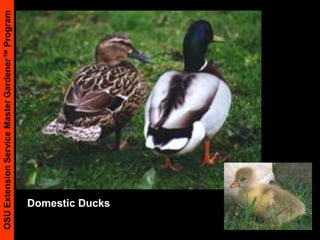
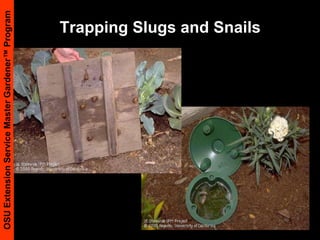
Slugs n’ SnailsWhat do they need to live?Encourage predatorsBirds, snakes, ground beetlesEliminate habitatBeer and board trapsChemical (baits)Iron phosphatemetaldahyde
Scissors
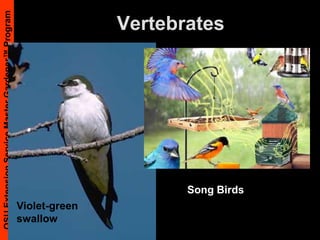
VertebratesSong BirdsViolet-green swallow
Common Garter Snake                                     © David RosenToadPacific Chorus Frog © David Rosen
Domestic Ducks
Trapping Slugs and Snails
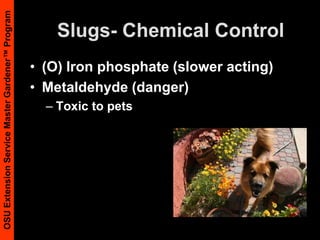
Slugs- Chemical Control(O) Iron phosphate (slower acting)Metaldehyde (danger)Toxic to pets
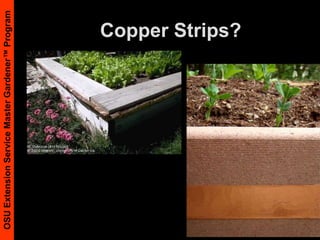
Copper Strips?
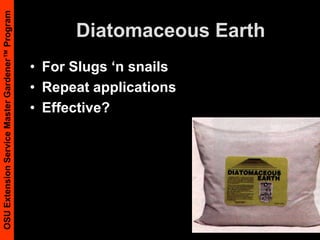
Diatomaceous EarthFor Slugs ‘n snailsRepeat applicationsEffective?
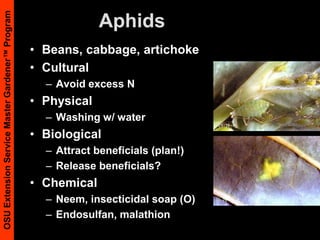
AphidsSigns and Symptoms?
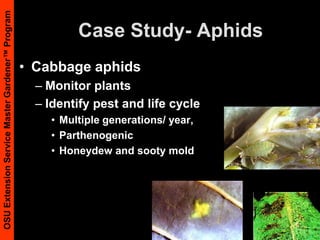
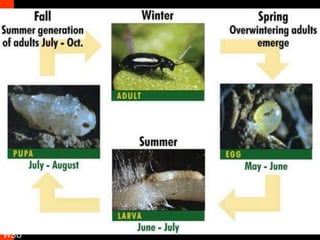
Case Study- AphidsCabbage aphidsMonitor plantsIdentify pest and life cycleMultiple generations/ year,ParthenogenicHoneydew and sooty mold
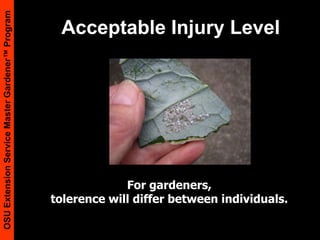
Acceptable Injury LevelFor gardeners, tolerence will differ between individuals.

Veggie IPM

Editor's Notes

  • #24 http://www.entomology.wisc.edu/mbcn/bbass.gif
  • #25 http://images.google.com/imgres?imgurl=http://ipmworld.umn.edu/chapters/hutchins2/Image15.gif&imgrefurl=http://ipmworld.umn.edu/chapters/hutchins2.htm&usg=__SGSty_pbek8Y
  • #47 http://www.back-to-basics.net/nds/crops/vegetables.htm
  • #48 http://www.extension.umn.edu/distribution/horticulture/M1190.htmlhttp://www.ces.ncsu.edu/depts/hort/consumer/quickref/fertilizer/nutri_def.html