

VASCULAR DISORDERS OF
RETINA
Dr. VS NAGGALAKSHMI M.S.,
ANATOMY OF RETINA
The retina is a thin, semitransparent, multilayered sheet of
neural tissue that lines the inner aspect of the posterior
two-thirds of the wall of the globe
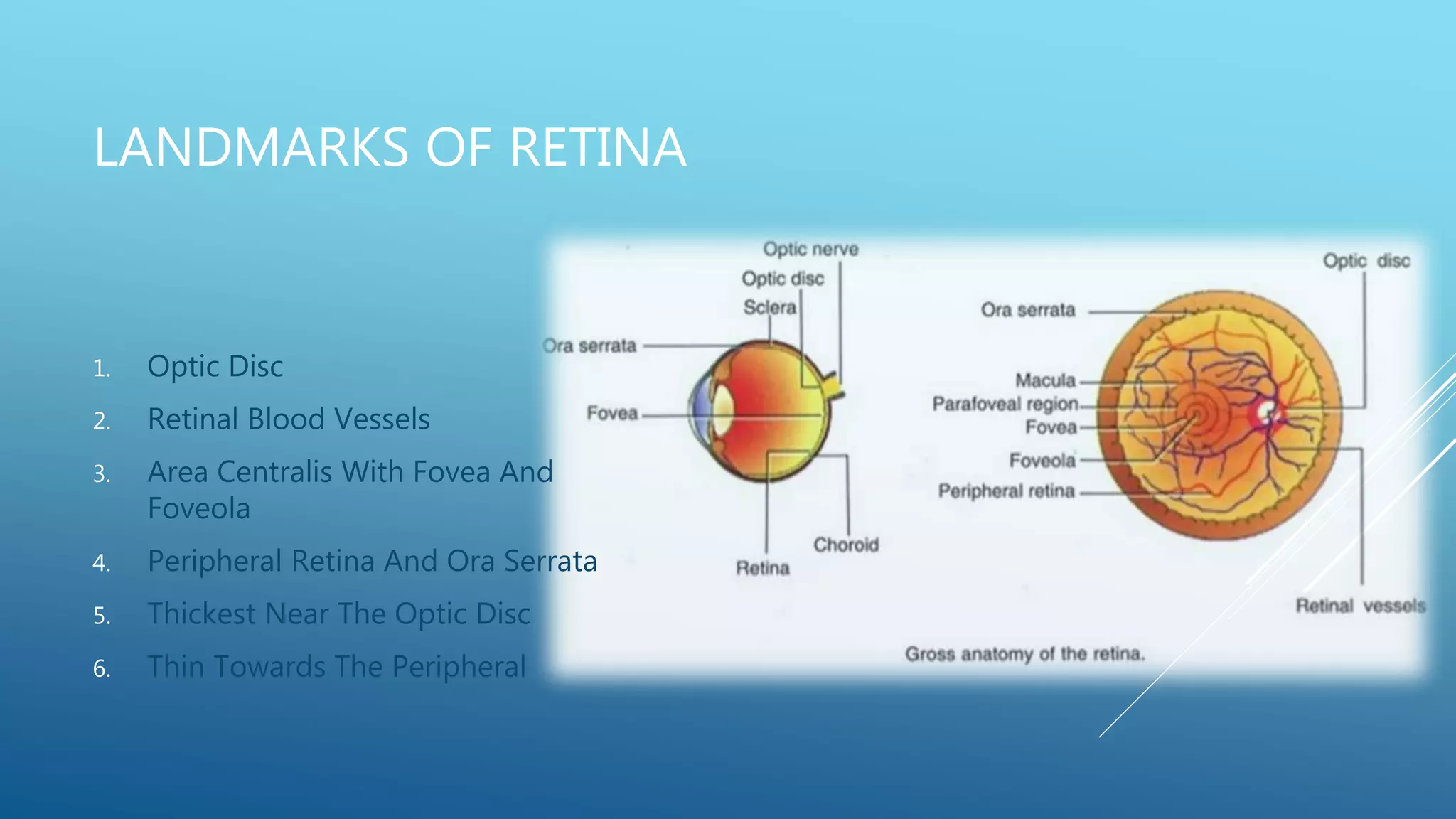
LANDMARKS OF RETINA
1. Optic Disc
2. Retinal Blood Vessels
3. Area Centralis With Fovea And
Foveola
4. Peripheral Retina And Ora Serrata
5. Thickest Near The Optic Disc
6. Thin Towards The Peripheral

BLOOD SUPPLY OF THE RETINA
 Outer 4 layers of retina is supplied by (till outer nuclear layer) choriocapillaries.
 The inner six layers gets its supply from central retinal artery which is a branch of ophthalmic
artery.
 The outer plexiform layer gets partly by both the above arteries. •The fovea is avascular and is
mainly supplied by choriocapillaries.
 The inner portion of the retina is perfused by branches of the central retinal artery.
 In 30% of eyes ,a cilioretinal artery,branching from the ciliary circulation ,supplies part of
inner retina mainly The Macula Region.
 The retinal blood vessels maintain the inner blood-retinal barrier.This physiological barrier is
due to single layer of non-fenestrated endothelial cells,whose tight junctions are impervious
to tracer substances such as fluorescein

BLOOD SUPPLY OF THE RETINA
 Retinal blood vessels lack an internal elastic lamina & a continuous layer of smooth muscle
cells.
 The retinal arteries are end arteries & have no anastomoses.The only place where the retinal
system anastomoses is in the neighborhood of lamina cribrosa.
 The veins of the retina unite to form Central retinal vein at the disc, which follows the
corresponding artery.
 The terminal fundus arterioles bend sharply and dip almost vertically into the retina.
 In most of the Extramacular fundus- two retinal capillary networks- a superficial and a deep.
 In parafoveal zone it is well developed and in 3 layers.
 A capillary free zone of 500 micro meter diameter in foveal zone- FAZ.
VASCULAR DISORDERS OF RETINA
1. DIABETIC RETINOPATHY
2. HYPERTENSIVE RETINOPATHY
3. RETINAL VEIN OCCLUSION
4. RETINAL ARTERY OCCLUSION
5. RETINOPATHY OF PREMATURITY
DIABETIC RETINOPATHY
 Diabetic retinopathy is a disorder of the retinal vessels that
eventually develops to some degree in nearly all patients with
long- standing diabetes mellitus.
Most Common cause of bilateral severe visual loss in working age
group in US
RISK FACTORS
 Age at diagnosis of diabetes
 Duration
 Poor control of diabetes
 Pregnancy
 Hypertension
 Nephropathy
 Hyperlipidemia
 Obesity
 Anemia
 Smoking
 Cataract surgery
PATHOGENESIS
MICROVASCULAR LEAKAGE
1. Loss Of Pericytes
2. Micro Aneurysn
3. Blood Retinal Barrier Breakdown
IT CAUSES
1. Retinal Edema
2. Hard Exudate
3. Retinal Hemorrhages
1. Superficial (Flame Shaped)
2. Deep (Dot & Blot )
MICROVASCULAR OCCLUSION
1. Thickening Of Basement Membrane
2. Endothelial Damage
3. Stickiness & Aggregation Of Platelets
4. Fibrinolytic System Defective
5. Red Cell Aggregation
6. Defective Oxygen Transport
IT CAUSES
1. Retinal Ischaemia (Cotton Wool Spots)
2. Neovasculariization On The Surface Of
Retina, Optic Nerve Head And Iris
(Rubeosis Iridis )
3. Arterio Venous Shunts
SIGNS
1. BACKGROUND DIABETIC RETINOPATHY
2. PREPROLIFERATIVE STAGE
3. PROLIFERATIVE STAGE
4. DIABETIC MACULOPATHY
5. ADVANCED STAGE
BACKGROUND DIABETIC RETINOPATHY
 MICROANEURYSMS
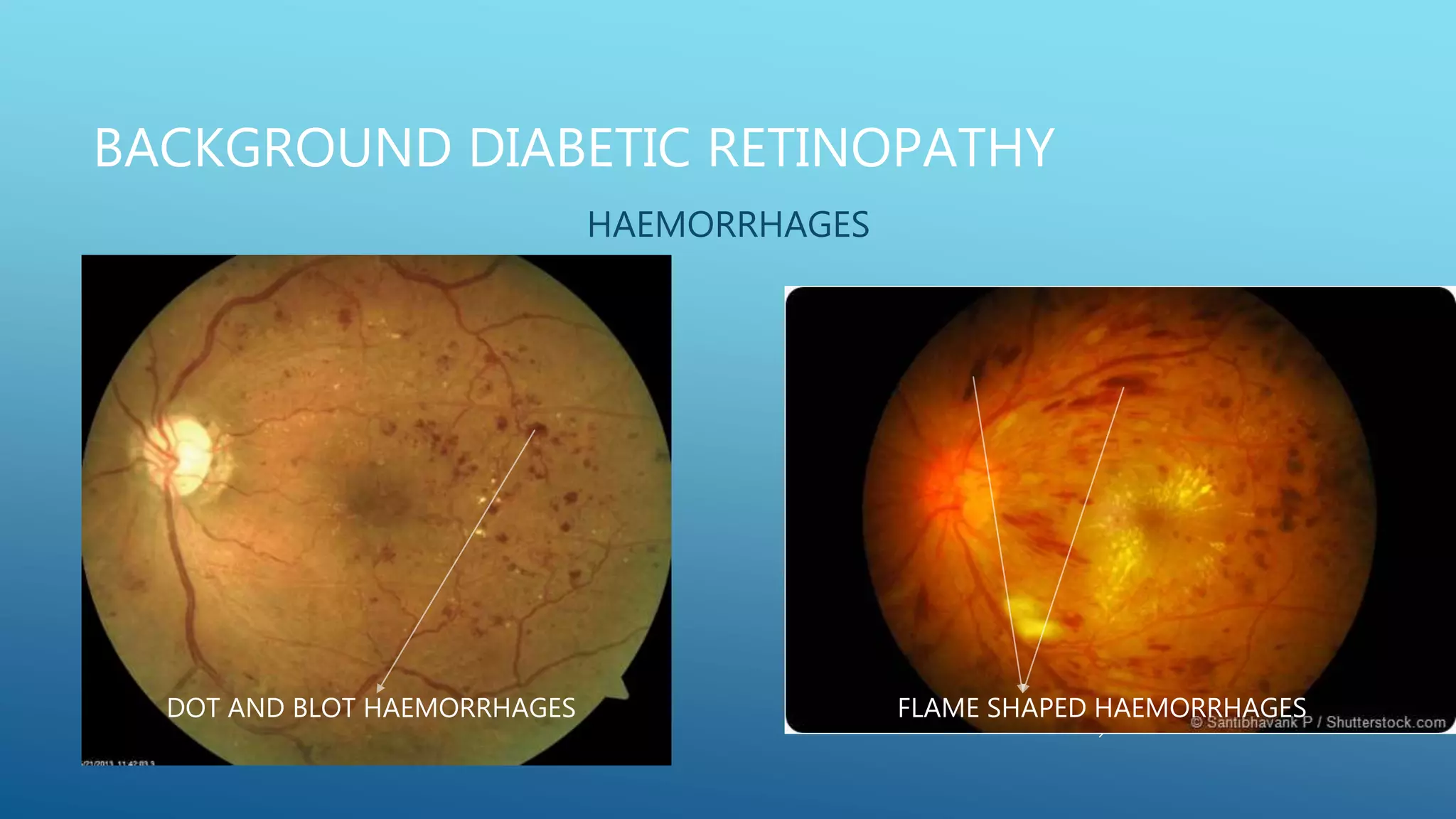
HAEMORRHAGES
BACKGROUND DIABETIC RETINOPATHY
FLAME SHAPED HAEMORRHAGES
DOT AND BLOT HAEMORRHAGES
HARD EXUDATES
 located between inner plexiform and
inner layer of retina
 Composed of plasma proteins and lipid
 Yellow waxy appearance with distinct
margins
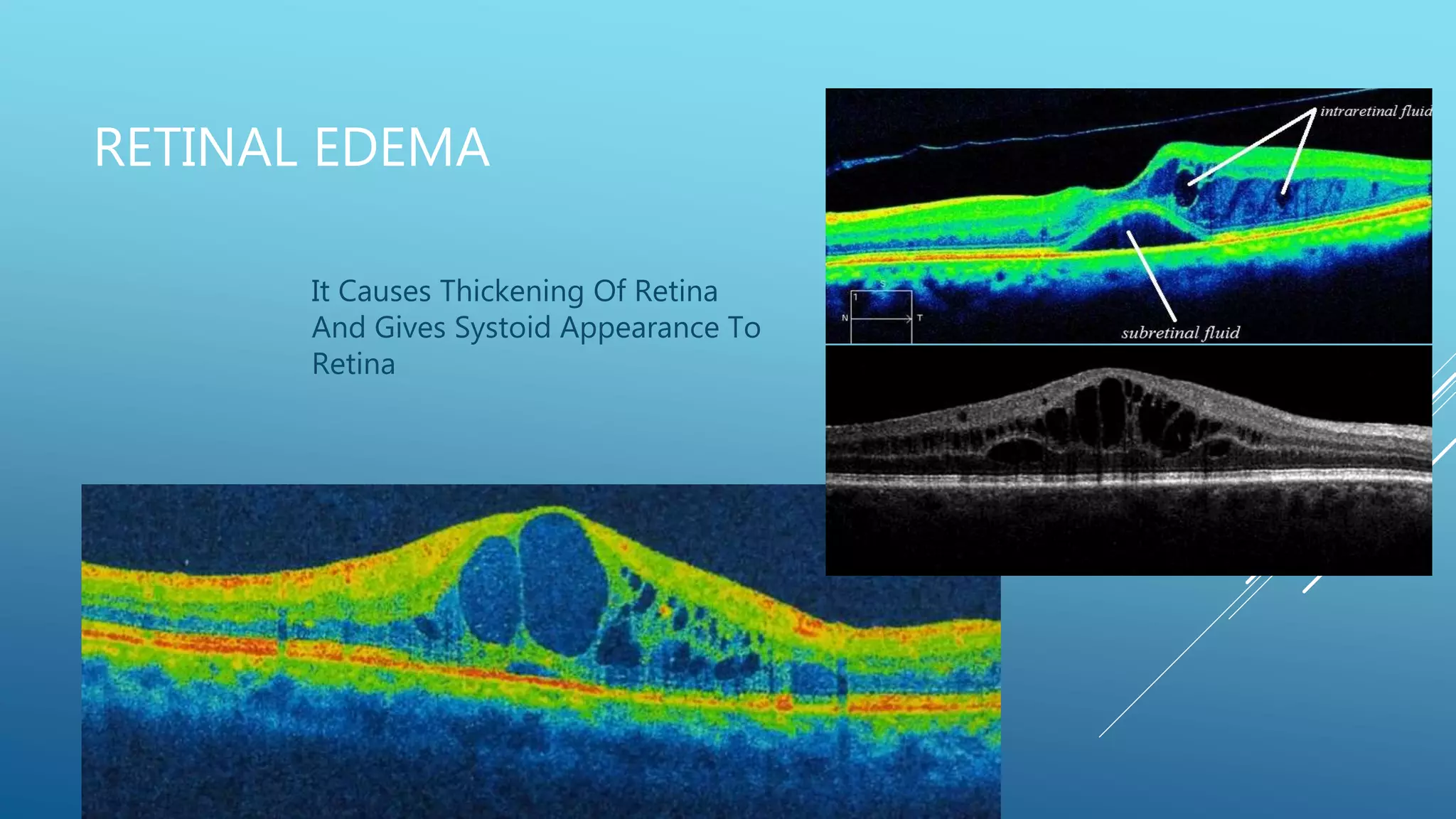
RETINAL EDEMA
It Causes Thickening Of Retina
And Gives Systoid Appearance To
Retina
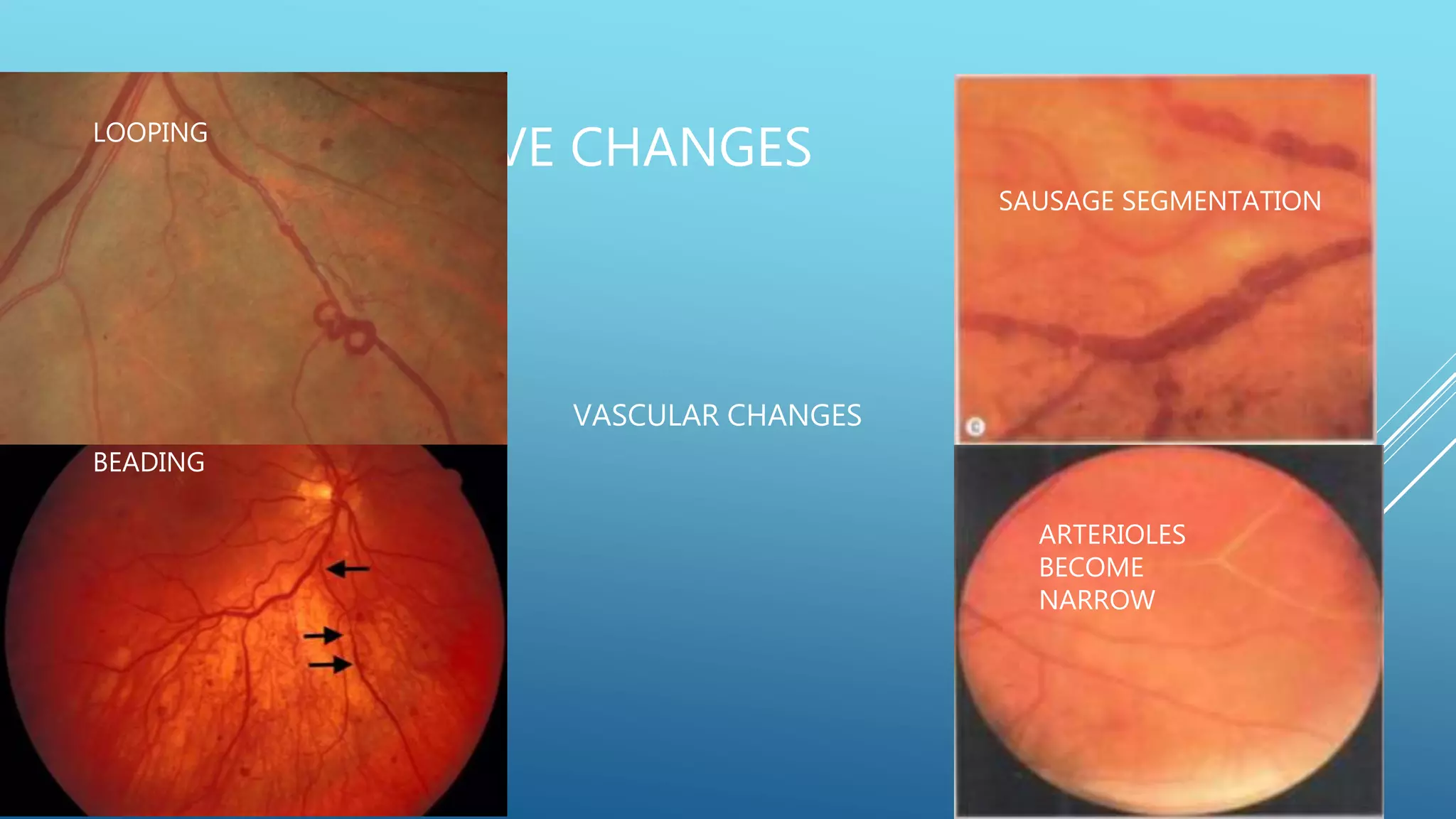
PREPROLIFERATIVE CHANGES
LOOPING
BEADING
SAUSAGE SEGMENTATION
ARTERIOLES
BECOME
NARROW
VASCULAR CHANGES
PREPROLIFERATIVE CHANGES
 COTTON WOOL SPOTS
 APPEAR AS WHITISH GREY AREAS WITH INDISTINCT
MARGINS
PREPROLIFERATIVE CHANGES
DARK BLOT HAEMORHAGE
 They represent hemorrhagic retinal infarcts
INTRA RETINAL MICROVASCULAR ABNORMALITIES
IRMA
PROLIFERATIVE DIABETIC RETINOPATHY
NEO VASCULARIZATION : DISC
 New vessels grow or proliferate on the
optic nerve head
PROLIFERATIVE DIABETIC RETINOPATHY
NEO VASCULARIZATION : ELSEWHERE
 New vessels proliferate along the
course of internal temporal vascular
arcades or tother areas of retina
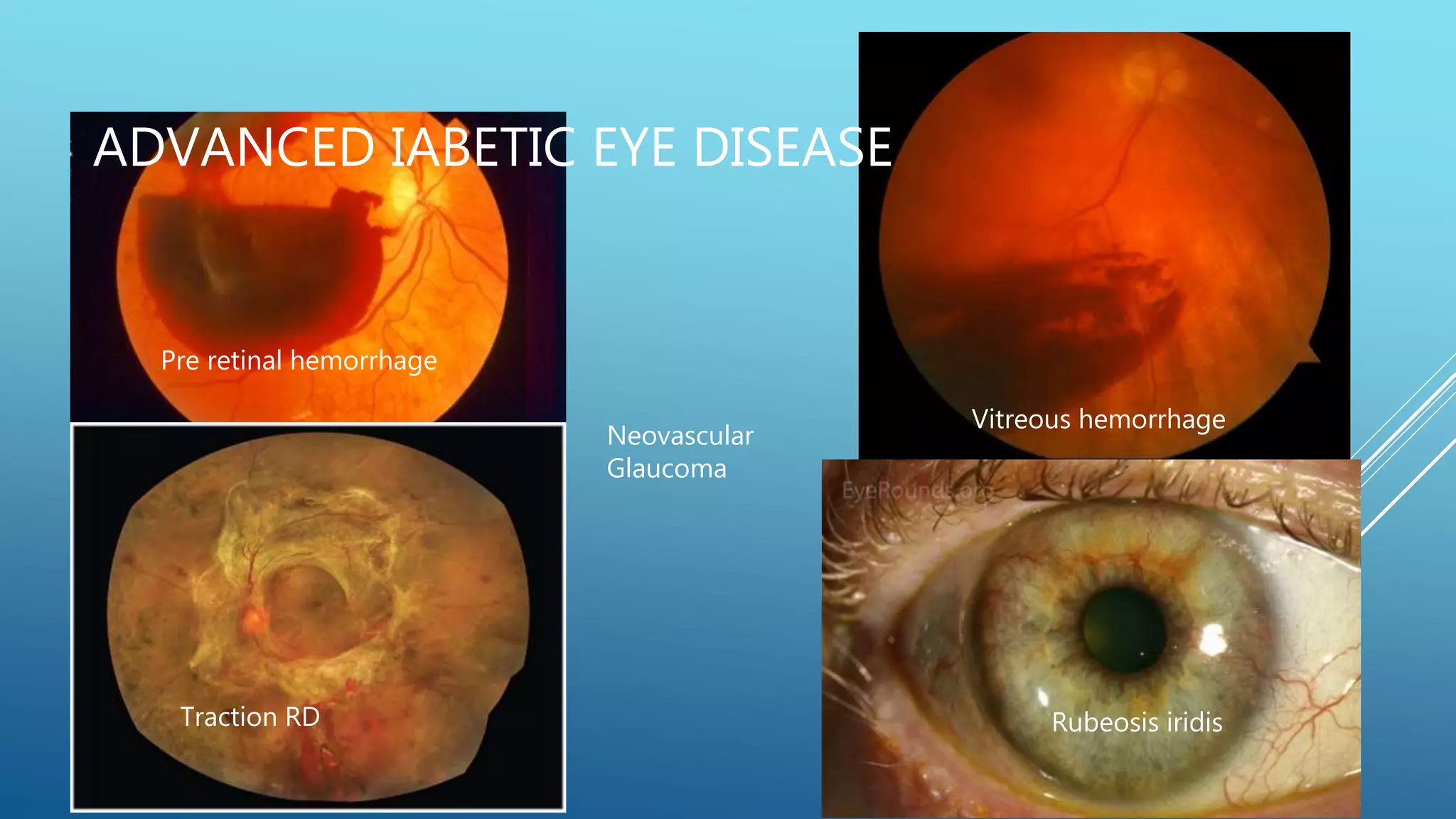
ADVANCED IABETIC EYE DISEASE
Pre retinal hemorrhage
Vitreous hemorrhage
Traction RD Rubeosis iridis
Neovascular
Glaucoma
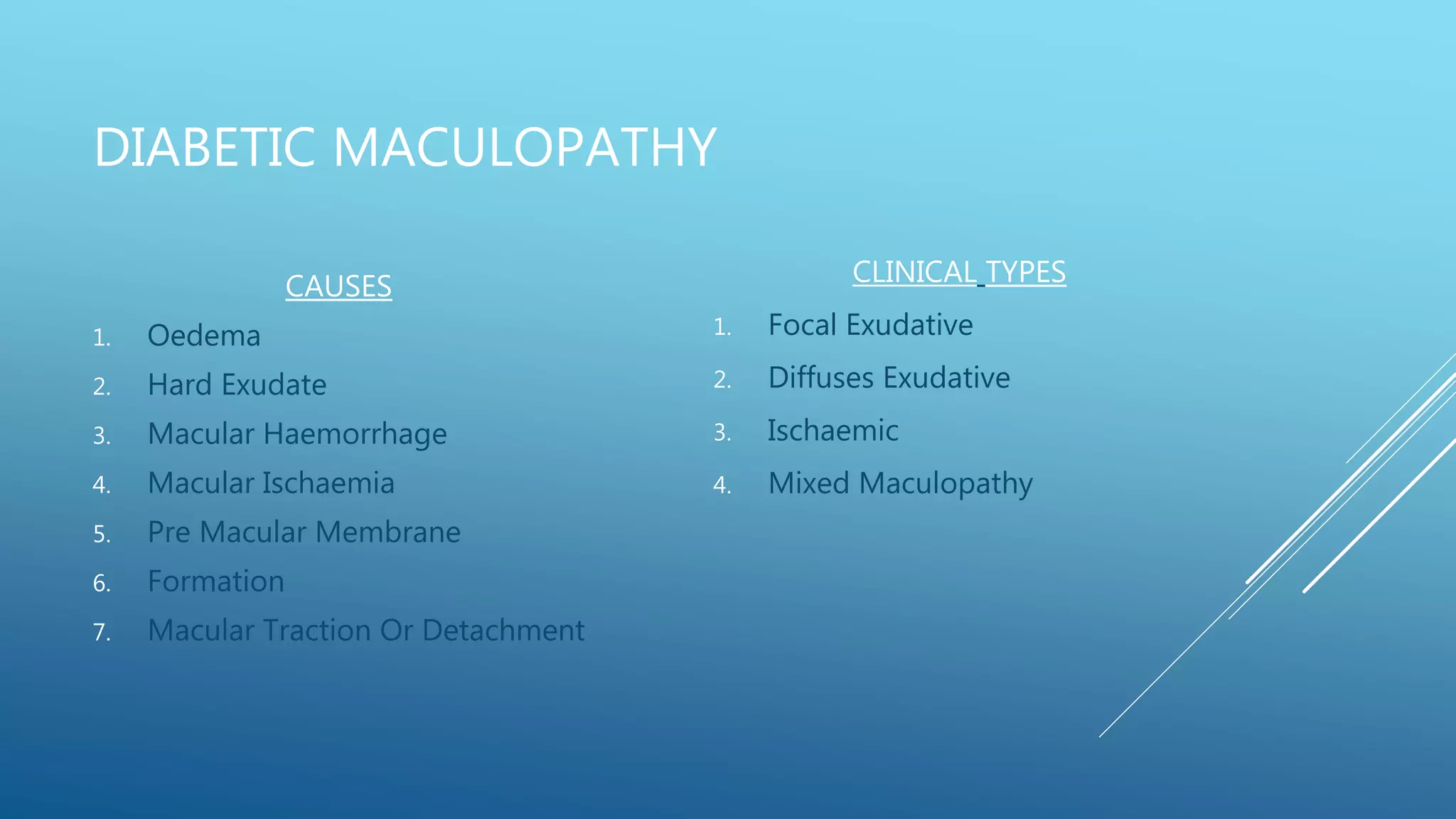
DIABETIC MACULOPATHY
CAUSES
1. Oedema
2. Hard Exudate
3. Macular Haemorrhage
4. Macular Ischaemia
5. Pre Macular Membrane
6. Formation
7. Macular Traction Or Detachment
CLINICAL TYPES
1. Focal Exudative
2. Diffuses Exudative
3. Ischaemic
4. Mixed Maculopathy
DIAGNOSIS
1. FUNDUS EXAMINATION WITH
 Direct Ophthalmoscope
 Indirect Ophthalmoscope
 Slit Lamp Bimicroscopy With Contact Lens And Non Contact Lens
2. FUNDUS FLUORESCEIN ANGIOGRAPHY FOR ASSESSMENT OF:
 Leaking Areas
 Occlusion Areas
3. OPTICAL COHERENCE TOMOGRAPHY IS USEFUL TO ASSESS RETINAL OEDEMA
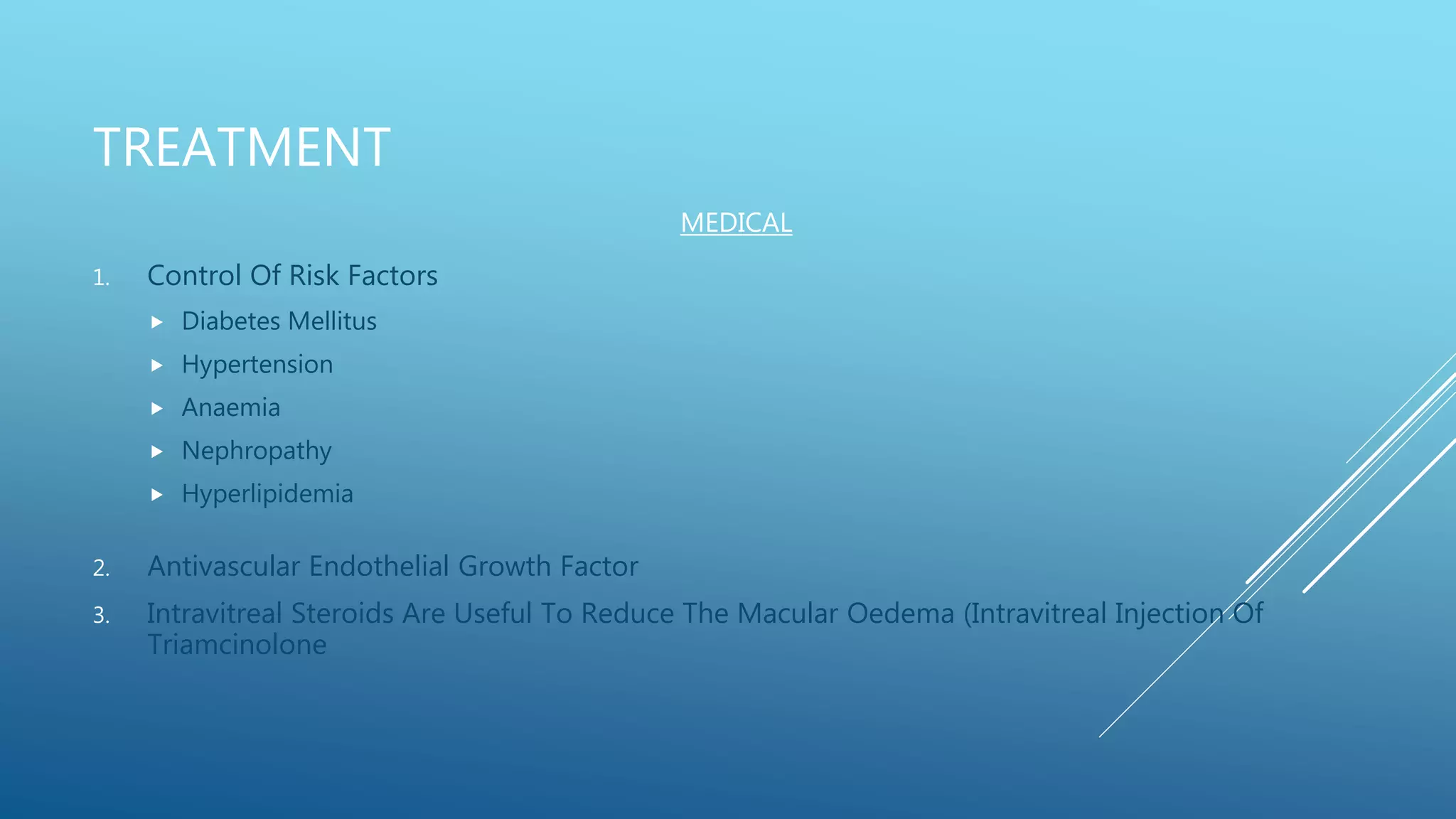
TREATMENT
1. Control Of Risk Factors
 Diabetes Mellitus
 Hypertension
 Anaemia
 Nephropathy
 Hyperlipidemia
2. Antivascular Endothelial Growth Factor
3. Intravitreal Steroids Are Useful To Reduce The Macular Oedema (Intravitreal Injection Of
Triamcinolone
MEDICAL
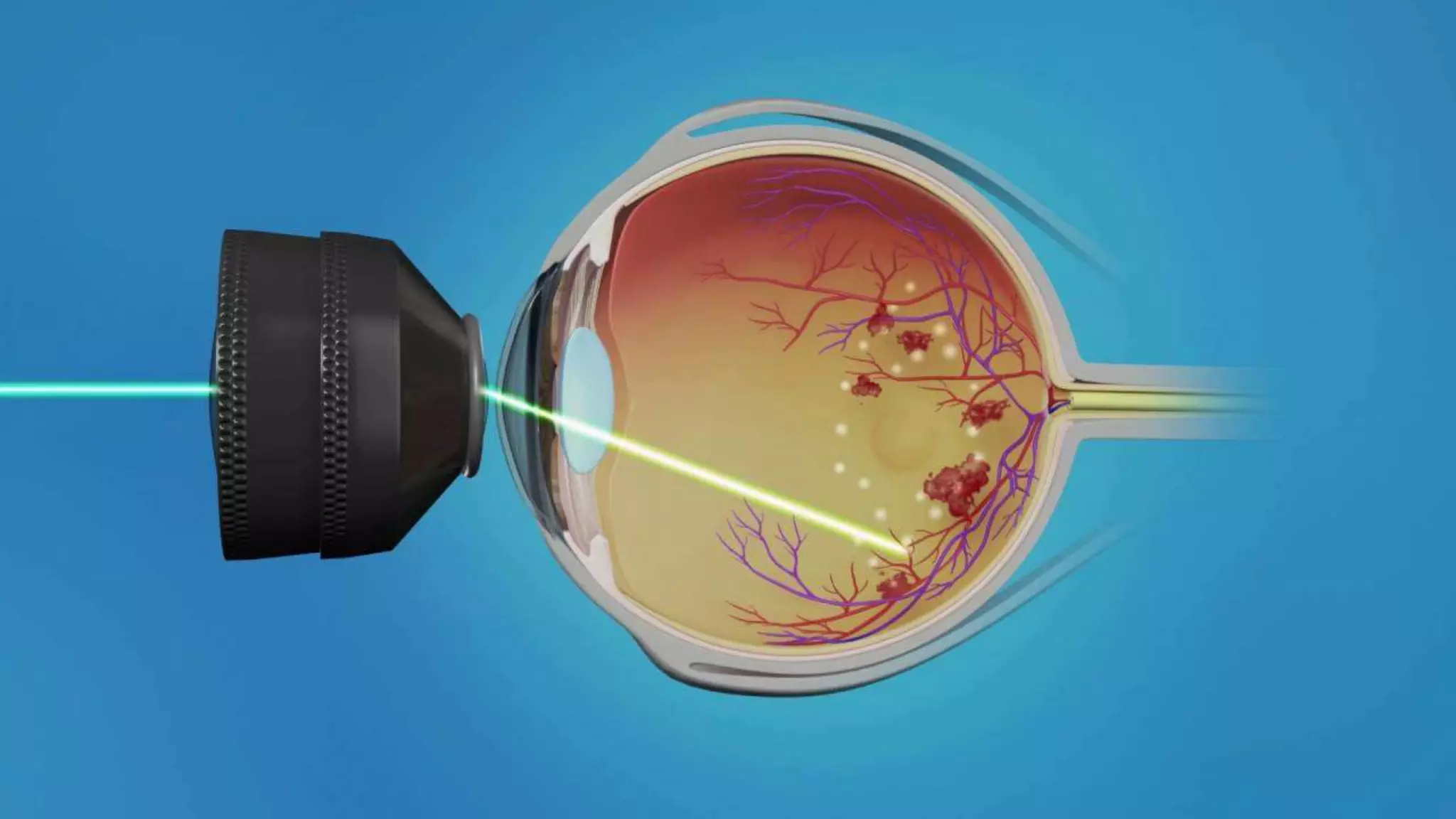
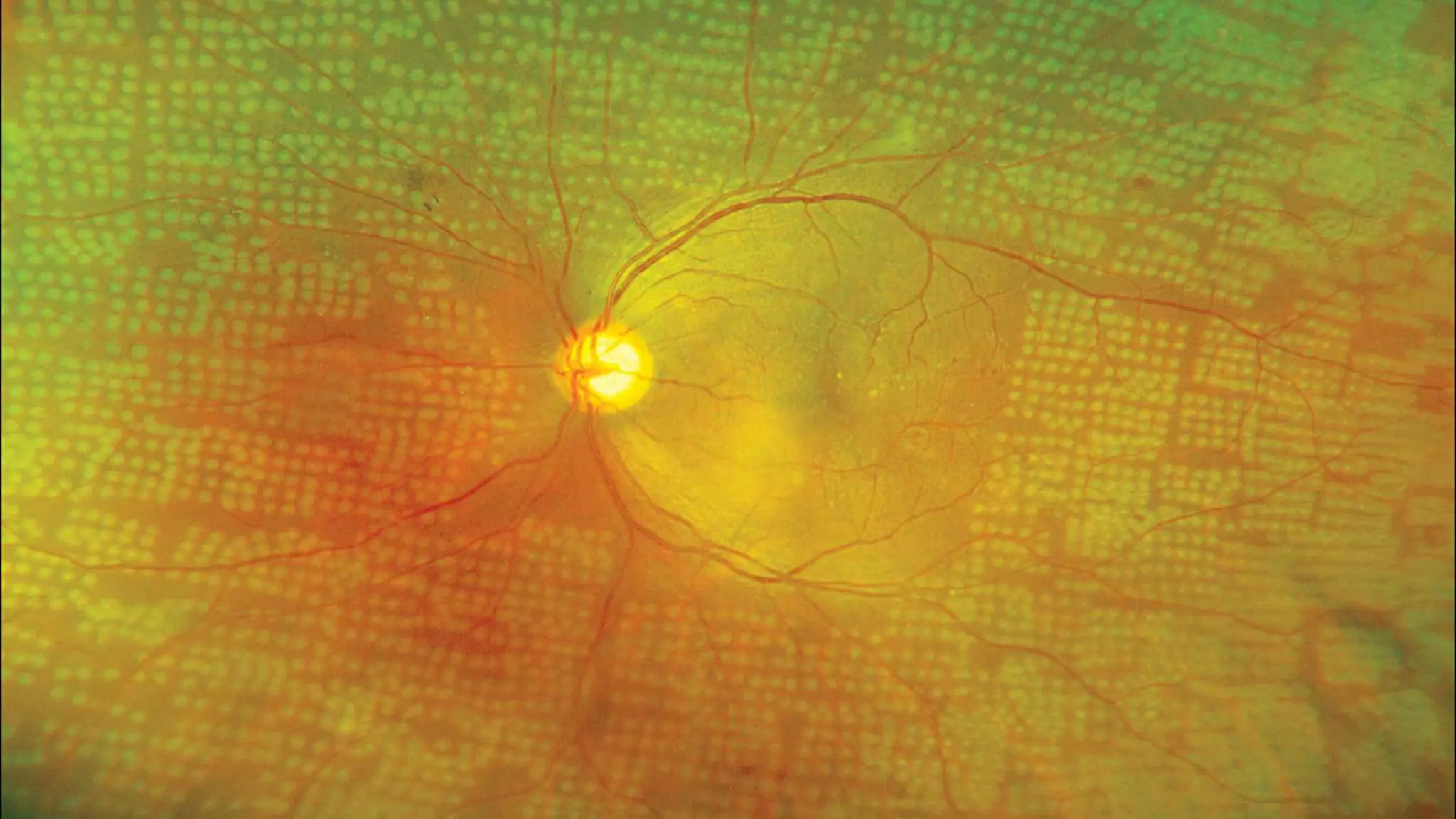
LASER PHOTOCOAGULATION
OBJECTIVES
 To destroy the hypoxic retina, stop the
release of vasoformative substance and
cause involution of new vessels
 To destroy the leakage areas and
enhance the absorption of edema and
exudate
TYPES
 Focal treatment for focal macular edema
 Grid treatment for diffuse macular
edema
 Panretinal photocoagulation


SURGERY
PARS PLANA VITRECTOMY IS INDICATED
FOR
 Dense Persistent Vitreous Haemorrhage
 Tractional Retinal Detachment
 Epiretinal Membranes
HYPERTENSIVE RETINOPATHY
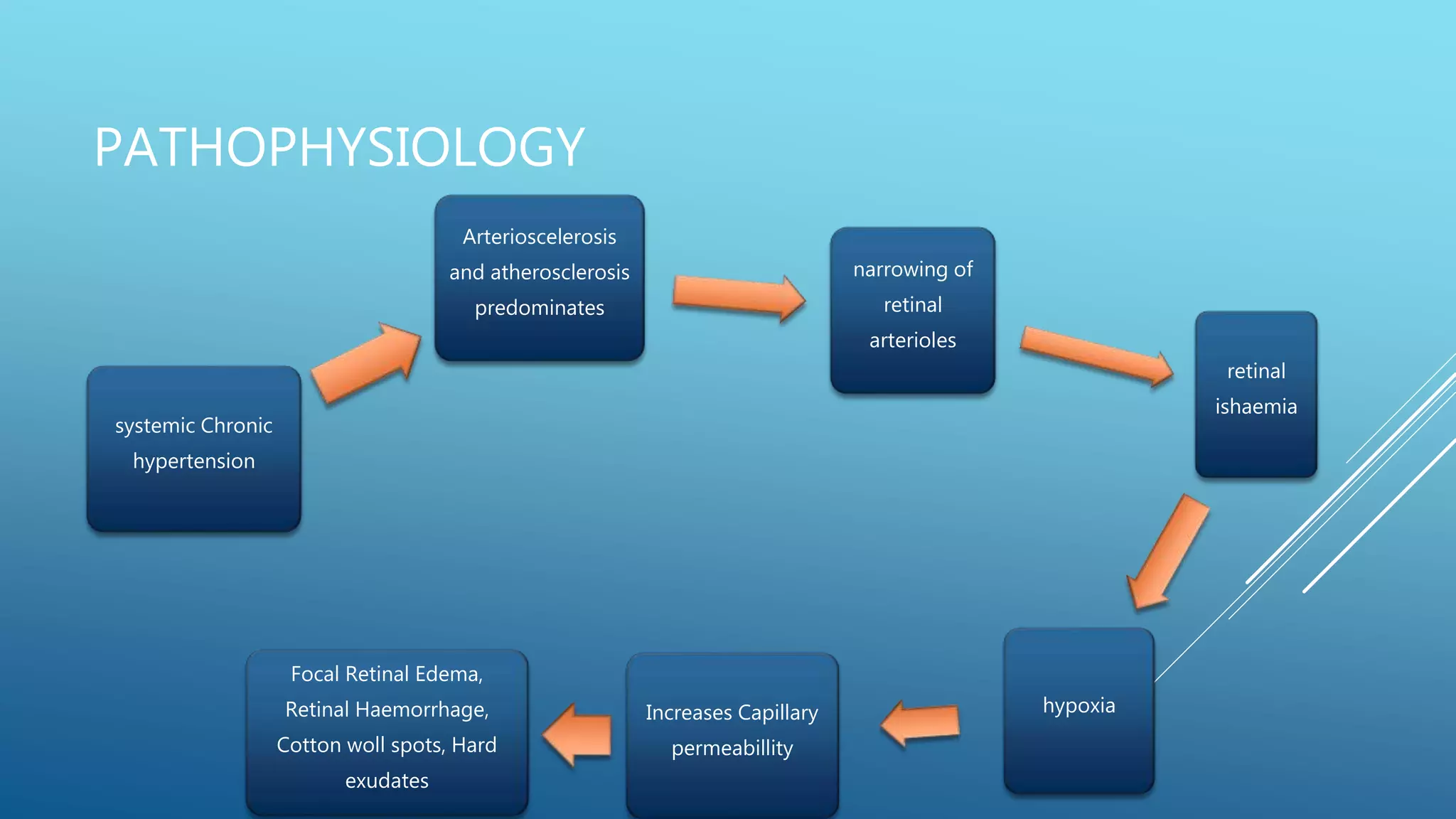
PATHOPHYSIOLOGY

systemic Chronic
hypertension
Arterioscelerosis
and atherosclerosis
predominates
narrowing of
retinal
arterioles
retinal
ishaemia
hypoxia
Increases Capillary
permeabillity
Focal Retinal Edema,
Retinal Haemorrhage,
Cotton woll spots, Hard
exudates
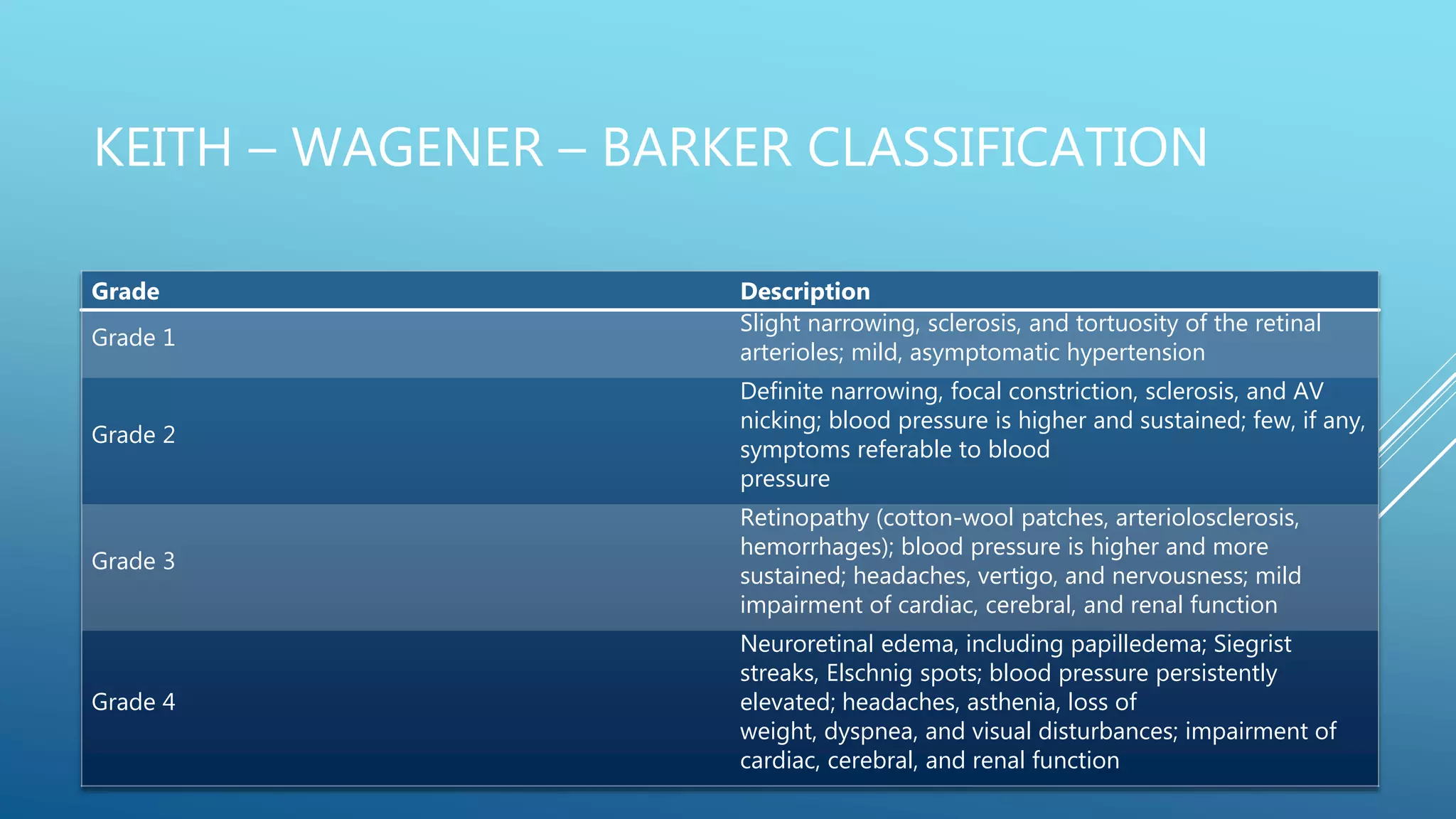
KEITH – WAGENER – BARKER CLASSIFICATION

Grade Description
Grade 1
Slight narrowing, sclerosis, and tortuosity of the retinal
arterioles; mild, asymptomatic hypertension
Grade 2
Definite narrowing, focal constriction, sclerosis, and AV
nicking; blood pressure is higher and sustained; few, if any,
symptoms referable to blood
pressure
Grade 3
Retinopathy (cotton-wool patches, arteriolosclerosis,
hemorrhages); blood pressure is higher and more
sustained; headaches, vertigo, and nervousness; mild
impairment of cardiac, cerebral, and renal function
Grade 4
Neuroretinal edema, including papilledema; Siegrist
streaks, Elschnig spots; blood pressure persistently
elevated; headaches, asthenia, loss of
weight, dyspnea, and visual disturbances; impairment of
cardiac, cerebral, and renal function
MODIFIED SCHEIE CLASSIFICATION
Grade 0 No changes
Grade 1 Barely detectable arterial narrowing
Grade 2
Obvious arterial narrowing with
focal irregularities
Grade 3
Grade 2 plus retinal hemorrhages
and/or exudates
Grade 4 Grade 3 plus disc swelling
RETINAL VEIN OCCLUSION
Definition
 It is a common vascular disorder characterized by retinal vein occlusion resulting in
edema and haemorrhages on retina in the affected region with potential blinding
complications
Types
 central retinal vein occlusion o Branch Retinal vein occlusion
Aetiology and Risk Factors
 Age of age of above 50 years
 Systemic diseases like hyperlipidaemia, Diabetes, Chronic Renal Failure
 Chronic Open Angle Glaucoma
RETINAL VEIN OCCLUSION
Clinical Presentation
 Sudden painless loss of vision
 Persistent decreased central vision
Clinical Examination
 Visual Acuity- Severe visual loss, up to 20/200
 Intra Ocular Pressure- Raised
 Fundus Examination- dilated, tortuous veins, retinal and macular edema, flame shaped
haemorrhages, and cotton wool spots
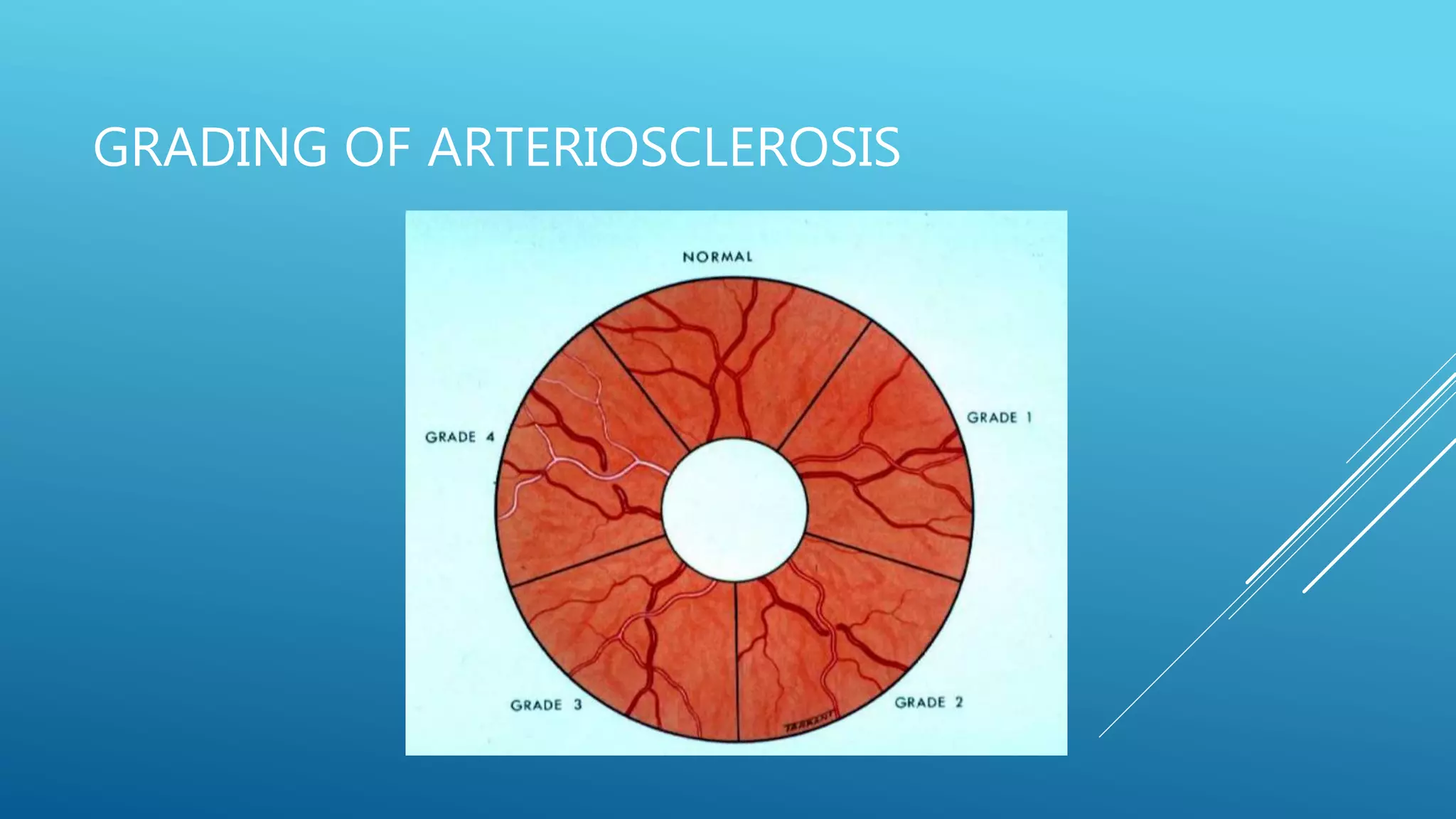
GRADING OF ARTERIOSCLEROSIS
CENTRAL RETINAL VEIN OCCLUSION
Non-ischemic type
 Mild fundus change
 retinal hemorrhage and tortuous vein
 Mild VA decrease
 capillary nonperfusion rare
 Visual field defect (retinal hemorrhage)
CENTRAL RETINAL VEIN OCCLUSION
Ischemic type
 More Common
 Extensive Retinal Haemorrhage And
Tortuous Vein, Multiple Cotton-wool Spots
 Severe VA Decrease
 Widespread Capillary Nonperfusion, 60%
Cases Present Iridal Neovascularization.
BRANCH RETINAL VEIN
OCCLUSION
 More Common Than CRVO
 Edema And Haemorrhage Limited To The
Affected Vein
 Vision Affected Only Macular Area Is Involved
 Secondary Glaucoma Occurs Rarely
 Prognosis Is Reasonably Good
RETINAL VEIN OCCLUSION
INVESTIGATIONS
 Fluorescein Angiography
 ECG
 Blood CP
 ESR
 Blood Glucose level
COMPLICATIONS
 Chronic Macular Edema
 Conversion from Non-Ischemic to Ischemic type
 Retinal Neovascularization
 Neovascular Glaucoma
RETINAL VEIN OCCLUSION
TREATMENT
 Macular Laser Photocoagulation
 Intra Vitreal injections anti-VEGF and steroids
 Intra Vitreal triamcinolone injections
RETINAL ARTERY OCCLUSION
Definition
 Vascular disorder of retina resulting in sudden painless loss of vision, with antecedent transient
visual loss
Types
 Central Retinal Artery Occlusion o Branch Retinal Artery Occlusion
Etiology
 Thrombosis due to atherosclerosis
 Embolism
 Raised Intra Ocular Pressure o Giant Cell Arteritis
 Angiospasm- Retinal Migraine
CLINICAL MANIFESTATION
Symptoms
 Sudden painless vision loss of one eye
Signs
 Direct light reflex disappear
 Indirect light reflex normal
 Retinal edema – cherry red spot
 Retinal artery narrow, mild hemorrhage
CENTRAL RETINAL ARTERY OCCLUSION
 Retinal Oedema
 Cherry Red Spots
 Retinal Artery Narrow
 Mild Haemorrhage
 Whitish Appearance Of Retina
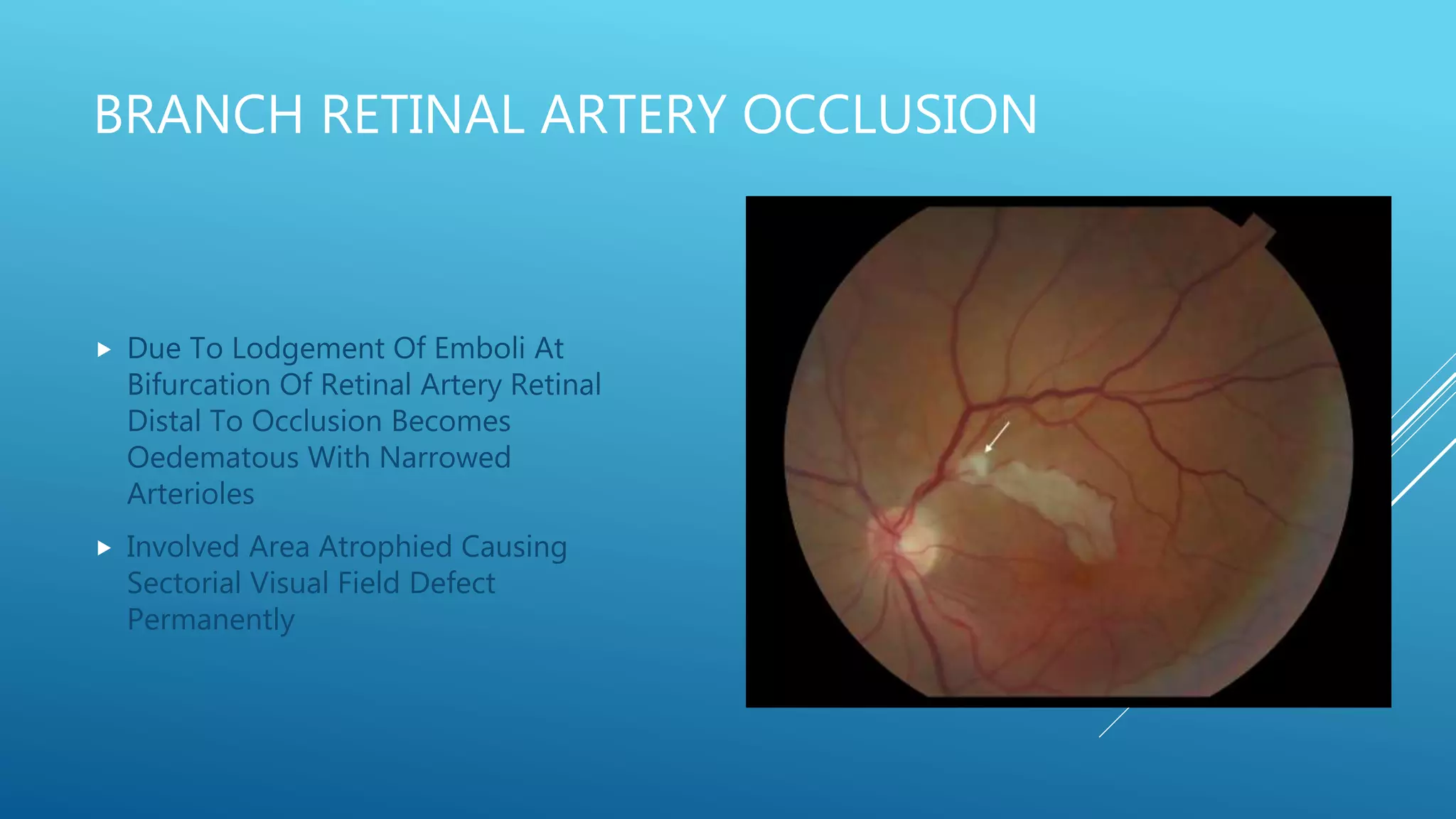
BRANCH RETINAL ARTERY OCCLUSION
 Due To Lodgement Of Emboli At
Bifurcation Of Retinal Artery Retinal
Distal To Occlusion Becomes
Oedematous With Narrowed
Arterioles
 Involved Area Atrophied Causing
Sectorial Visual Field Defect
Permanently
RETINAL ARTERY OCCLUSION
TREATMENT
 Intraocular pressure lowered immediately by anterior chamber paracentasis or I.V Acetazolamide
 Inhaled oxygen and carbon dioxide mixture to improve oxygen delivery to retina
 Thrombolytic therapy
RETINOPATHY OF PREMATURITY
Definition
 It Is A Bilateral Vasoproliferative Retinopathy Occurring In Premature Infants With Low Birth Weight And
Exposed To High Concentration Of Oxygen
Etiology And Risk Factors
 Low Birth Weight
 Exposure To High Concentrations Of Oxygen O Premature Birth
Pathology
 THE TEMPORAL RETINAL VASCULARIZATION IS COMPLETED 1 MONTH AFTER BIRTH
 TOXIC LEVEL OF OXYGEN INTERFERES WITH REVASCULARIZATION BY DAMAGING THE ENDOTHELIUM
AND OBLITERATING NEWLY FORMED CAPILLARIES.
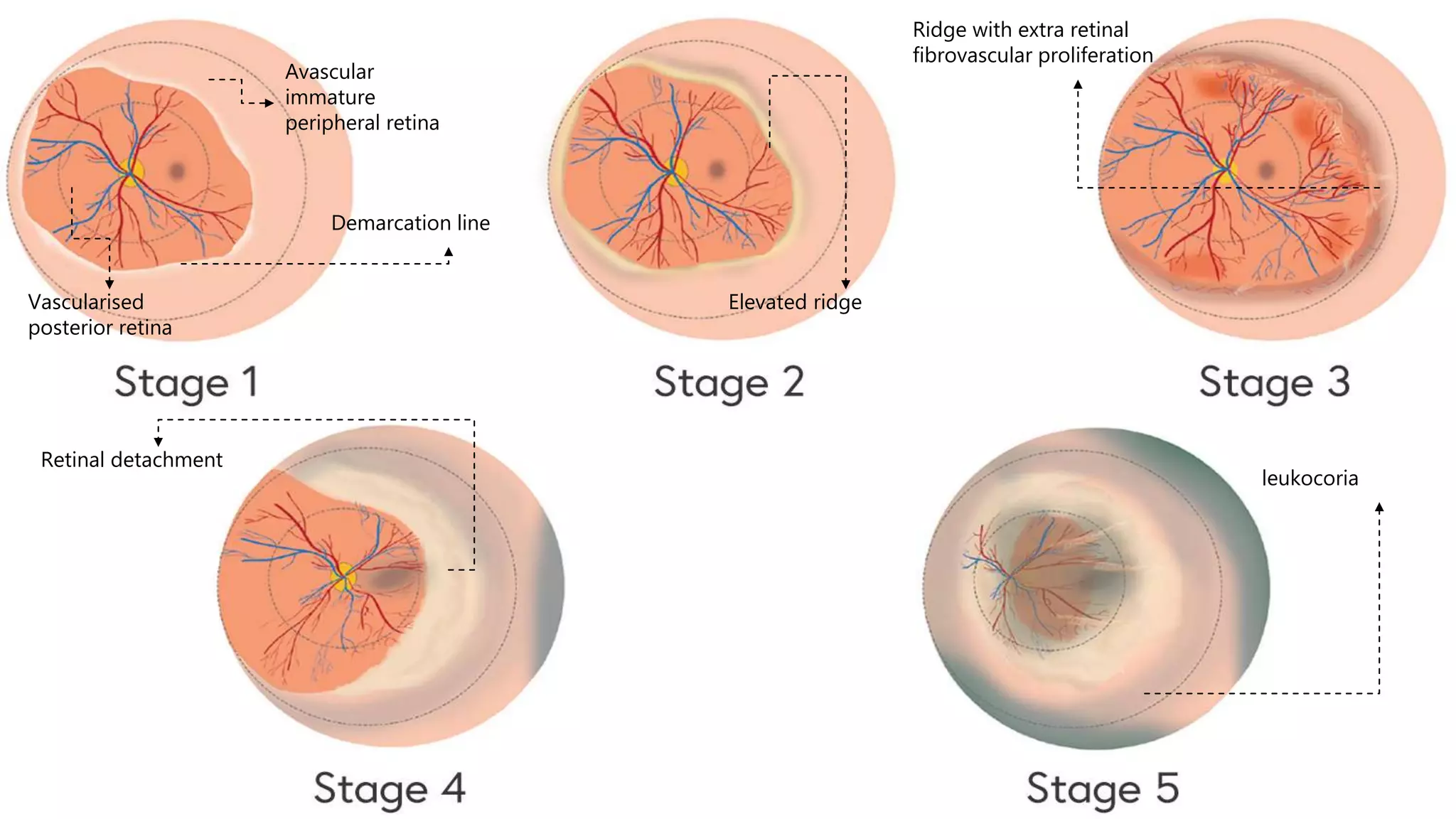

Vascularised
posterior retina
Avascular
immature
peripheral retina
Demarcation line
Elevated ridge
Ridge with extra retinal
fibrovascular proliferation
Retinal detachment
leukocoria
RETINOPATHY OF PREMATURITY
TREATMENT
 Peripheral retinal laser in stage 2
 Ablation of avascular retina in stage 3
 Vitreotomy in stage 4 & 5
THANK YOU

Vascular disorders of eye

  • 1.
    VASCULAR DISORDERS OF RETINA Dr.VS NAGGALAKSHMI M.S.,
  • 2.
    ANATOMY OF RETINA Theretina is a thin, semitransparent, multilayered sheet of neural tissue that lines the inner aspect of the posterior two-thirds of the wall of the globe
  • 3.
    LANDMARKS OF RETINA 1.Optic Disc 2. Retinal Blood Vessels 3. Area Centralis With Fovea And Foveola 4. Peripheral Retina And Ora Serrata 5. Thickest Near The Optic Disc 6. Thin Towards The Peripheral
  • 4.
  • 5.
    BLOOD SUPPLY OFTHE RETINA  Outer 4 layers of retina is supplied by (till outer nuclear layer) choriocapillaries.  The inner six layers gets its supply from central retinal artery which is a branch of ophthalmic artery.  The outer plexiform layer gets partly by both the above arteries. •The fovea is avascular and is mainly supplied by choriocapillaries.  The inner portion of the retina is perfused by branches of the central retinal artery.  In 30% of eyes ,a cilioretinal artery,branching from the ciliary circulation ,supplies part of inner retina mainly The Macula Region.  The retinal blood vessels maintain the inner blood-retinal barrier.This physiological barrier is due to single layer of non-fenestrated endothelial cells,whose tight junctions are impervious to tracer substances such as fluorescein
  • 6.
  • 7.
    BLOOD SUPPLY OFTHE RETINA  Retinal blood vessels lack an internal elastic lamina & a continuous layer of smooth muscle cells.  The retinal arteries are end arteries & have no anastomoses.The only place where the retinal system anastomoses is in the neighborhood of lamina cribrosa.  The veins of the retina unite to form Central retinal vein at the disc, which follows the corresponding artery.  The terminal fundus arterioles bend sharply and dip almost vertically into the retina.  In most of the Extramacular fundus- two retinal capillary networks- a superficial and a deep.  In parafoveal zone it is well developed and in 3 layers.  A capillary free zone of 500 micro meter diameter in foveal zone- FAZ.
  • 8.
    VASCULAR DISORDERS OFRETINA 1. DIABETIC RETINOPATHY 2. HYPERTENSIVE RETINOPATHY 3. RETINAL VEIN OCCLUSION 4. RETINAL ARTERY OCCLUSION 5. RETINOPATHY OF PREMATURITY
  • 9.
  • 10.
    DIABETIC RETINOPATHY  Diabeticretinopathy is a disorder of the retinal vessels that eventually develops to some degree in nearly all patients with long- standing diabetes mellitus. Most Common cause of bilateral severe visual loss in working age group in US
  • 11.
    RISK FACTORS  Ageat diagnosis of diabetes  Duration  Poor control of diabetes  Pregnancy  Hypertension  Nephropathy  Hyperlipidemia  Obesity  Anemia  Smoking  Cataract surgery
  • 12.
    PATHOGENESIS MICROVASCULAR LEAKAGE 1. LossOf Pericytes 2. Micro Aneurysn 3. Blood Retinal Barrier Breakdown IT CAUSES 1. Retinal Edema 2. Hard Exudate 3. Retinal Hemorrhages 1. Superficial (Flame Shaped) 2. Deep (Dot & Blot ) MICROVASCULAR OCCLUSION 1. Thickening Of Basement Membrane 2. Endothelial Damage 3. Stickiness & Aggregation Of Platelets 4. Fibrinolytic System Defective 5. Red Cell Aggregation 6. Defective Oxygen Transport IT CAUSES 1. Retinal Ischaemia (Cotton Wool Spots) 2. Neovasculariization On The Surface Of Retina, Optic Nerve Head And Iris (Rubeosis Iridis ) 3. Arterio Venous Shunts
  • 13.
    SIGNS 1. BACKGROUND DIABETICRETINOPATHY 2. PREPROLIFERATIVE STAGE 3. PROLIFERATIVE STAGE 4. DIABETIC MACULOPATHY 5. ADVANCED STAGE
  • 14.
  • 15.
    HAEMORRHAGES BACKGROUND DIABETIC RETINOPATHY FLAMESHAPED HAEMORRHAGES DOT AND BLOT HAEMORRHAGES
  • 16.
    HARD EXUDATES  locatedbetween inner plexiform and inner layer of retina  Composed of plasma proteins and lipid  Yellow waxy appearance with distinct margins
  • 17.
    RETINAL EDEMA It CausesThickening Of Retina And Gives Systoid Appearance To Retina
  • 18.
  • 19.
    PREPROLIFERATIVE CHANGES  COTTONWOOL SPOTS  APPEAR AS WHITISH GREY AREAS WITH INDISTINCT MARGINS
  • 20.
    PREPROLIFERATIVE CHANGES DARK BLOTHAEMORHAGE  They represent hemorrhagic retinal infarcts
  • 21.
    INTRA RETINAL MICROVASCULARABNORMALITIES IRMA
  • 22.
    PROLIFERATIVE DIABETIC RETINOPATHY NEOVASCULARIZATION : DISC  New vessels grow or proliferate on the optic nerve head
  • 23.
    PROLIFERATIVE DIABETIC RETINOPATHY NEOVASCULARIZATION : ELSEWHERE  New vessels proliferate along the course of internal temporal vascular arcades or tother areas of retina
  • 24.
    ADVANCED IABETIC EYEDISEASE Pre retinal hemorrhage Vitreous hemorrhage Traction RD Rubeosis iridis Neovascular Glaucoma
  • 25.
    DIABETIC MACULOPATHY CAUSES 1. Oedema 2.Hard Exudate 3. Macular Haemorrhage 4. Macular Ischaemia 5. Pre Macular Membrane 6. Formation 7. Macular Traction Or Detachment CLINICAL TYPES 1. Focal Exudative 2. Diffuses Exudative 3. Ischaemic 4. Mixed Maculopathy
  • 26.
    DIAGNOSIS 1. FUNDUS EXAMINATIONWITH  Direct Ophthalmoscope  Indirect Ophthalmoscope  Slit Lamp Bimicroscopy With Contact Lens And Non Contact Lens 2. FUNDUS FLUORESCEIN ANGIOGRAPHY FOR ASSESSMENT OF:  Leaking Areas  Occlusion Areas 3. OPTICAL COHERENCE TOMOGRAPHY IS USEFUL TO ASSESS RETINAL OEDEMA
  • 27.
    TREATMENT 1. Control OfRisk Factors  Diabetes Mellitus  Hypertension  Anaemia  Nephropathy  Hyperlipidemia 2. Antivascular Endothelial Growth Factor 3. Intravitreal Steroids Are Useful To Reduce The Macular Oedema (Intravitreal Injection Of Triamcinolone MEDICAL
  • 28.
    LASER PHOTOCOAGULATION OBJECTIVES  Todestroy the hypoxic retina, stop the release of vasoformative substance and cause involution of new vessels  To destroy the leakage areas and enhance the absorption of edema and exudate TYPES  Focal treatment for focal macular edema  Grid treatment for diffuse macular edema  Panretinal photocoagulation
  • 29.
  • 30.
  • 31.
    SURGERY PARS PLANA VITRECTOMYIS INDICATED FOR  Dense Persistent Vitreous Haemorrhage  Tractional Retinal Detachment  Epiretinal Membranes
  • 32.
  • 33.
    PATHOPHYSIOLOGY  systemic Chronic hypertension Arterioscelerosis and atherosclerosis predominates narrowingof retinal arterioles retinal ishaemia hypoxia Increases Capillary permeabillity Focal Retinal Edema, Retinal Haemorrhage, Cotton woll spots, Hard exudates
  • 34.
    KEITH – WAGENER– BARKER CLASSIFICATION  Grade Description Grade 1 Slight narrowing, sclerosis, and tortuosity of the retinal arterioles; mild, asymptomatic hypertension Grade 2 Definite narrowing, focal constriction, sclerosis, and AV nicking; blood pressure is higher and sustained; few, if any, symptoms referable to blood pressure Grade 3 Retinopathy (cotton-wool patches, arteriolosclerosis, hemorrhages); blood pressure is higher and more sustained; headaches, vertigo, and nervousness; mild impairment of cardiac, cerebral, and renal function Grade 4 Neuroretinal edema, including papilledema; Siegrist streaks, Elschnig spots; blood pressure persistently elevated; headaches, asthenia, loss of weight, dyspnea, and visual disturbances; impairment of cardiac, cerebral, and renal function
  • 35.
    MODIFIED SCHEIE CLASSIFICATION Grade0 No changes Grade 1 Barely detectable arterial narrowing Grade 2 Obvious arterial narrowing with focal irregularities Grade 3 Grade 2 plus retinal hemorrhages and/or exudates Grade 4 Grade 3 plus disc swelling
  • 37.
  • 38.
    RETINAL VEIN OCCLUSION Definition It is a common vascular disorder characterized by retinal vein occlusion resulting in edema and haemorrhages on retina in the affected region with potential blinding complications Types  central retinal vein occlusion o Branch Retinal vein occlusion Aetiology and Risk Factors  Age of age of above 50 years  Systemic diseases like hyperlipidaemia, Diabetes, Chronic Renal Failure  Chronic Open Angle Glaucoma
  • 39.
    RETINAL VEIN OCCLUSION ClinicalPresentation  Sudden painless loss of vision  Persistent decreased central vision Clinical Examination  Visual Acuity- Severe visual loss, up to 20/200  Intra Ocular Pressure- Raised  Fundus Examination- dilated, tortuous veins, retinal and macular edema, flame shaped haemorrhages, and cotton wool spots
  • 40.
  • 41.
    CENTRAL RETINAL VEINOCCLUSION Non-ischemic type  Mild fundus change  retinal hemorrhage and tortuous vein  Mild VA decrease  capillary nonperfusion rare  Visual field defect (retinal hemorrhage)
  • 42.
    CENTRAL RETINAL VEINOCCLUSION Ischemic type  More Common  Extensive Retinal Haemorrhage And Tortuous Vein, Multiple Cotton-wool Spots  Severe VA Decrease  Widespread Capillary Nonperfusion, 60% Cases Present Iridal Neovascularization.
  • 43.
    BRANCH RETINAL VEIN OCCLUSION More Common Than CRVO  Edema And Haemorrhage Limited To The Affected Vein  Vision Affected Only Macular Area Is Involved  Secondary Glaucoma Occurs Rarely  Prognosis Is Reasonably Good
  • 44.
    RETINAL VEIN OCCLUSION INVESTIGATIONS Fluorescein Angiography  ECG  Blood CP  ESR  Blood Glucose level COMPLICATIONS  Chronic Macular Edema  Conversion from Non-Ischemic to Ischemic type  Retinal Neovascularization  Neovascular Glaucoma
  • 45.
    RETINAL VEIN OCCLUSION TREATMENT Macular Laser Photocoagulation  Intra Vitreal injections anti-VEGF and steroids  Intra Vitreal triamcinolone injections
  • 46.
  • 47.
    RETINAL ARTERY OCCLUSION Definition Vascular disorder of retina resulting in sudden painless loss of vision, with antecedent transient visual loss Types  Central Retinal Artery Occlusion o Branch Retinal Artery Occlusion Etiology  Thrombosis due to atherosclerosis  Embolism  Raised Intra Ocular Pressure o Giant Cell Arteritis  Angiospasm- Retinal Migraine
  • 48.
    CLINICAL MANIFESTATION Symptoms  Suddenpainless vision loss of one eye Signs  Direct light reflex disappear  Indirect light reflex normal  Retinal edema – cherry red spot  Retinal artery narrow, mild hemorrhage
  • 49.
    CENTRAL RETINAL ARTERYOCCLUSION  Retinal Oedema  Cherry Red Spots  Retinal Artery Narrow  Mild Haemorrhage  Whitish Appearance Of Retina
  • 50.
    BRANCH RETINAL ARTERYOCCLUSION  Due To Lodgement Of Emboli At Bifurcation Of Retinal Artery Retinal Distal To Occlusion Becomes Oedematous With Narrowed Arterioles  Involved Area Atrophied Causing Sectorial Visual Field Defect Permanently
  • 51.
    RETINAL ARTERY OCCLUSION TREATMENT Intraocular pressure lowered immediately by anterior chamber paracentasis or I.V Acetazolamide  Inhaled oxygen and carbon dioxide mixture to improve oxygen delivery to retina  Thrombolytic therapy
  • 52.
  • 53.
    RETINOPATHY OF PREMATURITY Definition It Is A Bilateral Vasoproliferative Retinopathy Occurring In Premature Infants With Low Birth Weight And Exposed To High Concentration Of Oxygen Etiology And Risk Factors  Low Birth Weight  Exposure To High Concentrations Of Oxygen O Premature Birth Pathology  THE TEMPORAL RETINAL VASCULARIZATION IS COMPLETED 1 MONTH AFTER BIRTH  TOXIC LEVEL OF OXYGEN INTERFERES WITH REVASCULARIZATION BY DAMAGING THE ENDOTHELIUM AND OBLITERATING NEWLY FORMED CAPILLARIES.
  • 54.
     Vascularised posterior retina Avascular immature peripheral retina Demarcationline Elevated ridge Ridge with extra retinal fibrovascular proliferation Retinal detachment leukocoria
  • 55.
    RETINOPATHY OF PREMATURITY TREATMENT Peripheral retinal laser in stage 2  Ablation of avascular retina in stage 3  Vitreotomy in stage 4 & 5
  • 56.