Volcano-Related
HAZARD
BY: Group 4
Let’s play some
mini games.
----
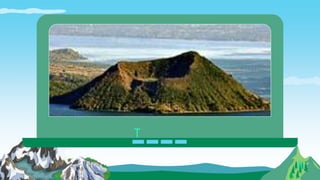
T
----
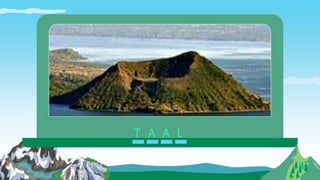
T A A L
-----
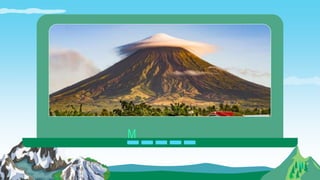
M
-----
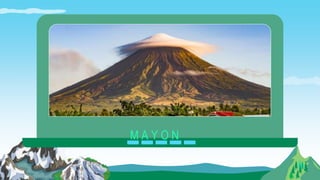
M A Y O N
--------
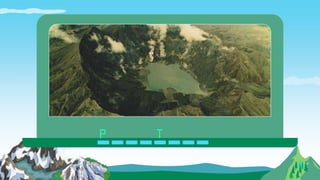
P T
--------
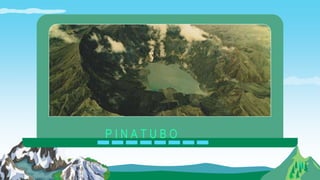
P I N A T U B O
-------
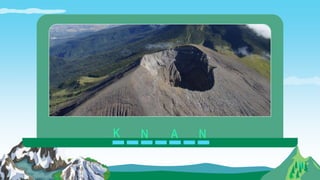
K A N
N
-------
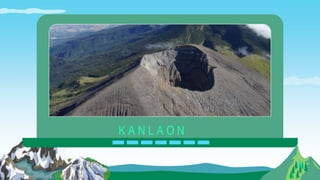
K A N L A O N
-------
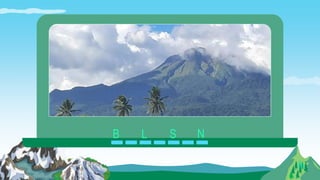
B S
L N
-------
B U L U S A N
Well done!
You did greate!
Lesson Objectives:
Identify the Various Volcano-Related Hazards.
Be aware of what Volcano-Related Hazards can cause.
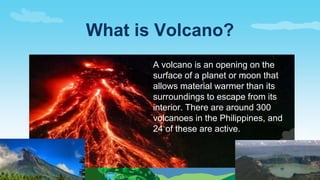
A volcano is an opening on the
surface of a planet or moon that
allows material warmer than its
surroundings to escape from its
interior. There are around 300
volcanoes in the Philippines, and
24 of these are active.
What is Volcano?
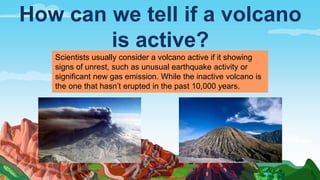
How can we tell if a volcano
is active?
Scientists usually consider a volcano active if it showing
signs of unrest, such as unusual earthquake activity or
significant new gas emission. While the inactive volcano is
the one that hasn’t erupted in the past 10,000 years.
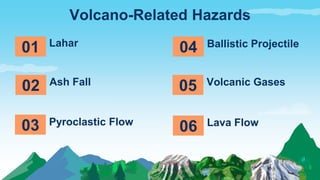
Volcano-Related Hazards
01
03
02
Lahar
Pyroclastic Flow
Ash Fall
04
05
06
Ballistic Projectile
Volcanic Gases
Lava Flow
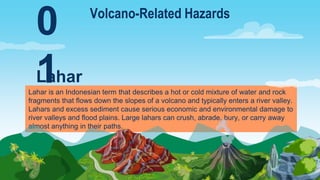
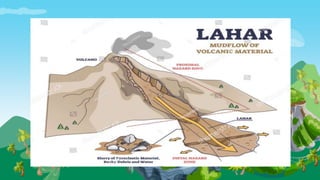
Lahar is an Indonesian term that describes a hot or cold mixture of water and rock
fragments that flows down the slopes of a volcano and typically enters a river valley.
Lahars and excess sediment cause serious economic and environmental damage to
river valleys and flood plains. Large lahars can crush, abrade, bury, or carry away
almost anything in their paths.
Lahar
0
1
Volcano-Related Hazards
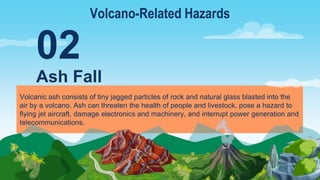
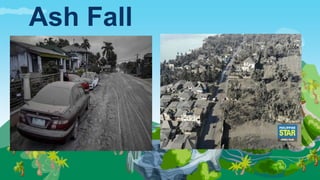
Volcanic ash consists of tiny jagged particles of rock and natural glass blasted into the
air by a volcano. Ash can threaten the health of people and livestock, pose a hazard to
flying jet aircraft, damage electronics and machinery, and interrupt power generation and
telecommunications.
Ash Fall
02
Volcano-Related Hazards
Ash Fall
Pyroclastic Flow
03
Volcano-Related Hazards
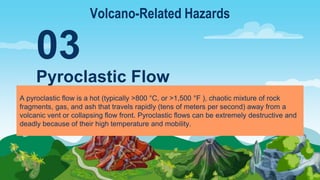
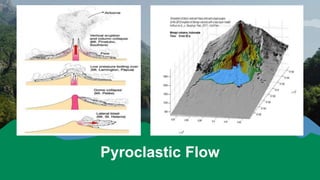
A pyroclastic flow is a hot (typically >800 °C, or >1,500 °F ), chaotic mixture of rock
fragments, gas, and ash that travels rapidly (tens of meters per second) away from a
volcanic vent or collapsing flow front. Pyroclastic flows can be extremely destructive and
deadly because of their high temperature and mobility.
Pyroclastic Flow
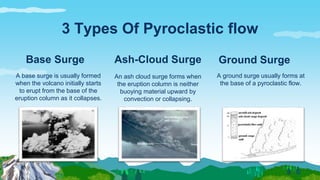
3 Types Of Pyroclastic flow
A base surge is usually formed
when the volcano initially starts
to erupt from the base of the
eruption column as it collapses.
A ground surge usually forms at
the base of a pyroclastic flow.
Base Surge Ground Surge
Ash-Cloud Surge
An ash cloud surge forms when
the eruption column is neither
buoying material upward by
convection or collapsing.
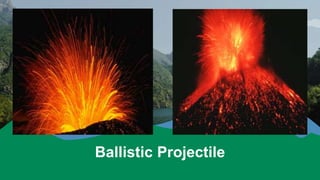
Ballistic projectiles are fragments of solid (blocks) or fluid (bombs) material ejected
during the range of magmatic or phreatic (steam) explosive eruptions. They are
centimeters to tens of meters in diameter and follow near-parabolic trajectories separate
from the main eruption column. They can cause significant damage to infrastructure due
to the speed, size, and often high temperatures of the material.
Ballistic Projectile
04
Volcano-Related Hazards
Ballistic Projectile
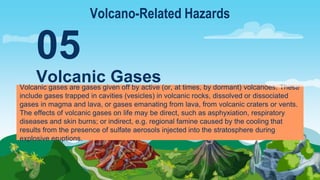
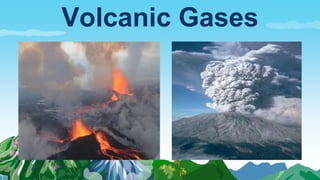
Volcanic gases are gases given off by active (or, at times, by dormant) volcanoes. These
include gases trapped in cavities (vesicles) in volcanic rocks, dissolved or dissociated
gases in magma and lava, or gases emanating from lava, from volcanic craters or vents.
The effects of volcanic gases on life may be direct, such as asphyxiation, respiratory
diseases and skin burns; or indirect, e.g. regional famine caused by the cooling that
results from the presence of sulfate aerosols injected into the stratosphere during
explosive eruptions.
Volcanic Gases
05
Volcano-Related Hazards
Volcanic Gases
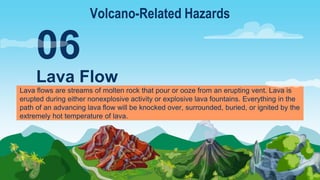
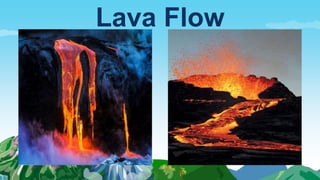
Lava flows are streams of molten rock that pour or ooze from an erupting vent. Lava is
erupted during either nonexplosive activity or explosive lava fountains. Everything in the
path of an advancing lava flow will be knocked over, surrounded, buried, or ignited by the
extremely hot temperature of lava.
Lava Flow
06
Volcano-Related Hazards
Lava Flow
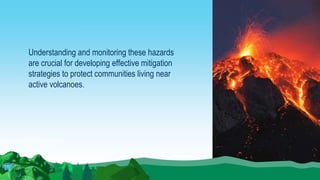
Understanding and monitoring these hazards
are crucial for developing effective mitigation
strategies to protect communities living near
active volcanoes.
Thanks for listening! We hope you
learn something!

Various_Volcano-Related_Hazards_Group_4.pptx

  • 1.
  • 2.
  • 3.
  • 4.
  • 5.
  • 6.
  • 7.
  • 8.
    -------- P I NA T U B O
  • 9.
  • 10.
  • 11.
  • 12.
  • 13.
  • 14.
    Lesson Objectives: Identify theVarious Volcano-Related Hazards. Be aware of what Volcano-Related Hazards can cause.
  • 15.
    A volcano isan opening on the surface of a planet or moon that allows material warmer than its surroundings to escape from its interior. There are around 300 volcanoes in the Philippines, and 24 of these are active. What is Volcano?
  • 16.
    How can wetell if a volcano is active? Scientists usually consider a volcano active if it showing signs of unrest, such as unusual earthquake activity or significant new gas emission. While the inactive volcano is the one that hasn’t erupted in the past 10,000 years.
  • 17.
    Volcano-Related Hazards 01 03 02 Lahar Pyroclastic Flow AshFall 04 05 06 Ballistic Projectile Volcanic Gases Lava Flow
  • 18.
    Lahar is anIndonesian term that describes a hot or cold mixture of water and rock fragments that flows down the slopes of a volcano and typically enters a river valley. Lahars and excess sediment cause serious economic and environmental damage to river valleys and flood plains. Large lahars can crush, abrade, bury, or carry away almost anything in their paths. Lahar 0 1 Volcano-Related Hazards
  • 20.
    Volcanic ash consistsof tiny jagged particles of rock and natural glass blasted into the air by a volcano. Ash can threaten the health of people and livestock, pose a hazard to flying jet aircraft, damage electronics and machinery, and interrupt power generation and telecommunications. Ash Fall 02 Volcano-Related Hazards
  • 21.
  • 22.
    Pyroclastic Flow 03 Volcano-Related Hazards Apyroclastic flow is a hot (typically >800 °C, or >1,500 °F ), chaotic mixture of rock fragments, gas, and ash that travels rapidly (tens of meters per second) away from a volcanic vent or collapsing flow front. Pyroclastic flows can be extremely destructive and deadly because of their high temperature and mobility.
  • 23.
  • 24.
    3 Types OfPyroclastic flow A base surge is usually formed when the volcano initially starts to erupt from the base of the eruption column as it collapses. A ground surge usually forms at the base of a pyroclastic flow. Base Surge Ground Surge Ash-Cloud Surge An ash cloud surge forms when the eruption column is neither buoying material upward by convection or collapsing.
  • 25.
    Ballistic projectiles arefragments of solid (blocks) or fluid (bombs) material ejected during the range of magmatic or phreatic (steam) explosive eruptions. They are centimeters to tens of meters in diameter and follow near-parabolic trajectories separate from the main eruption column. They can cause significant damage to infrastructure due to the speed, size, and often high temperatures of the material. Ballistic Projectile 04 Volcano-Related Hazards
  • 26.
  • 27.
    Volcanic gases aregases given off by active (or, at times, by dormant) volcanoes. These include gases trapped in cavities (vesicles) in volcanic rocks, dissolved or dissociated gases in magma and lava, or gases emanating from lava, from volcanic craters or vents. The effects of volcanic gases on life may be direct, such as asphyxiation, respiratory diseases and skin burns; or indirect, e.g. regional famine caused by the cooling that results from the presence of sulfate aerosols injected into the stratosphere during explosive eruptions. Volcanic Gases 05 Volcano-Related Hazards
  • 28.
  • 29.
    Lava flows arestreams of molten rock that pour or ooze from an erupting vent. Lava is erupted during either nonexplosive activity or explosive lava fountains. Everything in the path of an advancing lava flow will be knocked over, surrounded, buried, or ignited by the extremely hot temperature of lava. Lava Flow 06 Volcano-Related Hazards
  • 30.
  • 31.
    Understanding and monitoringthese hazards are crucial for developing effective mitigation strategies to protect communities living near active volcanoes.
  • 32.
    Thanks for listening!We hope you learn something!