

TOPIC OUTLINE:
Definition of Values Goals and Objectives of Values
Education
Values Education
The Why, When, Where, Who, What, and How in
Teaching Values
Importance of Teaching Values
Value Formation
Value Clarification
The Values of Being and Giving
Core and Related Values
Values as subject matter must have a
direct and immediate relevance to the
personal life of the learner.
The process must involve all the
faculties of the learners.
The teacher’s and parent’s personal
values play important roles in values
learning.
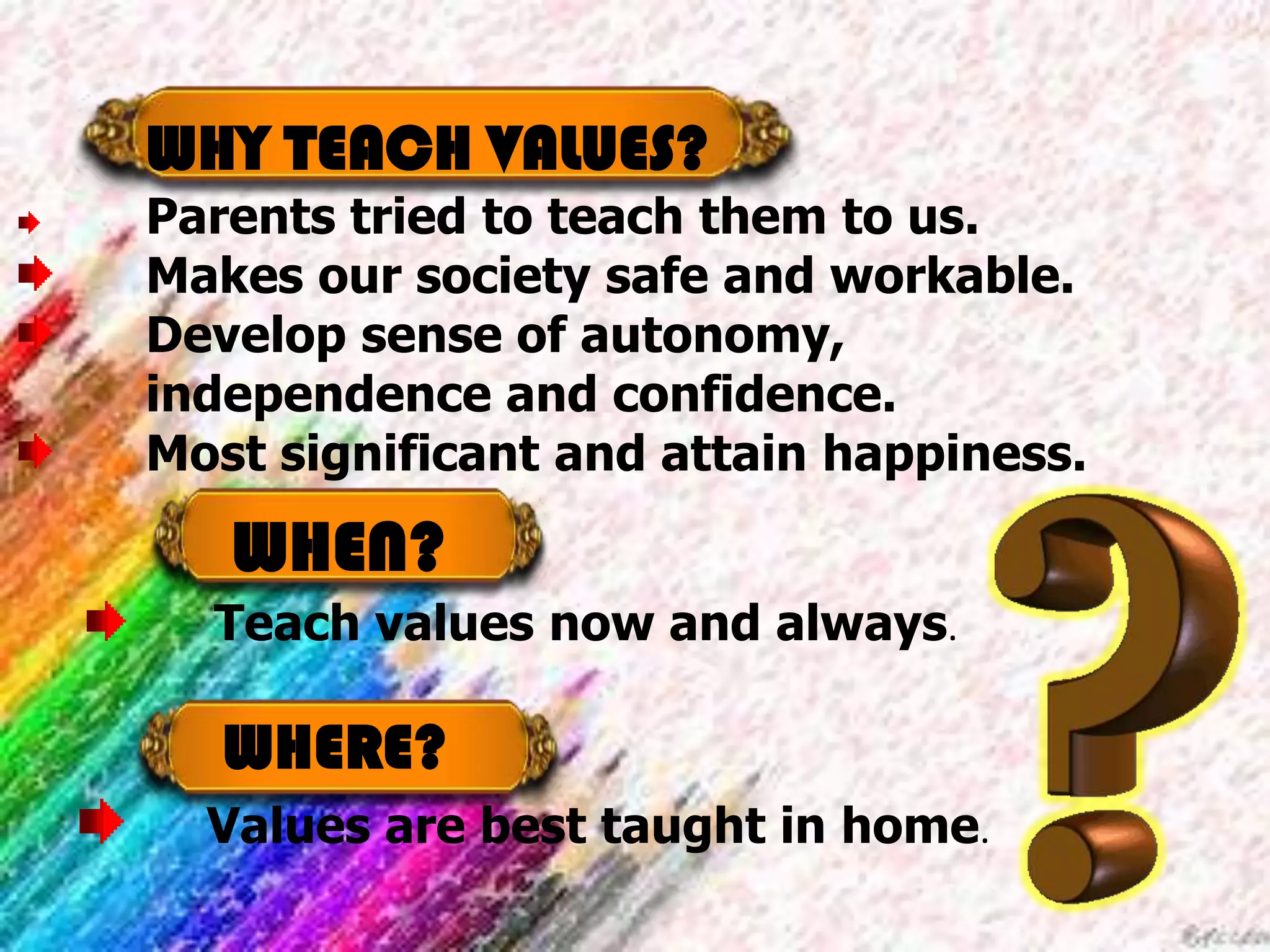
WHEN?
Teach values now and always.
WHY TEACH VALUES?
Parents tried to teach them to us.
Makes our society safe and workable.
Develop sense of autonomy,
independence and confidence.
Most significant and attain happiness.
WHERE?
Values are best taught in home.
WHAT?
Decide which values to teach.
WHO?
Parents
Teachers
HOW?
Methods especially designed in
teaching values to pre-
schools, elementary
ages, adolescents, and community
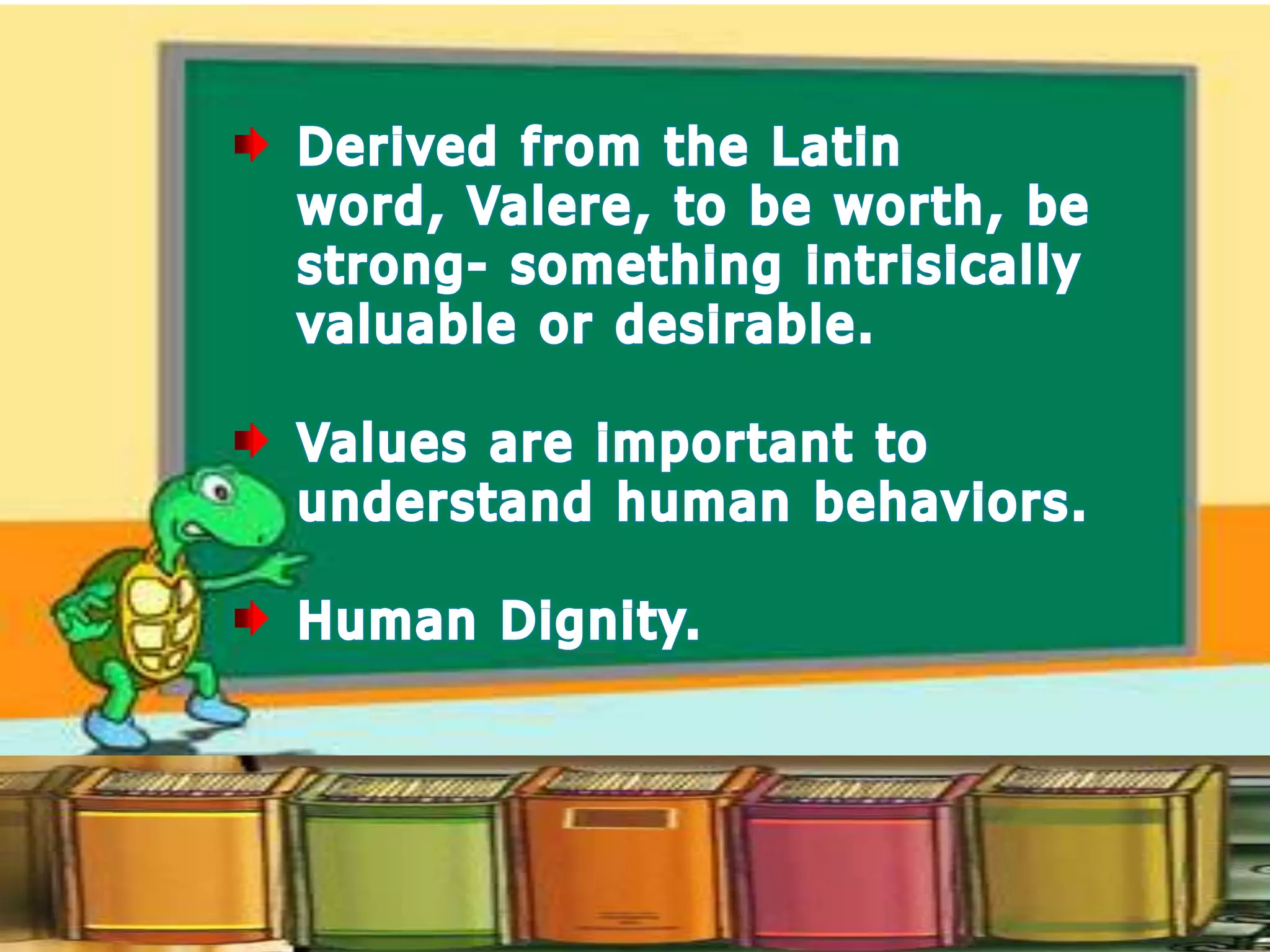
They guide people and identify
what behavior is acceptable and
what behavior is not.
It is who we are and what we give
rather than what we have that
make up our truest inner selves.
These are given as they are and
gained practiced on the “outer” as
they are developed in the “inner”.
Influences-
Person’s Internal influences such as
intellectual and emotional capabilities
Experience Factor-
Good Influences and good experiences
are needed in value formation
Liturgical Experience
Bible Experience
Learning Experience
Human Experience
1. Value Clarification is a difficult task.
Three basic steps that are useful in Value
Clarification.
Choice
Value
Action
2. Values are better than rules.
Forward Thinking- The organization promotes
values to guide people.
3.Values serve as outline goals.
An explicit set of values shall form the
foundation of any organization because they
endure.
4. Values send a message.
A good value teaches and guides the members
of the organization.
5. Values shape an Organization.
It thrusts members to produce quality good
products. Values can shape and animate an
organization.
THE VALUES OF BEING
HONESTY
The inner strength and confidence are bred by
exacting truthfulness, trustworthiness, and
integrity.
COURAGE
Being True to convictions and following good
impulses even when they are unpopular or
convenient.
PEACEABILITY
Calmness, peacefulness and serenity.
Understand how others feel rather than simply
reacting to them.
SELF-RELIANCE AND POTENTIAL
Individuality, awareness, and development
of gifts and uniqueness. Responsibility for one’s
own actions.
SELF-DISCIPLINE AND MODERATION
Controlling and bridling of one’s own
appetites and understanding the limits of body and
mind.
FIDELITY AND CHASTITY
Value and security of fidelity within marriage
and of restraint and limits before marriage.
THE VALUES OF GIVING
LOYALTY AND DEPENDABILTY
Reliability and consistency in doing what you
say you will do.
RESPECT
Courtesy, politeness, and manners. Self-
respect and the avoidance of self criticism.
LOVE
Personal caring that goes beneath and
beyond loyalty and respect.
UNSELFISHNESS AND SENSITIVITY
More extra-centered and less self-
centered. Learning to feel with for others.
KINDNESS AND FRIENSHIP
Understand rather than confront, and be
gentle, toward those who are younger and weaker.
Helpfulness and cheerfulness.
JUSTICE AND MERCY
Obedience to law and fairness in work and
play. Understanding natural consequences and the
law of the harvest.
DIMENSIONS - VALUES
PHYSICAL
- HEALTH
Physical Fitness
Cleanliness
Harmony with material
Universe
Art and Beauty
INTELLECTUAL
- TRUTH
Knowledge
Creating and Critical Thinking
MORAL
LOVE
Integrity
Honesty
Self-worth
Self-esteem
Personal Discipline
SPIRITUAL
SPIRITUALITY
Faith in God
SOCIAL RESPONSIBILITY
Mutual Love
Respect
Fidelity
Responsible Parenthood
Concern for Common Good and others
SOCIAL SOCIETYFAMILY
Freedom/Equality
Social Judgement/Respect for Human
Rights
Peace/Active Non-violence
ECONOMIC
ECONOMIC EFFICIENCY THRIFT
OF CONSERVATION RESOURCES
Work Ethics
Self-Reliance
Vocational Efficiency
Entrepreneurship
POLITICAL
NATIONALISM
Common Identity
National Unity
Civic Consciousness/ Pride
Bayanihan/ Solidarity
Loyalty to country
Prepared by: I- Penafrancia

Valus education

  • 2.
    TOPIC OUTLINE: Definition ofValues Goals and Objectives of Values Education Values Education The Why, When, Where, Who, What, and How in Teaching Values Importance of Teaching Values Value Formation Value Clarification The Values of Being and Giving Core and Related Values
  • 10.
    Values as subjectmatter must have a direct and immediate relevance to the personal life of the learner. The process must involve all the faculties of the learners. The teacher’s and parent’s personal values play important roles in values learning.
  • 12.
    WHEN? Teach values nowand always. WHY TEACH VALUES? Parents tried to teach them to us. Makes our society safe and workable. Develop sense of autonomy, independence and confidence. Most significant and attain happiness. WHERE? Values are best taught in home.
  • 13.
    WHAT? Decide which valuesto teach. WHO? Parents Teachers HOW? Methods especially designed in teaching values to pre- schools, elementary ages, adolescents, and community
  • 15.
    They guide peopleand identify what behavior is acceptable and what behavior is not.
  • 16.
    It is whowe are and what we give rather than what we have that make up our truest inner selves.
  • 17.
    These are givenas they are and gained practiced on the “outer” as they are developed in the “inner”.
  • 19.
    Influences- Person’s Internal influencessuch as intellectual and emotional capabilities Experience Factor- Good Influences and good experiences are needed in value formation
  • 20.
  • 22.
    1. Value Clarificationis a difficult task. Three basic steps that are useful in Value Clarification. Choice Value Action 2. Values are better than rules. Forward Thinking- The organization promotes values to guide people. 3.Values serve as outline goals. An explicit set of values shall form the foundation of any organization because they endure.
  • 23.
    4. Values senda message. A good value teaches and guides the members of the organization. 5. Values shape an Organization. It thrusts members to produce quality good products. Values can shape and animate an organization.
  • 25.
    THE VALUES OFBEING HONESTY The inner strength and confidence are bred by exacting truthfulness, trustworthiness, and integrity. COURAGE Being True to convictions and following good impulses even when they are unpopular or convenient.
  • 26.
    PEACEABILITY Calmness, peacefulness andserenity. Understand how others feel rather than simply reacting to them. SELF-RELIANCE AND POTENTIAL Individuality, awareness, and development of gifts and uniqueness. Responsibility for one’s own actions.
  • 27.
    SELF-DISCIPLINE AND MODERATION Controllingand bridling of one’s own appetites and understanding the limits of body and mind. FIDELITY AND CHASTITY Value and security of fidelity within marriage and of restraint and limits before marriage.
  • 28.
    THE VALUES OFGIVING LOYALTY AND DEPENDABILTY Reliability and consistency in doing what you say you will do. RESPECT Courtesy, politeness, and manners. Self- respect and the avoidance of self criticism.
  • 29.
    LOVE Personal caring thatgoes beneath and beyond loyalty and respect. UNSELFISHNESS AND SENSITIVITY More extra-centered and less self- centered. Learning to feel with for others.
  • 30.
    KINDNESS AND FRIENSHIP Understandrather than confront, and be gentle, toward those who are younger and weaker. Helpfulness and cheerfulness. JUSTICE AND MERCY Obedience to law and fairness in work and play. Understanding natural consequences and the law of the harvest.
  • 32.
    DIMENSIONS - VALUES PHYSICAL -HEALTH Physical Fitness Cleanliness Harmony with material Universe Art and Beauty
  • 33.
  • 34.
  • 35.
  • 36.
    SOCIAL RESPONSIBILITY Mutual Love Respect Fidelity ResponsibleParenthood Concern for Common Good and others SOCIAL SOCIETYFAMILY
  • 37.
    Freedom/Equality Social Judgement/Respect forHuman Rights Peace/Active Non-violence
  • 38.
    ECONOMIC ECONOMIC EFFICIENCY THRIFT OFCONSERVATION RESOURCES Work Ethics Self-Reliance
  • 39.
  • 40.
    POLITICAL NATIONALISM Common Identity National Unity CivicConsciousness/ Pride Bayanihan/ Solidarity Loyalty to country
  • 41.
    Prepared by: I-Penafrancia