Value Proposition Design
or, How To Make Things People Want
Soumitra Bhat
@performingflea
MAKE
THINGS
PEOPLE
WANT.
MAKE
PEOPLE
WANT
THINGS.
- 21c - 20c
>
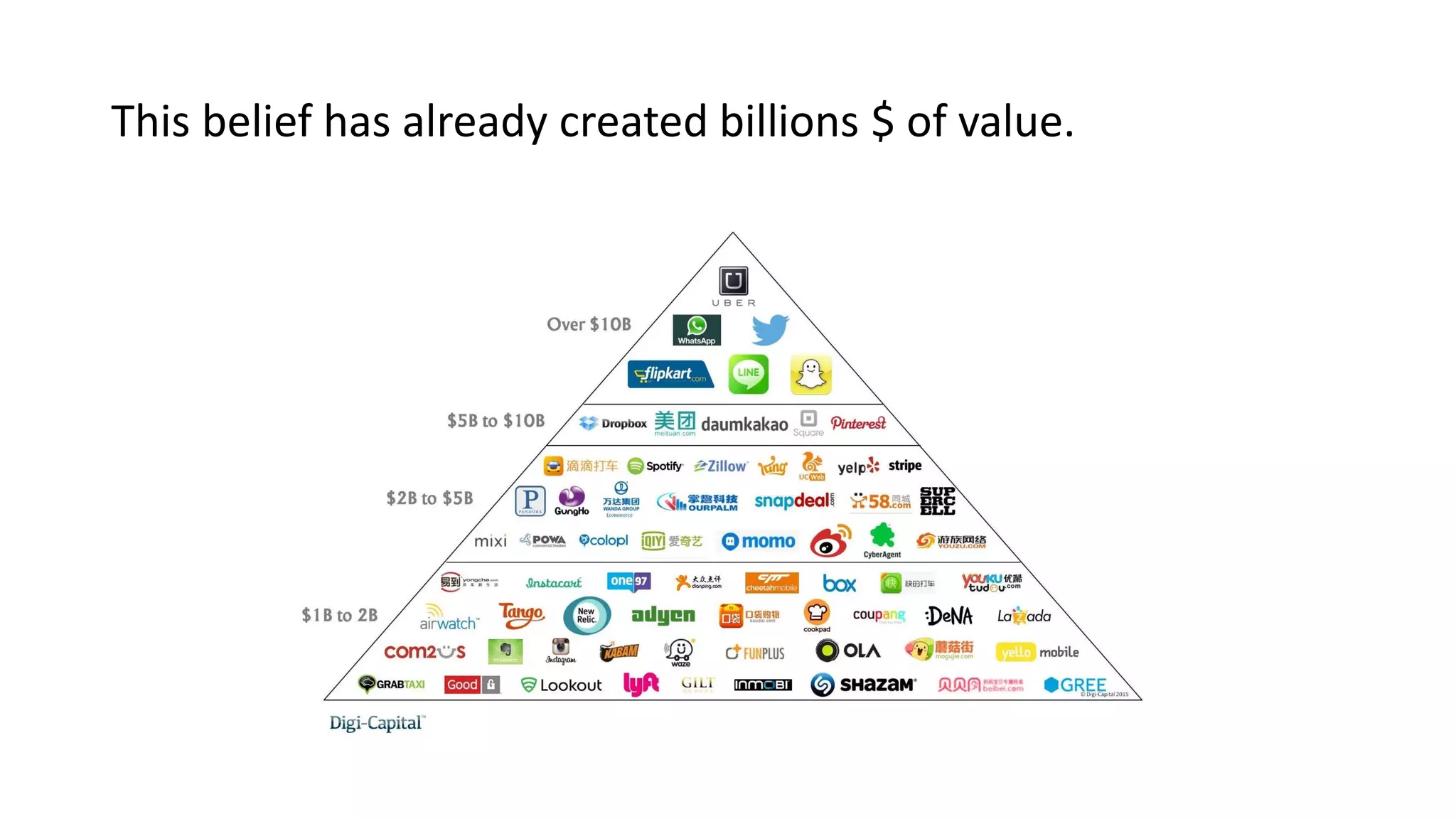
This belief has already created billions $ of value.
And it is rapidly becoming the foundation of new business.
NEED WANT≠
What people What people
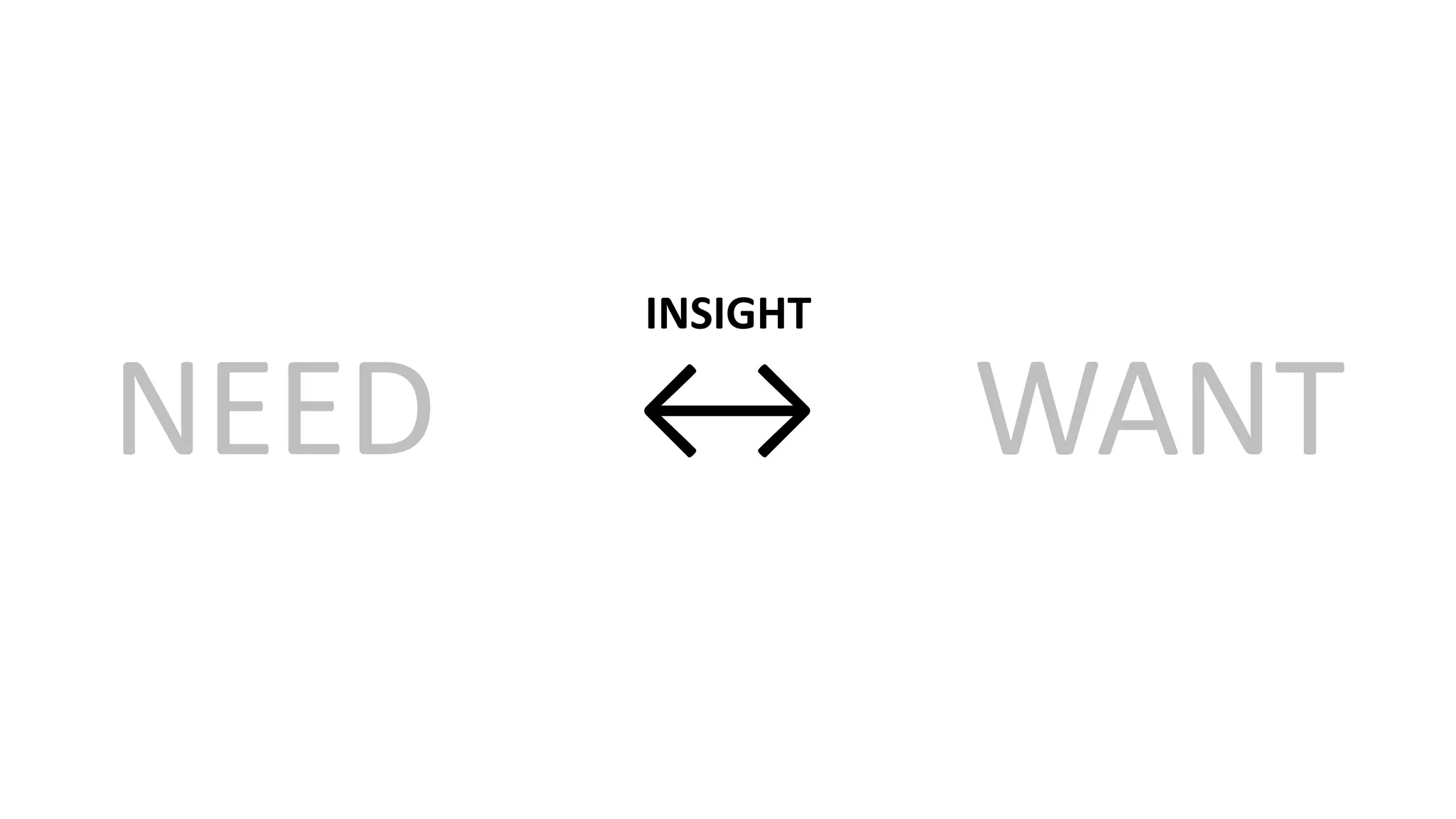
NEED WANT↔
INSIGHT
Design Thinking: A powerful framework
Empathize Define Ideate Prototype Test
Iterate
Let’s try:
• Make sure every person has a sheet of paper and a marker
• Loosen up, get comfortable
• Follow the instructions as best as you can
• Stick to the clock
• Don’t be afraid to get things wrong!
Pair up with the person next to you.
Get introduced.
What do you procrastinate
about?
Think of one (silly) activity – (exercising, waking up, going to the dentist, paying taxes…)
Tell your partner.
NEED WANT≠
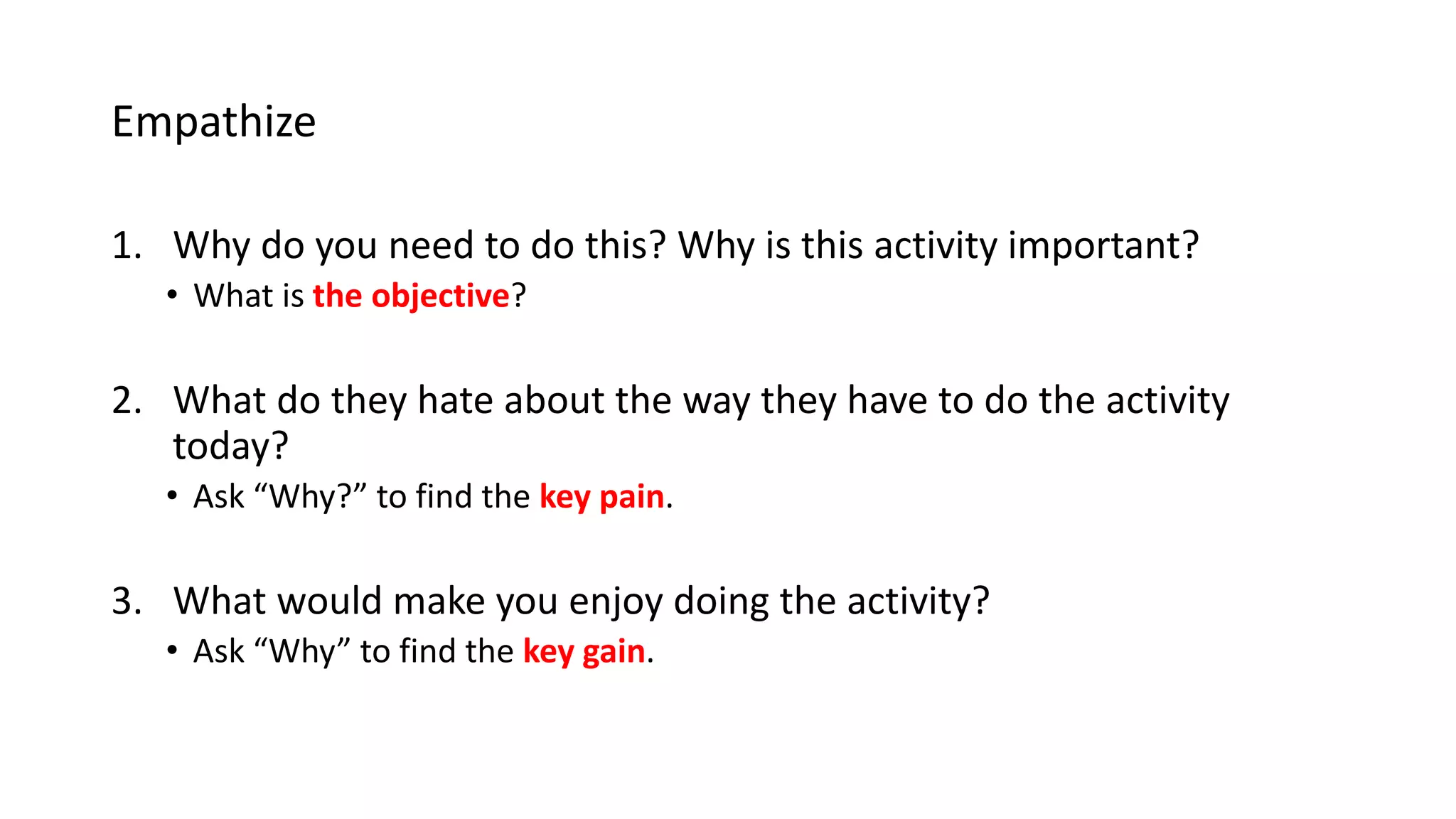
Empathize
1. Why do you need to do this? Why is this activity important?
• What is the objective?
2. What do they hate about the way they have to do the activity
today?
• Ask “Why?” to find the key pain.
3. What would make them enjoy doing the activity?
• Ask “Why” to find the key gain.
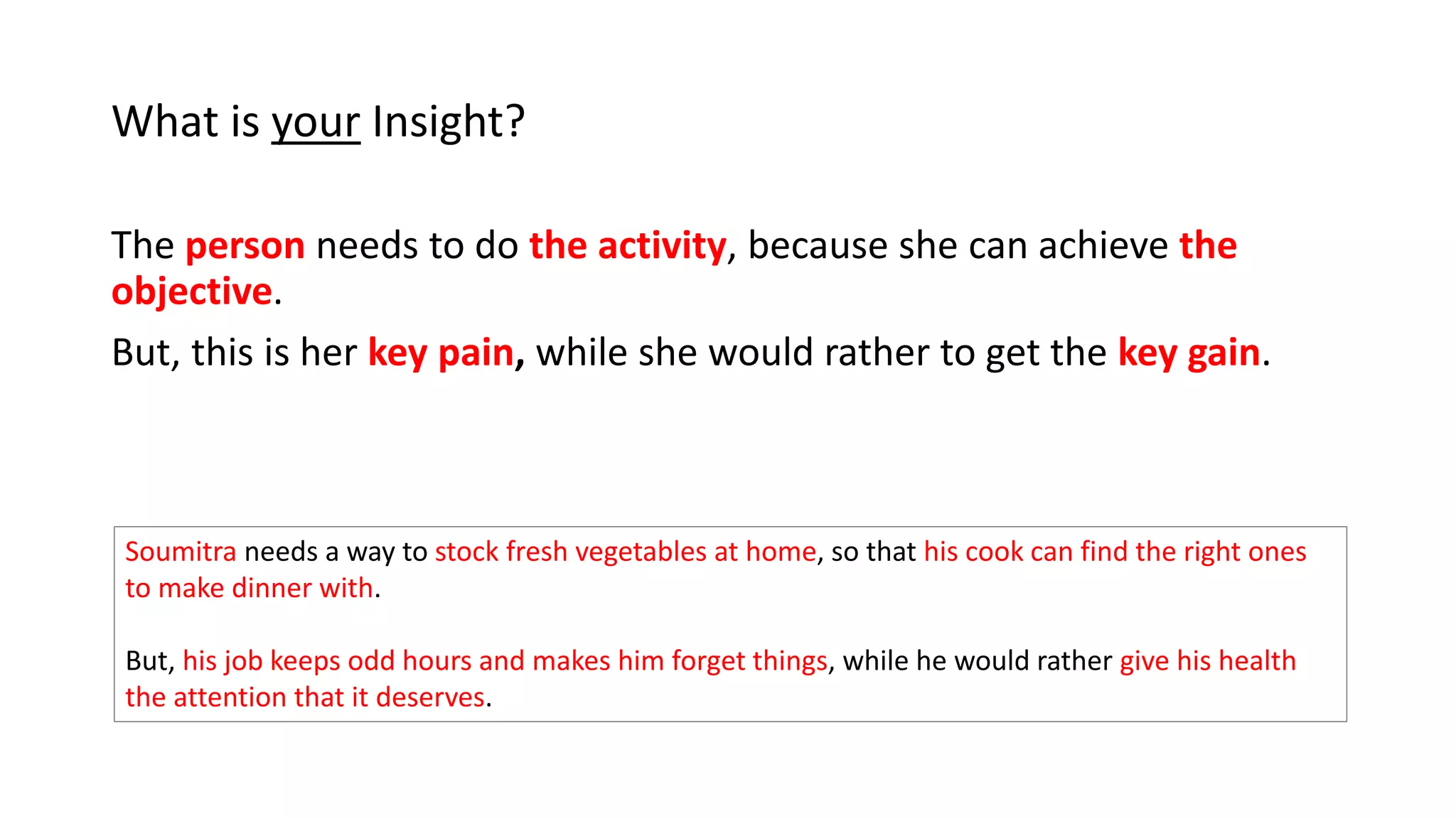
What is your Insight?
The person needs to do the activity, because she can achieve the
objective.
But, this is her key pain, while she would rather get the key gain.
Soumitra needs a way to stock fresh vegetables at home, so that his cook can find the right ones
to make dinner with.
But, his job keeps odd hours and makes him forget things, while he would rather give his health
the attention that it deserves.
Define the Problem
How might I help the person achieve the objective in a way that
removes the key pain, while enhancing the key gain?
How might I help Soumitra get fresh vegetables daily in a way that he spends minimum time and
mental attention, while satisfying his daily nutritional needs?
Ideate
Brainstorm ideas to solve the problem.
• Quantity over Quality
• Specific over Vague
Select one idea to develop further.
• Try and combine many good ideas into one if you can.
• See how you can make the idea more unique.
Sketch the Concept
Sketch a basic version of your idea showing only the key parts that are
solving the problem.
Drawing skills are irrelevant. Draw to communicate, not impress!
Test and get Feedback!
Show the sketch to you partner.
Describe how you are removing the pain and increasing the gain.
Don’t make it technical.
Remember
• It’s a Process – it improves with practice.
• Every cycle results in Learning, and a better Problem-Solution fit
• Your initial Problem and Idea always change
• Your Focus on the User never shifts
Make Things People Want
Soumitra Bhat
T: @performingflea
soumitra@isdi.in

Value Proposition Design

  • 1.
    Value Proposition Design or,How To Make Things People Want Soumitra Bhat @performingflea
  • 2.
  • 3.
    This belief hasalready created billions $ of value.
  • 4.
    And it israpidly becoming the foundation of new business.
  • 5.
  • 6.
  • 7.
    Design Thinking: Apowerful framework Empathize Define Ideate Prototype Test Iterate
  • 8.
    Let’s try: • Makesure every person has a sheet of paper and a marker • Loosen up, get comfortable • Follow the instructions as best as you can • Stick to the clock • Don’t be afraid to get things wrong!
  • 9.
    Pair up withthe person next to you. Get introduced.
  • 10.
    What do youprocrastinate about? Think of one (silly) activity – (exercising, waking up, going to the dentist, paying taxes…) Tell your partner. NEED WANT≠
  • 11.
    Empathize 1. Why doyou need to do this? Why is this activity important? • What is the objective? 2. What do they hate about the way they have to do the activity today? • Ask “Why?” to find the key pain. 3. What would make them enjoy doing the activity? • Ask “Why” to find the key gain.
  • 12.
    What is yourInsight? The person needs to do the activity, because she can achieve the objective. But, this is her key pain, while she would rather get the key gain. Soumitra needs a way to stock fresh vegetables at home, so that his cook can find the right ones to make dinner with. But, his job keeps odd hours and makes him forget things, while he would rather give his health the attention that it deserves.
  • 13.
    Define the Problem Howmight I help the person achieve the objective in a way that removes the key pain, while enhancing the key gain? How might I help Soumitra get fresh vegetables daily in a way that he spends minimum time and mental attention, while satisfying his daily nutritional needs?
  • 14.
    Ideate Brainstorm ideas tosolve the problem. • Quantity over Quality • Specific over Vague Select one idea to develop further. • Try and combine many good ideas into one if you can. • See how you can make the idea more unique.
  • 15.
    Sketch the Concept Sketcha basic version of your idea showing only the key parts that are solving the problem. Drawing skills are irrelevant. Draw to communicate, not impress!
  • 16.
    Test and getFeedback! Show the sketch to you partner. Describe how you are removing the pain and increasing the gain. Don’t make it technical.
  • 17.
    Remember • It’s aProcess – it improves with practice. • Every cycle results in Learning, and a better Problem-Solution fit • Your initial Problem and Idea always change • Your Focus on the User never shifts
  • 18.
    Make Things PeopleWant Soumitra Bhat T: @performingflea soumitra@isdi.in