
VALUE CHAIN ANALYSIS
hain Analysis
What is the value chain?
Porter’s definition includes all activities to design,
produce, market, deliver, and support the
product/service.
 The value chain is concentrating on the activities
starting with raw materials till the conversion into
final goods or services.
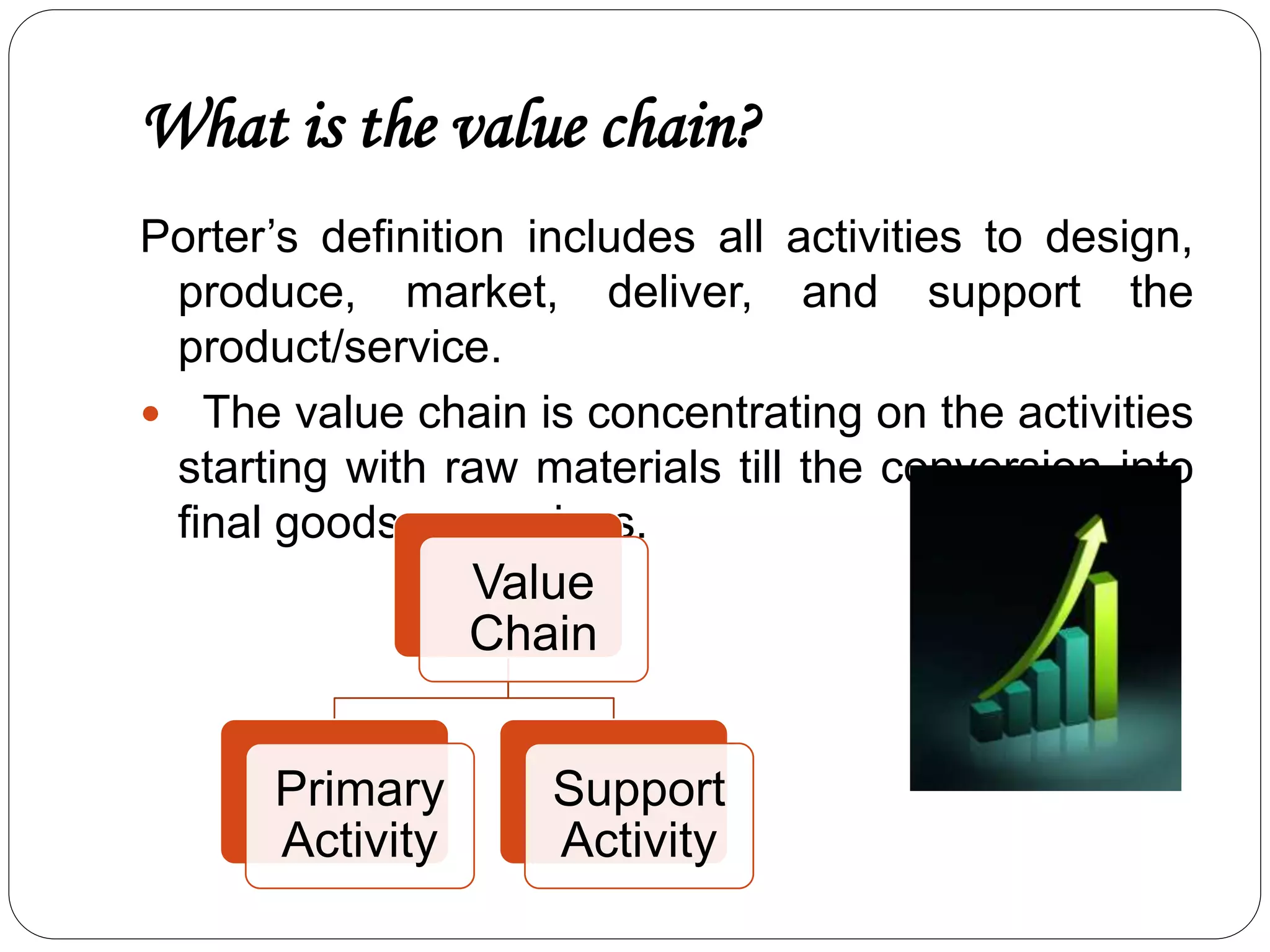
Value
Chain
Primary
Activity
Support
Activity
What is value chain analysis?
 Used to identify sources of competitive
advantage
 Specifically:
– Opportunities to secure cost advantages
– Opportunities to create product/service
differentiation
 Includes the value-creating activities of all
industry participants
 It is a process where a firm identifies its primary
and support activities that add value to its final
product and then analyze these activities to
reduce costs or increase differentiation.
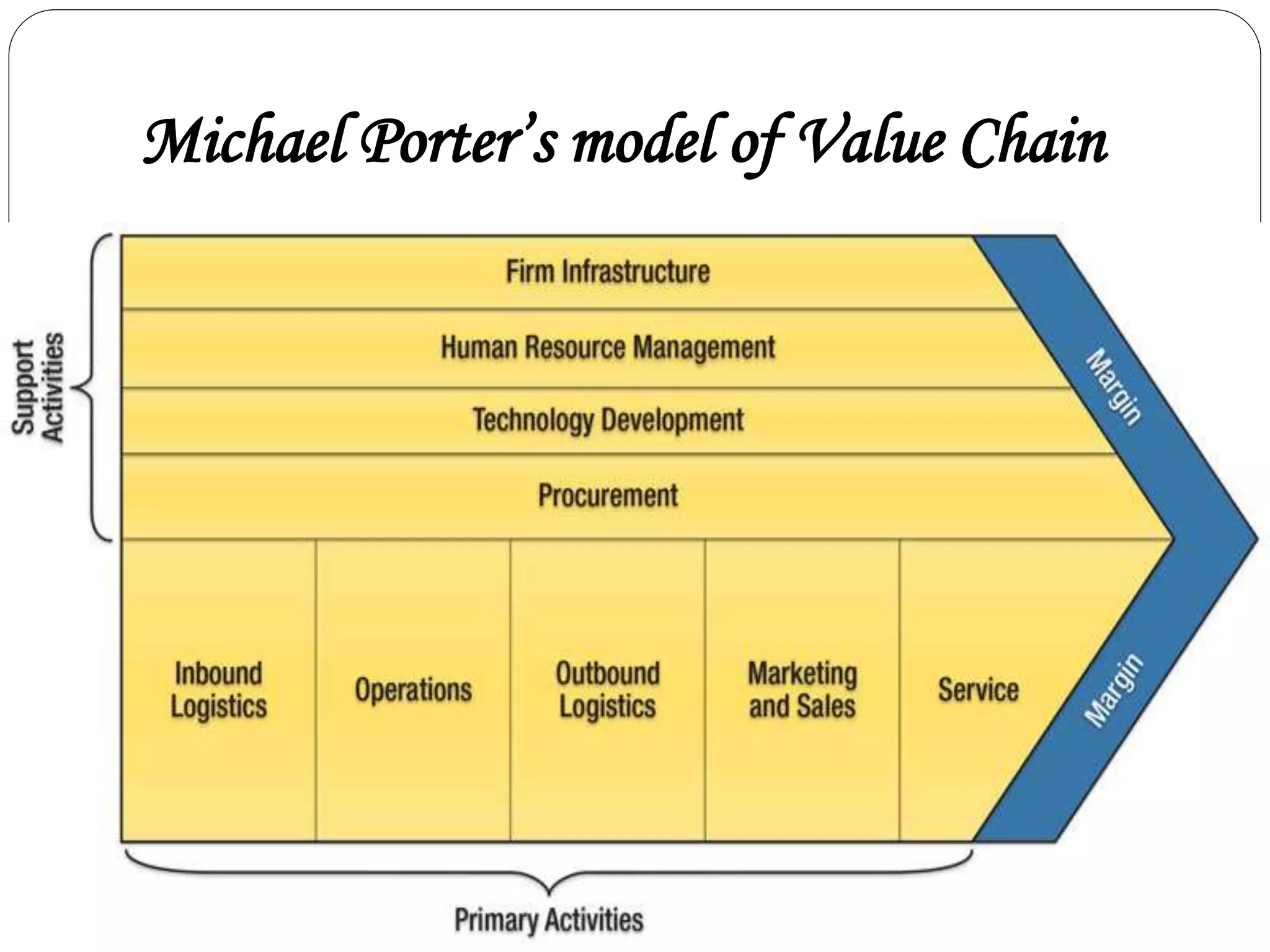
Primary activities
 Inbound logistics : Refers to goods being obtained
from the organizations suppliers and to be used for
producing the end product
 Operations : Value is added to the product at this
stage as it moves through the production line
 Outbound logistics:. Distribution of finished goods
is known as outbound logistics.
 Marketing and Sales: The marketing mix is used to
establish an effective strategy, any competitive
advantage is clearly communicated to the target
group through the promotional mix.
 Services: After the product/service has been sold
what support services does the organization offer
Support activities
 Procurement: The challenge for procurement is
to obtain the best possible quality available (on
the market) for their budget.
 Technology development: The use of
technology to obtain a competitive advantage is
very important in today’s technological driven
environment.
 Human resource management: The organization
will have to recruit, train and develop the correct
people for the organization to be successful.
 Firm infrastructure: Every organizations needs to
ensure that their finances, legal structure and
management structure work efficiently and helps drive
the organization forward
Michael Porter’s model of Value Chain
Case Study (Pizza Hut)
Primary Activities
 Inbound Logistics
- Purchasing raw materials like: Dough Cheese
Sauce Fruits and vegetables Spaghetti Salt and
pepper
 Operations
-Preparation of pizza base Customization of pizza
Make pastas and salads On time delivery
 Outbound Logistics
-Transporting pizza bases Serving pizzas hot
Continued….
 Marketing and Sales Segmentation
- Target Market Branding Redefining its menu
Introduction of new products Pricing Distribution
Advertising Promotional offers
 Service and Support
-Customer feels comfortable Online orders Home
Delivery Explanation of Value Chain of Pizza Hut:
Support Activities
 Infrastructure- Funds collection, Administrative tasks
 Human Resource Management -Managing
employees Training employees Appraisals and
rewards Knowledge transfers Freedom of thoughts
Conducting meetings
 Technology Development- Feedback from customers
Research work Improvising of their products
Innovation Launch of new products Use of IT,
databases Temperature controlled trucks
 Procurement- Acquiring the resources Ingredients
from local suppliers Special ingredients From
Conclusion
 The sources of the competitive advantage of a firm
can be seen from its discrete activities and how they
interact with one one another.
 The value chain is a tool for systematically examining
the activities of a firm and how they interact with one
another and affect each other’s cost and
performance.
 A firm gains a competitive advantage by performing
these activities better or at lower cost than
competitors.
 Helps you to stay out of the “No Profit Zone”
 Presents opportunities for integration
 Aligns spending with value processes
By-
Megha Varma(7282)
Gitika Prachish(7294)

Value chain analysis

  • 1.
  • 2.
    What is thevalue chain? Porter’s definition includes all activities to design, produce, market, deliver, and support the product/service.  The value chain is concentrating on the activities starting with raw materials till the conversion into final goods or services. Value Chain Primary Activity Support Activity
  • 3.
    What is valuechain analysis?  Used to identify sources of competitive advantage  Specifically: – Opportunities to secure cost advantages – Opportunities to create product/service differentiation  Includes the value-creating activities of all industry participants  It is a process where a firm identifies its primary and support activities that add value to its final product and then analyze these activities to reduce costs or increase differentiation.
  • 4.
    Primary activities  Inboundlogistics : Refers to goods being obtained from the organizations suppliers and to be used for producing the end product  Operations : Value is added to the product at this stage as it moves through the production line  Outbound logistics:. Distribution of finished goods is known as outbound logistics.  Marketing and Sales: The marketing mix is used to establish an effective strategy, any competitive advantage is clearly communicated to the target group through the promotional mix.  Services: After the product/service has been sold what support services does the organization offer
  • 5.
    Support activities  Procurement:The challenge for procurement is to obtain the best possible quality available (on the market) for their budget.  Technology development: The use of technology to obtain a competitive advantage is very important in today’s technological driven environment.  Human resource management: The organization will have to recruit, train and develop the correct people for the organization to be successful.  Firm infrastructure: Every organizations needs to ensure that their finances, legal structure and management structure work efficiently and helps drive the organization forward
  • 6.
  • 7.
    Case Study (PizzaHut) Primary Activities  Inbound Logistics - Purchasing raw materials like: Dough Cheese Sauce Fruits and vegetables Spaghetti Salt and pepper  Operations -Preparation of pizza base Customization of pizza Make pastas and salads On time delivery  Outbound Logistics -Transporting pizza bases Serving pizzas hot
  • 8.
    Continued….  Marketing andSales Segmentation - Target Market Branding Redefining its menu Introduction of new products Pricing Distribution Advertising Promotional offers  Service and Support -Customer feels comfortable Online orders Home Delivery Explanation of Value Chain of Pizza Hut:
  • 9.
    Support Activities  Infrastructure-Funds collection, Administrative tasks  Human Resource Management -Managing employees Training employees Appraisals and rewards Knowledge transfers Freedom of thoughts Conducting meetings  Technology Development- Feedback from customers Research work Improvising of their products Innovation Launch of new products Use of IT, databases Temperature controlled trucks  Procurement- Acquiring the resources Ingredients from local suppliers Special ingredients From
  • 10.
    Conclusion  The sourcesof the competitive advantage of a firm can be seen from its discrete activities and how they interact with one one another.  The value chain is a tool for systematically examining the activities of a firm and how they interact with one another and affect each other’s cost and performance.  A firm gains a competitive advantage by performing these activities better or at lower cost than competitors.  Helps you to stay out of the “No Profit Zone”  Presents opportunities for integration  Aligns spending with value processes
  • 11.