UX Jiu-Jitsu
Handling Big Change with Baby Steps
Eli Silva elisilva.com/slate @elisymeon
Most businesses want to deliver well designed
experiences, because the market has shown that’s
where the money is.
Getting there is a matter of discipline...especially when
you're a solo designer, or small team within an
organization with little UX exposure.
UX Never Stops
As soon as a human interacts with something UX is
happening.
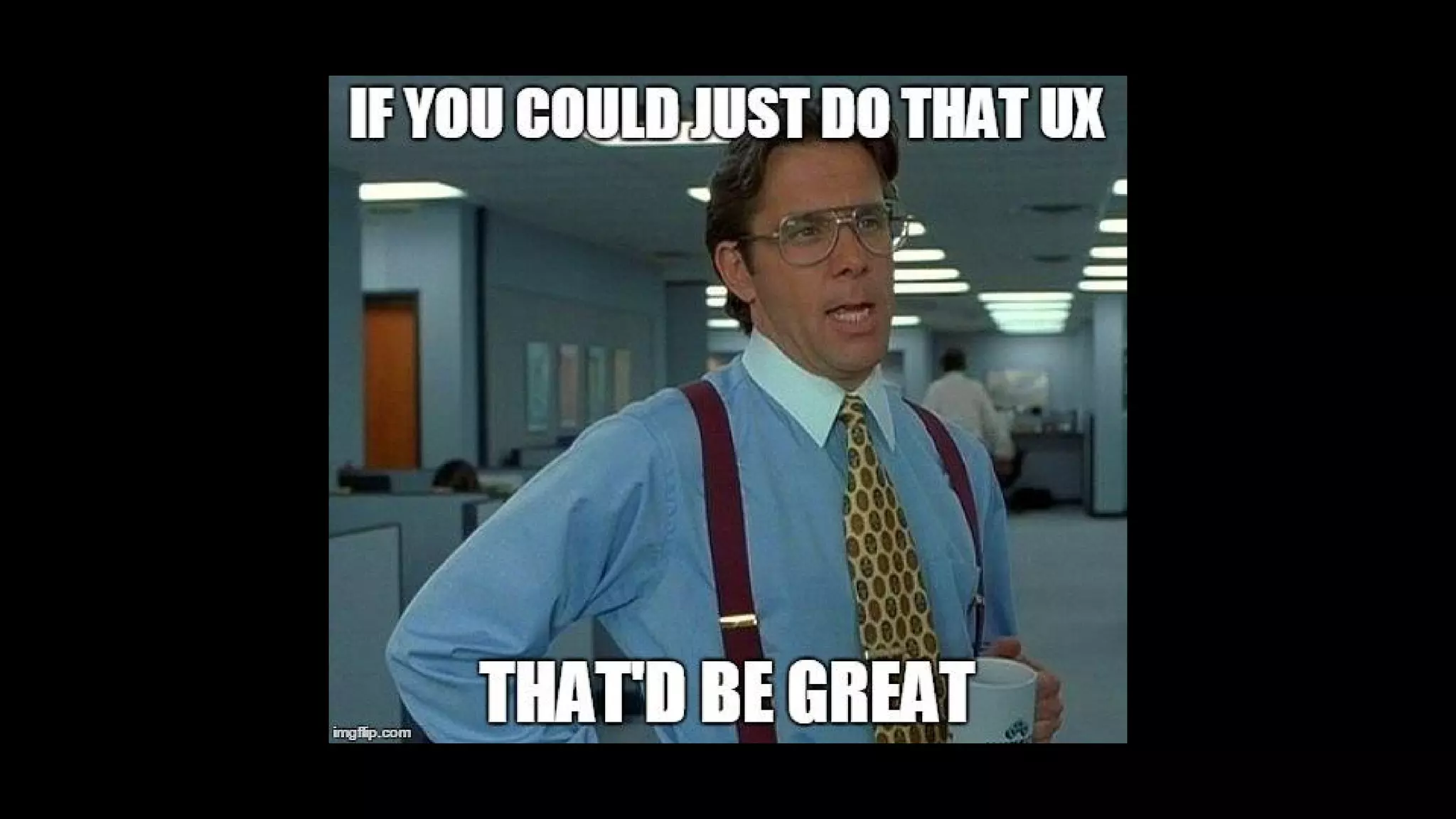
Technically, everyone at your company is already doing
UX. The question is whether they’re doing good UX.
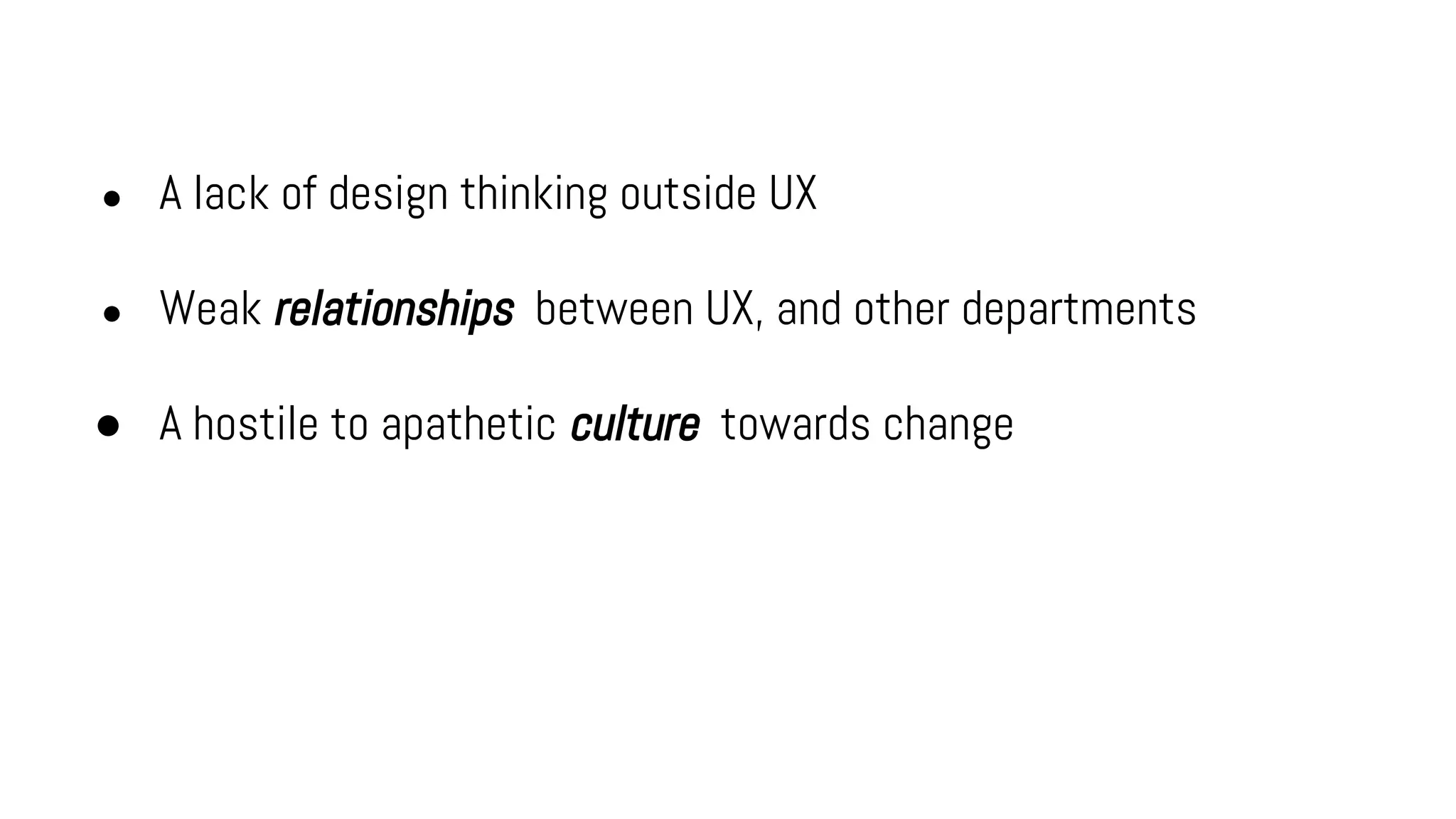
What’s the biggest challenge in UX?
● A lack of design thinking outside UX
● Weak relationships between UX, and other departments
● A lack of design thinking outside UX
● Weak relationships between UX, and other departments
● A hostile to apathetic culture towards change
● A lack of design thinking outside UX
● Weak relationships between UX, and other departments
● A hostile to apathetic culture towards change
● A cumbersome, or non-existent process
How does anyone facing limitations create design
thinking in an environment unexposed to UX?
Vision
You probably deal with stakeholders that think they’re
designers. In some ways they are.
Design is about problem solving in different contexts.
We believe that creating an atmosphere of shared
vision for a business will achieve an increase in design
thinking outside the UX department.
We will know we are right when we see the business
team and UX speaking the same language in their
pursuit of common goals.
UX often limits itself intentionally, or unintentionally
to design deliverables without applying the same
problem-solving skills to their context.
If you limit yourself to deliverables do not be surprised
if your business fails to recognize your value as a UX
professional.
Trust Me,
I’m a Professional.
“In order to avoid losing its place atop organizations, design
must deliver results. Designers must also accept that if
they don’t, they’re not actually designing well.”
-Mills Baker, Facebook Product Designer
Wait a minute...Whose side are you on?
The side that tells the right story.
So, What’s the Story?
Usability is more than a layer of product, the
experience is the product.
UX is more than deliverables.
We are strategists, but more than strategists, we are
keepers of the story. That story is best told where the
users and the business have common ground.
Our purpose is to tell the story in such a way that it is
compelling to the business, and compelling to the
users at the same time.
“No story has power, nor will it last, unless we feel in
ourselves that it is true and true of us.”
-John Steinbeck
How?
Change what you believe about yourself.
UX is about more than wireframes. It’s about strategy.
Change what you believe about yourself.
UX is more than wireframes. It’s about strategy.
See yourself as a strategist and provide value to your
organization by empathizing with your context.
How does anyone facing limitations create design
thinking in an environment unexposed to UX?
Relationships
“Yesterday I was clever, so I wanted to change the
world. Today I am wise, so I am changing myself.”
-Rumi
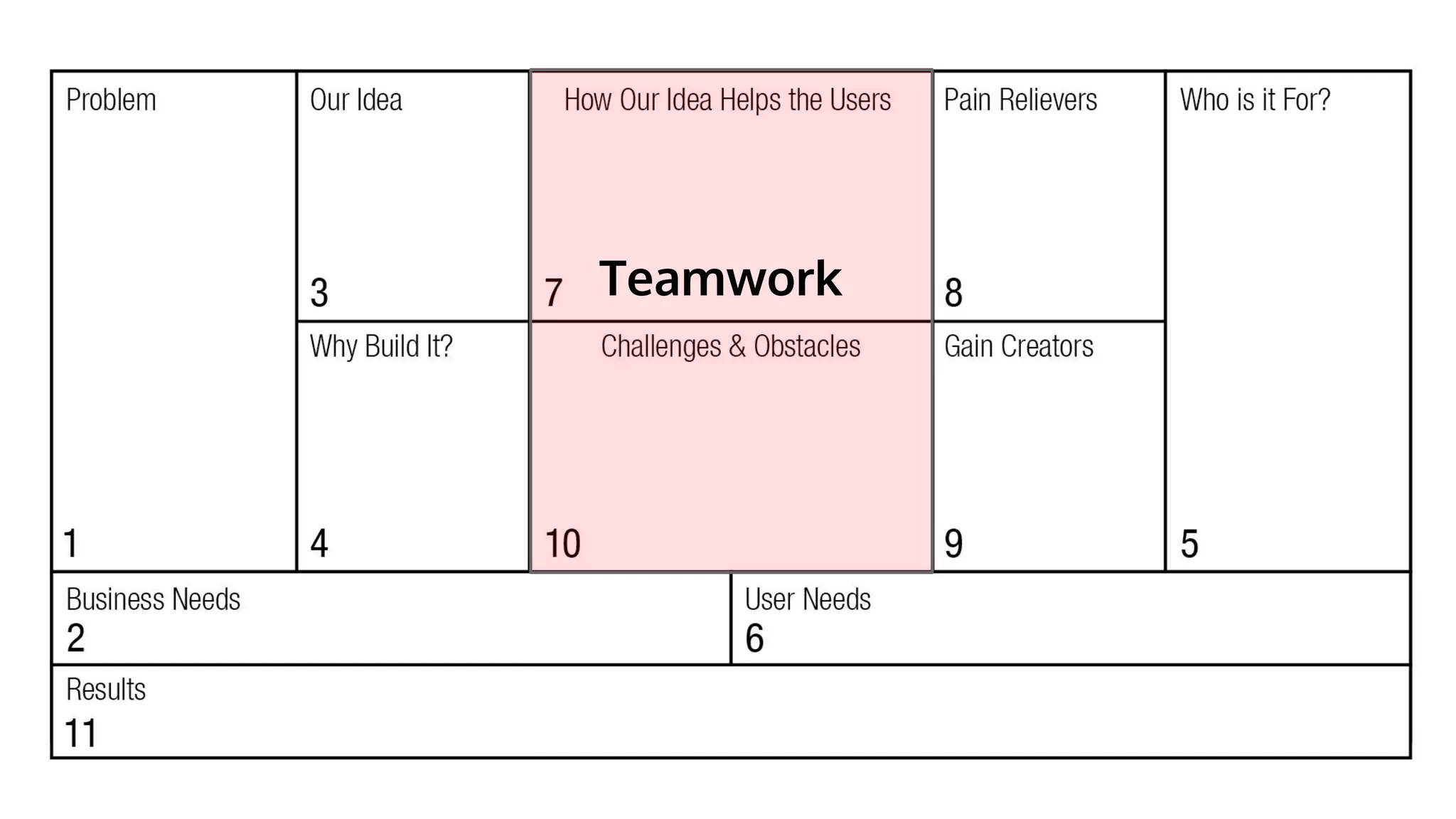
Who is it for?
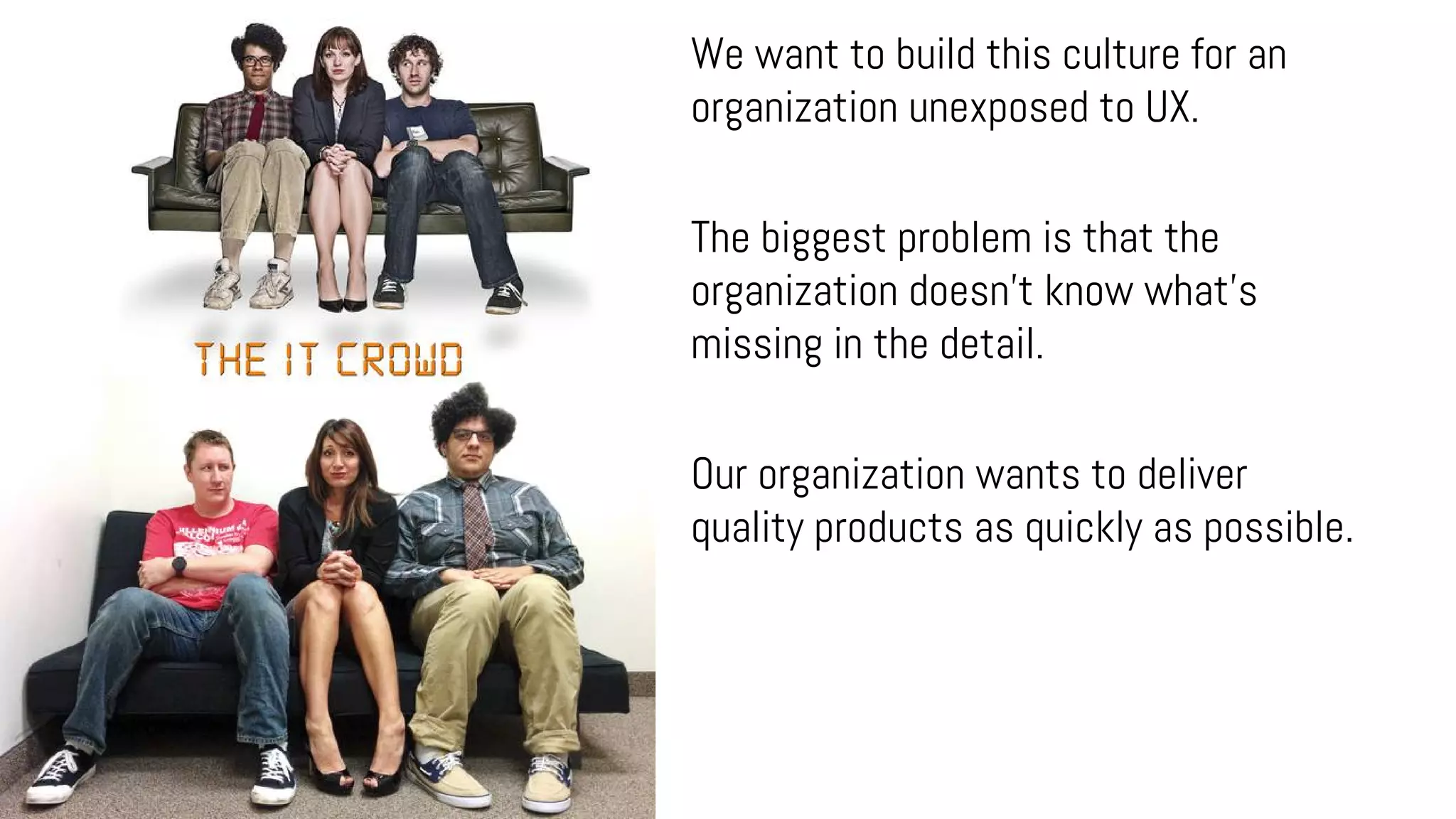
We want to build this culture for an
organization unexposed to UX.
We want to build this culture for an
organization unexposed to UX.
The biggest problem is that the
organization doesn't know what's
missing in the detail.
We want to build this culture for an
organization unexposed to UX.
The biggest problem is that the
organization doesn't know what's
missing in the detail.
Our organization wants to deliver
quality products as quickly as possible.
We want to build this culture for an
organization unexposed to UX.
The biggest problem is that the
organization doesn't know what's
missing in the detail.
Our organization wants to deliver
quality products as quickly as possible.
Currently they rush to deadlines with
little understanding of usability's
impact on revenue, and conversions.
How can we help?
We work with the business who is providing the product, or service
to the users.
The product needs to be usable for them as well.
Our idea is to build a culture of collaboration across departments. It
has not been done at this organization in this way before.
Our idea is to build a culture of collaboration across departments. It
has not been done at this organization in this way before.
If we approach it as a service we need to create value for other
departments, and share our vision by speaking their language before
we can serve them properly.
Our idea is to build a culture of collaboration across departments. It
has not been done at this organization in this way before.
If we approach it as a service we need to create value for other
departments, and share our vision by speaking their language before
we can serve them properly.
If we succeed it provides increased design thinking, and better
strategy across departments for our business.
How will we know we are helping?
We believe that creating an atmosphere of shared
vision for a business will achieve an increase in design
thinking outside the UX department.
We will know we are right when we see the business
team and UX speaking the same language in their
pursuit of common goals.
How does anyone facing limitations create design
thinking in an unexposed environment?
Culture
Culture is the somewhat ignored factor in UX. Largely
because it tends to be megalithic, top-down, and
static.
How do We Manage Such a Large OPPONENT ?
Brazilian Jiu-Jitsu promotes the concept that a
smaller, weaker person can successfully defend
against a bigger, stronger opponent by using the
opponent’s gravity against them, leveraging their own
weight, and most notably, taking the fight
to the ground.
Frame design problems in the language of business.
Example:
Instead of saying "this is modern design," frame design decisions with these terms:
● Conversions
● Revenue
● Value proposition
● Engagement
● Retention
● Costs
1. Take it to the ground:
The challenge isn’t to overpower the business into UX,
but to use the weight of the system against its own
barriers to innovation.
How?
UX Jiu-Jitsu is built on the correct use of gravity, and
momentum.
When these two components are used correctly the
amount of effort you’ll expend to perform your
techniques will be minimized.
How do you Change the Center of Gravity?
Your opponent is bigger than an individual.
Example:
Put your opponents off balance. Don't scheme to keep even the sneakiest attackers out of
the discussion. Let them in. They are not the real opponent, the real opponent is culture,
which is changed one step at a time.
Listen for any good questions, and concerns between the lines. You can make useful
adjustments to a plan that is fundamentally sound.
2. Use your opponent’s weight against them:
Be dynamic. Make your UX department more like connective tissue
instead of a single organ.
Example:
Deliver value in multiple areas outside your department as often as possible. Lead small
sessions to find quick wins.
Don't waste your time trying to convert a minority that is so emotionally committed to an
ideology that they will never support your idea unless it is changed to fit that ideology.
3. Do not rely on an entrenched position:
How do you build UX Momentum?
Teach the value of design thinking.
Bring others into the design thinking by facilitating the
process.
Teach the value of design thinking.
Bring others into the design thinking by facilitating the
process.
Convey the value of usability with results.
How?
Process
Users, and businesses benefit when a team can work
together across departments that speak the same
language.
A simplified process is better than a robust, but
unactionable theory.
Research:
“It’s really hard to show the process to clients and
spread some understanding of the importance of
design.”
Research:
“It’s really hard to show the process to clients and
spread some understanding of the importance of
design.”
“How do I present the design process to stakeholders
and developers to actually get buy-in?”
We come bearing gifts
Business
Business User
Teamwork
We built a prototype process that takes the best of
Lean and Agile , and puts usability at the center in a
way that makes sense to the business.
Our Goal:
Design Thinking for Everyone
Our Method:
Incentivize collaboration between design and business
while giving designers a tool that teaches design thinking
Our Vision:
UX that speaks to business and the user at the same time
There are many challenges in UX, and we’ll never solve
them overnight.
Ultimately empathize, and be there.
Thank You
Now, Let’s Train.
Eli Silva elisilva.com/slate @elisymeon

Ux jiu jitsu

  • 1.
    UX Jiu-Jitsu Handling BigChange with Baby Steps Eli Silva elisilva.com/slate @elisymeon
  • 4.
    Most businesses wantto deliver well designed experiences, because the market has shown that’s where the money is. Getting there is a matter of discipline...especially when you're a solo designer, or small team within an organization with little UX exposure.
  • 6.
    UX Never Stops Assoon as a human interacts with something UX is happening. Technically, everyone at your company is already doing UX. The question is whether they’re doing good UX.
  • 7.
    What’s the biggestchallenge in UX?
  • 8.
    ● A lackof design thinking outside UX
  • 9.
    ● A lackof design thinking outside UX ● Weak relationships between UX, and other departments
  • 10.
    ● A lackof design thinking outside UX ● Weak relationships between UX, and other departments ● A hostile to apathetic culture towards change
  • 11.
    ● A lackof design thinking outside UX ● Weak relationships between UX, and other departments ● A hostile to apathetic culture towards change ● A cumbersome, or non-existent process
  • 12.
    How does anyonefacing limitations create design thinking in an environment unexposed to UX?
  • 13.
  • 14.
    You probably dealwith stakeholders that think they’re designers. In some ways they are. Design is about problem solving in different contexts.
  • 15.
    We believe thatcreating an atmosphere of shared vision for a business will achieve an increase in design thinking outside the UX department. We will know we are right when we see the business team and UX speaking the same language in their pursuit of common goals.
  • 17.
    UX often limitsitself intentionally, or unintentionally to design deliverables without applying the same problem-solving skills to their context.
  • 18.
    If you limityourself to deliverables do not be surprised if your business fails to recognize your value as a UX professional.
  • 19.
    Trust Me, I’m aProfessional.
  • 20.
    “In order toavoid losing its place atop organizations, design must deliver results. Designers must also accept that if they don’t, they’re not actually designing well.” -Mills Baker, Facebook Product Designer
  • 21.
    Wait a minute...Whoseside are you on?
  • 22.
    The side thattells the right story.
  • 23.
  • 24.
    Usability is morethan a layer of product, the experience is the product.
  • 25.
    UX is morethan deliverables.
  • 26.
    We are strategists,but more than strategists, we are keepers of the story. That story is best told where the users and the business have common ground.
  • 27.
    Our purpose isto tell the story in such a way that it is compelling to the business, and compelling to the users at the same time.
  • 28.
    “No story haspower, nor will it last, unless we feel in ourselves that it is true and true of us.” -John Steinbeck
  • 29.
  • 30.
    Change what youbelieve about yourself.
  • 31.
    Change what youbelieve about yourself. UX is about more than wireframes. It’s about strategy.
  • 32.
    Change what youbelieve about yourself. UX is more than wireframes. It’s about strategy. See yourself as a strategist and provide value to your organization by empathizing with your context.
  • 33.
    How does anyonefacing limitations create design thinking in an environment unexposed to UX?
  • 34.
  • 35.
    “Yesterday I wasclever, so I wanted to change the world. Today I am wise, so I am changing myself.” -Rumi
  • 36.
  • 37.
    We want tobuild this culture for an organization unexposed to UX.
  • 38.
    We want tobuild this culture for an organization unexposed to UX. The biggest problem is that the organization doesn't know what's missing in the detail.
  • 39.
    We want tobuild this culture for an organization unexposed to UX. The biggest problem is that the organization doesn't know what's missing in the detail. Our organization wants to deliver quality products as quickly as possible.
  • 40.
    We want tobuild this culture for an organization unexposed to UX. The biggest problem is that the organization doesn't know what's missing in the detail. Our organization wants to deliver quality products as quickly as possible. Currently they rush to deadlines with little understanding of usability's impact on revenue, and conversions.
  • 41.
  • 42.
    We work withthe business who is providing the product, or service to the users. The product needs to be usable for them as well.
  • 44.
    Our idea isto build a culture of collaboration across departments. It has not been done at this organization in this way before.
  • 45.
    Our idea isto build a culture of collaboration across departments. It has not been done at this organization in this way before. If we approach it as a service we need to create value for other departments, and share our vision by speaking their language before we can serve them properly.
  • 46.
    Our idea isto build a culture of collaboration across departments. It has not been done at this organization in this way before. If we approach it as a service we need to create value for other departments, and share our vision by speaking their language before we can serve them properly. If we succeed it provides increased design thinking, and better strategy across departments for our business.
  • 47.
    How will weknow we are helping?
  • 48.
    We believe thatcreating an atmosphere of shared vision for a business will achieve an increase in design thinking outside the UX department. We will know we are right when we see the business team and UX speaking the same language in their pursuit of common goals.
  • 49.
    How does anyonefacing limitations create design thinking in an unexposed environment?
  • 50.
  • 52.
    Culture is thesomewhat ignored factor in UX. Largely because it tends to be megalithic, top-down, and static.
  • 53.
    How do WeManage Such a Large OPPONENT ?
  • 54.
    Brazilian Jiu-Jitsu promotesthe concept that a smaller, weaker person can successfully defend against a bigger, stronger opponent by using the opponent’s gravity against them, leveraging their own weight, and most notably, taking the fight to the ground.
  • 55.
    Frame design problemsin the language of business. Example: Instead of saying "this is modern design," frame design decisions with these terms: ● Conversions ● Revenue ● Value proposition ● Engagement ● Retention ● Costs 1. Take it to the ground:
  • 56.
    The challenge isn’tto overpower the business into UX, but to use the weight of the system against its own barriers to innovation.
  • 57.
  • 58.
    UX Jiu-Jitsu isbuilt on the correct use of gravity, and momentum. When these two components are used correctly the amount of effort you’ll expend to perform your techniques will be minimized.
  • 59.
    How do youChange the Center of Gravity?
  • 60.
    Your opponent isbigger than an individual. Example: Put your opponents off balance. Don't scheme to keep even the sneakiest attackers out of the discussion. Let them in. They are not the real opponent, the real opponent is culture, which is changed one step at a time. Listen for any good questions, and concerns between the lines. You can make useful adjustments to a plan that is fundamentally sound. 2. Use your opponent’s weight against them:
  • 61.
    Be dynamic. Makeyour UX department more like connective tissue instead of a single organ. Example: Deliver value in multiple areas outside your department as often as possible. Lead small sessions to find quick wins. Don't waste your time trying to convert a minority that is so emotionally committed to an ideology that they will never support your idea unless it is changed to fit that ideology. 3. Do not rely on an entrenched position:
  • 62.
    How do youbuild UX Momentum?
  • 63.
    Teach the valueof design thinking.
  • 64.
    Teach the valueof design thinking. Bring others into the design thinking by facilitating the process.
  • 65.
    Teach the valueof design thinking. Bring others into the design thinking by facilitating the process. Convey the value of usability with results.
  • 66.
  • 67.
  • 69.
    Users, and businessesbenefit when a team can work together across departments that speak the same language.
  • 70.
    A simplified processis better than a robust, but unactionable theory.
  • 73.
    Research: “It’s really hardto show the process to clients and spread some understanding of the importance of design.”
  • 74.
    Research: “It’s really hardto show the process to clients and spread some understanding of the importance of design.” “How do I present the design process to stakeholders and developers to actually get buy-in?”
  • 75.
  • 77.
  • 78.
  • 79.
  • 80.
    We built aprototype process that takes the best of Lean and Agile , and puts usability at the center in a way that makes sense to the business.
  • 81.
  • 82.
    Our Method: Incentivize collaborationbetween design and business while giving designers a tool that teaches design thinking
  • 83.
    Our Vision: UX thatspeaks to business and the user at the same time
  • 84.
    There are manychallenges in UX, and we’ll never solve them overnight.
  • 85.
  • 87.
    Thank You Now, Let’sTrain. Eli Silva elisilva.com/slate @elisymeon